

5 Fruits To Plant That Attract Birds To Your Yard
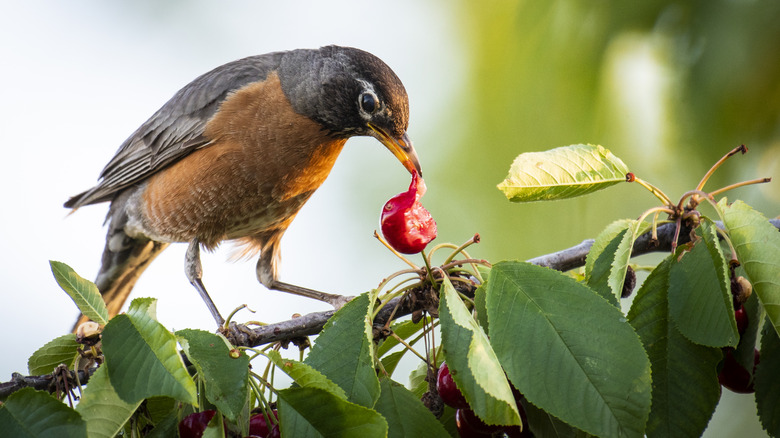
The outdoor space around our homes may sometimes seem like a source of chores more than anything else, but it doesn't have to be that way. Giving up some grass and turning it over to fruit plants not only reduces the amount of mowing each week but also provides some fresh ingredients for the kitchen. Additionally, it provides a haven for wildlife in a world where their available habitat is shrinking all the time. You've got three wins there: food for you, food and shelter for birds and other wildlife, and less time spent on yardwork.
There is a fine line to be walked when it comes to gardening for wildlife. You don't want to pick plants that you are going to put a whole lot of work into just to have all the produce snatched up by your feathered visitors. By the same metric, though, it's best not to get too attached to harvesting 100% of the fruit from your yard. No matter what you are gardening, some of it is likely to be lost to wildlife, and that's alright. In fact, if you just reframe it in your mind, it's great. You get to help feed and house these wild creatures and enjoy watching and sharing space with them.
Below we have a list of five different beginner-friendly fruit plants that are great choices for attracting birds to your yard, but you can also try enticing avian friends by adding some other installations. Nest boxes provide shelter, vintage crocks can be transformed into bird baths, and DIY bird feeders are always inviting. With the right plants in your yard, however, the bird food grows itself.
1. Blackberries and raspberries
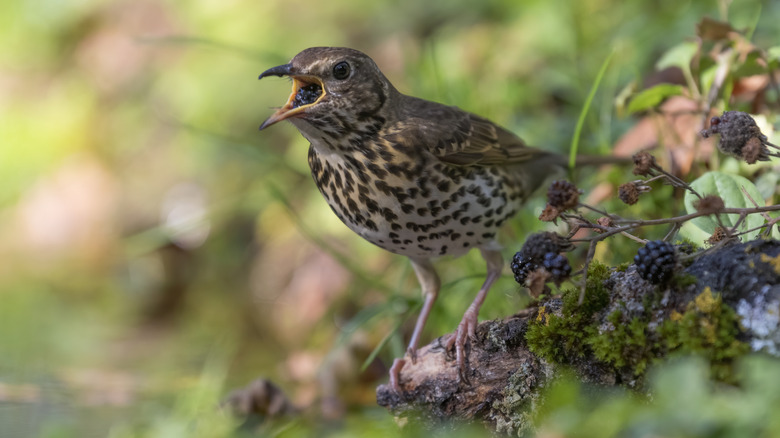
Blackberries and raspberries are both well-known fruits from the produce department of the grocery store, but they are also quite easy to grow in many parts of the country. They are perennials with spiky canes, but the fruit that they bear each summer is a delight for birds and gardeners alike. All sorts of bird species — like scarlet tanagers, thrushes, nuthatches, finches, and more — love the juicy fruits. But even when the plants are not fruiting, they still serve an important role for the birds.
The thick bramble of a blackberry or raspberry patch creates its own little ecosystem. A section of the yard cut off from the rest attracts all sorts of life to its shelter. The matrix of spiky canes provides a natural defense in which birds can construct nests, but it also invites another food source: insects. These bugs show up to sip at the nectar of the flowers, eat the leaves, suck the sap, or dine on the other insects, and, in turn, provide an ample food source for birds and other insectivores.
Blackberries and raspberries are enjoyed by many species, so you will certainly face some competition with regard to your own backyard berry picking, but fortunately these plants produce a lot of fruit. Once a berry patch is well-established in your yard, you should have plenty of fruit to make yourself a few honey blackberry sage pies or batches of raspberry cheesecake muffins while still leaving the majority for the birds.
2. Gooseberries
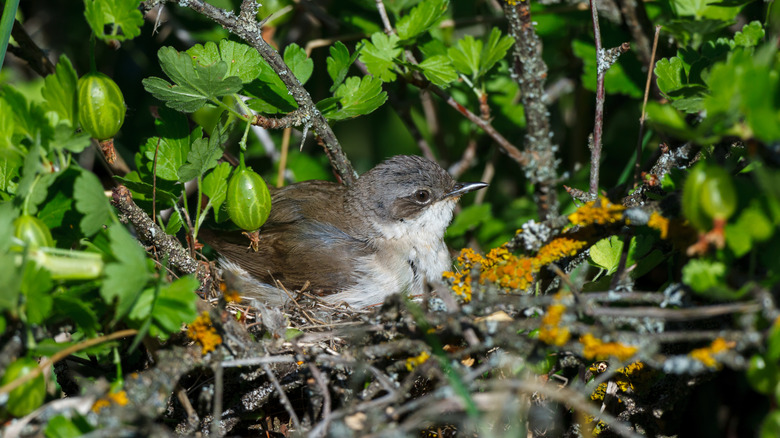
Gooseberries are not the most common fruit to find at the market but these rare American berries are a treat more than worth the space they take up in the yard. They also happen to be a favorite of many types of birds. Whether it's making a perfectly-balanced gooseberry chutney or a round of gooseberry fizz cocktails for happy hour bird watching, it's a lovely berry to have on hand — especially because of how hard they can be to find at the store.
Gooseberries were actually once banned in the U.S., thanks to being a carrier for the white pine blister rust fungus, which affects white pines. There are still some states — mostly in the Northeast and Midwest — where the bans endure, so be sure to check the situation before planting these fruit shrubs and probably choose disease-resistant varieties. In addition to the sweet-and-tart green fruits called gooseberries, there are many other species in the Ribes genus, many of which are native to the U.S., and typically referred to by another name: currants.
Whether you are talking about commercial gooseberries or other varieties of currants, all of them are favorites for birds. In the spring, before fruit has set, you may spy songbirds like indigo buntings stopping by to nosh on the tender young flowers. Hummingbirds, too, will visit the flowers, though they, of course, only want the nectar. Later in the season, the berries become the primary draw, and depending on where you are located, you may catch the lovely colors of grosbeaks or cedar waxwings perched on the branches to sup on the fruits.
3. Cherry Trees
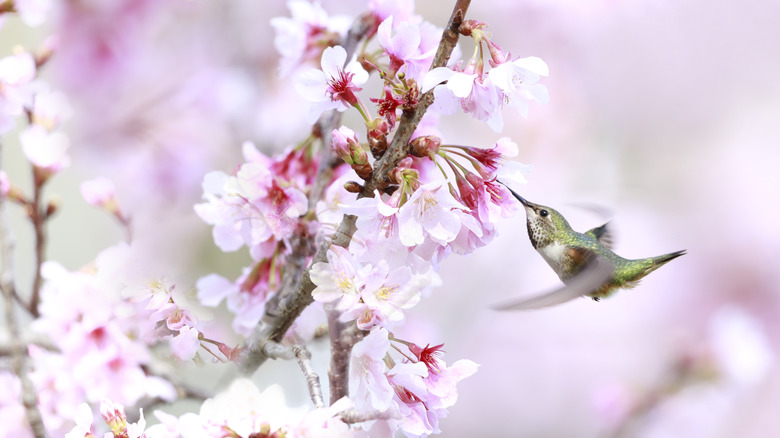
It may ask for a bit more space than some of the other fruits on this list but adding a cherry tree or two to your yard is not a decision that you will regret. In the springtime, the trees robe themselves stunningly in pale pink blossoms. Later in the season, those blossoms turn into delicious fruit for both you and your feathered friends. During the early season, when your cherry tree is covered in bloom, it is a magnet for insects that will, in turn, bring birds to visit.
On top of that, though, just like with the gooseberries, birds will show up to dine on the flowers themselves. These cherry blossoms are toxic to us, but can be turned into sakura, so that you might share a meal with the visiting birds. The cherries themselves are, naturally, a favorite for avifauna of all kinds. Cardinals, jays, titmice, woodpeckers, and plenty of other species will be regular visitors when the fruit is ripe. But their use of the cherries doesn't end at filling their own bellies. Birds are also known to stop by for a meal and then carry cherries back to the nest to feed their young.
If you're lucky, maybe you'll get to watch the whole family enjoying the fruits of your yard. Cherries don't need much explanation in the kitchen, but having a couple of fruit-bearing trees out back means a summer full of the standard cherry baked goods. On top of that, though, it invites more exciting offerings like bowls of Moroccan-inspired cherry gazpacho with a chocolate cherry old fashioned on ice to go with it.
4. Elderberries
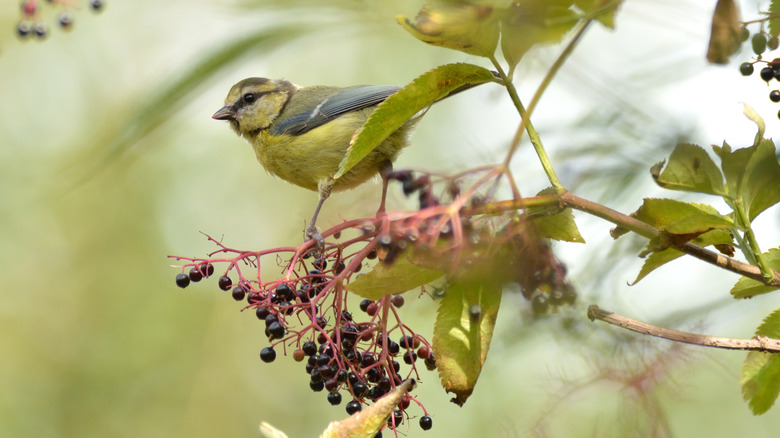
Elderberries, again, are not an item that you are likely to see in the produce department of your local market anytime soon, but that makes them an especially fine addition to the backyard garden. They grow in large bushes and provide throughout the spring and summer seasons, with fragrant flowers and vast arrays of small, dark berries later in the year. You will need two of them if you want them to produce berries since they can't self-pollinate but given what they offer to you and the local wildlife, you won't regret dedicating a piece of your yard to the pair.
Culinarily, your work begins when the flowers first set, as the aroma of elderflower is highly prized. You can use it to make elderflower syrup, elderflower champagne, or create your own knock-off St-Germain liqueur for use in cocktails like elderflower-pear martinis or elderflower and peach summer punch. Later in the year, the ample supply of dark berries can be made into honey-elderberry syrup or used in elderberry pie. Elderberries are a food that naturally boosts your immune system, so a jar of syrup is a great thing to have on hand through the winter.
Of course, you won't be alone in your harvests throughout the season. The wide sprays of fragrant flowers and hearty supply of berries are major attractants for pollinating insects, hummingbirds, and many bird species. On top of that, however, the large bushes also provide cover and nesting sites for a number of bird species. If you want a shrub that keeps giving interesting ingredients throughout the season and invites your feathered friends to stay a while, elderberry is a good choice.
5. Sunflowers
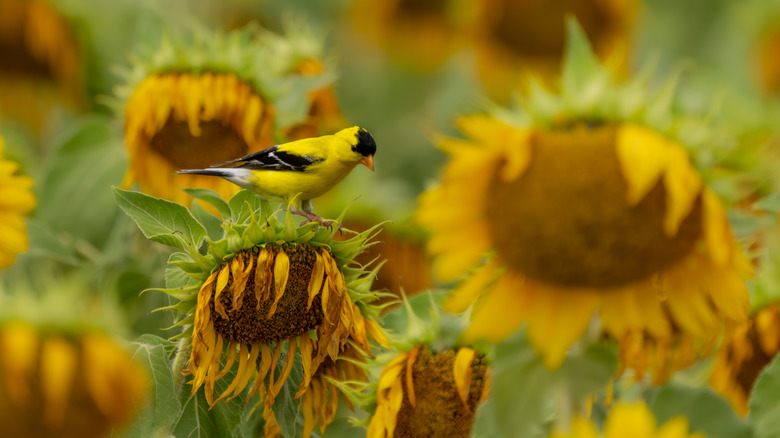
One plant that we just can't leave off this list is sunflowers. If it strikes you as out of place, well, you're not wrong. Sunflowers are fairly different from many of the others on this list. Many of them are annual plants rather than perennials, and they don't create the sort of fleshy fruit that you'd put in a pie. However, those familiar oblong seeds found in the center of the flower are technically fruits. Besides, given how much birds love the seeds (and what a beautiful feature they are in the yard with their bright yellow blooms following the sun), they are a must for avian enthusiasts.
As far as culinary uses go, striped sunflower seeds are typically the choice for human use, whereas the black oil sunflower seeds are what you will typically find used as bird seed. That said, humans can eat the black oil seeds, they just aren't as tasty, and most sunflower-seed-eating birds will eat both types. There are a few bird species with weaker beaks, however, like mourning doves and sparrows, that may not be able to get through the tougher shells of the striped variety.
If you are looking for a pine nut substitute for your backyard pesto or an easy high-protein addition to nearly anything, the striped sunflower seeds will suit just fine and still attract plenty of birds. Plus, if you have any seeds leftover at the end of the season, you can store them up and parcel them out in the bird feeder to keep the local avian population healthy and happy through the long, cold winter.