

13 Foods You Probably Didn't Realize Are Over 100 Years Old
Many of the foods we love today have a long and rich history. Take bread, for example. Did you know this simple staple was eaten in 10,000 BC? We'll put that in perspective: The Earth was just coming out of the last Ice Age. It was chilly, but there was bread. We are always grateful for carbs.
Plenty of American food favorites are more recent inventions, of course, but they still date back over 100 years (well over, in some cases). In fact, you might be surprised to learn that lunch staples like Caesar salads and club sandwiches have been around since before the Depression. And hamburgers? Well, we're talking about ancient history there.
Intrigued? Find out more about the 13 foods you probably didn't realize are over 100 years old below. We have to admit: We were particularly surprised by number four.
Hamburgers
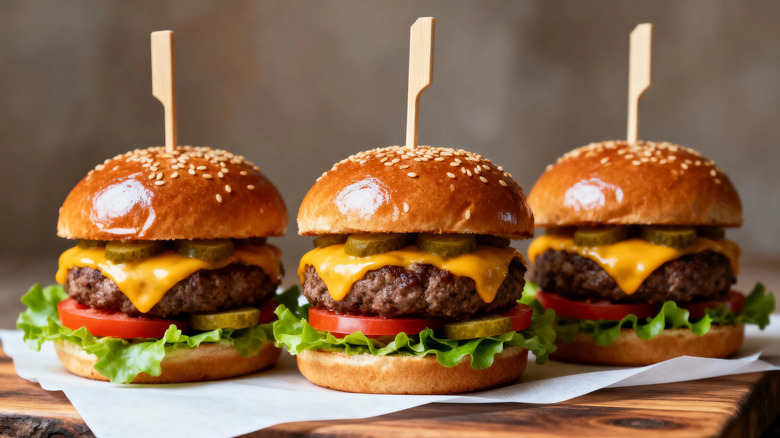
Hamburgers feel like one of the most American foods you can eat. They're a Fourth of July staple, after all, and a fast food favorite. In fact, the average person in the U.S. eats roughly three burgers a week. But actually, hamburgers aren't American at all. We know, shocking, right?
It turns out, hamburgers actually have their roots in ancient Rome. In fact, "De Re Coquinaria," one of the world's oldest cookbooks, written by Roman merchant and epicure Marcus Gavius Apicius, includes a recipe for a burger-like dish called Isicia Omentata. It involves combining chopped meat with breadcrumbs, pepper, garum, myrtle berries, and pine nuts, before wrapping in caul fat (the membrane of an animal's internal organs).
Similar recipes were cooked up in the medieval era, 18th century Britain, and finally, in the 1870s, Hamburg steak arrived in the U.S. from Germany. This patty of pounded beef became known as a hamburger, which was then, of course, shortened to burger. In the 1920s, after the crucial invention of meat grinders that give modern burgers their distinct taste and texture, White Castle served up the first ever fast food burger, and the rest is history.
Caesar salad
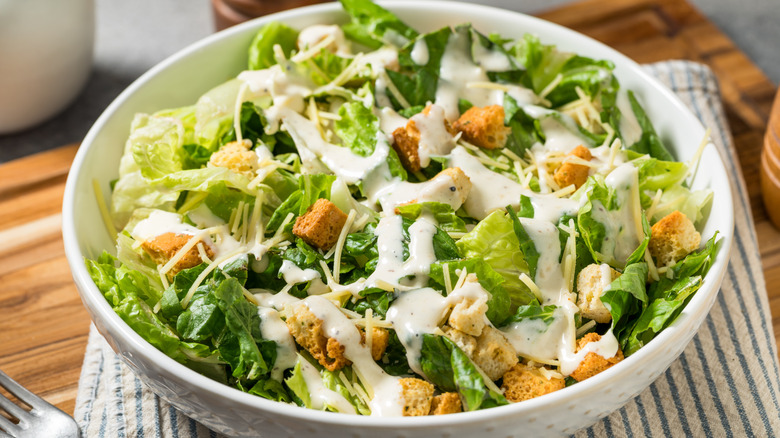
Okay, so the hamburger isn't a modern American dish at all, but Caesar salad has to be, right? The mix of crisp romaine lettuce leaves, crunchy croutons, creamy, zesty, slightly fishy dressing, and umami-packed Parmesan cheese is a beloved dish in the U.S., only disliked by 8% of the population (per YouGov). Well, actually, Caesar salad was invented in Mexico — more than 100 years ago, in 1924.
We know what you're thinking: Caesar salad doesn't feel very Mexican, with its lack of staple ingredients like beans, tortillas, and chiles. Well, that's because it was created by an Italian restaurateur called Caesar Cardini to serve tourists for the American holiday, the Fourth of July. So actually, the only Mexican thing about this dish is its birthplace of Tijuana, where Cardini had a string of restaurants.
The story goes that Cardini threw together some ingredients he needed to use up, and accidentally created one of America's most beloved dishes. Tourists loved it, took it back to the U.S., and over the decades, it became a staple on menus across the country (and indeed, all over the world). Fun fact: According to our taste-tester, the best chain restaurant Caesar salad in America can be found at Yard House (the worst is at Red Lobster, in case you were wondering).
Club sandwiches
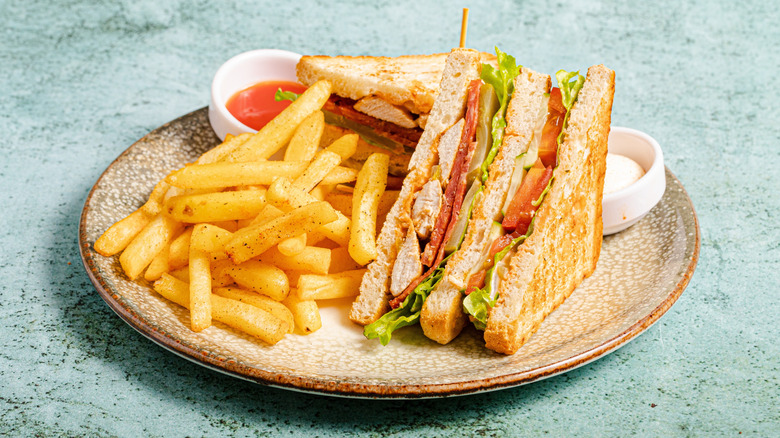
If you were hoping for an American invention, you've found it. Yep, the classic club sandwich, with its layers of deli slices, bacon, salad, mayonnaise, cheese, and crunchy toasted bread, has its roots in the U.S. It's definitely more than 100 years old; however, pinning down its exact roots is a little tricky.
There is a recipe for a club sandwich in the 1906 recipe book, "Boston Cooking-School Cookbook," written by Fannie Farmer, for example. However, it's a little more dialed down than the version you'd see on a restaurant menu today, with just bread, bacon, cold roast chicken, and mayonnaise. Farmer certainly didn't invent the sandwich, because it was also referenced in an issue of "The World" newspaper in November 1889. "Have you tried a Union club sandwich yet?" the short blurb reads. "Two toasted slices of Graham bread with a layer of turkey or chicken between them, served warm."
Could this be where the club sandwich got its name? It's hard to say. Again, it's hardly the stacked handheld we're familiar with today. In "The Encyclopedia of American Food and Drink," journalist John Mariani has a different theory, crediting its invention to the chefs at New York's Saratoga Club (which later became a casino) in the 1890s. Wherever and whenever it originated, it's safe to say this old sandwich is still beloved by American diners today.
Mac and cheese
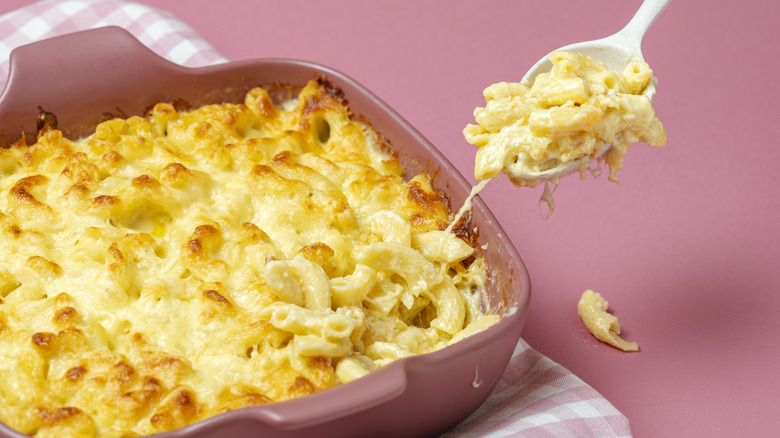
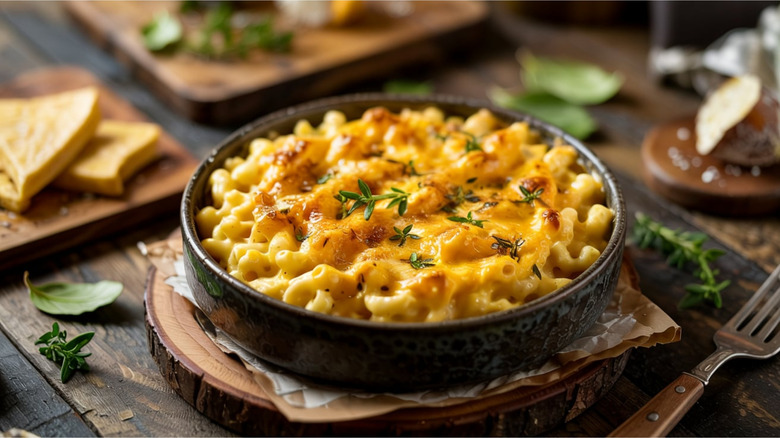
Mac and cheese is an American favorite. In fact, one 2025 survey by Main St Bistro found that more than half of Americans would rather give up coffee or social media than the cheesy pasta dish. But what might be surprising to some is that mac and cheese is actually older than the U.S. Despite the popularity of its iconic blue box creations, Kraft didn't invent this beloved comfort food.
It turns out, we have more in common with medieval Europeans than we may have realized. One of the earliest mentions of a dish that sounds much like mac and cheese appears in "The Forme of Cury," a 14th century English cookbook. Sure, it's not entirely the same (it was created more than 600 years ago, after all), but there are some serious similarities: Pasta sheets are cooked in a creamy sauce with hard cheese. Cheesy pasta was a hit; several centuries later, a recipe for Macaroni Soup, made with macaroni pasta from Naples and Parmesan cheese, appears in the 1845 cookbook "Modern Cookery for Private Families."
Macaroni made its way to America in the late 1700s, thanks to Thomas Jefferson, who fell in love with the pasta during a visit to Europe. And in the 1930s, during the Great Depression, Kraft made it available to the masses, transforming it into an American staple in the process.
Eggs Benedict
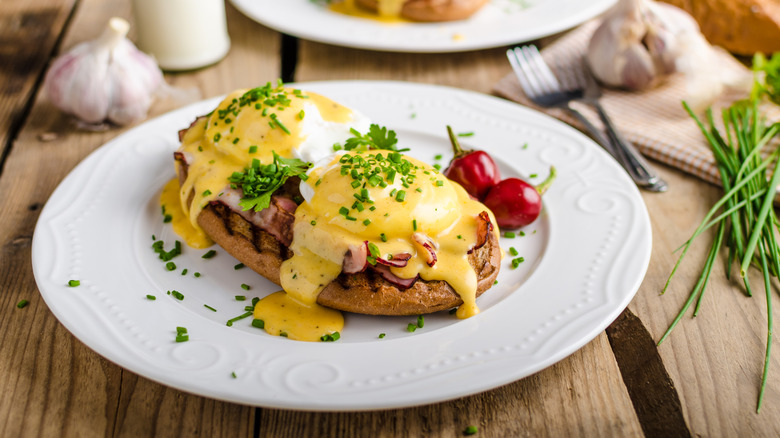
Sometimes, it's fairly easy to pin down when a dish originated, like with Cardini's Caesar salad. But often, things are a little more, well, messy. That's the case with brunch favorite, eggs Benedict. However, one thing is for certain: This dish came to be well over 100 years ago.
We know this because there is a recipe for eggs Benedict in the cookbook "Eggs, and how to use them," which was published in New York in 1898. The dish, titled Poached Eggs Benedict, instructs the reader to layer up toasted muffins with broiled ham, poached eggs, and Hollandaise sauce. That's pretty much exactly how it's served today, though the ham is replaced with bacon or even mushrooms in vegetarian versions.
But who actually was Benedict? Some believe Lemuel Benedict is the real deal; the New York socialite apparently asked the Waldorf Hotel to whip up this exact dish, with bacon, not ham, to cure his hangover in 1894. However, some attribute its creation to the iconic Delmonico's restaurant in New York, where chefs whipped it up for two regular customers, Mr. and Mrs. LeGrand Benedict, while others say it was actually made by New York yachtsman Commodore E.C. Benedict. We can't be sure of the exact story, but several things are likely true: This dish is from New York, it originated in the 19th century, and it's still widely loved today.
Banana split
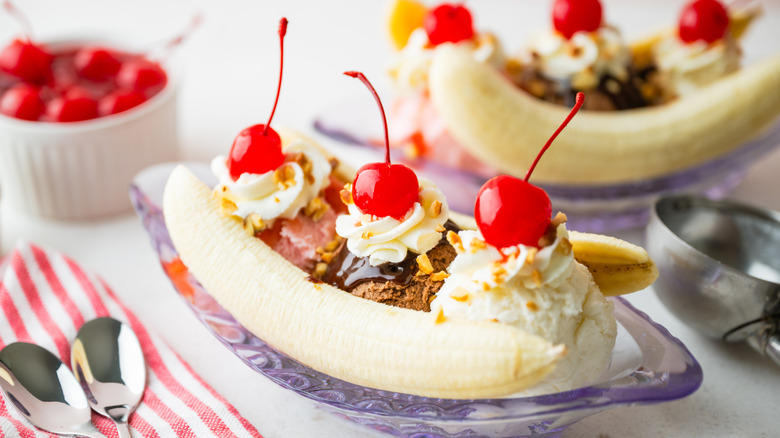
We'd love to tell you that we know the exact date and time that the banana split came to be, but unfortunately, we can't. However, what we can give you is this: A battle between two American towns that dates back more than 100 years. And doesn't that sound more exciting?
According to the Banana Split Fest in Latrobe, Pennsylvania, the dessert originated in their town more than 120 years ago in 1904. It was allegedly invented by a soda jerk named David Strickler, who started experimenting with sweet ingredients, covering a cut banana in ice cream, syrup, nuts, whipped cream, and, of course, a maraschino cherry. The banana split was born. Or was it? Wilmington, Ohio, also claims to be the birthplace of the banana split. According to the people in this town, the indulgent dessert was created by a local businessman called Ernest Hazard in 1907, who developed the dish in a bid to pull more students into his restaurant. Wilmington also regularly hosts a banana split festival to celebrate its claim to the dessert.
Who's right? Maybe Latrobe, maybe Wilmington, or maybe both. We don't have time to put this age-old battle to rest. We do have time to indulge in a banana split, though (might we suggest frying the banana for extra panache?).
Hash browns
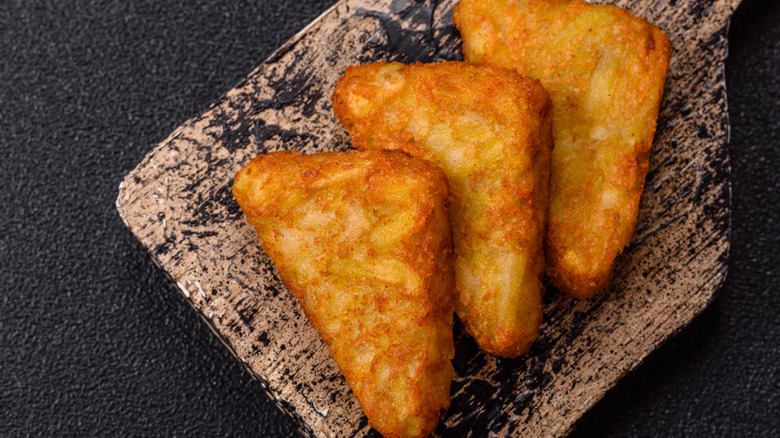
Hash browns are a breakfast classic. Whether you love to make them yourself, air fry them from frozen, or order them from McDonald's, it's hard to beat this crispy, fried potato treat. In fact, hash browns are so loved, the frozen market for them is set to reach $12.4 billion by 2034 (up from $7.8 billion in 2025, per Verified Market Reports).
Again, the history of this potato favorite is a little fuzzy. But that said, we do know they've been around for longer than 100 years. In fact, they were mentioned all the way back in 1887, in the cookbook "Miss Parloa's Kitchen Companion: A Guide for All Who Would Be Good Housekeepers," by food writer Maria Parloa. A few decades earlier, in 1835, they also appeared in the "Minnesota Farmers' Institute Annual."
It's hard to say exactly who made hash browns for the first time, and that's likely because it's one of those dishes that has simply evolved over time under the influence of various countries and cultures. Just take a look around the world: Swiss rösti, British bubble and squeak, and Jewish latkes all bear a resemblance to hash browns.
Hot dogs
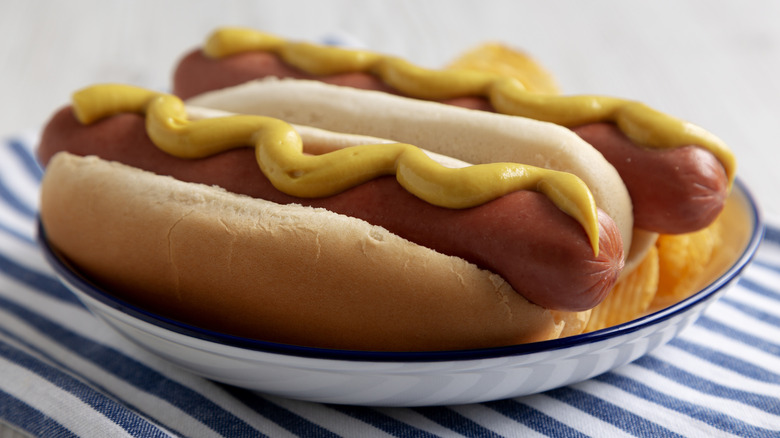
A cousin to the hamburger, hot dogs are another food that just feels distinctly American. They are, after all, a staple at cookouts, baseball matches, and beaches across the country. But again, the origins of the classic sausage and bun combination can be traced back centuries, to before the U.S. existed.
One origin story credits 17th century German butcher Johann Georghehner with the invention of the hot dog's key ingredient: The frankfurter. Georghehner lived in Coburg, but traveled to Frankfurt to sell his sausage creation. The people of Frankfurt dispute this, and maintain the sausage was created in the city in the 1400s. And in Austria, the people of Vienna say it was actually them who created wiener sausages, which would later be used in hot dogs.
One thing is for sure: No one can agree on where the sausage for the classic hot dog came from. However, we do know that hot dogs as we know them now likely originated in the U.S. in the 1860s, when vendors sold them on the streets of New York. Fun fact: They were originally called dachshund sausages because of their shape.
Fortune cookies
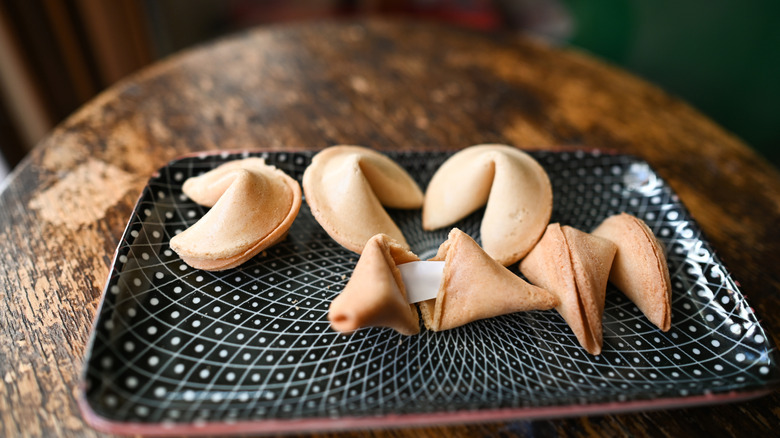
If you order Chinese food in America, fortune cookies at the end of the meal are usually a given. A small sheet of paper with some (usually hopeful) words is encased inside a vanilla-flavored, crispy, golden cookie shell. What's not to love?
You might assume that fortune cookies are, well, Chinese, but actually their (long) history is a little more complicated than that. And you guessed it, there is more than one origin story. One theory credits the San Francisco Japanese restaurant, Japanese Tea Garden, with their invention in 1909 — nearly 120 years ago. Yes, that's a Japanese restaurant, not Chinese. Others believe that it was the Los Angeles-based Hong Kong Noodle Company that created the cookies, though, in 1918. The issue is so fraught it has even been taken to a federal judge, who ruled in favor of Japanese Tea Garden in 1983.
But there is research to suggest that the history of fortune cookies goes back even further than the turn of the 20th century. One popular legend even says they were inspired by a 14th century Taoist priest, who, during the Mongol invasion, would hide messages inside Chinese moon cakes. Still, whatever the origins, they're beloved across the U.S. today. Ever wondered how they get messages inside? Us, too. It turns out the paper is slipped inside while the cookies are still soft after baking. Now you know.
Reuben sandwiches
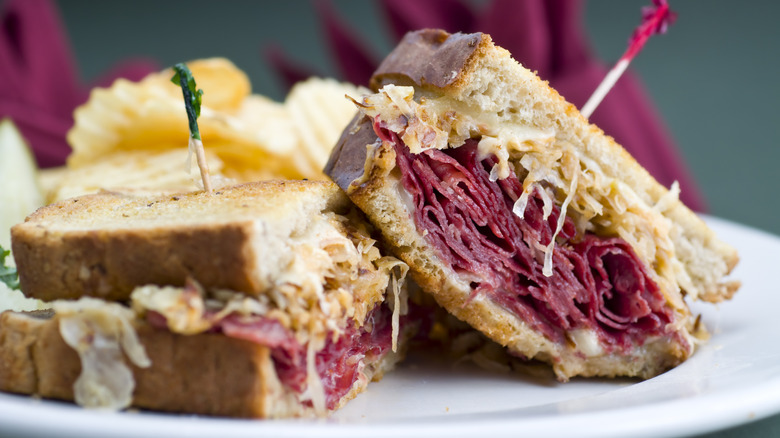
Reuben sandwiches, stuffed with corned beef, sauerkraut, melted cheese, and Russian dressing, are widely thought of as a New York invention. The story goes like this: More than 100 years ago, in 1914, actress Annette Seelos asked Arnold Reuben of Reuben's Restaurant to make her a sandwich. Specifically, she wanted rye bread, ham, turkey, Swiss cheese, and coleslaw. It's not a modern Reuben, sure, but apparently it is when the sandwich recipe, named after Arnold Reuben, of course, took root.
But not everyone agrees. We know you're surprised. Another theory puts the sandwich's invention at just under 100 years ago, and more than 1200 miles away from New York in Omaha. That story claims that the sandwich was invented by a chef called Bernard Schimmel, who made it for a poker player named Reuben Kulakofsky at the Blackstone Hotel in 1927.
Either way, the Reuben is old, and it's beloved. You'll find delicious versions all across the U.S. (many of which are in New York, sorry, Omaha).
Delmonico Steak
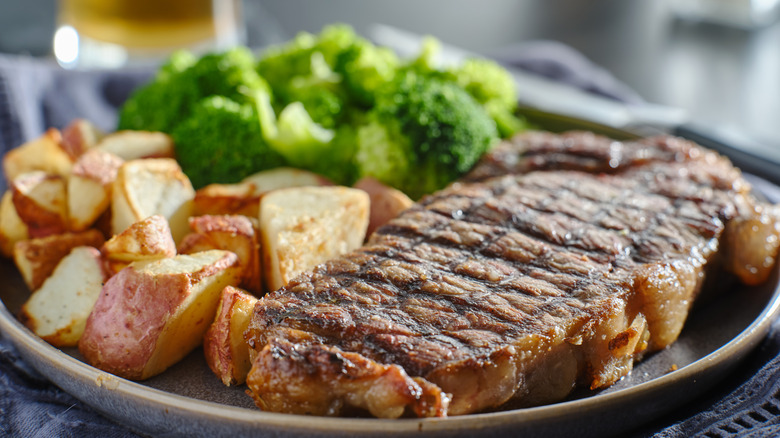
Finally, a dish with a fairly clear-cut origin story. Unlike with the hazy origins of Eggs Benedict, which might have been created at Delmonico's in New York, most agree that Delmonico Steak was definitely invented at the prestigious restaurant. The luxurious eatery, which was one of the very first fine-dining restaurants in the U.S., opened in the middle of the 1830s, and its signature steak was one of its best-sellers.
But this is where our assuredness ends, unfortunately. We don't know exactly what the original Delmonico Steak was like, but we do know it was around 2 inches thick, marbled, and tender. While some restaurants claim to serve up authentic versions of Delmonico steak today, your best chance at tasting the closest version to the nearly 200-year-old original is at Delmonico's itself. Yep, this restaurant, which is also credited with pioneering other dishes like baked Alaska and lobster Newberg, is still open today.
Cuban sandwiches
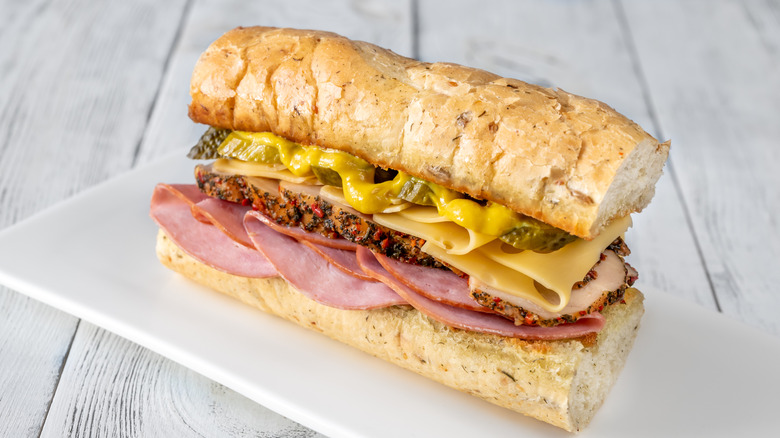
You might have heard that Cuban sandwiches were invented in Florida (either Tampa or Miami, depending on your source), but actually, that's probably not true. It turns out there is a pretty obvious clue to the sandwich's origins in the name. Yeah, it's from Cuba.
Researchers from the University of South Florida traced the sandwich's roots and found that the popular handheld, which is loaded with pork, Swiss cheese, pickles, and yellow mustard, was probably first eaten in 19th century Havana. But, of course, it wasn't actually called a Cuban sandwich back then. It was known as a mixto, and sold as a street food (in fact, it still is today).
Cuban people likely brought the sandwiches with them when they immigrated to Florida in the late 19th century and early 20th century, which explains why the dish is such a big deal in the state, especially in Tampa's Ybor City neighborhood and across Miami. Of course, Florida is one of the best places to grab a Cuban sandwich today, but when one of our writers pulled together a guide to the best spots for a Cuban sandwich across the U.S., they also found standout spots in New Orleans, New York City, and beyond.
Frozen custard
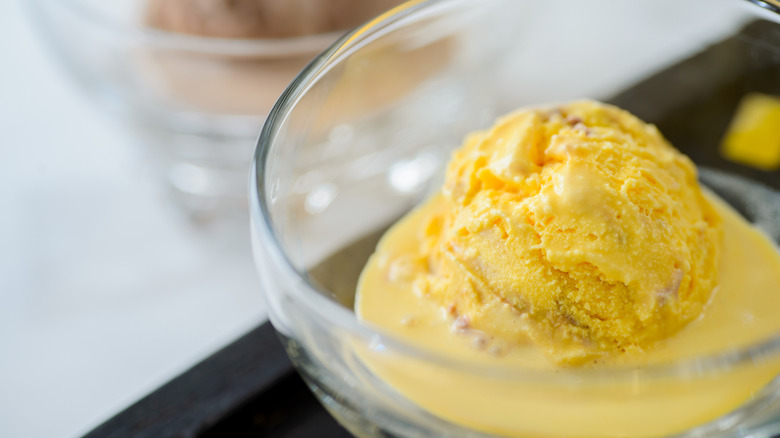
Wisconsin may be known for its frozen custard, but the sweet treat wasn't actually invented in the Midwestern state. Actually, its origins can be traced back to Coney Island, New York, more than 100 years ago.
We have Archie and Elton Kohr to thank for inventing frozen custard. In 1919, they combined eggs with soft-serve ice cream, and it was a hit. The creamy, silky dessert was sold at the 1933 World's Fair in Chicago, and from there, it spread to the Midwest, landing in Milwaukee. Today, you can buy frozen custard from many different brands and restaurants, but our taste-tester's favorite is the Wisconsin fast food giant, Culver's.