

You No Longer Need These 12 Kitchen Appliances In 2026
We may receive a commission on purchases made from links.
Unless you're among the lucky few with a showcase kitchen (and perhaps even then!) you probably don't have enough space in your kitchen, especially on your counter, for everything you want or need. Adding space is the difficult fix to this problem. Working on your Pokémon attitude toward kitchen gadgets ("gotta catch 'em all!"), is more practical.
Honestly, I'm a kitchen-stuff hoarder myself. It's an occupational hazard I share with many other current and former chefs. During my time as an avid home cook and a working chef, I've seen a lot of appliances come and go. With time, I've begun to think a lot harder about which things I really need, and which I might not.
With that in mind, here are some kitchen appliances that I think you don't really need in 2026. It may include a couple of your favorites (heck, it includes a couple of my favorites!), but the important part is the reasoning behind it. Most of us own multiple appliances with overlapping features, and if you think about it, you can probably eliminate a few without changing the way you cook.
Slow cooker
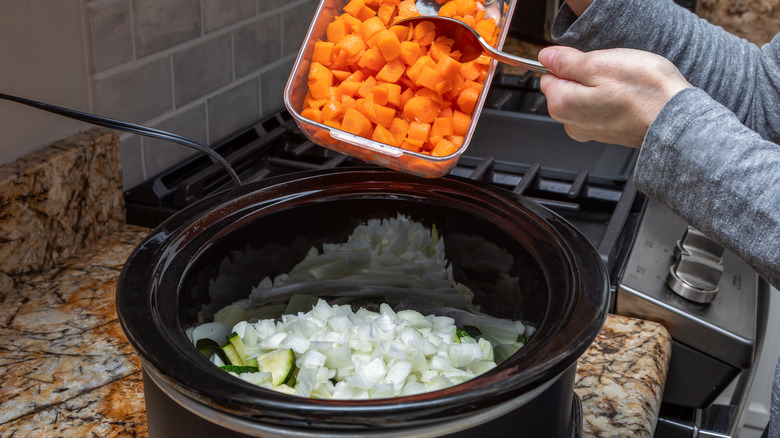
I'm old enough to remember when slow cookers were the hot new trend in kitchen appliances, and I've owned one for most of my adult life. Despite this, I think it's time to say goodbye to slow cookers in general.
The big virtue of a slow cooker is that it requires relatively little hands-on time: You load it, you go about your day, and dinner's ready by the time you come home. It sounds great in theory, but in practice, there are issues. First, it means you need to plan your meal a day ahead, and then get the cooker loaded with its ingredients before you leave in the morning. That may not fit well with your morning routine. Also, most recipes only need three to four hours of cooking time, which may not match your schedule for the day. Some models allow for delayed start or have timer settings, but many don't.
Another issue with slow cookers is that unless you're really creative (or work from an unusually good cookbook), a lot of meals come out with a very similar slow-cooker flavor and texture. If you already own a modern multi-cooker, like the Instant Pot, you can use that instead for your slow cooking, or — better yet — get similar results in a fraction of the time via pressure cooking.
Toaster
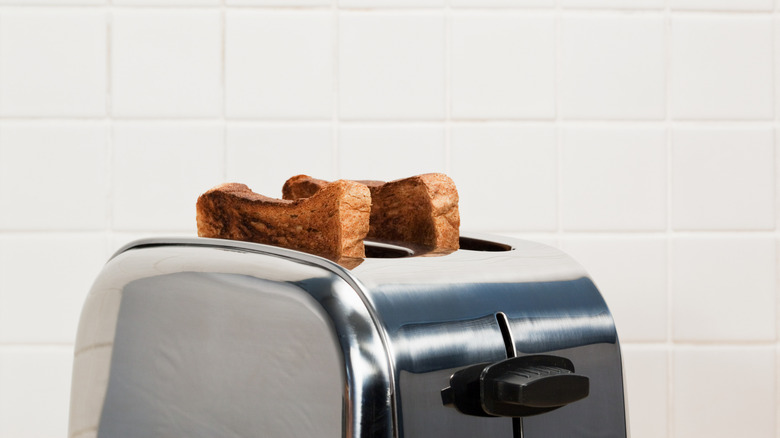
I'm apparently bucking a trend with this one, because I frequently see people arguing for the toaster over the toaster oven. Personally, I'm firmly on team toaster oven. I have a pretty good four-slice toaster (and finding a good one was way harder than I thought it should be), but currently it's collecting dust in my barn. Instead, I have two toaster ovens: One in the main kitchen, and the other on a breakfast bar in my office.
Here's the thing: A toaster is a uni-tasker, and toaster pastries — or those parchment bags that let you make a grilled cheese in them — are about their limit. Toaster ovens, on the other hand, are much more versatile. Aside from toast (and a toaster oven accommodates home-baked or artisanal bread much better than a toaster), we use ours frequently to heat and crisp frozen foods, cook frozen pizzas or reheat leftover pizza, broil chicken wings, and lots more.
I've also used it to do small sheet pan meals of salmon or chicken breast when I'm feeding one or two, not the whole household, and (very important) I also freeze cookie dough in logs and muffin batter in cups so I can bake one or two at a time when the craving hits. So unless you literally can't squeeze a toaster oven into your space, nobody needs a traditional toaster anymore.
Bread machine
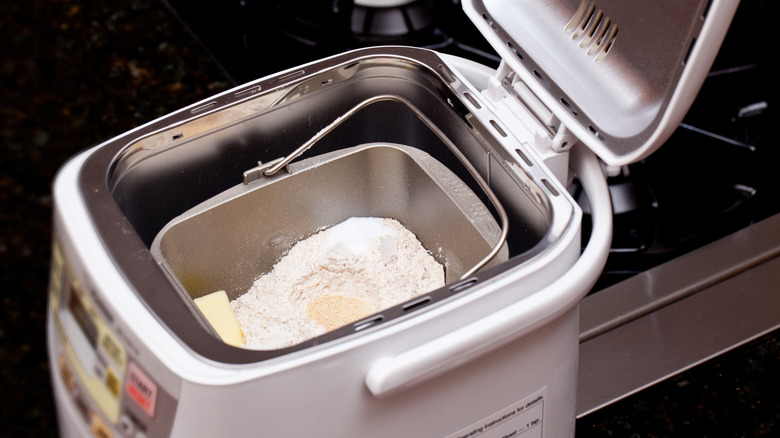
A lot of people took up bread-baking during the COVID-19 pandemic, most memorably sourdough, and discovered that it's actually a pleasant and comforting pastime. It also takes less hands-on time than many people realized, especially if you stick with yeast and leave sourdough starters to people with the time to fuss over them.
So bread machines take up an odd niche, where they really only make sense if a) your stand mixer isn't powerful enough to mix up a yeast dough; b) you've never attempted baking a scratch loaf by hand; or c) you just don't want to put your hands into dough at all. I've been baking bread since I left home as a teen, since I didn't have access to my mom's bread anymore, and over the years I've done it — and still do it — all three ways.
Like the expert baker we interviewed about bread machines, I see them as a pure-play convenience product. Their bread is only okay, but it's convenient to make. If you find that you buy bread more often than bake it, or if your bread machine is gathering dust in the "I really gotta pull that out someday" cupboard, then maybe it's time to donate it to your local thrift store.
Popcorn popper

Here's a legitimate question for you: How often do you eat popcorn, really? Unless it's your go-to snack and you use your popper almost every day, you probably don't need a separate appliance for this one job.
Hot air popcorn poppers were huge during my 1970s childhood (my parents had the other kind, with a heating plate), but home poppers mostly fell out of fashion once microwave popcorn came along. The microwave kind hands-down beats a dedicated popper on convenience, which is why most supermarkets have a huge selection of microwave popcorn but only a few choices for plain ol' kernels. And even if you do love to make your own popcorn, rather than eat the heavily salted, microwaved kind, it's fast and easy to do in a pot on the stovetop. You know — the same kind you use all the time for everything else.
Technically, I suppose, even a hot-air popper is not quite a single-purpose appliance. I've used one to roast green coffee beans, for example (it took forever). But in practical terms, it's hard to make a case for keeping one unless it's a cherished family tradition. Then you can use the "Marie Kondo rule" (if it sparks joy) to justify keeping it. Otherwise, it's just taking up space.
Countertop ice maker
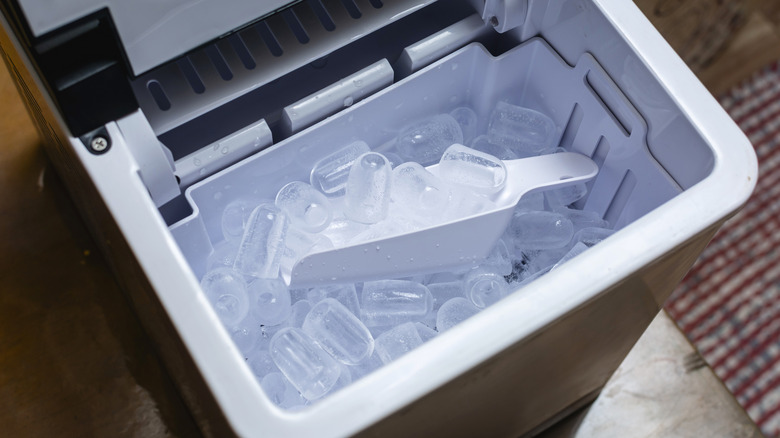
Modern refrigeration is one of the greatest game-changers to ever hit the kitchen. If you've ever lived through an extended blackout and had to manage without a fridge, you'll have great respect for our ancestors who did that all the time.
One of the perks of inexpensive refrigeration is that we can also have ice any time we want it to cool our drinks or keep our picnic lunches food safe while we're out in the hot sun. Those of us who really love ice, and use it constantly, want (reasonably enough) to have plenty on hand at all times. Modern fridges often come with built-in ice makers, but there's also a market for countertop models (because fridge ice makers are failure-prone and are hard to clean).
The thing with countertop models is that buyers usually expect them to deliver the same quality of ice you'd get from a commercial ice maker, and that's just not the case. Often brand-new countertop units fail prematurely, make poor-quality, wet ice, leak, or their coils just fail. Mold in their lines is also a problem, and — while they're relatively easy to clean — that takes time, and there's a safety step after the cleaning that a lot of people forget. So really, unless you go through massive quantities of ice, you may be better off buying some extra ice cube trays for your freezer, and pocket the difference.
Deep fryer
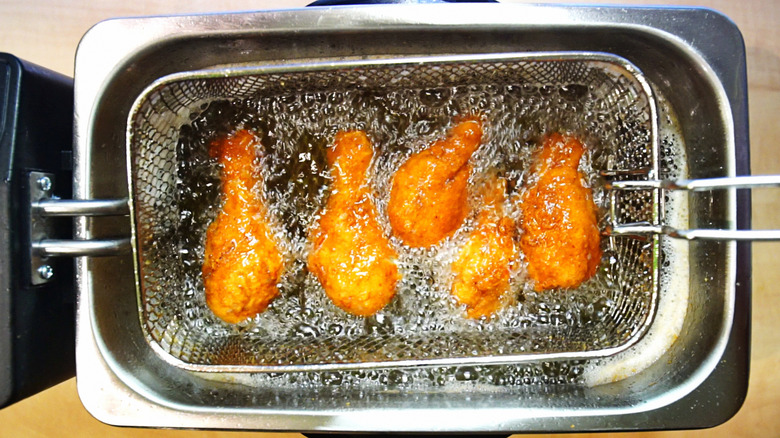
One of the reasons people go out for deep-fried food is that, frankly, restaurants do it better. Another reason is that countertop deep fryers aimed at the home consumer kinda suck.
I'm not saying they're uniformly bad, but overall, they face some real challenges. One is that they're limited by 120-volt home electricity, which means they can't heat oil as quickly as commercial units. That in turn means they can't hold very much oil, so when you drop your cold food into the fryer it takes forever to come back up to temperature. A quick "recovery time" (the climb back up to your preset temperature) is the key to light, crisp fried foods that don't absorb oil. When your food spends most of its time at lower temperatures, while the fryer struggles back to the correct heat, it comes out soggy and poorly browned.
So unless you're willing to work in very small batches, countertop deep fryers just don't do the job well. I do my deep frying on the stovetop or a little induction hot plate, using a Dutch oven for larger batches or a narrow, steep-sided pot for small batches. It's not as difficult or risky as you may think (mastering some basic deep-frying tips certainly helps). Still, if you're still intimidated about frying, you can either air-fry instead or support a local restaurant. Either way, you'll free up counter space and be rid of a redundant and little-loved appliance.
Air fryer
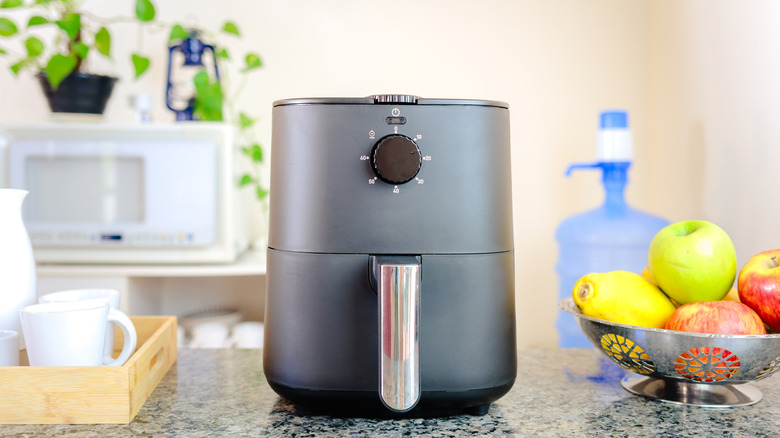
Speaking of air frying, I also think you could consider ditching your air fryer itself. I realize I'm going to lose some of you on this one, especially if it's your most-loved and most-used countertop appliance. That's fine, and I get it. But hear me out.
An air fryer is just a small-format convection oven. Hot air cooks things faster when the air is moving (that's how convection works), and the air flowing through an air fryer's basket is how it creates a crisp, golden finish. But the baskets on most air fryers are small enough to make cooking more than a portion or two problematic. For many households that means upgrading to a larger model (extra counter space), or frequently making multiple batches, which costs you the air frying speed advantage.
Finally, you may already have something in your home that does convection cooking or air frying. I have both a countertop convection/toaster oven and a convection oven in my range, for example. They both cook the same foods air fryers do, just slightly slower, and they'll do it in larger batches so you don't need to cook multiple. Also, a lot of the new multi-cookers from well-loved brands like Ninja and Instant Pot provide air-fryer capability along with pressure cooking and everything else. You can even add an air-fryer lid to an existing cooker.
Powered knife sharpener
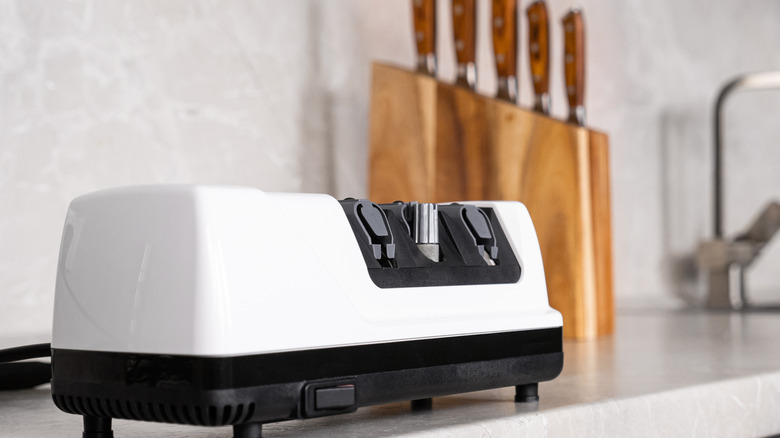
One thing I've noticed when leading cooking classes is that my students frequently apologize for their knife skills. I can tell you from observation that your knife skills may be better than you think; it's your knife sharpening skills that need work. A sharp knife is easier and more pleasant to work with, takes less physical strength, and speeds your prep work noticeably.
To fix that, you can buy manual or motorized sharpeners. The simple kind of pull-through sharpeners you'll find at any department store aren't great, but they kinda work. Electric sharpeners cost more (and we've reviewed some of the best-in-class sharpener models), but even the good ones remove a lot of metal from your blade. That means they'll quickly start to degrade your blade, changing its shape enough to interfere with how well the knife works. High-volume commercial kitchens are okay with grinding their knives and just replacing them every few years. If you'd rather not do that yourself, lose the powered grinder.
Even chefs who use a sharpening service at work tend to baby their personal knives by sharpening them by hand, usually with a simple whetstone. It only takes a few minutes to learn what you need to know about knife sharpening, and everything after that is just a matter of practice. It's a useful skill to learn, your knives and cooking will benefit from it, and that motorized sharpener is one less thing you have to find room for in your cabinets.
Waffle maker
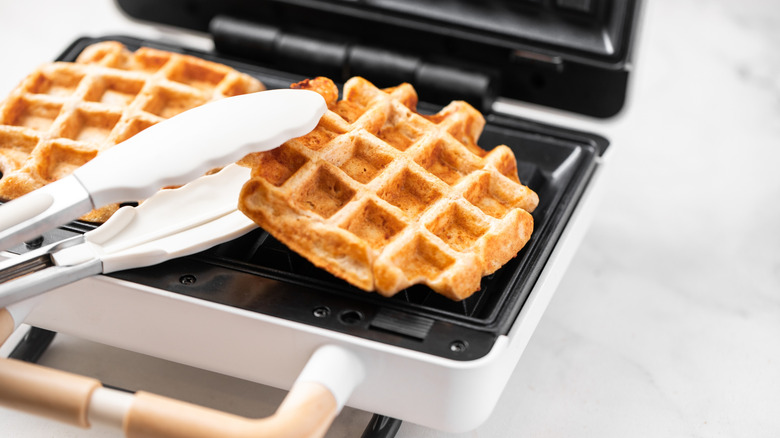
I said earlier that some of my own favorite appliances would make the list, and this is one of them. I have two waffle makers: a vintage Sears model that makes thin, rectangular "classic" waffles and a more modern Cuisinart to make round Belgian waffles. Go ahead; call me a hypocrite.
But if you already own a decent contact grill — the kind with grilling plates on the top and bottom, like a George Foreman Grill — you probably don't need to have a separate waffle maker. Many of those models offer optional waffle-cooking plates that can be swapped for the normal grilling plates so you can turn your existing grill into a waffle iron. Not only do these grills sometimes offer better heat control than a waffle iron (important if you like to experiment with recipes), you can also use that same appliance to grill steaks and burgers, toast your panini, or perhaps (if the plates are reversible and have a flat side) use it to cook pancakes, eggs, and bacon.
That's a lot more versatility than you get with a waffle iron, and contact grills are still reasonably space-efficient when it comes to storage (my Belgian waffle-maker is decidedly not). And even if your grill isn't high-end enough to have interchangeable plates, you can just ladle batter into the contact grill and close it. Basic grill-pan waffles won't have the traditional cross-hatch waffle pattern (they'll look more like "French toast fingers" from a burger joint's breakfast menu), but they'll still taste great.
Juicer
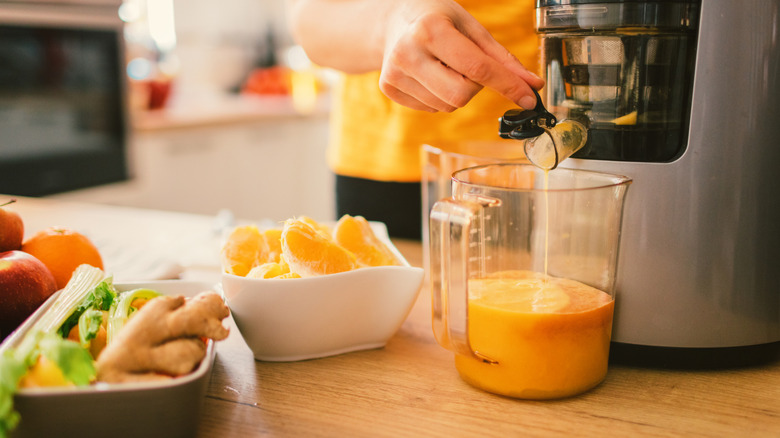
Disclosure: I'm not a juice guy, by and large. I enjoy a glass occasionally, but juicing isn't central to my lifestyle; I'd rather eat my fruit and vegetables than drink them. Also, most of us don't get enough fiber in our diets, and using an electric juicer appliance strips out most of the healthy fiber from the juices.
But even if juicing is very much your thing, a big standalone juicer may not be your best "lifestyle appliance." They take up a lot of space, they're often heavy, many are hard to clean effectively, and (again) they don't really have a lot of other uses. There's only so much cabinet space in any one kitchen, so inconvenient single-taskers are always an easy target when you're looking to downsize.
And the thing is, you probably have alternatives already in your home. For citrus fruit, for example, a manual juicer can be faster and easier to clean than an electric juicer. With other fruits, melons, berries, and even tough vegetables, your blender will usually do the job just fine (with maybe an assist from a box grater). You can either leave the pulp in or strain it out, if you prefer, but it'll work fine, and a blender is a lot easier to clean.
A full-sized food processor
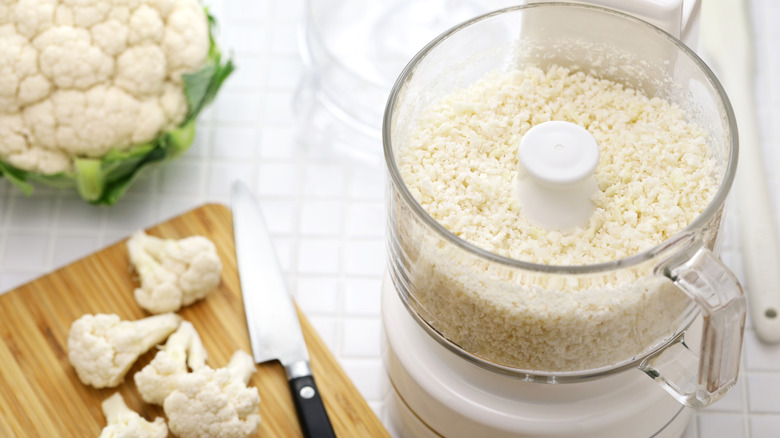
This is another case where I'll point a finger at a personal favorite because it may not be the best option for everyone. I own a vintage Cuisinart — dating to the '80s when they were made in Japan – along with a full set of slicing and shredding discs. I love it and use it frequently. For example, my freezer holds bags of shredded zucchini from our garden, ready to bake with, and I use it every couple of weeks to make food for our dogs. Many of my friends use theirs to make pie crust, or even to knead bread dough with the plastic blade.
But (you knew there was a but, right?) I have to confess that most of the discs have never been used, and everyone else in the household gravitates to our mini-sized Cuisinart instead. Its bowl only holds 3 cups, but that's all we need for most of the things we do in our kitchen. When I'm away from home, even the dog food gets made in the little one.
Honestly, while I love my full-sized processor, most non-chefs are probably better off with something like our mini food processor (like this Cuisinart model), and an inexpensive mandoline or other manual slicer or chopper. They're much less costly, quick to clean, and easy to store.
Your actual stove
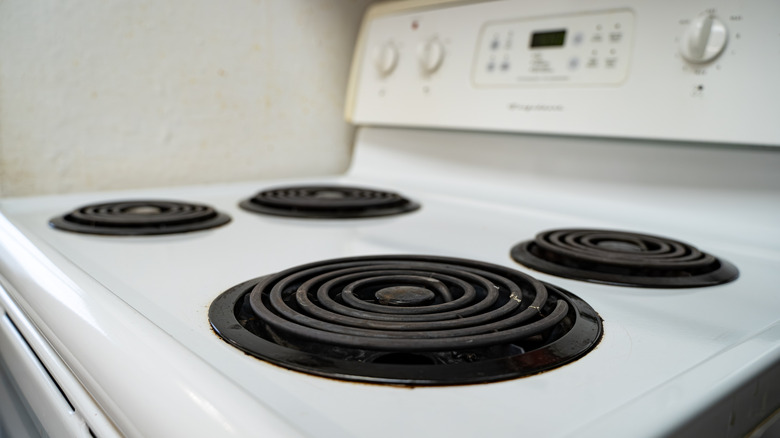
This is a left-field suggestion, but hear me out. My online social circle includes a lot of dedicated foodies, and a surprising number of them are thinking hard about how much they really need full-sized stoves (in fairness, several have gone the opposite direction with big, showpiece ranges).
But if you're downsizing or planning a kitchen renovation, eliminating that full-sized range is an intriguing way to make the most of a small space. Countertop ovens and higher-end toaster ovens have gotten pretty good over the past few years, often offering convection, rotisserie cooking, and even professional-style steam injection (chefs love this), all features you won't find in many full-sized home ovens. Some are large enough to handle normal-sized loaves of bread, or even a small turkey.
As far as cooking goes, a couple of inexpensive induction hot plates can easily replace your cooktop. I have two, and they're small enough to easily store (even in a drawer) when they're not in use. Ikea even makes induction units designed to hang on the wall when they're not in use! Induction isn't for everyone, but it's fast, efficient, and doesn't heat up your kitchen like a regular cooktop. Going this route can save money and energy, and it's a lot cheaper and easier to upgrade if something fails.