

It's Time To Say Goodbye To Your Slow Cooker — Here's Why You Don't Need It Anymore
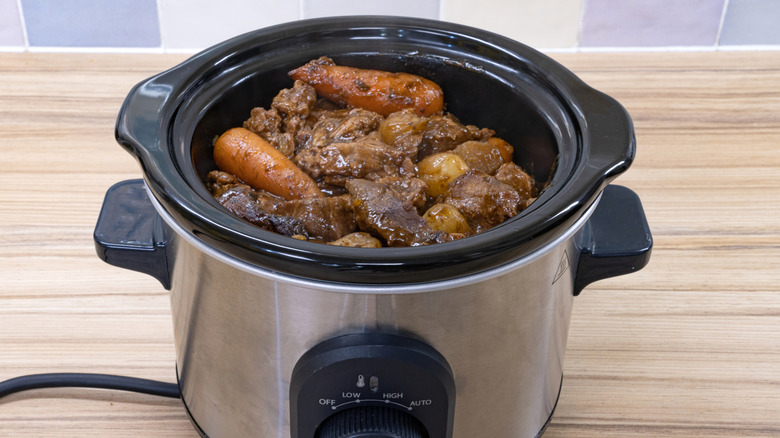
Slow cookers can help foodies get the most out of tough, budget-friendly cuts of meat, or bring out deeper flavors in a batch of chili. But, that's about all this appliance can do. Slow cookers work by applying low-temperature heat for prolonged periods inside of an enclosed space, trapping the moisture from the steam. Foodies can toss all of the ingredients into a single pot, slam the lid on, and wait for the meal to cook itself — at least, in theory. Slow cookers boast the benefits of hands-off cooking for dishes where longer simmering develops deeper flavors. But, this isn't a universal benefit to every dish. Counterintuitively, the excess condensation from that steam heat can dull spices and dilute certain flavors, especially in fresh produce. Beyond this culinary disadvantage, there are a myriad of other reasons why slow cookers may not be the best convenience-centric option in the kitchen anymore.
Although slow cookers spare foodies when it comes to hands-on prep time, they also require proactive foresight — which is easier said than done. Before any meal prepared in a slow cooker can be eaten, it must be planned out well in advance. That means at least four hours of cooking time (or as much as eight). This may not be feasible for busy modern foodies who can't rush home to prep ingredients before dinnertime.
Another chief drawback of slow cookers is the quantity size of meal prep. Unless you're okay with eating the same thing every day for a week straight, slow cookers aren't the best choice for smaller households of one or two. These appliances typically prepare large batches of food, and while leftovers may be welcome, ending up with a surplus of the same stew night after night may lead to burnout or food waste.
These outdated, bulky appliances only offer one function
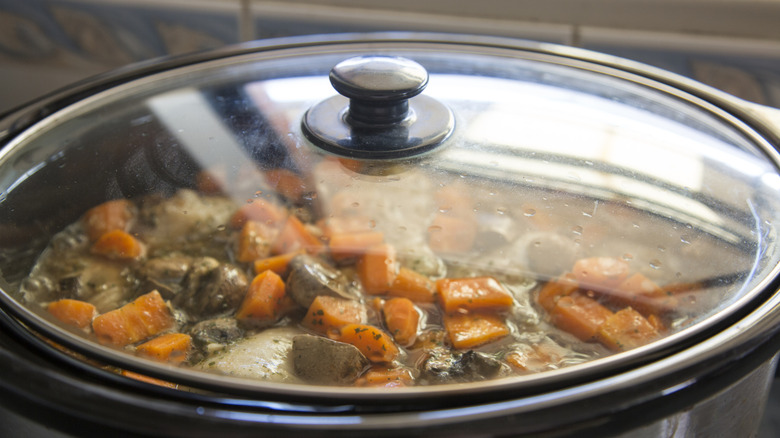
Despite the hype, slow cookers do not have a one-size-fits-all approach. They also pose the risk of overcooking some ingredients and undercooking others. Overcooked meat can be dry and overcooked veggies can be mushy, yielding a dish with unpleasant textures. For the best results, meat should generally be seared before it is placed into a slow cooker, which creates another prep step and more dishes to wash. Some ingredients famously do not bode well in a slow cooker, either. Dairy products are susceptible to curdling, high-moisture veggies like tomatoes and zucchini can become soggy, and pasta turns to mush.
The fact that slow cookers should almost never be set on "high" renders one of the appliance's few settings near-useless. Comparatively, modern multicookers (the next evolution of the slow cooker) offer much more versatility since they are able to slow cook, pressure cook, make rice, sear, sauté, and even bake. There's no need to turn on the stovetop or oven — and certainly no need to opt for a single-use slow cooker appliance, which can vary in terms of reliability.
This isn't to say that, if you already own a traditional slow cooker, it shouldn't be used. Rather, when the time comes to replace that appliance, it's a better choice to upgrade to a multicooker like an Instant Pot instead. Especially in smaller kitchens with limited storage space, bulkier appliances can (and should) perform more than one function.