

Easy Cacio E Pepe Focaccia Recipe
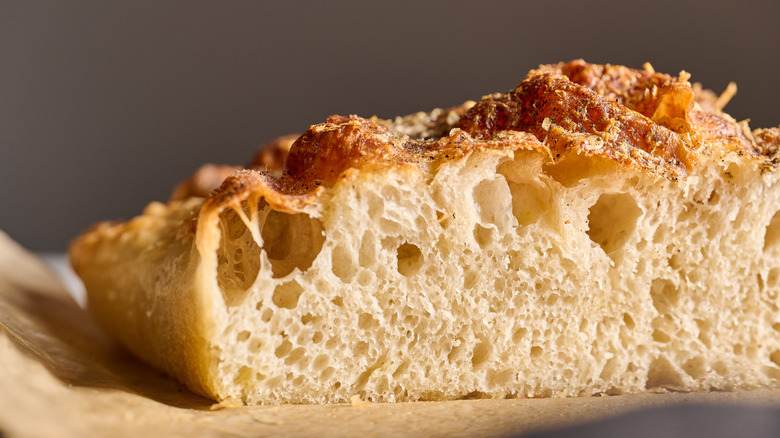
Even after years of working at a bakery learning how to make (and fix) the best lemon bars, pastry creams, and cookies, I still shy away from making bread. Even for the best bakers, bread is understandably intimidating; unlike cookies, brownies, and cupcakes, which can come in many different shapes, flavors, and sizes, bread relies on fairly specific kneading, proofing, and baking instructions in order to rise to a perfect inner crumb. There are seemingly endless mistakes you can make with bread making, which is why so many bakers avoid it entirely. It's an exercise in patience that sometimes — or often — doesn't turn out how you expect it will.
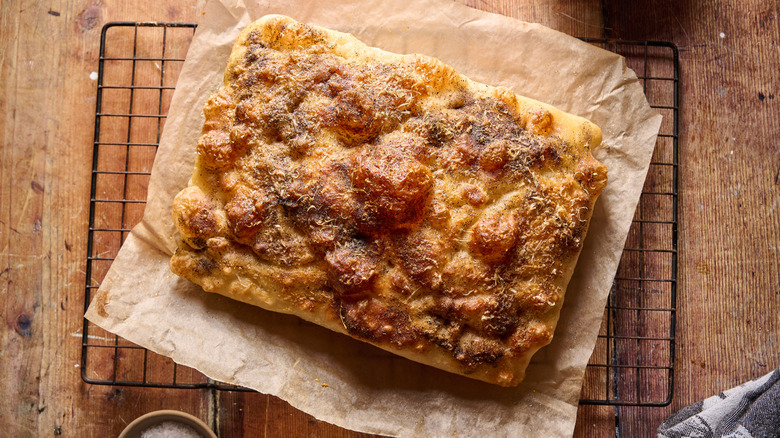
If you're just beginning your bread-making journey, the best place to start is with a no-knead bread that's as forgiving as it is delicious: Focaccia. There are still many mistakes you can make with focaccia, and trust me, I've made them all — from using the wrong kind of yeast to hurrying the proofing time, I have found every way to make focaccia way harder than it needs to be. The truth is, focaccia only needs some patience and a good amount of olive oil to become a perfectly crunchy, fluffy, delicious bread. In this recipe, inspired by the enduringly-popular pasta dish cacio e pepe, I'll walk you through making the best, most foolproof focaccia, with hints of cheese and plenty of black pepper folded into the fluffy risen dough. My go-to recipe for perfect focaccia, this might just change your mind about breadmaking — or at least give you a good place to start.
The ingredients you'll need for easy cacio e pepe focaccia
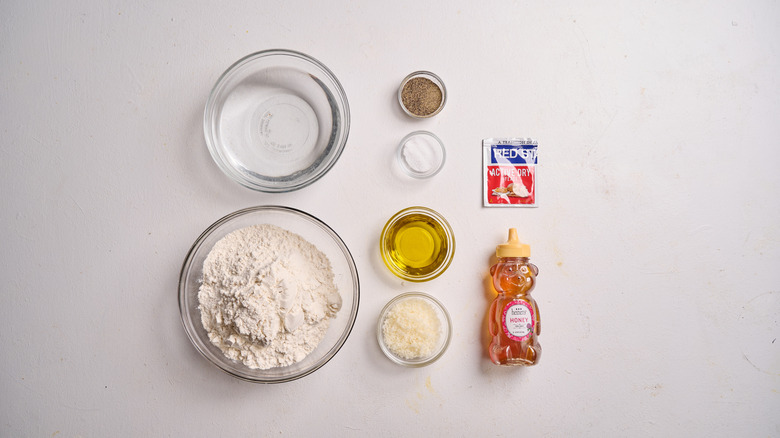
Making focaccia requires only a few ingredients. First, you'll need active dry yeast, which needs to be bloomed in warm water. The water can be poured from your tap, but will likely need to be taken from your tap's hottest setting (and if that's too hot, simply let it cool for a minute before adding it to the yeast). You'll also need honey to activate the yeast, which feeds on sugar. From there, you'll just need all-purpose flour, olive oil, salt, and the ingredients that make it cacio e pepe — Parmesan and cracked black pepper.
Step 1: Bloom the yeast
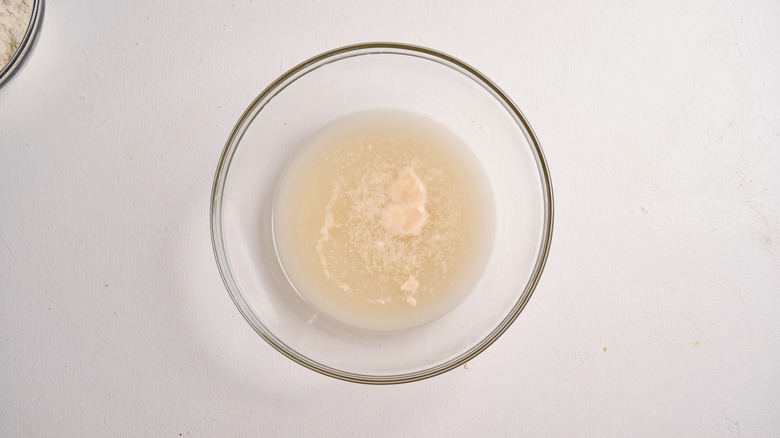
In a large bowl, gently whisk together the yeast, honey, and warm water. Cover and let rest for 10 minutes until lightly foamy with a strong yeast aroma.
Step 2: Combine the yeast with the flour
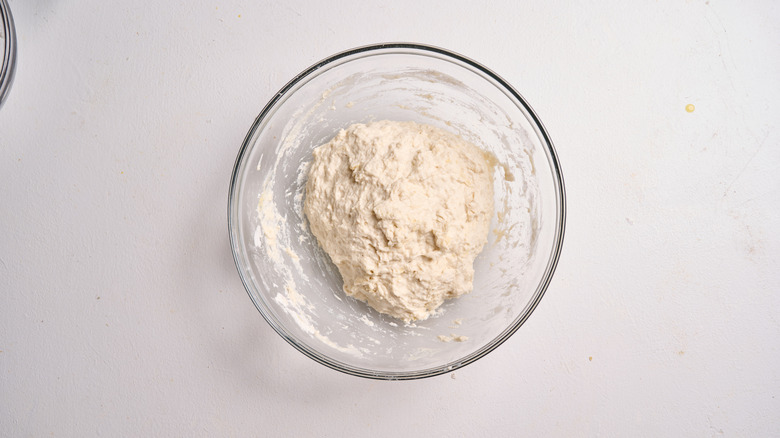
Add the bread flour, 1 tablespoon olive oil, and salt, and stir together first with a spatula, then with your hands, until all the flour is absorbed. Cover and let rest for 10 minutes.
Step 3: Fold the dough
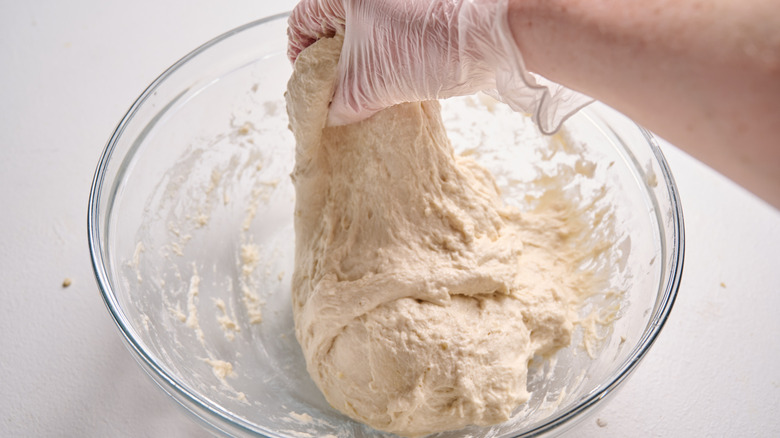
Begin to fold the dough: Scoop the top of the dough and pull it up and over to the bottom. Rotate the bowl and repeat the fold, top to bottom, folding the dough over itself to form a ball. Once the dough no longer pulls easily, cover and let rest for 10 minutes.
Step 4: Fold again
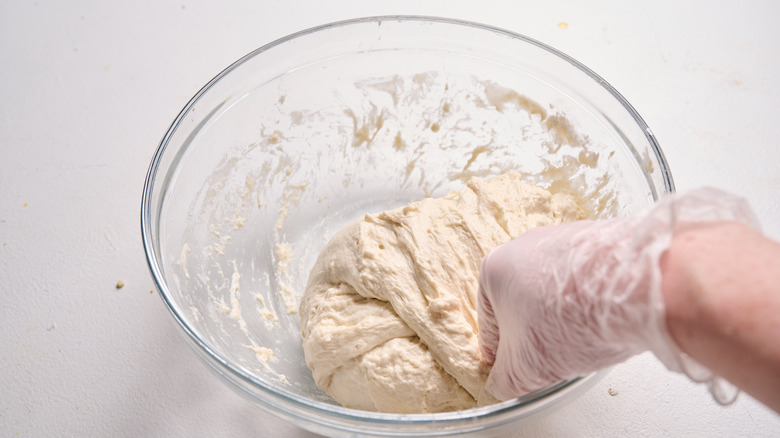
Repeat the pulling for a second round, pulling the dough up and over itself to form a ball.
Step 5: Form into a ball
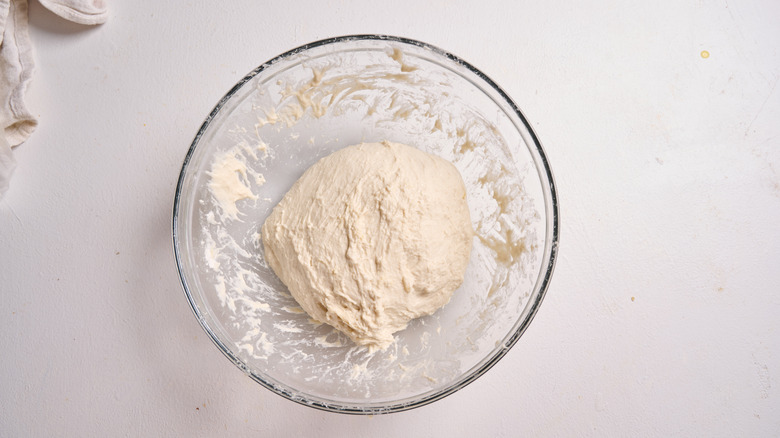
Once the dough loses elasticity, turn it seam-side down and drizzle it with 1 tablespoon olive oil.
Step 6: Cover the bowl and proof
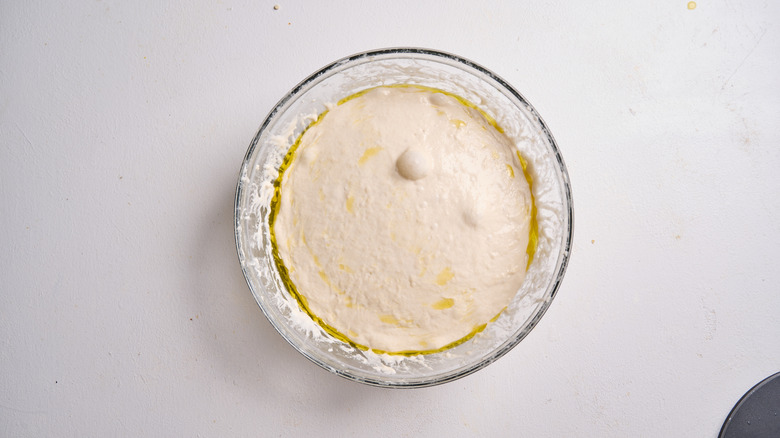
Cover tightly with plastic wrap and store in the fridge for 8-12 hours. The dough will double in size.
Step 7: Prepare a baking dish
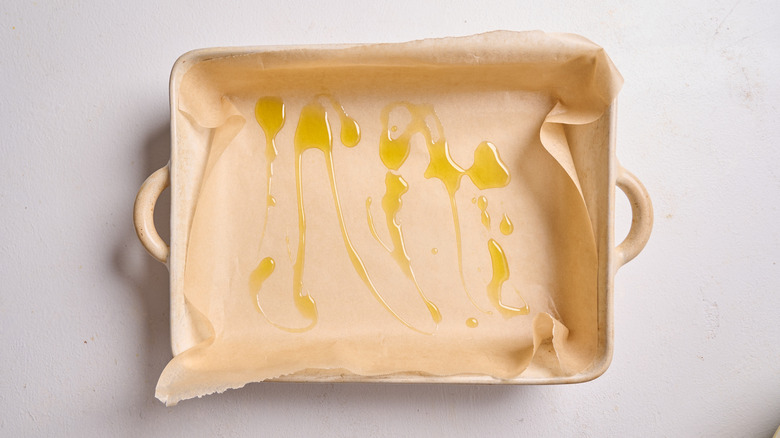
Place parchment paper into a 9x13-inch baking dish. Drizzle it with 1 tablespoon olive oil.
Step 8: Fold in the cheese
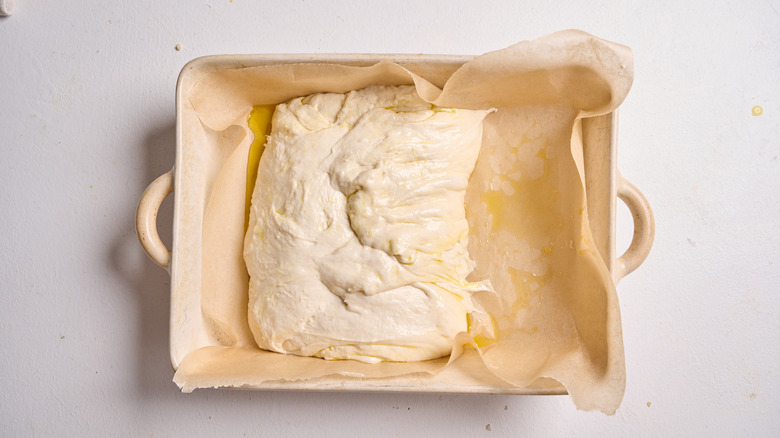
Turn the dough into the baking dish. Sprinkle with ½ cup of cheese, then fold the sides in towards each other to meet as a seam in the middle.
Step 9: Place smooth side up
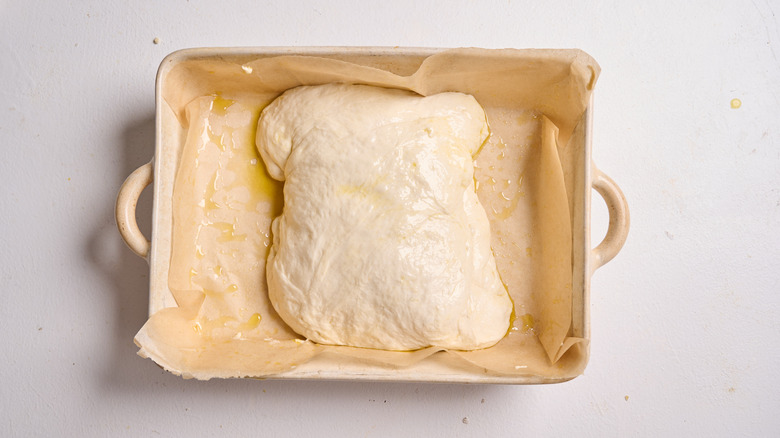
Flip so that the seam is on the bottom and the top is smooth.
Step 10: Let rise
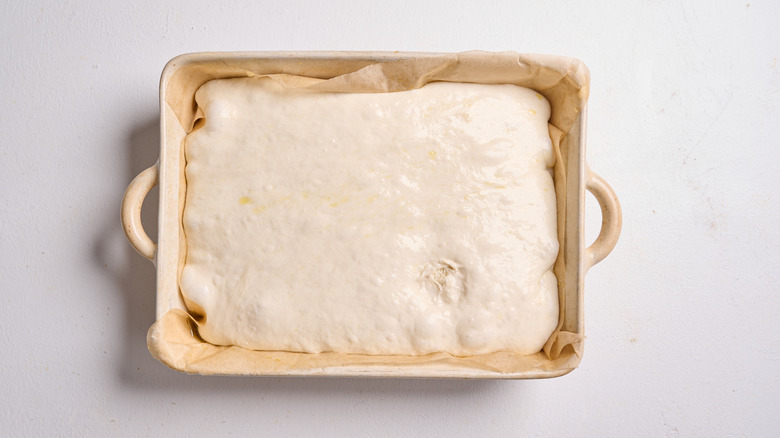
Cover the dish with a sheet tray and let rise for 2-3 hours. If needed, stretch the dough to cover the entire bottom of the dish.
Step 11: Heat up the oven
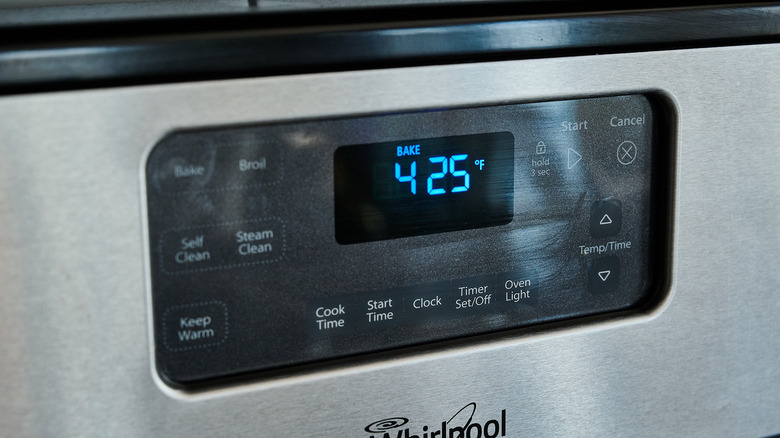
Preheat the oven to 425 F.
Step 12: Dimple the dough
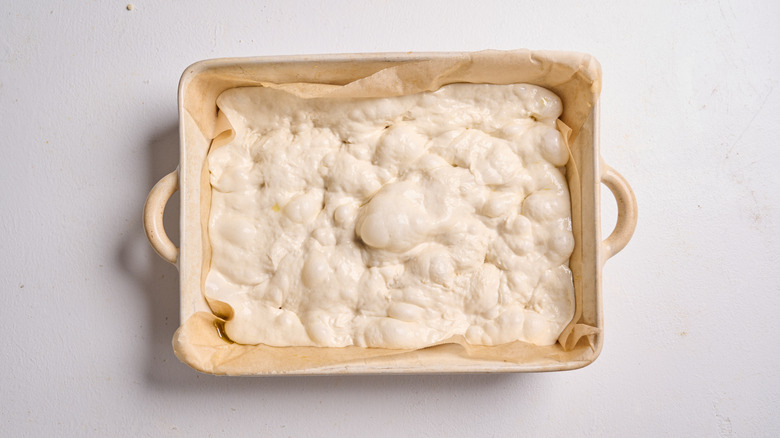
Gently dimple the dough with your fingers, pressing into the dough to create bubbles.
Step 13: Add toppings
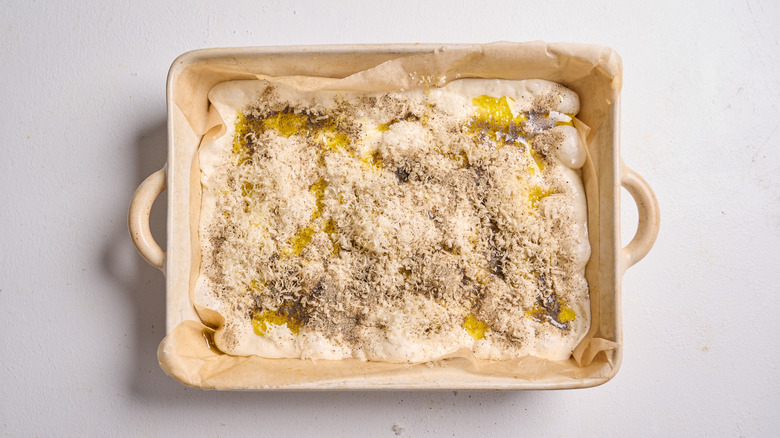
Drizzle the dough with the remaining 1 tablespoon oil, then sprinkle the top with ½ cup Parmesan and black pepper.
Step 14: Bake and serve
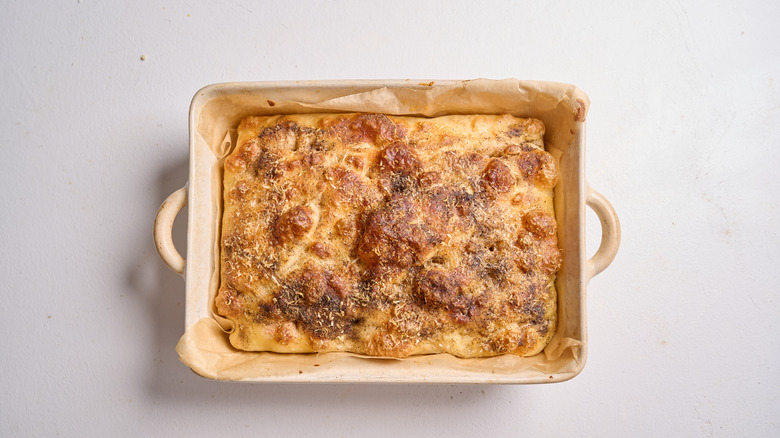
Bake for 20 minutes, or until risen and golden brown, and serve.
What pairs well with focaccia?
Easy Cacio e Pepe Focaccia Recipe
This recipe, inspired by the pasta dish cacio e pepe, produces the most foolproof focaccia, with Parmesan and black pepper folded into the fluffy risen dough.
Ingredients
- 1 ¼ teaspoon active dry yeast
- 1 teaspoon honey
- 1 ¾ cups warm water
- 3 level cups bread flour
- 4 tablespoons olive oil, divided
- 2 teaspoons Kosher salt
- 1 cup grated Parmesan cheese, divided
- 1 teaspoon cracked black pepper
Directions
- In a large bowl, gently whisk together the yeast, honey, and warm water. Cover and let rest for 10 minutes until lightly foamy with a strong yeast aroma.
- Add the bread flour, 1 tablespoon olive oil, and salt, and stir together first with a spatula, then with your hands, until all the flour is absorbed. Cover and let rest for 10 minutes.
- Begin to fold the dough: Scoop the top of the dough and pull it up and over to the bottom. Rotate the bowl and repeat the fold, top to bottom, folding the dough over itself to form a ball. Once the dough no longer pulls easily, cover and let rest for 10 minutes.
- Repeat the pulling for a second round, pulling the dough up and over itself to form a ball.
- Once the dough loses elasticity, turn it seam-side down and drizzle it with 1 tablespoon olive oil.
- Cover tightly with plastic wrap and store in the fridge for 8-12 hours. The dough will double in size.
- Place parchment paper into a 9x13-inch baking dish. Drizzle it with 1 tablespoon olive oil.
- Turn the dough into the baking dish. Sprinkle with ½ cup of cheese, then fold the sides in towards each other to meet as a seam in the middle.
- Flip so that the seam is on the bottom and the top is smooth.
- Cover the dish with a sheet tray and let rise for 2-3 hours. If needed, stretch the dough to cover the entire bottom of the dish.
- Preheat the oven to 425 F.
- Gently dimple the dough with your fingers, pressing into the dough to create bubbles.
- Drizzle the dough with the remaining 1 tablespoon oil, then sprinkle the top with ½ cup Parmesan and black pepper.
- Bake for 20 minutes, or until risen and golden brown, and serve.
Nutrition
| Calories per Serving | 431 |
| Total Fat | 16.4 g |
| Saturated Fat | 5.1 g |
| Trans Fat | 0.0 g |
| Cholesterol | 16.9 mg |
| Total Carbohydrates | 52.1 g |
| Dietary Fiber | 2.0 g |
| Total Sugars | 1.2 g |
| Sodium | 404.1 mg |
| Protein | 17.5 g |

Can I make this focaccia on a sheet tray instead of a casserole dish?
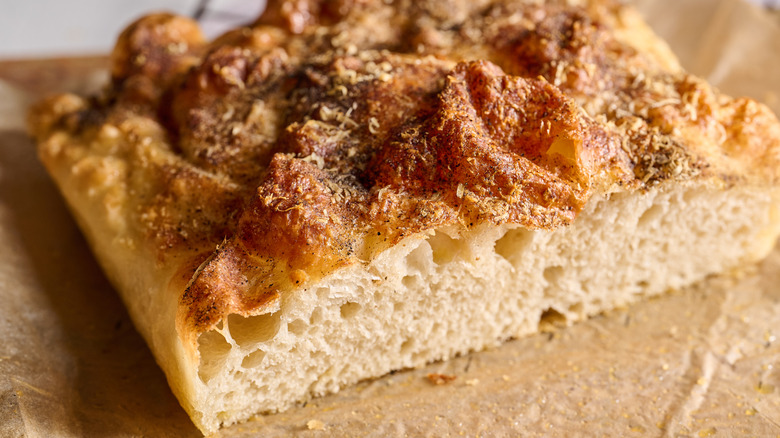
Focaccia is different from other breads because it can be made in any flat baking vessel and rises straight up, rather than doming into a loaf or baguette. For this reason, focaccia can easily be made on a sheet pan instead of in a casserole dish. The reason you'd make a focaccia in a casserole dish is for the size — in a smaller dish with high sides, the focaccia will bake into a thick, fluffy bread about 3 to 4 inches thick. The reason you'd bake focaccia in a sheet pan is for a thinner, crispier bread, which can be used more easily for sandwiches or storing.
To bake the focaccia on a sheet tray, the recipe does not need to change at all. When preparing the pan, use a half sheet and simply cover with parchment and oil as you would with the casserole dish, then arrange the dough in the center and allow it to rise in the same way. The dough may need some more coaxing to fill the sheet pan, which you can do by gently pulling from underneath the dough and stretching it gently towards the edges of the pan. Because of the wider surface area, the bread will rise to about 1 or 2 inches, or just over the height of the sheet pan's edges.
How do I keep the dough from sticking to my hands?
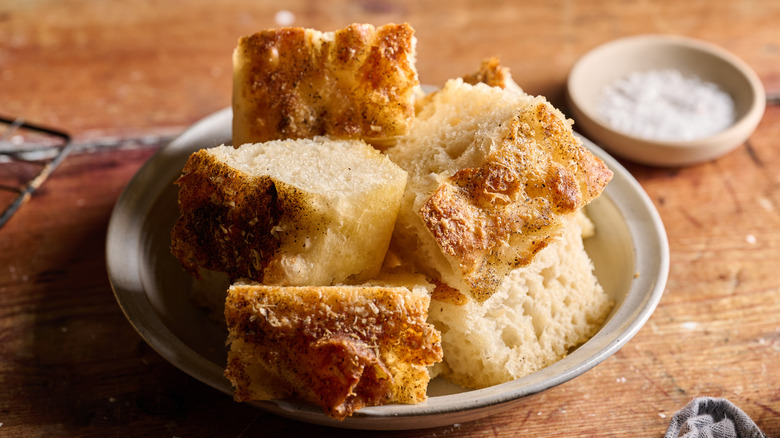
If you have made the focaccia correctly, the bloomed yeast will have caused the dough to become moist, voluminous, and a little jiggly. As a result, the dough will be sticky to the touch and may be difficult to work with. I'd suggest wearing gloves to keep the dough from getting under your nails, but you'll notice that even with gloves, the dough is still sticky and a little challenging. The trick to avoid this is to moisten your hands or gloves.
You can moisten your hands by simply running them under water, which creates a moisture barrier and prevents the dough from sticking. To avoid over-moistening the dough, though, make sure your hands have just a thin layer of moisture. You can also use olive oil, which will add some flavor to the dough. The bowl does not need to be oiled, but oiling the dough after folding will prevent it from drying out or sticking to the bowl while it proofs.