

The Best Cuts Of Beef To Use For 15 Popular Dishes
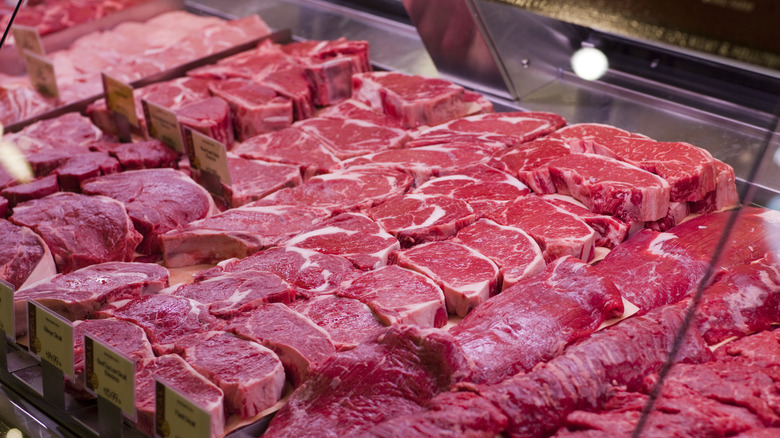
Despite rising interest in vegetarianism, and the availability of plant-based options at popular fast food chains, Americans love meat. Americans especially love beef, with the industry posting record sales in 2024 despite high prices (over 55% of all meat sales).
The thing is, when prices are high most of us tend to buy whatever's a good deal, and it's not always suitable for the meal we have in mind. Cuts from different parts of the animal have their own characteristics, and aren't necessarily interchangeable.
I've been through this as a home cook, and as a trained chef and restaurateur. In fact, the first kitchen I ran was in a high-volume outlet in Alberta, which is the heartland of Canadian beef production. Albertans are big fans of beef, as you'd expect, and are quick to let you know if you get it wrong. So, for your meal-planning convenience, here's a list of popular beef dishes and the best cuts to use for them.
Beef dip or roast beef sandwiches
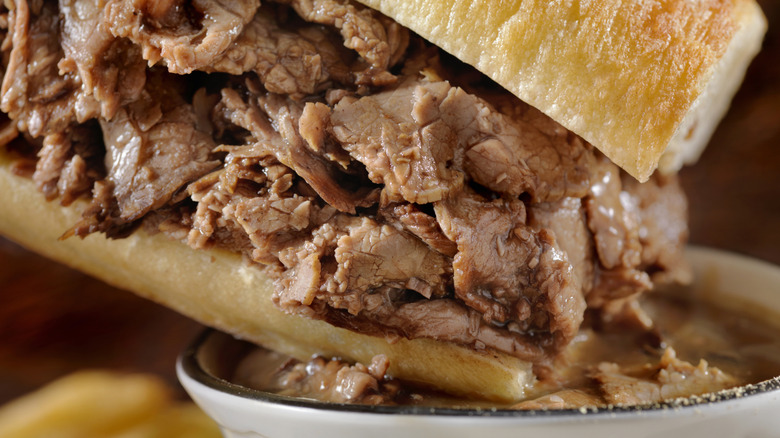
When I was young, I worked at a couple of restaurants as a cook or cook's helper. I didn't stick with foodservice at the time (I came back to it as a career-changer), but it was in one of those restaurants that I encountered a beef (French) dip sandwich for the first time.
There are regional variations on the theme (like Buffalo's beef on weck), but they're all pretty similar. You need thin-sliced roast beef on a bun that's crusty enough to hold together when it's wet, and a cup of the jus from the roast (or its instant-mix equivalent) to dip the sandwich in. I was blown away the first time I had one, and still enjoy them a lot.
The best cut for this kind of sandwich (or roast beef sandwiches in general) should be relatively lean and fine-grained, and free of obvious gristle. The round is a great choice, because it's affordable and slices beautifully. I generally use eye of round, personally. Sirloin and tri-tip are also good choices, or even prime rib or ribeye as a deluxe option.
Pot roast
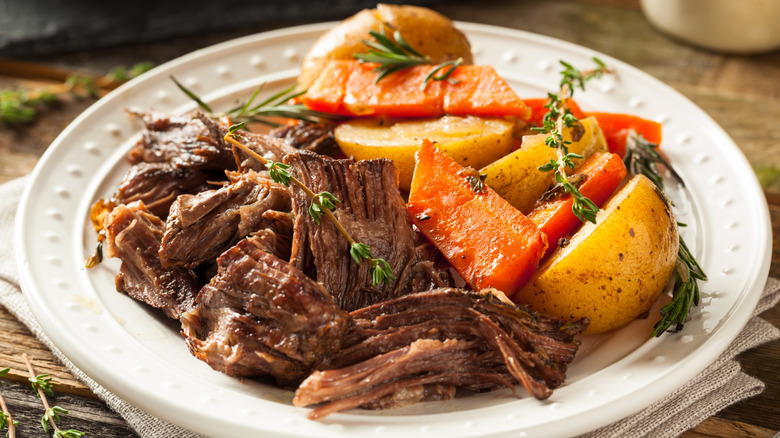
Most of us have a few food-related guilty secrets. Here's one of mine: While I certainly enjoy a steak, most of my favorite beef dishes — like pot roast — are slow-cooked.
The thing with most meats is that the more-used a muscle is, while the animal is alive, the tougher it gets. The muscle fibers are dense and long, and the cuts are filled with connective tissue. But they're very flavorful, and if you slow-cook that cut, its negatives become positives. With pot roast's long, slow cooking time, the tough fibers and connective tissues break down, giving the meat a rich, lush, and tender texture, and enhancing its beefiness.
So in this case you want tough, relatively inexpensive cuts. Anything from the shoulder (chuck) is always my first choice, but brisket is a pretty good option as well. You'll also see round or rump roasts sold for pot roast, and they'll work, but personally I find them too lean and the end result is a bit dry.
London Broil
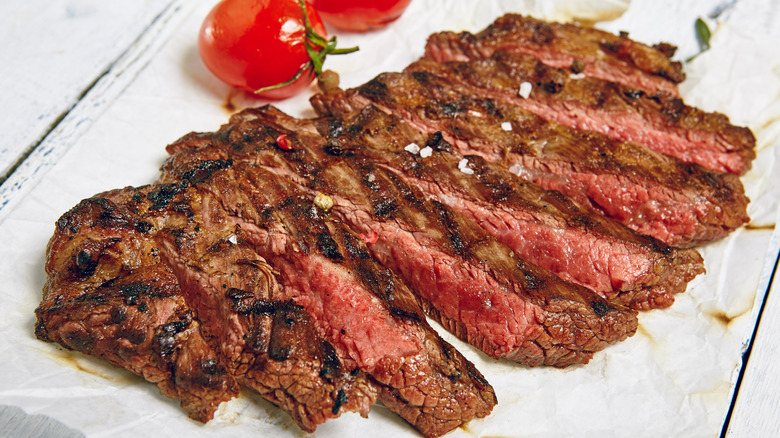
Most steaks come to the table as a single slab of meat, usually from one of the tender cuts that are great for grilling. But other cuts are just as good if they're sliced before serving, and that's how London Broil works.
To be clear, London Broil is not the name of a beef cut. Rather, it's a cooking method. It calls for taking a flat, relatively thin and tough cut of meat, with long, chewy muscle fibers, then grilling and seasoning it, and slicing it relatively thinly across the grain. Thin-slicing shortens the tough muscle fibers, and the end result is a piece of tasty beef that's just pleasantly chewy.
The classic cut for London Broil is flank steak, cut from the steer's abdomen. Supermarket cuts labeled simply as "London Broil" are often cut from the round, which is less flavorful, but it works well with this cooking method and tends to be relatively inexpensive. Flatiron or skirt steak make excellent London Broil, but they'll cost more.
Beef kebabs
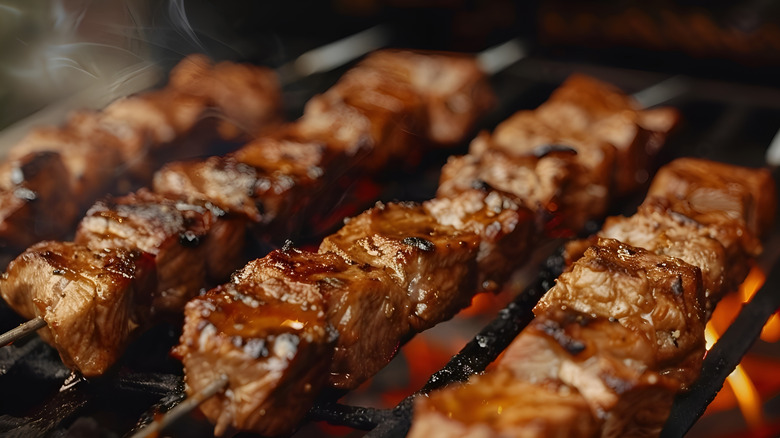
When summertime grilling season rolls around, there are lots of good things to look forward to. Steaks and chops are always right up there, but there's a lot to be said for beef kebabs as well.
The great thing about kebabs (or kabobs, depending where you live) is that they give you a lot of exposed surface area. That means the entire outside of each cube can be coated with a spice rub or dipped in a marinade, and — more importantly — become charred on the grill or under a broiler. You'll get all the great flavor of well-seared beef, but it comes on all six sides of each cube rather than just on the top and bottom, as you'd get with a steak.
For this you should go with something relatively tender, not a tough cut that needs slow cooking. I always feel like it's a bit of a waste to use a premium cut like a striploin or ribeye for kebabs (if I'm paying that price, I'll serve it as a whole steak). Instead, I usually go for a cut like sirloin or tri-tip, which is flavorful and still tender, but a more economical option.
Beef jerky
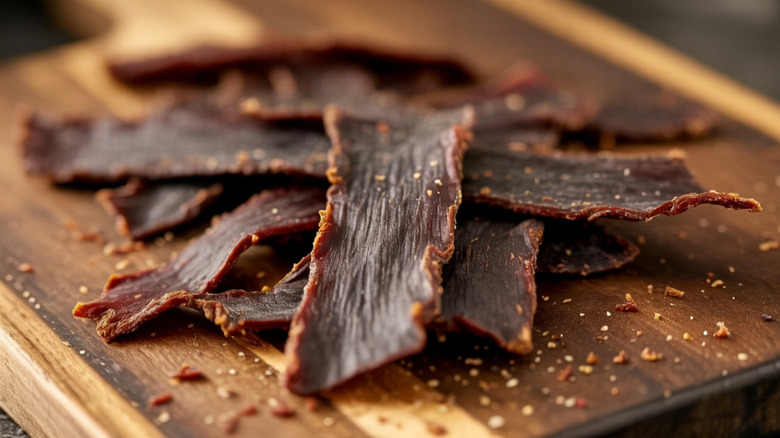
There are plenty of good reasons to dry your foods. In the days before refrigeration, of course, it was an important technique for making perishable foods last, so you could stock up in times of plenty. It also concentrates flavors, which is why (for example) dried mushrooms are often tastier than the fresh versions.
Beef jerky hits both of those points. It's a way to have a stash of lightweight, high-protein food on hand when needed, and it's also just a really tasty way to eat beef. When I first owned my dehydrator I made it a lot, for exactly those reasons. It doesn't happen as often now, though my grandkids occasionally request it as a lunch snack, but I still make it occasionally.
For jerky-making you should avoid many popular cuts, because they're too well-marbled. Fat's not desirable in jerky, because it goes rancid relatively quickly. Lean cuts from the round are usually your best bet, because there's relatively little fat or gristle, and it slices nicely. I like eye of round best, because it's a nice, manageable size, but any cut from the round will do.
Meatballs, meatloaf, and burgers
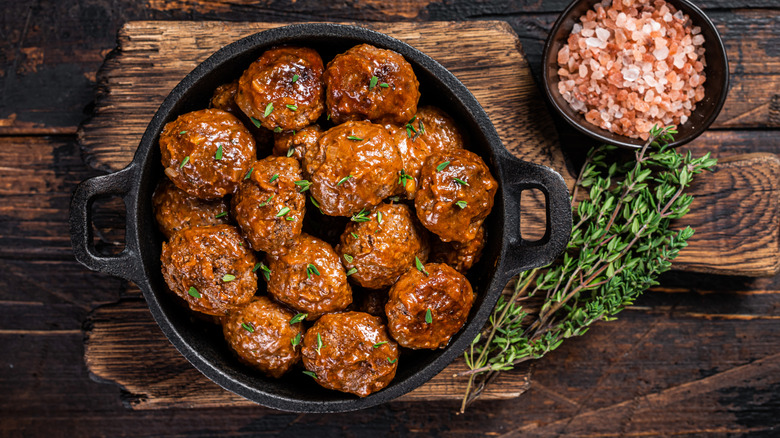
Ground beef is a very versatile ingredient. It's a staple in everything from soups to spaghetti sauce to weeknight casseroles, which is why so many of us always keep a pound or two in the freezer.
But when it comes to meals where the ground beef is the centerpiece, rather than just part of the ensemble — I'm thinking of things like meatballs, meatloaf, and hamburgers, here — you may want to up your ground beef game a little bit. When you buy ground beef at the supermarket, you're usually getting whatever they feel like grinding. The label won't usually tell you much beyond the percentages of lean and fat.
For meatballs, meatloaf and burgers, I think it's worth asking for ground chuck at the meat counter or your local butcher. Why? Because chuck is really flavorful, for one thing, and also because it's got a nice balance of fat and lean. Much of the fat will cook out, and can be discarded after cooking, but there'll be enough left to leave your food rich, tasty, and moist on your palate.
Steak Frites
Some things in life are deceptively simple. Every department store has its own variations on the "little black dress," for example, but when you look at what the great fashion designers have done with it (from Chanel and Givenchy up to the present day) it quickly becomes clear that they aren't so simple after all.
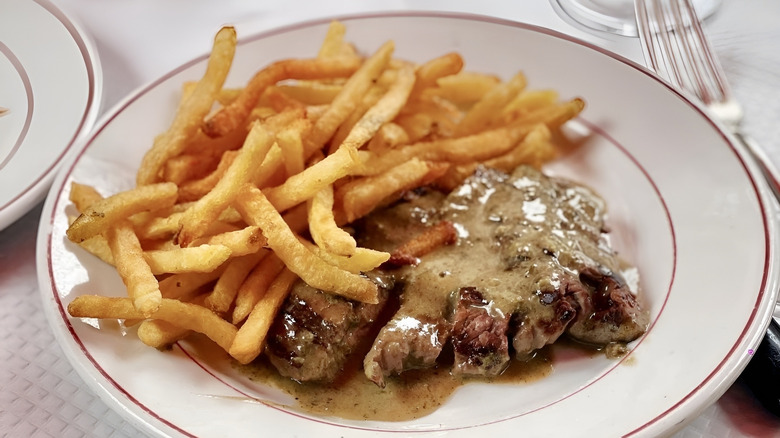
The culinary world is full of those deceptively simple dishes, and one of them is the French classic called steak frites, which call for the kind of cuts known as "bistro" or "brasserie" steaks after the blue-collar eateries where they're served. It's basically just a steak and fries, but the end result has a lot to do with both execution (it's harder than you'd think to get fresh-cut fries right) and the correct choice of steak.
For this kind of French-style presentation, you're not looking for something super-tender like a strip or a ribeye. To be authentic, you need something with a bit of chew to it. A common American choice is the shoulder tender (the teres major, a tender and affordable cut from the otherwise-chewy shoulder), though the two iconic French cuts are the onglet (hanger steak) and the bavette (sirloin flap). Other good options include the flatiron steak and skirt steak.
Ropa vieja
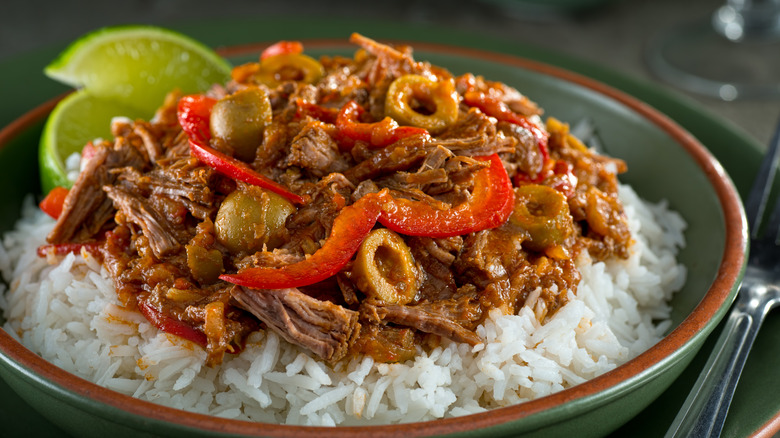
I've already mentioned my love of pot roast and other braised dishes, and I'm in good company on that score. Almost any beef-loving culinary culture you care to name has similarly cherished meals. In Cuba, the iconic example is called "ropa vieja," which literally means "old clothes" (and we thought the English gave their food unappealing names, right?). Braised dishes are often not exactly photogenic, so the name may come from the slow-cooked beef looking like a pile of old clothes. It may also be because the beef is shredded, like tattered and worn-out clothing. Whatever the name's origin, the dish itself consists of a tough cut of beef simmered slowly in a tomato-based sauce, with onions, garlic, peppers and spices.
You can opt for any inexpensive cut for this one, as long as it's got a bit of marbling and lots of connective tissue. Your best bets are usually chuck or flank, whichever you can get the best deal on. When shredded, chuck will give you relatively short strands of beef and flank will give you longer shreds, but they'll both work just fine.
Beef Wellington
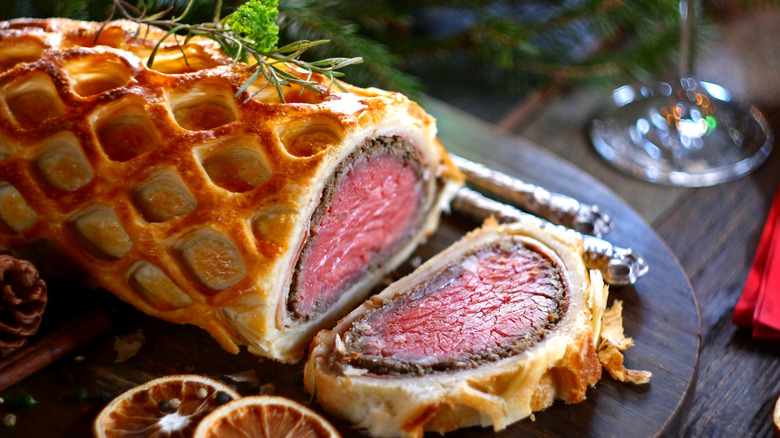
Beef Wellington might seem an odd choice for a list like this one. Canonically calls for beef tenderloin, specifically the middle "Chateaubriand" portion, where it's most consistent in size and shape. Then it's topped with foie gras, and other luxury ingredients, wrapped in puff pastry, and baked until the pastry is crisp and the beef is medium-rare. Home versions are simplified a bit, but the tenderloin and puff pastry are essential.
That said, there's an alternative. It can be tricky to crisp the pastry without overcooking the beef, so some cooks have turned to sous vide as a "hack." They'll cook the tenderloin to medium-rare using their sous vide circulator, then chill it thoroughly before wrapping and baking it. With the beef already cooked, they can focus on puffing and browning the pastry.
One of the big things about sous vide cookery is that it can make tough, chewy cuts tender. So if you have a sous vide rig, you can cook an eye of round (which is cheaper, but roughly the tenderloin's size) until it's very tender, then chill it and proceed the same way you would if you'd used a tenderloin.
Beef stew
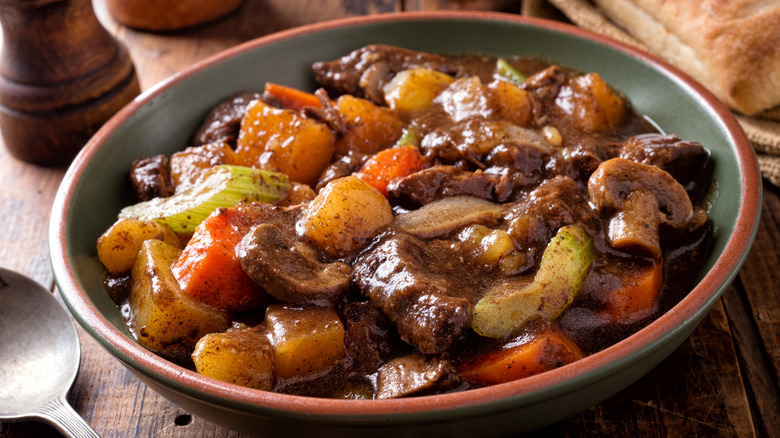
This list is meant to give a reasonably wide range of beef dishes, from weeknight meals to international favorites to high-end celebratory meals like Beef Wellington. This one falls into the "weeknight meals" category.
Beef stew is a frugal classic, because it's meant (by design) to work with cheap cuts. Those tough, chewy cuts are packed with flavor, but it's locked up in tight, stringy muscle strands, and rubbery connective tissue. When you cut up those tough cuts and simmer them for hours, on your stovetop, in your oven, or in a slow cooker, you help them release their flavor into the gravy while simultaneously becoming tender and rich.
So is another use-case where tough, inexpensive cuts work better than their "premium" equivalents. I'd recommend going with chuck for stew (it's the classic option), but brisket, flank and oxtail are all good as well if you can find them at a good price. Ideally, don't just buy a random pack of "stew beef" from the supermarket's meat counter. Those are often randomly mixed off-cuts from different parts of the animal, and they'll give you unpredictable results.
Beef fajitas
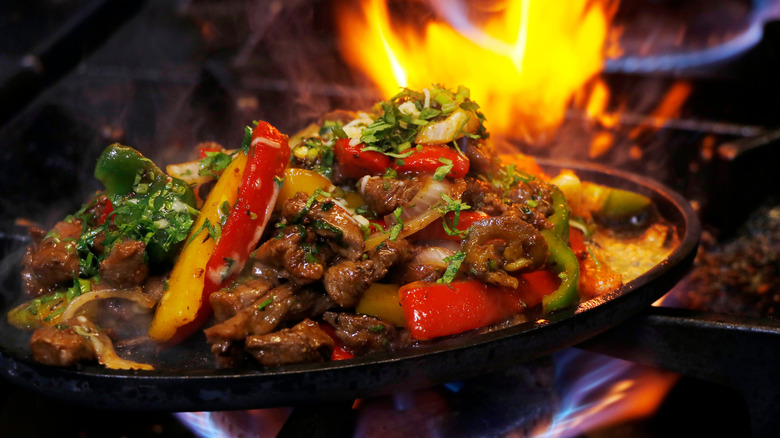
People eat at restaurants for a lot of reasons. One of those reasons is that it's an opportunity to have food with a little bit of drama ("dinner and a show!"). In a lot of restaurants, that role is played by fajitas. When a server crosses the floor with a hissing, sputtering platter of fajitas on their sizzler plates, and filling the air with good smells, that's part of the pleasure of the meal. And unlike flambéing, or a teppanyaki cook's knife-and-spatula work, fajitas are something most of us are confident in doing at home.
As far as the beef itself is concerned, they fall into the same general category as London Broil or bistro steaks. The best cuts of beef for fajitas are thin and flavorful, with long muscle fibers, and skew a bit to the tough side. Cuts like flank, skirt steak, flatiron steak, and top round are all common choices. You'll want to broil, grill or pan-sear them to medium-rare, then slice the meat thinly, across the grain, so they aren't too chewy.
Chicken-fried steak
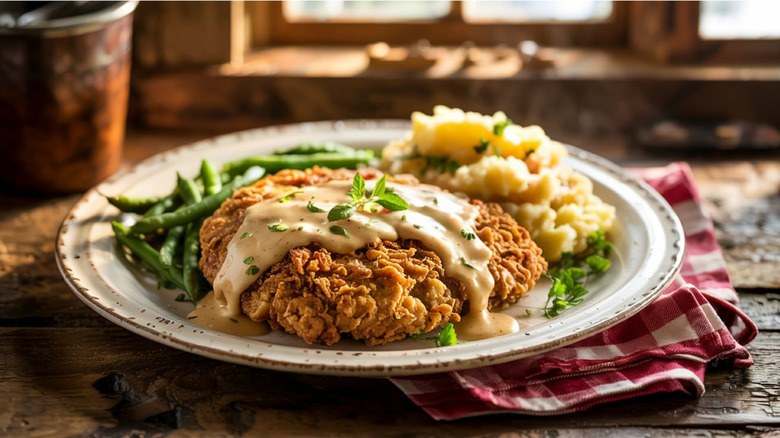
Chicken-fried steak is a staple of the American diner repertoire, specifically in its Southern incarnation. I'd never heard of it until I was an adult (having grown up in Canada), but I recognized it as a close cousin of schnitzel.
Schnitzel is typically breaded while chicken-fried steak is dipped and floured, like fried chicken, but the end result is pretty similar. The fried coating becomes crisp and golden, lending a nice textural contrast to the meat. It's also more filling, which appeals to frugal cooks like me. I made it part of my regular rotation at home, and cooked it regularly.
It's all about eating economically, so the best cuts for chicken-fried steak are relatively tough. You're going to slice them thinly and then pound them out with a meat mallet, and that makes them tender anyway. I used a lot of eye of round, because a store near me put it on sale regularly, but any cut from the round is good. Top sirloin is good, at a slightly higher price, or you can buy mechanically-tenderized "cube steaks" from your supermarket. You don't need to pound those, so you can start cooking right away.
Beouf Bourguignon
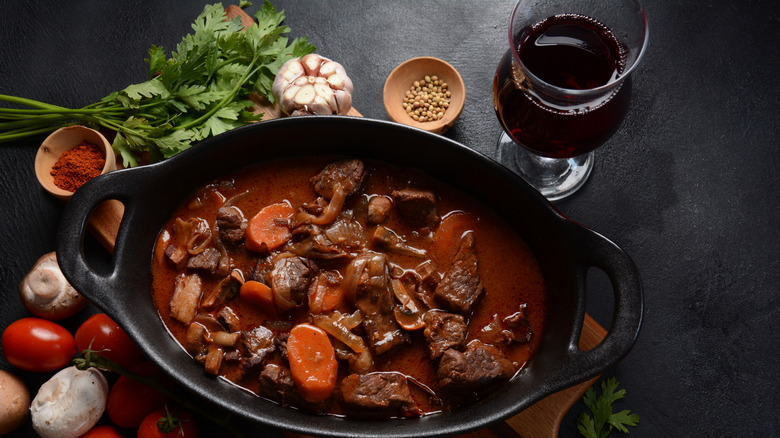
A lot of dishes that sound fancy and impressive actually have blue-collar roots. That's the case with beef Bourguignon, which is just homestyle food from another place. The only thing that makes it sound fancy is the Burgundy wine, but that's just because the French like it for cooking with. So really, it's just beef stew with an accent. Not so intimidating, right?
Now to be clear, it's going to call for some ingredients you probably don't keep on hand (not being a French housewife). A good tip, if you're planning to make this at home, is to read your recipe closely and make sure you pick up all the ingredients ahead of time (you can use a new-world pinot noir, rather than French Burgundy). As for the beef itself, because it's essentially an elevated version of beef stew, you should be looking at the same cuts of beef that I've already suggested for stew in general. Chuck is my go-to for this kind of cooking, but you can also look at boneless short ribs, brisket, or flank
Carne asada
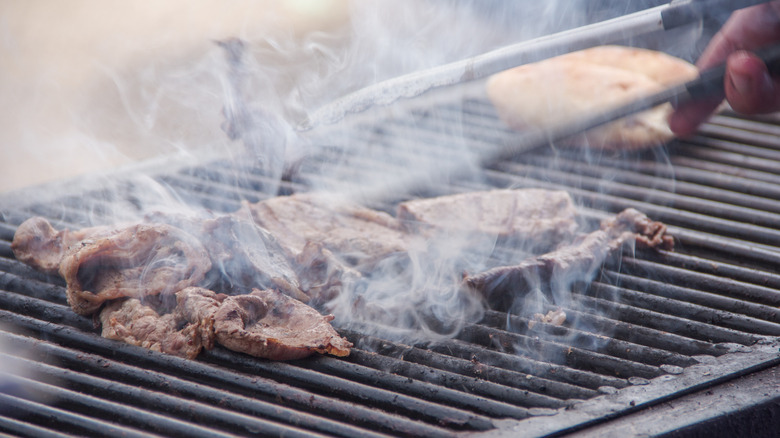
Carne asada is one of the show-stopping offerings at a good Mexican-themed restaurant. It may be served on its own with a few appropriate side dishes, or incorporated into a taco, but however it's served it'll be delicious if it's done well.
You could think of carne asada as the Latin version of France's steak frites, in that it's a blue-collar kind of dish meant to use relatively inexpensive cuts of beef. You're looking for much the same kind of characteristics that make for good steak frites: A relatively thin cut with long muscle fibers, and lots of big, beefy flavor. Skirt steak is ideal, but flank steak or flatiron steak work just as well if they're easier for you to find. You could even use a premium steak, like a striploin or ribeye, if your budget allows for that, as long as you get the cooking part right.
The correct method for cooking perfect carne asada is to grill, broil or pan-sear it until the exterior is well-browned and maybe even a little charred, then let it rest for a few moments before slicing it thinly across the grain.
Steak tips
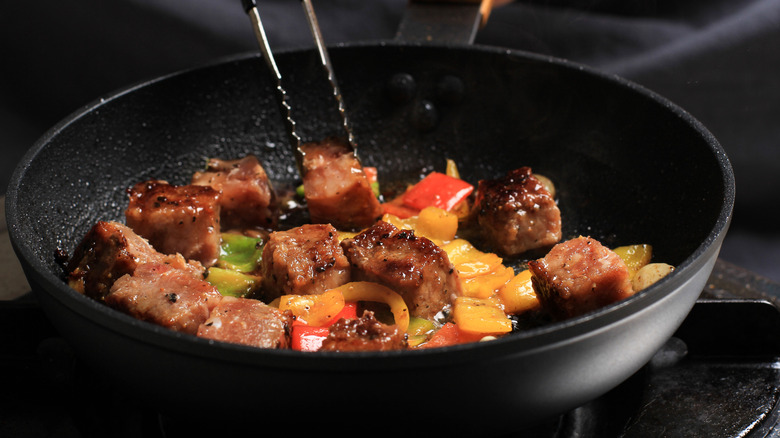
Like chicken-fried steak, you'll see steak tips on the menu at diners and "family restaurants" just about anywhere you go. They may have different names, and individual restaurants come up with different ways to serve them, but the fundamental ingredient is always bite-sized pieces of beef.
You could think of steak tips as a sort of pan-seared version of beef kebabs, but without the stick. That's actually a pretty good comparison, because you're looking for very similar characteristics in your beef. Typically you won't want to buy premium cuts for this use, because that's hard on your budget, so flavorful and mid-priced cuts like sirloin and tri-tip are your best bets. Tri-tip is a popular choice in California, where it's something of a signature ingredient. In New England, where steak tips are especially popular, they lean towards flap steak.
You'll also find packages in your supermarket's meat counter that are labeled as "steak tips," but — as with stew beef — those are very often filled with random trim pieces and off-cuts, depending what the meatcutter has on hand. For consistent results, you're better off picking the specific cut you want.