

Gluten-Free Lemon Olive Oil Cake Recipe
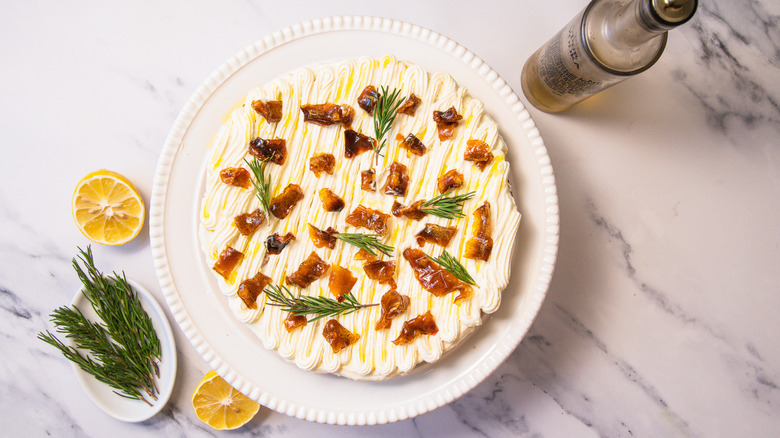
This cake draws inspiration from a small Italian restaurant in my neighborhood, which brings to life the cooking of the owners' Italian grandmothers. In this simple yet sophisticated cake, all of the textures and flavors — from the cake crumb to the creamy topping, from the rich fruitiness of olive oil to the light nutty sweetness of almond flour and polenta, to the deeply layered tart-sweet tang of lemons and mascarpone — come together for one beautiful dessert.
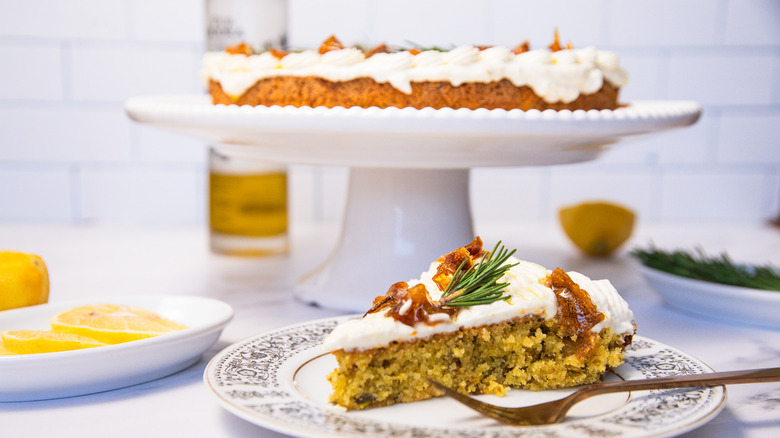
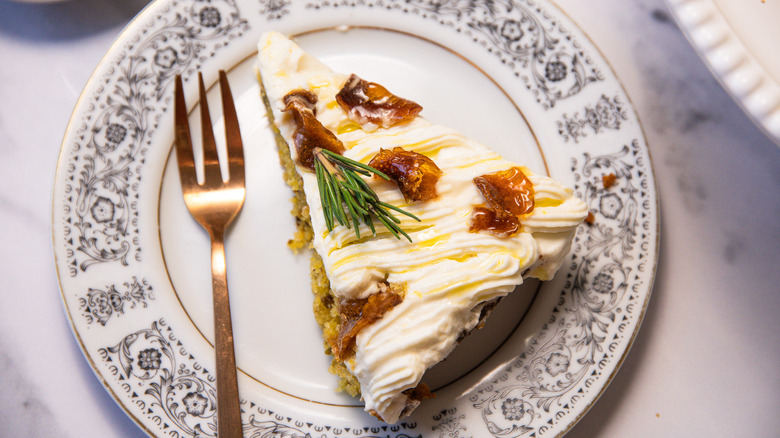
As a recipe developer and blogger, I make a lot of desserts. But after tasting this, my family looked at me and said, "I think it's the best thing you've ever made." There was a good reason for it. The batter combines almond flour and polenta, which give it a pleasantly dense, slightly grainy crumb that somehow ends up tasting so moist and light, you might as well be eating cream. The lemon comes through at every level, in the crumb of the cake itself, as well as in the pretty candied rind and whipped mascarpone that top the cake.
If you want to close out a dinner with a light, bright, and elegant dessert, this gluten-free lemon olive oil cake is it. It comes together relatively easily, and when in a rush, you can skip the candied peels and call it a day. No one will be the wiser, and the cake will still taste as if it came from a nonna's kitchen.
Gather the ingredients for this lemon olive oil cake
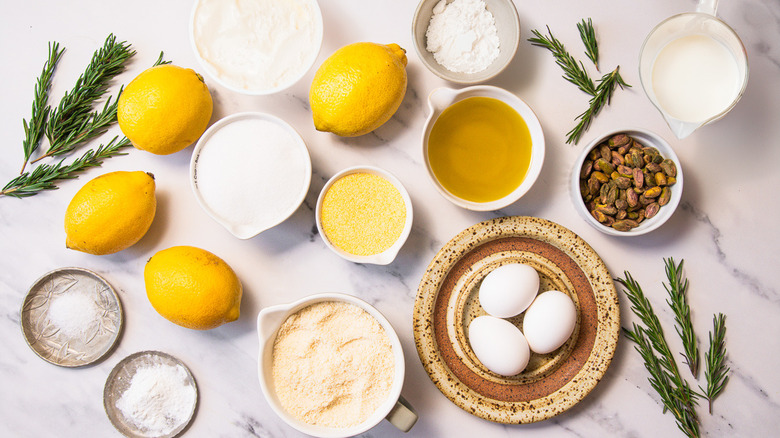
To make this cake, we start with the candied lemon rinds. You will need the rind of 2 lemons and sugar. For the cake, you'll need almond flour, fine polenta, baking powder, kosher salt, large eggs, sugar, extra virgin olive oil, the zest of 2 lemons, fresh lemon juice, and toasted pistachios. Make sure you choose a fruity extra virgin olive oil that works for cake.
For the whipped mascarpone topping, grab mascarpone, heavy cream, powdered sugar, and lemon zest. For a final garnish, you'll need the candied lemon rind that you made, small fresh rosemary sprigs, and extra virgin olive oil.
Step 1: Preheat the oven
Preheat the oven to 350 F.
Step 2: Prepare the cake pan
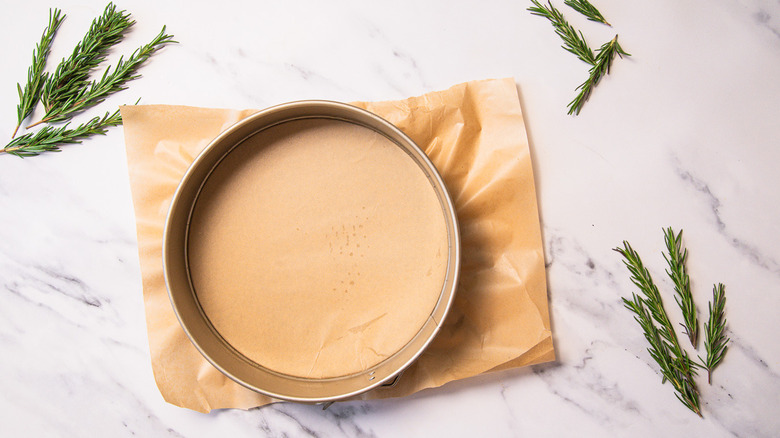
Grease a 9-inch round cake pan with olive oil and line the bottom with parchment paper.
Step 3: Boil water

Bring a small saucepan of water to a boil.
Step 4: Blanch the lemon strips
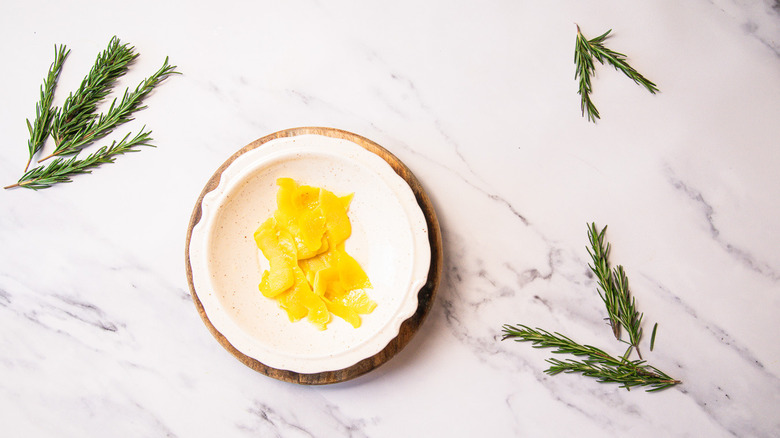
Add the lemon strips and blanch for 2 minutes. Drain and repeat twice more.
Step 5: Make the sugar syrup
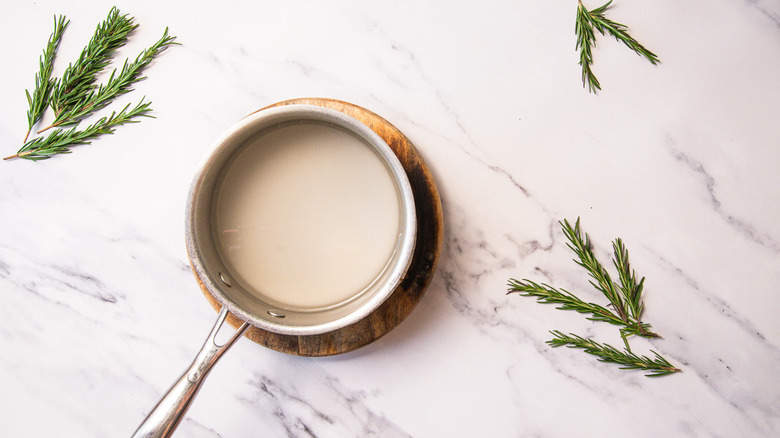
Combine 1 cup sugar and 1 cup water in the saucepan and bring it to a simmer.
Step 6: Candy the lemon rind
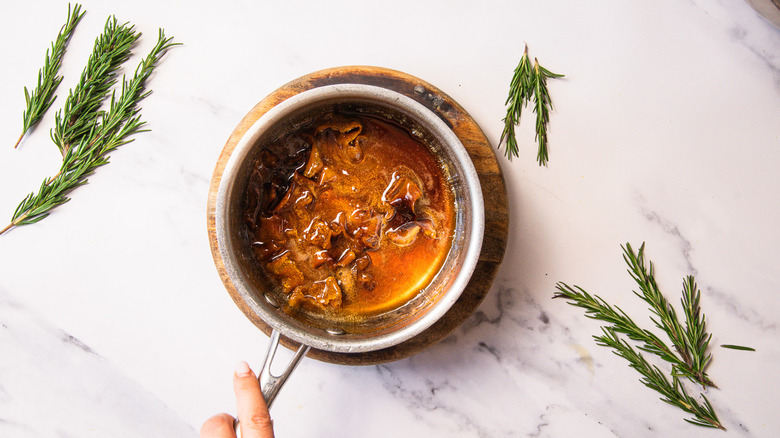
Add the blanched lemon strips and cook until the syrup thickens and caramelizes, about 15 to 20 minutes.
Step 7: Cool the candied rind

Transfer the strips to a wire rack with a fork and cool completely.
Step 8: Mix the dry ingredients
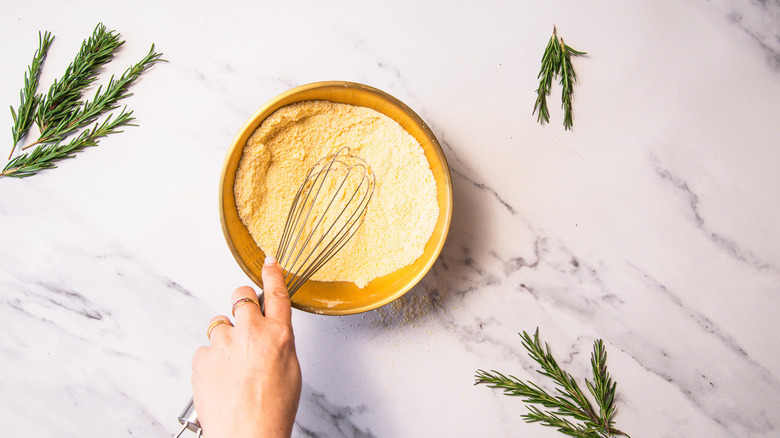
Whisk together the almond flour, polenta, baking powder, and salt in a bowl.
Step 9: Beat the eggs and sugar
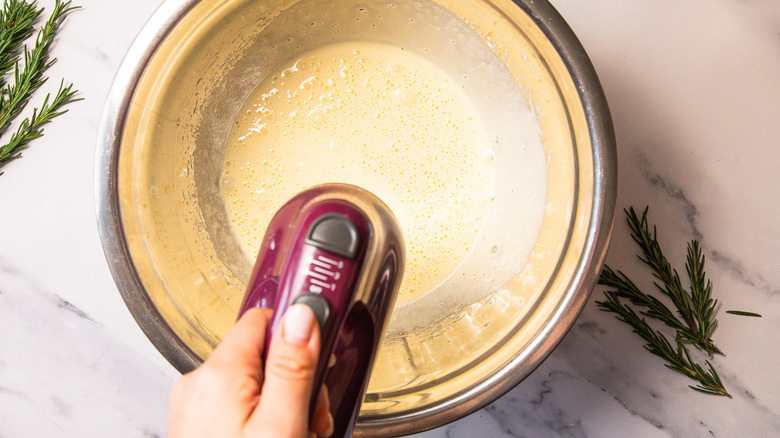
In a large bowl, beat the eggs and 1 cup sugar together until pale and slightly thickened, about 3 to 4 minutes.
Step 10: Add the olive oil
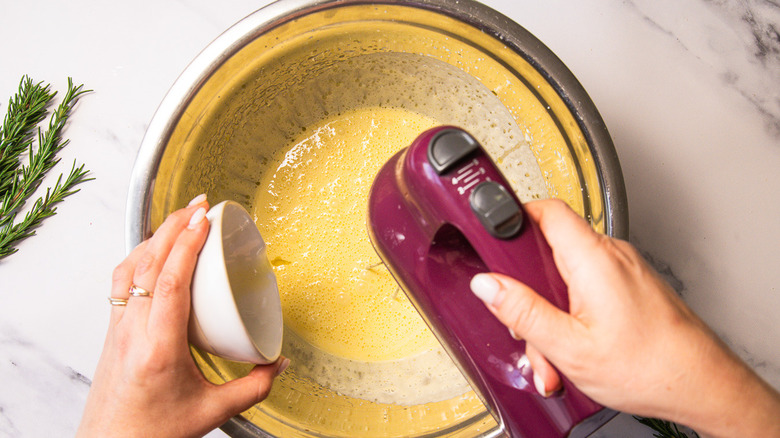
Stream in the olive oil while beating.
Step 11: Add the zest and juice
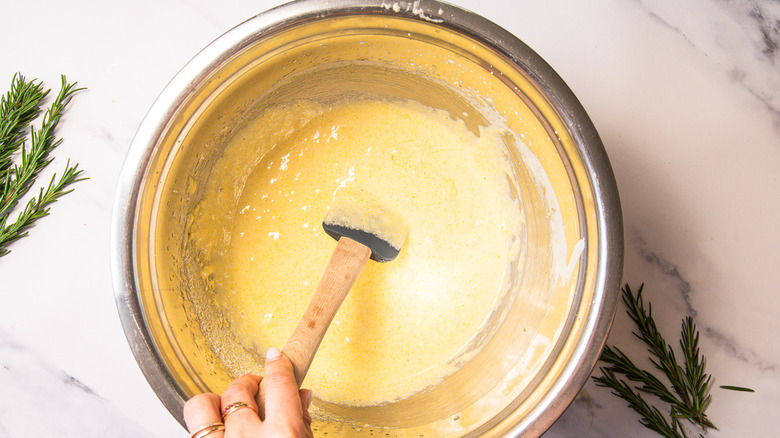
Add the lemon zest and lemon juice.
Step 12: Fold the batter together
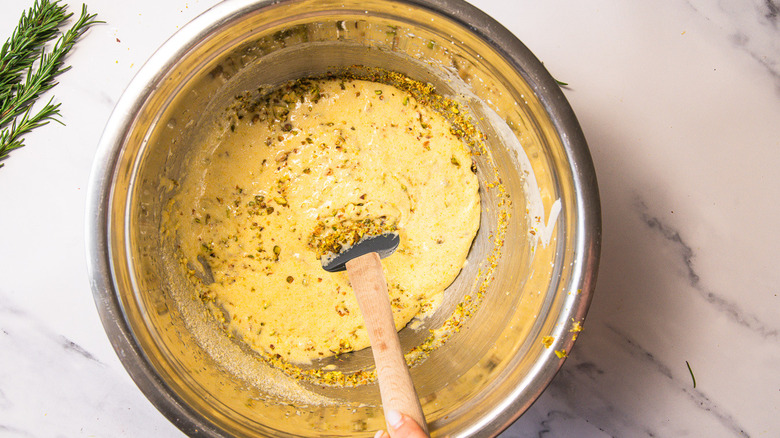
Fold in the dry ingredients until just combined. Fold in the pistachios.
Step 13: Add the batter to the pan
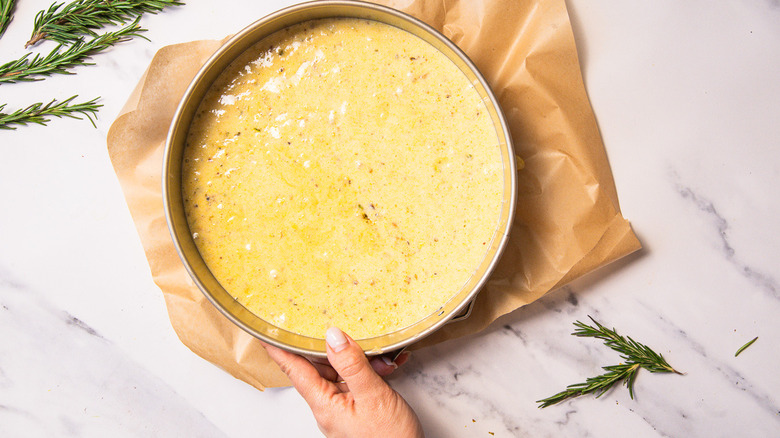
Pour the batter into the prepared pan.
Step 14: Bake the cake
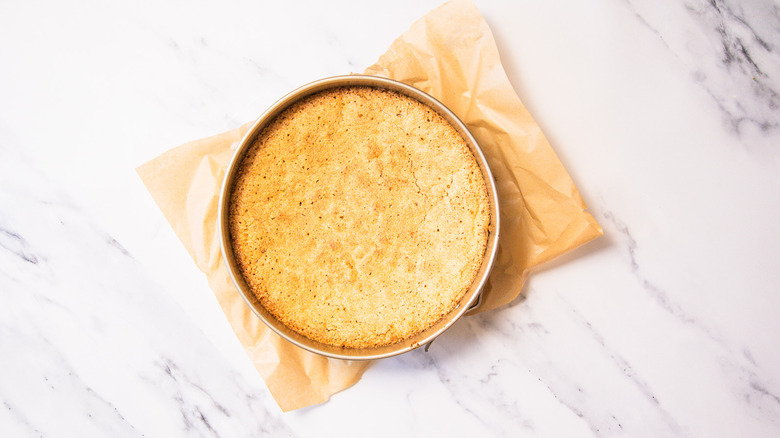
Bake until the cake is golden and a toothpick inserted in the center comes out clean, about 35 to 40 minutes.
Step 15: Cool the cake
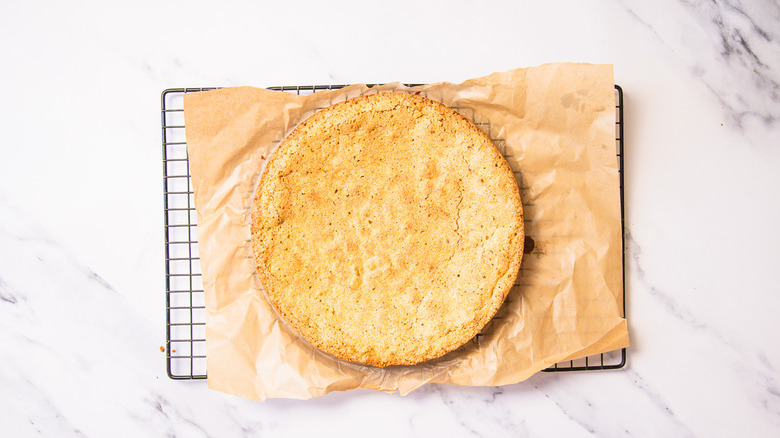
Cool in the pan 10 minutes, then turn out onto a wire rack.
Step 16: Make the whipped mascarpone
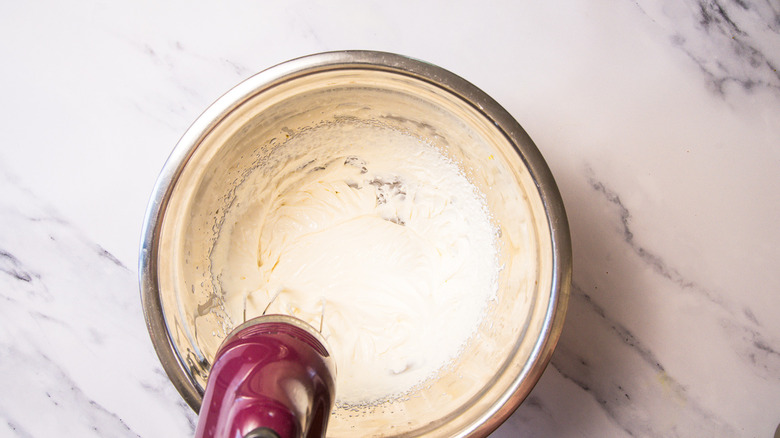
Beat the mascarpone, heavy cream, powdered sugar, and lemon zest together until smooth and lightly whipped, about 2 minutes. Do not overbeat.
Step 17: Top the cake with mascarpone
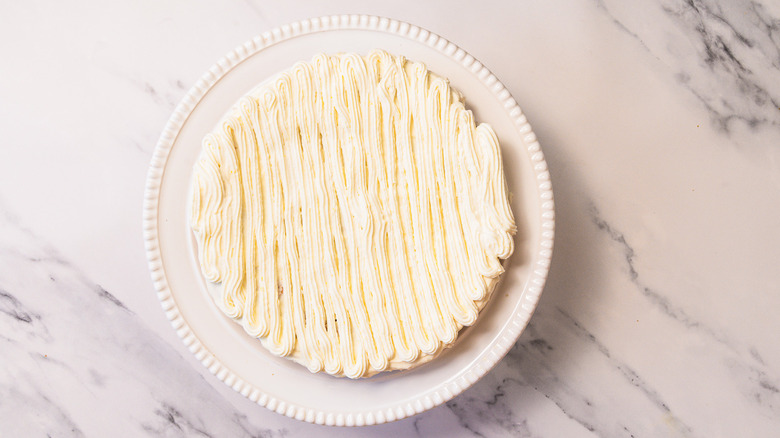
Spread or pipe the whipped mascarpone over the cooled cake.
Step 18: Garnish the cake
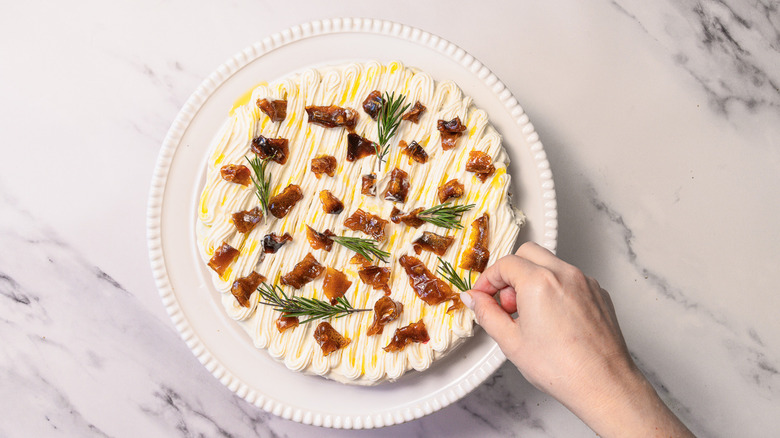
Drizzle with olive oil. Arrange the candied lemon rind over the top, and garnish with rosemary sprigs.
Step 19: Serve the lemon olive oil cake
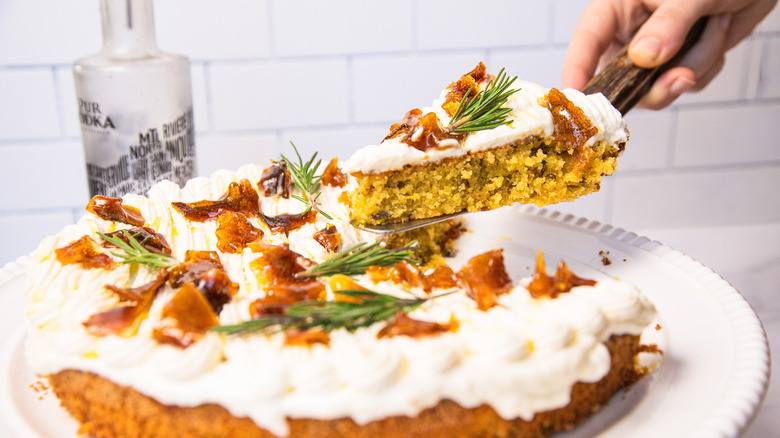
Serve immediately.
What pairs well with olive oil cake?
Gluten-Free Lemon Olive Oil Cake Recipe
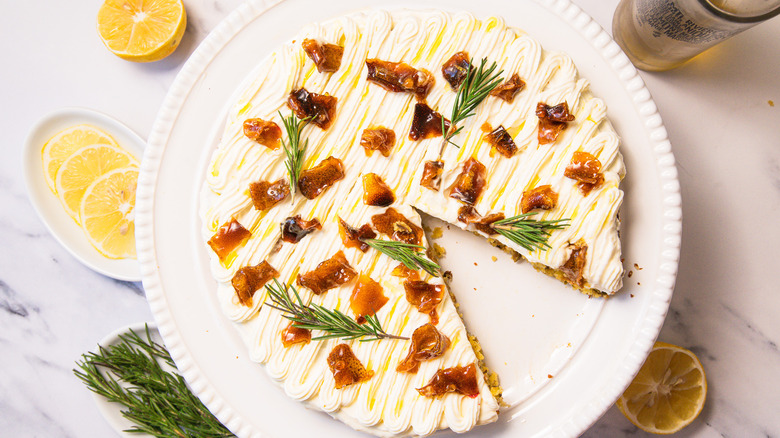
This gluten-free lemon olive oil cake has a dense, moist citrusy crumb and is topped with pretty candied rind and sweet-tangy whipped mascarpone.
Ingredients
- For the candied lemon rind
- Rind of 2 lemons, white pith removed, cut into thin strips
- 1 cup sugar
- For the cake
- 1½ cups almond flour
- ½ cup fine polenta
- 1½ teaspoons baking powder
- ½ teaspoon kosher salt
- 3 large eggs, room temperature
- 1 cup sugar
- ¾ cup extra virgin olive oil, plus enough to oil the pan
- Zest of 2 lemons
- 2 tablespoons fresh lemon juice
- ½ cup toasted pistachios, roughly chopped
- For the whipped mascarpone
- 8 ounces mascarpone, room temperature
- ¼ cup heavy cream
- 2 tablespoons powdered sugar
- Zest of 1 lemon
- For garnish
- All of the candied lemon rind
- 3 to 4 small fresh rosemary sprigs
- 2 tablespoons extra virgin olive oil
Directions
- Preheat the oven to 350 F.
- Grease a 9-inch round cake pan with olive oil and line the bottom with parchment paper.
- Bring a small saucepan of water to a boil.
- Add the lemon strips and blanch for 2 minutes. Drain and repeat twice more.
- Combine 1 cup sugar and 1 cup water in the saucepan and bring it to a simmer.
- Add the blanched lemon strips and cook until the syrup thickens and caramelizes, about 15 to 20 minutes.
- Transfer the strips to a wire rack with a fork and cool completely.
- Whisk together the almond flour, polenta, baking powder, and salt in a bowl.
- In a large bowl, beat the eggs and 1 cup sugar together until pale and slightly thickened, about 3 to 4 minutes.
- Stream in the olive oil while beating.
- Add the lemon zest and lemon juice.
- Fold in the dry ingredients until just combined. Fold in the pistachios.
- Pour the batter into the prepared pan.
- Bake until the cake is golden and a toothpick inserted in the center comes out clean, about 35 to 40 minutes.
- Cool in the pan 10 minutes, then turn out onto a wire rack.
- Beat the mascarpone, heavy cream, powdered sugar, and lemon zest together until smooth and lightly whipped, about 2 minutes. Do not overbeat.
- Spread or pipe the whipped mascarpone over the cooled cake.
- Drizzle with olive oil. Arrange the candied lemon rind over the top, and garnish with rosemary sprigs.
- Serve immediately.
Nutrition
| Calories per Serving | 787 |
| Total Fat | 52.5 g |
| Saturated Fat | 11.3 g |
| Trans Fat | 0.5 g |
| Cholesterol | 106.8 mg |
| Total Carbohydrates | 74.6 g |
| Dietary Fiber | 5.8 g |
| Total Sugars | 56.4 g |
| Sodium | 307.1 mg |
| Protein | 12.0 g |

Is polenta the same as cornmeal?
Polenta and cornmeal are similar in that they are both made from dried ground corn. In that sense, they are made from the same ingredients — but the similarities end there. The main difference between polenta and cornmeal is in how they are milled and how that reflects in the size of the grains and their taste and texture when cooked. Cornmeal can be ground from yellow, white, or any other colored corn. It is typically ground finer, closer to a powder, though you can usually buy fine or coarse cornmeal. Polenta is an Italian product that is mostly used in the same way rice is. It is courser and more granular than traditional cornmeal.
This difference matters in baking. The grind determines texture, which affects how moist your cake feels and tastes. Coarse polenta lets more liquid in and can give you a more granular crumb that feels more airy. In contrast, cornmeal can give a pretty dense and stable crumb that can hold its shape closer to finely ground flour.
For this recipe, we ask you to track down fine polenta. This behaves somewhere in the middle, more like a coarse flour. This gives the cake its characteristic slight bite without becoming gritty or sandy. I recommend that you take the time to find it for the best results.
What adaptations can you make to this lemon olive oil cake?
This cake is naturally gluten-free, so no specialty flours are needed. However, if you're having trouble locating fine polenta and you don't care about keeping the cake free of gluten, then fine semolina flour will give you a similar grainy crumb with a tighter structure. Semolina flour is different than cornmeal because it's made out of wheat, but it's also easier to find than fine polenta.
If you want to go beyond lemon and explore other citrus, you can use blood orange, regular orange, or Meyer lemon in the same quantities. I particularly love a combination of lemon and orange zest in the batter because it gives you a sweeter, less sharp and tart citrus flavor.
If you want to skip the mascarpone topping, the cake also works really well when served with a dollop of Greek yogurt on the side. You can drizzle honey, olive oil, and lemon zest on the yogurt to maintain the rich, fruity, tart-sweet flavors. You can also reserve the caramel liquid from sugaring the lemon rinds and drizzle that on the cake.