

Sheet Pan Steak Frites Recipe
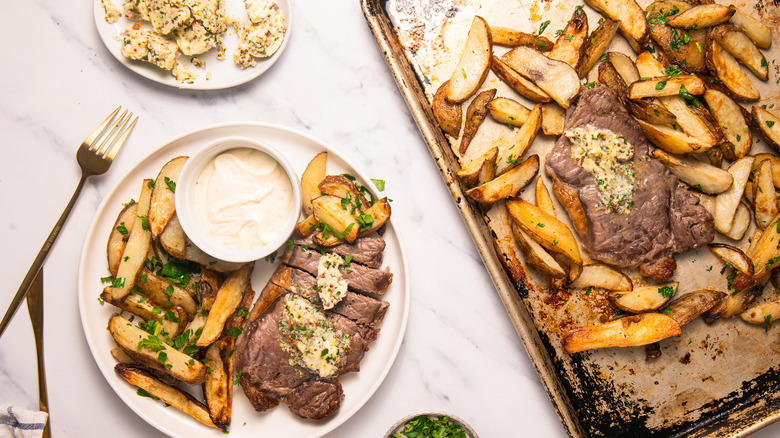
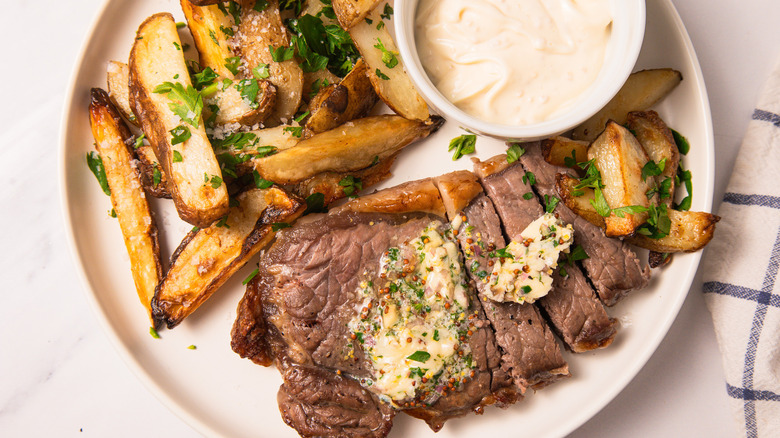
A few dishes can make you feel like you're dining out at a restaurant: a good Pad Thai, a perfectly cooked piece of fish, a fresh tartare, and expertly made steak frites. But what if we told you this sheet pan steak frites recipe can be made at home with minimal effort? The result is perfectly tender steak crowned with a melting dollop of compound butter, crisp and satisfying steak fries, and a bright citrusy aioli to pull everything together.
Despite being a recipe developer and blogger, I love it when someone cooks for me, so I enjoy going to a good restaurant. But I like it even more when I can produce a dish that is even better than one I can order out, especially because it costs me a lot less money. The sheet pan method has helped me perfect my weeknight steak frites down to a science that balances ease and elegance.
First, the fries go in on a screaming-hot baking sheet so they start crisping immediately. Then the steaks are added, finishing right alongside them, sharing the pan for the last 10 minutes while everything comes together. But what really makes this dish a standout are the little touches: duck fat on the fries, a pat of pungent café butter (flavored with anchovies, shallots, and Dijon) on the steak, and a garlicky, sharp lemon aioli on the side. If the whole feels greater than the sum of its parts, that's no accident.
Gather the ingredients for this steak frites recipe
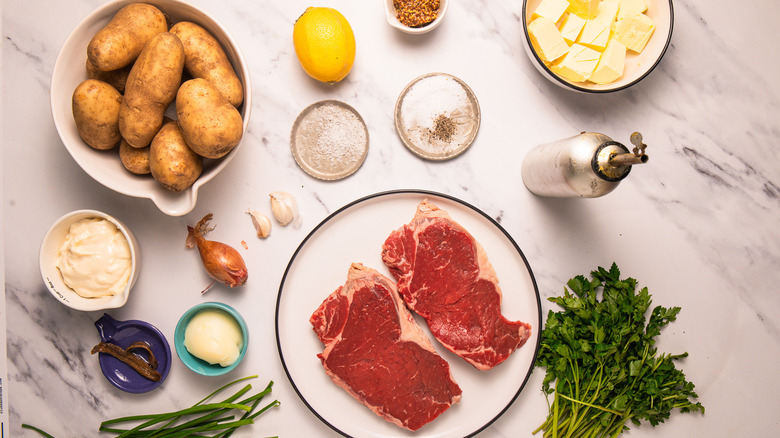
For the café butter that will flavor our steak, you'll need softened unsalted butter, a small shallot, a clove of garlic, anchovy fillets, fresh parsley, fresh chives, Dijon mustard, fresh lemon juice, and kosher salt. For the lemon aioli for the fries, we'll need mayonnaise, garlic, fresh lemon juice, and kosher salt. For the frites & steak themselves, gather russet potatoes, New York strip steaks, kosher salt, black pepper, duck fat, flaky sea salt, neutral oil, and fresh parsley leaves, for garnish.
Step 1: Make the café butter
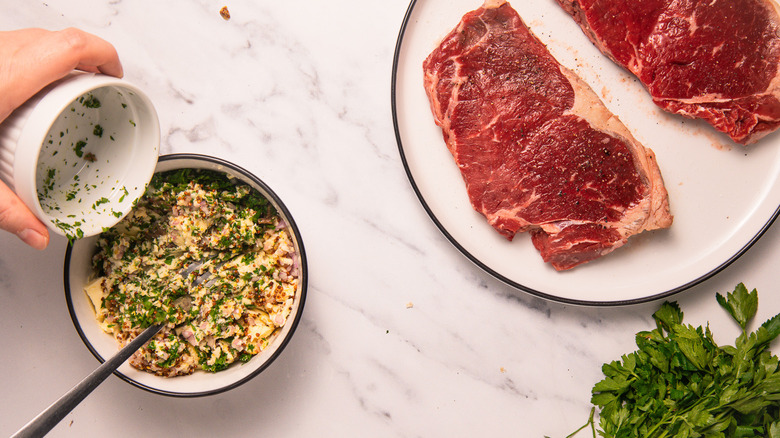
For the butter, mash the softened butter, shallot, garlic, anchovies, 1 tablespoon parsley, chives, Dijon mustard, lemon juice, and ¼ teaspoon salt together in a bowl until evenly combined.
Step 2: Shape and chill the café butter
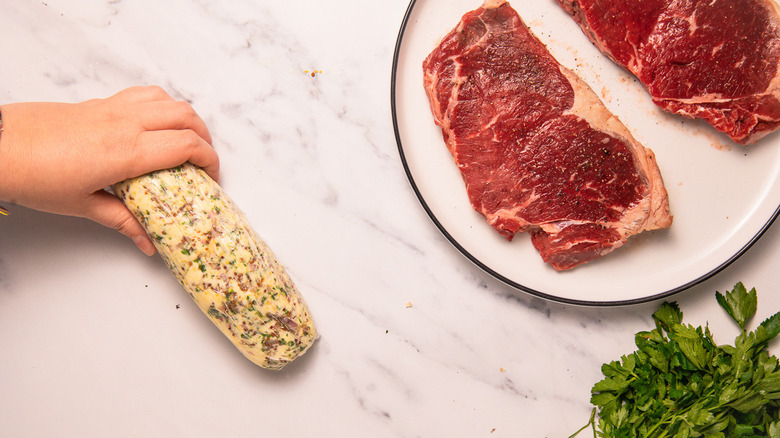
Spoon the butter onto plastic wrap, roll it into a log, twist the ends, and refrigerate until firm.
Step 3: Make the aioli
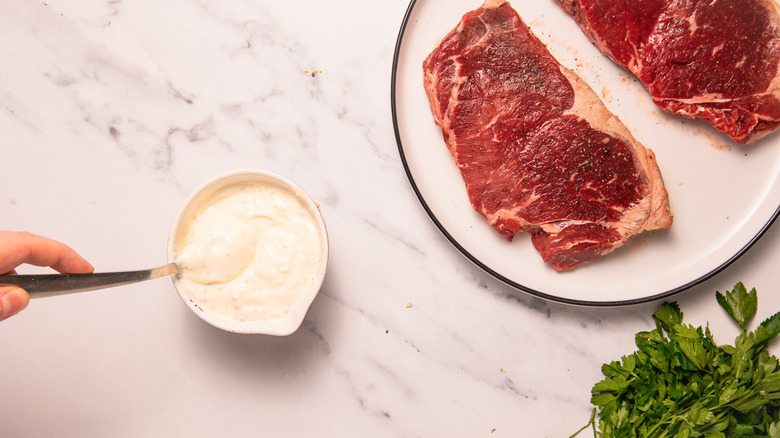
For the aioli, whisk the mayonnaise, garlic, lemon juice, and ¼ teaspoon salt together in a small bowl. Refrigerate.
Step 4: Soak the potatoes
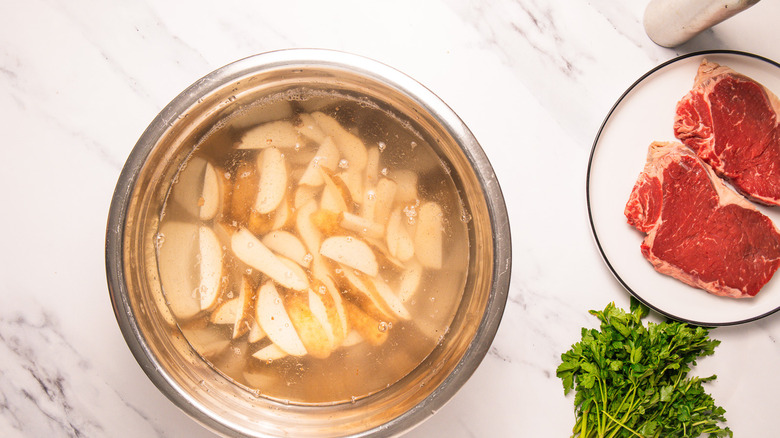
Soak the chopped potatoes in a large bowl of cold water for 30 minutes to remove the surface starch.
Step 5: Season the steaks
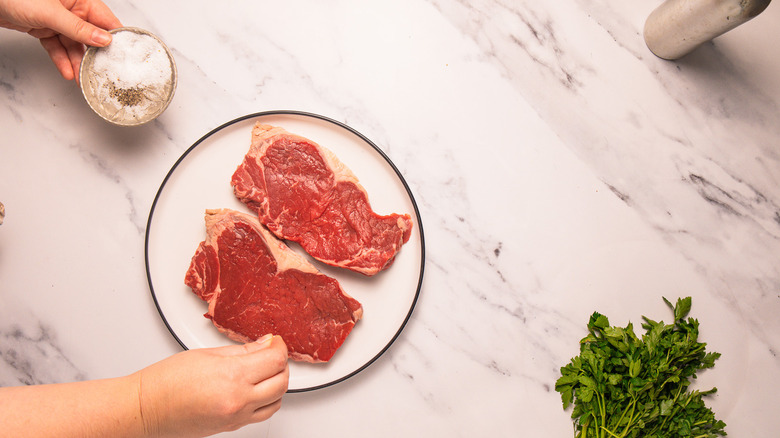
Season the steaks on all sides with the 2 teaspoons of kosher salt and black pepper, and let them sit at room temperature while the fries soak.
Step 6: Preheat the oven and pan
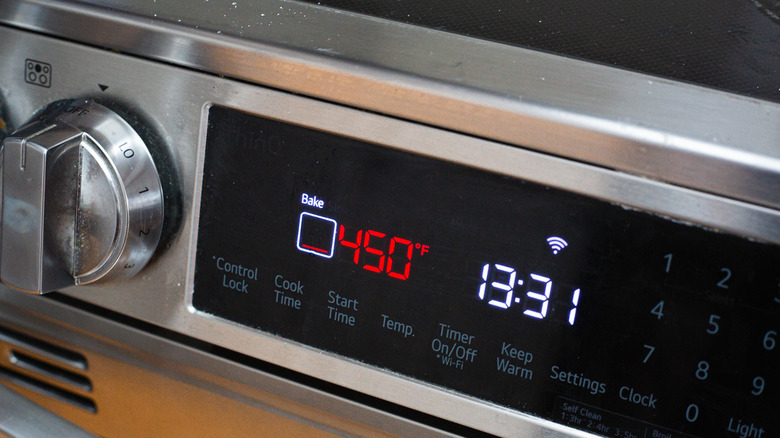
Place a rimmed baking sheet on the lower oven rack and preheat the oven to 450 F.
Step 7: Drain the potatoes
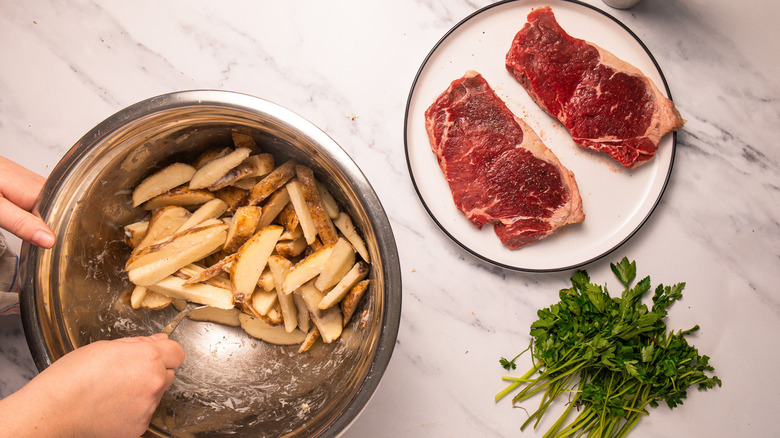
Drain the potatoes and dry them thoroughly with kitchen towels. Toss with the duck fat and 1 teaspoon kosher salt.
Step 8: Roast the potatoes
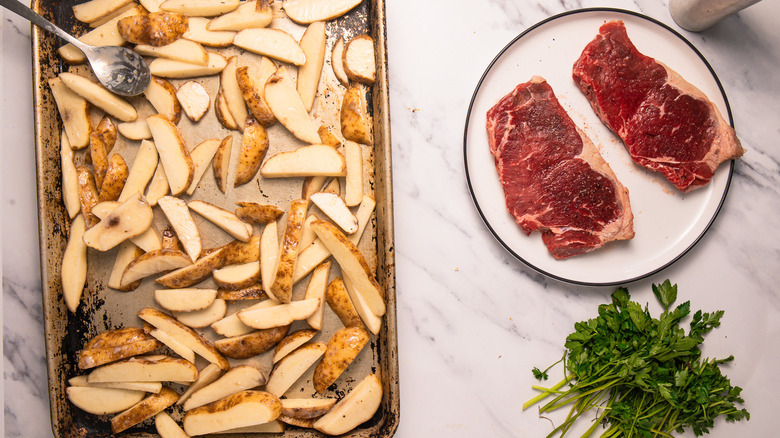
Carefully pull out the hot baking sheet and spread the potatoes in a single layer, leaving room between sticks. Roast for 20 minutes, until the bottoms are golden.
Step 9: Dry and oil the steaks
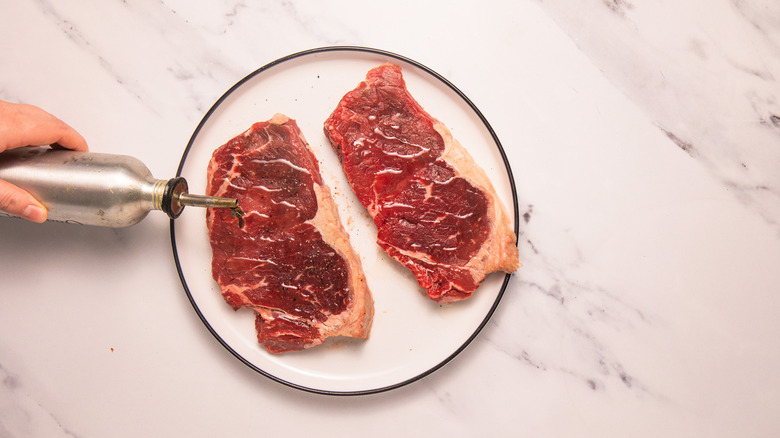
Pat the steaks dry and rub them with the neutral oil.
Step 10: Flip the frites
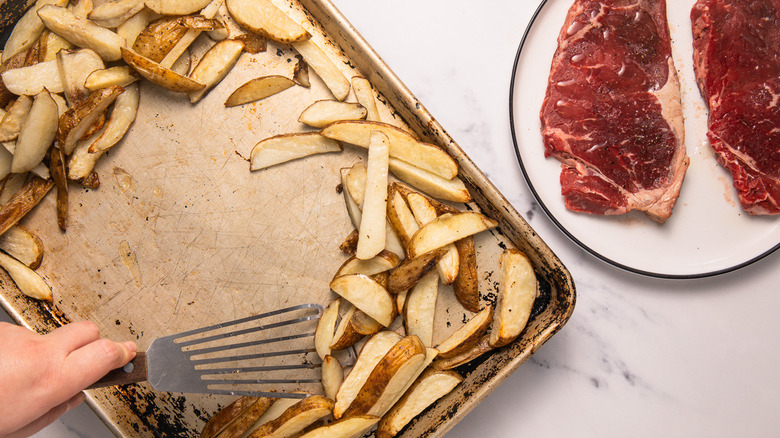
Remove the sheet from the oven, flip the fries, and push them to the edges.
Step 11: Add the steaks to the pan
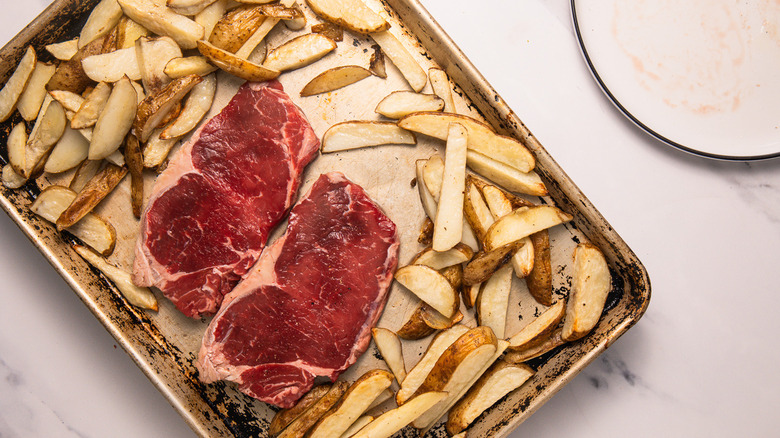
Place the steaks in the center.
Step 12: Roast the steaks
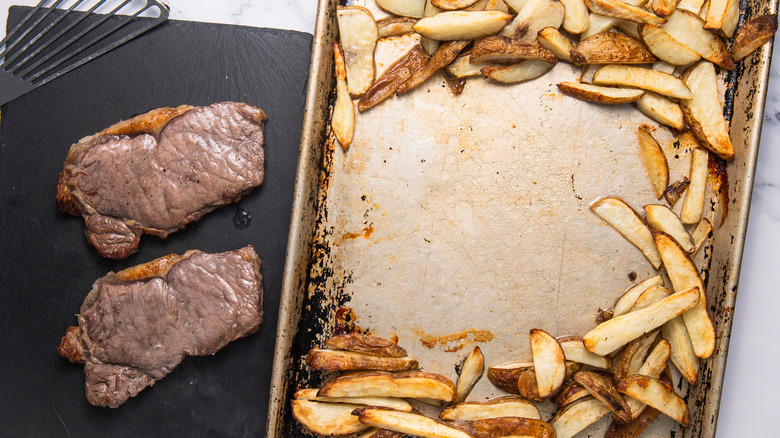
Roast for 10 to 12 minutes, until a thermometer inserted in the center of the steaks reads 125 F for medium-rare. The temperature will rise to 130 F while resting.
Step 13: Rest the steaks
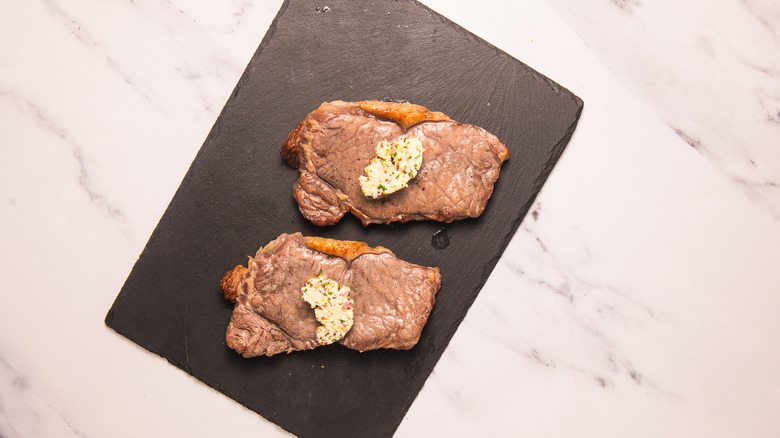
Transfer the steaks to a cutting board and top each with 2 tablespoons of the café butter. Rest for 10 minutes.
Step 14: Broil and season the fries
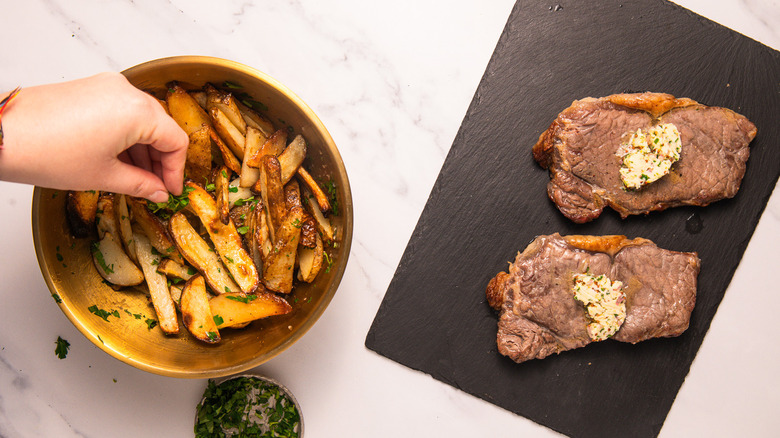
Return the fries to the oven and broil for 2 to 3 minutes, until deeply golden and crisp, watching closely. Toss the fries with the flaky sea salt and the 2 tablespoons parsley.
Step 15: Slice the steaks
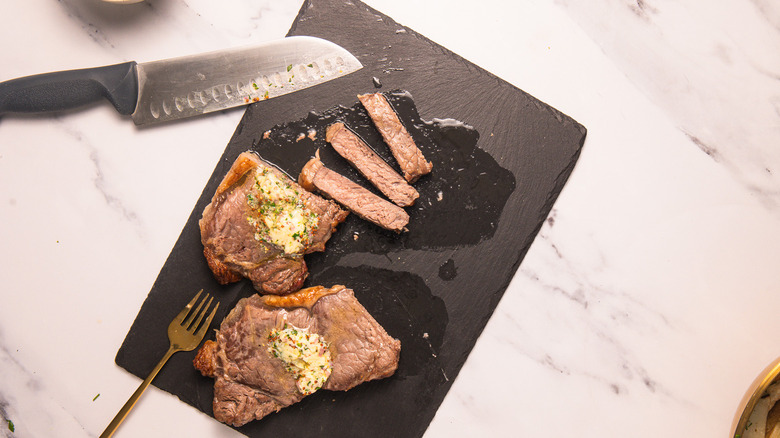
Slice the steaks against the grain.
Step 16: Plate and serve the steak frites
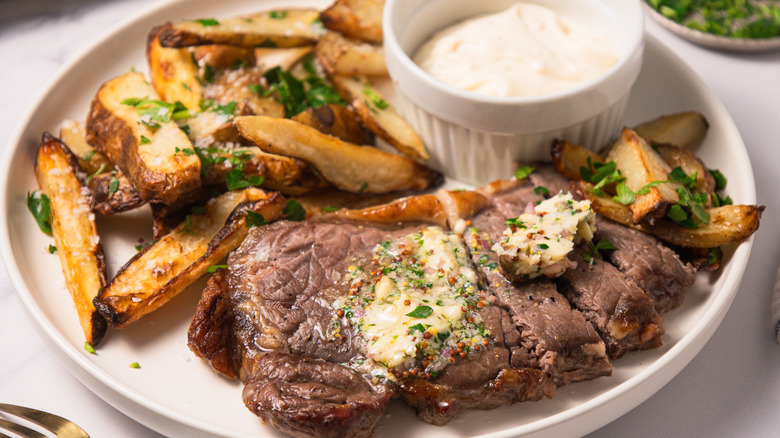
Arrange the steak and fries on a platter, top the steak with a slice of the remaining café butter, and serve with the aioli.
What can I serve with steak frites?
Sheet Pan Steak Frites Recipe
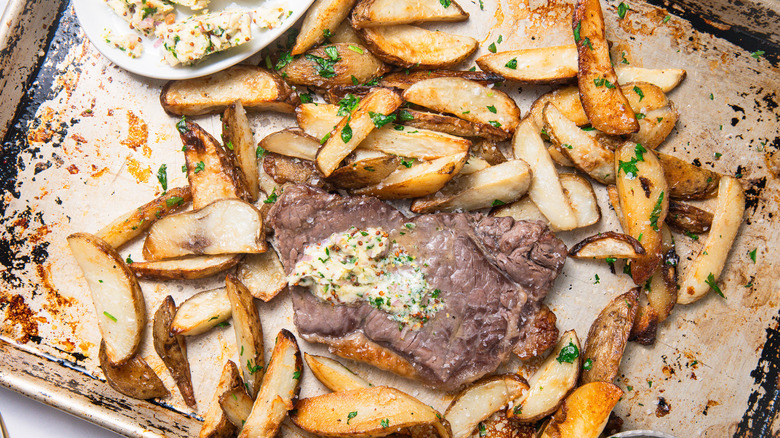
Our leveled-up steak frites recipe features duck fat on the fries, a pat of pungent café butter on the steak, and a garlicky, sharp lemon aioli on the side .
Ingredients
- For the café butter
- 8 tablespoons unsalted butter, softened
- 1 small shallot, minced
- 1 clove garlic, grated
- 2 anchovy fillets, minced
- 1 tablespoon fresh parsley, finely chopped
- 1 tablespoon fresh chives, finely chopped
- 1 teaspoon Dijon mustard
- 1 teaspoon fresh lemon juice
- ¼ teaspoon kosher salt
- For the lemon aioli
- ½ cup mayonnaise
- 1 clove garlic, grated
- 1 tablespoon fresh lemon juice
- ¼ teaspoon kosher salt
- For the frites & steak
- 2 pounds russet potatoes, cut into ½-inch sticks
- 2 New York strip steaks (1 pound each, 1½ inches thick)
- 3 teaspoons kosher salt, divided
- 1 teaspoon black pepper
- 3 tablespoons duck fat, melted (or olive oil)
- ½ teaspoon flaky sea salt
- 1 tablespoon neutral oil
- 2 tablespoons fresh parsley leaves, roughly chopped
Directions
- For the butter, mash the softened butter, shallot, garlic, anchovies, 1 tablespoon parsley, chives, Dijon mustard, lemon juice, and ¼ teaspoon salt together in a bowl until evenly combined.
- Spoon the butter onto plastic wrap, roll it into a log, twist the ends, and refrigerate until firm.
- For the aioli, whisk the mayonnaise, garlic, lemon juice, and ¼ teaspoon salt together in a small bowl. Refrigerate.
- Soak the chopped potatoes in a large bowl of cold water for 30 minutes to remove the surface starch.
- Season the steaks on all sides with the 2 teaspoons of kosher salt and black pepper, and let them sit at room temperature while the fries soak.
- Place a rimmed baking sheet on the lower oven rack and preheat the oven to 450 F.
- Drain the potatoes and dry them thoroughly with kitchen towels. Toss with the duck fat and 1 teaspoon kosher salt.
- Carefully pull out the hot baking sheet and spread the potatoes in a single layer, leaving room between sticks. Roast for 20 minutes, until the bottoms are golden.
- Pat the steaks dry and rub them with the neutral oil.
- Remove the sheet from the oven, flip the fries, and push them to the edges.
- Place the steaks in the center.
- Roast for 10 to 12 minutes, until a thermometer inserted in the center of the steaks reads 125 F for medium-rare. The temperature will rise to 130 F while resting.
- Transfer the steaks to a cutting board and top each with 2 tablespoons of the café butter. Rest for 10 minutes.
- Return the fries to the oven and broil for 2 to 3 minutes, until deeply golden and crisp, watching closely. Toss the fries with the flaky sea salt and the 2 tablespoons parsley.
- Slice the steaks against the grain.
- Arrange the steak and fries on a platter, top the steak with a slice of the remaining café butter, and serve with the aioli.
Nutrition
| Calories per Serving | 1,073 |
| Total Fat | 84.5 g |
| Saturated Fat | 31.8 g |
| Trans Fat | 0.0 g |
| Cholesterol | 207.0 mg |
| Total Carbohydrates | 44.3 g |
| Dietary Fiber | 3.7 g |
| Total Sugars | 2.4 g |
| Sodium | 1,097.0 mg |
| Protein | 35.3 g |

What are some tips for ensuring your steaks are cooked to the right temperature?
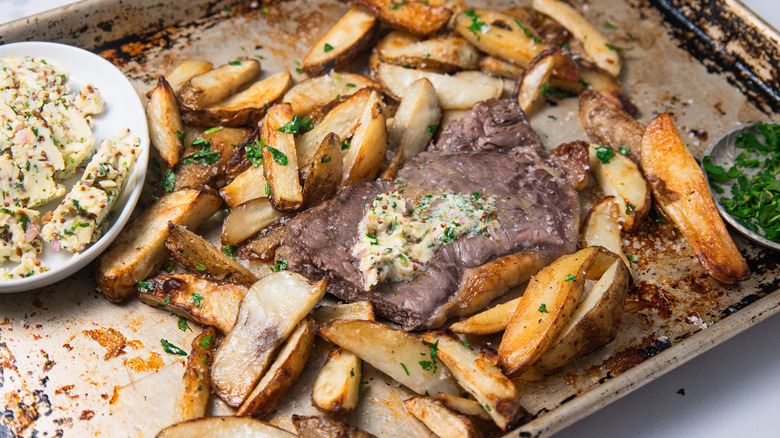
The only truly reliable way to know whether your steak is ready is to use a thermometer. The most common mistake people make is cutting into a steak to check for doneness while it's still cooking. The juices make the interior look rarer than it actually is, and you'll end up losing moisture in the process.
Instead, to know how close your steak is to being cooked through, insert a thermometer into the thickest part of the piece, away from the fat cap. If you want your steak perfectly done at medium-rare, pull it from the oven at 125 F. The steak will continue cooking due to carryover heat, bringing it up to around 130 F during the 10-minute rest. If you want it more medium, pull it out at 130 to 135 F, and expect it to land at about 140 F by the time all is said and done.
Oven temperature also matters here. If your oven runs hot or cold, the cooking time may need to be adjusted. And because most home ovens are off by 25 degrees or more, my best advice is to get an oven thermometer. And finally, for the best results, bring the steaks to room temperature before you cook them, as steaks cold from the fridge tend to cook unevenly.
What is the origin of café butter, and what can you use instead?
The café butter in this recipe is essentially a compound butter, a softened butter with aromatics, herbs, and seasonings that has been rolled into a log and chilled until firm. The version used here is loosely based on Café de Paris butter, a preparation made famous by a Geneva restaurant in the mid-20th century. It comes from the old French tradition of Beurre Maitre d'Hotel, which translates to the "head waiter's butter," a classic restaurant combination of butter, parsley, and lemon, which French brasseries have been melting over steaks for generations.
If you want to make some swaps to this recipe, you can use any compound butter in its place. A plain herb butter with parsley and garlic will add a similar flair. A blue cheese butter will bring in the funk. And a butter with tarragon and shallots will taste sophisticated and aromatic. If you're not a fan of anchovies, they can be left out, and the butter will be milder-flavored.
The most important thing with compound butter is to make it ahead of time, and let it firm up in the fridge. This will help it hold its shape when it hits the hot steak, and it will melt slowly rather than immediately upon contact.