

10 Best Tips For Perfect Prime Rib, From 5 Celebrity Chefs
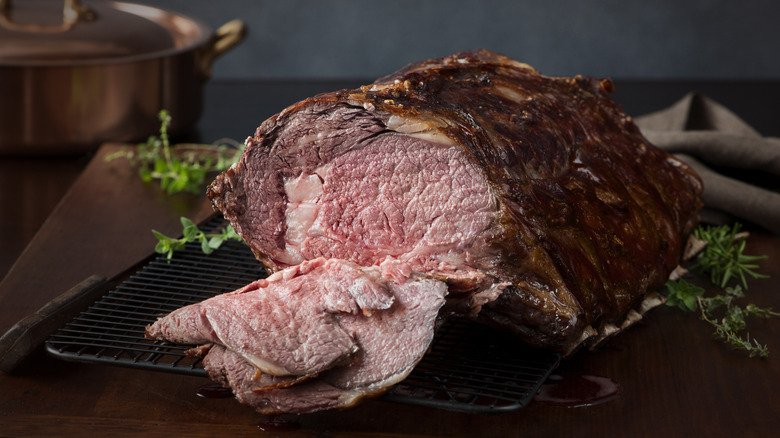
Dinner's ready, the table is set, and at its center sits a succulent prime rib that took 5 hours of your life to prepare. Brimming with anticipation, you pick up the carving knife and fork and begin slicing, only to find the interior undercooked. There's nothing worse than putting hours into something, only to mess it up. But sadly, this happens more often than you realize. Prime rib, to put it plainly, is hard to get right. And there are several reasons why.
You can under-salt and season it, forget to let it reach room temperature, overcook it, or forget to let it rest. And those are just a few of the missteps cooks commonly fall victim to. Luckily, we've found some celebrity chefs willing to rescue your roast. You don't have to settle for a subpar experience. Below, we've compiled the best tips for perfect prime rib.
These time-tested tips come from chefs Jean-George Vongerichten, who heads PRIME Steakhouse at the Bellagio and Jean George's Steakhouse at ARIA in Las Vegas, Michelin Star-winner Joe Isidori, who just opened his forth Arthur & Sons location in Palm Beach, Kent Rollins, host of the Outdoor Channel's "Cast Iron Cowboy" and co-host of the "Cowboy Coffee Hour Podcast," along with chef Daniel Boulud, owner of the prime rib trolley at La Tete d'Or, and chef, author and founder of The Robert Irvine Foundation, Robert Irvine.
Great marbling is a sign of quality prime rib
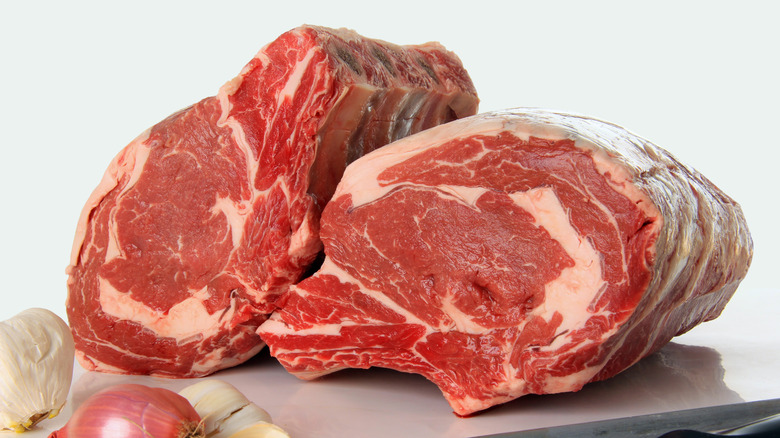
When it comes to cooking perfect prime rib, the age-old adage, "how you start is how you finish" definitely applies. It's important to select a quality cut of beef. "Marbling is fundamental. It defines both flavor and texture — when properly roasted, it melts into the meat," says chef Daniel Boulud. Steak marbling refers to the white specks and sections found in cuts of beef, and is generally what most chefs look for when cooking prime rib. Rather than selecting your own cut, chef Kent Rollins recommends asking "your butcher to cut one for you, [and] have them wrap it with butcher's paper and twine."
That said, marbling isn't the end-all-be-all for perfect prime ribs, lean beef with less marbling can work too, and has its own benefits. "Leaner beef is a healthier option with less saturated fat," chef Robert Irvine points out. How you prepare prime rib plays a bigger part in how it turns out than the type of cut you choose. Chef Joe Isidori says, "When cooked properly the grade might not play such a role, but definitely don't use cheap cuts."
Grain-finished beef is more convenient than grass-fed
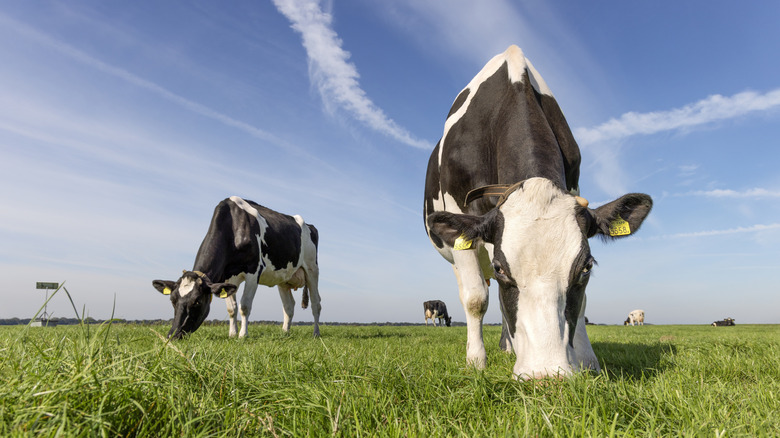
When selecting beef, you have the option of choosing grain-finished or grass-fed. "Grain-finished beef is typically pasture-raised but finished on grain, leading to higher marbling, a milder taste, and increased tenderness. It is also generally more affordable," says chef Robert Irvine. In fact, over 95% of the beef consumed in the U.S. comes from grain-finished cattle, which tend to be fatter than those raised on a grass-only diet.
Both varieties work just fine for prime rib, though, as both can have beautiful marbling. Grass-fed, however, contains less cholesterol and more omega-3 fatty acids. According to chef Jean-Georges Vongerichten, "Grass-fed beef is leaner, [and has a] slightly firmer texture with a more earthy, herbal flavor. I prefer [it] for high heat, shorter cooking times, as it tends to dry out." Grass-fed also costs more because it takes longer to raise, requires additional land, and often comes from a small, family-owned farm.
Wet-aged vs. dry-aged beef offer different results
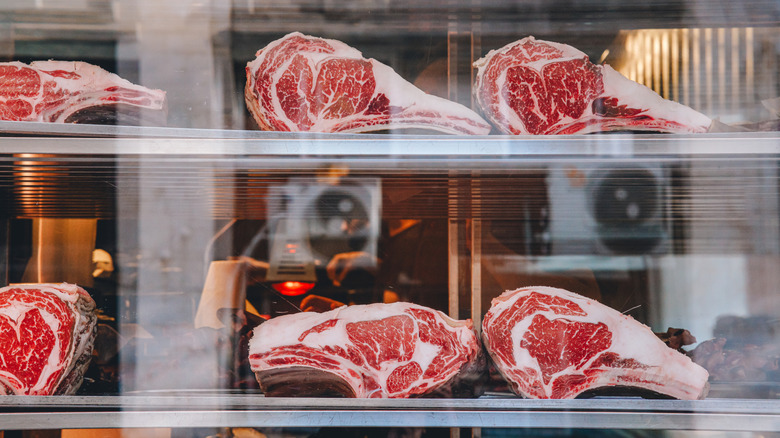
To buy wet-aged or dry-aged beef? That is the question. But first, what is wet-aging and dry-aging? Aging itself refers to the process of storing meat in a controlled setting to enhance flavor and tenderness. Dry aging is achieved in an open air, climate-controlled space, while wet aging involves vacuum-sealing steak in its own meat juice. "Wet aging is the industry standard, with about 90–95% of U.S. beef being vacuum-sealed to tenderize the meat via natural enzymes without moisture loss," says chef Robert Irvine.
Because of convenience and affordability, it's probably best to learn how to make perfect prime rib with wet-aged beef. But, Irvine warns that it can sometimes carry subtle metallic notes. Dry aged beef is more expensive because of how challenging it is to control moisture in open spaces. However, it offers a deliciously intense, nutty flavor that can sometimes emit a funky aroma depending on how long it's been aged. "I prefer around 32 days dry age for the perfect concentrated beefy sweet spot," says chef Jean-Georges Vongerichten. The number of days is a matter of preference, though. Chef Kent Rollins, for example, prefers to use steak dry aged for 7 days.
Bone-in vs boneless beef depends on preference
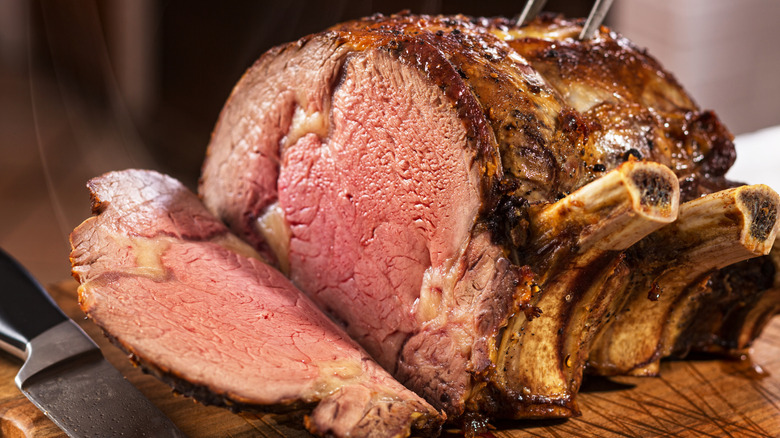
When selecting a prime rib roast, you must decide whether to use bone-in or boneless. It generally boils down to preference, but there are pros and cons to using both. Bone-in, for example, costs more and takes longer to prepare. The cost is attributed to the added weight of a bone; the prep time can benefit your prime rib cooking. "The bone acts as an insulator during the slow-roasting process," says chef Robert Irvine. The bone will also dictate how the prime rib can be portioned.
According to chef Jean-Georges Vongerichten, bone-in offers benefits that boneless beef doesn't. "Bone-in adds to the aesthetics and end result. Also, you can remove the bone once the prime rib is cooked and use it for a stock or roast the bones for a delicious snack." Boneless comes with its own set of perks, too. It's easier to carve into equal portions, and also produces a more uniform flavor throughout the roast, which makes it ideal for grilling and searing. With that said, boneless prime rib requires a different cooking technique and considerations, such as tying it off with twine.
Use salt and use a lot of it
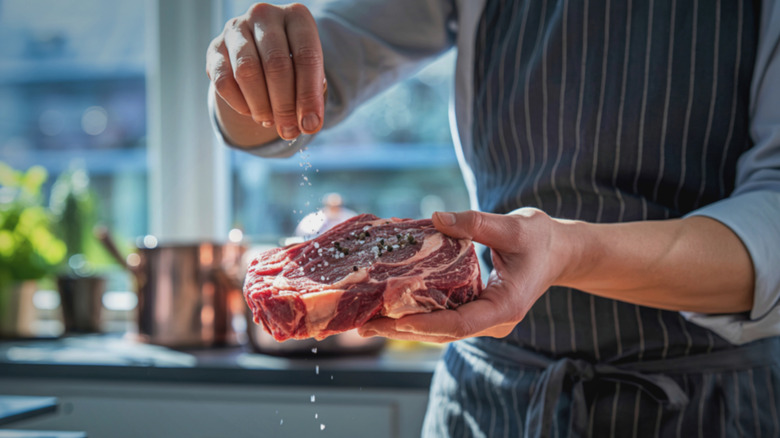
Salting your steak before cooking not only adds flavor, it absorbs moisture and tenderizes muscle fibers. How much salt is needed? According to chef Joe Isidori, "A LOT! This is because the prime rib is a massive, thick cut that requires significant seasoning to penetrate the interior, and salt unravels protein strands, allowing the meat to hold onto its natural juices during the long roasting process."
Removing moisture allows heat to transfer faster. Salt makes meat juice rise to the surface. The meat eventually re-absorbs the juice, which leaves the surface dry, and during the cooking process, the Maillard reaction kicks in, and that's how you get a delicious crust. The amount of salt and duration depends on the amount of beef. "Season generously but with precision — enough to enhance the natural flavor of the beef without overwhelming it. Around 1% of the total weight of the beef roast," says chef Daniel Boulud.
Salting can take less than an hour or, as chef Kent Rollins prefers, up to 48 hours. Basically, thicker cuts take longer than thin ones. As far as the type of salt to use, chef Robert Irvine suggests using "high-quality options like sea salt, Himalayan, or Celtic salt, as they are full of nutritional minerals your body needs." He advises against using iodized salt and offers another tip: Salt the slices after carving.
Use simple seasonings that don't overpower
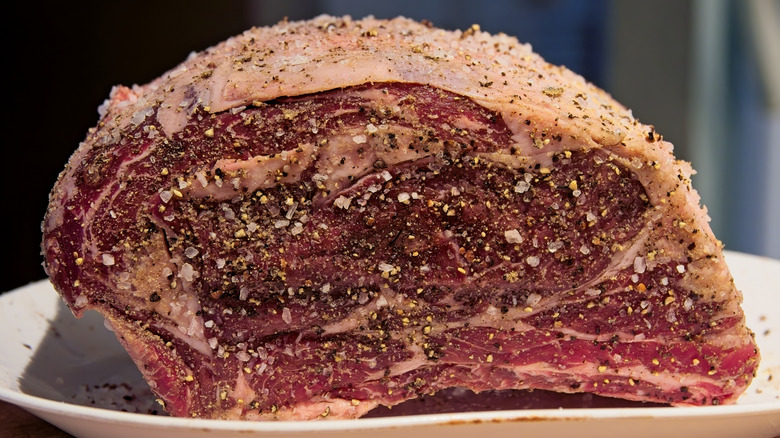
Perfect prime rib requires freshly ground black pepper. Unlike pre-ground pepper, fresh pepper is more pungent with a more pronounced flavor. It also stimulates our salivary glands, which enhances how our palates perceive flavor. Combine it with salt and you have the foundation of prime rib seasoning. Beyond that, it's all about using "Earthy flavors that don't overpower the beef, [along with] fresh herbs and aromatics," says chef Robert Irvine. This chef-approved method for tender prime rib includes garlic, mustard powder, sumac, and rosemary.
It's worth noting that prime rib is a thick cut of meat, and as a result, is easy to under-season. So, to ensure the seasoning penetrates, you should first make crosswise cuts into the fat cap, and add oil — a ½ cup for 5 to 8-pound roasts, and a ¼ cup for 10 to 12-pound roasts. Olive, vegetable, and grapeseed oils all work. Apply seasoning with both hands and rub it around until the full roast is covered.
Chef Kent Rollins uses coffee grounds, and a method he calls "butter botox," which involves inserting butter into slits throughout the roast. The butter melts into the meat and juice drippings, boosting flavor and caramelization. For herbs, fresh or dried both work. Fresh herbs are more flavorful, nutritious, and visually appealing, while dried herbs work better under heat and in sauces. To help you get started, here's a steak-to-seasoning ratio worth memorizing.
Medium rare is the ideal temperature
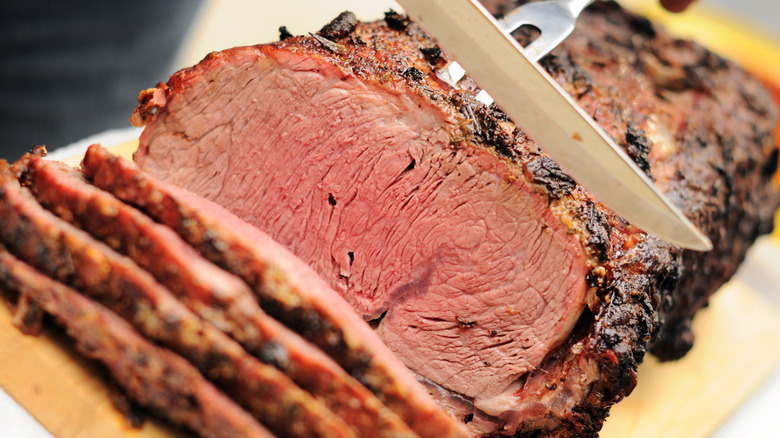
After salting and seasoning your prime rib, it's time to roll up your sleeves and fire up your oven. According to chef Jean-Georges Vongerichten, medium rare, or between 130 to 135 degrees Fahrenheit, is the sweet spot for tenderness and juiciness. To ensure prime rib cooks evenly, which reduces the gray ring of more-cooked meat that forms just beneath the skin, it must first be at room temperature. Once ready, place it in a baking pan atop a bed of sliced onions and herbs.
For the ideal hot pink interior color, chef Daniel Boulud says you must "Monitor the internal temperature at every stage of the cooking process." But keep in mind that "Doneness should always be determined by internal temperature and time rather than visual cues alone," says chef Robert Irvine, who recommends using a meat thermometer. Start with high heat before reducing the temperature for low-and-slow cooking. You can also baste it with pan juice every 30 minutes to enhance flavor.
Here's chef Vongerichten's approach: "Start in a high heat oven (450 degrees Fahrenheit) to develop a deep golden crust (15 to 20 minutes). Remove the rib and turn the oven down to 225 degrees Fahrenheit. While the oven cools, rub the prime rib with finely chopped fresh herbs such as thyme, rosemary and parsley tossed with a little olive oil. Return to the oven until an internal temperature of 120 to 125 degrees Fahrenheit."
Your searing style impacts how crust develops
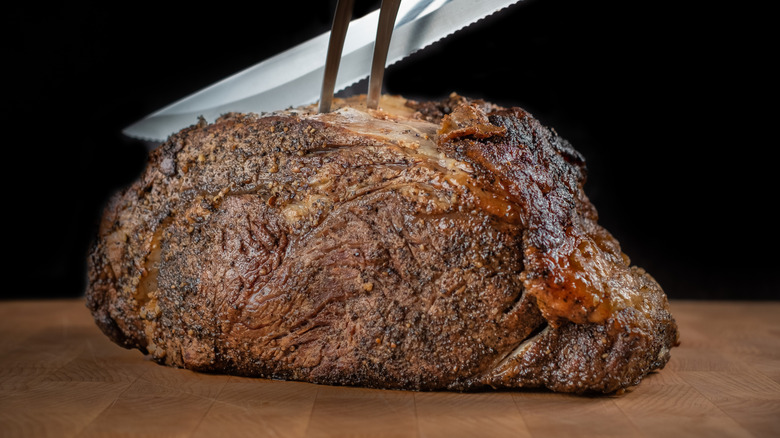
Crunching into a well-developed, savory crust is one of the highlights of eating perfectly-cooked prime rib. For better prime rib, you can start by searing (or browning) it, or you can reverse-sear it. Some chefs, like Kent Rollins, prefer to brown first. "You can brown it in a 425-degree Fahrenheit oven for 20 minutes, then reduce the heat to 275 to 300 and cook until desired internal temp is reached. I like to sear mine over an open fire first, then move to indirect heat to finish cooking." While others, like chef Daniel Boulud, recommend developing the crust after you've reached the ideal internal temperature.
"We achieve this through controlled, high heat during our browning stage, building flavor through caramelization rather than aggressive searing," he says. Searing is important, but not at the expense of overall flavor. Prime rib is thick enough to withstand high heat without overcooking, which is why the crust can be developed later. "Don't get creative. It's a 100 year-plus method for a reason!" chef Joe Isidori stresses.
At the end of the day, it has to do with preference. Chef Robert Irvine says, "Searing first creates a thicker crust, whereas reverse-searing or sous vide allows the meat to cook more evenly before finishing with a more delicate crust."
Let your prime rib rest before eating it
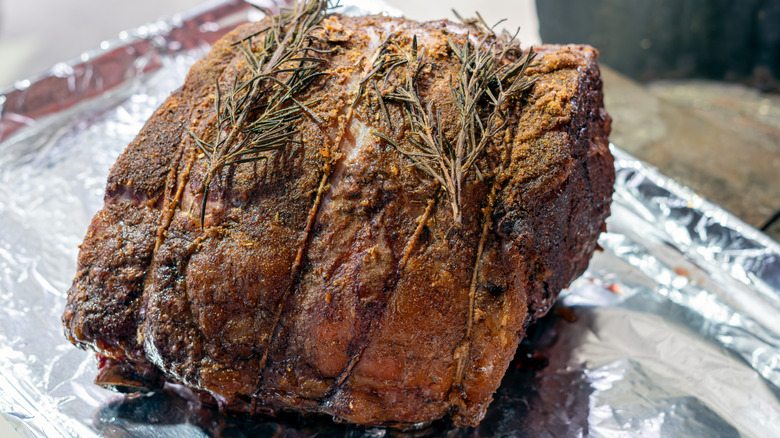
Forgetting to rest your roast after cooking it might ruin an otherwise perfect prime rib. Cooking tightens muscle fibers, temporarily pushing myoglobin juices to the surface. When you rest meat the temperature drops, the fibers loosen, and the juices get reabsorbed. Cut the meat too soon and you'll leave a juicy puddle atop your cutting board.
"Resting allows the juices to redistribute, ensuring each slice is perfectly cooked from top to bottom and end to end. We like to hot hold the prime ribs for at least an hour so that the temperature of the exterior and interior can even out," says chef Daniel Boulud.
If an hour feels like a long time, chef Jean-Georges Vongerichten says that a rest period of 20 to 30 minutes is sufficient. "There is no good way to rush a prime rib, and once it's cooked, it should be enjoyed on the day that it is roasted," chef Boulud adds.
Save the meat juice for sauce
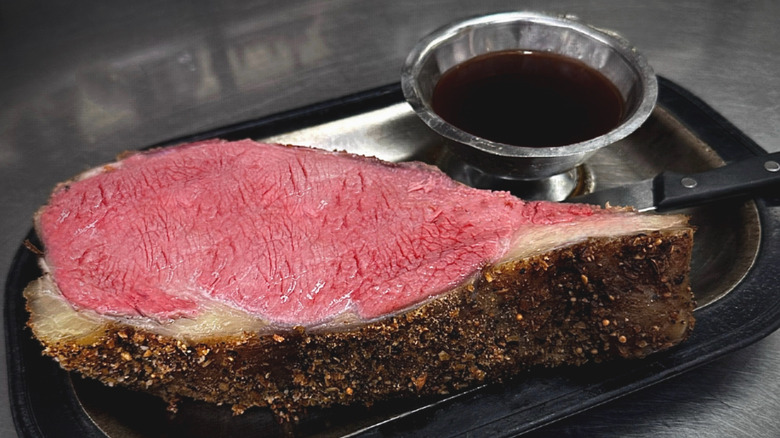
The scene is set. Your prime rib has reached room temperature, and with fork and knife in hand, you're finally ready to experience your labor of love. But, before you plunge into the glistening, pepper-flecked flesh, there's one final component to grab: sauce. Fortunately, the sauce you're looking for is at the bottom of the pan that you just used. Yup, good 'ol umami-rich meat juice, also known as au jus, or simply as French dip.
The rib's savory drippings, which are infused with seasoning and contain crunchy caramelized bits, is the perfect chef's kiss. "A flavorful au jus and creamy horseradish is a must," says chef Jean-Georges Vongerichten. Vinegary and peppery sauces typically pair well with prime rib, along with red wine reductions. If you're looking for the former, chef Robert Irvine recommends chimichurri, which he says, "offers a fresh garlic and vinegar kick."
However, if you want something more indulgent, you can try chef Daniel Boulud's go-to combination. "Our prime rib is served with bordelaise and béarnaise alongside creamy spinach, pommes purée, and a peppered popover." You can also use dill sauce to temper the rich flavor of prime rib, or experiment with similar sauces if you're feeling adventurous, or, go sauce-less. Who knows, you might prefer the natural taste of salt and pepper prime rib.