

12 Unexpected Ways To Use Soy Sauce In Your Cooking
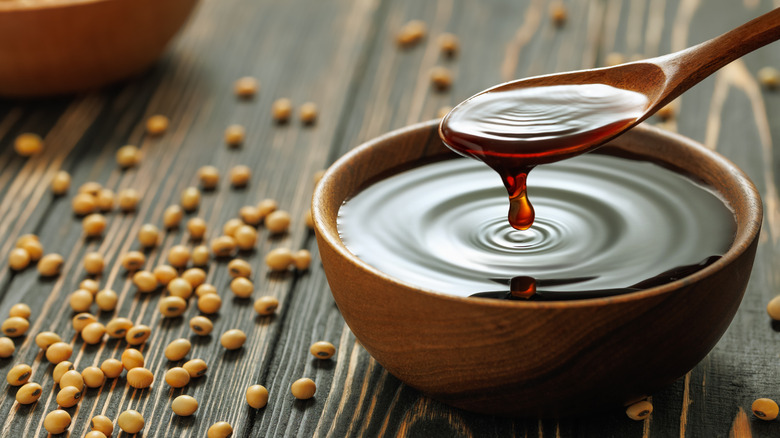
As one of the world's oldest condiments, soy sauce is still incredibly popular today. Originally created in ancient China around 500 B.C., soy sauce was first popularized in Asia before it was introduced to other countries around the world. These days there are many soy sauce varieties, ranging in flavor and consistency. While most use soy sauce exclusively for stir-fries and sushi dipping, some have expanded its reach and keep it on hand as an everyday cooking staple. Because of its high salt content, soy sauce can be used instead of salt, and its rich umami flavor makes it a popular ingredient for marinades and other savory capacities. In addition to being a flavor booster, soy sauce can also be used in sweet treats — believe it or not. Once you've unlocked the vault to unexpected ways to use soy sauce in your cooking, you'll be sure to keep your refrigerator and pantry stocked.
Even though most of us only cook at home, it's important to give the unexpected a try, push boundaries, and experiment with new flavor combinations. Soy sauce is one of the most versatile condiments to use, especially suitable in vegetarian cuisine as it provides that meat-like umami depth. There's a reason this ancient sauce has stood the test of time and will likely remain one of the world's favorite flavor boosters. Now, it's time you used it in a more creative way in your kitchen, so let's get experimenting.
Blend into soup
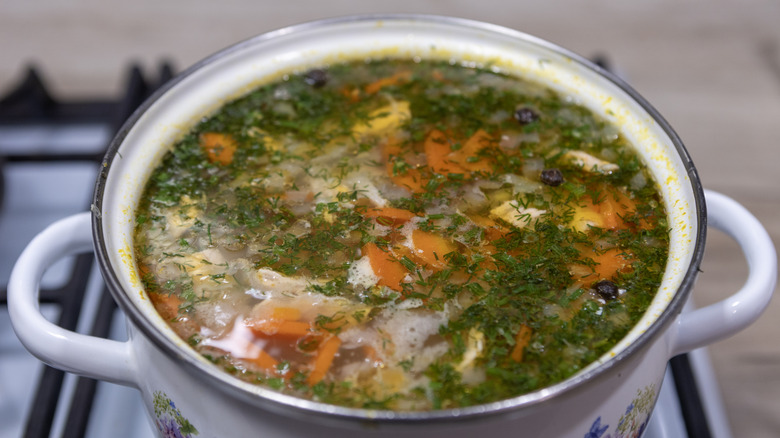
Different types of food prompt different emotions. Spicy, tropical foods can trigger feelings of relaxation, smokey barbecue might remind us of family get-togethers, while soups often leave us feeling comforted and nurtured. There's something about this universal dish that exudes comfort, and you can further intensify this feeling by adding depth. To achieve this, consider boosting your favorite soup with a splash of soy sauce instead of just loading it with salt. Salt is a fantastic flavor enhancer, but soy sauce delivers saltiness and a unique flavor twist.
Soy sauce can flavor broths and creamy soups, but don't forget stews and similar dishes as they always benefit from richer umami notes. Soups that contain an onion base, chunks of meat, or a full-flavored broth, like chicken noodle soup or French onion soup, are great candidates. Be sure to note the sodium level of the particular soy sauce you're using and try to match with the salt stipulated in the recipe. This simple soy sauce swap will leave you with a richer, more layered soup.
Mix into mashed potatoes
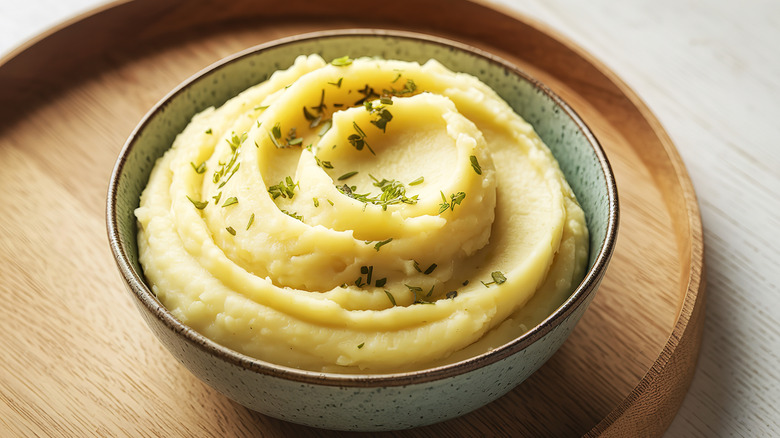
Mashed potatoes are one of those foods that get labeled as simple, when in reality they are a blank canvas, waiting to be adorned with creativity and pizzazz. Instead of standard heavy cream or chives, one of our favorite additions is a splash of soy sauce. As potatoes are not rich, complex, or layered with flavor, when whipping up a bowl of mash, you have to introduce these elements. Typically, butter takes care of the fatty mouthfeel and density, while cream adds that smooth texture. Salt and pepper are a must, but a little kick of soy sauce can bring the entire recipe together.
This one savory addition can transform mashed potatoes in a way that you'd never expect. The standard side dish can help to tie the plate together, especially if you're serving mashed potatoes alongside a piece of meat, or an umami-rich vegetable like asparagus or roasted tomatoes. Soy sauce, in combination with butter, makes for a memorable duo, hitting both mouthfeel and flavor all in one. Note that adding dark soy sauce to your mashed potatoes may affect the color of the dish. Also, don't forget that adding miso to mashed potatoes is another creative twist you can use.
Add to brownies

When we talk about using soy sauce in your cooking in unexpected ways, brownies just about make the top of the list. For an ultra-savory condiment, it might be surprising to find it inside a brownie batter, but, oddly enough, it works. Here's why: Brownies are all about depth, and soy sauce can help build that complexity. Now, if you go this route, you'll want to proceed with caution, and that means don't measure it with your heart. Instead, eliminate salt from the recipe, and use twice the amount of soy sauce. So, if the recipe calls for ½ a teaspoon of salt, use a full teaspoon of soy sauce.
The addition will be slightly noticeable, although not strong enough to be identified once the full recipe comes together. Those enjoying your secret-ingredient brownies might mention a rich mouthfeel or richer flavor, but they probably won't be able to put their finger on it. And the fun does't end with brownies. Really, you can use this swap for almost any dense, rich, chocolate-based dessert that calls for salt – soy sauce is a fantastic and unexpected way to add depth to your desserts.
Drizzle over ice cream

Sweet and savory combinations have long been a popular food trend best evident in classic dishes like chicken and waffles, candied bacon, and maple pulled pork. Mimicking the previous combination of soy sauce and brownies, don't be scared to experiment further with the method of adding a sparkle of savory flavor to sweet dishes. One of the more creative approaches is to use soy sauce as a savory condiment, and one of the best ways to do it is to drizzle a small amount of soy sauce over ice cream to give it an umami kick.
You may have heard of the surprisingly delicious pairing of olive oil over ice cream, and this saltier version has a similar vibe. Though olive oil has more to do with the fatty mouthfeel, it also adds flavor. However, soy sauce focuses primarily on flavor. Now, this is one of those suggestions you'll want to ease into. As we know, soy sauce is incredibly intense and salty. So, keep in mind that even the smallest drizzle can change the entire dish in a matter of seconds. Start light as you can always add more, and, ideally, use chocolate or vanilla ice cream or gelato the first time around. You can also use an alternative sweetener like maple syrup or hot honey as secondary condiments that will perfectly balance that intense saltiness.
Boost umami in pasta sauces
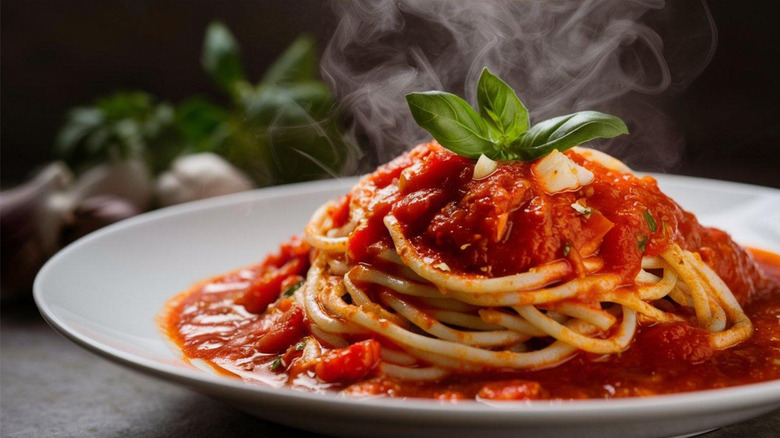
Pasta is essentially a vehicle for flavor. As it's such a versatile base ingredient, it has an incredible pairing range. Whichever pasta and sauce combination you choose, it's essential to include some sodium-rich ingredient. Traditionally, pasta sauces incorporate salt, but if you want something more complex, try adding soy sauce. This creative twist would work especially well with tomato-based sauces that are already umami-rich and could always benefit from additional depth.
That brothy, meaty flavor in soy sauce, along with the salty, full-bodied kick come together to elevate classic marinara. For homemade marinara, use soy sauce in place of salt, be sure to caramelize your tomato paste, and blossom your herbs for ultimate flavor. Even if you don't make your own marinara at home, you can upgrade store-bought tomato sauce with a splash of soy sauce. Beyond tomatoes, you can use soy sauce alongside butter to make a quick and flavorful pasta sauce. In fact, there are few pasta sauces that wouldn't benefit from a small dash of this brown salty condiment, shattering all misconceptions that soy sauce is an ingredient to be used exclusively in Asian cuisine. Of course, this doesn't mean you shouldn't use it in Asian-style noodle stir-fries for a more traditional application.
Pour it into gravy
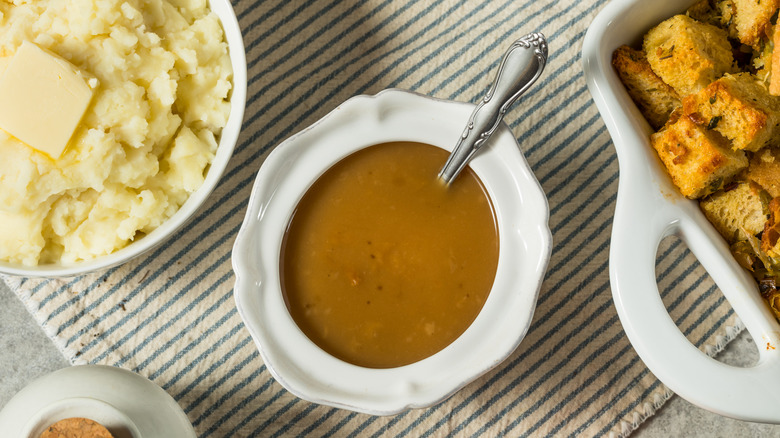
Everyone should make homemade gravy. Although an intimidating feat, homemade versions can actually be quick and painless, especially with the right ingredients. There are several ways to go about it, but the basic formula involves using some sort of stock — meat or vegetable-based — and reducing it while adding additional flavors and thickeners. Some of the richness of soy sauce is reflected in standard gravy, so combining the two can enhance our favorite gravy qualities. If you're using store-bought stock or broth, opt for low-sodium or salt-free, and if you're making your own, then simply use soy sauce in place of any additional salt. Low-sodium versions are preferred as they can help find a balance that's not too intense.
Besides soy sauce, there are other ingredients that can absolutely transform your gravy into something incredible. An ideal gravy is complex, deep, rich, and powerful, yet it's not overpowering. Soy sauce can help do just that, as even just a very tiny bit can add that powerful depth. Start with a small splash, give it a taste test, and add more from there if needed. The biggest mistake you can make with soy sauce is using too much, and it's especially essential to be careful with vegetarian gravy that might be missing that meaty undertone.
Scramble into eggs
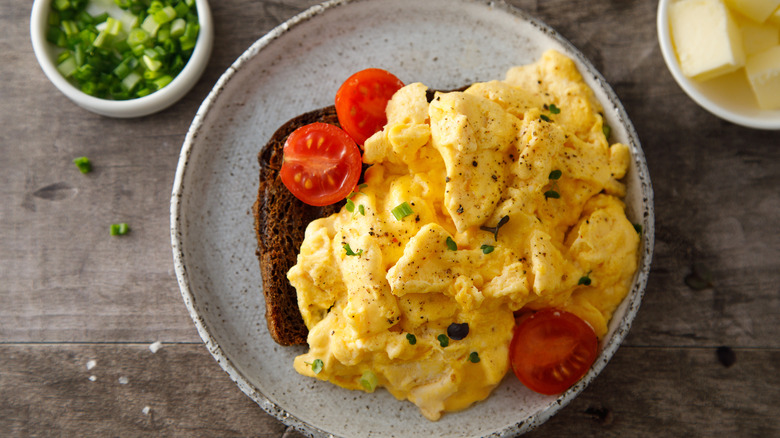
Most of us eat eggs for breakfast as they are quick, easy, filling, and satisfying. But having the same breakfast every day can get dull, especially if you're not changing the supporting ingredients. Adding different vegetables to your scrambles or omelettes, using different cheese, or being creative with spice additions can help, but if you really want to transform this morning staple, add just a trickle of soy sauce to your scrambled eggs.
As you may have heard, scrambled eggs fare well with a splash of liquid. This could be milk, seltzer water, or, in this case, soy sauce. If you're adding soy sauce to your scrambled eggs, be sure not to add any other liquid to ensure your eggs don't end up watery. Include a mellow cheese, and use less soy sauce if you're using an ultra-salty cheese. You can whip the soy sauce right into the raw egg mixture before it hits the pan, or use a splash of soy sauce to season cooked eggs, as you might do with table salt or ketchup.
Add it to your salad dressing
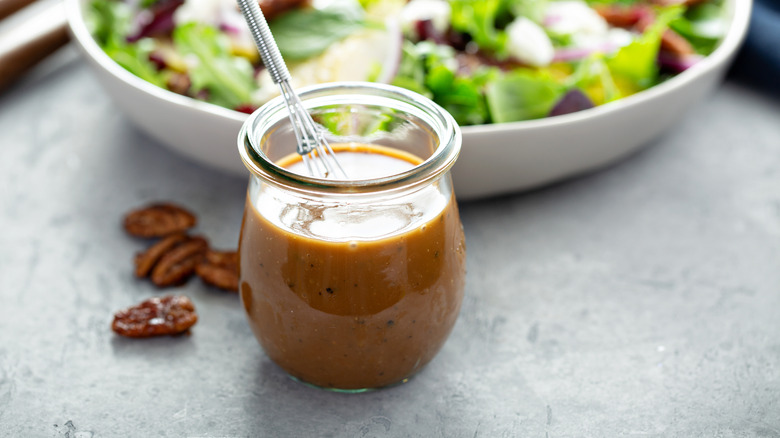
Vinegar and oil tend to be the dynamic duo found at the base of most salad dressings. The fatty mouthfeel of the oil mixed with the tangy and bold vinegar strikes the perfect balance to coat those leafy greens. We firmly believe that if you think you don't like salads, it's probably because you're not using the right dressing, as it can make all the difference in the flavor department. Typical dressing incorporates a dash of salt, especially if there isn't an abundance of vinegar, or the addition of salty ingredients like Dijon mustard. However, there are other salt alternatives to consider, and at the top of the list is soy sauce.
Although soy sauce is famously found in Asian-style vinaigrette, it can certainly help to enhance your typical balsamic-based dressing. The key is to add more balsamic and oil than soy sauce, which should be used as an enhancement rather than a base ingredient — mainly due to the intensity of the sodium content. You'll notice that the flavor combination of the tangy balsamic, overwhelmingly luscious oil, and sharp soy sauce results in an incredibly balanced dressing ideal for seasoning your favorite greens.
Mash it into compound butter
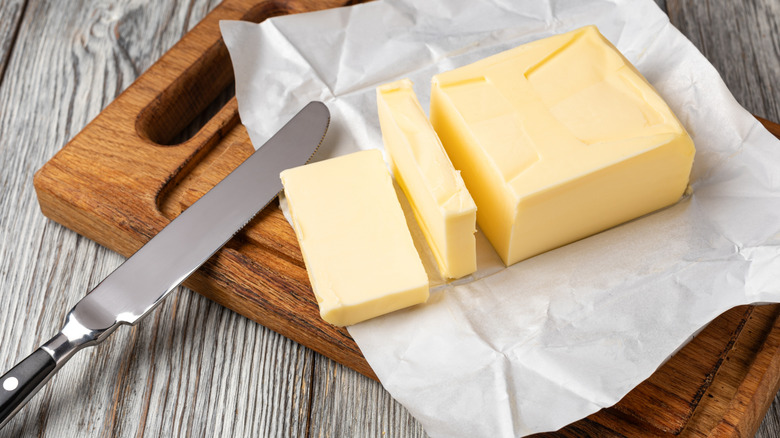
Compound butter is all the rage, and we can understand why — who wouldn't like butter mixed with various flavor-packed components. Classic compound butter can be used on bread, over pasta, and in just about any capacity you might use good old plain butter. And while standard versions typically blend herbs and spices, you can switch it up and use soy sauce to impart body and flavor.
All you need to do is soften your butter, whip in a small amount of rich soy sauce — preferably use one of the thicker varieties – and shape it before tossing it back into the refrigerator. Note that the color of the butter will be slightly darker due to the soy sauce addition. Use unsalted butter and expect the compound butter to have miles of depth. This is the perfect flavor combination to use with steak, poultry, bread, pasta, or vegetables. Essentially, any savory food that could use an umami boost will benefit from the rich, buttery mouthfeel and a dash of soy sauce flavor. Use tamari instead of soy sauce as a gluten-free alternative.
Season roasted nuts
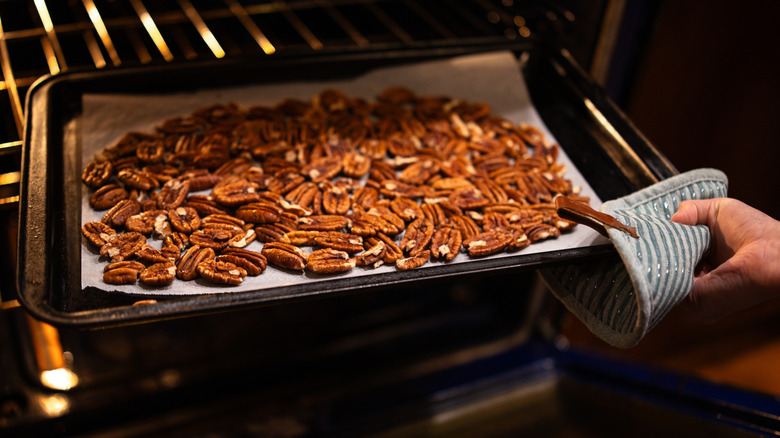
It seems like roasted nuts are served almost exclusively over the holidays, and it's a shame. There's something incredibly comforting about seasoned and roasted nuts, whether they are coated with a sugary, spiced glaze, or they lean more into herby and salty territory. Though there are many methods to do it, our favorite way to season roasted nuts is simple and to the point: Just add a small splash of soy sauce. Likely, most of the savory roasted nuts you've enjoyed in your life are seasoned with salt, but there are a few reasons why you should opt for soy sauce instead.
The first is consistency. Nuts have nooks and crannies, and it's tough to get an even distribution of salt across these rugged surfaces, especially since it tends to settle in the bottom of the bowl. But, if you toss your nuts in a little soy sauce and roast them, the sauce is more likely to stick and remain in place. Color is another reason soy sauce is preferable, as it provides a pleasing toasty look ideal for roasted nuts. And lastly, that meaty undertone helps boost complexity and nuttiness, creating a more rounded mouthfeel and an utterly satisfying snack. Don't make the common mistake and overseason your nuts; keep it light.
Make a bread dip
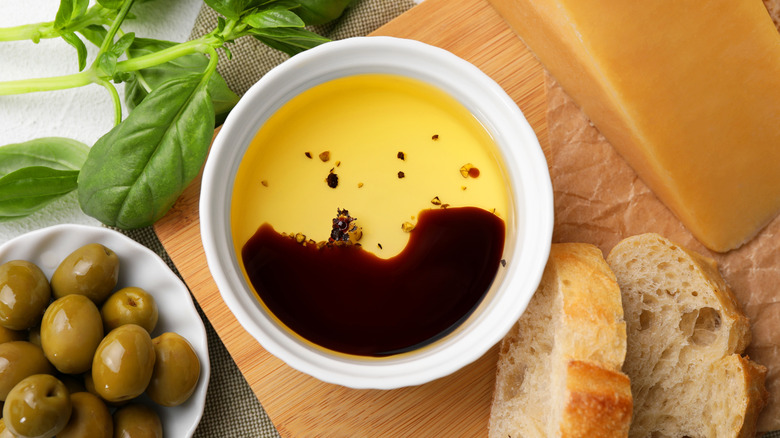
Fresh bread is best served with olive oil-based dipping sauces. There is nothing more satisfying than tearing off a chunk of warm bread and using it like a sponge to soak up high-quality extra virgin olive oil, especially if it's seasoned properly. There are a few different directions to take when choosing seasonings, but we often see flaky sea salt, crushed black pepper, pepper flakes, Parmesan, herbs, and sometimes a splash of balsamic. Though all of these work great, if you want more savory depth, next time, swap the flaky sea salt for soy sauce.
Luckily, soy sauce pairs beautifully with each of those additional ingredients, especially with Parmesan as they share some similarities. The pop of soy sauce mixed with rich olive oil is just about one of the best combinations on the planet. Just be sure to whip your ingredients together for an even distribution of flavor. If the mixture becomes too intense, simply add more EVOO to the mix to mellow it down. Choose a high-quality extra virgin olive oil for dipping bread, and consider using a heavier and thicker soy sauce. If you're adding balsamic vinegar to the mix, use a sweeter variety.
Add into meatballs

Meatballs are packed with flavor, but it's always possible to go further. Traditional meatballs typically include fresh parsley, breadcrumbs, chopped onion, salt, and pepper, but if you want to experiment with other ingredients, try incorporating miso, minced garlic, or mushroom powder, and for a really creative kick, add a splash of soy sauce. The goal with meatballs is to create nuggets loaded with savory flavor, and the best way to do it is to increase the umami factor.
There are many other ways how to add flavor to meatballs, but if you decide to go with soy sauce, the method is pretty straightforward: Replace the salt in your recipe with soy sauce, and be sure to keep any other liquid ingredients to a minimum. You may need to add more breadcrumbs or even some flaxseeds to soak up extra liquid. However, if added properly, soy sauce can help to make those meatballs extra juicy. As long as you're not over-salting, splash away.