

Baked St. Louis-Style Ribs Recipe
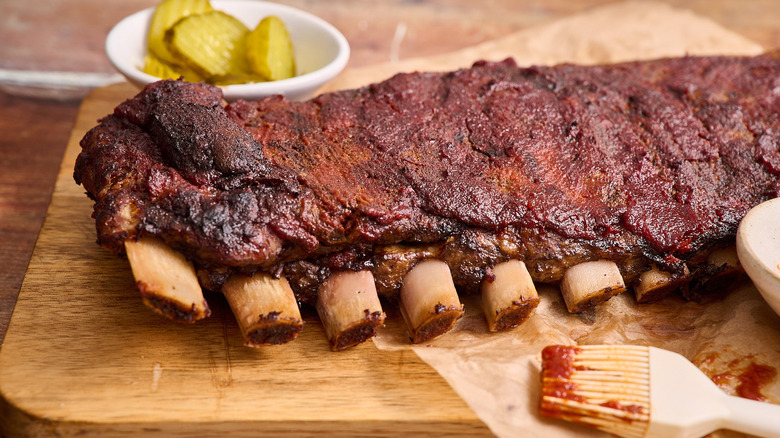
Some of the best barbecue in the nation is in Missouri, and you might be surprised to learn that it's not just Kansas City that claims the fame. St. Louis, located in eastern Missouri, has a similar smoky style but specializes in grilled meats and a sweet-and-tangy sauce, a unique pairing that makes for especially decadent barbecue. A product of the Midwestern meatpacking industry, St. Louis specializes in spare rib, a cut favored for its tender, meaty pieces. Meat packers in St. Louis cut the ribs into neat, rectangular pieces to leave more meat on the bone, thus creating the style now associated with the city.
Developer Michelle McGlinn pays homage to this classic dish with her very own baked St. Louis-style ribs recipe, in which the ribs are baked at low heat until endlessly tender. Then they're coated in a barbecue sauce inspired by Maull's — a barbecue sauce created in St. Louis almost 100 years ago and a staple of grilled pork steaks — for a caramelized, sticky crust. Maull's serves as the quintessential St. Louis-style sauce, made of ingredients like anchovies, oranges, onion powder, and garlic powder. The sauce, which isn't too far off from Kansas City's famously sweet tomato-based sauce, also includes vinegar that makes it uniquely tangy. This recipe truly takes on the flavors of the city, encapsulating the rich, tangy, and ever-so-slightly sweet quality of the region's barbecue.
Round up the ingredients needed to make baked St. Louis-style ribs
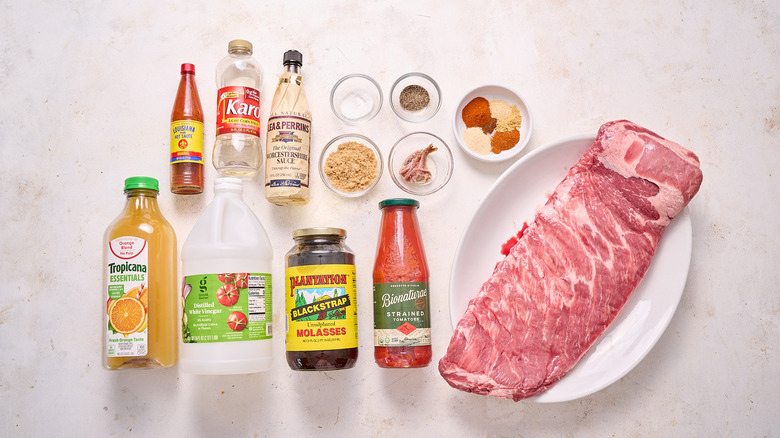
Though the ingredient list for this recipe looks lengthy, you might already have many of the items in your spice rack. You'll need salt, black pepper, paprika, garlic powder, onion powder, chili powder, and ground cloves. Besides spices, you'll also need other items that you may already have at home — brown sugar, white vinegar, Worcestershire sauce, and hot sauce. In addition to those ingredients, you'll have to gather tomato puree, corn syrup, molasses, orange juice, and anchovies.
Don't forget to get the main star of this recipe: the St. Louis-style spare ribs. Spare ribs are longer, flatter, and fattier than baby back, and when cut into a uniform, square shape, they become St. Louis-style ribs. If the ribs aren't labeled as St. Louis-style, look at their shape. While every butcher may cut them a little differently, St. Louis-style will be almost completely rectangular, while regular spare ribs will have a wider, more oblong shape, with larger ribs on one end.
Step 1: Heat up the oven for the baked St. Louis-style ribs
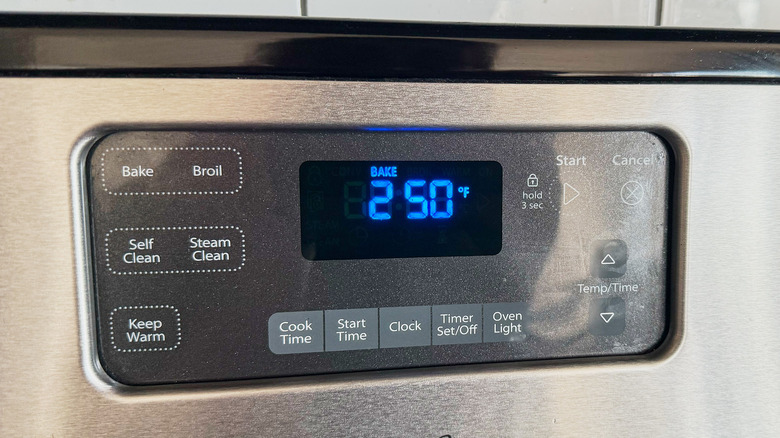
To start the ribs, preheat the oven to 250 F.
Step 2: Make the spice mix
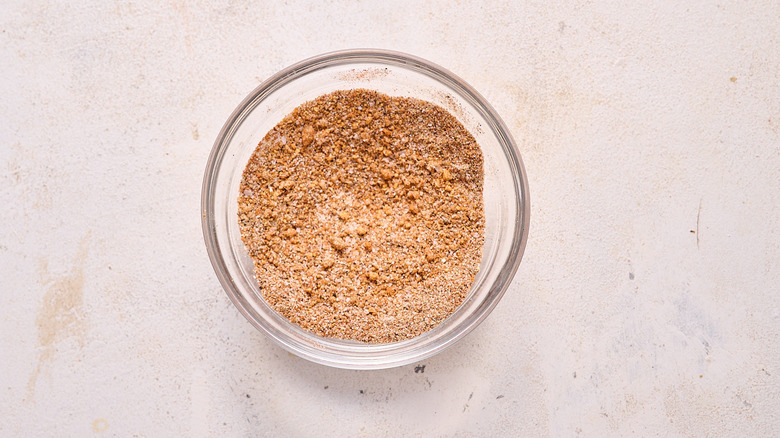
In a bowl, add the salt, pepper, paprika, brown sugar, garlic powder, onion powder, and chili powder. Whisk the spices together.
Step 3: Coat the ribs with the spice mix
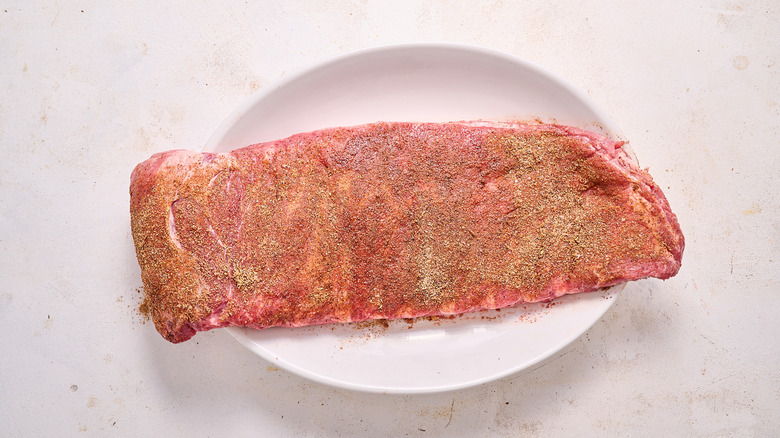
Rub the ribs with the spice mixture, making sure the top side is completely coated.
Step 4: Cover with foil and bake
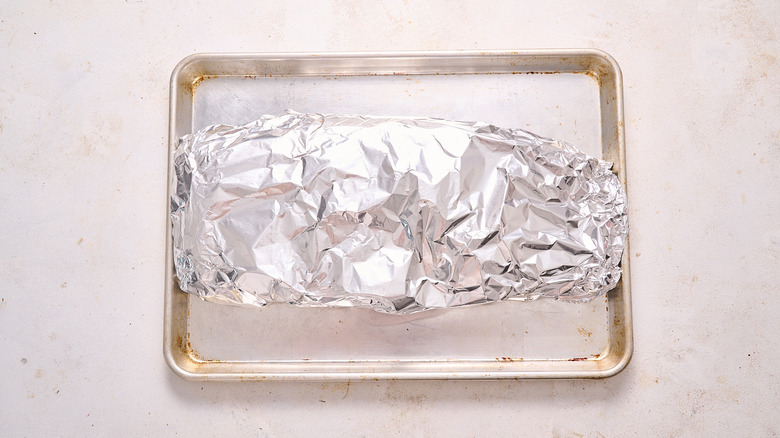
Wrap the ribs in foil and place on a baking sheet. Bake for 2 to 2 ½ hours.
Step 5: Time to make the barbecue sauce for the baked St. Louis-style ribs
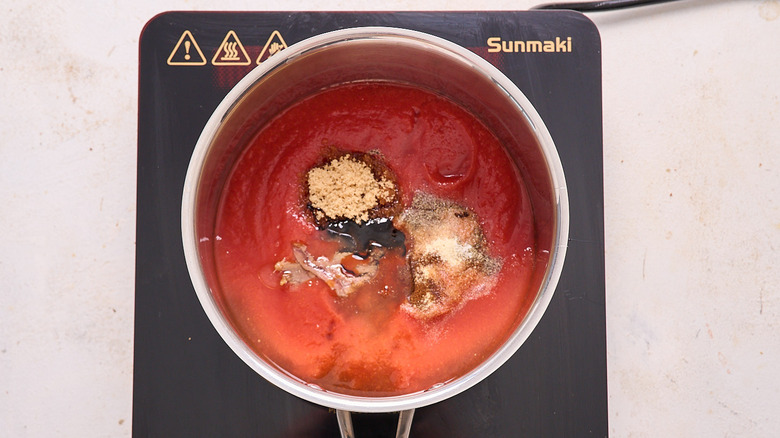
Meanwhile, start the barbecue sauce by adding all the sauce ingredients to a saucepan over medium heat.
Step 6: Let the sauce simmer
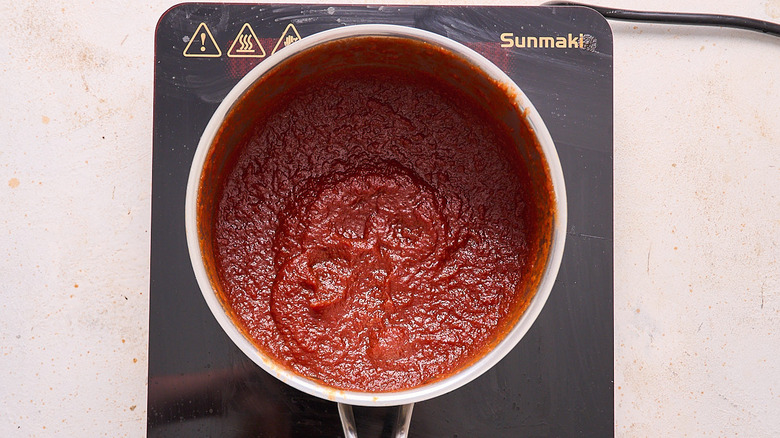
Simmer the sauce for 10 to 15 minutes, or until thick, and set aside.
Step 7: Remove the ribs from the oven
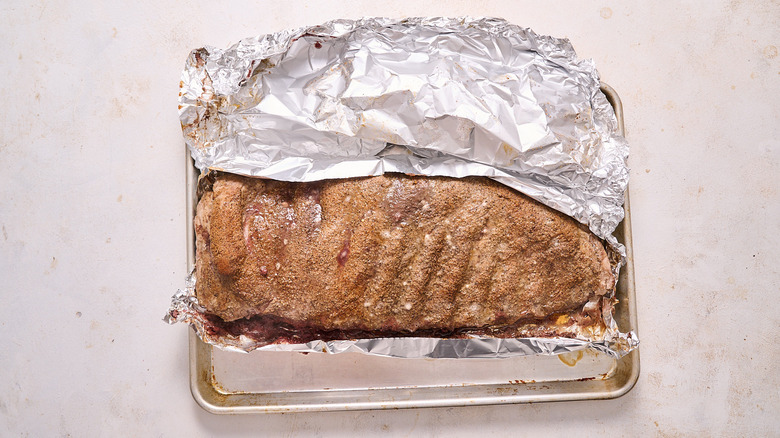
Once the ribs are done cooking, remove them from the oven and peel back the foil on the top.
Step 8: Brush with barbecue sauce
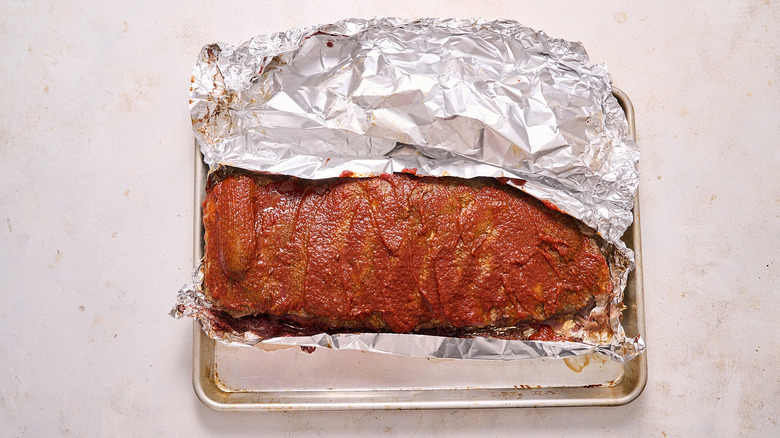
Use a basting brush to brush the top of the ribs with barbecue sauce.
Step 9: Cover and bake again
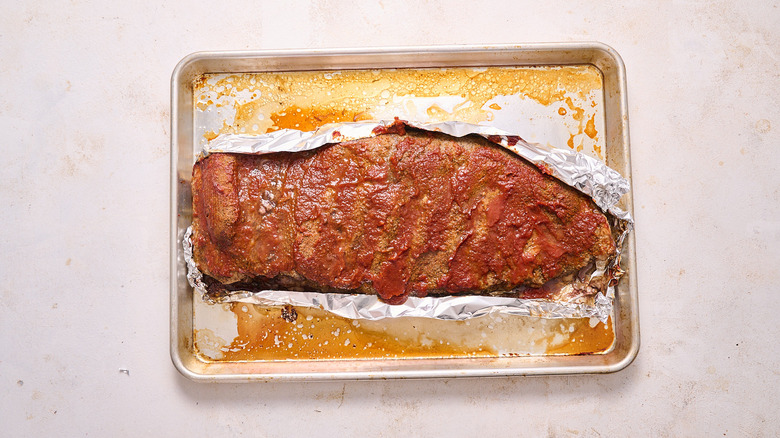
Cover the ribs again with foil and bake for an additional 1 hour, or until tender.
Step 10: Bake uncovered
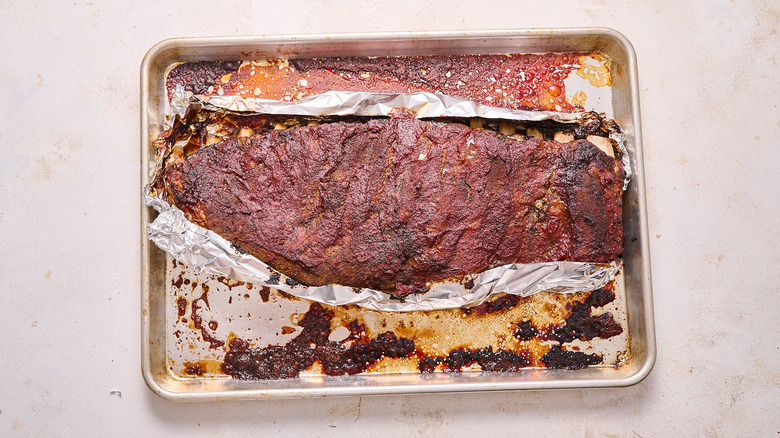
Unwrap the ribs and bake for 1 more hour, or until the sauce is caramelized.
Step 11: Serve the baked St. Louis-style ribs
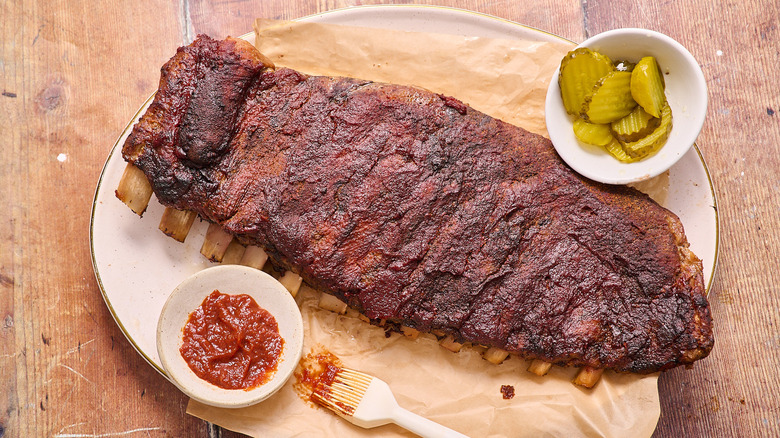
Serve with extra barbecue sauce on the side.
What to pair with these baked St. Louis-style ribs
Baked St. Louis-Style Ribs Recipe
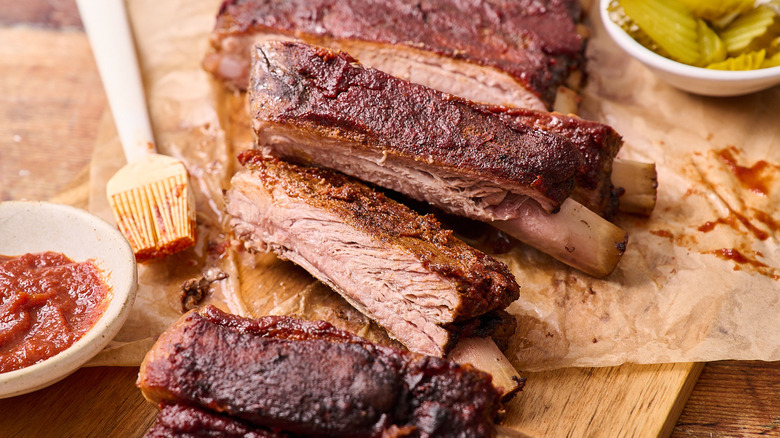
There's no getting away with messy hands when eating these baked St. Louis-style ribs, so dig into the spare ribs covered in caramelized barbecue sauce.
Ingredients
- For the ribs
- 1 tablespoon salt
- 1 tablespoon black pepper
- 1 tablespoon paprika
- 2 teaspoons brown sugar
- 2 teaspoons garlic powder
- 2 teaspoons onion powder
- 1 teaspoon chili powder
- 5 pounds (1 rack) St. Louis-style spare ribs
- For the barbecue sauce
- 1 ½ cups tomato puree
- ¼ cup distilled white vinegar
- 3 tablespoons corn syrup
- 2 tablespoons brown sugar
- 1 tablespoon Worcestershire sauce
- 1 tablespoon molasses
- 1 tablespoon orange juice
- 1 teaspoon hot sauce
- 2 anchovies, chopped
- ½ teaspoon garlic powder
- ½ teaspoon onion powder
- ¼ teaspoon salt
- ¼ teaspoon black pepper
- ¼ teaspoon ground cloves
Directions
- To start the ribs, preheat the oven to 250 F.
- In a bowl, add the salt, pepper, paprika, brown sugar, garlic powder, onion powder, and chili powder. Whisk the spices together.
- Rub the ribs with the spice mixture, making sure the top side is completely coated.
- Wrap the ribs in foil and place on a baking sheet. Bake for 2 to 2 ½ hours.
- Meanwhile, start the barbecue sauce by adding all the sauce ingredients to a saucepan over medium heat.
- Simmer the sauce for 10 to 15 minutes, or until thick, and set aside.
- Once the ribs are done cooking, remove them from the oven and peel back the foil on the top.
- Use a basting brush to brush the top of the ribs with barbecue sauce.
- Cover the ribs again with foil and bake for an additional 1 hour, or until tender.
- Unwrap the ribs and bake for 1 more hour, or until the sauce is caramelized.
- Serve with extra barbecue sauce on the side.
Nutrition
| Calories per Serving | 1,720 |
| Total Fat | 133.6 g |
| Saturated Fat | 42.9 g |
| Trans Fat | 1.3 g |
| Cholesterol | 455.3 mg |
| Total Carbohydrates | 35.5 g |
| Dietary Fiber | 3.5 g |
| Total Sugars | 27.6 g |
| Sodium | 1,673.4 mg |
| Protein | 91.0 g |

How does oven-baking ribs differ from the 3-2-1 method?
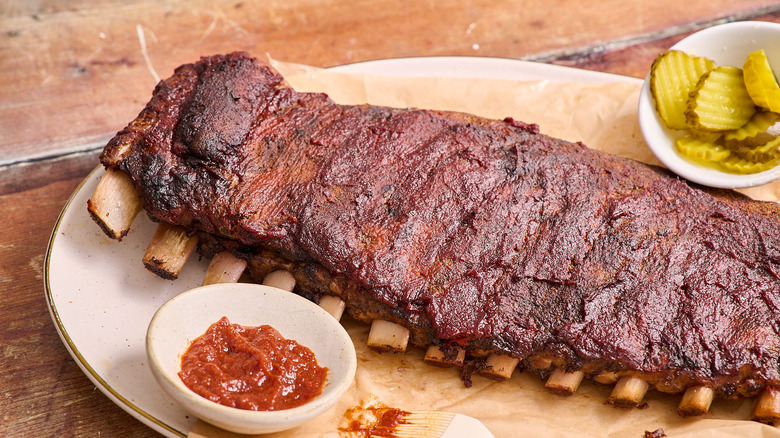
The 3-2-1 method is a common technique used to cook ribs until tender using low heat and slow cooking. The method usually utilizes the smoker or grill. It begins with three hours of undisturbed, low-heat cooking with just a dry rub on the meat. Next, the meat is brushed with sauce, covered, and cooked for another two hours at the low heat setting, which steams the meat and introduces the sauce's flavor. Finally, the meat is cooked uncovered for one hour (sometimes at a slightly higher temperature) to build a bark on the exterior, which fully enhances the rib's rich flavor.
The benefit of the 3-2-1 method is that the smoker infuses the meat with smoky flavor during the initial three hours. With an oven, which cooks meat in a dry but smokeless heat, the 3-2-1 method is not necessary, though a similar blueprint can be followed. The ribs will first be dry rubbed and wrapped for a longer, two-hour or two-and-a-half-hour bake. Then, they will be coated in sauce, wrapped, and baked for one hour. Finally, they'll be cooked unwrapped under direct heat for a caramelization effect. These won't be as smoky as a traditionally smoked rib, but will be equally as fall-apart tender in less time.
Can I grill or air-fry the St. Louis-style ribs instead?
Baking ribs is an easy, accessible way to make super tender ribs; you can, however, make ribs using other appliances. Similar to the oven, the grill encloses the ribs in low heat for hours, allowing the meat to tenderize slowly. To make ribs on the grill, heat the grill to 225 F by lighting only the burners on either end. Rub the ribs with spices and wrap in foil, then place on the grill and cook for about 3 hours, rotating the ribs 180 degrees halfway through cooking. When tender, pull the ribs from the grill, unwrap, brush generously with sauce, and increase the heat to 450 F. Add the sauced ribs to the grates and cook for just 2 minutes per side, or until browned and slightly charred.
The best ribs are cooked in low, slow heat, but in a pinch, you can use your air fryer. To do this, preheat the air fryer to 400 F. Dry rub the ribs, cut them into pieces that would fit the basket of the air fryer, and cook for 15 minutes. After 15 minutes, flip and cook for another 15 minutes, or until tender. Baste them in barbecue sauce toward the end of the cooking time. This air-frying method results in a much crispier, slightly less moist and tender rib, but if you're willing to compromise a bit, the air fryer can make last-minute ribs a real possibility.