

Coney Island Hot Dog Recipe
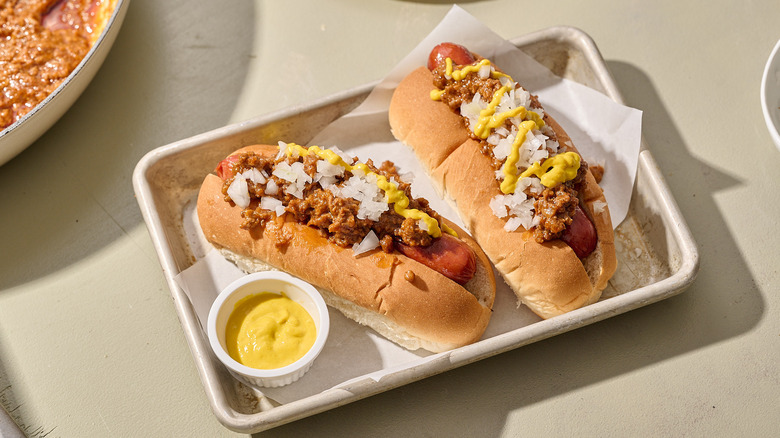
Coney Island, known for its boardwalks, sandy beaches, mouthwatering food, and amusement park, is the birthplace of several American icons, including the hot dog. The concept of a sausage stuffed in a bun was first dreamed up and sold in Coney Island by German immigrant Charles Feltman; however, the Coney Island hot dog, sometimes called the Coney dog, topped with meat sauce, diced onions, and mustard, is not a Coney Island product.
While there is speculation around which Midwestern city invented the Coney dog, most will credit Detroit. It is there that Greek and Macedonian immigrants combined sauces traditionally used in their communities with the hot dogs famously sold in New York. The marriage of the cuisines created the Coney dog we know today: A unique blend of spices, beef, cracker meal, suet, and mustard on top of an all-beef frank and a warm bun.
Though the most traditional Coney recipe includes a few hard-to-find ingredients like beef hearts and suet, recipe developer Michelle McGlinn's version allows anyone to make Coney dogs at home. Her Coney Island hot dog recipe is an easy, pantry-friendly version of the Detroit classic, made with ground beef, crackers, and vegetable shortening. Just imagine a rich and beefy sauce simmered with cracker crumbs and spices, spooned across hot dogs, which are topped with mustard and onions. It's as close to a real Coney dog as you can get without setting foot in Detroit.
Round up the ingredients to make Coney Island hot dogs
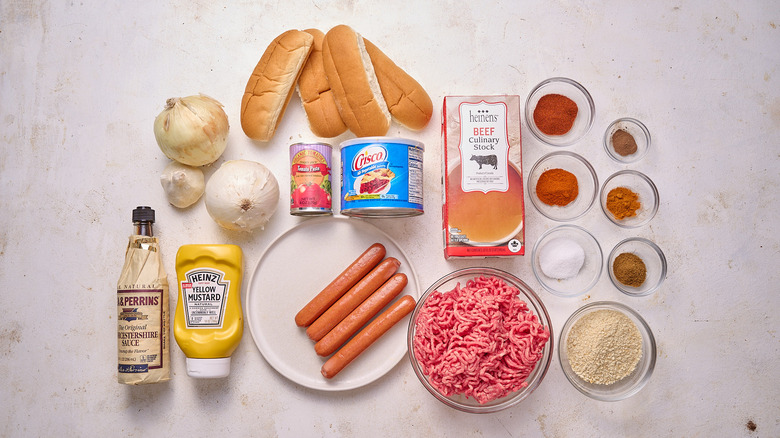
Gather all the necessary ingredients for this recipe before you begin. For the Coney sauce, you'll need vegetable shortening, ground beef, soda crackers such as Saltines, yellow onion, garlic, tomato paste, Worcestershire sauce, yellow mustard, chili powder, paprika, salt, cumin, cayenne, allspice, and beef broth. The crackers offer a similar taste and texture to traditional Coney dogs. The rest of the grocery list for this recipe is fairly straightforward: You'll need additional vegetable shortening, your favorite hot dogs, some soft hot dog buns, white onion, and yellow mustard.
Step 1: Get a pot or skillet ready for the Coney sauce

To start the Coney sauce, in a large pot or skillet, heat the vegetable shortening over medium heat.
Step 2: Cook the beef
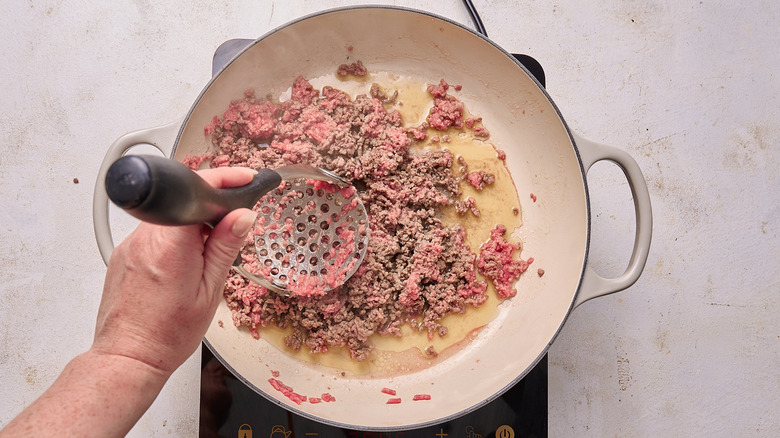
Add the ground beef. As it cooks, use a potato masher to crumble it into fine pieces.
Step 3: Add the cracker crumbs
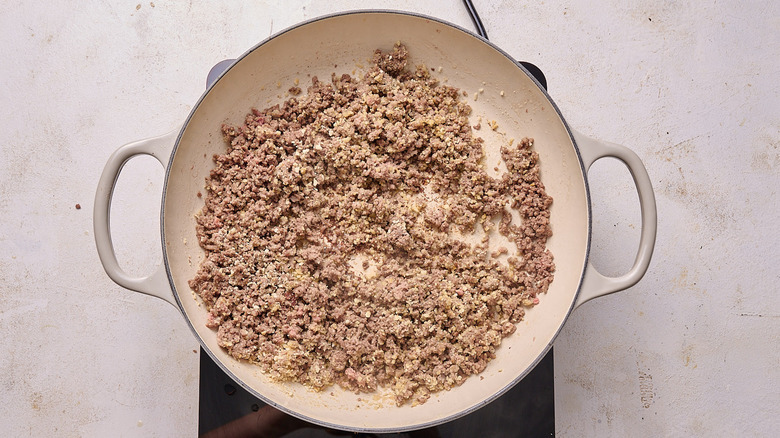
Once the beef is crumbled and browned, stir in the cracker crumbs.
Step 4: Put in the aromatics

Add the onion and garlic and cook until fragrant, about 2 minutes.
Step 5: Stir in the tomato paste

Mix in the tomato paste and cook until the contents begin to stick to the bottom of the pot, about 2 minutes.
Step 6: Add the rest of the Coney sauce ingredients
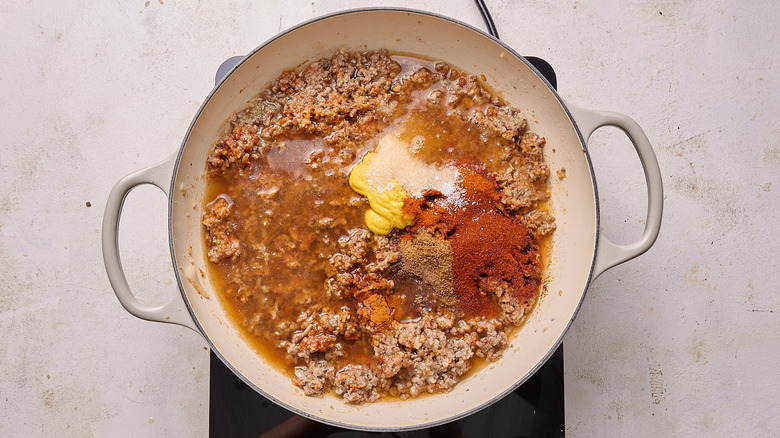
Put in the Worcestershire sauce, mustard, chili powder, paprika, salt, cumin, cayenne, allspice, and beef broth. Stir to combine and bring to a simmer.
Step 7: Simmer the Coney sauce
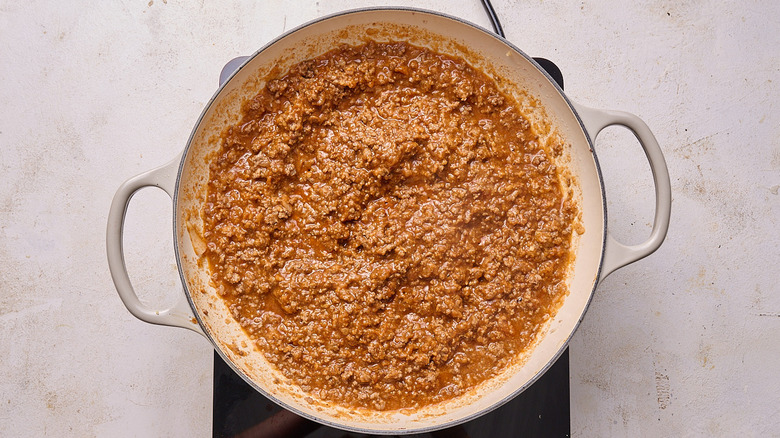
Cover the cookware with a lid, reduce the heat, and simmer for 1 hour, stirring occasionally and adding broth as needed to prevent burning, before removing from the heat.
Step 8: Heat up a grill or pan for the Coney Island hot dogs
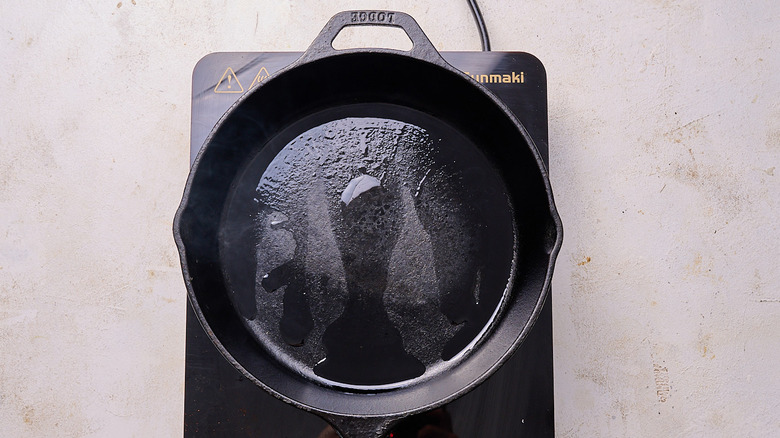
When the Coney sauce is almost done simmering, begin making the hot dogs by heating a grill pan or cast iron skillet over medium heat and adding the vegetable shortening.
Step 9: Cook the hot dogs

Place the hot dogs spaced out on the pan or skillet.
Step 10: Brown all sides

Rotate the hot dogs often until browned, about 10 minutes.
Step 11: Assemble the Coney Island hot dogs
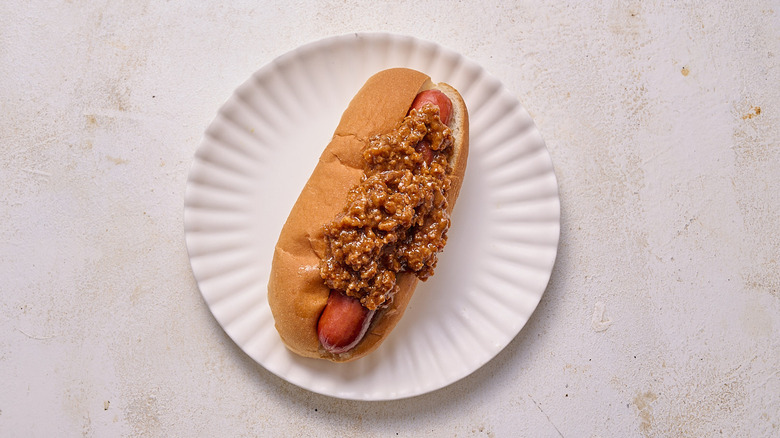
Warm the hot dog buns in the microwave for 10 seconds. Place the hot dogs in the buns and top with Coney sauce.
Step 12: Garnish the Coney Island hot dogs
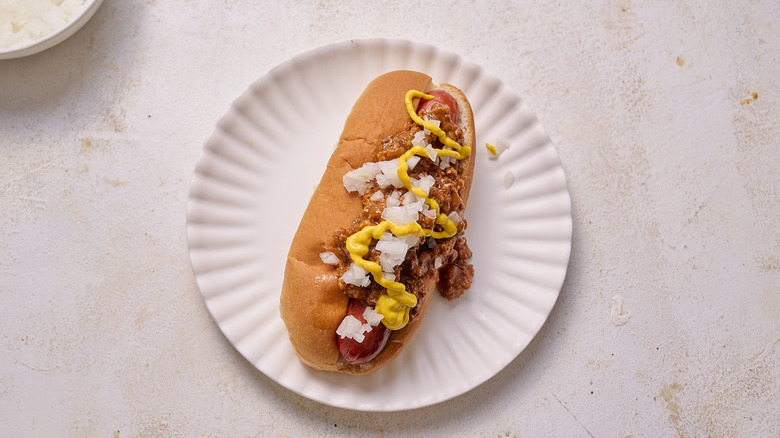
Garnish with diced onions and a drizzle of yellow mustard to serve.
What to serve with Coney Island hot dogs
Coney Island Hot Dog Recipe
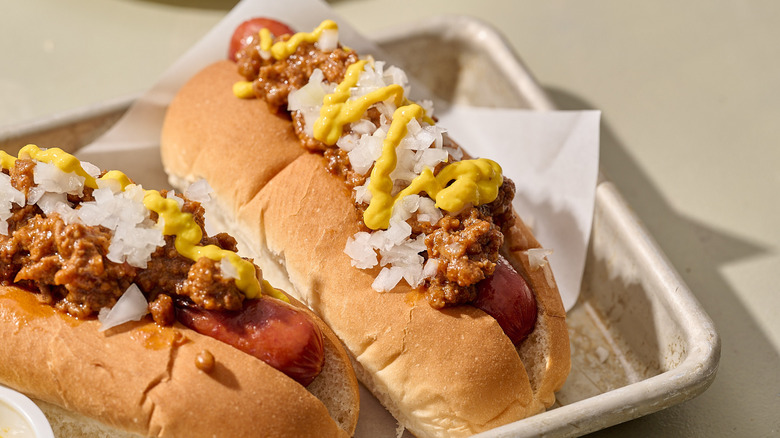
A sizzling, juicy hot dog doused with beefy Coney sauce and garnished with onions and mustard will live up to its potential at your next summer event.
Ingredients
- For the Coney sauce
- 1 tablespoon vegetable shortening
- 1 pound ground beef
- ¼ cup soda cracker (e.g. Saltine) crumbs
- 1 yellow onion, grated
- 4 cloves garlic, minced
- 2 tablespoons tomato paste
- 1 tablespoon Worcestershire sauce
- 1 teaspoon yellow mustard
- 1 tablespoon chili powder
- 1 tablespoon paprika
- 2 teaspoons salt
- 1 teaspoon cumin
- ½ teaspoon cayenne
- ½ teaspoon allspice
- 1 cup beef broth, or more as needed
- For the hot dog
- 1 tablespoon vegetable shortening
- 4 hot dogs
- 4 hot dog buns
- 1 cup finely diced white onion
- Yellow mustard, for garnishing
Directions
- To start the Coney sauce, in a large pot or skillet, heat the vegetable shortening over medium heat.
- Add the ground beef. As it cooks, use a potato masher to crumble it into fine pieces.
- Once the beef is crumbled and browned, stir in the cracker crumbs.
- Add the onion and garlic and cook until fragrant, about 2 minutes.
- Mix in the tomato paste and cook until the contents begin to stick to the bottom of the pot, about 2 minutes.
- Put in the Worcestershire sauce, mustard, chili powder, paprika, salt, cumin, cayenne, allspice, and beef broth. Stir to combine and bring to a simmer.
- Cover the cookware with a lid, reduce the heat, and simmer for 1 hour, stirring occasionally and adding broth as needed to prevent burning, before removing from the heat.
- When the Coney sauce is almost done simmering, begin making the hot dogs by heating a grill pan or cast iron skillet over medium heat and adding the vegetable shortening.
- Place the hot dogs spaced out on the pan or skillet.
- Rotate the hot dogs often until browned, about 10 minutes.
- Warm the hot dog buns in the microwave for 10 seconds. Place the hot dogs in the buns and top with Coney sauce.
- Garnish with diced onions and a drizzle of yellow mustard to serve.
Nutrition
| Calories per Serving | 685 |
| Total Fat | 44.6 g |
| Saturated Fat | 15.6 g |
| Trans Fat | 2.2 g |
| Cholesterol | 103.0 mg |
| Total Carbohydrates | 38.4 g |
| Dietary Fiber | 4.2 g |
| Total Sugars | 8.4 g |
| Sodium | 1,062.1 mg |
| Protein | 32.7 g |

What's the difference between Coney sauce and chili?

It's easy enough to call a Coney dog's meaty, saucy topping chili, especially when chili dogs exist, but Coney sauce and chili are not quite the same. Coney sauce and chili have different origins: the latter has roots in Mexico and Texas, whereas Coney sauce was likely born in Detroit. They also comprise different ingredients and therefore have a slightly different consistency, too.
At its simplest, Coney sauce lacks the beans that commonly make up chili. Beans contain natural starches that can help thicken and absorb excess liquids, which is one reason why chili is thick. On the other hand, Coney sauce — as the name implies — is more sauce-like, often thinned to a consistency closer to condiments like mustard and mayo. To go further, Coney sauce is traditionally made with beef hearts, while chili rarely is, though chili sometimes contains larger pieces of meat instead of ground meat.
The flavor profiles of the two are different as well. Coney sauce leans into the sweet-and-salty flavors adapted from Greek cuisine. Chili is far spicier and predominantly flavored with chili peppers.
Why does this Coney Island hot dog recipe use vegetable shortening?
Shortening is a magic ingredient in the kitchen used to replace different types of fat in many recipes. Technically, there are four types of shortening, though the one you may be most familiar with is the tub of solid white sold by Crisco. It's often used as a butter replacement in baking, but can also be used as a substitute for other solid fats, such as the suet that is traditionally used in a Coney sauce recipe.
Unlike lard, which is fat produced from a pig, suet is the edible fat surrounding a cow's kidneys. Traditional Coney sauce recipes likely included suet as a means to make use of the entire cow, especially since the savory sauce already included ground beef hearts. Suet can be hard to find so shortening is used in this recipe instead. Like suet, shortening begins as a solid, and slowly melts and emulsifies into simmering sauces differently than oil would, leading to a silky, smooth texture with very little oily separation. It prevents an oily layer on top of the sauce, instead creating a mouthfeel that is distinctly velvety. You might have experienced something similar when using butter, which can be swapped in a pinch, but a better substitute would be lard. However, lard may have a pork-forward flavor, whereas shortening is mild.