

10 Underrated Old-School Baking Tricks Worth Trying Today
We may receive a commission on purchases made from links.
If the opportunity arises to bake a sweet treat, and you find yourself without some of the necessary ingredients, are you prepared to adjust on the fly and lean on old-school baking tricks to get the job done? In a world where influencers lean on AI-generated recipes and AI-assisted glam photos of the finished dish, it may feel like we have moved so far into the future that old-school methods have no place in the modern kitchen.
However, you should take comfort in knowing that AI still has a long way to go when it comes to generating legitimate recipes, and professional chefs today are still leaning on tried-and-true old-school techniques to get the job done efficiently. While it may not always seem like it, older strategies can deftly be incorporated into the modern kitchen.
To help you elevate your baking game and impress your family, friends, and neighbors alike with top-tier sweets, we spoke with talented bakers and industry professionals to learn some of the best old-school baking tricks still worth trying today. You can make use of these hacks whether you're attempting to revive a classic bakery staple, or your cakes always come out frustratingly dry. Amateur and expert bakers alike can benefit from these old-school baking tips that the nonnas, abuelas, bubbes, and other old-school home cooks would be proud to see still in use.
Cutting cake with a hot knife gives you the perfect slice
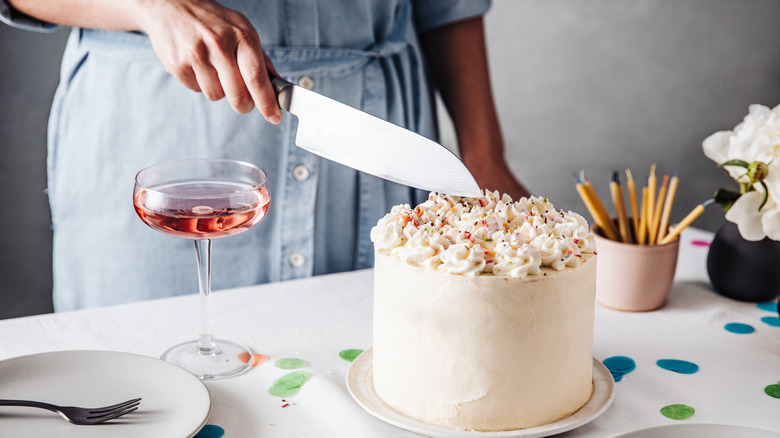
You do a grave disservice to your beautifully layered cakes and the hours you spent prepping, baking, designing, and presenting them, only to slice them haphazardly and serve them to your guests. That's why experts recommend using a knife that has been warmed up ahead of time in order to more deftly cut through cakes and execute the fabled "perfect slice."
As Kristina Lavallee, the owner of The Cake Girl in Tampa, Florida, attests, "This old-school technique will give you the cleanest slice." As Lavallee explains, the heat softens the buttercream, thereby reducing friction and making for a clean cut. "This is a trick that I show people all the time to avoid dragging the frosting through the cake," she says. Professional cake designers still use this old-school trick today, and hopefully more people become aware of this quick and easy hack for cutting an aesthetic slice of cake.
This genius old-school tip is akin to using a heated scooper to effortlessly dive into a tub of ice cream to attain the perfect scoop. In order to properly make use of this tip, however, you must make sure that the knife is sufficiently sharpened before slicing through the cake. A heated but otherwise blunt knife may do some ugly damage to the structure and design of your cake. Experience is an amazing teacher, and if you wish to serve a proper slice of cake, make sure that you do not skimp on knife quality.
Remove your cookies from the oven before they look done
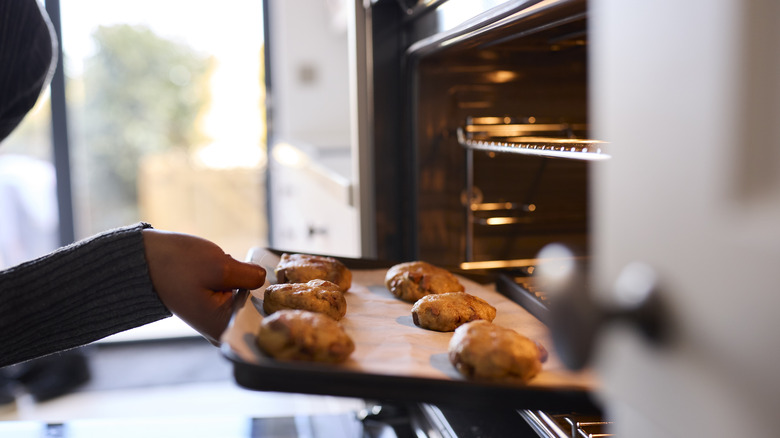
Knowing when to pull cookies from the oven is a skill that needs to be honed over time. Although this skill frustratingly eludes some bakers, Lindsay Hancock, founder of My Better Batch, says there are benefits to removing cookies from the oven early. For one, underbaking can lead to cookies with a chewier texture.
"Pull [cookies] before they look done," she says. "Take them out when the edges are set and the centers still look soft. They finish baking on the hot pan." Experienced bakers know that cookies take on a different sheen, texture, and taste depending on when you remove them from direct heat. By implementing this technique, bakers can avoid overbaking the center of the cookie and getting edges that are too crispy.
Some bakers err on the side of leaving cookies in the oven for a bit too long, fearing a goopy texture or raw eggs. However, you should proceed with confidence knowing that the science of cookie baking is always on your side. Trust that the heat from the pan is properly finishing your cookies from the bottom up, and so long as you pay attention to the visual cues from your cookies, you should attain a chewy texture.
Bake with softened butter and room-temperature eggs
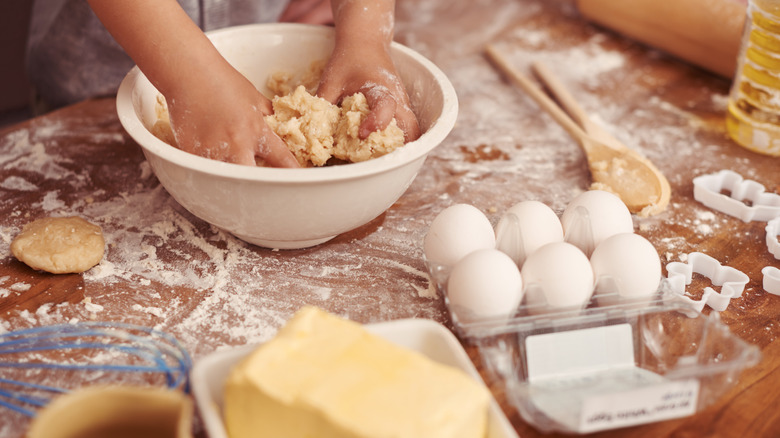
Check your assumptions before baking, because preconceived notions about certain ingredients may be getting in the way of you achieving better baked goods. For example, melted butter doesn't function the same way that softened butter does in all recipes. Lindsay Hancock says that when a recipe calls for softened butter, it does not mean melted. She says to aim for butter that gives slightly when you press it and does not look shiny or greasy. As to why bakers should avoid the latter, she says that melting butter will give you flat, greasy cookies.
Another common myth our experts cited is that eggs must be refrigerated until they are used. However, your cake batter may thank you (in its own way) for using eggs stored at room temperature, per the recommendation of chef Chris McLaurin, the owner of Lutra Cafe and Bakery in Durham, North Carolina. "A lot of newer recipes will indicate this, but old recipes don't. Eggs used to be stored at room temperature and so recipes didn't need to add this as a step. Using room temperature eggs, though, is very helpful in keeping cake batters light and airy and will help keep them from separating when mixing," he says.
Fats, fruits, and veggies can be used for ingredient swaps — in some situations
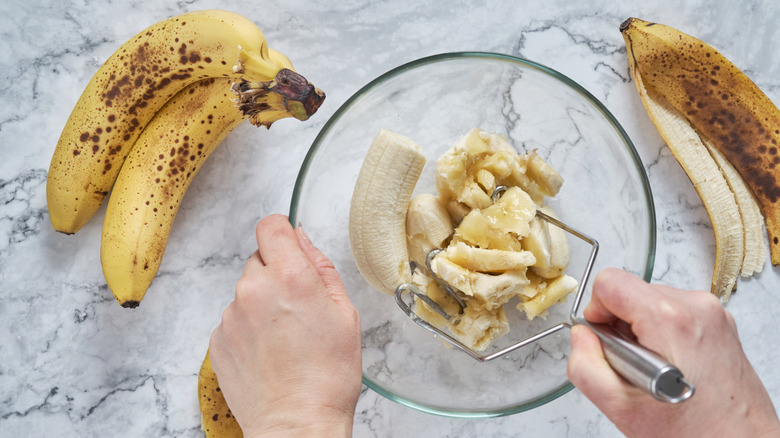
If a recipe calls for eggs, but you're all out, don't panic. Our experts confirm that one old-school baking trick that you can try is using certain fruits and vegetables as egg replacers or to enhance the moisture of your baked goods. There are plenty of egg substitutes you can use for store-bought brownie mixes or for boxed cake mix, and you might already have a suitable replacement sitting on your counter.
"Depending on the recipe, bananas or applesauce can be used in place of eggs, but it really depends," says chef Esther Donohue of Sweetly Tempered. "If it's a recipe for brownies or sheet cake, eggs can be replaced with applesauce or bananas. But in recipes that require more leavening and a finer crumb, eggs are needed to help create that texture." Indeed, among the factors to consider when reaching for a banana to replace eggs in your recipe is whether the natural sugars within a banana would add too much sweetness to your recipe. If consistently dry cakes have been plaguing you, perhaps the boost of moisture provided by the applesauce that Donohue recommends is the perfect remedy.
It can be a fun experiment to see how different types of fruits and vegetables or alternative baking binders and leaveners, like the ones from Bob's Red Mill, can impact a recipe. Considering the exorbitant price of eggs today, it isn't the worst idea to try out different old-school egg replacement hacks.
Brush your cake layers with simple syrup
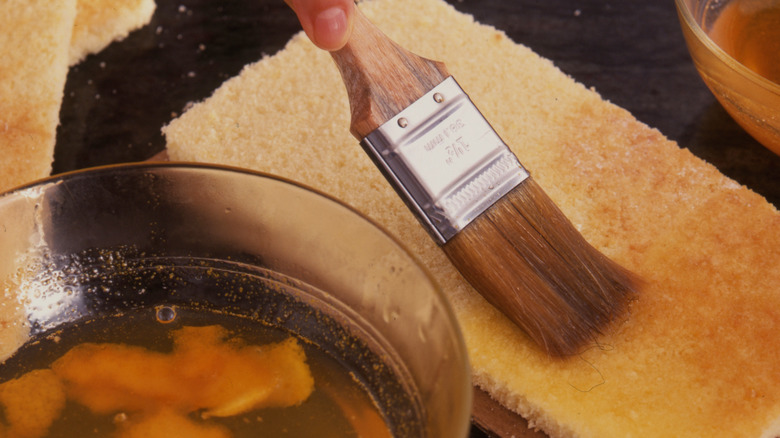
The loss of moisture that occurs during the baking process can be super frustrating. However, thanks to a savvy old-school baking trick, there are delicious ways to keep your cake moist and enhance the overall taste and texture. Kristina Lavallee brushes her cake layers in simple syrup to elevate both the moisture and flavor of the finished product.
"Combine equal parts of sugar and water and heat them up until dissolved. Let it cool down and then start lightly brushing it onto your cooled cake layers," Lavallee says. "If you want to sprinkle in a little bit of flavor and personality, you could add in some vanilla or citrus zest." Although it can be very tempting to soak the layers with heavy coats of simple syrup, proper caution and restraint must be exercised to avoid making your cake overly sweet. You also want to approach this old-school method with caution because you could easily make the cake too soggy.
Vanilla is a tried-and-true addition to simple syrup, and it works well when used on baked goods, too. It will give your treats a unique, warm, and comforting flavor. It also leaves behind a wonderful aftertaste.
Use a bain-marie to make the best cheesecake
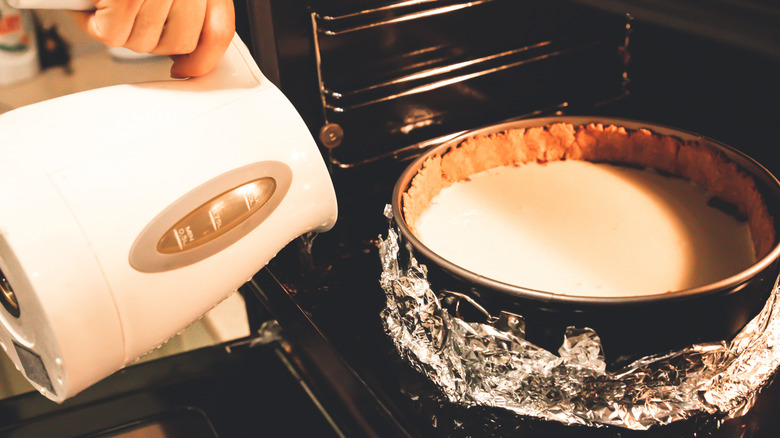
If this is the first time you're learning about the fascinating technique known as bain-marie, you'll no doubt want to try out this masterfully scientific and old-school approach to baking. Don't let the fancy name intimidate you; a hot-water bath encourages a lot of amazing things to happen while you're baking. Yuvika Wadhwa, a professional pastry chef and operations manager at Protein Chefs who frequently uses the bain-marie method to make cheesecake, highlights how this old-school method merits inclusion in modern recipes.
The steam from the hot water will slow-cook the cheesecake, she says. "I keep the oven fan setting on low and reduce the temperature by about 25 degrees to avoid the forced air, which can brown the top of the cheesecake and reduce its moisture." If a bain-marie isn't accessible for you, Wadhwa recommends filling a baking tray with hot water and placing the cheesecake mold on top of it.
Wadhwa says a water bath can also be used to melt chocolate. Whatever the occasion may be for the bain-marie method, Wadhwa explains that it works perfectly every time and supports the preparation of "hundreds of desserts per week" in a professional kitchen setting.
Wrap the sides of your cake pans so that vanilla cakes don't darken too quickly
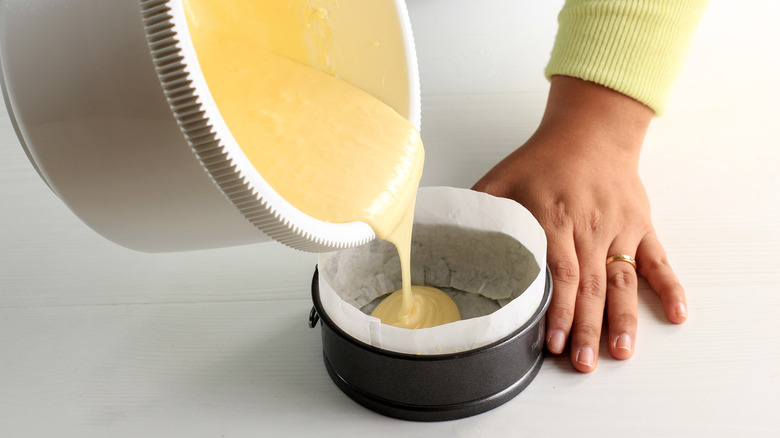
If you have been noticing the edges of your vanilla cake browning too quickly and darkening at a rapid rate while the center of your cake appears unfinished, there is an old-school technique that you can try. Assuming that you have already ruled out too much fat (such as butter or oil) in the recipe, hot spots in the oven, or inadequate bakeware, then a simple, old-school fix may be waiting in your cupboard. In fact, bakers have been turning to cake pan wraps or aluminum foil as an old-school remedy for this very situation.
"My mom religiously wrapped all her cake pans with the soaked (cake pan wraps) for even baking and so the sides didn't brown as much," says Ashley Cannon, executive pastry chef at Oak Steakhouse Highlands. She says that she now wraps the edges of her vanilla cakes and pound cakes with foil to prevent them from browning too much. By redirecting the flow of heat and energy in the oven, aluminum foil is a proven strategy for both protecting the sides of cakes and ensuring they come out more evenly baked.
Whether you choose to make your own cake strips, purchase them from retailers, or simply use the aluminum foil in your pantry, the end result should be a cake sufficiently protected from premature browning. Keep in mind that you might see this product referred to by other names, such as baking strips or bake-even strips.
Sketch out your cake designs before baking and constructing
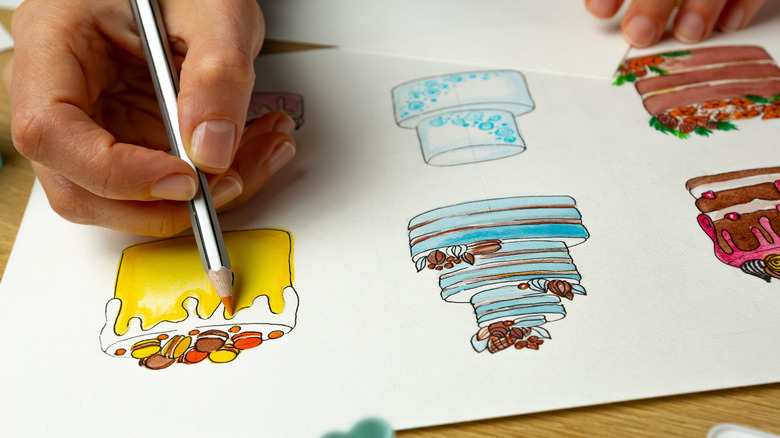
Even if you are up against the clock, drafting a rough sketch of your cake design can save you time during the decorating process and prevent you from making unnecessary errors. Karen Krasne, owner of San Diego-based Extraordinary Desserts and co-author of "Extraordinary Cakes," says this is an old-school technique she's employed since the 1980s to help her construct a perfect cake.
"There is a style in France where the pastry chefs sketch. It is an architectural drawing," Krasne says. "I really think about constructing it. What will be holding it up?" Indeed, this forethought affords bakers an opportunity to outline any challenges that may arise and detail how to complete the design process. Sketching a cake provides bakers with a template for turning a creative vision into reality. Bakers should consider the effort that will be needed to mix colors to achieve the desired vibrancy of the cake, as well as whether the structure of more elaborate cakes will need extra support.
With an effective sketch to lean on as a guide throughout the baking process, it feels like time-sapping surprises and setbacks will be much less likely to occur. This kind of predictability can work wonders for both unconfident amateurs and professionals who are rushed for time.
Listen to your bread dough to know if it's ready to be baked
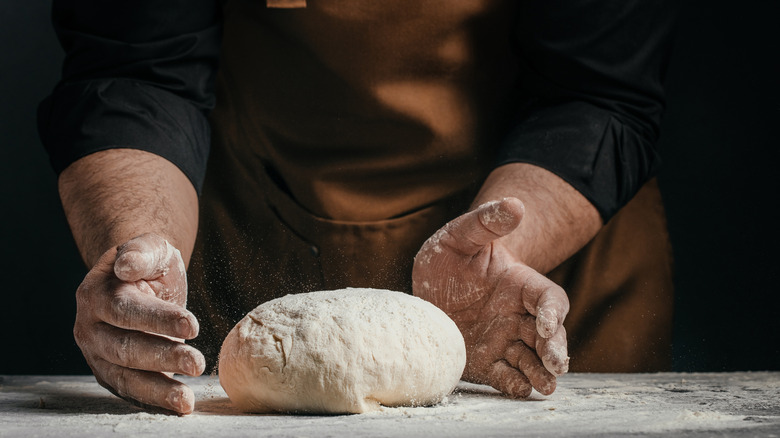
As you develop your sense of confidence in the kitchen, the feeling of "oneness" with your baked goods will follow. As sourdough bread-making has become a popular hobby in recent years, especially with Taylor Swift adopting the art as a genuine source of joy, it's important to learn what sensory cues to be aware of to know when your dough is ready to be baked. For example, as the ingredients come together, you'll be able to feel the texture eventually becomes springy.
"When I first learned to make bread as an intern, I had two Spanish ladies as my teachers. They taught me about tasting my bread dough and listening to the sounds it makes when mixing," says Ashley Cannon. "Because of this, with [Oak Steakhouse Highlands'] rolls, for example, I can tell by the color, taste, and sound of the dough as it's mixing whether it's going to [be] a perfect batch or not." This is also a matter of knowing the type of bread you're baking and what you're looking for. For example, sourdough should smell slightly sour but not pungent and pass the poke test to ensure it's properly risen. As you develop a better sensory understanding of bread, perhaps one day, your recipes will rival Swift's famed sourdough.
Handwritten recipe books and antique recipe magazines still have a place in your kitchen
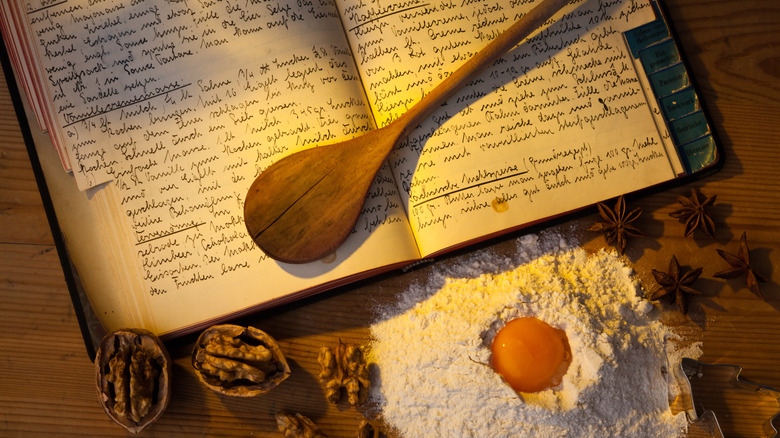
This piece of advice is less of an old-school baking trick and more of an old-school approach to staying organized and prepared in the kitchen. For Katrina Pagan, a pastry chef at The Ritz-Carlton, Atlanta, maintaining a handwritten recipe book still has a place in a professional kitchen. "Perhaps my most old-fashioned habit of all: I still keep a handwritten recipe notebook," Pagan says. "Despite all the digital tools available today, I prefer documenting recipes, notes, adjustments, and ideas on paper. It's a practice I've maintained throughout my career and one that remains surprisingly valuable in a professional kitchen."
It makes sense that professional chefs lean on the tried-and-true method of maintaining handwritten documentation of the tips, recipe revisions, and other insights that have driven them to success. Meanwhile, other chefs we spoke to note that they occasionally reference antique recipe books and magazines when mining for untapped, hidden gems that could still prove useful today. For example, Esther Donohue notes that she is a "major fan of old and antique cookbooks," and uses many of their recommendations, such as making crust with real lard instead of oil. Ultimately, Donohue says that "learning from grandparents and past generations and how they baked ... is the most valuable baking lesson you could ever have. Cherish the time spent [learning] from them."