

Boomers Can't Stand These Modern Kitchen Design Trends
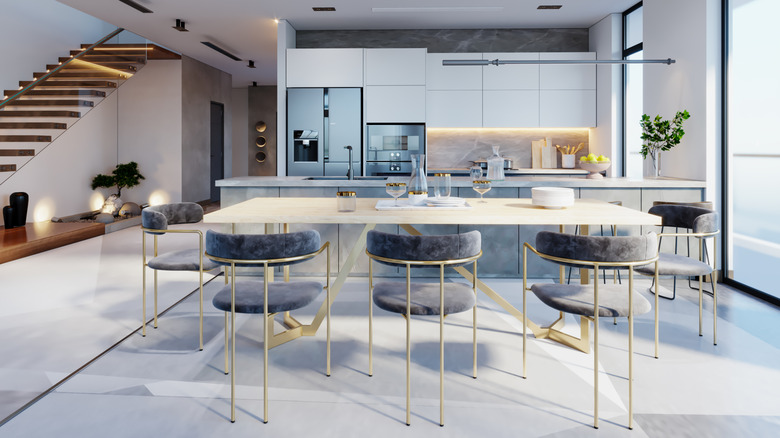
My sweetheart and I watch a lot of renovation shows: They're fun, they give us ideas for our own space, and some of the hosts are especially engaging. (Who could not love Erin and Ben?) But as a boomer and a retired chef, I'm super judgmental about kitchen design.
It would be fair to argue that the generation who went big on sideburns, shag carpet, and harvest-gold appliances shouldn't cast stones, and fair enough. But collectively, we've seen trends come and go, so we know which design elements are timeless, and which are just passing fads. Also, if you're concerned about resale value, the median repeat homebuyer is now 62 years old, and the median of all buyers is 59. So, if you don't consider our preferences, you'll lose half of your potential market.
As a former chef, I have strong opinions on the subject, but I'm just one guy. So, I've combed the internet for boomer-specific gripes about kitchen design to make sure I'm representing "My G-g-generation" accurately. I've also canvassed boomer members of a foodie forum that I've belonged to for over 20 years, who — like me — spend a lot of time in the kitchen. The result? These 10 modern kitchen design trends that we've agreed we can't stand.
Hidden appliances
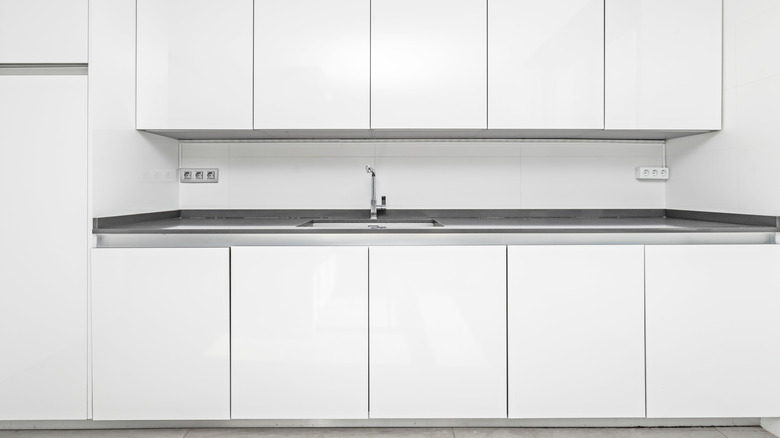
My fiancée loves the sleek, clean look of a kitchen with everything hidden. But she's not a boomer, and she's also not the one who does the cooking. For those of us who fit those two categories, it's less appealing.
It's a popular trend. At Tasting Table, we've written about the most desirable hidden kitchen features, like the hidden in-drawer microwaves that are popular now. But boomers know there are practical issues with that sleek look. First, having to constantly open and close doors to get at your appliances and workspaces is a pain. Also, panel-ready appliances are often harder to find, and costlier both to buy and install. And when one breaks down, you're looking at paying those extra costs again for the replacement (assuming you can find one that's the same size). The overall look just leaves a lot of boomers cold, too. As one member of my forum put it, "It also looks like it's not really a kitchen at all, and while I think that's the point, I don't much like it."
One last point to consider is that boomers often care for older relatives, and we aren't exactly spring chickens ourselves. A kitchen filled with flat, identical doors is especially confusing for those of us dealing with mild cognitive impairment or the early stages of dementia, whereas familiar visual cues can help us live independently for longer. So, if you like that sleek look, maybe consider other ways to hide your kitchen eyesores instead.
Cabinets to the ceiling
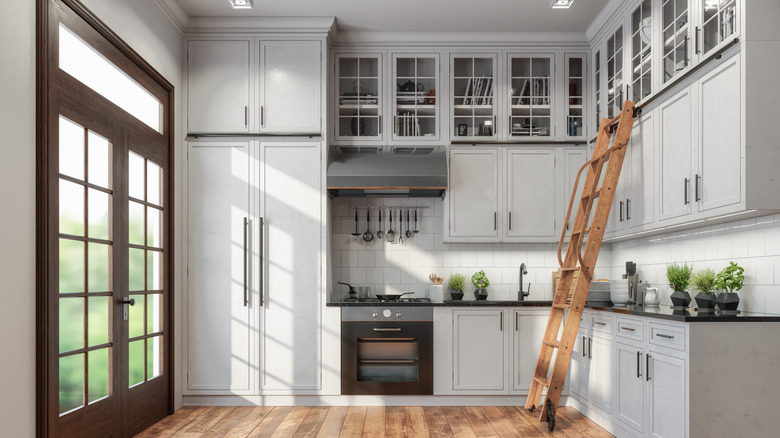
High ceilings are a popular design trend, and when well used, they can make a room feel more spacious and airy. In the kitchen, they're often an excuse to double stack cabinetry, adding a second set of cabinets to turn the extra headroom into extra storage room.
Let me stress that this isn't a bad thing. It's extra storage in the same square footage, which is always positive, and never having to dust the top of your cabinets again is a plus. But this is where age comes into play, because even the youngest boomers (like me) are in our 60s now, and we're all painfully aware that falls are a major risk for older people and anyone else with physical issues. In fact, reorganizing kitchen storage to eliminate reaching and climbing is one of the best things you can do to prevent falls in the kitchen.
So, for boomers looking to retire into a "forever home," having so much storage up high is inconvenient and frustrating. Sure, there are things we'll only use once in a while, and it's nice to have them in the kitchen when that "once" rolls around. But getting stuff down from way up high is just impractical or downright dangerous (especially for bulky or heavy items), even if you're young and strong. It's better to find ground-level storage whenever possible, perhaps by converting an adjacent room or closet, or by parking larger countertop appliances in an appliance garage.
No upper cabinets at all (or open shelving)
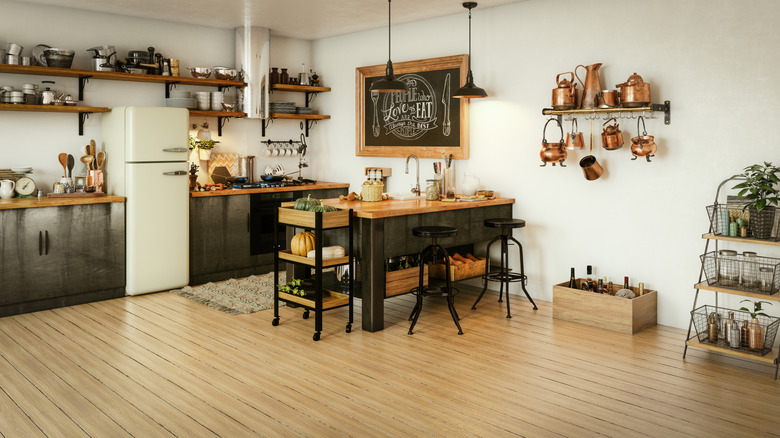
Having no upper cabinets at all, usually deleting them in favor of open shelving, is another thing designers sometimes do in kitchens. This is the exact opposite of the cabinets-to-the-ceiling ploy, and it's another thing that plenty of boomers can't stand.
To be fair, you can meet your storage needs without uppers, especially if you have a sizable island. But the downside is needing to bend and lift almost anything we need, especially if it's heavy. Some designs replace uppers with open shelving, which adds new issues. First, stuff on open shelves needs to be decorative as well as (hopefully) functional. But it'll attract dust, and the dust in your kitchen tends to be greasy and sticky, which makes for a lot of cleaning. The conventional uppers-and-lowers arrangement became the standard for a reason, so think hard before you abandon it.
Boomers don't hate open shelves as such, to be clear. Back in the day, it was common to have some at the end of a counter or peninsula, where frequently used items would be quick to grab. But if you want a boomer-friendly way to display your tchotchkes and pretty stuff, consider going with glass-front cabinets instead. As designer Cara Woodhouse told House Digest, they'll help meet boomers halfway, adding some personality and visual display back into a kitchen without the inconveniences of open shelving.
Kitchens that are open to the whole house
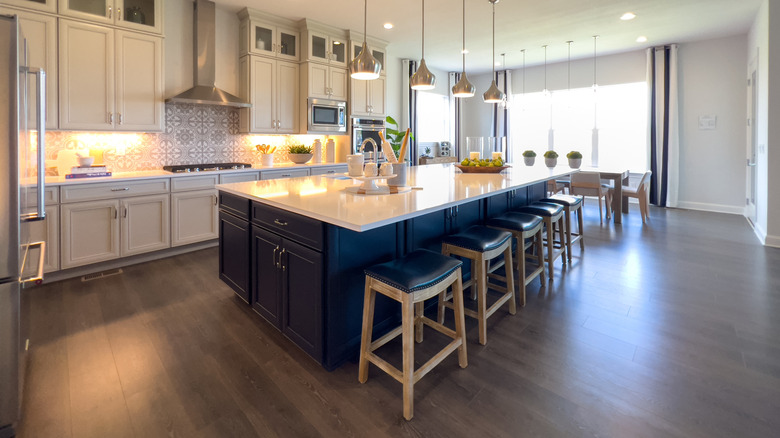
Open floor plans are still a popular trend, but over the past few years, a backlash has been brewing both at work and at home. The short version is that while open spaces look nice, they aren't always practical.
Boomers are primed to turn back the clock, because we know that those beautiful open kitchens don't just free up sightlines. They also allow sounds, smells, and people to pass through freely, which often isn't great for cooking or for the rest of the house. "I don't want to hear my dishwasher cycling when I'm in the family room trying to watch old 'Gunsmoke' episodes," one forum member quipped. Also, on a practical note, she much prefers having the opportunity to fix or hide any little mistakes before serving the meal. Trying to cook neatly, under your guests' eyes, can really ramp up the stress when you're entertaining.
The two-way traffic in scents is a good thing when you've got cinnamon rolls coming out of the oven, but not so much when the drain backs up in your basement. And c'mon, do you really want Saturday night's dress to smell like Friday afternoon's sausage and sauerkraut? But if you've already spent big on converting to an open floor plan and want to appeal to boomers when it's time to sell, there are clever ways to mitigate the absence of a wall in your open concept kitchen.
Neglecting the work triangle
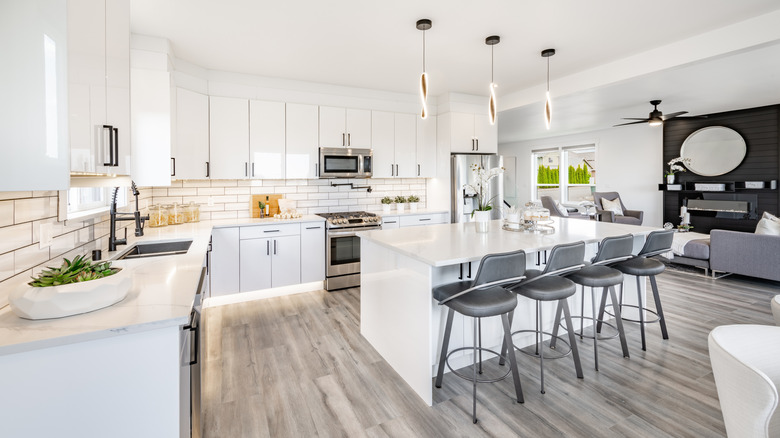
One thing that really stands out about modern kitchens, for boomers, is how big they've gotten. We spent our '60s and '70s childhoods in houses where kitchens were often fairly small and tucked away out of sight. The National Kitchen & Bath Association's 2026 Kitchen Trends Report states that kitchens will continue to get bigger this year (again!), so don't expect things to change soon. And bigger is genuinely better, to a point. Extra prep and storage space is good, but designers sometimes don't give enough attention to workflow.
The famous "kitchen triangle" — the arrangement and spacing of stove, sink, and fridge — is crucial: If those spaces are still close to each other, it's fine for the rest of the kitchen to expand. But if those three areas are spread out unnecessarily, you're adding a lot of steps and inefficiency just for looks. As one of my food forum acquaintances groused, "running all over creation" to pull a meal together just won't cut it. It's a common kitchen design error, and one that's easily avoided.
To be clear, the classic triangle isn't the only way to structure a kitchen. Some designers build functional, efficient spaces using the "3-by-4" rule instead. The key is to make sure the things and surfaces you need most are close at hand. Please trust the creaky-knee demographic when we tell you that you'll resent those extra steps every time you cook.
Loading a kitchen with smart appliances
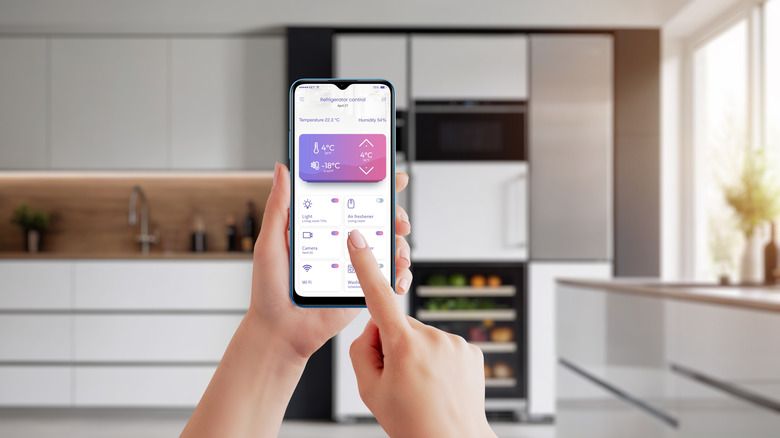
The generational divide between boomers and the "digital natives" born in this century isn't what you think. It's not because we're tech-averse; boomers and Gen Xers created most of the tech you use right now. It's because our experience makes us question whether smart appliances are worth it.
You can nail down your toast's ideal shade of brown with a smart toaster and mobile app, or double-check what's in your fridge from right in the supermarket. But the "smart" circuits and software add failure points, and cost, to your appliances. As Minnesota-based forum member Nancy Smith pointed out, your appliances' software needs regular updates, and an otherwise-functional appliance fails if the app is glitchy or loses support. That's not a hypothetical. Compare the support life of your phone (typically three to seven years) to your fridge, which can last for 12 years or more. "My refrigerator predates 3G," says Smith, "much less 4G and 5G cellular communication, as well as Bluetooth. I'm just fine with it."
"Smart" appliances also have their darker side. Because security updates are slow and irregular, hackers have made creative use of them in stealth attacks. Samsung has begun pushing ads onto the screens of its smart fridges, and as always, there's the question of what personal data companies are gathering, who they're potentially selling it to, and how well it's protected by the manufacturer. Manufacturers grumble that barely half of users connect their appliances to Wi-Fi, so do they really help your resale value?
Cold, sterile visual design
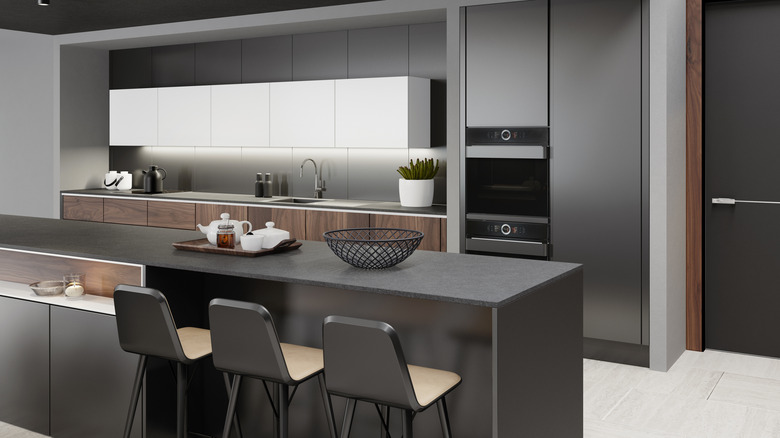
Collectively, boomers aren't afraid of color. Admittedly, some of the color schemes we grew up with don't fit the modern aesthetic — orange accent walls, green shag, and harvest gold appliances aren't coming back soon — but on the whole, color in the kitchen is a trend we remember fondly. So, you won't be surprised to know that the current love of cool, neutral, minimalist spaces leaves a lot of boomers cold.
White on white on white is the extreme example, but black cabinetry with white counters, gray on gray, and various other "designer-ish" color schemes fall into the same bucket. Neutral color schemes are said to provide a palette for personalization and added color, but often, they just feel impersonal. As Nancy Smith put it, "They look cold and unwelcoming, the culinary equivalent of a formal dining room where people have to sit straight and mind their manners. ... Someone might spill! or drop a crumb! or smudge a pristine surface! The horror!" Another member of our forum, commenting on a kitchen like the one shown above, asked rhetorically, "Does this look like it's any fun to cook in?"
So, what should you do if you like the minimalist aesthetic but want to give it more of the "heart of the home" vibe that boomers expect (and will pay for)? Well, there are lots of smart ways you can incorporate low-key color, natural materials, or even occasional bright-colored accents to soften a neutral kitchen design, keeping your space's clean lines but still humanizing it.
Unsuitable materials in food-prep spaces
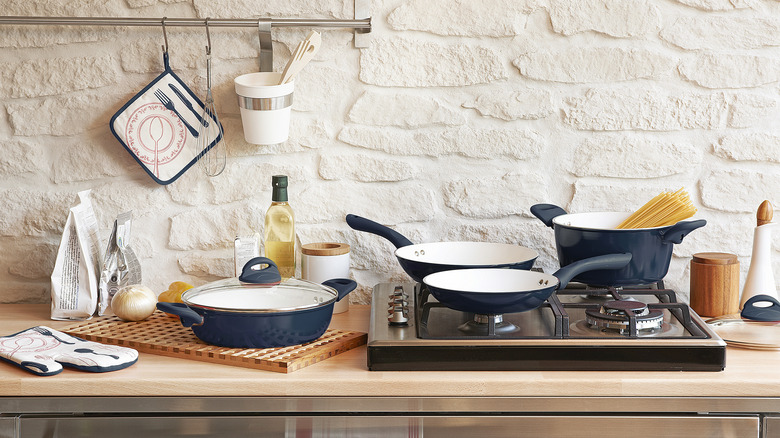
My fiancée can tell you that this brings out my inner "yelling at clouds" faster than anything else on TV. I can't tell you how many times I've sat up in my chair, shouting at an on-screen designer, about the materials they've chosen for cooking and food-prep spaces.
When I see people putting unglazed tiles, rough brick, or barn wood on a backsplash, or (even worse) around a vent hood, I don't know whether to cringe or scream (as one of the women on my forum said, "Glass or brick or wood behind your cooktop? Are you mad?"). I get that they're looking for unique countertop and backsplash pairings, but seriously: How's anybody supposed to clean that? It only works if you never actually cook, or if you have someone who does the cleaning for you (and even then ... sheesh!). And don't get any boomer started on the subject of tiled countertops. We grew up with 'em, and spent hours scrubbing that ghastly grout or watching our mothers do it. Backsplashes aren't quite as bad, but tile anywhere around the stove takes constant work just to keep looking good.
There's a saying that "everything old is new again," and subway tiles in particular have been a firm favorite with designers over the past several years. Still, a lot of boomers are just not up for that vintage trend to make a comeback.
Dramatic (rather than functional) lighting
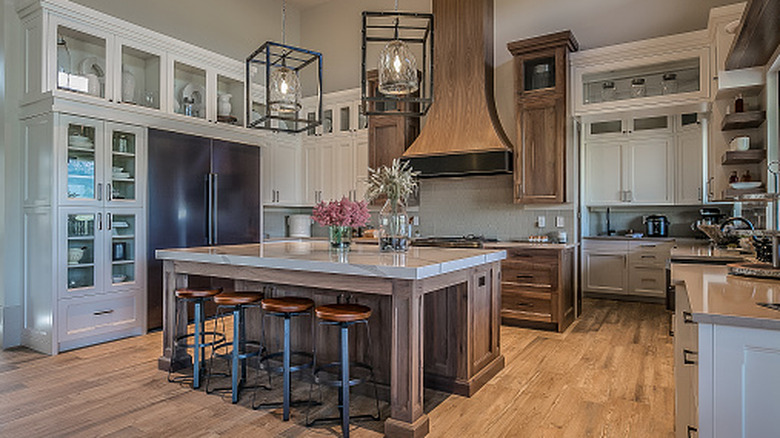
Aside from its actual physical layout (work triangle!), few things affect a kitchen's usability like its lighting. Effective lighting isn't always showy, and dramatic lighting isn't always effective. It's an area where designers sometimes don't always think things through.
How many times have you watched a designer combing shops or websites for some "statement" lighting for a kitchen? Okay, now how many times have you seen a designer sitting down to seriously plan out a kitchen's workflow and how the lighting will complement it? Yeah. I rest my case. The classic example might be an oversized island with a pair of symmetrical pendant lights, while the actual workspace falls into the shaded area in between (one of many kitchen lighting mistakes to avoid). If you're thinking about a kitchen reno, you need to make sure your designer is laser-focused on illuminating work areas and bottlenecks in the kitchen. If necessary, you can even suggest that they turn to a specialized lighting consultant.
This is really important for boomers, because eyesight seldom improves with age (I'm writing this on a 30-inch monitor for a reason). It's not just a question of being able to read a recipe, ingredients, or instructions from a package. Poor lighting can also hide fall threats, like wet spills, and tripping threats, like dangling cords (the Fall Prevention Foundation is big on upgraded lighting, too). Seriously, you'll thank us for urging you to get this right.
The pot-filler faucet behind the stove
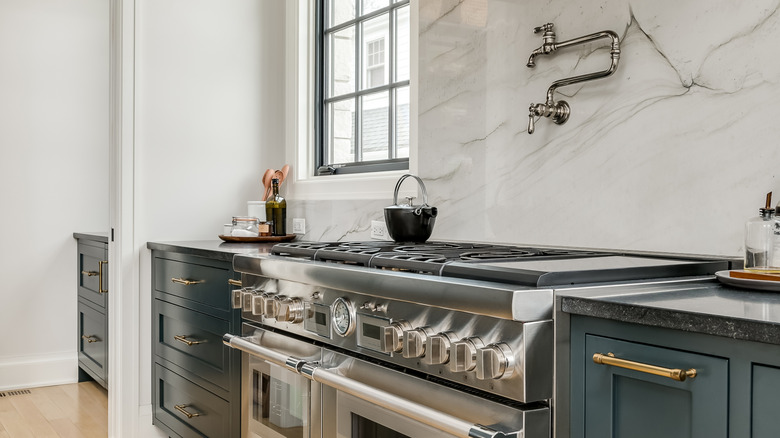
I'll admit that this feature seemed like a good idea at first. Why carry a heavy pot of water to the stove, when you can fill it right there? Well, it turns out there's hot debate about whether installing a pot filler is worth it.
As a Californian forum member put it, "It gets spattered, needs cleaning way more frequently than it's actually used, and is a potential source of damaging water leaks. And you still have to hoist the pot when it's hot." Nancy Smith, the Minnesota member, seconded that last point ("If the pot is too heavy to move from the sink to the stovetop, how will you empty it later?"). As someone who's burned himself on way too many pot handles, I'll add that the faucet could also get uncomfortably hot if you don't swing it all the way back to the wall.
The biggest issue, though, is that you really need to trust your plumbing contractor. If the pot filler starts to leak, it's big trouble: Leaks inside the walls can sometimes cause serious structural damage before you even know there's a problem. Then, to fix it, you'll need to have your stove pulled out and reinstalled, and your walls torn out. That's a big expense, especially if you're still paying off your kitchen renovation. I'm not saying don't get it if your heart is set on one, but plan for access and serviceability if you do.
Static Media owns and operates Tasting Table and House Digest.