

Homemade Creamy Sesame Dressing Recipe
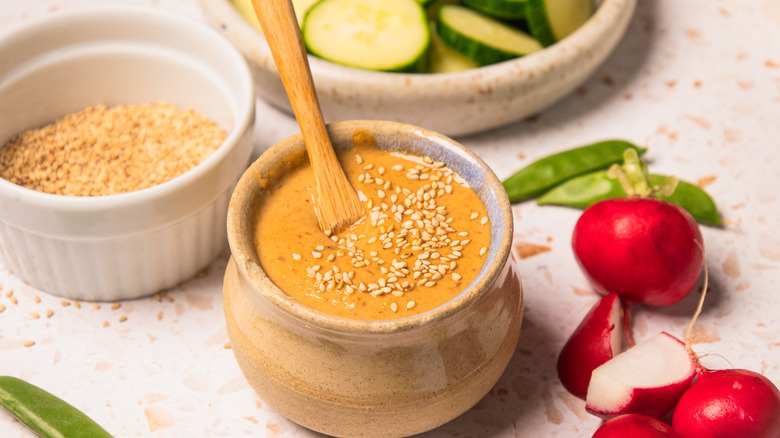
If you've ever had a great salad at a Japanese restaurant and wondered what was in that nutty, savory dressing that you couldn't stop eating, then this homemade creamy sesame dressing is the recipe you've been looking for. This creamy sesame dressing takes the basic structure of goma dressing, that classic Japanese-style sauce built on toasted sesame seeds, and gives it creaminess with the addition of tahini rather than the traditional mayo. It's an effortless fusion between Middle Eastern and Japanese flavors that tastes completely unique.
A typical creamy Japanese goma sauce gets its body from Kewpie mayo, a unique Japanese mayonnaise that is made only out of egg yolks for a creamier texture. But as a recipe developer and blogger who likes to explore Middle Eastern flavors, I wanted to take the qualities of one of my favorite pantry staples, tahini, and emulsify it with the sesame that is already prominent in this dressing. This way, you get the same silky, clinging consistency of the original, but without the eggy sweetness.
This homemade creamy sesame dressing is a little more complex, nutty, tangy, and unique than the original version. Drizzle it over greens, use it as a dip for crunchy vegetables, or get a few more ideas below. Once you have this sauce on hand, you'll find excuses to put it on everything.
Gather the ingredients for homemade creamy sesame dressing
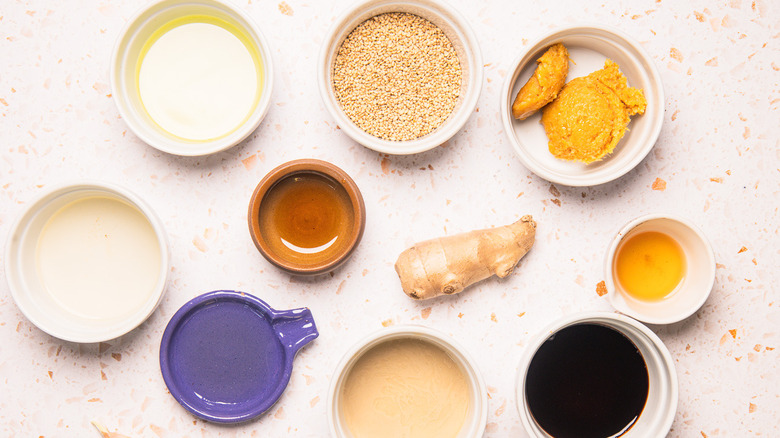
The first ingredient in this creamy sesame dressing is the white sesame seeds. They are toasted and blended into the dressing, then sprinkled on top for texture. Beyond the seed form, you'll also need the paste form of sesame, which is tahini sauce. The other ingredients you'll need are white miso, rice vinegar, mirin, toasted sesame oil, and a neutral oil like grapeseed or avocado oil for emulsification.
Step 1: Toast the sesame seeds
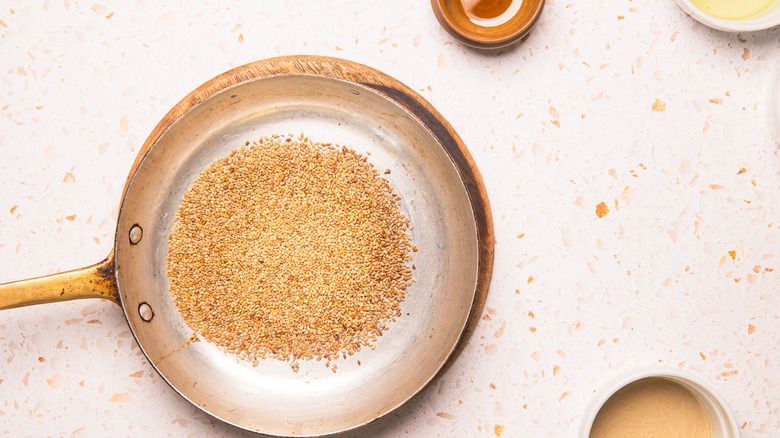
Toast the sesame seeds in a dry skillet over medium heat, shaking frequently, until golden and fragrant, about 3 to 4 minutes. Transfer to a plate and cool completely.
Step 2: Blend the dressing base
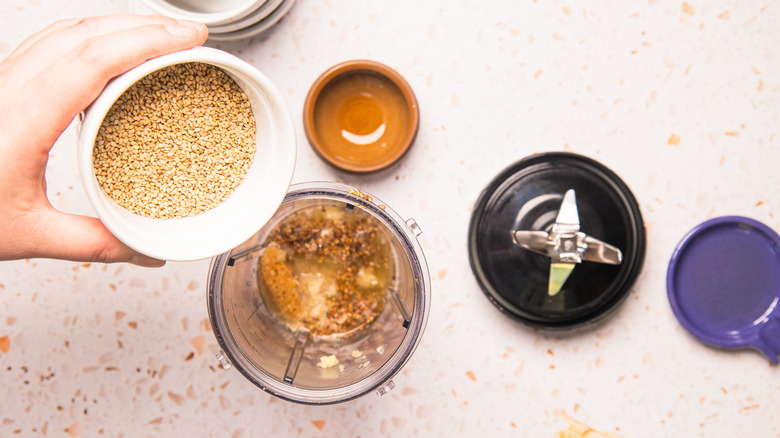
Add the sesame seeds, tahini, miso, rice vinegar, mirin, soy sauce, sesame oil, ginger, and garlic to a blender. Blend until smooth, about 1-2 minutes.
Step 3: Stream in the oil
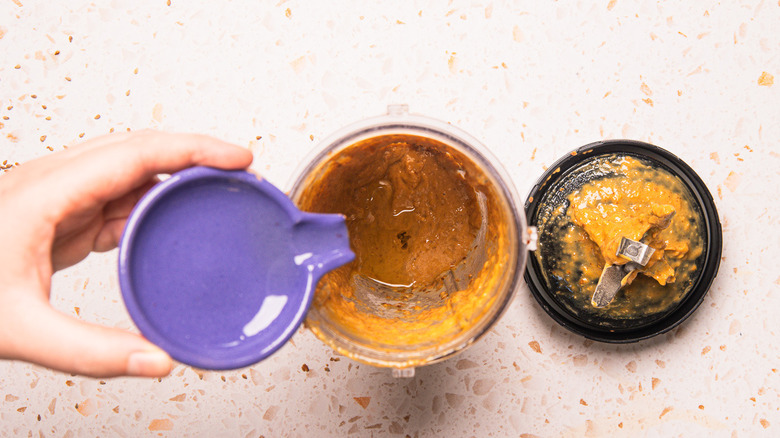
With the blender running, stream in the neutral oil slowly, or add it in batches, stopping the blender each time to scrape down the sides.
Step 4: Thin and adjust the consistency
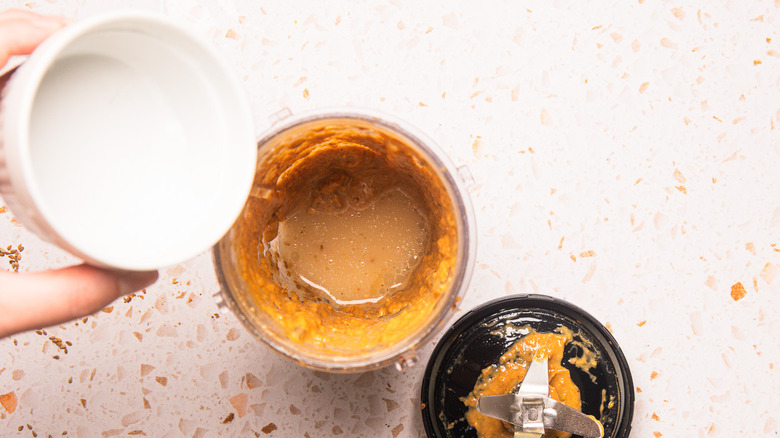
Add 2 to 4 tablespoons cold water, one tablespoon at a time, until the dressing reaches a pourable consistency. Taste and adjust seasoning.
Step 5: Top with seeds
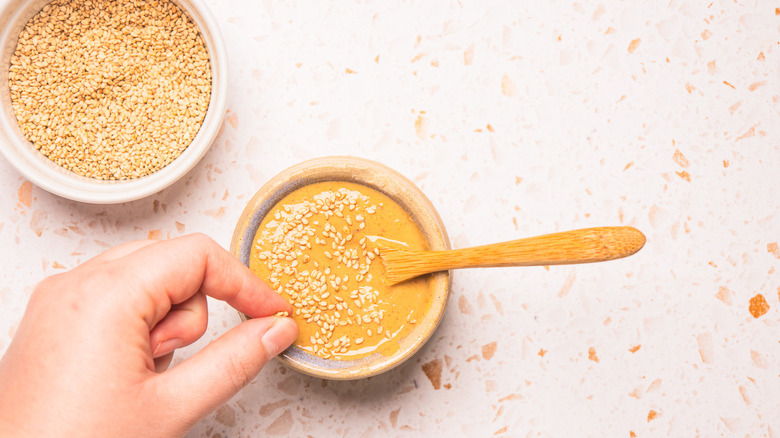
Top with more sesame seeds right before serving.
Slide 6: Serve the sauce
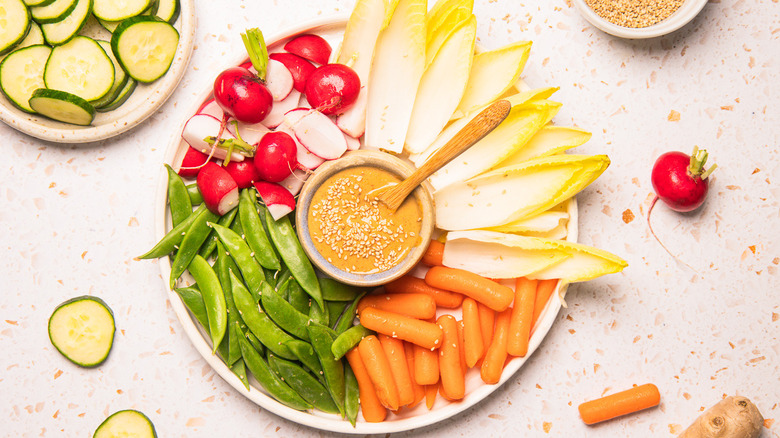
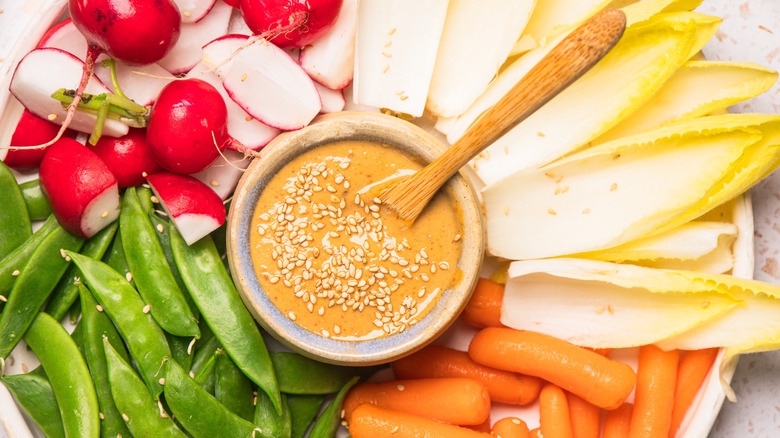
Serve with salads, or as a dip with snap peas, radishes, or endive leaves. You can also serve the sauce with satay dishes.
What can I serve with sesame dressing?
Homemade Creamy Sesame Dressing Recipe
Our versatile homemade sesame dressing calls on miso for umami flavor and tahini for creaminess, while ginger, garlic, and soy sauce add depth and complexity.
Ingredients
- 4 tablespoons white sesame seeds, divided
- 3 tablespoons tahini
- 2 tablespoons white miso
- 2 tablespoons rice vinegar
- 1 tablespoon mirin
- 1 tablespoon soy sauce
- 1 teaspoon toasted sesame oil
- 1 (1-inch) piece fresh ginger, finely grated
- 1 small garlic clove, finely grated
- 3 tablespoons neutral oil
Optional Ingredients
- Vegetables or salad, for serving
Directions
- Toast the sesame seeds in a dry skillet over medium heat, shaking frequently, until golden and fragrant, about 3 to 4 minutes. Transfer to a plate and cool completely.
- Add the sesame seeds, tahini, miso, rice vinegar, mirin, soy sauce, sesame oil, ginger, and garlic to a blender. Blend until smooth, about 1-2 minutes.
- With the blender running, stream in the neutral oil slowly, or add it in batches, stopping the blender each time to scrape down the sides.
- Add 2 to 4 tablespoons cold water, one tablespoon at a time, until the dressing reaches a pourable consistency. Taste and adjust seasoning.
- Top with more sesame seeds right before serving.
- Serve with salads, or as a dip with snap peas, radishes, or endive leaves. You can also serve the sauce with satay dishes.
Nutrition
| Calories per Serving | 125 |
| Total Fat | 11.4 g |
| Saturated Fat | 1.3 g |
| Trans Fat | 0.0 g |
| Cholesterol | 0.0 mg |
| Total Carbohydrates | 3.9 g |
| Dietary Fiber | 1.3 g |
| Total Sugars | 0.3 g |
| Sodium | 275.7 mg |
| Protein | 2.5 g |

What is white miso, and does the type of miso matter?
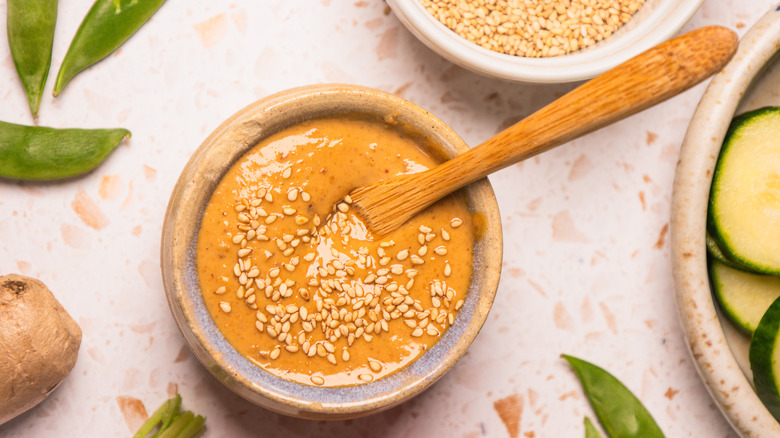
White miso, which is officially called shiro miso, is one of the three most common types of miso. This fermented soybean paste has been aged for a shorter time than darker varieties, which gives it a milder, slightly sweeter flavor and paler color than its more pungent, salty cousins.
In this dressing, white miso adds depth and savory umami-ness without overwhelming the sesame and ginger flavors. It also gives it a beautiful toasted color that looks almost golden in the light.
If you don't have or don't want to purchase white miso, there are some alternatives, but none are quite the same. Yellow miso sits between white and red in terms of intensity, so it will give you a dressing that's a touch saltier and more robust in flavor. Red miso is a stronger flavor that might overshadow the other ingredients, so use substantially less of it, and prepare for a much more pungent sesame dressing.
In what ways can you use this creamy sesame dressing in your cooking?
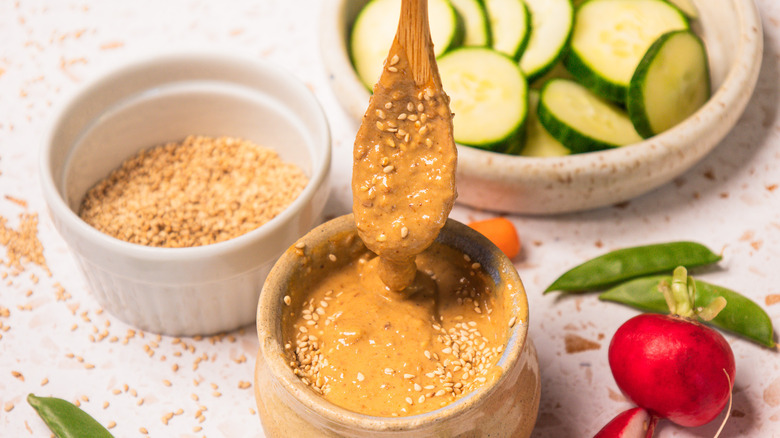
What I love about this dressing is how versatile it is in the kitchen. You may think it only works in Asian-style recipes, but the truth is there's no limit to how you can use it, since it combines Middle Eastern and Asian pantry staples.
The most obvious use is, of course, as a salad dressing. It's especially good over shredded cabbage, butter lettuce, little gem lettuce, or a simple cucumber salad. I also love to coat chicken thighs in it, grill them, and then use them in a salad with purple and green cabbage, edamame, nectarines, and more of the dressing on top. It also goes really well with salmon, and my husband swears by dipping steak slices into it.
Of course, this dressing is a natural accompaniment to rice and noodle bowls, and works as a dip for spring rolls. But if you want something unique, make stir-fried tofu or tempeh, skewer them, and use the dressing as a dip.