

Goan Ghotache Sasav (South Indian-Style Mango Curry) Recipe
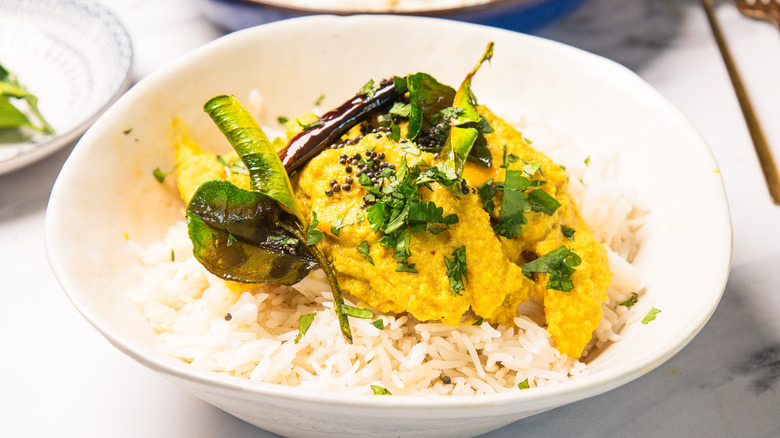
Watch mango become the star of its own savory show with this South Indian-style mango curry, the Goan ghotache sasav. It's tangy, a bit sweet, and really surprising with every bite.
As a recipe developer and blogger who specializes in international cuisine, it's not surprising that Indian food remains my holy grail. My best friend from high school is Indian, and a lot of my cooking was done with her on weekends and after-school nights when we were both home alone, learning to fend for ourselves. As a result, many of my favorite flavors include tempered oil, sizzling mustard seeds, and complex curry pastes made bright with golden turmeric. All of those culminate in this Goan-inspired mango curry, and I have to admit I'm fairly proud of the result.
Mango may not be the most typical ingredient you think of when shopping for dinner, but I truly hope this recipe may push you in that direction. This coconut curry is built around ripe Ataulfo mangoes, which hold their shape during cooking and give this curry an almost floral sweetness that works beautifully with the sharp and earthy toasted spices, fragrant curry leaves, and freshly grated coconut.
Gather the ingredients for this Goan ghotache sasav curry
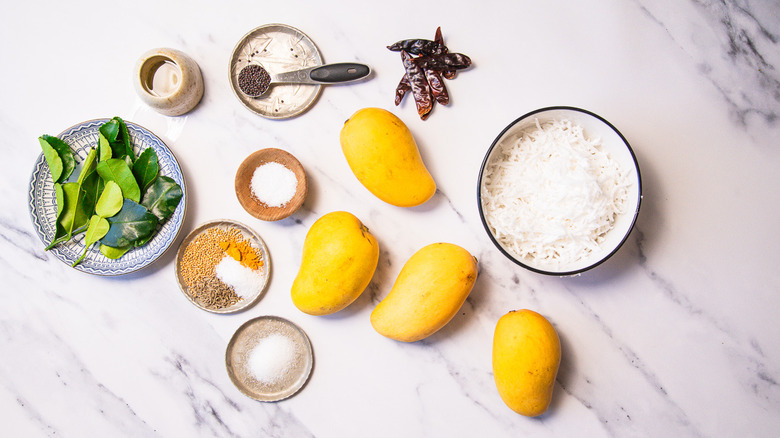
For the coconut sauce, you'll need dried red chiles, fresh or frozen grated coconut, yellow mustard seeds, cumin seeds, ground turmeric, and kosher salt. The coconut should be unsweetened, and if you can't get fresh, soak desiccated dried coconut in water for 30 minutes to rehydrate it. The chiles I recommend are kashmiri dried chiles.
For the mango curry, assemble ripe Ataulfo mangoes, sugar, and kosher salt. And for the tempered oil that really makes this curry fragrant, you'll need coconut oil, black mustard seeds, fresh curry leaves, and more dried red chilies. We recommend serving this over steamed rice.
Step 1: Soak the chiles
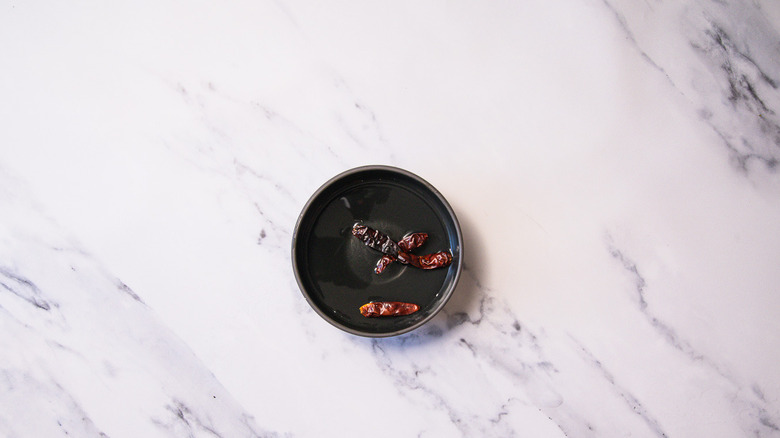
Soak the chiles in warm water for 15 minutes. Drain.
Step 2: Combine the coconut paste ingredients
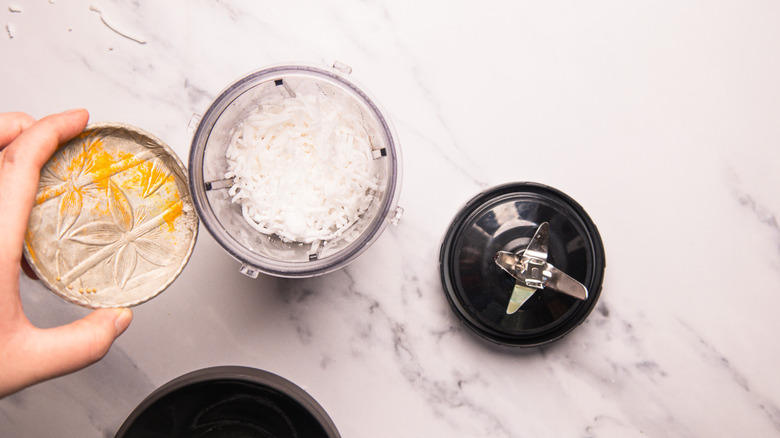
Combine the soaked chiles, coconut, yellow mustard seeds, cumin seeds, turmeric, and salt in a blender with ¾ cup water.
Step 3: Blend until smooth
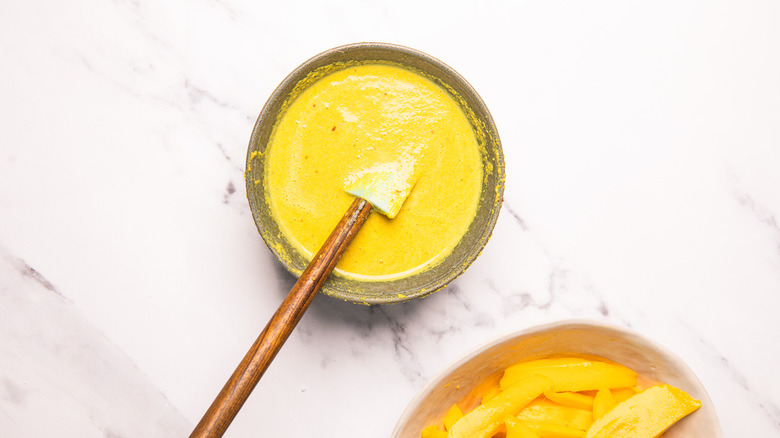
Blend until completely smooth, about 2 to 3 minutes. The paste should be fine with no gritty texture.
Step 4: Heat the coconut paste
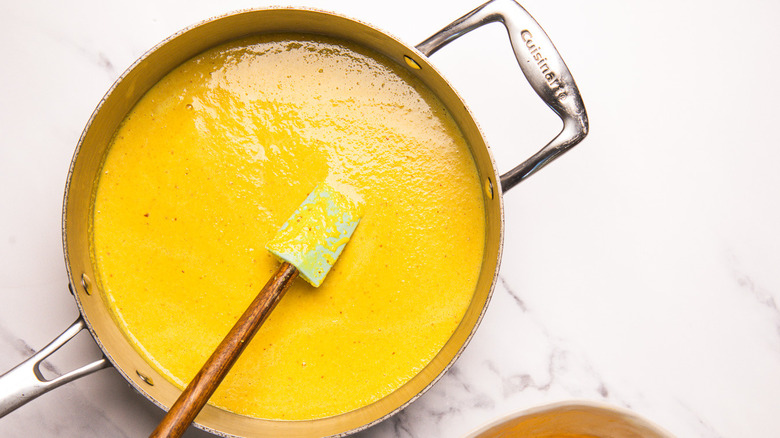
Pour the coconut paste into a wide, heavy-bottomed pan over medium heat.
Step 5: Simmer the sauce
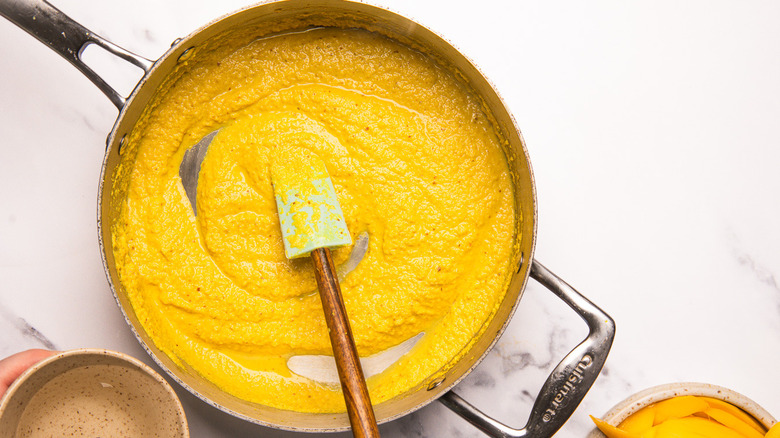
Add ¼ cup water to thin it slightly and bring to a gentle simmer, stirring frequently. Cook until the raw smell of coconut and spices fades, about 5 to 6 minutes.
Step 6: Add the mango
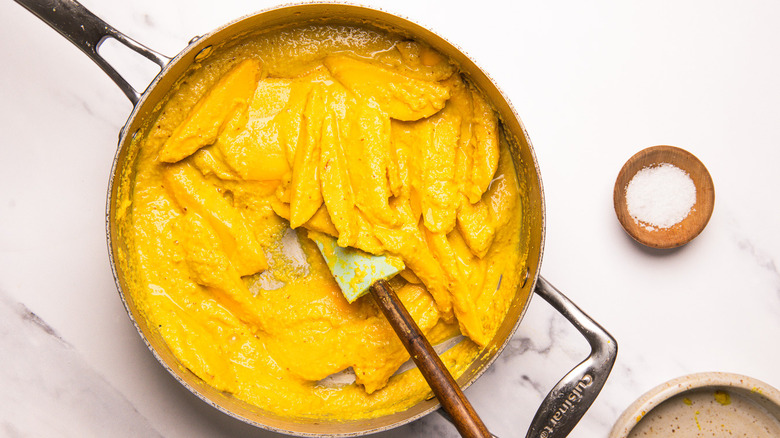
Add the mango wedges, sugar, and salt. Stir gently to coat.
Step 7: Cook the curry
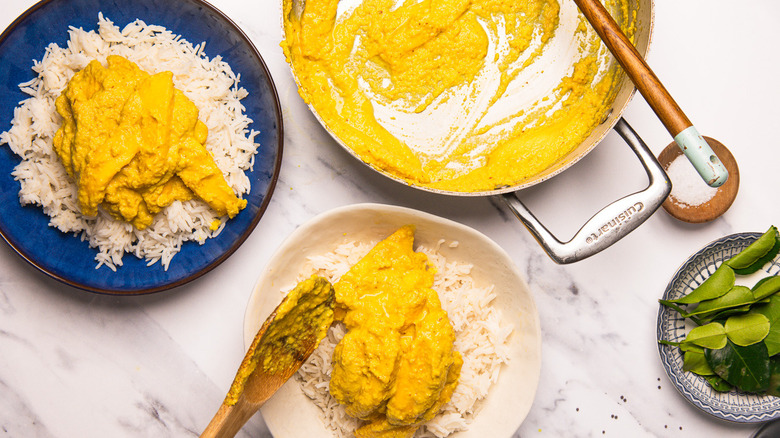
Cook over low heat until the mangoes are warmed through and the sauce thickens slightly around them, about 5 to 6 minutes. Transfer to a serving bowl with rice, if desired.
Step 8: Heat the coconut oil
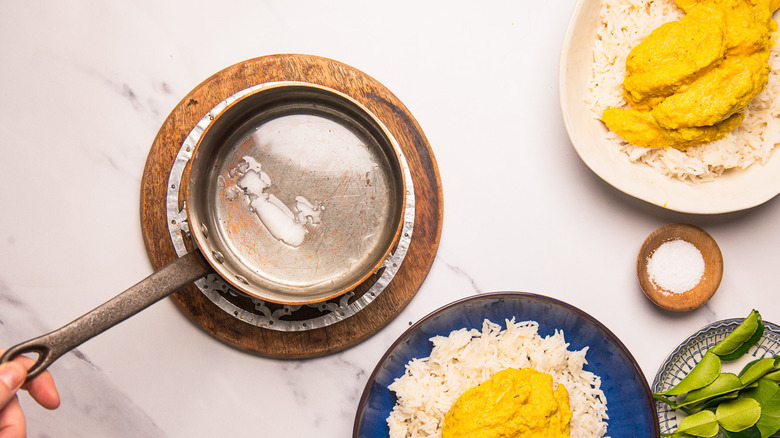
Heat the coconut oil in a small pan over medium-high heat until shimmering.
Step 9: Pop the mustard seeds
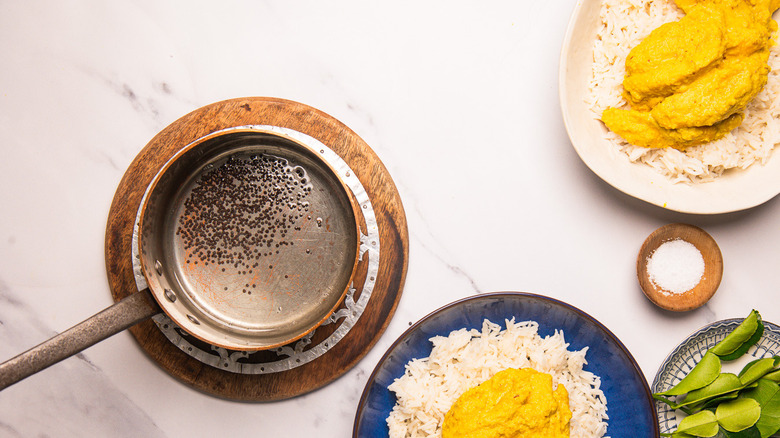
Add the black mustard seeds and cook until they begin to pop, about 30 seconds.
Step 10: Fry the curry leaves and chiles
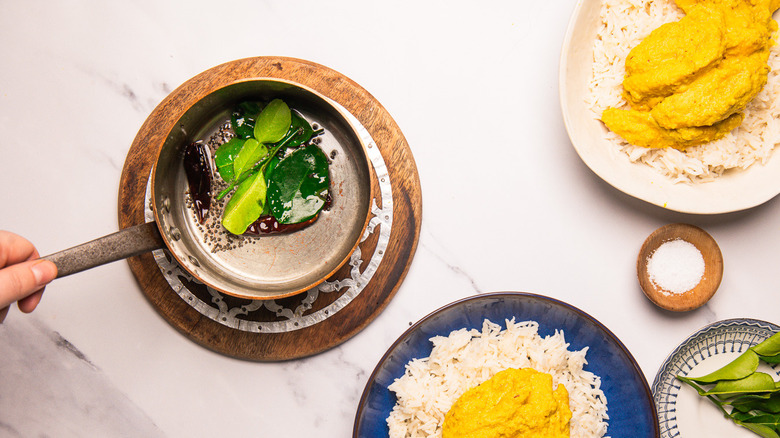
Add the curry leaves and dried chiles and fry for 20 to 30 seconds more until the leaves crisp and the oil is fragrant.
Step 11: Add the oil and serve the curry
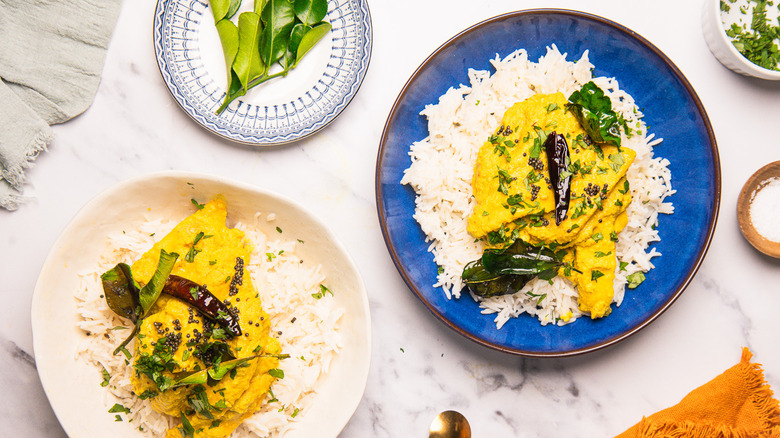
Pour the tempered oil immediately over the curry and serve with steamed rice.
What can I serve with mango curry?
Goan Ghotache Sasav (South Indian-Style Mango Curry) Recipe
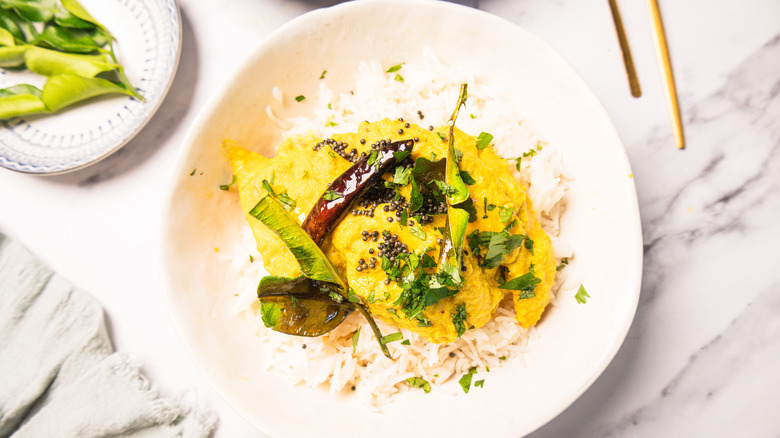
Our coconut curry is built around ripe mangoes, which give it an almost floral sweetness that works beautifully with the sharp and earthy toasted spices.
Ingredients
- For the coconut sauce
- 4 dried red chiles
- 1½ cups fresh or frozen grated coconut
- 1 tablespoon yellow mustard seeds
- 1 teaspoon cumin seeds
- ½ teaspoon ground turmeric
- 1 teaspoon kosher salt
- For the mango curry
- 4 ripe Ataulfo mangoes, peeled and cut into thick wedges
- 1 teaspoon sugar
- ½ teaspoon kosher salt
- For the tempered oil
- 2 tablespoons coconut oil
- 1 teaspoon black mustard seeds
- 12 fresh curry leaves
- 3 dried red chilies, broken in half
Optional Ingredients
- 2 cups steamed rice, for serving
Directions
- Soak the chiles in warm water for 15 minutes. Drain.
- Combine the soaked chiles, coconut, yellow mustard seeds, cumin seeds, turmeric, and salt in a blender with ¾ cup water.
- Blend until completely smooth, about 2 to 3 minutes. The paste should be fine with no gritty texture.
- Pour the coconut paste into a wide, heavy-bottomed pan over medium heat.
- Add ¼ cup water to thin it slightly and bring to a gentle simmer, stirring frequently. Cook until the raw smell of coconut and spices fades, about 5 to 6 minutes.
- Add the mango wedges, sugar, and salt. Stir gently to coat.
- Cook over low heat until the mangoes are warmed through and the sauce thickens slightly around them, about 5 to 6 minutes. Transfer to a serving bowl with rice, if desired.
- Heat the coconut oil in a small pan over medium-high heat until shimmering.
- Add the black mustard seeds and cook until they begin to pop, about 30 seconds.
- Add the curry leaves and dried chiles and fry for 20 to 30 seconds more until the leaves crisp and the oil is fragrant.
- Pour the tempered oil immediately over the curry and serve with steamed rice.
Nutrition
| Calories per Serving | 391 |
| Total Fat | 19.0 g |
| Saturated Fat | 14.9 g |
| Trans Fat | 0.0 g |
| Cholesterol | 0.0 mg |
| Total Carbohydrates | 58.0 g |
| Dietary Fiber | 8.8 g |
| Total Sugars | 49.5 g |
| Sodium | 717.7 mg |
| Protein | 4.6 g |

What's the origin and background of mango curry?
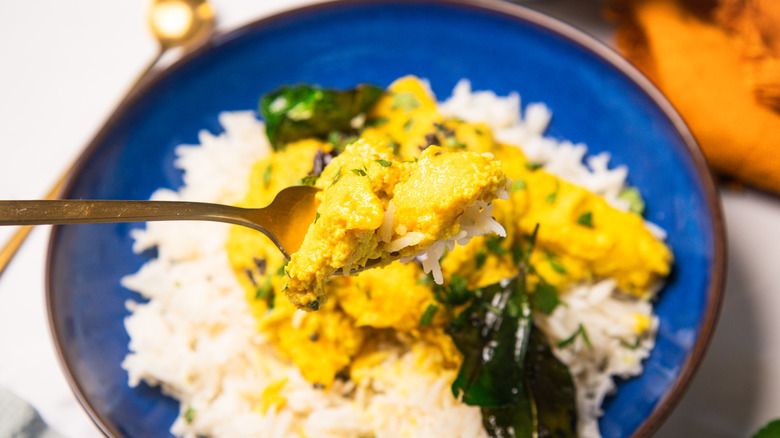
This recipe is a version of Ghotache Sasav, also called Mango Sasav, a traditional South Indian dish made out of ripe mango in a coconut and mustard sauce. The dish is popular in Kerala and Goa, where indigenous coastal flavors like coconut, curry leaves, and local mangoes abound, with influences brought in through trade, especially from Portugal.
There are plenty of types of curry, but Goan cuisine tends toward tangy, spicy, and mildly sweet, a flavor profile embodied in this dish. The word "sasav" in the title means mustard in Konkani, the regional language, which is the defining flavor of the sauce.
Goa is also known for its native mango varieties, which include the Mankurad, a close relative of the Alphonso mango. Ataulfo mangoes, used here, make a good substitute that is widely available in North America. They have a similar soft, fiber-free texture and a deep sweetness that works even if they're not fully ripe. Though mango curry may be lesser known among all the amazing Indian dishes one can try, I strongly recommend you make it at least once — and you might find yourself making it again and again.
What adaptations can you make to this mango curry?
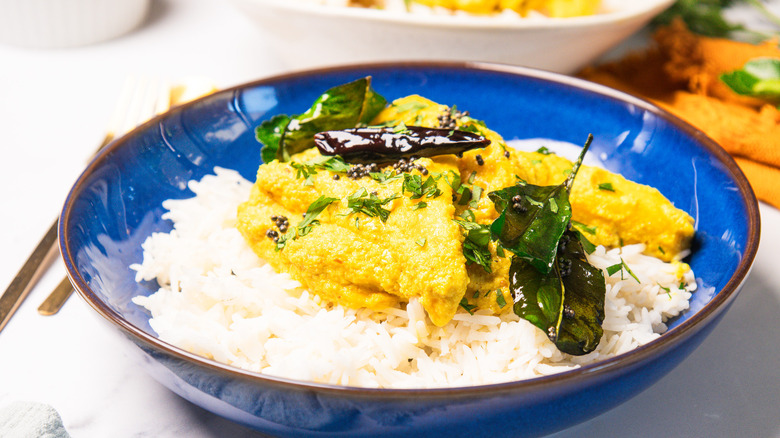
Probably the most popular adaptation to this dish, at least in my own house, is to transform it into a chicken mango curry. This turns it from a vegetarian side dish into a full-fledged meal, and my kids love the sweet-and-sour combination alongside plump pieces of seared chicken.
To make this change, you'll need chicken breasts that you're going to cube and salt. Saute the chicken in a bit of coconut oil for about 3 minutes per side, and then add it back to the coconut sauce once it's in the pan. Cook it for another five minutes in the sauce before adding the mango, and you've got a full dish that's great for any meal, but is especially welcome on hot days. If you want to add protein but keep the dish vegetarian, consider adding paneer, a farmer's cheese-like Indian cheese, which would go well here.
To adjust the heat in the recipe, start with two dried chiles in the paste rather than four and taste before simmering. You can also skip the chiles or reduce them in the tempered oil for a milder finish, as it's really a question of flavor. I personally like to add more heat, so I usually add a teaspoon of chile flakes or ground cayenne into the tempered oil.