

5 Cheaper Alternatives For Granite Kitchen Countertops
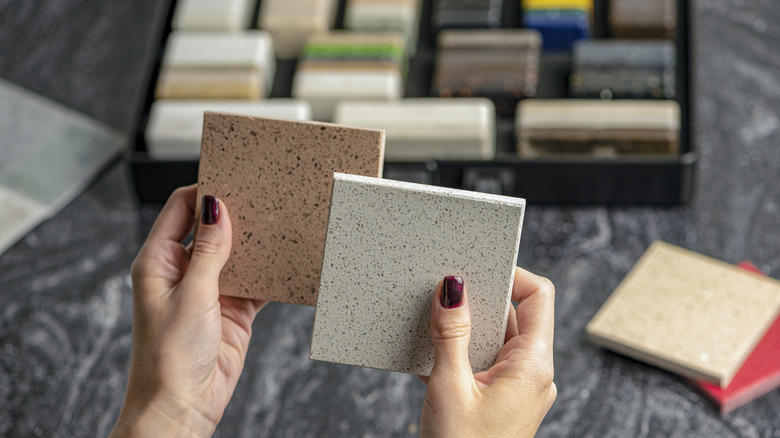
We all have an idea about what our dream kitchen looks like, whether it's merely the general aesthetics or if it's been planned down to the hardware. When it comes time to renovate, however, the budget doesn't always match the Pinterest board.
Granite countertops have gone in and out of fashion over the years, but ultimately remain a solid choice for their durability and long life span. This can make granite a good investment considering the long-term value, but at the end of the day, it's not a cheap material — particularly if you're opting for thicker slabs or patterns that mimic marble. Prices range from about $40 to as high as $175 per square foot.
With a tighter budget you still have plenty of options, but you might have to make some compromises. And it's here where you really want to think about what's important. Is it the day-to-day durability of granite? Or the aesthetic that matched the rest of your kitchen plans? When choosing any countertop material, it's always going to be a balance between your needs, your wants, and your budget.
It's also important to understand what's involved in the pricing of new countertops. Some materials are certainly more expensive, but the raw materials might only account for 50-60% of the final quote, with the rest going to fabrication, cutting of the materials, labor costs, and finishing. Ensure that any estimate you receive is the installed cost per square foot, and not just the cost of the material itself.
Solid surface
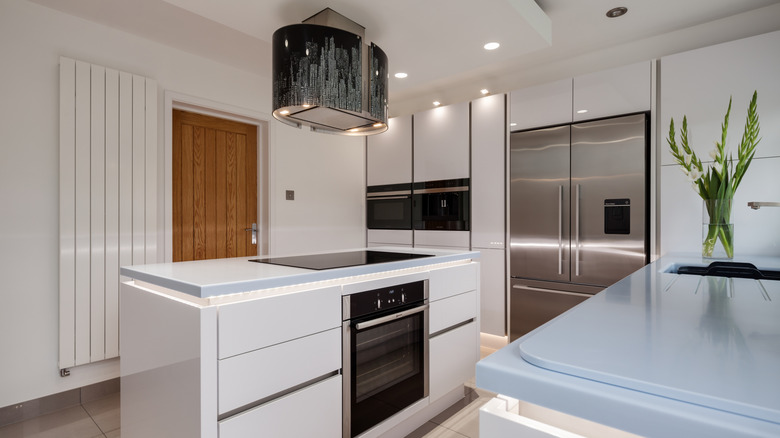
Solid surface countertops (also known by the brand name Corian) are a fairly recent innovation, introduced to the market in the late 1960s, which surged in popularity during the 1990s. Depending on the design and manufacturer, solid surface is composed of around 30% acrylic or resin, with natural filler materials (such as mineral dust) and colors mixed in.
Corian was developed to create a more hygienic and low maintenance alternative to the kitchen countertop materials available at the time. It's almost completely non-porous, making it easy to clean and resistant to water damage. The downside is that it's not heat resistant and prone to scratches. But as solid surface is the same material all the way through (hence the name), light scratches can usually be buffed out.
Solid surface can be made in a wide range of colors, but one of its most popular features is that it can be made to mimic the design of natural stone at a fraction of the cost, around $20 to $75 per square foot. What's going to have the biggest impact on price is whether you opt for pre-made slabs that are then cut to size for installation, or the more expensive option, which is to have the solid surface made to measure. This is usually required if you have long islands, built-in sinks, or curved sections of counter. Both require professional installation, but once your solid surface countertop is in, it won't require any costly ongoing maintenance, and can last around 20 years.
Butcher block
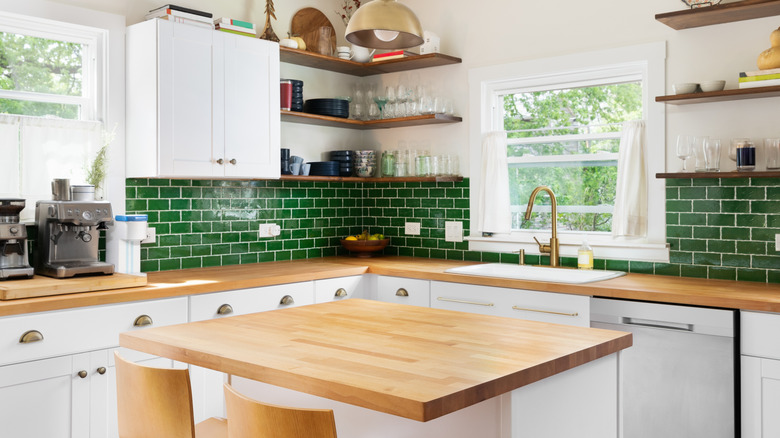
If you've assumed that a classic country kitchen is out of your budget, you'll be surprised to learn that a butcher block countertop is a reasonably affordable option, bringing instant warmth to your space for as little as $20 per square foot. A butcher block is also one of the few countertops you can install yourself, which will save labor costs, but you'll still need to consider the price of having the wood cut to size and your old countertops removed.
Butcher block is a mixed blessing when it comes to durability; it's more prone to damage, but easier to repair or refinish than granite. Placing a hot pan directly on the counter is going to leave a scorch mark, and if you take a look at your wooden cutting board, it'll give you an idea of how easily it scratches. The good news is that this wear and tear can usually be sanded out.
What can't be repaired is structural damage caused by water, so you will need to factor in the cost of sealing the wood about once a year, as well as oiling the butcher block once a month. That said, with the right care, butcher block counters will last upwards of 20 years.
Butcher block is composed of strips of hardwood glued together, and is distinct from solid timber countertops. Although both provide a similar aesthetic, solid timber counters are more prone to cracking and warping, and are generally more expensive.
Slate
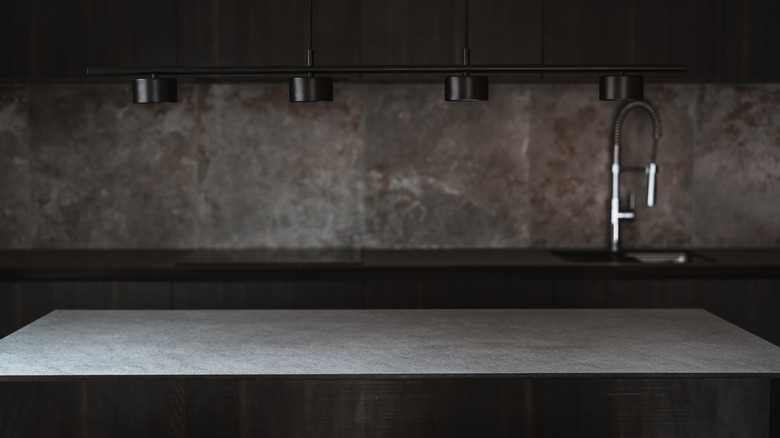
Slate isn't generally as popular as other countertop materials, but if you're looking for an all-natural material that's a little more affordable, it's worth keeping in mind. Slate is a fine-grained rock that's been used as a building material for centuries, particularly roofing and flooring, as the way the stone forms makes it easy to split into large flat sheets.
Slate offers many of the same benefits of other stone, but at a lower cost of around $20-$85 per square foot. It's resistant to heat and staining, and a good long-term investment, with an expected lifespan of 25 plus years. Unlike granite, it's naturally non-porous, and therefore more resistant to bacteria. Being non-porous also means it won't require sealing — another cost saver for both the installation and ongoing maintenance.
Although slate is generally durable, the edges can be more prone to chipping than other stones. It's also softer, so it's not entirely scratch proof. In terms of aesthetics, slate isn't available in the wide range of colors and patterns you'll find with other materials. Natural slate colors include greens, purples, browns, and grays, but all within a fairly muted palette. That said, a dark gray or black can lend a luxury touch when used in the right setting.
Laminate
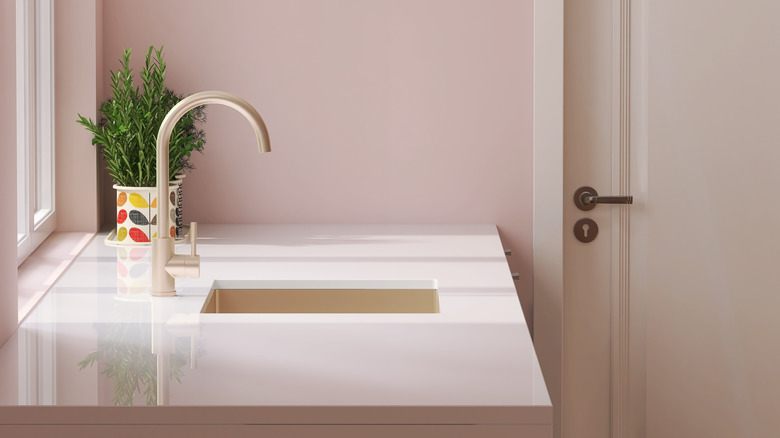
Although laminate was invented back in the 1930s, the heyday of its use was during the '50s and '60s as an affordable and low maintenance option when compared to other materials available at the time. Even when the look was no longer in fashion, the price tag certainly was, and you've probably seen enough rental kitchens to know that laminate continues to be the go-to for renovations on a budget.
The cost of laminate itself is cheap, starting at $10 to $40 per square foot, depending on the design. If you have a straightforward kitchen layout and no special edging requests, it's easy enough to buy the sheets and do it yourself.
Laminate has a bit of a bad reputation for durability, with the Property Brothers going so far as to say laminate can lower the value of your house. It's not resistant to heat, and has a fairly short lifespan compared to granite or other materials, expected to last around 10-15 years.
Before you write off laminate for your kitchen counters, there are some pros to consider. The laminate of today is much more durable and heat resistant, and available in a broader range of colors and designs. Light scratches on the surface can be repaired using a DIY kit, and even peeling laminate can be re-adhered. Finally, consider the look you're going for. When designing a retro kitchen, the bold block colors of laminate countertops will be the best choice.
Ceramic tile
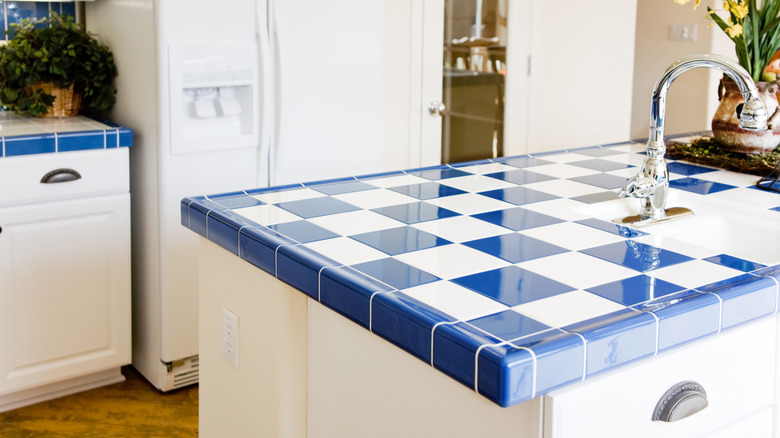
Ceramic tile countertops are one of the most budget friendly options for your kitchen, starting at as low as $5 per square foot, depending on the design and finish. They also come with a lot of the benefits you might have been looking for in granite counters: They're heat resistant and durable against daily wear and tear.
Tiles also have a few advantages over granite. You'll have access to a much wider range of colors and designs, and even the size of the tiles can have a big impact on the overall look. With a bit of DIY know-how and a few tools, you can install a tile countertop yourself, making this a very affordable material. You also have the option to replace single tiles in case of cracking or chipping, rather than the need for professional repairs or replacing the whole counter.
So why aren't tile countertops more popular? You'll often see ceramic tiles on kitchen backsplashes, but for a countertop they're not quite as practical as they might seem at first. The glazed ceramic itself is non-porous and stain resistant, but the grout between them is not. Maintaining clean grout, especially in an all-white kitchen, requires a lot of time and effort — a cost to be considered even if it's not a monetary one.