

The 10 Biggest Beer Myths People Still Believe Are Facts
Few things are as rewarding as kicking back after an incredibly long day, cracking open your favorite beer, and treasuring a few moments of serenity. The beer world is pretty neat, and it can be difficult to wrap your head around just how many options exist. Did you know that the world's biggest draft beer selection has more than 350 different brews on tap? That's absolutely wild, and sheer volume helps explain why choosing a good beer is more complicated than you'd think. It also doesn't help that there's a lot of misinformation and oft-repeated claims that you've possibly heard so many times that it's easy to accept that they're true.
We'd like to clear up some of those myths. In this process, we'll talk about the neat history and fun science of beer, and we'll give a few tips that will help you get the most out of your next pint. Along the way, you might just learn a few things you can drop into the conversation the next time you get together with friends for an impromptu beer tasting or brewpub outing, and honestly, any time we get to share some fun facts and funky history, we're there for it.
So, here's some real talk about some of the myths and misconceptions about beer we've seen posted on social media, and heard pub-goers repeat time and time again. Let's see if we can do a little debunking to derail some of those tiresome and wildly incorrect conversations, shall we?
Dark beers are stronger than light
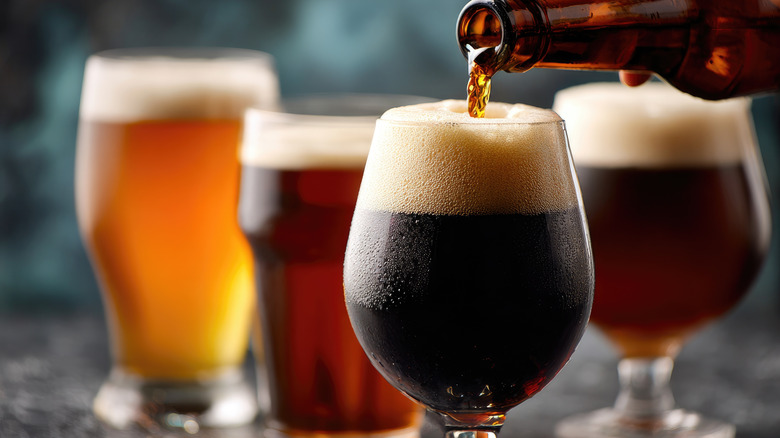
There are a lot of different types and styles of beer, and if you tend to gravitate toward a few specific kinds, you're certainly not alone. Those who choose to stay away from dark beer might do so as they repeat one of the biggest myths about these deliciously deep and flavorful brews, as dark beer is often said to be stronger and heavier than light-colored beers.
It's simply not true, and this one is really easy to disprove with just a few examples. We'll start with one of the most famous dark beers: Guinness. Though the brand has several stronger styles, order a Guinness Draught, Original, or Extra Stout, and you're getting a beer that's 4.2% ABV. Ask for Heineken or Samuel Adams Boston Lager, which are generally perceived as lighter, and you'll notice that they clock in at 5% ABV. Myth busted.
We'd also like to add that there is absolutely no connection between the color of a beer and its alcohol content. A beer's particular color comes from a number of things, including how deeply (or lightly) roasted the malt was, the presence of ingredients like candi sugar, the addition of coloring agents, and the chemical reactions that happen during the brewing process.
All beer is best when it's really, really cold
We're the first to say there's something magical about a cold pint on a hot, sunny summer afternoon, but we're also here to say that anyone who subscribes to the idea that all beer needs to be served really, really cold is doing their beer — and their taste buds — a massive injustice. Because here's the thing: When beer is served at an Arctic-adjacent temperature, it lessens your ability to taste all the flavors present in your beverage. And yes, that's exactly why some bottom-shelf, mass-market beers (which shall go unnamed) are advertised as tasting best when they're super cold. They do, because there's not much going on in these beers, and the cold prevents you from realizing that.
Generally speaking, beers like lagers and pilsners are best when they're served between 40 and 45 degrees Fahrenheit, while ales, stouts, and IPAs are better at a slightly warmer 45 to 50 degrees Fahrenheit. And yes, some beers should be served at warmer temperatures. If you're getting into the high-end, ultra-fancy things like Trappist and other Belgian beers, it's recommended that you serve them chilled to around 60 degrees Fahrenheit. That's going to keep all those carefully curated flavors and aromas at the forefront.
In other words, save your coolers and your koozies for your cream ales, Mexican lagers, and light beers. Also, if you're picking up some of the best 6-packs for under $10, feel free to chill away.
IPAs were created by a British brewer specifically for ships bound for India
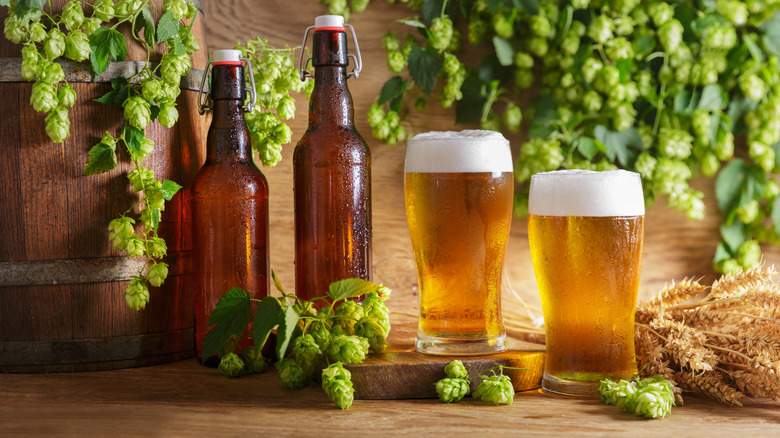
IPA is the most popular style of craft beer in the U.S., and you've probably heard the oft-told tale that IPAs were invented by a British brewer named George Hodgson. Hodgson, the story goes, was the 18th-century brewer who created the extra-hoppy ale to solve a very specific problem. Shipping beer from Britain to Colonial India meant that not only was it going to be subjected to some seriously extreme climate changes, but it could take several years to get to its destination. Hodgson decided that extra hops meant extra durable beer, and it sounds like a perfectly reasonable story.
Only, it's not true. Hodgson was a brewer, exporter, and one of the main suppliers of ale to British ships heading for India. That's about where the historical accuracy ends, though, as no records, documents, or writings have ever been found to suggest Hodgson created IPA.
Interestingly, historians have found records that kind of contradict the whole foundation of the story. At the time, porter was one of the go-to styles of beer, and there are some ships' records — including the writings of crew aboard Captain Cook's voyages on the Endeavour — that indicate it was a shipboard staple that remained absolutely delightful after months at sea. So, this one's debunked in two ways.
Beer before liquor, never been sicker...
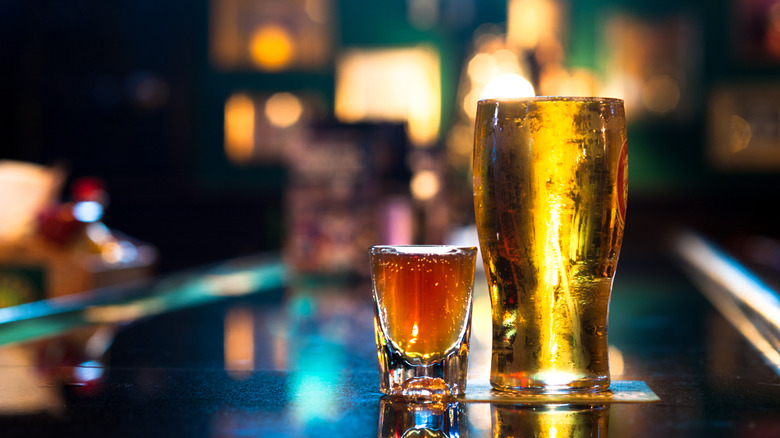
Alcohol, of course, comes with the risk of a hangover. Even though scientific research has found that there's no real cure for a hangover, plenty myths, misconceptions, and tall tales have continued to make the rounds regarding these morning-after regrets. Let's talk about one that we hear a lot, because in reality, that "beer before liquor" saying is a drinking myth that you really should stop believing.
The full saying is, "Beer before liquor, never been sicker. Liquor before beer, you're in the clear." It's not entirely certain how or why this became such widely repeated and believed pseudo-wisdom, but there's no evidence that there's the slightest bit of truth to it.
Consider this: When you drink — regardless of whether it's beer or liquor — alcohol goes from your stomach (or small intestine) to your bloodstream, and it takes just minutes to reach your brain. And that's among other organs. By the time you wake up with that hangover, all the alcohol you consumed has been absorbed into your system and is in the process of being eliminated in various ways. The order you drank it doesn't matter — it's all in there together, mixing things up and possibly giving you a severe case of the sad. Some types of alcohol — like red wine and rum — are more likely to give severe hangovers thanks to the presence of substances called congeners, but drinking order has no impact.
Expect warm beer in Britain
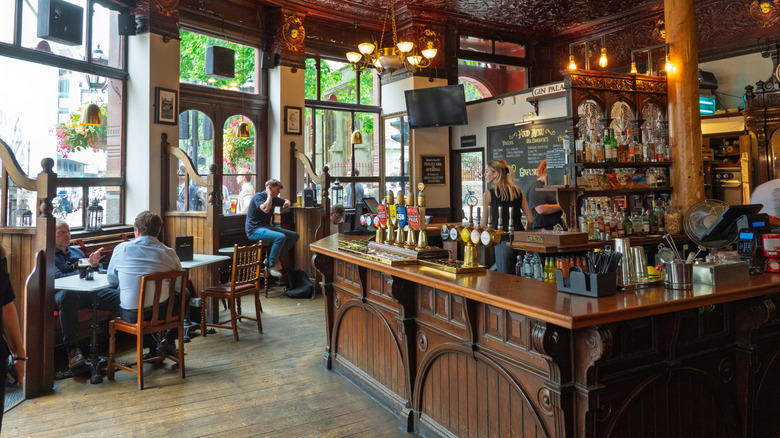
You know that temperature of your beer is important, but anyone who has ever expressed an interest in visiting Britain, watched "Monty Python," listened to The Rolling Stones, or even looked at a map has undoubtedly gotten the old nudge and a wink before being informed that the Brits like their beer warm. And no, it's not true that any time you head into a pub, you're going to be poured a room-temperature pint.
The Brits take their beer very seriously, and you're likely to find different styles served at different temperatures. Pubs are also very particular about things like regularly cleaning tap lines and keeping beer storage at a temperature in the low 50 degrees Fahrenheit. What you will find is beer perhaps warmer than most Americans are used to, but that's by design. Popular cask ales tend to be served at around 50 degrees Fahrenheit, and interestingly, we kind of know where the whole room-temperature beer rumor came from: World War II.
When American GIs found themselves shipped off to Britain on their way to the front, it was a bit of a culture shock. To help, many were given a book called "Instructions for American Servicemen in Britain," which included this warning: "You [will quickly discover] differences that seem confusing and even wrong. Like driving on the left side of the road, and having money based on an 'impossible' accounting system, and drinking warm beer." Perceptions were very different, and rumors persist today.
A frosty cold glass is the way to get a perfectly chilled beer
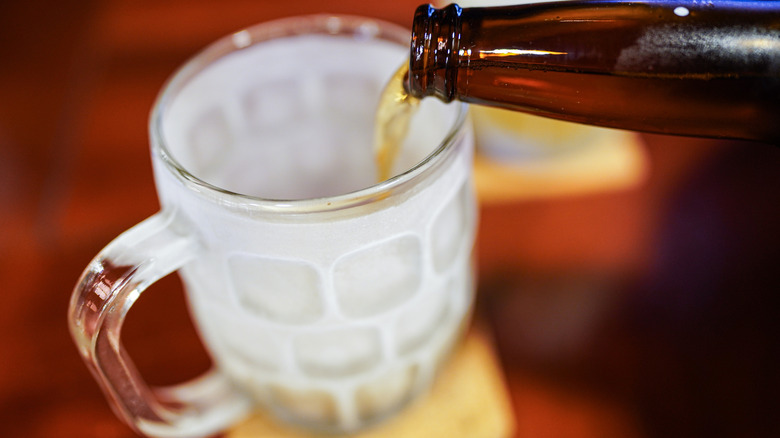
Look, we get it. Frosty glasses of beer are fun. However, they're not nearly as good for your beer as you might think, and in fact, you should never be serving or drinking beer in a frosted glass, unless it's the one-dimensional beer that you're drinking just for something cold and refreshing, not necessarily tasty. In other words, you're not going to be waxing poetic about the flavor profile and complexity of Bud Light, so frosty mugs are perfectly fine.
For anything else, though, keep in mind that if you have something like a complex craft beer, flavorful IPA, or pretty much anything you're drinking for the flavor, aroma, and experience, that frosty glass is going to do the same thing as serving it at an ultra-cold temp. Flavor will be muted, along with any complexity you get from that oh-so-important first whiff, and that makes for a wasted experience.
Bottles are always better than cans
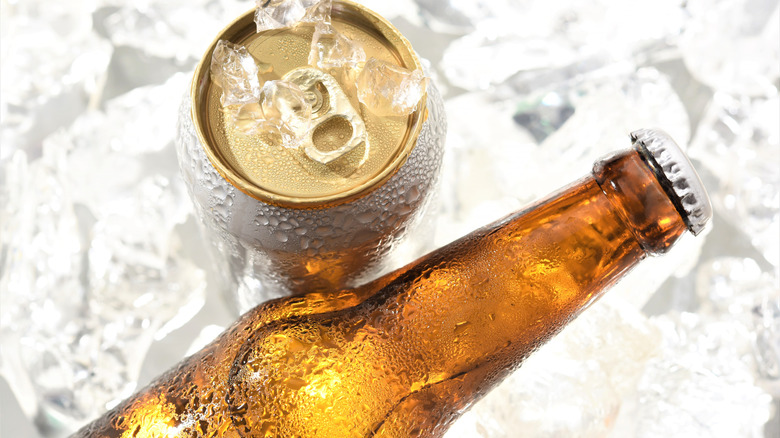
Bottles have long been seen as the superior choice over cans, but before we debunk this one, we will say that there was a time when this was 100% true. Beer cans have been around since the 1920s and '30s, but even when aluminum cans became mainstream, the canning process wasn't great, and sometimes beer ended up a little funky-tasting. Bottles were preferred, and we've just sort of stuck with that.
You still might hear people swear how cans impart a bit of metallic funk, but fortunately, we don't have to argue anymore. In 2023, research published in ACS Food Science & Technology covered a study that measured change — in both cans and bottles — that happened on a microscopic level over the course of six months. The TL;DR is that there's no one best answer. The IPAs and the ales tested as part of the study acted very differently, and it led to the theory that different beer styles fare better in different types of packaging.
Plenty of breweries, meanwhile, are making the shift to cans. Cans are better at protecting beer from the potentially damaging effects of light, and they're also more airtight than bottles. Some go even further, citing things like convenience, lighter weight, and durability as benefits to cans, and as for taste, advances in can technology and linings have eliminated that metallic bite.
Changing temperature means skunky beer
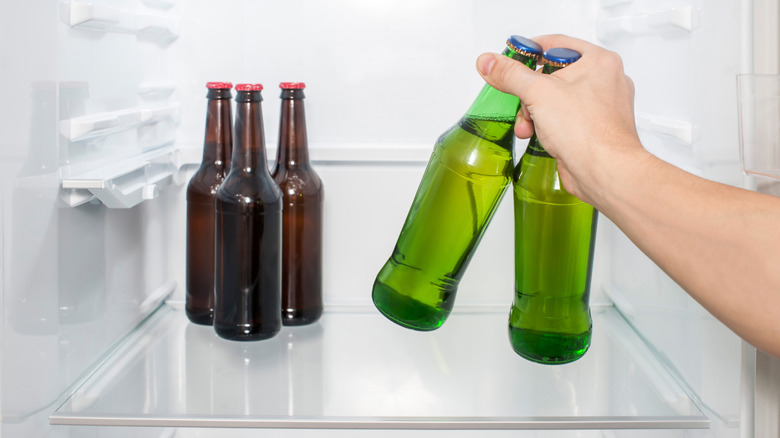
So, you run to the store and grab a 6-pack out of the cold section, but then you pause. You're not heading straight home, and that brings up a question: Does cold beer go bad if it warms up? It's entirely possible you've heard that cold beer needs to be kept cold or it's going to spoil, but we have some good news for anyone who does their grocery shopping on their lunch break. Letting that cold beer reach room temperature and then stashing it in the fridge before you're ready to drink it isn't going to make the slightest bit of difference.
While a record-breaking, sweltering summer day or freezing winter evening can be another story, moderate temperature swings aren't going to skunk your beer. Light — particularly UV light — is a much bigger threat, so go right ahead and keep hitting the grocery store on your lunch break.
Sediment is bad and will make you sick
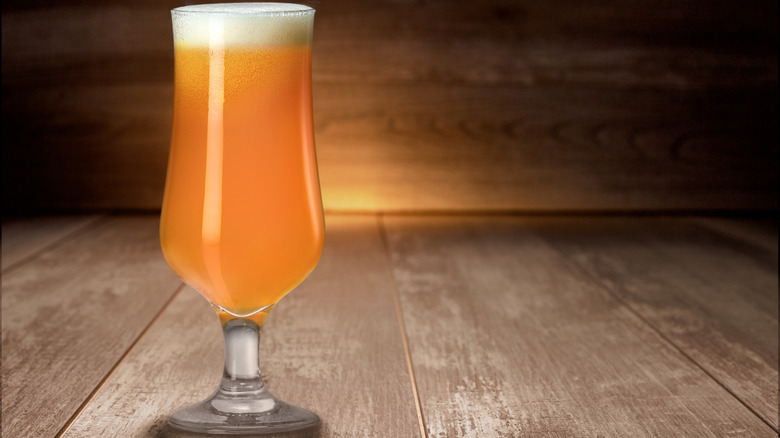
No one likes to see strange things in their food or drink, and beer sediment can be a little troubling. It's sometimes said that the sediment in beer is the kind of thing that will make you sick if it ends up in your glass, but that's actually not the case.
There are many reasons sediment might end up in your beer. Potentially, it could be the remnants of the hops or simply sugars and yeast from a bottle conditioning process. It also might just be a haze caused by components, for example proteins, that some breweries choose not to remove via filtration. Sediment is often considered a good thing, as it can mean there's still active yeast in the bottle. And this means your beer is going to stay fresh for longer!
As for whether or not it's safe to consume, there's a rather interesting take on that. The yeast used in beer contains various B vitamins, so some sources point out that while you're not going to get your daily intake of nutrients this way, it's not going to hurt you, either. In some cases, the sediment is left there on purpose to add to the flavor. We have to add that sediment sometimes happens in spoiled beer. If that's the case, you'll know it by the smell or the first sip. Otherwise, feel free to let it settle and carefully pour it out, or let it add to the experience!
Belgian abbey beers are brewed by monks
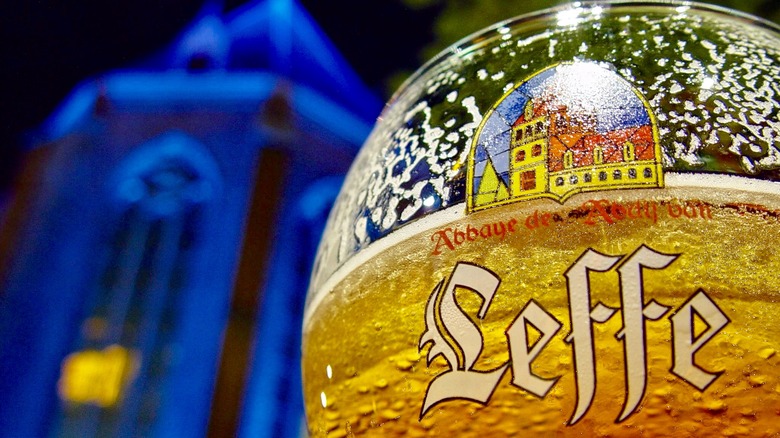
This one's a little complicated, so let's take a specific example. If you look at the website and advertising for Belgian Leffe, you'll see a lot of cathedral-esque vibes, a declaration that it's a Belgian abbey beer that's been around since 1240, and a lot of images of serene-looking European monasteries. Even the chalice-shaped official glassware depicts what is advertised as the beer's abbey. So, clearly, it makes perfect sense that Belgian abbey beers always involve that ages-old tradition of monks brewing, right?
Not so fast. In 2016, Leffe was in the center of a lawsuit for deceptive advertising. In reality, the brand is owned by Anheuser Busch. It is mass-produced in a massive facility in Belgium, and it hasn't had a real connection to any actual abbey since the end of the 18th century. Whoops. The lawsuit was eventually dropped, but it brings up an important distinction. Abbey beers are called that because they're a style of beer originally brewed in abbeys, not because they are currently brewed by monks.
Trappist beers are different. In order to earn that designation, they need to be produced (or supervised) by monks, within a monastery, and are sold to support said monastery. There's a big difference there, and it's one that certainly isn't made clear in some advertising.