

7 '80s Chain Restaurants That Beat The Odds And Are Still Going Strong
Much to the chagrin of anyone born between 1980 and 1989, we're coming up on four, or even five, decades since that magical period. But fear not possibly middle-aged readers, as not everything has changed since then — especially in regards to some particularly rad restaurants that are still totally tubular today. To translate that into today-speak, there's a few familiar chain restaurants that people are visiting just as much these days as they did back then.
Not every beloved restaurant remained unscathed however. For example, Sizzler may have helped define 1980s dining, but it's now a shell of its former self. A mention of Chi-Chi's or Ground Round to an older relative might bring a tear to their eye as they flashback to memories of Tex-Mex meals or eating burgers while peanut shells adorned the floor. You might also find them rewatching scenes from "Austin Powers" just so they can remember the good times they may have had at Bob's Big Boy.
Even though some of these restaurants were established prior to that fabulous decade of big hair and hanging out at malls, all of these chains really found their footing during that time and became some of the most popular restaurants of the '80s. The designs may be different, the logos may have changed, and those menu prices certainly aren't as low as they once were, but for anyone who frequented these chains then and now, the feeling of nostalgia is as strong as the taste of whatever you're eating.
Red Lobster
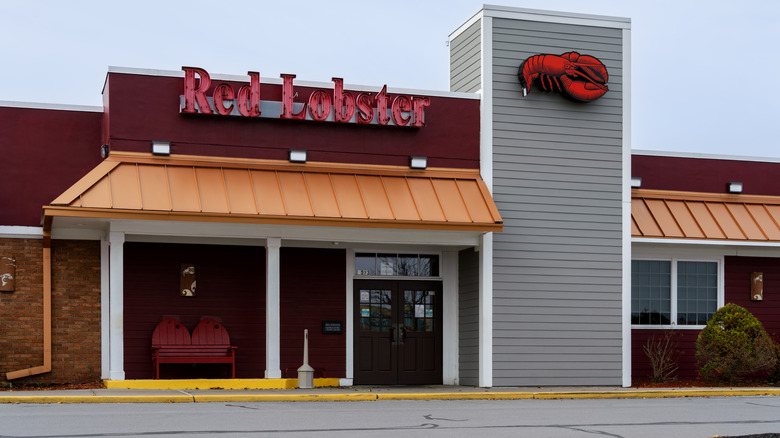
Long before he was the namesake behind a giant restaurant operator, Bill Darden was simply a successful restaurateur who realized that diners were lacking in seafood options — so in 1968, Red Lobster was born. It didn't take long before the burgeoning restaurant caught the attention of General Mills, who acquired it, and the chain steadily grew throughout the '70s. During that time it also continued to grow its customer base, especially among Black diners, a welcome change from other establishments during that time. However, it was the '80s where things really took off, as it not only saw the restaurant go international with an expansion into Canada, but also the birth of the one and only Lobsterfest.
But much like cassette tapes and Cabbage Patch Kids, people eventually lost interest in Red Lobster and sales began to stagnate in the 2010s. Throw in some ownership changes, a couple of instances of failing to realize just how much people could eat during an all-you-can-eat promotion, and a pretty problematic pandemic, and you've got a perfect recipe for a once mighty chain declaring bankruptcy.
It was a sizable fall from grace, but fortunately for shrimp and lobster lovers out there, it ended up not being a freefall. The chain navigated its way out of bankruptcy, thanks in part to the hiring of former P.F. Chang's CEO Damola Adamolekun, who oversaw a massive turnaround for Chang's, and hopes to do the same for Red Lobster.
Olive Garden
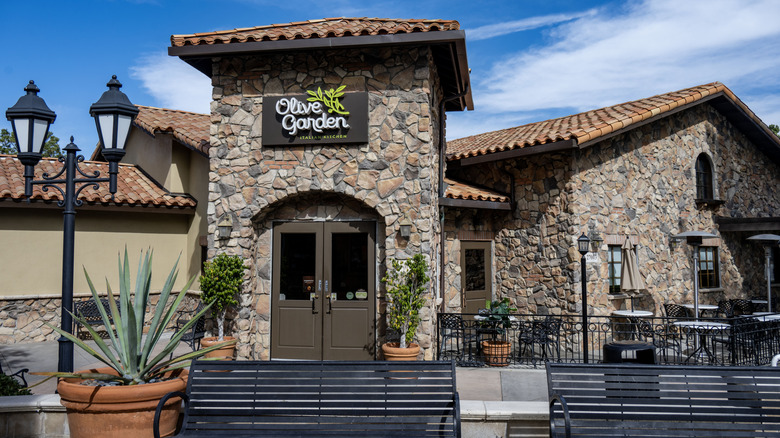
Surprise — one of your favorite restaurants was created by a cereal company! After they purchased the aforementioned Red Lobster brand from Mr. Darden, General Mills followed that up by opening the first Olive Garden in 1982. And on that momentous first day, the doors opened — and it did NOT go well. During its first two days, the kitchen couldn't keep up with the long line of customers, and general manager Blaine Sweatt needed to do something to deal with a restaurant full of hangry diners. His idea would prove to be an iconic concept that exists to this day: unlimited soups, salad, and breadsticks.
While it has been criticized for offering up an American take on Italian cuisine, rather than sticking the real deal, Olive Garden has gone on to become a giant in the restaurant industry, with the number of locations passing over 950 as of 2026. It hasn't all been red wine and roses for the chain however. In the mid-2010s, they had their shortcomings deservedly displayed for everyone to see by a lengthy slideshow from a frustrated investor, but after some adjustments, the chain has seen sales growth to start 2026. Anyone of the Gen Z generation can ask an elder for some tips to get the most out of their OG experience, and even though $20 won't get you as far today as it would back in the '80s, it's still a worthy place to have a night out without breaking the bank.
LongHorn Steakhouse
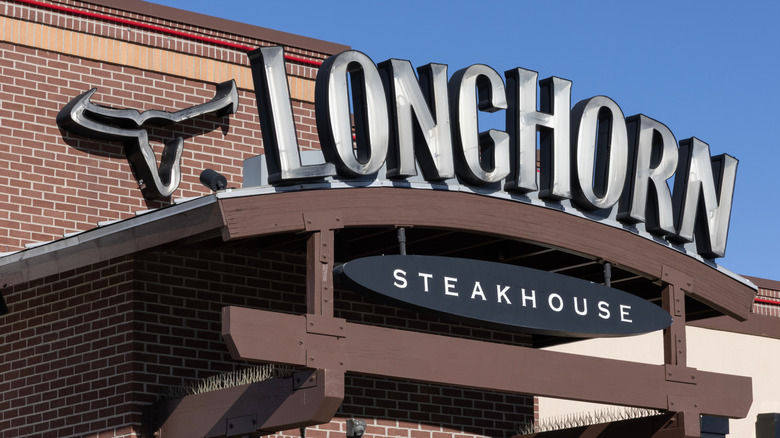
Before it was boasting over 550 restaurants across the globe, the first LongHorn Steakhouse location was scraping by when it caught a lucky break. Sure, a big snow storm may not seem to be so lucky at first glance, but when it resulted in people getting literally stuck in traffic and needing a warm place to wait it out, the nearby LongHorn Steakhouse offered them an oasis. The restaurant offered up $1 drinks to weary travelers as long as it continued to snow, and the blizzard-turned-feel-good story caught the attention of publications and diners alike.
That type of hospitality is still embedded deep into LongHorn's culture, with an emphasis on making sure their customers get their money's worth when it comes to their meals. Despite the astronomical prices of beef these days, LongHorn has continued to find success by not passing the cost onto the customers. By absorbing some of the cost of inflation, it's maintained its status as a casual dining restaurant while churning out a product that goes for much more at other high-end steakhouses.
Because of that consideration, LongHorn has been rewarded by diners continuing to walk through its doors at a time when many other restaurants have seen a decrease in foot traffic. The proof is in the numbers, and like its Darden Restaurants sibling Olive Garden, LongHorn started out 2026 with exceptional sales growth. It turns out that you don't need a blizzard as an excuse to treat your customers right.
Golden Corral
Brace yourselves folks — Golden Corral, a name that has become synonymous with buffets, did NOT start out as one. The original Golden Corral was founded in 1973 as a steakhouse, but it was in the '80s when the chain began incorporating the buffet elements that we all know today. The later years of the decade saw the restaurant go further away from its steakhouse origins by introducing things like a salad bar and other foods such as donuts, pizza, and pies.
By the '90s, the name of the game for GC was to expand, and boy did it ever, as sales eventually passed $1 billion in 2001. But good times can't last forever, and though it continued chugging along for almost two more decades, the COVID pandemic almost brought everything crashing down. Although it took its toll on nearly every business, and of course on other restaurants, the pandemic was devastating to the buffet industry. Golden Corral was no exception, as the chain was forced to close 124 restaurants across 2020 and 2021.
Fortunately for the company, however, many locations managed to survive, and Golden Corral has been able to stage a dramatic comeback in the post-COVID years. Now that an emphasis on health and safety has given way to diners looking for affordable food options, buffets like GC are experiencing positive growth once again. Add in the fact that it's not even halfway through its 100-year business plan, and Golden Corral looks primed to stay.
Chili's
Sticking with chains that are experiencing a full-on resurgence, Chili's is another spot on our list that was founded during the '70s, but the following decade was when it really began to make its mark upon the restaurant landscape. Chili's reached 240 outlets by 1990, and this was before the chain unleashed the baby-back ribs earworm that became synonymous with the franchise.
Unfortunately for the chain, not everything went over as well as that jingle. The 2008 recession wasn't fun for anyone, but Chili's also suffered from poor sales through the 2010s, resulting in several locations closing down. Add the 2020 pandemic, and things were looking particularly grim — but it was only setting the stage for a remarkable comeback.
While previous generations seemingly shunned the chain, Chili's found an unexpected clientele in Gen Z. The company leaned heavily into social media marketing, resulting in the restaurant becoming big on TikTok, thanks in part to trends like users showing off how epic a cheese pull they could get with their mozzarella sticks. The powers that be also took a hard look at what was working and what wasn't, resulting in the chain eliminating around a quarter of their low-selling products and putting their focus into popular items like cheese sticks and the Triple Dipper appetizer, another TikTok favorite. By promoting themselves as a fun and affordable dining option, Chili's finds itself in the midst of an improbable comeback story as it continues to report positive sales numbers.
Bojangles
A North Carolina staple since 1977, Bojangles has come a long way since its inception — and with locations as far away as Honduras, we mean that in both the literal and figurative sense. Known for its various biscuit sandwiches, the chain had 100 locations by 1981, but that figure apparently wasn't enough for the higher-ups, as the name of the game for the next few years was aggressive expansion. That decade also saw Bojangles try to appeal to those with a more sensitive palate, as it introduced a milder seasoning option to complement its original spicy Cajun seasoning in 1986.
Despite all the expansion over the years, resulting in 884 locations as of 2026, Bojangles remains mostly a Southeastern affair, with the majority of spots kept to the Carolinas and Georgia. The company went public in 2015, so don't expect expansion to slow down anytime soon, seeing as how those on Wall Street never seem to have enough money. As of 2025, Bojangles is one of the fastest growing chicken restaurants in the country, and has its eye on opening more locations on the West Coast.
Though it's hard to get any more old-fashioned than chicken and biscuits, the company hasn't been afraid to embrace new technology. Digital menu boards, self-serve kiosks, and even an AI voicebot for the drive thru have popped up at a few locations, signaling that Bojangles is looking to bring their classic dishes into the modern age.
Applebee's
Founded in 1980, Applebee's eventually overcame its mouthful of an original name, T.J. Applebee's Edibles and Elixirs, to dominate the restaurant scene. Six years later, someone finally convinced founders Bill and T.J. Palmer that the name didn't exactly roll off the tongue, so they compromised and settled on Applebee's Neighborhood Bar & Grill. It was debatably still too long of a name, but that didn't stop the chain from taking off, especially after it went public in 1989. Following that, Applebee's spread like wildfire, opening its 1,000th location in 1998, and hitting 1,500 in 2002.
The restaurant has come a long way since opening its first location, and that includes the menu. Before landing on a selection of burgers, steaks, and seafood options, Applebee's experimented with offering up items like cottage cheese and oysters. Those eventually went the way of the signs ending with "Edibles and Elixirs," but after all that trial and error, the restaurant seemed to be an unstoppable juggernaut.
Like many other entries on our list, Applebee's eventually struggled to remain as relevant as it once was. Unlike other restaurants like Chili's and Golden Corral, however, is the fact that Applebee's has yet to hit on a resurgence. Don't worry though, as even though it closed a number of locations in recent years, it still meets the definition of "going strong," seeing as how it still boasts over 1,600 locations. Plus, 2025 saw the chain pocket just under $880 million in net revenue.