

All The Ways The 1960s Filet-O-Fish Differed From The 2026 Version
We may receive a commission on purchases made from links.
Lou Groen dreamed up the now-famous McDonald's Filet-O-Fish in 1961, and it debuted on the menu of his McDonald's franchise in Monfort Heights, Ohio, the following year. McDonald's added the sandwich to its permanent U.S. menu in 1965, sending it on a multi-decade journey to icon status. Since then, the McDonald's Filet-O-Fish has transcended its original purpose as a Lenten alternative to red meat. It is now prized for the simplicity of its construction, consistency of its flavor profile, and the heavy nostalgia it evokes.
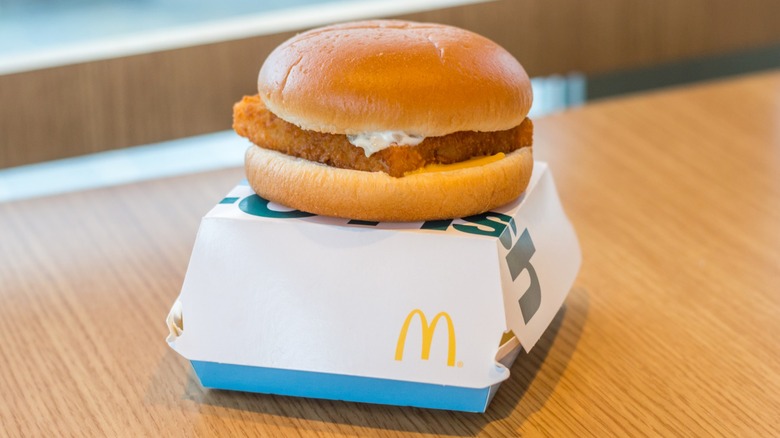
The artfully steamed bun, crispy and buttery pollock patty, tangy tartar sauce, and creamy American cheese are the perfect combination for those times when you don't want the heaviness (or calorie content) of a classic Big Mac. In the 64 years since its introduction to the McDonald's menu, the sandwich has achieved quite the glow-up. Even comparing the original 1960s Filet-O-Fish with its 2026 version, there are striking differences. From its core recipe and novelty status to its price and distribution, here are five of the ways the fishy entrée has evolved.
The 1962 version of the sandwich was made with halibut
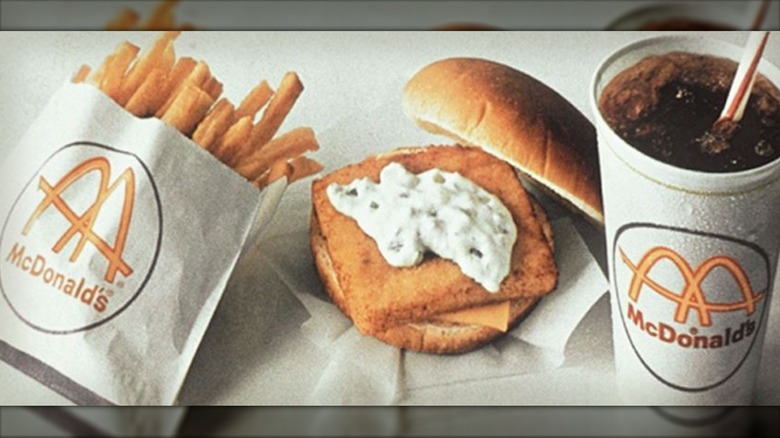
Groen owned the first McDonald's franchise in the area, opening in Monfort Heights in 1959. At the time, sales fell flat during the 40-day period of Lent due to the area's predominantly Catholic population. Inspired by a fish sandwich offered by competing fast food chain Big Boy, Groen decided to suggest something similar to McDonald's CEO Ray Kroc. In 1961, he presented Kroc with his idea — but the original McDonald's Filet-O-Fish sandwich was made with a tender, pricier catch than today's version. Groen pitched a fish sandwich made from halibut and tartar sauce. But because halibut was so expensive, he ended up changing the fish to Atlantic cod and adding a slice of cheese to the filet.
Now, you're eating a different type of fish in McDonald's Filet-O-Fish sandwich, at least in the U.S.: wild-caught Alaska pollock. McDonald's prides itself on using sustainably-sourced fish from reputable fisheries. Since 2001, the company has worked in partnership with the Sustainable Fisheries Program to ensure its global fish suppliers are verifiably eco-friendly. However, certain parts of the world get a different type of fish in their McDonald's Filet-O-Fish sandwiches. In Ireland and Australia, restaurants use hoki or pollock, while in New Zealand the sandwich is made with New Zealand hoki, and Indonesian McDonald's locations use locally-sourced tilapia.
It originally debuted on the menu for just 29 cents a sandwich
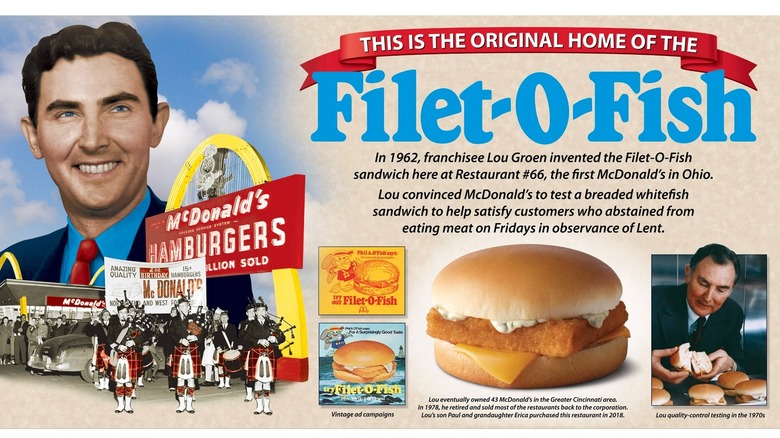
If you're having a hard time digesting current food prices, you may shed a tear when you think about how inexpensive dining out was in the 1960s. McDonald's introduced the Filet-O-Fish at select locations on Good Friday in 1962. When it was added to the company's nationwide menu in 1965, it debuted at only 29 cents a sandwich. Adjusted for inflation, that's about $3.07 in 2026 currency. Yet McDonald's now sells the same sandwich for around $6 or more depending on location. If you're feeling pretty nostalgic for old-school McDonald's prices right about now, you aren't alone.
According to the Bureau of Labor Statistics, the average weekly earnings for U.S. workers is $1,235 in 2026, with women earning around $1,098 per week and Black, Indigenous, and People of Color earning between $901 to $1,054 depending on gender, race, and ethnicity. That makes rising grocery prices and fast food costs even more devastating. Since 2019, McDonald's has raised the menu prices of certain items by as much as 44%, making it harder than ever before to justify the cost of fast food. Given that you can make your own restaurant-worthy fried fish sandwich at home for less than a dollar a serving, we certainly wouldn't complain if McDonald's gave us a $3 Filet-O-Fish in 2026.
At first, it was only sold in U.S. McDonald's restaurants
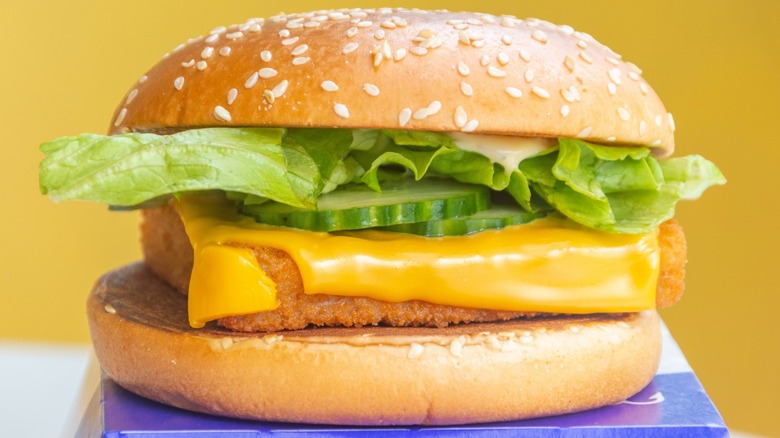
When the Filet-O-Fish debuted in 1965, it was available at McDonald's restaurants nationwide. At the time, that included around 700 locations across the country. Over the next two decades, it would be introduced to the international McDonald's menu in a number of countries, including France, Spain, Belgium, the United Kingdom, the Republic of Ireland, New Zealand, Australia, Japan, Indonesia, Russia, and India. The sandwich differs in both name and construction from country to country as well. In France, a version of the sandwich called Le McFish is offered. It doesn't include cheese, and is served with ketchup instead of tartar sauce.
Some Asian restaurants serve it with wasabi, and in Japan, the Filet-O-Fish is offered on the breakfast menu and served all day long. In Norway, you can order the Happy Fish, which features a breaded fish filet topped with tartar sauce and ketchup on a bun, or the McFeast, which includes a classic Filet-O-Fish sandwich dressed with lettuce, tomatoes, onions, pickles, and mayo. In Belgium, the sandwich includes tartar sauce, pickles, onions, and capers along with cheese. Some places, including the U.S., U.K., Australia, and Canada, also offer a permanent or seasonal version of the sandwich that includes a double filet.
It was once the only non-beef sandwich on the menu
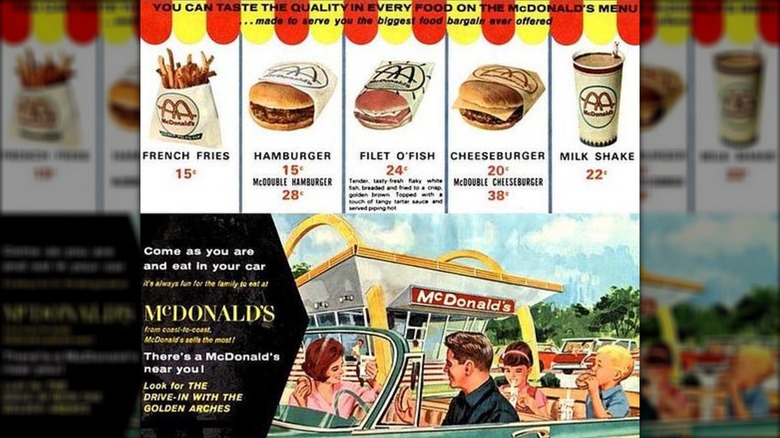
When the McDonald's Filet-O-Fish sandwich earned its spot on the menu by beating out a fruit-centered competitor, its introduction was memorable in many ways. One standout reason was that it was the first non-beef sandwich on the menu in 1965. When the first McDonald's restaurant opened in 1948, it sold hamburgers and cheeseburgers, potato chips, pie, and beverages. In 1949, chips were replaced by fries, and restaurants began selling milkshakes. With the addition of a fish sandwich, the 1965 McDonald's menu still remained remarkably simple, without any of the bells and whistles we are familiar with today.
The Big Mac was introduced a few years after the Filet-O-Fish in 1968, followed shortly by the Quarter Pounder and Quarter Pounder with Cheese in 1973. Since then, the menu has expanded rapidly, with new and limited-edition items added and removed annually. Now the McDonald's permanent menu offers a few different sandwich or sandwich-adjacent options, including bagels, breakfast burritos, breakfast sandwiches, chicken sandwiches, and Snack Wraps. You can also enjoy limited-time McDonald's releases like the Lobster Roll, the McRib, and its most over-the-top burger ever, the Big Arch.
McD's sold around 2,000 Filet-O-Fish sandwiches in the first month it was on the menu
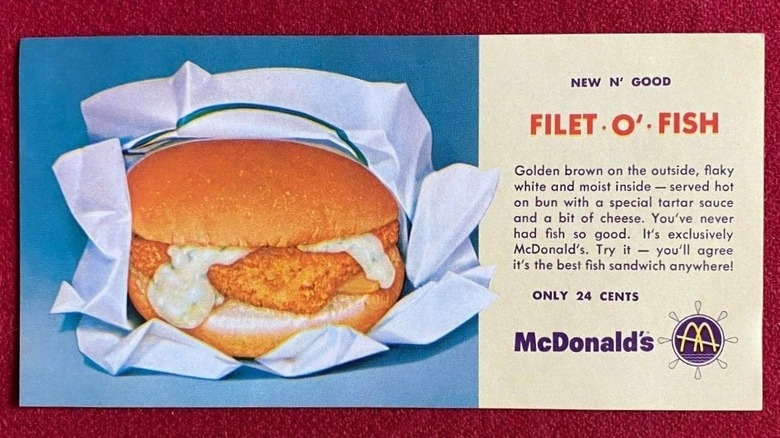
Between February and March 1962, McDonald's sold 2,324 fish sandwiches to happy diners in select locations, with Groen himself responsible for 350 sandwiches sold at his Ohio restaurant alone. That's about $101.50 in sales for just one menu item, which is an impressive feat given that Groen's total sales numbers pre-filet were around $8,716 a month – or about $300 per day — with his daily revenue dipping dramatically to just $75 on Fridays. While McDonald's is famously tight-lipped about sales data for certain menu items, it's safe to say that the Filet-O-Fish has remained a popular and steady income-generator for the corporation over the decades.
According to 2023 data, McDonald's now sells 300 million Filet-O-Fish sandwiches a year worldwide, or about 25 million a month, with around ¼ of the total number of sandwich sales occurring during Lent. Though the Filet-O-Fish may still be a favorite item on the McDonald's menu, however, there are some who believe it doesn't quite stack up in the rankings of fast food fish sandwiches. If you're trying to get the most value for your buck and feel like McDonald's Filet-O-Fish has gotten a little too pricey (or has fallen victim to shrinkflation), you might prefer Popeyes' Classic Flounder Fish Sandwich or Culver's North Atlantic Cod Sandwich instead.