

Bienenstich (German Bee Sting Cake) Recipe
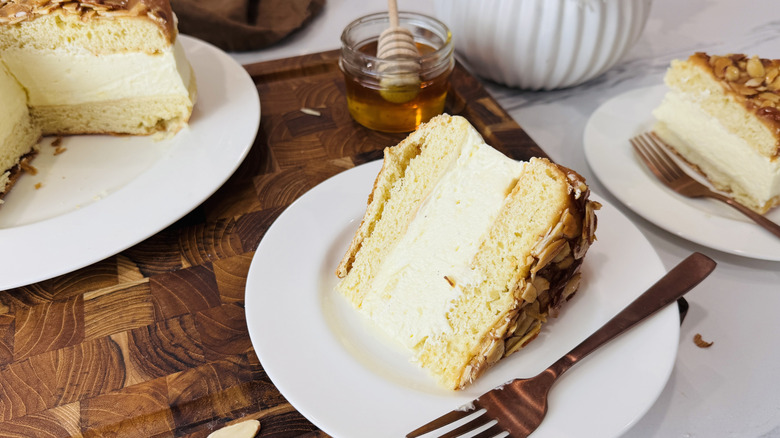
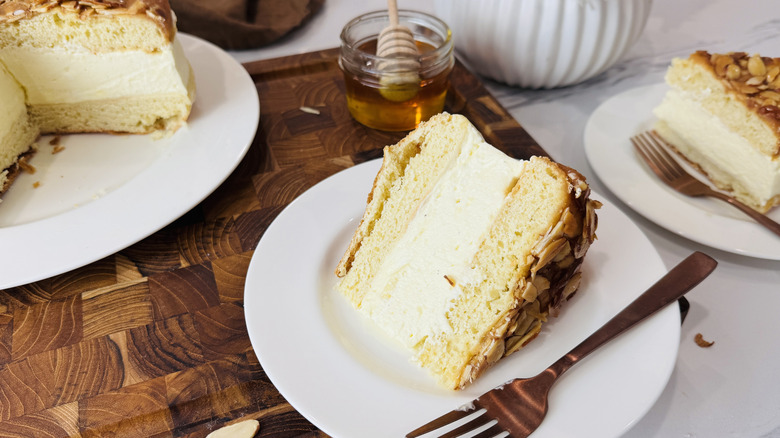
If you love the combination of a creamy, whipped filling, tender cake, and a caramelized, nutty topping, Bienenstich — also known as German bee sting cake — will quickly become a new favorite. While it's a little bit of a labor of love to prepare, the result is a beautifully balanced dessert that feels special enough for a brunch or an Easter gathering, but approachable enough to pair with a cup of afternoon tea or coffee.
This classic German dessert features a tender yeasted brioche-like cake layered with a vanilla-infused lightened pastry cream filling, and finished with a buttery, honey-almond topping that bakes into a golden, crackly crust. The contrasting textures make the cake memorably delicious — and definitely a dessert to put on your pastry-eating bucket list. Similar to other beloved European-style desserts, a Bienenstich isn't overly sweet. Instead, it's subtle and balanced, and indulgent without being heavy. It's the kind of dessert that feels holiday-worthy and elegant but comforting at the same time, and one you're guaranteed to think about year-round.
Gather the ingredients for Bienenstich (German Bee Sting cake)
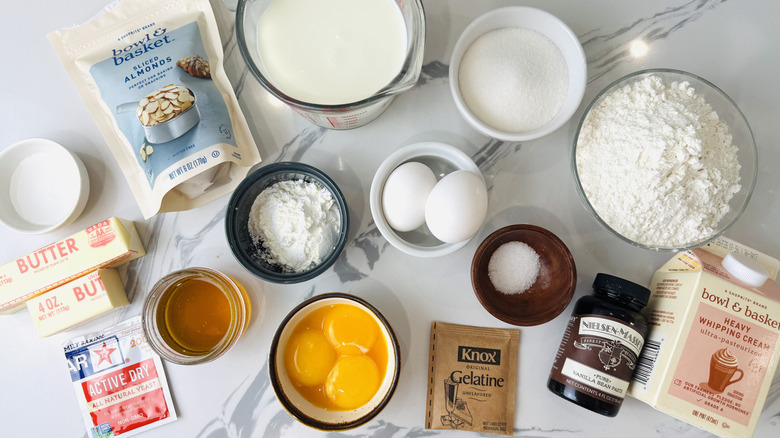
Bienenstich is made up of three distinct components: yeasted cake layers, a lightened pastry cream filling, and a caramelized honey-almond topping. The cake itself is similar to brioche in flavor and texture. It's made with warmed whole milk, active dry yeast, granulated sugar, large eggs, bread flour, kosher salt, and unsalted butter. The yeast provides structure and lift, giving the cake its airy texture. Bread flour adds a bit more chew and strength, but all-purpose flour can be used as a substitute if needed. If you're using instant yeast instead of active dry, you can skip the activation step.
The nutty topping is where Bienenstich gets its signature crunch. A mixture of unsalted butter, granulated sugar, honey, heavy cream, and kosher salt is cooked until golden, then drizzled over one cake layer that's topped with sliced almonds before baking.
The filling is a pastry cream (pudding) base enriched with butter and vanilla, then lightened with whipped cream for a mousse-like consistency. A small amount of gelatin powder helps stabilize the filling, for clean, sliceable layers.
Step 1: Begin the dough
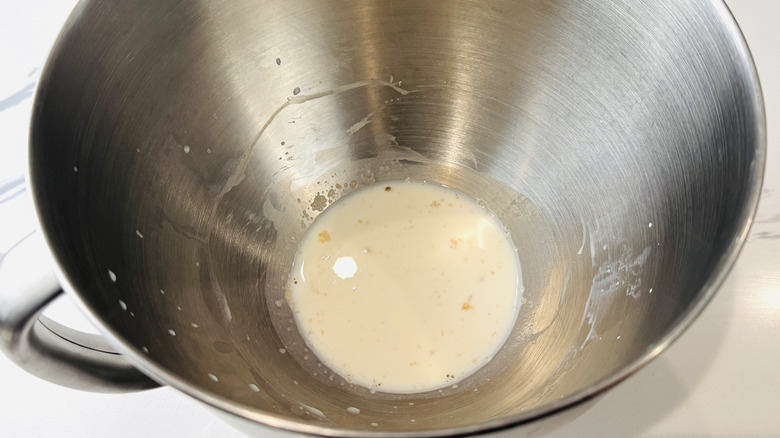
Begin the dough: Combine the warm milk, yeast, and 1 teaspoon sugar in the bowl of a stand mixer.
Step 2: Bloom the yeast
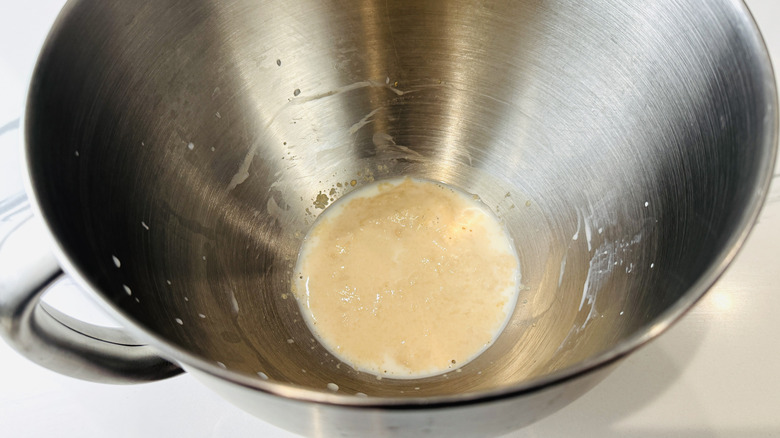
Cover and set aside for 5 minutes until foamy.
Step 3: Mix the dough
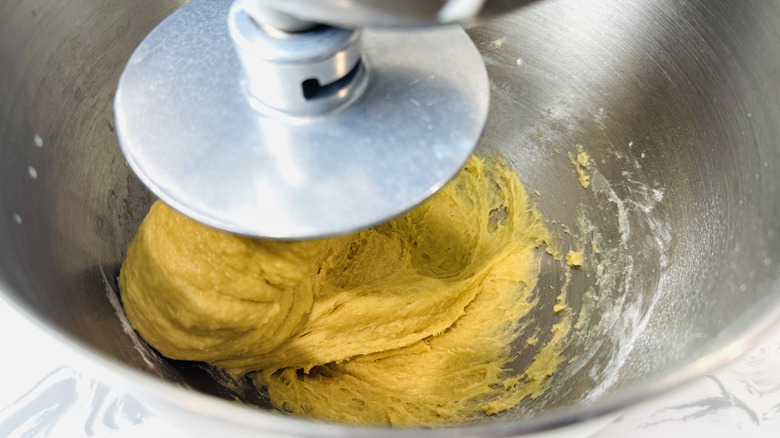
Add the remaining 3 teaspoons sugar, eggs, flour, and salt. Knead using a dough hook for 4-6 minutes until a smooth dough forms.
Step 4: Add butter
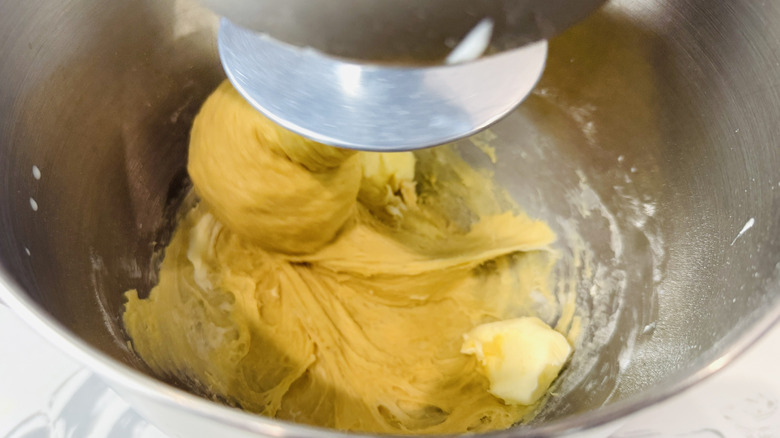
Slowly knead in 1 tablespoon of butter at a time until all 6 tablespoons have been incorporated.
Step 5: Let the dough rise
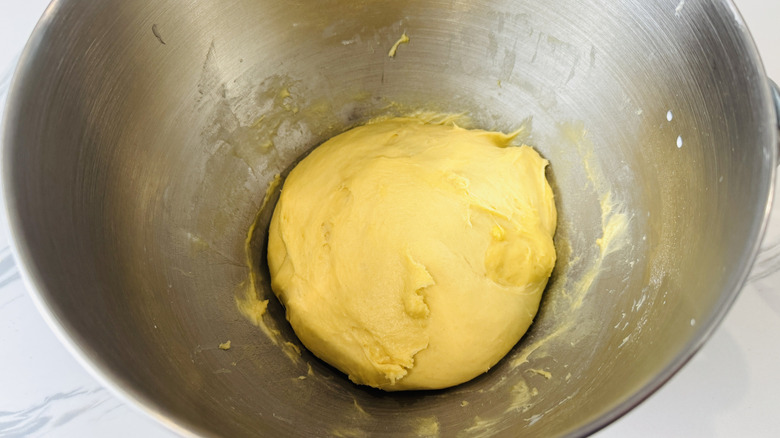
Scrape down the bowl with a spatula, then cover and let the dough rise for at least 1 hour, or until doubled in size.
Step 6: Prepare the pans
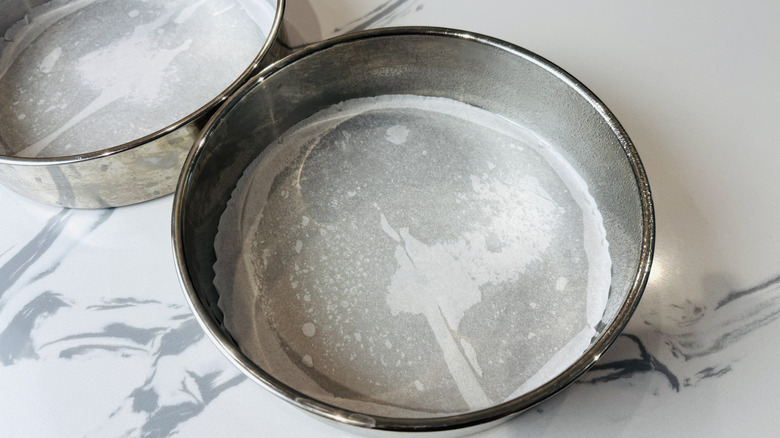
Spray and line two 8-inch cake pans with parchment paper.
Step 7: Divide the dough
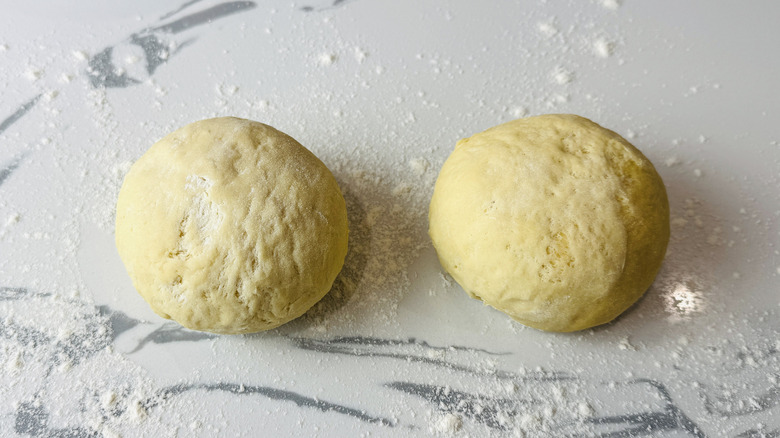
Divide the dough into two portions and form into balls on a lightly-floured surface.
Step 8: Stretch the rounds
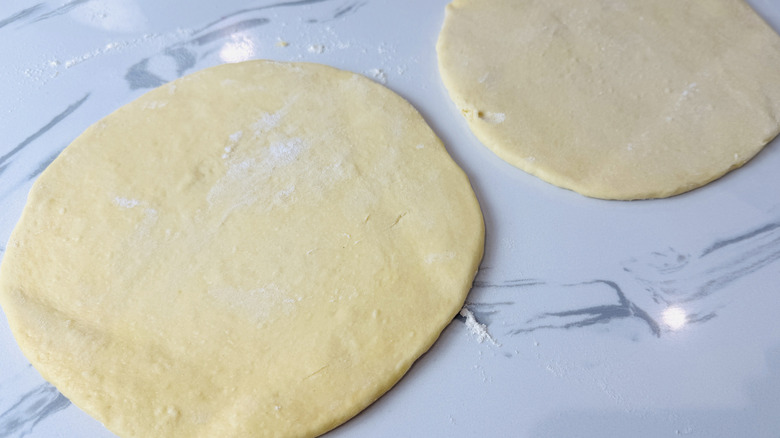
Stretch or roll the dough to create 8-inch rounds.
Step 9: Let rise
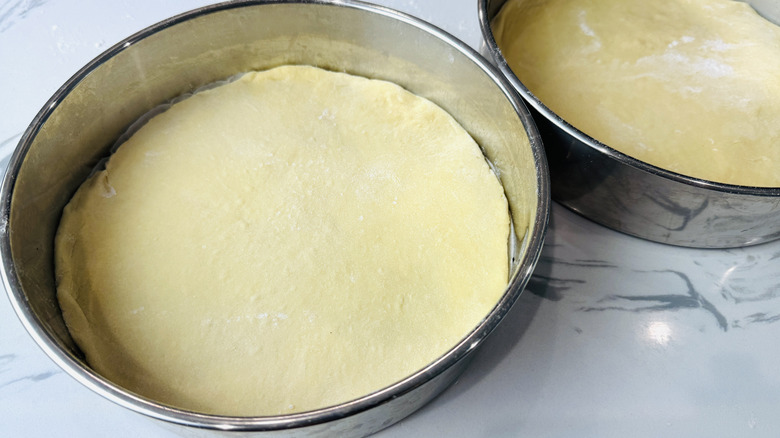
Place the dough rounds into the cake pans. Cover and set aside to rise for 30-45 minutes, until slightly puffed.
Step 10: Preheat the oven
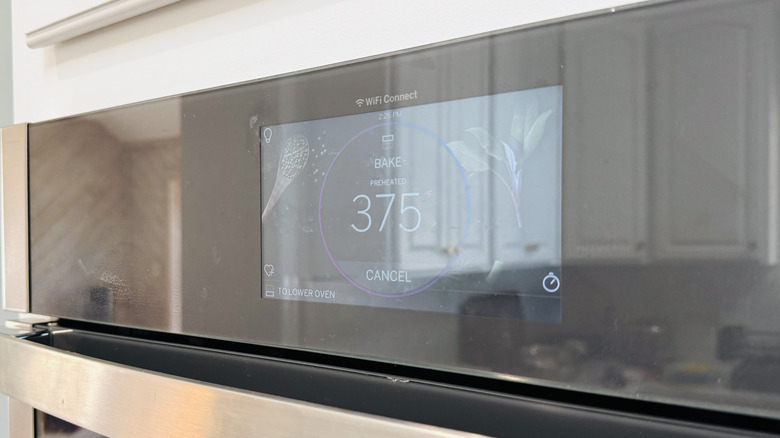
Preheat the oven to 375 F.
Step 11: Prepare the topping
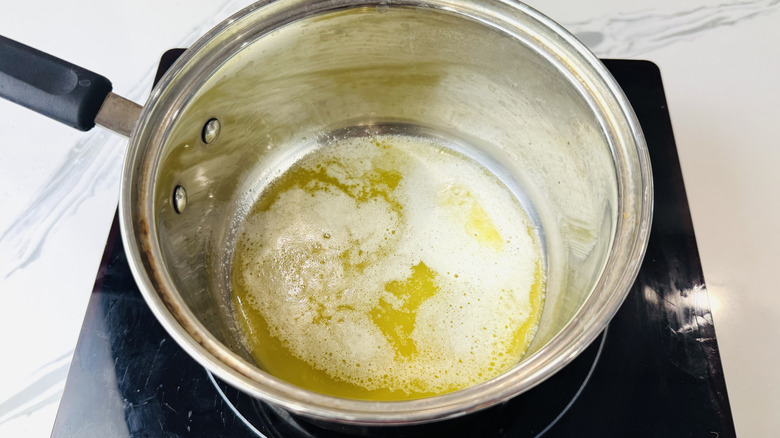
In the meantime, prepare the topping. Melt the butter in a small pot.
Step 12: Simmer until golden
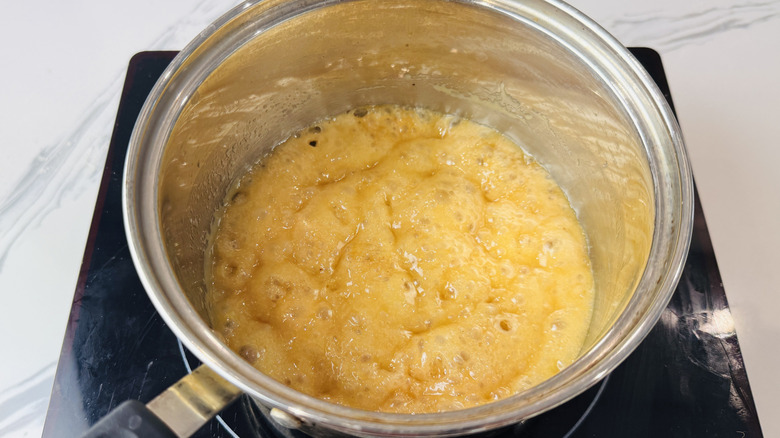
Stir in the sugar, honey, cream, and salt. Cook, stirring, until the mixture simmers and becomes golden in color.
Step 13: Add the almonds
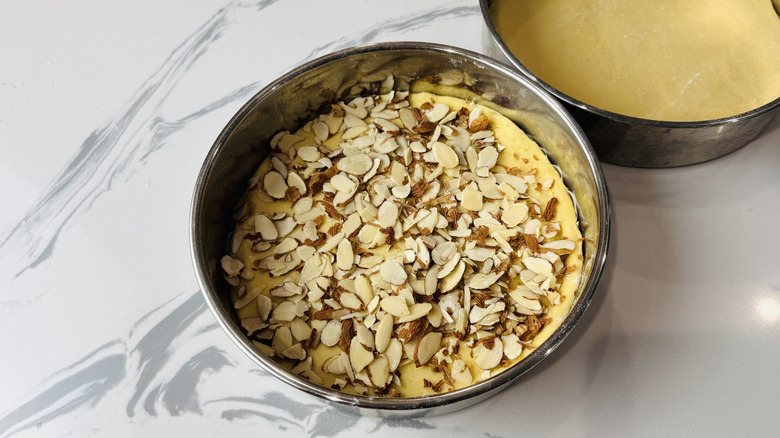
Pour the sliced almonds evenly over one round of dough.
Step 14: Pour on the topping
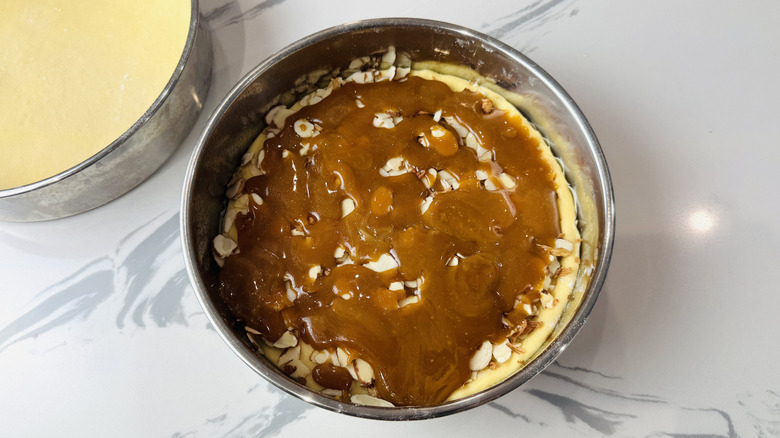
Drizzle the topping mixture evenly over the almonds to coat.
Step 15: Bake
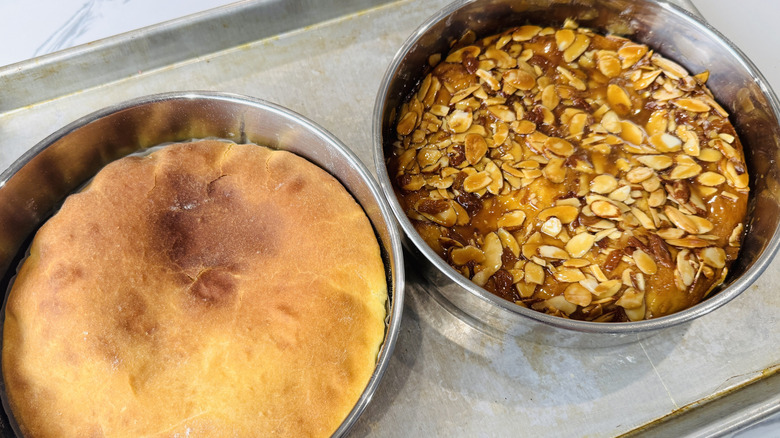
Bake both the almond-covered and plain dough rounds for 25-30 minutes, until golden brown and firm to the touch.
Step 16: Set aside to cool
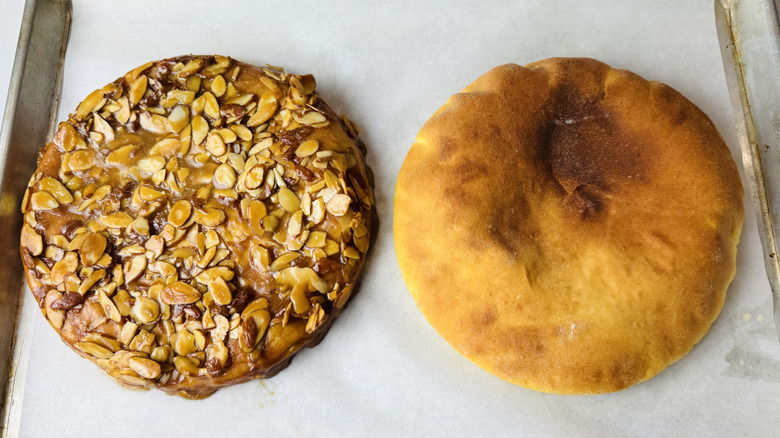
Run a small knife around the edge of the caramelized almond layer to loosen, then transfer to a lined baking sheet or cooling rack once cool enough to handle. Repeat the same process with the plain layer.
Step 17: Prepare the filling
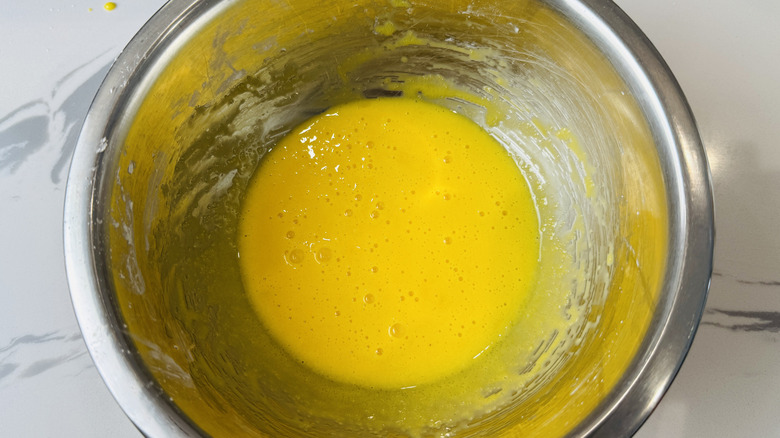
Prepare the filling: Whisk to combine the egg yolks, cornstarch, and half of the sugar in a medium bowl.
Step 18: Heat the milk
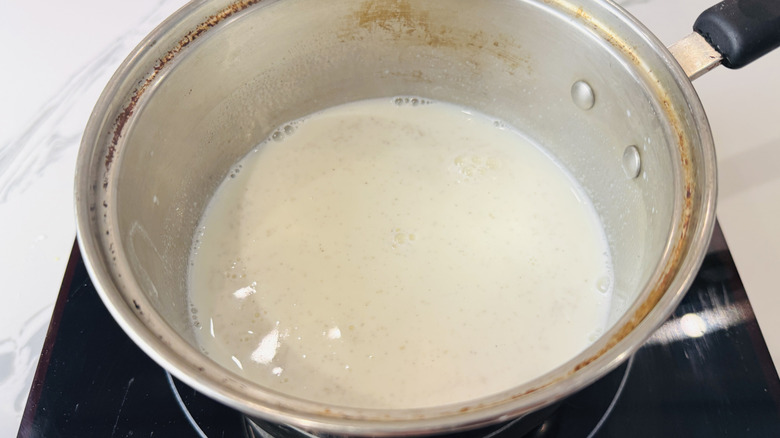
In a small pot, bring the milk, vanilla, and salt to a light simmer.
Step 19: Temper the eggs
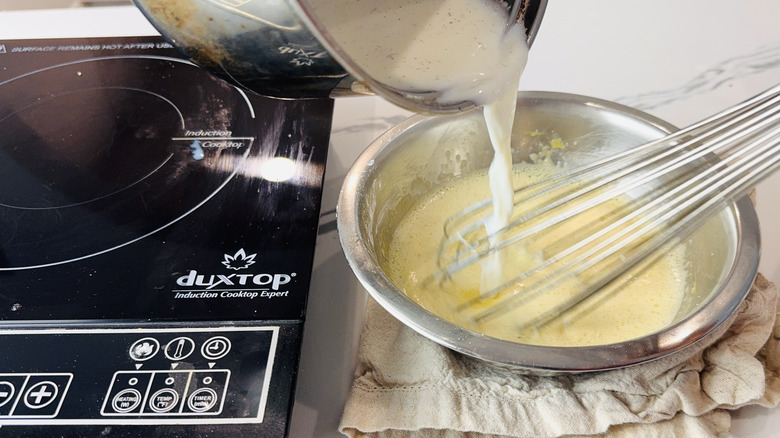
Slowly pour the hot liquid into the egg yolk mixture, whisking constantly.
Step 20: Cook until thickened
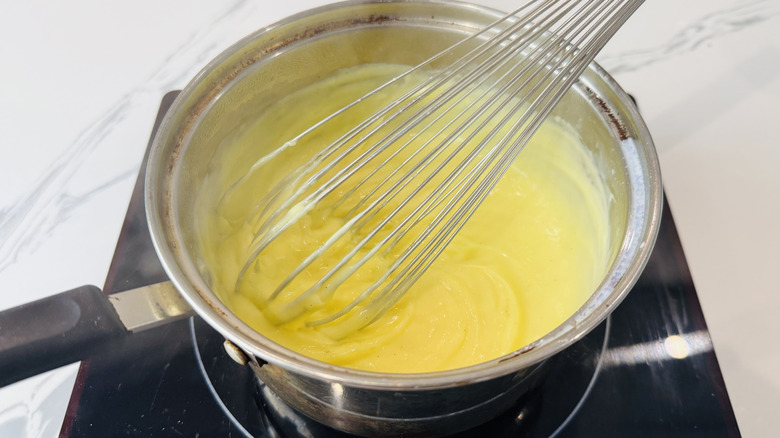
Return the egg yolk mixture to the pot. Cook over medium-low, whisking constantly, until thickened to a pudding.
Step 21: Add the butter
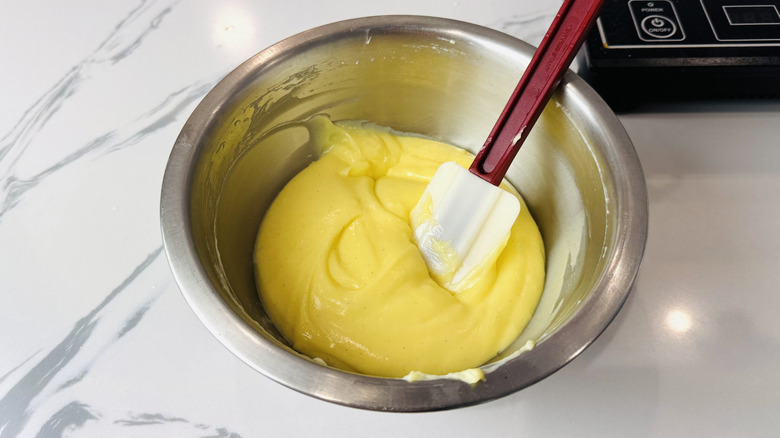
Transfer the pudding to a clean bowl and whisk in the butter.
Step 22: Cover and chill
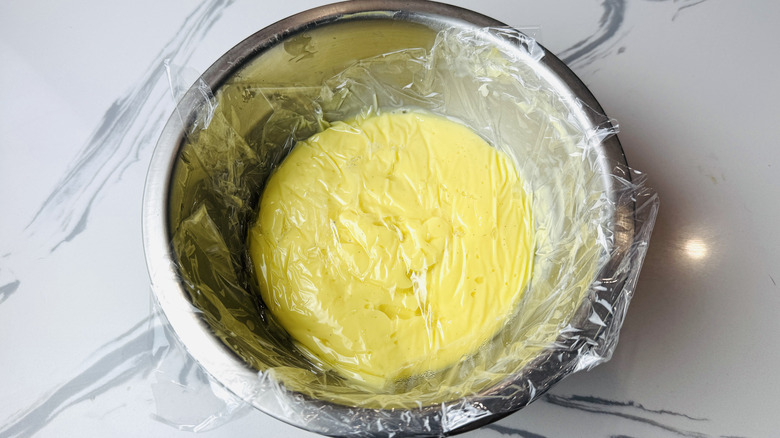
Press plastic wrap directly onto the surface of the pudding and chill at least 1 hour, or until firm and cold.
Step 23: Bloom the gelatin
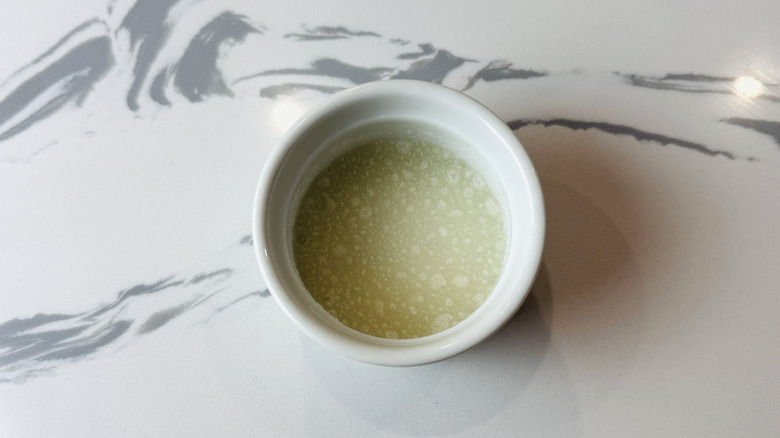
In a small microwave-safe container, stir to combine gelatin powder and water. Let stand for 5 minutes.
Step 24: Dissolve the gelatin
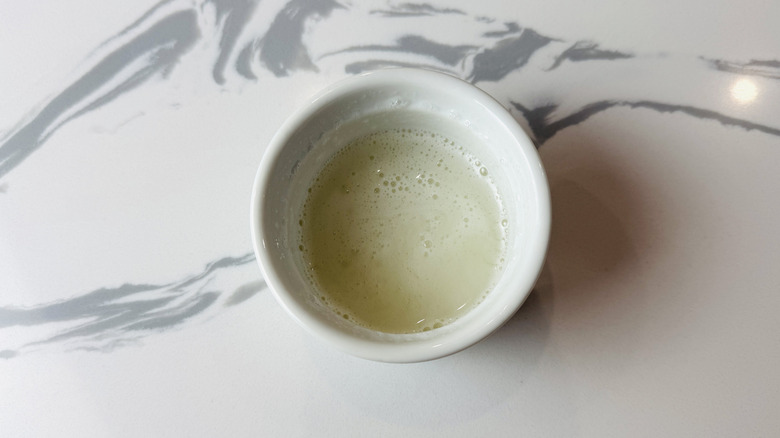
Heat in the microwave until the gelatin powder is fully dissolved.
Step 25: Whip the cream
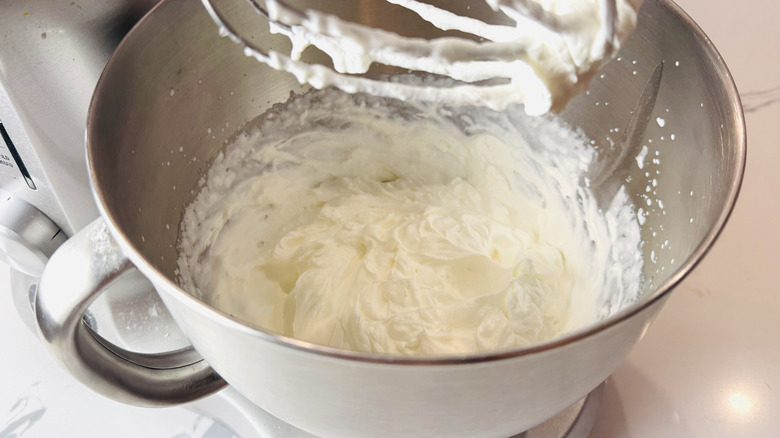
Whip the cream to soft peaks. Slowly drizzle in the gelatin mixture, then whip to stiff peaks.
Step 26: Fold to combine
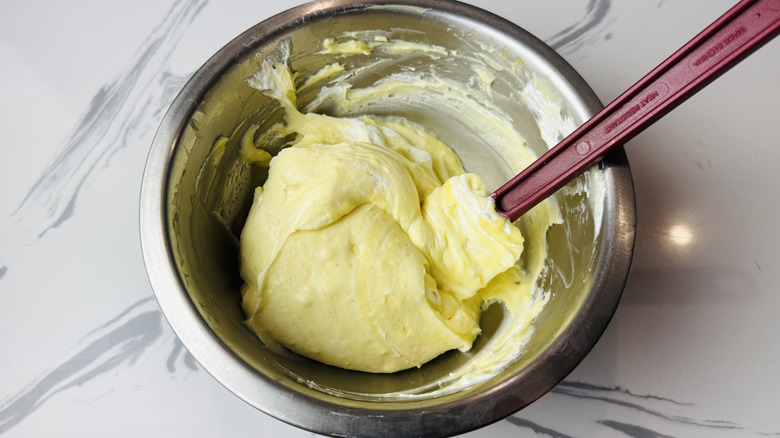
Fold the chilled pudding gently with a spatula to loosen, then fold in a generous dollop of the whipped cream.
Step 27: Add the remaining whipped cream
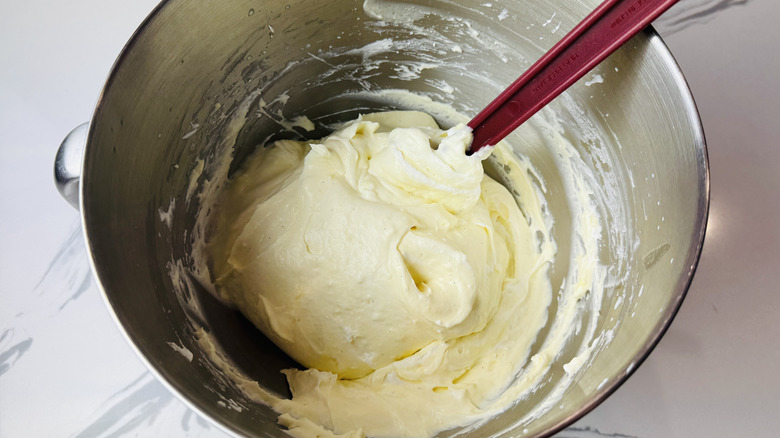
Fold in the remaining whipped cream.
Step 28: Invert the brioche
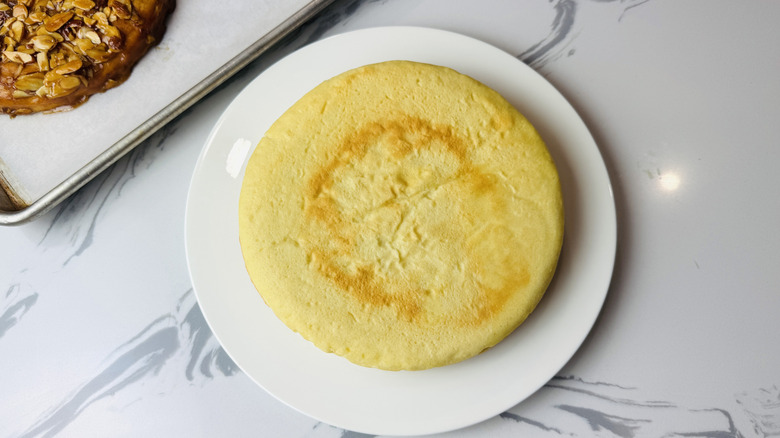
Invert the plain layer of brioche onto a serving plate.
Step 29: Top with the filling
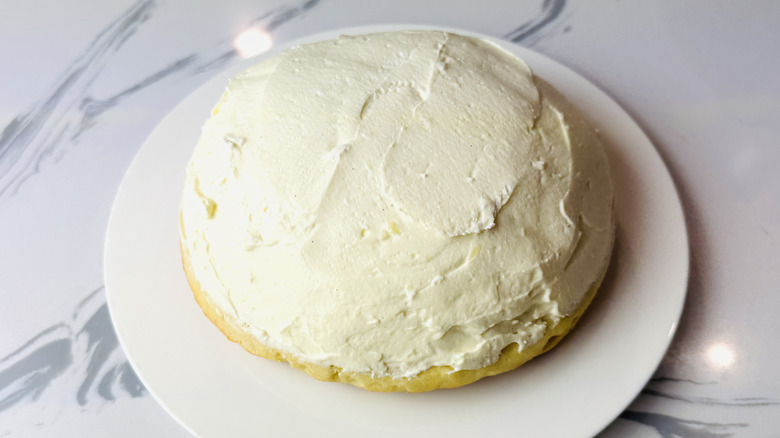
Top with the pudding/cream mixture, then spread lightly to form a dome.
Step 30: Top and serve
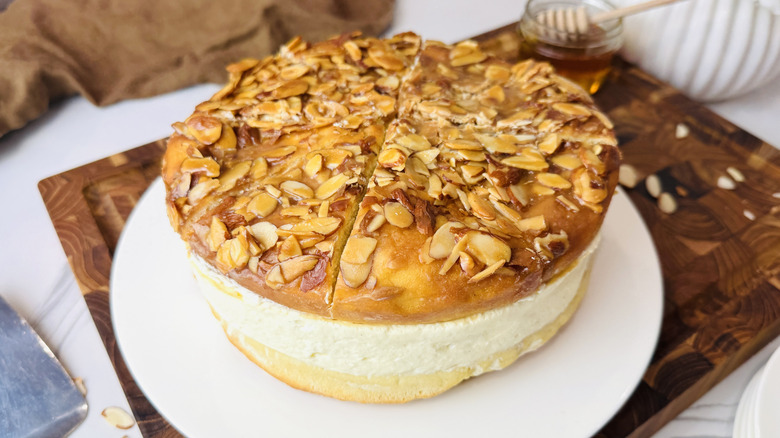
Cut the remaining brioche round, almond-side up, into 8 sections. Place on top of the filling. Chill the cake for at least 1 hour before serving.
what pairs well with Bienenstich?
Bienenstich (German Bee Sting Cake) Recipe
This classic German Bienenstich features a tender brioche-like cake layered with pastry cream and finished with a buttery, crackly honey-almond topping.
Ingredients
- For the dough
- ⅓ cup whole milk, warmed
- 1 (¼-ounce) package active dry yeast
- 4 teaspoons granulated sugar, divided
- 2 large eggs
- 2 cups bread flour
- 1 teaspoon kosher salt
- 6 tablespoons unsalted butter
- For the topping
- 4 tablespoons unsalted butter
- ¼ cup granulated sugar
- 2 tablespoons honey
- 1 tablespoon heavy cream
- ¼ teaspoon kosher salt
- ½ cup sliced almonds
- For the filling
- 3 large egg yolks
- 3 tablespoons cornstarch
- ⅓ cup granulated sugar, divided
- 1 ½ cups whole milk
- 2 teaspoons vanilla bean paste or extract
- ¼ teaspoon kosher salt
- 2 tablespoons unsalted butter
- ½ tablespoon unflavored gelatin powder
- 1 tablespoon cold water
- 1 cup heavy cream
Directions
- Begin the dough: Combine the warm milk, yeast, and 1 teaspoon sugar in the bowl of a stand mixer.
- Cover and set aside for 5 minutes until foamy.
- Add the remaining 3 teaspoons sugar, eggs, flour, and salt. Knead using a dough hook for 4-6 minutes until a smooth dough forms.
- Slowly knead in 1 tablespoon of butter at a time until all 6 tablespoons have been incorporated.
- Scrape down the bowl with a spatula, then cover and let the dough rise for at least 1 hour, or until doubled in size.
- Spray and line two 8-inch cake pans with parchment paper.
- Divide the dough into two portions and form into balls on a lightly-floured surface.
- Stretch or roll the dough to create 8-inch rounds.
- Place the dough rounds into the cake pans. Cover and set aside to rise for 30-45 minutes, until slightly puffed.
- Preheat the oven to 375 F.
- In the meantime, prepare the topping. Melt the butter in a small pot.
- Stir in the sugar, honey, cream, and salt. Cook, stirring, until the mixture simmers and becomes golden in color.
- Pour the sliced almonds evenly over one round of dough.
- Drizzle the topping mixture evenly over the almonds to coat.
- Bake both the almond-covered and plain dough rounds for 25-30 minutes, until golden brown and firm to the touch.
- Run a small knife around the edge of the caramelized almond layer to loosen, then transfer to a lined baking sheet or cooling rack once cool enough to handle. Repeat the same process with the plain layer.
- Prepare the filling: Whisk to combine the egg yolks, cornstarch, and half of the sugar in a medium bowl.
- In a small pot, bring the milk, vanilla, and salt to a light simmer.
- Slowly pour the hot liquid into the egg yolk mixture, whisking constantly.
- Return the egg yolk mixture to the pot. Cook over medium-low, whisking constantly, until thickened to a pudding.
- Transfer the pudding to a clean bowl and whisk in the butter.
- Press plastic wrap directly onto the surface of the pudding and chill at least 1 hour, or until firm and cold.
- In a small microwave-safe container, stir to combine gelatin powder and water. Let stand for 5 minutes.
- Heat in the microwave until the gelatin powder is fully dissolved.
- Whip the cream to soft peaks. Slowly drizzle in the gelatin mixture, then whip to stiff peaks.
- Fold the chilled pudding gently with a spatula to loosen, then fold in a generous dollop of the whipped cream.
- Fold in the remaining whipped cream.
- Invert the plain layer of brioche onto a serving plate.
- Top with the pudding/cream mixture, then spread lightly to form a dome.
- Cut the remaining brioche round, almond-side up, into 8 sections. Place on top of the filling. Chill the cake for at least 1 hour before serving.
Nutrition
| Calories per Serving | 589 |
| Total Fat | 37.0 g |
| Saturated Fat | 20.4 g |
| Trans Fat | 0.4 g |
| Cholesterol | 202.5 mg |
| Total Carbohydrates | 54.5 g |
| Dietary Fiber | 1.9 g |
| Total Sugars | 25.2 g |
| Sodium | 458.7 mg |
| Protein | 11.7 g |

What are some tips and shortcuts for preparing a Bienenstich?
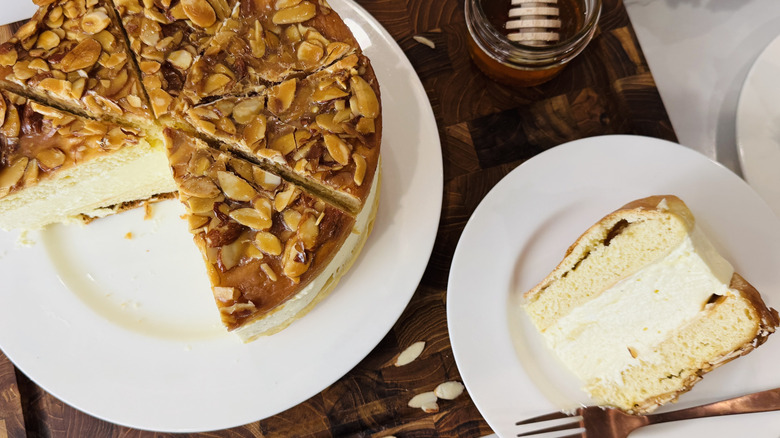
When preparing Bienenstich, a few key techniques will help ensure the best possible results. Since it's made with a yeasted dough, proper gluten development is essential. Make sure to knead the dough thoroughly to build structure before incorporating the butter. This will help give the cake layers a light, feathery texture rather than a dense or heavy one.
When it comes to proofing the dough, note that in cooler temperatures it may take longer for the dough to rise. You're looking for the dough to double in size before you portion it, and to become slightly puffed before you bake it. Once the cake is out of the oven, immediately run a knife around the edge of the caramelized almond layer to prevent it from sticking. You'll want to pre-slice this layer once it's cool to avoid squishing the filling when you serve the cake.
Whisk often when preparing the pudding (pastry cream), and if you notice any lumps, strain it before adding the butter for the smoothest texture. Chill the pudding base thoroughly before folding in the whipped cream to achieve a set and airy texture. Don't skip the gelatin if you can help it — while it's a small amount, it will make the difference between clean, stable slices and more squished and wobbly ones. For this same reason, chill the cake for at least one hour before serving.
Can I make this cake ahead?
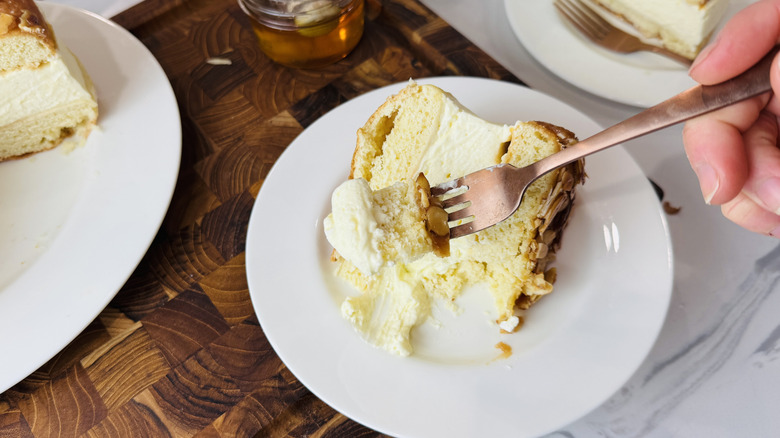
Bienenstich is best enjoyed on the day it's assembled — when the cake is soft and fluffy, the filling is fresh, and the caramelized almond topping is crisp. However, since there are multiple components to prepare, you might want to get a jumpstart on the recipe. The good news is that you can prepare portions ahead so you're ready to assemble and serve the cake without a ton of same-day prep needed.
To make the cake layers ahead, prepare the dough, place it into pans as directed, wrap it tightly, and refrigerate it overnight. The next day, let the pans stand at room temperature until the dough is slightly puffed, then top and bake them as directed. The pastry cream (pudding) can also be prepared ahead. Once cooked and covered (with the plastic wrap touching the surface of the pudding), you can refrigerate it for up to two days before using. Assemble the cake fresh the morning of serving for the ideal texture and flavor. Store leftover slices of German bee sting cake well-wrapped or in an airtight container in the refrigerator for up to three days. The sooner you're able to enjoy it, the tastier it will be.