

14 Mistakes Everyone Makes With Cauliflower
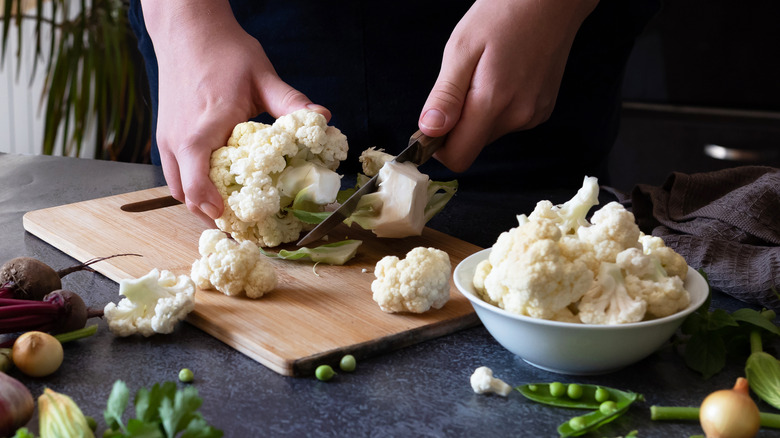
There are two types of people in this world: Those who have been overjoyed by cauliflowers' comeback to the culinary world, and those who think it's a stinking pile of mush that has no place in our pizza crusts or rice. Cauliflower is one of those ingredients that can be flavorful, tender, crunchy, and mouth-watering if prepared properly, but we've all been subjected to the rubbery, dry, or mushy version that just needed a little more attention in the kitchen. If you've been dissatisfied with how your cauliflower is coming out, it may be time to address the 14 mistakes most everyone makes with cauliflower, so you can rule them out, and focus on creating something great in the kitchen.
As a recipe designer and chef with a Plant-Based Nutrition Certification from Cornell, I have a particular interest in cruciferous vegetables, and I'm not alone. Cruciferous vegetables like cauliflower are trending, and it's because they are a fiber powerhouse. But you can't reap the benefits of cauliflower unless you eat it, and you won't eat it unless it tastes good. And if it doesn't taste good to you, then it's time we gave it a little makeover. Avoid common mistakes and take a new approach to these bumpy, stiff, cloud-like vegetables, and turn them into a culinary dream come true.
Overcooking cauliflower rice
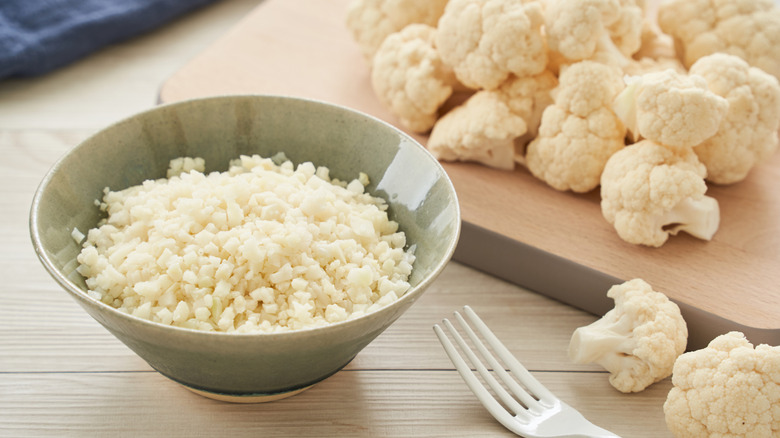
The beauty of cauliflower is that it can wear so many hats, and the version that took the United States by storm in the 2010s was cauliflower rice. There are several ways to cook cauliflower rice, or process it raw, but there is one universally easy way to ruin it, and that's by making it soggy. The pleasing, tender crunch of cauliflower rice goes out the window when too much liquid is used, and the cauliflower is overcooked.
Perhaps the sauteing mistake you're making with riced cauliflower is not prepping it properly. The best way to ensure there is limited moisture in the pan is by using cheesecloth to wring out the grated vegetable. This is an especially important step if you're using frozen and thawed riced cauliflower. Be sure your pan isn't too crowded to prevent steaming, and wait to add the cauliflower until the oil is hot. When there is too much moisture in the pan, the pieces of cauliflower steam and overcook. This can create a lumpier, less creamy cauliflower mash that isn't particularly desirable. Keep the heat high, the fat hot, and the sauce light.
Throwing out the stalk
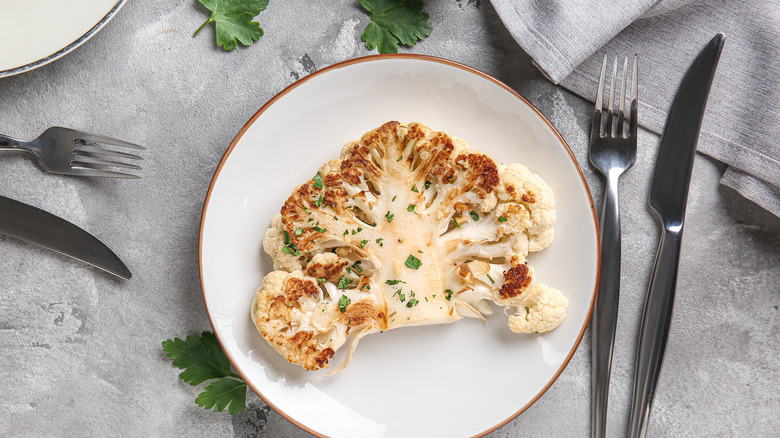
While we are often presented with those little cloud-like trees, arranged beautifully on a plate, that doesn't mean we can't use the stalk, too. If you're planning on making a cauliflower steak, you'll need that stalk to hold all of those florets together in place. In fact, your best cross-sections will contain quite a bit of stalk. In addition, the stalk is just a different texture of the same vegetable, and a variety of textures can benefit your recipe.
For any mash or cauliflower rice dish, just treat the stalk like you would any other part of the vegetable. If you are making cauliflower wings, you'll want to include some of the stalk as the "bone" part of the wing to replicate chicken. There is no use in throwing out a large portion of the vegetable that is entirely edible and actually quite delicious. You can even slice the stalk into cross-sections to create small cauliflower disks that resemble scallops. These are fantastic, fried in bacon or olive oil until crispy. Don't make the major mistake almost everyone makes with cauliflower by tossing the stems.
Making soggy cauliflower wings
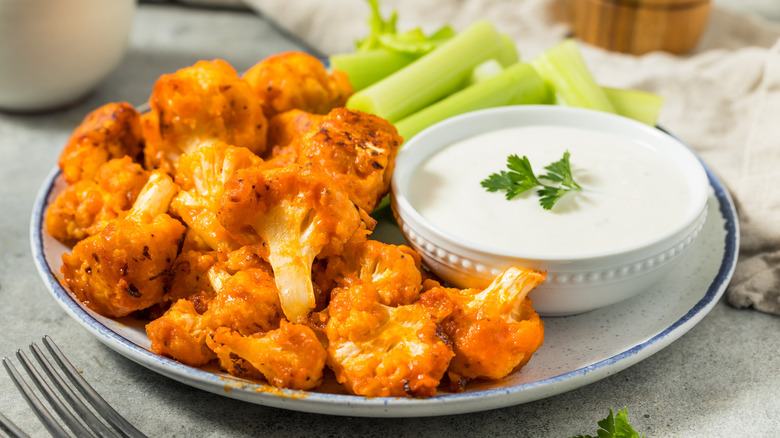
One of the major draws to chicken wings is that crispy skin. Battered or unbattered, you can always count on that pleasing outer texture. So when replicating chicken wings with a cauliflower base, it's important to preserve a similar texture. Will it be identical? No. But that doesn't mean we can't get close. There are several ways to go about avoiding soggy buffalo cauliflower wings, and the first is to refrain from over-saucing. A thin layer of sauce, especially one containing oil, can actually help to caramelize the cauliflower.
Tossing your wings in powdered herbs and spices like paprika, garlic powder, and onion powder will also help improve the texture of both baked and air-fried wings. Consider a small amount of starch, chickpea flour, or a breading of some kind if you're used to battered wings. For those choosing to go this route, it's extra important to refrain from over-saucing. Wings should be lightly tossed or brushed with sauce, and should not drip or be soggy. If you're using the air fryer or oven, be sure to space the wings out so they don't steam each other and become soggy. They should still retain a small crunch, but be tender like chicken meat.
Cooking cauliflower rice in sauce
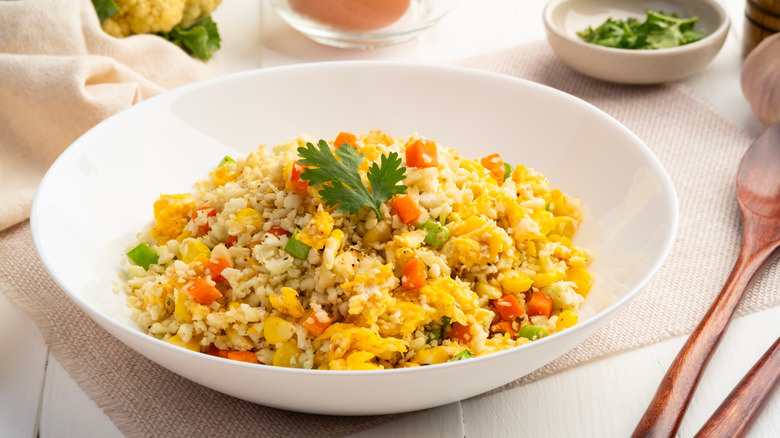
I am a big advocate for saucing and spicing. Grains, tofu, chicken, and beans especially deserve a helping hand when it comes to boosting flavor, but it's important that we use a methodical approach to adding such enhancers. For cauliflower rice, a saucy mistake to avoid is overloading it with a liquid sauce. A splash of tamari or a kick of miso sauce can go a long way, but if you're overloading the moisture content, the rice will become a mushy, soggy mess. In fact, I recommend adding just a touch of sauce towards the end of your high-heat sautéing, or forgoing sauce altogether. Now, that doesn't mean you shouldn't flavor your cauliflower rice.
Try using chopped herbs and ground spices to enhance the bulk of the flavor. Some parsley, garlic powder, and a hint of salt sprinkled on towards the end of the cooking process offer quite a bit of flavor without sogging up the dish. If you'd prefer a sauce, go for a thicker sauce, and be sure it's not spending too much time in the pan alongside the processed vegetable.
Not washing it properly
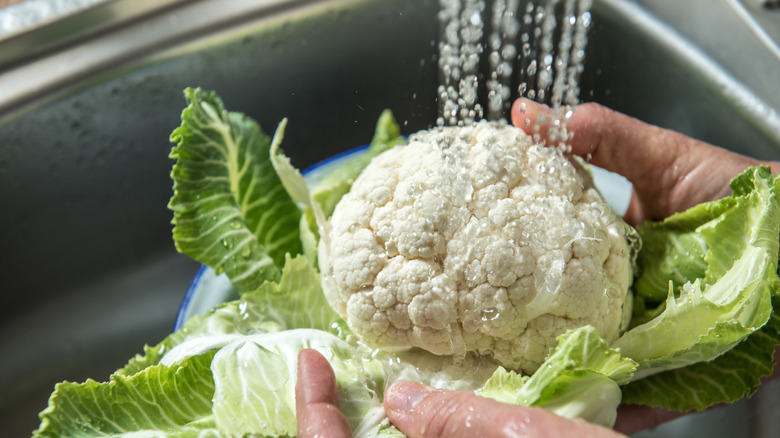
We've talked a lot about avoiding added moisture to your cauliflower rice and cauliflower wings, but that doesn't mean you need to forgo the washing process. Even if you purchase it fully wrapped or fresh from the farm, it's essential to wash produce. You don't know what kind of fertilizer or manure was used to grow it, who handled it during picking and transportation, and where it's been stored. Heck, even the conveyor belt at the grocery store is full of germs. I don't even want to think about the chemicals that might linger on the skin.
Avoid harsh washes and use water as your primary rinsing agent. You can also use baking soda to wash your produce, and you can also opt for vinegar, but good old-fashioned water should do the trick. If you have a spray setting on your sink, give it a full spray-down, or you can soak and rinse cauliflower as well. The goal is to get into all those nooks and crannies to rinse out any remaining bacteria. If you're then ready to cook and want to achieve a crispy texture, you can air dry or blot with a clean cloth or paper towel until completely dry.
Tossing the leaves
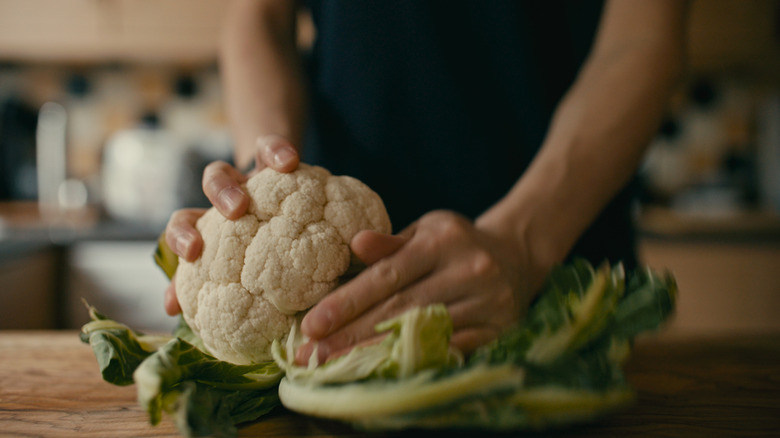
I don't want to even think about the cauliflower stalks and leaves I've wasted over the years. Once I started using the whole cauliflower, I got much more from it and enjoyed its different textures. Now, when roasting cauliflower, I'm sure to preserve those leaves, toss them in a little oil, and roast them just like I would any part of the plant. Alternatively, if you're working with a farm-fresh cauliflower that might contain quite a few leaves, consider sautéing them in some garlic to make a whole separate dish from them.
If they don't fit the vibe of your dish, I can assure you that they will fit in somewhere. Blend them into a soup, chop for a curry or stir fry, or shred them for a crunchy coleslaw. Using every edible part of a plant like cauliflower can help to save you on your grocery bill, and might ignite some culinary creativity. My favorite part about using these peripheral elements of produce is the variety they offer. The aesthetic alone is enough to encourage their use, but you may find that the flavor and texture bring a much-needed element to the dish as well.
Marinating it raw
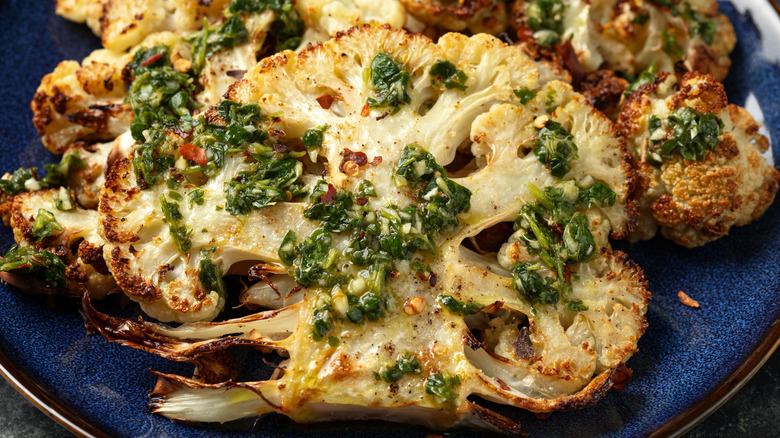
Before cauliflower is cooked, it has a dense, firm, plastic-like texture. This makes it difficult for a sauce to penetrate it. And although we love to coat foods in sauce, it's nice when the flavor can seep deep into the center. Because of this, you might benefit from marinating a cauliflower steak after grilling it. Although most foods like meats, mushrooms, and tofu prefer a flavor bath before coming in contact with heat, cauliflower acts much more sponge-like post flame.
Use salt and olive oil before or during the grilling process. Once comes off the hot grate, it's time to brush it and douse it in sauce. A thin marinade, loaded with umami, a sweet element, an acidic component, and a little heat, can make all the difference. However, feel free to load on a thicker and more robust sauce like a smoky barbecue sauce. You are welcome to throw the steak back on the grill for a few more minutes for caramelization, but it might be just ready to enjoy after marinating.
Not pairing it with citrus
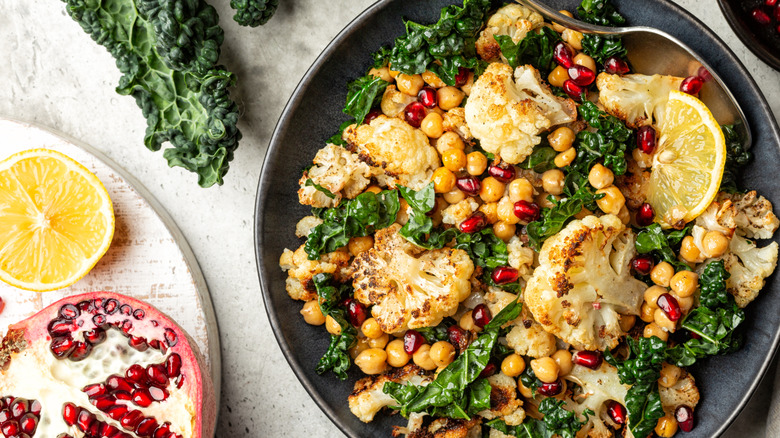
One of the most disappointing things about roasted vegetables is how commonly they are under-seasoned. Yes, a fresh, in-season veggie does not need to be burdened with loads of seasoning, but a little culinary attention can do it some good. Salt, pepper, and olive oil are a given. But if you'd like to add a little kick of flavor to your cauliflower, consider a squeeze of citrus. Lemon is a classic, and a good friend to freshly ground pepper, but lime and orange are also delicious options.
The citrus helps to boost the natural sweetness of the cauliflower and enhance its subtle flavors. It adds some sharp intensity, which will make the dish pop. If you really enjoy the citrus flavors and are looking for a stronger way to incorporate them, consider finishing your cauliflower with fresh zest. Use citrus in your sauce, marinade, or simply finish your cooked cauliflower with a wedge of lemon.
Not soaking it
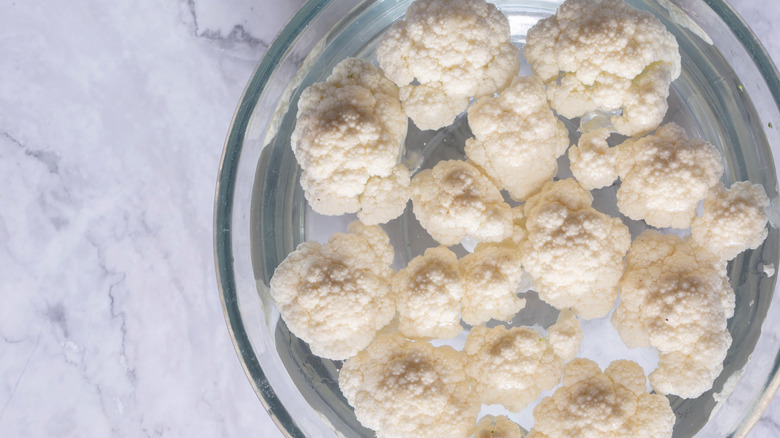
Have you ever air-fried or roasted cauliflower in an oven or an air fryer and had it come out rubbery and dry? There might be a few reasons you're experiencing this outcome. The first is that you need to be sure there is a thin coating of oil over the surface. This will help lock in moisture and create a caramelizing effect, crisping the outside and keeping the inside nice and moist. The other is that your cauliflower needs to be soaked.
Soak the raw cauliflower in water before adding it to a pan. This will allow you to bake it at a lower temperature for longer. Typically, this could dry it out. But pre-soaked cauliflower turns out nice and tender, meaty, and moist. Although cauliflower is dense and rubbery when raw, enough water gets caught up in the texture of the vegetable to make a difference. It's worth giving it a try if you're making cauliflower steak, but avoid it for cauliflower rice.
Steaming it in the microwave

Microwaves are fantastic at quickly reheating leftovers, frozen dinners, or that cup of coffee you just keep forgetting about. It can do a lot, but that doesn't mean that it's always the best option when steaming your vegetables. While microwaves are famous for convenience, they don't have the most even heat distribution. The easiest way to cook fresh cauliflower with consistent results is with a steamer on the stovetop.
Steam helps to keep the vegetables moist, and the heat is evenly distributed. Using a steamer basket ensures that the steam touches each side of the cauliflower. The natural flavors of the cauliflower are preserved, as are most of the nutrients. You'll have full access to the cauliflower to ensure it doesn't overcook, unlike a microwave that must be stopped each time you do a texture or taste test.
Remove the florets before they are fully cooked, as they will continue cooking until they cool down. You can always toss them back in to cook longer, but you can't reverse overcooked, mushy cauliflower.
Not adding it to smoothies
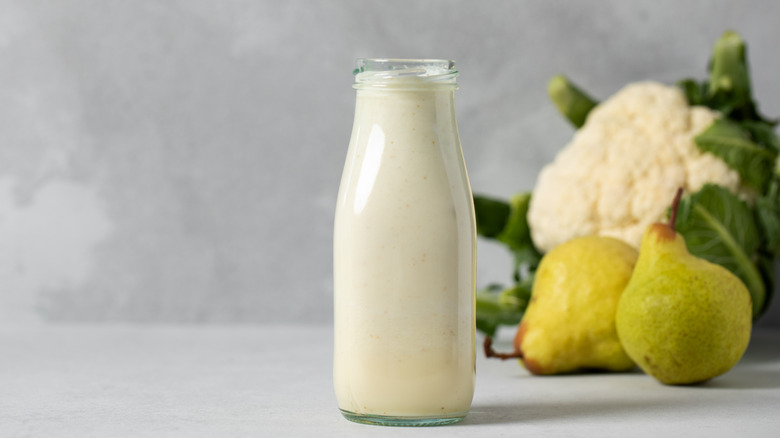
Smoothies might not be the first thing that comes to mind when we think about how to use cauliflower in the kitchen. But let's break it down so you can reap the benefits of this nutrient-dense cruciferous vegetable alongside your favorite fruits. Cauliflower has sweet undertones, a slightly nutty flavor, is extremely mild, and can be incredibly creamy. It's non-intrusive, and if used in moderation, can add some nice bulk to a smoothie. It's one of the best vegetables to add to fruit smoothies because of these factors.
For a quick and easy boost, add frozen cauliflower to your smoothies. Although less sweet than frozen bananas, cauliflower does carry a similar creamy texture that, when blended at a high speed, can help highlight the "smooth" in smoothie. The flavor is minimal, and to keep it that way, use steamed or raw cauliflower. Pair with strong flavors to mask the undertones of the vegetable if you're still concerned about the cauliflower shining through.
Not using the dry-wet-dry method with cauliflower wings
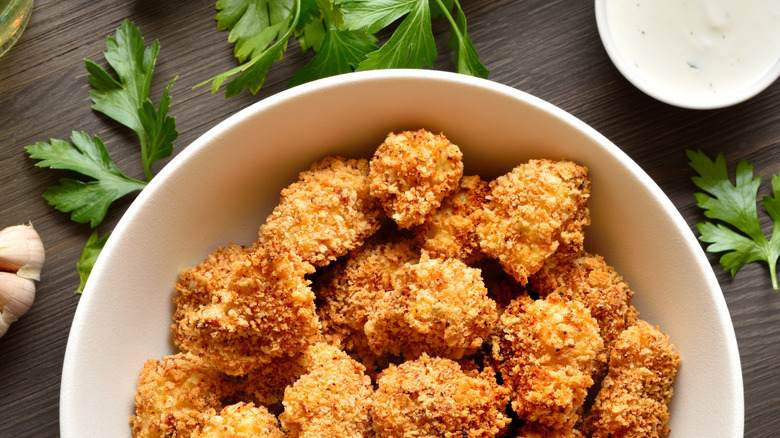
Because cauliflower wings don't actually have a crispy skin like chicken wings, breading them can add a nice touch to replicate that familiar texture. Using the dry-wet-dry sequence is your best bet. First, toss the cauliflower florets in starch or flour, then an egg batter or plant-based milk, and then seasoned breadcrumbs. This will ensure the breadcrumbs stick to the batter and that the batter sticks to the cauliflower.
If you go straight for the wet layer, there's a chance it will flake off the cauliflower easily, and without a wet layer, the breadcrumbs will not stick at all. Be sure to use seasoning in each layer, to fry or air fry at high heat, and to use plenty of salt. You can either toss the wings in a light sauce afterward or use a dipping sauce — or both. Use starch or chickpea flour for a gluten-free base dry layer, and unsweetened non-dairy milk for a wet layer. Don't have any breadcrumbs on hand? Use crushed-up corn flakes or your favorite buttery crackers.
Not using them in tacos

Tacos are often stuffed with meat or beans. And because they can be flavored in so many incredible ways, there's no need for additional reach. However, what we need and what we want are two different things, and you will definitely want to add cauliflower to your tacos. Now, the key here is to roast them in just the right way so that they add a nice crunch of tender texture and a huge pop of flavor. Cauliflower can be added alongside any meat or bean, and is a fantastic addition to any vegan taco.
Cut up the head of cauliflower into florets before tossing them in seasoning and oil and popping them in the oven or air fryer. Be sure to load on the tamari, hot sauce, paprika, and garlic powder. Use a pre-made taco seasoning to save time, or mess around with bold flavors like garlic, chili, and lime. Be sure not to overcook the vegetables, so that they retain a slight crunch. This will add bulk, texture, and flavor to your taco. Roasted cauliflower tacos are trendy for a reason; they are absolutely unforgettable.
Cutting off each individual floret
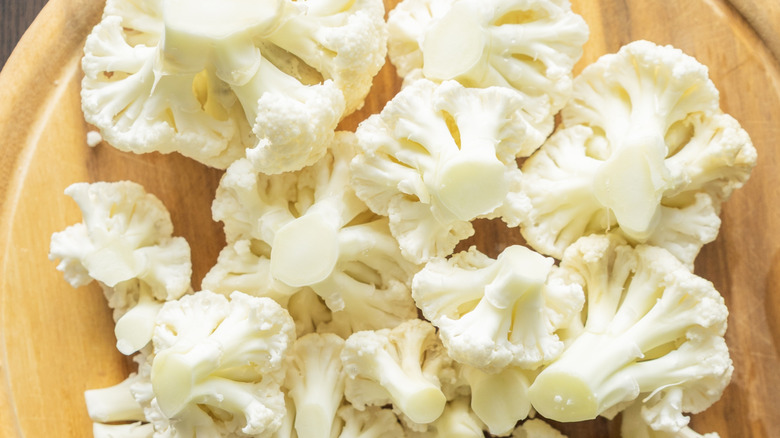
You've gotta love the internet when it comes to cooking hacks. This particular tip will save you not only a bunch of time, but it's also safer than the alternative. When separating florets from a fresh head of cauliflower, don't use a knife. Well, you actually can, but if you choose to, take caution and use a sharp one to prevent slipping.
The safe way to do so would be to leave the plastic wrapping on the cauliflower, hold the head with both hands, and the stem facing down towards the cutting board. Bring the vegetable up into the air, and then slam the stem down onto the cutting board with heavy, bold force.
Do this as many times as you need to until the florets are separated from the stem and floating around in the bag. Then you can use a sharp knife to slit the plastic wrap open and dump your cauliflower out onto the table or sheet pan. Not only is this a great way to get out a little pent-up rage, but it's also a mess-free way to save a little time in the kitchen.