

5 Ways To Make Coffee When The Power Is Out
When the power goes out at home, some people miss using the internet, watching TV, or going about their business without needing a flashlight — but coffee fanatics might miss their java the most. With no way to power your electric stove, kettle, or coffee machine, it might seem like all hope is lost for your morning cuppa. On the contrary, there are a few ways to make coffee without power, some of which don't even require special equipment.
The coffee brewing method you choose depends on whether or not you have access to hot water. If you do, the most obvious move is to reach for a good brand of instant coffee, but what if you only have beans or grounds on hand (or you just can't stand the taste of the instant stuff)? That's where this list comes in. We've put together the top five most accessible ways to enjoy freshly-brewed java when almost nothing in your house is working.
If you've got a gas-powered stove, portable camping stove, or even an outdoor grill to heat water, you have access to more options. That said, we also found a method that requires no hot water or specialty gadgets. No matter what path you choose, it's never a bad idea to grind fresh beans ahead of time, unless you have a hand-powered grinder. With these ideas and a little advance planning, you'll be all set to enjoy a steaming mug of joe, even during severe weather or an electricity malfunction.
Cold brew coffee

If you have no way of heating up water when the lights go out, cold brew coffee is the no-power method for you. It takes more time and planning than other routes to a cup of coffee, but is easily the most accessible, requiring no special equipment or techniques. All you have to do is combine ground coffee with cold or room temperature water in a pitcher or container. Wait at least 12 and up to 24 hours, strain out the grounds, and there you have it.
Not only is cold brew coffee easy; it also tastes wonderful, with a super smooth, aromatic, slightly sweet flavor that is less bitter and acidic than other coffee styles. It's also bolder than regular iced coffee, among other differences. The ratio of grounds to water depends on if you want to make ready-to-drink cold brew, or a stronger concentrate.
Using more coffee and less water to make cold brew concentrate could be a great time- and energy-saving idea when the power is out. That concentrate can be stretched across multiple servings by diluting it with water or shelf-stable creamer. To pull this off, try a ratio of one part coffee to eight parts water, or one part coffee to five parts water for an even more potent taste. If you'd prefer to have your cold brew ready to drink as soon as it's done steeping, try a 1:11 to 1:15 ratio of grounds to water.
Cowboy coffee
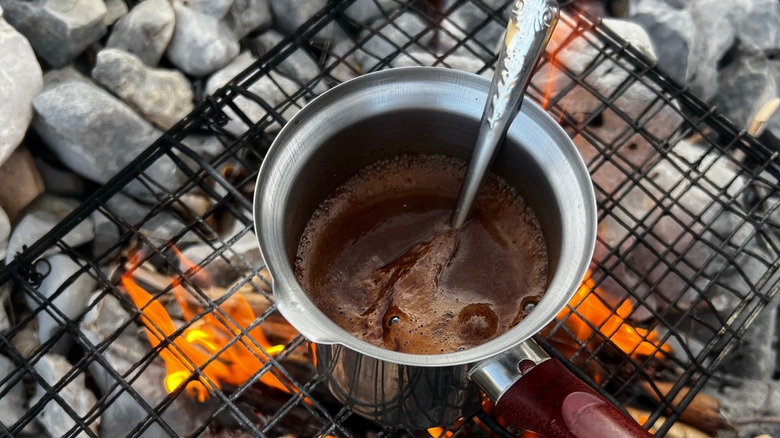
When you have a way to heat water, but no coffee equipment that works without power, cowboy coffee is your savior. Originating with the cowboys of the American West, this simple approach is one of the top methods for making coffee while camping. It's also traditionally made without filters, so it's a great choice when you're fresh out.
What exactly is cowboy coffee? It's made by bringing water to a boil in a pot over a gas stove or grill using a metal coffee pot, pitcher, or saucepan. After removing the pot from the heat, let the water cool off for 30 to 45 seconds, then mix in ground coffee. Let it steep for four minutes total, stirring occasionally, then pour in cold water to make the grounds settle at the bottom of the pot. Slowly pour the coffee into your cup, never tipping the pot too far, or grounds will get into your drink. Congrats; you've made coffee like the cowboys of old.
As you might expect from such a rustic method, cowboy coffee tastes bold and bitter. It's also easy to wind up with over-extracted java if you use too fine of a grind, don't stir enough during brewing, or brew for too long. Plus, there's always a risk of grounds getting in your cup, even if you pour carefully. In the end, what cowboy coffee offers in ease, it lacks in precision — but in a power outage, it's useful, and lovers of extra-strong joe will enjoy the taste.
Pour-over coffee
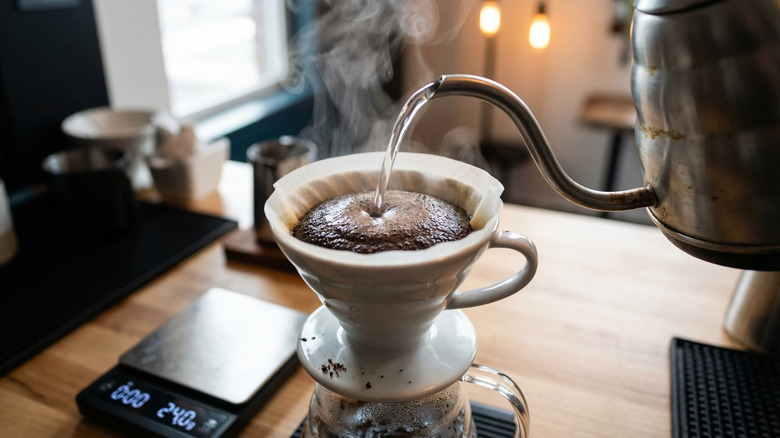
If you have a funnel or rubber band in the house, classic pour-over coffee is the no-power brewing method to try. Start by placing a funnel over a cup or pot, then inserting a paper filter. Spoon in your ground coffee and pour hot water over it, moving from the center of the grounds outward in a circular motion. The water extracts flavor as it travels through the grounds, transforming into fresh coffee that drips down into the collecting vessel.
Don't own a funnel? That's where the rubber band comes in. A clever Reddit user demonstrated how to hack your way to a pour-over: Use the band to tightly hug the coffee filter to your cup, so it doesn't fall in once you add the grounds and water. Proceed with the usual pour-over process, and you have a serving of hot java, no power or equipment required.
For the best-tasting joe, it helps to follow important tips for pour-over coffee. The golden ratio for the perfect pour-over every time is one part grounds to 18 parts water, and whether you're using a gas stove or another gadget for heat, aim for a water temperature between 195 and 205 degrees Fahrenheit, or just short of boiling. If you bought plenty of distilled water before you lost power, consider using it for the cleanest-tasting cuppa. Lastly, avoid the pour-over coffee mistakes of pouring too quickly or slowly, or not timing your brew. These are the most prevalent pitfalls that lead to a less-than-ideal taste.
French press
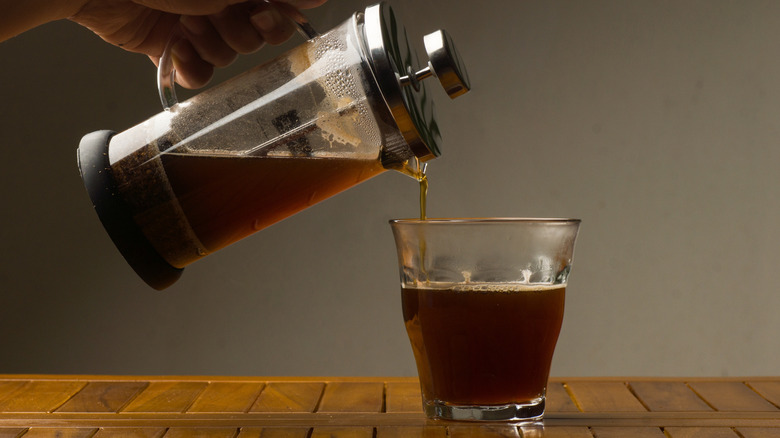
A French press may be a smidge less convenient than a coffee machine, but if you live somewhere with harsh weather, having this electricity-free gadget around is never a bad idea. You'll need a way to boil water, and you also have a choice of ingredient ratios. Go with one part ground coffee to 15 parts water for a standard brew, or a 1:12 ratio of coffee to water for a stronger cup. Coarse-ground coffee works best, as finer grounds can create a bitter taste, but any grind works in a pinch.
The steps you need when brewing French press coffee can be summarized thusly: Boil water and pour a little bit into the press to warm it up, then let the rest cool for a few seconds. Empty the press, spoon in the coffee, then pour in enough water to barely cover it. Mix everything up, add the rest of the water, and let steep for a few minutes before pushing down the plunger. The coffee will be squeezed out above the plunger while the grounds are pushed down to the bottom.
While you can brew a tasty cup following this bare-bones procedure, the devil is in the details. Freshly-ground beans make the best-tasting French press brews, and make sure not to let the coffee steep for too long. Using hard water and eyeballing your ingredient ratio are other things to avoid for perfect French press coffee. When made with care, you'll be rewarded with a deliciously rich and flavorful brew.
Stovetop percolator or moka pot
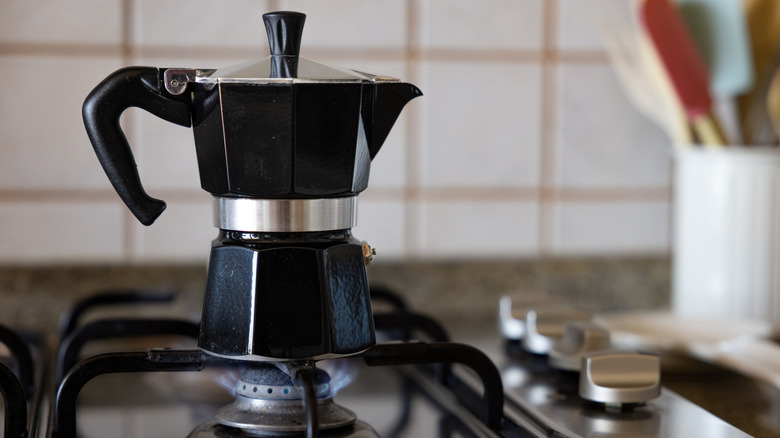
Stovetop percolators are an old-school coffee brewing method we don't see much anymore, as it's very easy to make water too hot over the stove, resulting in a bitter drink. However, these humble tools are a great power-free option if you have a gas stove. Even better is a moka pot, which brings freshly-brewed espresso into your home in an easier, more consistent way.
Traditional metal percolators come with a built-in filter basket to hold the coffee, a main body below to hold the water, and a "stem" that connects the two chambers and brings the hot water to the grounds. You fill the percolator with water and coffee, then heat it over the stove. Once the water boils, crank down the heat and let simmer for a few minutes. Remove the percolator from the stove, let the coffee cool for a bit, and pour it out. To reduce the chances of an overly bitter drink, you should use coarse grounds.
A moka pot is similar to a basic percolator, but it uses steam pressure to brew and is far less prone to over-extracting, creating rich, balanced, and full-bodied coffee or espresso. For brewing instructions, it's best to refer to the product information for your particular pot, but tips you need to make better moka pot coffee can apply to most models. Using low and slow heat and taking the pot off the stove at the right time are two of the most crucial points to keep in mind.