

10 Easy Ways To Eat More Vegetables Throughout The Day
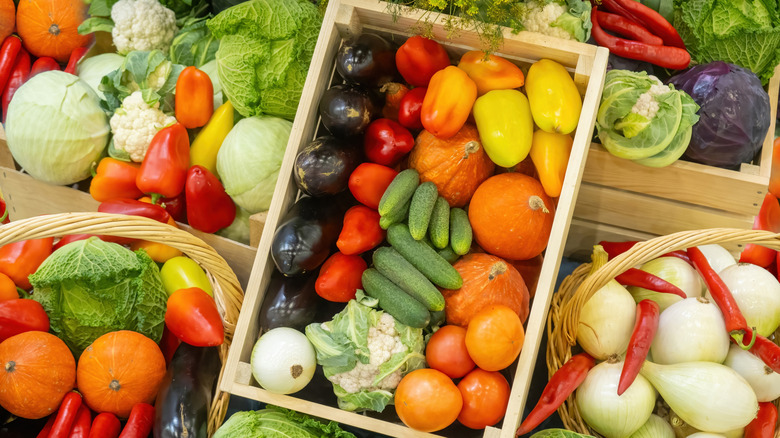
Vegetables are not only part of a healthy, balanced diet, but their compounds can help prevent illness and reduce the risk of disease. Yet a full 90% of Americans, across age levels, don't eat enough vegetables, per the USDA's Dietary Guidelines for Americans, which is typically defined as 2½ to 3 cups per day for adult women and 3 to 4 cups per day for adult men.
Vegetables are incredibly diverse, both in terms of offerings and ways to prepare them. At the most basic level, they're grouped into categories like leafy greens, starchy vegetables, beans/peas/lentils, and red and orange vegetables. Since there are so many different types, it's easy for you to find something you enjoy. Generally speaking, the greater variety of colors or types of vegetables you eat, the greater variety of health benefits you're consuming, as different colors of vegetables contain different types of antioxidant compounds.
There are lots of reasons why people don't consume sufficient vegetables in their daily diet, including lack of access to fresh produce, unfamiliarity with produce varieties, prohibitive costs, already-established eating habits, and more. But the good news is that there are lots of ways to incorporate more vegetables into your day that are delicious, easy, and fun! With some basic knowledge of how to pair vegetables, both for nutritional value and to complement your favorite meals, you'll be well equipped to reach your vegetable nutrition benchmarks.
1. Add veggies to your favorite egg dish

If you're someone who looks forward to eggs first thing in the morning, it's easy to eat a serving of vegetables with them. Omelets are a terrific vehicle for vegetables, and the more vegetables you include in them, the more exciting they'll be. If you're feeling a little daring, you can try French breakfast radishes. This mild, two-toned, pink-and-white variety was popular among upper-class French Victorians and can be packed into an omelet.
Rather than relying on one vegetable, consider adding veggie pairings to your omelet. Some suggestions include tomatoes and onions, zucchini and garlic, avocado and salsa, or spinach and sun-dried tomatoes. If you also enjoy cheese, consider the Italian trio of tomatoes, basil, and mozzarella; a Southwestern variety with onion, tomato, avocado, and Monterey Jack cheese; or broccoli, garlic, and cheddar.
If omelets aren't your thing, try serving veggies as a side with your eggs. A sweet potato hash is an excellent sweet complement to an egg dish, or you can saute some spinach with garlic and oil for a quick-to-fix savory side. However you slice it, breakfast is a great way to start incorporating more vegetables into your day.
2. Squeeze veggies into your sandwich
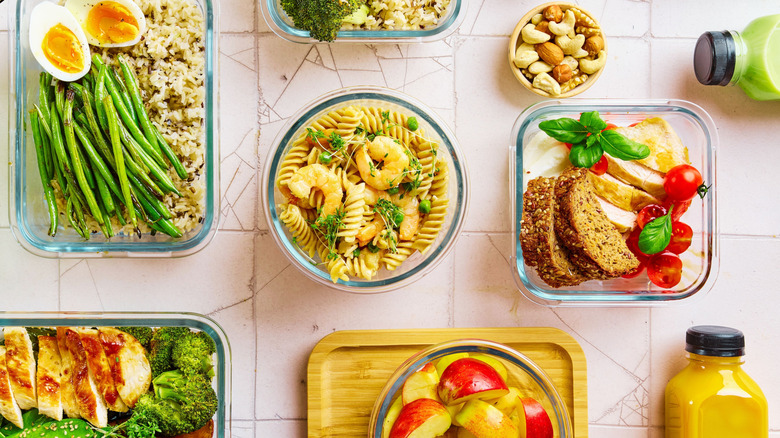
According to the National Health and Nutrition Examination Survey (NHANES), most Americans tend to eat the majority of their vegetables at dinner. But there are tons of opportunities to pack in extra veggies during lunchtime.
If you prefer to have a sandwich for your midday meal, adding a slice or two of tomato, a couple of pieces of lettuce, or even a handful of sprouts can up your vegetable count. While lettuce and tomatoes are sandwich standards, veggies like raw onions or sweet or hot peppers can counter the salt and spice of Italian meats like salami or capicola. Add a few thick slices of tomato sprinkled with salt and pepper for a flavor-packed cheese sandwich, or pile your sandwich fixings into a lettuce wrap instead of using bread for even more veggies. To prevent soggy veggie-packed sandwiches, wrap your lunch in wax or parchment paper instead of plastic wrap.
You can also take a look at your sandwich filling. Rather than reaching for a package of deli meat, you can prepare any number of varieties of a simple chicken salad using grocery store rotisserie chicken and veggies. Mix in diced celery, a bit of red and white onion, and a touch of mustard for a classic variety, or consider Kalamata olives, cucumbers, red onion, and feta for a Greek-inspired twist. Either of these varieties can be spooned onto your favorite sandwich bread, roll, or wrap.
3. Slice up veggies as a snack
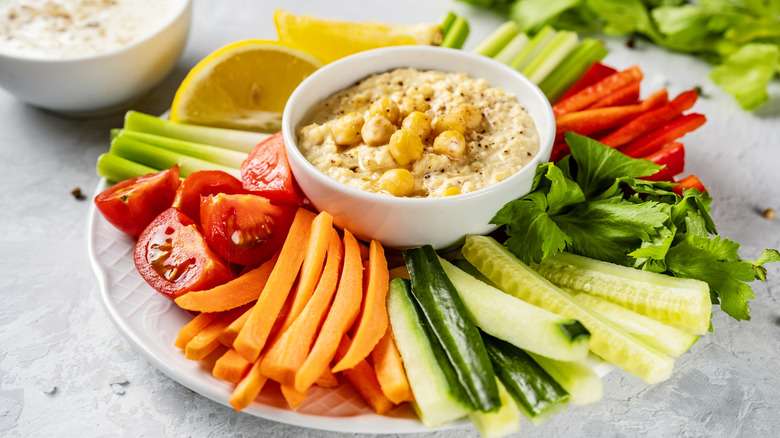
Snack time is a fabulous time of day to incorporate vegetables into your diet, and one of the best ways to do that is by pairing them with a tasty dip. Rather than chips and dip, consider reaching for tzatziki with broccoli florets or cucumber slices or hummus with carrot sticks, bell pepper slices, or raw, chopped cauliflower.
One of the best ways to seek inspiration for your snack time pairings is to stroll through the aisles of your preferred grocery store. The prepared food sections often have a variety of dairy- and vegetable-based dips to catch your attention. Salsa, guacamole, hummus, and yogurt dips are all easy dips to pair with veggies. If you're an Aldi shopper, there are plenty of veggie-friendly dips to choose from, or consider creating your own. If you have a bit more prep time, try your hand at making homemade kale chips or roasted zucchini slices to serve with a homemade chipotle sauce.
Bonus tip: If you pre-slice your vegetables and store them in snack-sized containers, they'll be ready to grab and go. Put those sliced vegetables front and center in your refrigerator in clear containers so they'll catch your eye the next time hunger strikes.
4. Sneak vegetables into your pasta sauce
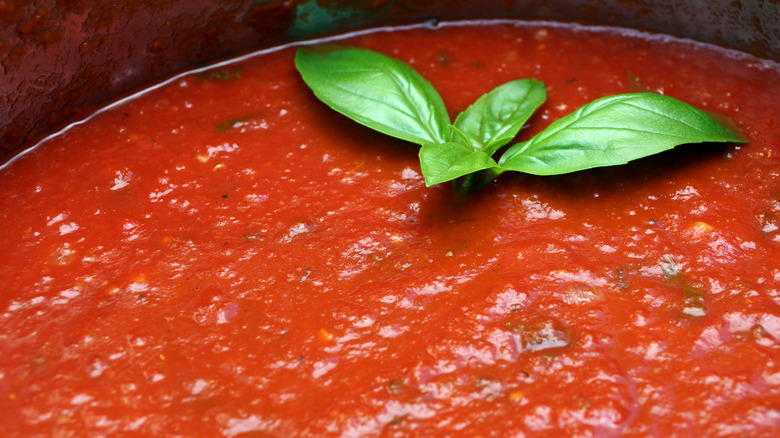
A traditional marinara sauce is already a vegetable-friendly dish — after all, marinara is chock-full of tomatoes. But there are many other ways to pump up the vegetable content of your pasta sauce, too.
Giada De Laurentiis famously adds blended carrots to sweeten her marinara sauce, which you can try yourself at home. Grating zucchini and bell pepper into your pasta sauce is another easy way to bolster the dish's vegetable content. You won't need much, so start with between a ½ cup and 1 cup per pot of sauce — more if you want a vegetable-forward dish, less if you're simply seeking a subtle texture and flavor. If you don't wish to change the texture of your marinara sauce, you can add a jar of mashed baby carrots, which will up your vegetable content but not alter the smooth consistency you'd expect from a traditional sauce. You can also consider foregoing your traditional marinara sauce for a vegetable-heavy pasta like this garden vegetable pasta dish, which incorporates both spaghetti and zucchini noodles for a fresh summer flavor.
5. Add fresh vegetables to your baked goods

You might not think of baked goods as an obvious vehicle for incorporating more vegetables into your day, but they can be a simple and tasty one. Consider adding zucchini to your muffins or dried sweet potato to your scones. A cup of shredded or grated carrots can be an easy mix-in for banana bread, lending it both color and antioxidants. Beetroot can be added to chocolate cake– many recipes call for the extra step of precooking the beets — and avocado or pumpkin can be added to most varieties of muffins for extra nutritional value and texture.
The key to "sneaking" these vegetables into sweet breakfast foods like these is to incorporate them in a way that doesn't significantly alter the texture or flavor of the original recipe. Techniques for this include finely grating, pureeing, or blending vegetables into the batter so you receive the health benefits of consuming more vegetables without changing the experience of eating your favorite muffin, bread, or baked good. To ensure the best texture, depending on your vegetable of choice, you may want to drain it. Zucchini is a good example of a vegetable that may need a little extra attention. If your batter is still wet after removing the moisture from the shreds with a dishtowel or cheesecloth, consider adding a scant amount of flour to counterbalance the moisture. Another option is to use slightly less liquid than called for in the recipe. In the end, with a little creative experimentation, you'll have delicious and vegetable-packed baked treats.
6. Pack your smoothies with veggies
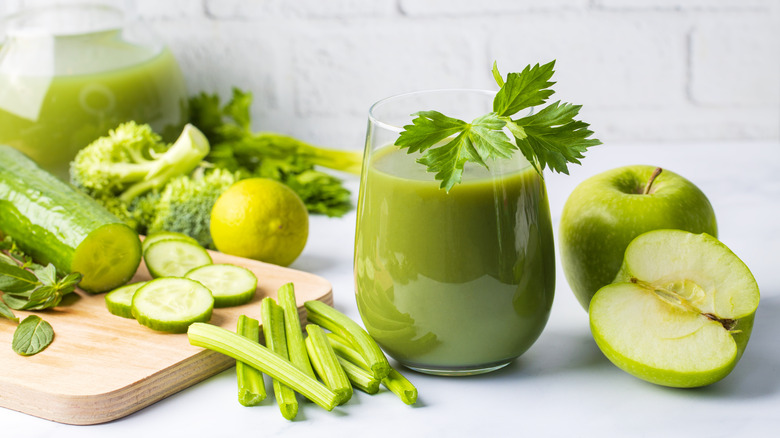
Smoothies, especially when blended with Greek yogurt and/or your favorite protein powder, can be a great source of fruits and protein any time of day. However, they can also be a great vehicle for vegetables. Adding a handful of spinach, leafy greens, or avocado can ease your taste buds into drinking green smoothies, but there are many more veggies you can try — and they're not all green.
Surprisingly, frozen sweet potatoes can create a silky smooth smoothie. Try this sweet potato smoothie recipe, which pairs the tuber with banana, dates, almond milk, and spices. If you're feeling more experimental, you can create your own recipe by mixing sweet potato with ingredients like ginger and turmeric for a bit of spice and maple syrup or honey as a sweetener. You can also use frozen store-bought sweet potato cubes and skip the ice.
Finally, if you're looking to add creaminess to your existing smoothie recipe, try adding frozen cauliflower. While it's typically used in savory dishes, it takes on the taste of whatever is around it. Try adding a few frozen florets — but just a few — to the blender the next time you make a smoothie. However you blend it, adding your favorite veggies to your next smoothie will guarantee you're on your way to a vitamin- and antioxidant-filled drink.
7. Add veggies to your chili

While chili is traditionally packed with protein from beans and meat (or a plant-based meat alternative), it's also a great vehicle for veggies. Canned tomatoes, either plain or seasoned with Italian spices like basil or oregano or chilis, are an easy addition that blends nicely with the flavors already present in your recipe.
There are plenty of other vegetables you can incorporate into your go-to chili recipe to beef up its vegetable content. Black or kidney beans and onions are common additions to tomato-based chilis, though you can also add hot peppers for a little heat. Zucchini, which tends to pick up the flavor of whatever it's in, can be a good addition, as can canned or frozen corn. You can also add vegetables to white chilis, including those made with white beans or chicken. Garlic, onion, and corn are standard add-ins. Both red and white chili are great topped with fresh avocado slices.
8. Swap your pasta noodles for vegetable ones
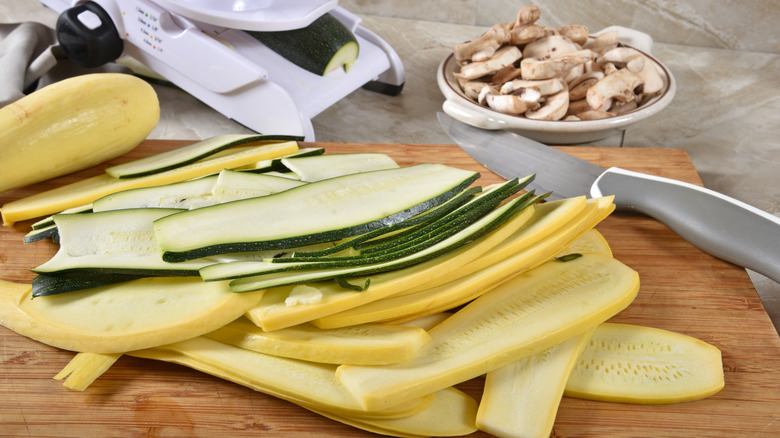
A fun way to bolster the vegetable count in your pasta and make it gluten-free is to swap your traditional spaghetti or pasta noodle for a "noodle" made from zucchini or squash. Vegetable noodles have become popular nutrient-dense substitutes in recent years. There are lots of veggie spiralizers to choose from to make the preparation process easy, or you can pick up a pack of pre-spiralized noodles in the prepared food section of your grocery store. The reason these noodles work well is that they soak up the flavor of whatever sauce or gravy is topping them. They're also versatile and can be cooked by blanching, sauteing, or, in a pinch, even microwaving them. Consider making a pesto chicken and zucchini noodle pasta salad or simply substituting zucchini noodles the next time you make your favorite pasta dish.
Similar to using zucchini noodles in your favorite pasta dish, you can use sliced zucchini to make a vegetable lasagna or eggplant to make an eggplant rollatini. Eggplant rollatini, with its layers of cheese, marinara sauce, and eggplant "noodles," is reminiscent of a lasagna both in concept and appearance. You can prepare vegetable lasagna "noodles" by slicing the zucchini or eggplant thinly on a mandoline, drying them on paper towels or a baking sheet, and then baking the slices before assembling the dish as you would a lasagna. No matter which vegetable you slice, choosing vegetable noodles over traditional pasta noodles will make for a tasty and nutritious meal.
9. Incorporate vegetables into your lasagna

Swapping zucchini or eggplant "noodles" for traditional, wheat-based noodles is one way to incorporate more vegetables into your meal. But if you prefer regular lasagna noodles, you can simply add vegetables to your go-to lasagna recipe. Vegetarians or vegetable lovers will be happy with a spinach and ricotta lasagna, which substitutes the traditional meat layers with spinach. If you're using fresh spinach, you'll want to saute it first with garlic, salt, pepper, and olive oil, then drain it in a colander. Squeeze frozen spinach out in a dishcloth (but use a dark-colored cloth or be prepared for the spinach to stain a lighter-colored towel). If you prefer to keep the meat in your lasagna, consider creating a spinach and ricotta mixture like what you'd use in a ravioli filling and use this in your layers instead of plain cheese.
If you're looking for an alternative to traditional red sauce lasagna, this lemony spinach lasagna sounds delicious. Also, Ina Garten recommends adding roasted zucchini and squash to any lasagna you make, whether it's meat-based or vegetarian. Similar to soups or chili, lasagna can be enhanced with a variety of vegetables.
10. Substitute stuffed peppers for tacos
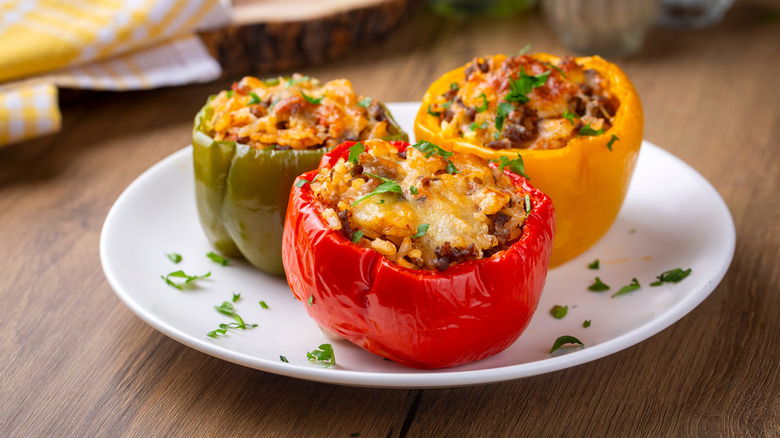
The next time you're craving tacos, consider stuffing all of that delicious filling inside a pepper instead. Peppers are a great substitute for taco shells because you can use many of the same ingredients for your recipe without significantly changing the flavor profile.
You can use whatever color bell pepper you prefer, though be aware that red, yellow, and orange peppers tend to be slightly sweeter than green. To prepare this meal, blanch your bell peppers in boiling water to soften their skins, then fill them with your preferred taco toppings, like seasoned and cooked beef or turkey or a meat substitute, canned or fresh tomatoes, and peppers and onions. You may also want to add a fair bit of rice to bulk up the base of the dish. If you're using tomato sauce, try mixing it with the rice to prevent the grains from drying out. Beans and corn are also good vegetable choices. Top your creation with your favorite cheese or cheese blend, and bake it in the oven. The result is a quick, vegetable-packed meal that's both filling and full of nutrients.