

10 Kitchen Brands Your Grandma Loved That Are Still Worth Buying Today

You know that classic saying, "An oldie, but a goodie"? We've found that some of our favorite kitchen appliances have come from yard sales and second-hand shops. We wouldn't always say that "they don't make them like they used to"; for instance, we're grateful that technology has advanced to grant us higher-powered motors that fuel our food processors and blenders. Nevertheless, there's no denying that some of the kitchen brands your grandma loved are still worth buying today.
In this article, we'll introduce you to several tried-and-true brands that, despite evolving over the years, serve folks well in the kitchen even today. Several products from these brands have recommendations from the likes of Julia Child and James Beard, too, so you can trust that they will get the job done. Odds are, you already have one or two of these brands in your kitchen drawers, and if not, we suggest looking through that box of hand-me-downs from your grandma to see if you can rustle up any old pastry decorating tools or cast iron pans. And if nothing else, you can expand your kitchen inventory with a few high-quality purchases; these brands offer products at a variety of price points to suit every customer.
Le Creuset
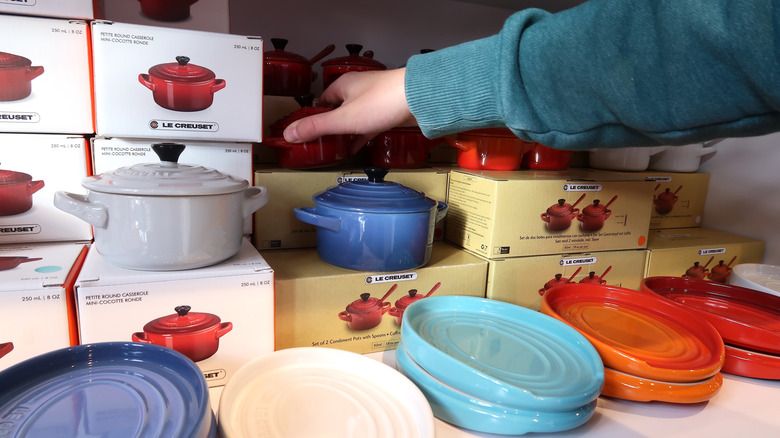
Enameled cast iron cookware is the love child of two industrial techniques: Enameling and casting. The first enamel cast iron cocotte — a durable, lidded cooking pot that is somewhat smaller than a Dutch oven — was manufactured by two Belgians in 1925. These cocottes rose in popularity during the early 20th century, in no small part because Le Creuset mass-produced them. According to Le Creuset's website, artisans monitor the quality of each piece that leaves the factory. Julia Child even used one for making soup, so there's a good chance your grandmother saw her on TV and then bought one for herself.
Today, enamel cast-iron appliances are available in myriad colors, adding flair to rustic and modern kitchens alike. Le Creuset is still one of the leading brands in this department. Its modern product range includes cocottes, saucepans, stock pots, bread ovens, tea kettles, and ramekins. There are even cutlery sets and muffin tins made with different materials.
Aside from performance, folks love Le Creuset pots for their gorgeous hues, and we're not just talking about red, blue, and green. Le Creuset's cookware comes in colors like artichaut (artichoke green), Marseille (vibrant blue), and cerise (fire hydrant red). Plus, to harken back to the company's earnest beginnings exactly 100 years ago, Le Creuset released the Flamme Dorée model (translating to "golden flame") this year. It was inspired by the first color to grace Le Creuset's cocottes back in the day.
Wilton
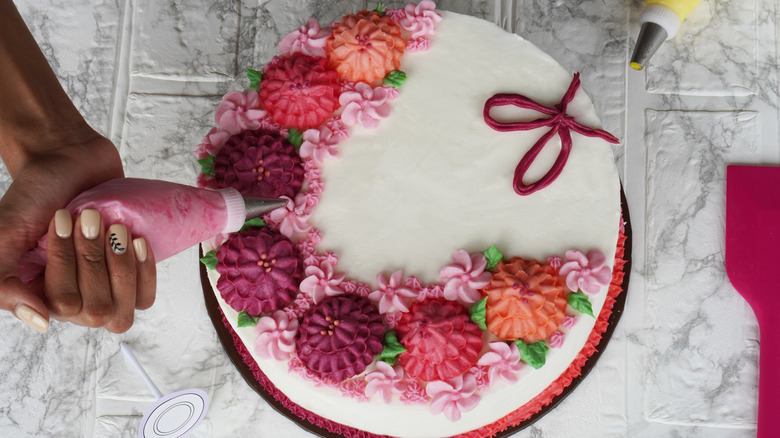
Your grandma might have spent hours perfecting her cakes, so it's a good possibility that she had a box full of Wilton products to help her out. Dewey McKinley Wilton was a pastry chef and candy maker who helped usher in revolutionary techniques in cake artistry. He spearheaded the Wilton Method, a set of baking and decorating skills that hundreds of thousands of people still learn every year. From piping buttercream and crafting drop flowers to shaping fondant and assembling layer cakes, folks learned a great deal from Wilton and the eponymous company he would establish in 1929. That's why Wilton's classes and products have remained in high demand for decades.
Though modern wedding and birthday cakes often look like they belong in a museum, this wasn't always the case. After the rationing associated with World War II finally ended, Americans began to express a rising interest in decorating extravagant cakes at home. By this time, boxed cake mixes had become readily available, leaving more time for folks to focus on the decorating aspect. Even men (especially veterans) were trained under the Wilton Method, the skills from which they took to professional bakeries.
After becoming a household name through classes and instruction, Wilton's debut product hit the market in 1959. Naturally, cake decorating supplies constituted the company's initial product range, helping bakers put into practice the lessons they had learned from Wilton's teachings. Cake decorating is still at the forefront of Wilson's branding, but products like baking sheets, donut pans, and muffin pans are also available.
KitchenAid
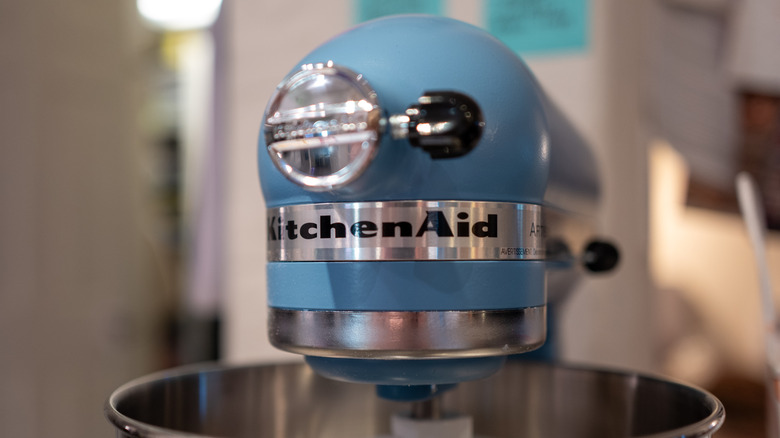
If you've been putting pennies in the piggy bank for a stand mixer, make sure there's not one already lurking in your grandparents' kitchen. Even if it's not functional, you could sell a vintage KitchenAid mixer and use the money to buy a new one. KitchenAid has been around since 1919, and today's stand mixers look a lot like they did 100 years ago. They're versatile and perform so well that even professional chefs use them. If you've ever been disappointed with a loaf of bread because you didn't have the time or energy to adequately knead it, a dough hook attached to a KitchenAid could have made all the difference.
KitchenAid is best known for its stand mixers, which can be paired with a variety of attachments to mix cake batter, whip eggs, and even turn out pasta. We once reviewed 16 stand mixer brands, and KitchenAid secured the very top spot. You shouldn't overlook the brand's other products, though, including coffee makers and grinders, toasters, blenders, and countertop ovens. Though it's not entirely clear which brand was her favorite, Julia Child once owned a KitchenAid food processor.
Finally, we would be remiss not to mention KitchenAid's signature bursts of color. In fact, one of the primary search functions on the brand's website filters products according to color instead of functionality. From a romantic hibiscus to a husky scorched orange, you can pick the right color to align with your kitchen's theme.
Hamilton Beach
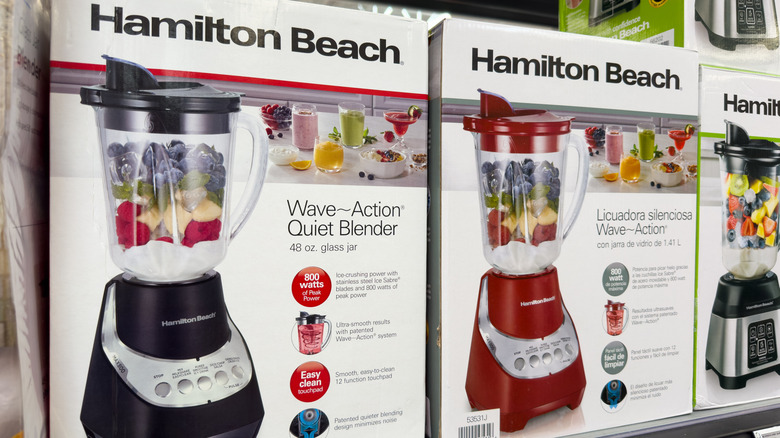
Before you ask, Hamilton Beach was not named after some seaside resort town; it was named after its founders, Louis Hamilton and Chester Beach. These two men established their company in the early 20th century, and it initially specialized in manufacturing motor-driven kitchen appliances. Beach patented a groundbreaking motor design that the company used to transform day-to-day life in the typical American kitchen. It wasn't long before folks were taking advantage of the brand's drink mixers, juice extractors, food mixers, and meat grinders.
In the 1990s, the company merged with Proctor Silex to offer a wider and better product range. Proctor & Schwarz, which preceded Proctor Silex, was responsible for releasing the first silent toasters, pop-up toasters, and toaster ovens. It makes sense, then, why so many Hamilton Beach toasters are on the market today. We recommend several of the brand's budget-friendly toaster ovens for their durability and performance.
If you have the budget to invest in top-of-the-line appliances, check out the Hamilton Beach Professional range, which was created in 2016. Some of these products, like the conical burr digital coffee grinder, are surprisingly affordable, falling under $100. Others, like the all-metal stand mixer, cost upwards of $200, $300, and $400. Or, you can look to the past for shopping inspiration; the vintage Hamilton Beach's milkshake makers are now worth a pretty penny, though you can purchase newer, similar models today at a lower cost.
Pyrex
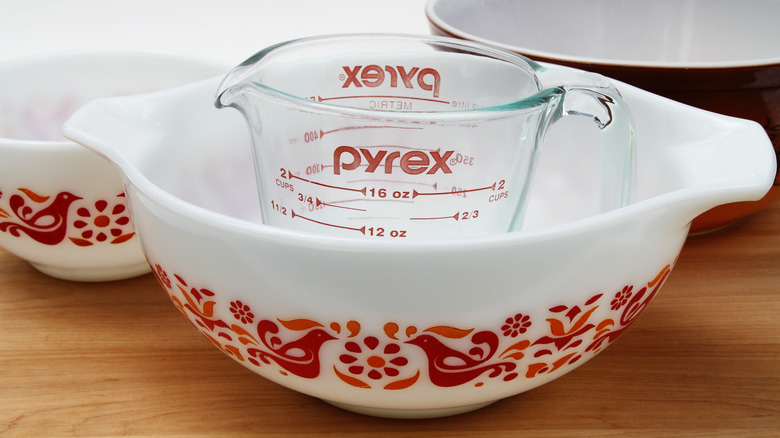
Concern over microplastics has consumers increasingly reaching for kitchen products made of glass instead of plastic. Yet, there have always been reasons to prefer glass. For instance, it is non-porous, meaning that when properly cleaned, glass containers don't hold onto those pesky turmeric stains or marinara sauce odors. Plus, glass containers can often be placed directly into the microwave or oven, making reheating leftovers a breeze (just make sure your container is at room temperature first so that it can survive the temperature change).
Because glass demands a heftier investment than plastic, the question that remains is which brand is worthy of your money. If you ask us, Pyrex is a pretty good place to start. This brand has been making waves since the early 1900s, when it started selling glass pie plates and loaf pans. After selling more than four million pieces in less than five years, Pyrex began releasing other products, such as the famous 8-ounce glass measuring cups. Then, in the 1930s, an automated production system reduced the price of Pyrex products, and the rest was history. Today, Pyrex can be found in around 80% of American kitchens.
The glass of most modern Pyrex products is clear or tinted, allowing you to locate that lasagna from the other night with ease. However, if you're lucky, your grandma might have left you a colorful opalware model, which boomed in popularity during the 20th century. Otherwise, you'll have to settle for adding color to your Pyrex with the brand's tinted glass or boldly hued lids.
Lodge Cast Iron
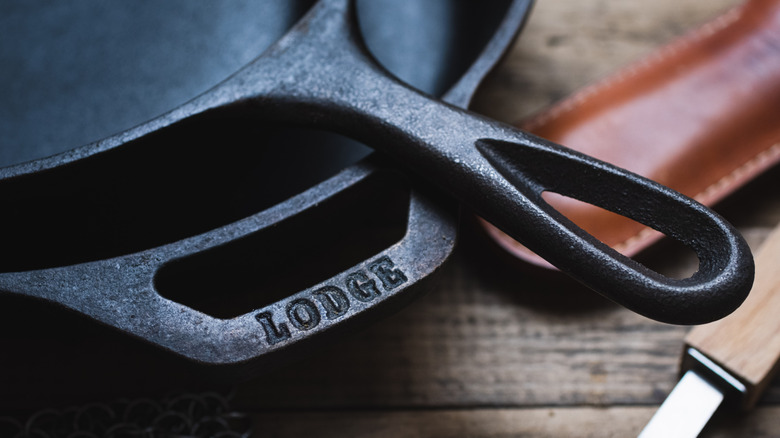
Lodge Cast Iron can trace its roots back to 1896, when it started producing cookware in South Pittsburg, Tennessee. Though the original foundry burned in 1910, two foundries can still be found there today. Depending on when your grandma was born, her cast iron pan may have been hand-poured, but today, Lodge cookware is produced using an automated molding system and electromagnetic induction rather than coal fire.
Folks who own cast iron pans will often tell you that food simply tastes better when cooked on cast iron rather than, say, stainless steel. Indeed, you might notice flavors gradually improve as your pan's seasoning grows and evolves. That said, cast iron pans do require more upkeep than those made from other materials. Namely, you need to keep your cast iron pan well-seasoned, which means rubbing oil onto its surface and heating it briefly on the stovetop after each wash. You should also avoid soaking your pan in water overnight, or really for any longer than necessary. Otherwise, rust might make an unwanted appearance.
While Lodge Cast Iron is the same durable and reliable brand that it was throughout the 20th century, it's received a noticeable glow-up in the 21st century that keeps us coming back for more. For example, although your grandma's Lodge cast iron cookware didn't arrive in her kitchen pre-seasoned, in 2002, the company began selling pre-seasoned products before any of its competitors. Her Lodge cast iron wasn't enameled either, though such products are available from the company today.
Tupperware
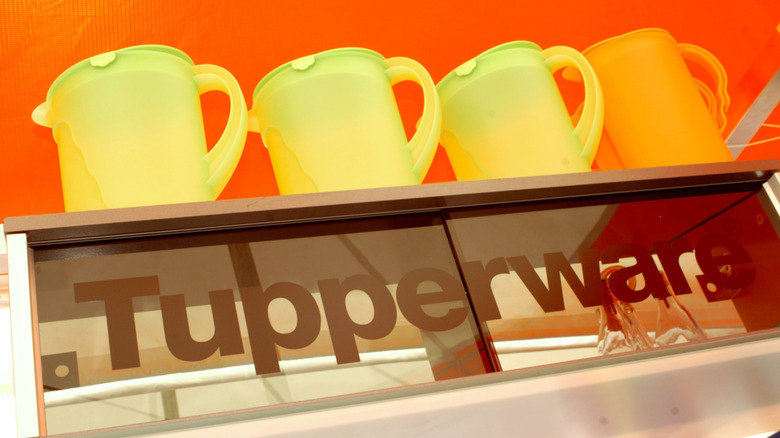
Despite our earlier praise for glass kitchenware, there's no denying that purchasing plastic products can be a more affordable and reasonable option for many consumers. Plastic is less likely to break, and it's also lighter in weight than its glass counterpart. When it comes to plastic storage products, Tupperware is perhaps the most classic brand on the market. Your grandma may have even hosted a few Tupperware parties in the 1950s and 1960s, bringing convenience to a nation of rapidly growing families. For many folks of this era, the name "Tupperware" would become synonymous with plastic storage containers, even those produced by competitor brands like Rubbermaid.
However, you may have heard that Tupperware filed for bankruptcy in 2024. Despite this and the ensuing transfer in ownership, you can still find the brand on store shelves and online. That might elicit a sigh of relief from devoted fans of Tupperware, who have long used its products to meal prep, store leftovers, and measure ingredients.
Most encouragingly, Tupperware now offers glass and silicone products in addition to plastic. Whether it's a reusable bag you're after or a glass baking dish, you can find it from Tupperware. Nevertheless, if you do opt for plastic, make sure not to use any vintage Tupperware – it likely contains Bisphenol A (BPA). Instead, purchase a new product from Tupperware's vintage food storage line, which features designs that have been loved by customers for years.
Alessi
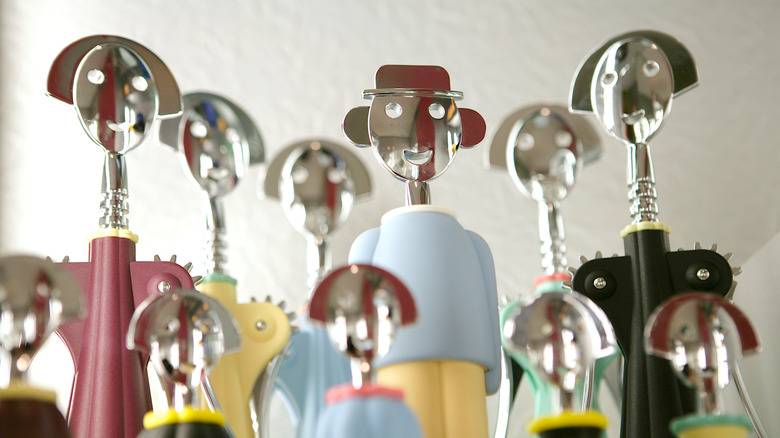
If your grandmother had a chic sense of style, she may have had a few Alessi appliances in her kitchen. This Italian brand has worked closely with more than 900 designers since it was established in 1921, including the Spanish surrealist, Salvador Dalí. Its products are known for their quirky patterns and bold yet elegant shapes. Some might not even call them products — each one is a work of art that, despite a seemingly mundane function, might invite you for a closer look or elicit a titter of laughter. It's no wonder that an Alessi product is among the ultimate thrift store finds when you're on the hunt for vintage kitchen brands.
Although copper, brass, nickel, silver, and chrome were among the preferred metals in Alessi's early days, your grandma's artifacts are more likely composed of stainless steel. This material change helped Alessi mass produce its goods and cater to a worldwide audience beginning in the 1950s. However, it wasn't until the 1960s that the company began to target a domestic audience. If you ever find yourself in the Piedmont region of Italy, visit Museo Alessi to see past products, learn about the applied arts, and delve deeper into the company's history.
Today, you can purchase Alessi products made of more than just stainless steel — glass, ceramic, wood, and more are utilized. A sleek and iconic kettle, a funky toaster, or a stainless steel fruit bowl would each serve as a unique and memorable gift, though we won't tell anyone if you decide to keep one of them for yourself.
Frigidaire
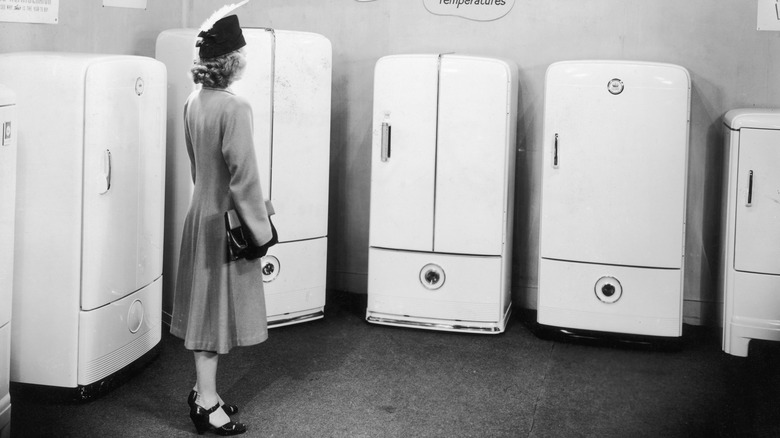
If you're designing a retro kitchen, a Frigidaire refrigerator may be a part of it. This company, founded in Indiana in 1916, was so vogue during the 20th century that the brand name became inextricably linked to refrigerators. That's why your grandma might still ask you to pull the milk out of the Frigidaire, even if she owns an LG or Samsung. Nevertheless, Frigidaire has since expanded to sell dishwashers, microwaves, washing machines and dryers, air conditioners, pressure cookers, and more. We even ranked the brand as having one of the best gas stoves on the market.
It's hard to imagine life without a refrigerator, but a little over 100 years ago, that was the reality. The revolutionary invention has shaped modern shopping habits to an extent that most of us don't even realize. Just think about walking into a Sam's Club or Costco and not being able to pick up a bulk carton of ice cream or your favorite frozen pizzas. Though Frigidaire did not invent the refrigerator, the brand was responsible for getting the first refrigerators into home kitchens. Frigidaire grew at an astounding rate, and by 1929, the brand had sold 1 million refrigerators.
If your current fridge has begun shuddering or demanding constant repairs, you'll be happy to know that Frigidaire is still one of the best refrigerator brands you can buy. Whether it's a one-door, two-door, French door, or side-by-side model that you're looking for, you might end up with a Frigidaire, just like your grandma.
Cuisinart
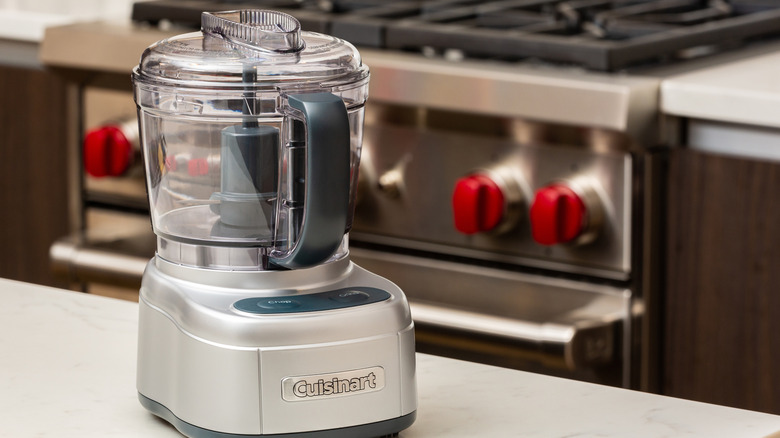
Even if the cans of vegetables your grandma stockpiled in her pantry are long expired, her Cuisinart food processor might still be kicking. As a matter of fact, if Cuisinart food processors were around when the dinosaurs were alive, a few of them still might be functioning today. We're joking, of course, but in our experience, these appliances are among the most reliable and high-performing products on the market.
Don't just rely on our word; Julia Child spoke highly of Cuisinart after it debuted in the United States in 1973. Child famously used a food processor to make pie crust, but you might use one to make hummus, peanut butter, and even pancakes. Your grandma may have also bought a Cuisinart on the recommendation of James Beard, who released a cookbook alongside Carl Jerome in 1978 titled "New Recipes for the Cuisinart."
Last year, we reviewed 11 food processors and ranked Cuisinart among the top three brands. Although you might still hear people say "pull out the Cuisinart" to refer to a food processor, the brand's modern product range includes blenders, baking sheets, knives, and more.