

3-Ingredient Yuzu Edamame Saute Recipe
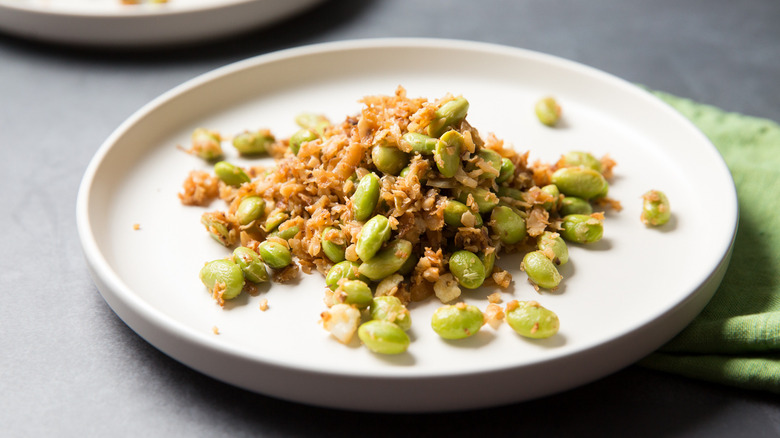
Yuzu edamame saute is an elegant name for an elegant dish that will not disappoint. Recipe developer Michelle Bottalico has created an edamame recipe that calls for only three ingredients, and each ingredient has been carefully selected to create a lovely dish with harmonious flavors and textures. Edamame is the star. These green immature soybeans provide protein and are both understated and substantial at once. Ponzu sauce brings everything together and adds a tart brightness to the earthy beans. Cauliflower rice is sauteed with the edamame to add texture and substance to the dish. Besides providing a contrasting texture to the edamame, the cauliflower also soaks up the sauce better than the silky beans do, for a more flavorful bite.
Yuzu ponzu sauce, or ponzu sauce, is made with yuzu, a tart citrus fruit that resembles a lemon. While not as well-known as soy sauce, ponzu sauce has a brighter and more complex flavor profile, and it gives this dish salty, tangy, citrusy, and umami notes all in one.
With complex flavor notes, it's hard to believe this dish has only three ingredients. Keep this recipe in mind if you want to serve a tasty and unique vegetarian dish that's sure to impress.
Gather your yuzu edamame saute ingredients
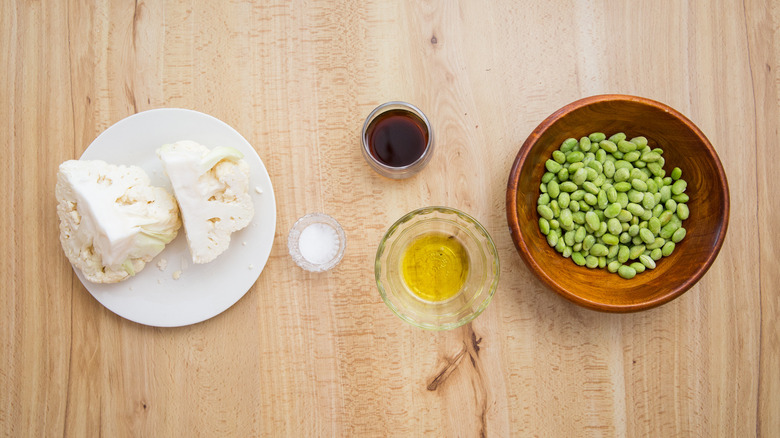
For this recipe, you'll first need ¼ of a medium head of cauliflower. A medium head weighs about 1 ½ pounds and produces about 6 cups of raw cauliflower rice, which shrinks to 4 ½ cups when cooked. The quarter head of cauliflower should give you about 1 ½ cups raw and just over 1 cup cooked cauliflower rice. You can substitute 1 cup of packaged raw riced cauliflower if desired. You'll also need avocado oil, shelled edamame (defrosted first if frozen), ponzu sauce, and salt.
Step 1: Cut the cauliflower
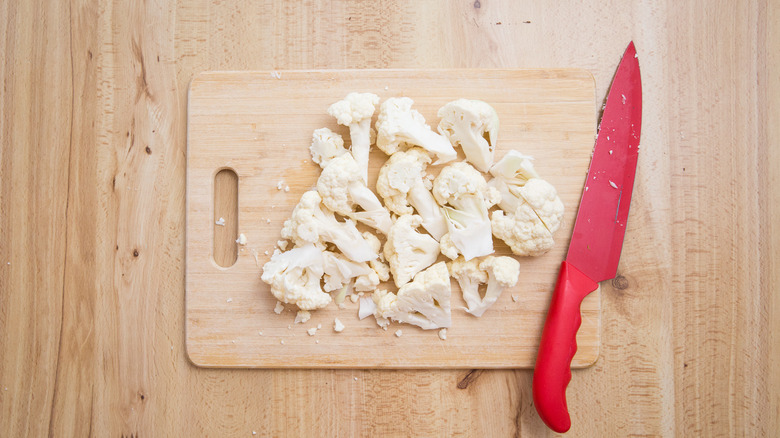
Cut the cauliflower into medium chunks that will fit in the tube of a food processor.
Step 2: Grate the cauliflower
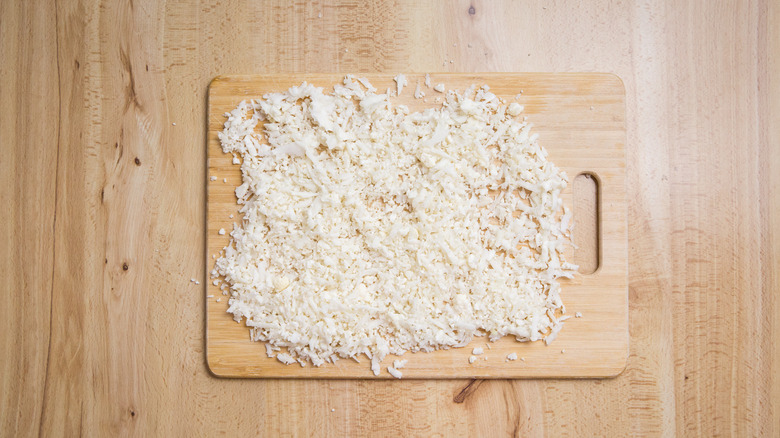
Fit the food processor with a grating disc and grate the cauliflower by pushing it through the tube. Alternatively, cut the half head of cauliflower in half and grate with a box grater or mince as finely as you can by hand.
Step 3: Pat the cauliflower dry
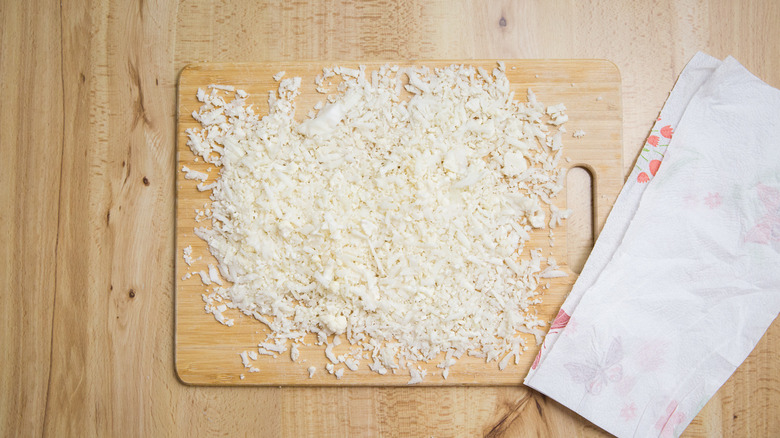
Pat the cauliflower dry to remove excess moisture.
Step 4: Heat the oil
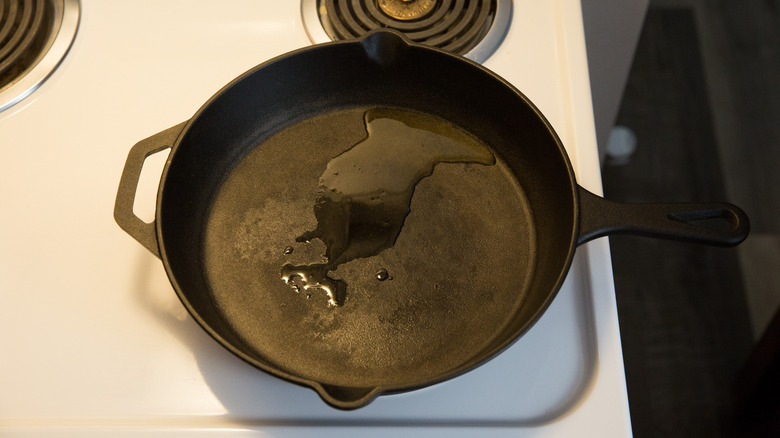
Heat the oil in a large skillet on medium-high. Work in batches if you have a smaller pan so the ingredients don't get overcrowded and steam.
Step 5: Add the cauliflower
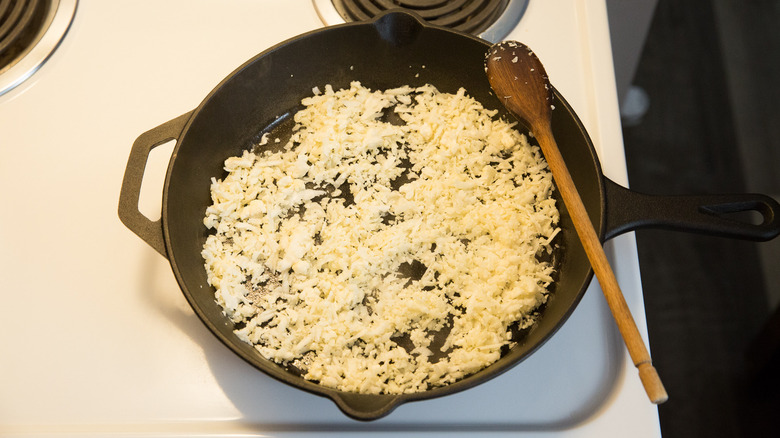
Add the cauliflower and stir to coat in the oil. Let it cook for 2 minutes.
Step 6: Add the edamame
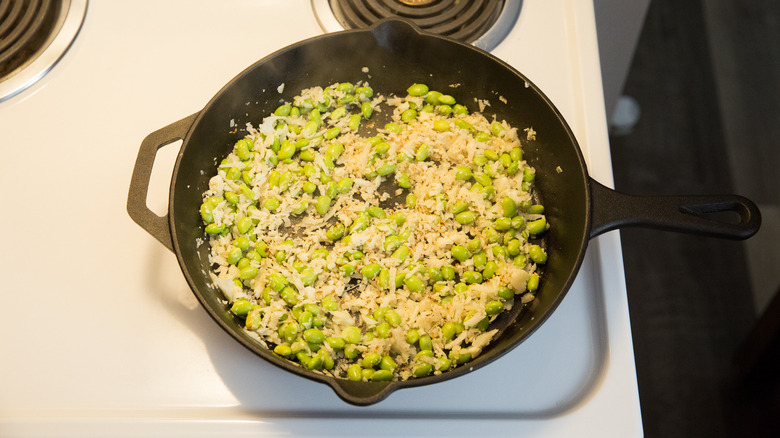
Add the edamame and stir well. Cook for an additional 4-5 minutes until lightly browned.
Step 7: Stir in the sauce
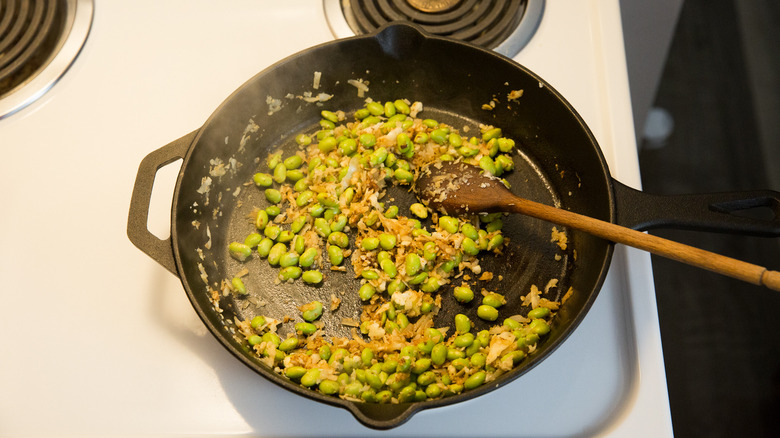
Stir in the ponzu sauce and cook for an additional minute.
Step 8: Add salt
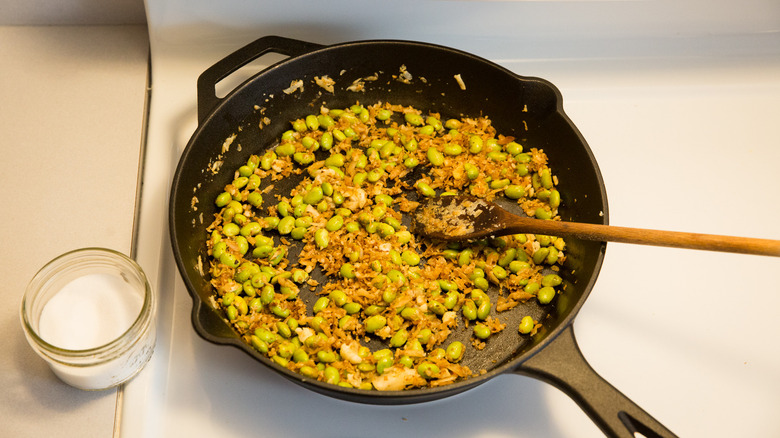
Remove the pan from the heat and stir in the salt. Taste and adjust for salt if desired.
Step 9: Serve the yuzu edamame saute
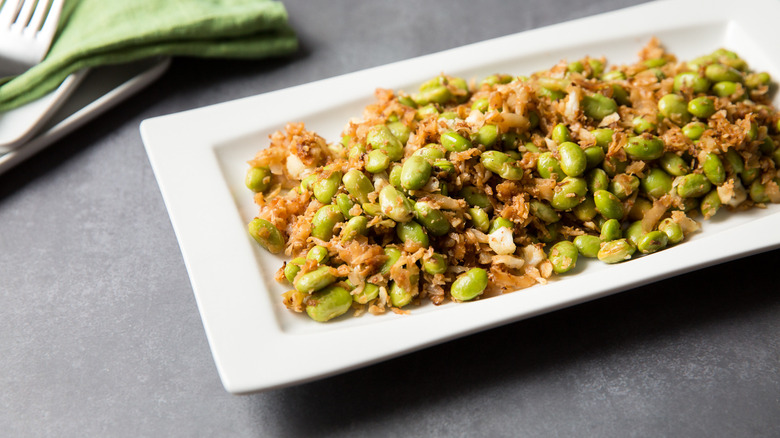
Serve hot.
What can I serve with yuzu edamame saute?
3-Ingredient Yuzu Edamame Saute Recipe
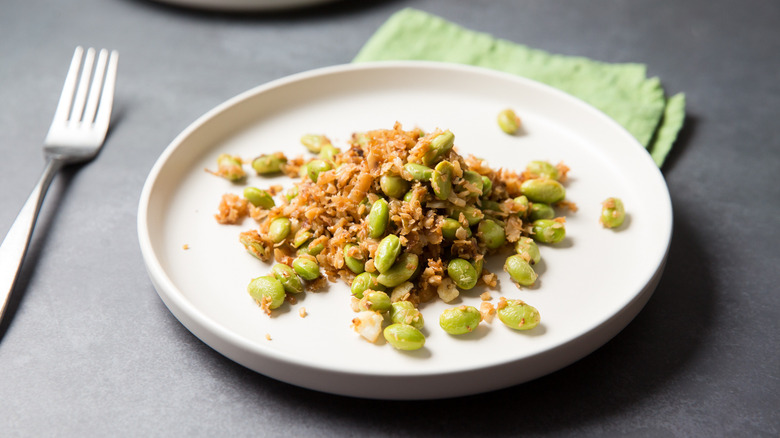
Our yuzu edamame saute recipe has protein-packed oybeans, lively citrusy ponzu sauce, and gluten-free cauliflower rice, for a flavorful and elegant side dish.
Ingredients
- ¼ medium head of cauliflower
- 1 tablespoon avocado oil
- 1 cup shelled edamame, defrosted if frozen
- 2 tablespoons ponzu sauce
- ¼ teaspoon salt, or to taste
Directions
- Cut the cauliflower into medium chunks that will fit in the tube of a food processor.
- Fit the food processor with a grating disc and grate the cauliflower by pushing it through the tube. Alternatively, cut the half head of cauliflower in half and grate with a box grater or mince as finely as you can by hand.
- Pat the cauliflower dry to remove excess moisture.
- Heat the oil in a large skillet on medium-high. Work in batches if you have a smaller pan so the ingredients don't get overcrowded and steam.
- Add the cauliflower and stir to coat in the oil. Let it cook for 2 minutes.
- Add the edamame and stir well. Cook for an additional 4-5 minutes until lightly browned.
- Stir in the ponzu sauce and cook for an additional minute.
- Remove the pan from the heat and stir in the salt. Taste and adjust for salt if desired.
- Serve hot.
Nutrition
| Calories per Serving | 182 |
| Total Fat | 11.3 g |
| Saturated Fat | 1.4 g |
| Trans Fat | 0.0 g |
| Cholesterol | 0.0 mg |
| Total Carbohydrates | 11.4 g |
| Dietary Fiber | 5.6 g |
| Total Sugars | 3.2 g |
| Sodium | 537.9 mg |
| Protein | 11.9 g |

How can I customize sauteed edamame beyond 3 ingredients?
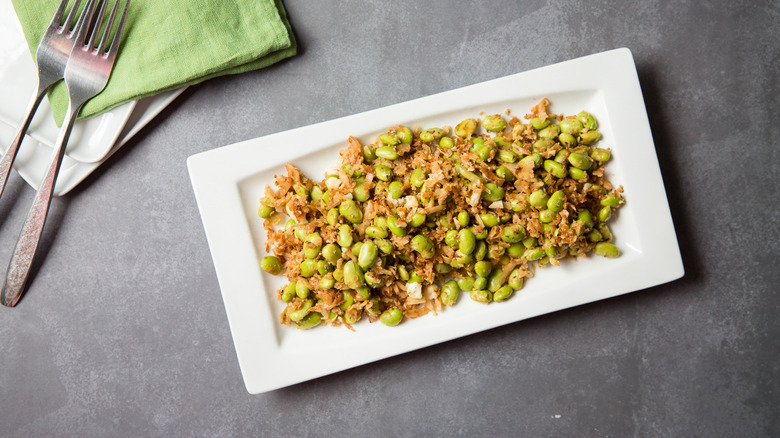
You might be surprised at how good this 3-ingredient sauteed edamame dish is, but if you want to customize it and add more ingredients, there are many variations you could try. Before adding the cauliflower rice, you can saute garlic, onion, and ginger in the oil for a flavor boost. Adding more vegetables to the mix will add color, flavor, and a large dose of nutrients as well. Bell pepper, carrot, and shredded cabbage, peas, broccoli, bamboo shoots, bean sprouts, and mushrooms are all good choices. You can turn the dish into a more traditional complete meal by mixing in a grain like rice or quinoa. Besides cauliflower rice, butternut squash fried rice is an alternative gluten-free option.
If ponzu sauce is unavailable, you can substitute soy sauce, which is easier to find. Add freshly squeezed lemon juice to add back some citrus flavor. If you like heat, mixing in a spoonful of fermented yuzu kosho will give a unique umami and spicy flavor to your meal. You can omit the sauce entirely if desired and finish the dish with freshly squeezed lime juice, perhaps with fresh minced cilantro as a garnish. Another way to finish the dish is with a drizzle of toasted sesame oil and a sprinkling of sesame seeds on top.
What is yuzu and what sauces are made from it?
Yuzu is an important fruit in Japanese cuisine, and while it's much harder to find in the U.S., this tart citrus fruit is made into a variety of sauces that can be found more easily. Yuzu probably originated in mountainous regions of China. Today it can be found growing across East Asia, and it's been used in Japanese cuisine for at least 1,000 years. Yuzu is hard to come by in the U.S. because of an import ban, but some yuzu is grown locally in locations such as California. A yuzu fruit looks like a squat, bumpy lemon. The taste is very bitter, so it's not normally consumed by itself. Both yuzu flesh and the peel are used to flavor dishes and make sauces.
Yuzu ponzu sauce looks like soy sauce but tastes lighter and more complex. It's tarter from the addition of yuzu juice along with other ingredients such as rice vinegar, mirin, and dashi, which give it acidic, sweet, and umami notes. Ponzu sauce may be made with other citrus fruits like sudachi and kobosu, which are sour green citrus fruits. Yuzu sauce is not the same as ponzu sauce, even though they both use yuzu juice, as ponzu sauce contains additional ingredients such as vinegar, soy sauce, sweetener, salt, and spices. It's tart, bright, citrusy, and salty. Yuzu kosho stands apart from ponzu sauce and yuzu sauce. It's a thick, green, fermented chile paste that contains yuzu and salt.