

Eagle Rare 10-Year: The Ultimate Bottle Guide
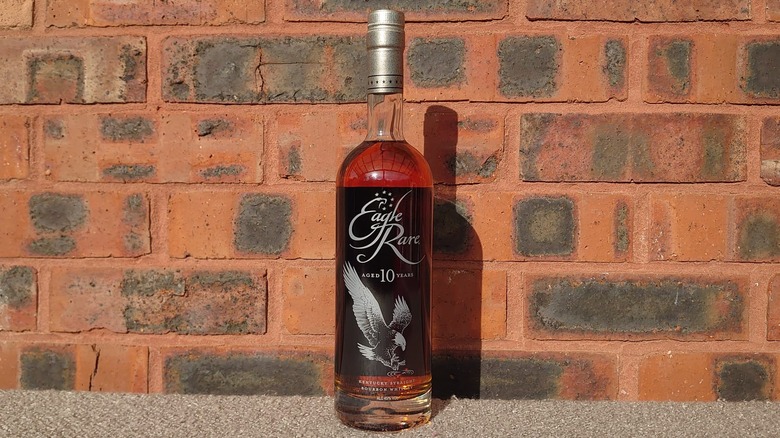
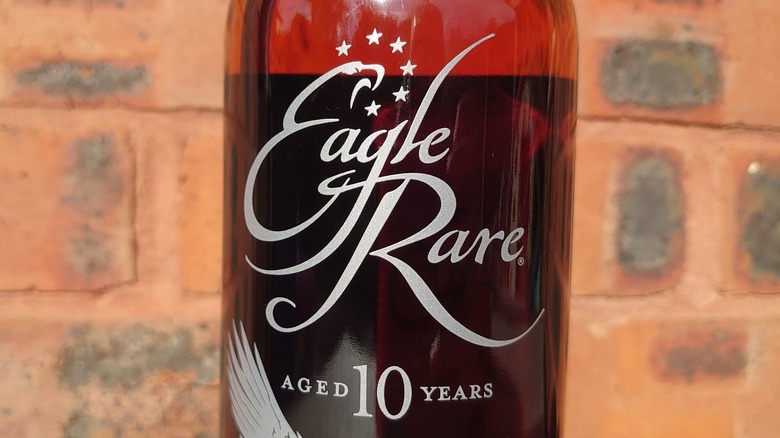
With just one look at the Eagle Rare 10-year bottle, you can probably guess what this bourbon is trying to achieve. It's elegant and graceful, hinting at the sophisticated liquid you'll find inside. As a bourbon enthusiast, I've had many interactions with this spirit over the years, along with others in the Eagle Rare range. Factor in my experience with countless other bourbons, and I believe I'm particularly well-suited to judge whether this expression is worthy of your time and investment. However, relying solely on past encounters wasn't enough for this article, so I acquired another bottle of Eagle Rare 10-year to ensure it still lives up to the standards I expected.
From the fabled Buffalo Trace Distillery, Eagle Rare holds the middle ground, elevated far above bottom-shelf bourbon but not quite reaching the heights of the distillery's most sought-after options. This allows drinkers to enjoy a premium tasting experience with a price tag that's affordable for most bourbon lovers. The result is a whiskey that finds an impressive balance between having an approachable character and deep flavor, where classic bourbon elements of vanilla and caramel are supported by a range of subtler notes. Below, I'll explore those tasting notes in greater detail and explain why Eagle Rare 10-year can be an excellent addition to your drinks cabinet.
History of Eagle Rare 10-year
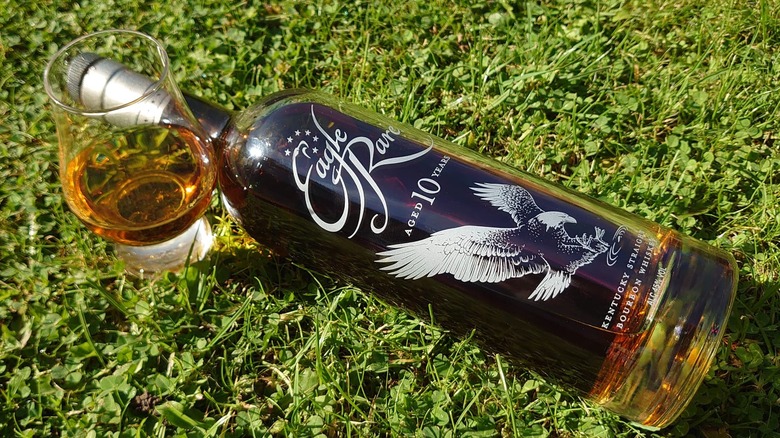
Many of the whiskeys I write about have a history stretching back to the 1800s. Born in 1975, Eagle Rare is a much more modern creation. However, despite being younger than many other brands, Eagle Rare has achieved a lot in its relatively short lifespan. The brand began as the brainchild of Jim Beam's grandnephew, Charles L. Beam. It was initially made at Seagram's Four Roses distillery and intended to be a luxury bourbon. Fourteen years later, in 1989, the brand was sold to Sazerac. Because Sazerac didn't have a distillery at the time, it moved Eagle Rare production to the Heaven Hill distillery in Kentucky and bottled the whiskey in New Orleans.
In 1992, Sazerac acquired the George T. Stagg distillery. Production of Eagle Rare was moved to the new site — later renamed the Buffalo Trace distillery — which has been its home ever since. The brand has also expanded over the years, offering a few different age statements. The original 10-year has been joined by the 17- and 25-year-old expressions, as well as the coveted 20-year-old Double Eagle Very Rare. Under Sazerac, Eagle Rare has been in the safe hands of the Buffalo Trace Distillery for over 30 years, and its recent release of Eagle Rare 12-year is a good sign that's unlikely to change anytime soon.
What does Eagle Rare 10-year taste like?
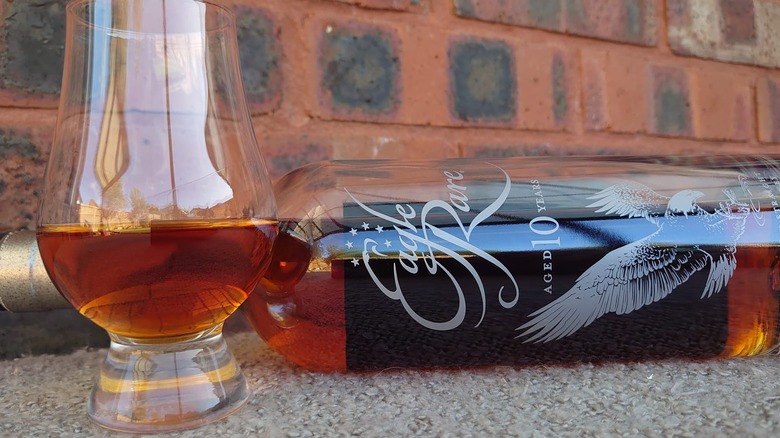
Simplistically, you can think of bourbons as existing on a spectrum — at one end, smooth and approachable; at the other, robust and powerful. Eagle Rare sits comfortably on the approachable side, though it does have a little kick. The nose is beautifully complex, with only a touch of vanilla, while it features a rich caramel and toffee quality. This is underpinned by the scent of toasted oak and clove-forward baking spice. When you detect the orange peel, everything combines to create a truly brilliant aroma.
Upon tasting, the first thing I noticed is how full and rich the mouthfeel is — something you typically only experience with well-aged bottles. This velvety texture allows you to truly savor the flavors to come. There's a pleasant sweetness in the form of vanilla and caramel, followed by more mouth-warming baking spices layered on a foundation of oak. I could also detect subtle hints of chocolate and almonds. There isn't a huge amount of nuance on the palate, but Eagle Rare is a whiskey that seemingly values elegance over complexity. The finish, however, is fantastic. Despite being a fairly soft whiskey, the finish is notably warm without any form of alcohol burn and lingers nicely until your next sip.
How is Eagle Rare 10-year made?
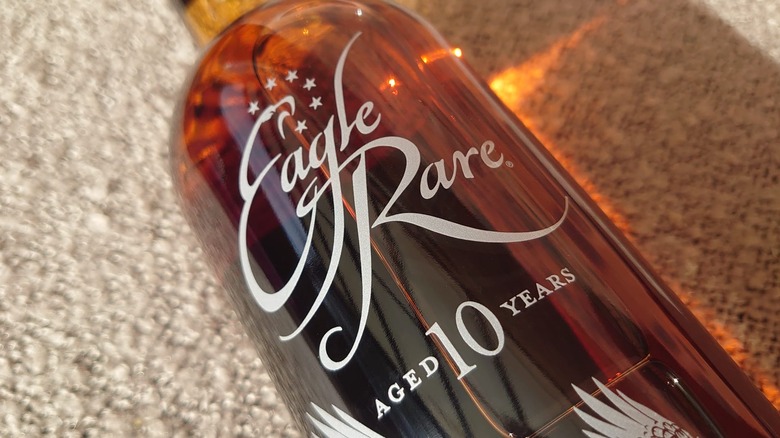
The Buffalo Trace distillery produces many of the world's best bourbons. Interestingly, the majority of its range relies on one of just four primary mash bills— these are the grain recipes that define a whiskey's character. There are two mash bills used for its standard high-corn, low-rye bourbons, and one apiece for its wheated and high-rye bourbons. Eagle Rare comes from Mash Bill #1, the same one that's used for the budget-friendly Benchmark Bourbon and for some of the distillery's premium brands, including E.H. Taylor and George T. Stagg. It's also the mash bill used to craft the distillery's eponymous flagship whiskey, Buffalo Trace bourbon.
A somewhat unique aspect of the Buffalo Trace distillery is that it has never publicly stated the exact grain ratios of these mash bills. However, upon tasting, it's fairly clear that Mash Bill #1 is a high-corn and low-rye recipe, featuring a small amount of barley. Despite many brands and expressions using the same base recipe, each develops a unique character thanks to differences in maturation time, aging conditions, and barreling techniques. This expression of Eagle Rare, for example, carries a 10-year age statement. That means the whiskey in the bottle must be at least that old. Throughout aging, the master distiller continually monitors the whiskey to ensure it's consistent with the flavor expected of Eagle Rare. Once the aging process is complete, the whiskey is diluted down to 90 proof (45% ABV) before bottling.
How to drink Eagle Rare 10-year
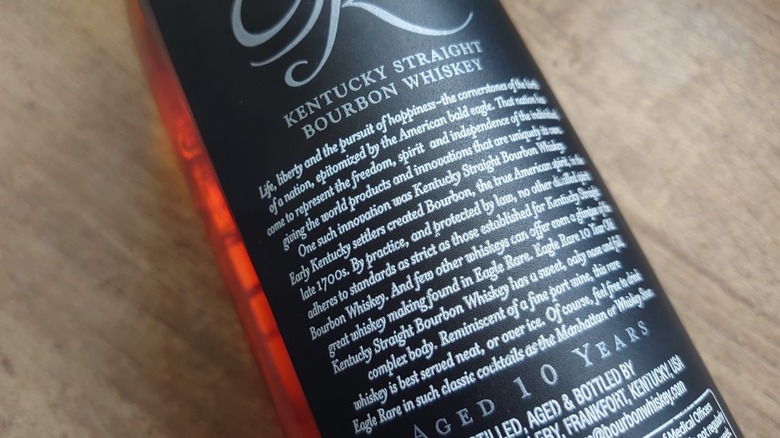
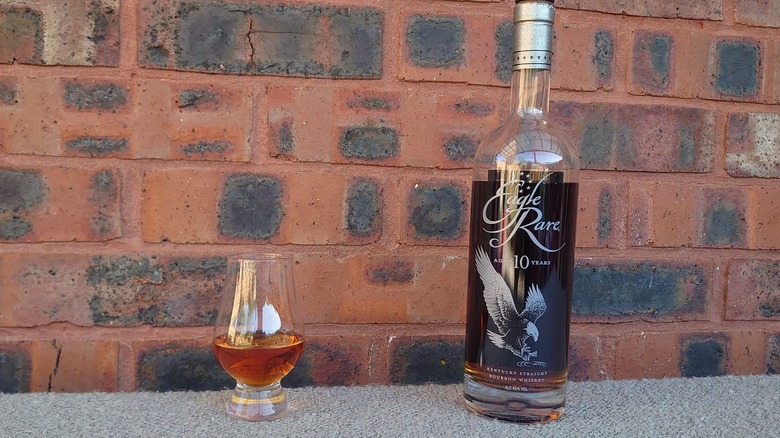
I usually lead with my own opinion at this stage, but I'll start by relaying how Eagle Rare tells us to drink its bourbon. The back of the bottle states, "This rare whiskey is best served neat, or over ice. Of course, feel free to drink Eagle Rare in such classic cocktails as the Manhattan or Whiskey Sour." That generally echoes my sentiments around how you should approach a bourbon like this. It's a spirit that deserves to be enjoyed without anything added, except, perhaps, ice. Eagle Rare works perfectly as a neat sipper, and if you prefer to enjoy your whiskey with a mixer, you may be better off choosing a cheaper everyday bourbon.
That said, it's your bottle, so you get to choose how you drink it. Eagle Rare 10-year undoubtedly has the ability to enhance whiskey-based cocktails, especially with its warm and lengthy finish. I typically take my whiskey neat, but adding ice on the first try can help temper the alcohol heat and open up new aromas and flavors. Once you've identified the more nuanced tasting notes, you should be able to rediscover them when you go back to drinking the whiskey without ice. Drinking bourbon from a Glencairn tasting glass is the best way to start, as the tulip shape concentrates the aromas and directs the whiskey perfectly onto the palate. Once I have a good grasp on the tasting notes, I like to switch to a premium tumbler. In summary, Eagle Rare 10-year is versatile enough to drink how you like, but the quality is definitely high enough for it to be regarded as a sipping whiskey.
Is Eagle Rare 10-year expensive?
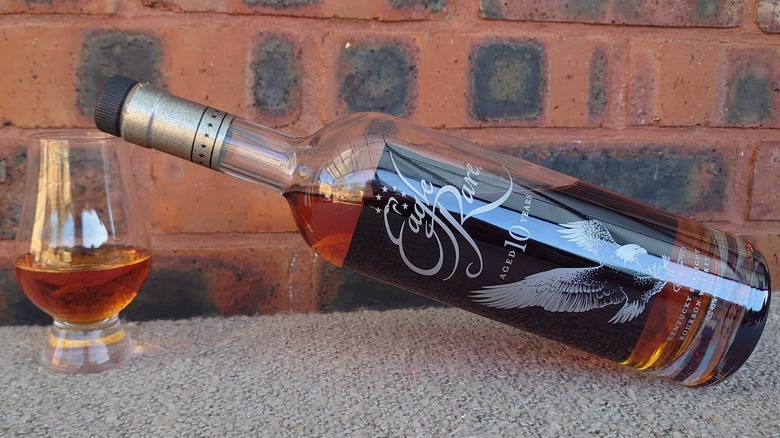
Whether Eagle Rare 10-year can be considered expensive depends on how easy it is to source a bottle. Availability has fluctuated over the years, with some regions seeing tighter supply than others. At the time of writing, it seems fairly easy to track down and appears to be hovering close to retail price. On average, you can expect to pay around $68 for a bottle of Eagle Rare, but it's possible to find it as low as $40. With that kind of variance, it's usually worth shopping around, especially if you're seeing it at the higher end of the price spectrum.
Personally, I'd say that paying anything less than $50 makes Eagle Rare excellent value for money. It's pretty hard to find bourbons with an age statement this high at such an affordable price, and it's comfortably one of the best bourbons out there for under $100. Its luxurious mouthfeel and richness of flavor are often only found in whiskeys priced significantly higher. There are plenty of fantastic budget bourbons out there if you're looking for something a little cheaper; however, if you want to treat yourself to a more premium whiskey, Eagle Rare 10-year is an excellent investment.
Eagle Rare 10-year vs Eagle Rare 12-year
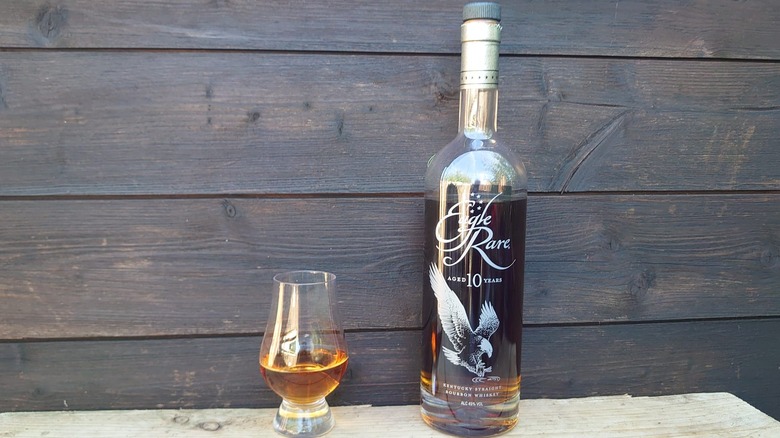
The Eagle Rare 10-year expression dates back to the brand's beginnings. Eagle Rare 12-year may be more mature from an aging perspective, but it's a baby in release terms, as it was only launched in June 2025. For the Eagle Rare brand, the newer expression acts as a bridge to its more premium bourbons — the 17-year version, for example, can retail on secondary markets for an eye-watering $2,000. And that's nothing compared to the asking prices for the 20- and 25-year-old expressions. Therefore, Eagle Rare 12-year serves as a higher-end offering for those without thousands of dollars to spend on whiskey.
With the same mash bill and just two extra years of aging, the difference between Eagle Rare 10- and 12-year isn't drastic, but it is noticeable. The latter has more oak on the nose, while the familiar notes of caramel, toffee, and spice are deeper and more well-rounded. On the palate, the earthiness is more pronounced, and flavors that are subtle in the 10-year are easier to distinguish in the more mature version. Eagle Rare 12-year also has a fruitier dimension, which greatly enhances its complexity. The new release is listed with a suspiciously low suggested retail price of $49.99, but I fear it might be hard to find for that amount. Hopefully, Buffalo Trace is able to meet demand so the 12-year remains affordable, as it's a brilliant whiskey and a worthy step up from the 10-year expression.
Eagle Rare 10-year vs Buffalo Trace
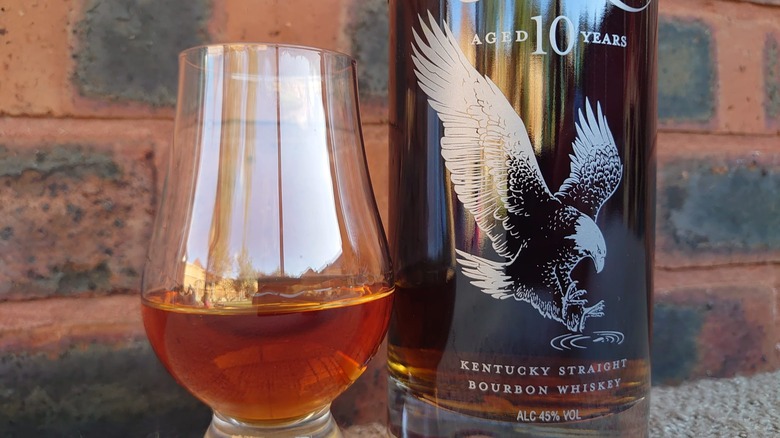
In many ways, Buffalo Trace feels like Eagle Rare's unofficial little brother. There's no age statement on Buffalo Trace bourbon, but the whiskey is generally believed to be around 8-10 years old. As I mentioned before, because Eagle Rare has an age statement, it needs to have been matured for a minimum of 10 years. With the same mash bill and similar maturation times, it's clear Eagle Rare 10-year and Buffalo Trace are closely related. Personally, I'm a huge fan of Buffalo Trace and feel it offers fantastic value for money.
Many of Buffalo Trace's qualities are shared with Eagle Rare. It's approachable, has a lovely range of sweet flavors, and is superbly balanced. One of the biggest differences is the mouthfeel. I'd describe Buffalo Trace as having a medium-to-light body, whereas Eagle Rare feels a lot richer. Much as Eagle Rare 12-year presents a more luxurious tasting experience compared to its younger sibling, the 10-year is a premium upgrade from Buffalo Trace. If you love this style of bourbon, you can't go wrong by having both bottles on your shelf. Buffalo Trace is versatile and works as an everyday bourbon while also being suitable in cocktails and combined with mixers. You can save Eagle Rare 10-year for those occasions when you want a more luxurious sipper.
Eagle Rare produces an incredibly beautiful bottle
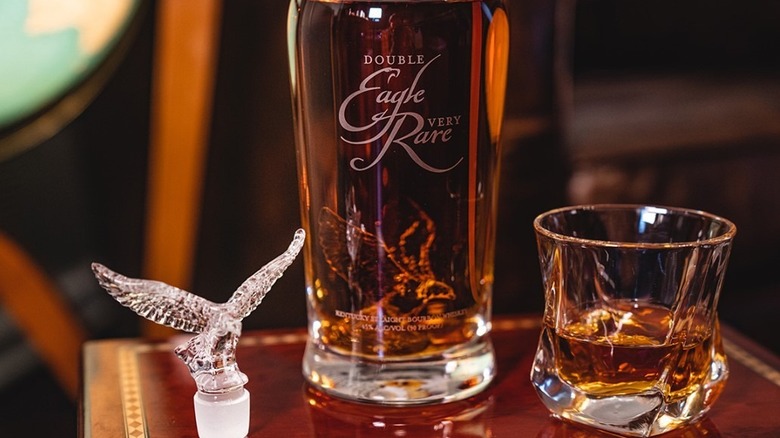
I'm often suspicious of mid-range spirits in fancy bottles. However, when you're paying thousands of dollars for whiskey, it's only fair that it's beautifully presented. This is very much the case with Double Eagle Very Rare, which, on secondary markets, is hard to find for less than $6,000. However, both the whiskey and its vessel are in a class of their own. Sadly, I've never owned a bottle of Double Eagle Very Rare, but I have sampled this fine bourbon and seen the bottle firsthand at Buffalo Trace's tasting room in London.
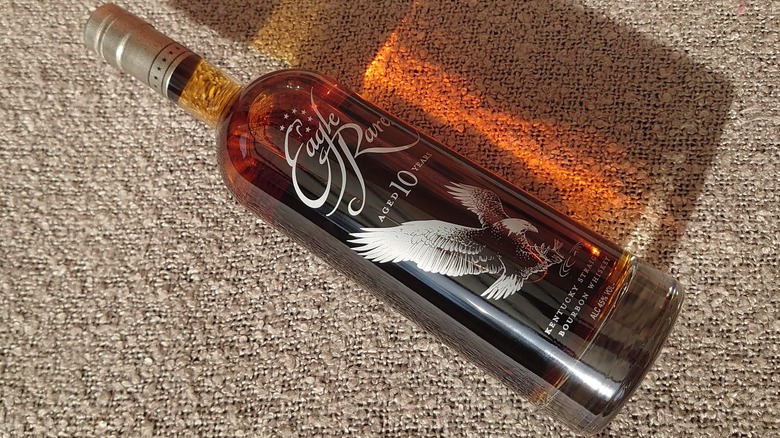
The first thing you'll notice is the stunning spread eagle on top of the bottle, which is impressive on its own. Upon further inspection, you'll spot something even more special — another majestic eagle inside, soaring up from the base. If that wasn't enough, the whiskey is also presented in a gorgeous silver box. You can see why wealthy collectors are happy to pay top dollar for this work of art. Even the entry-level 10-year bottle has an elegance to it, highlighting what Sazerac is trying to achieve with the brand. The liquid inside the bottle will always come first, but Eagle Rare succeeds in demonstrating that sophistication and craftsmanship can be showcased on the outside, too.
When the Eagle attacked the Turkey
Throughout the history of advertising, there have been some interesting battles between competing brands. The iconic clashes of Pepsi and Coke, McDonald's and Burger King, and Ford and General Motors spring to mind. While Eagle Rare's early marketing campaign may not be as famous as those companies', when it first launched, it went on the attack against the well-established Wild Turkey brand. In an early advertisement, Eagle Rare came up with the pithy tagline, "Carve the Turkey, Pour the Eagle." If that wasn't enough, the advert also stated that Eagle Rare was "the only 101 proof bourbon aged 10 years," in reference to the famous proof of Wild Turkey 101. That Wild Turkey expression was one of the most popular bourbons of the era, so it was a bold move.
Eagle Rare was meant to be a more expensive and refined version of bourbon. The initial campaign helped create a clear identity for Eagle Rare at a time when bourbon sales were falling and new brands needed to get creative to succeed. Today, the rivalry is effectively nonexistent. Since acquiring Eagle Rare in '89, Sazerac has never repeated Seagram's advertising strategy. Additionally, in 2005, the proof of Eagle Rare was dropped down from 101 to 90, so it no longer competed with Wild Turkey's unique proof. But did the bold tactic work at the time? Given how popular Eagle Rare remains, Seagram's must have done something right.
Eagle Rare was the victim of an audacious theft
In 2013, the Buffalo Trace distillery found itself in the middle of a story that came to be known as "Pappygate." Numerous bottles of coveted Pappy Van Winkle bourbon were stolen, but barrels of Eagle Rare went missing, too. Rather than being a dramatic heist, the theft was a calculated, long-running scheme in which valuable whiskey was stolen from the distillery over several years. Presumably, the perpetrators thought this approach would allow them to slip under the radar while they sold off the goods to make a profit.
Several people were implicated in the crime, but the main culprit was found to be an employee of the distillery, Gilbert "Toby" Curtsinger. In 2017, Curtsinger was sentenced to 15 years but only ended up serving 30 days before being released on parole. However, there's still some doubt over just how much whiskey he actually stole. In 2021, the story became part of a Netflix documentary series called "Heist," where Curtsinger admits to stealing bourbon. Interestingly, he denies having had any role in the Pappy Van Winkle theft that brought his crimes to the distillery's attention. It's possible he's lying, but perhaps there are people out there who got away with theft because Curtsinger took the blame. Precisely who stole what may never be known, but the whole affair is still another fascinating part of the distillery's story.
The distillery recently suffered a disastrous flood
It should be clear by now that the vast Buffalo Trace Distillery is home to many famous brands. As such, a disaster at the site could cause major disruptions across the entire bourbon industry. In April 2025, Frankfort, Kentucky, the home of the distillery, suffered the second-worst flood in its history. The crest of the Ohio River reached 48.27 feet, just inches below the record-breaking "Great Winter Flood of 1978." The flood forced the distillery to close to the public from April 5 until April 14. Thankfully, it seems that Buffalo Trace mitigated the potential fallout and quickly figured out how to clean up the mess. Around 37,000 whiskey barrels were affected, but due to the enormous scale of the distillery, that only accounted for about 4% of its 1.5 million-barrel stock.
Nevertheless, the flood was a huge headache for the business. All affected barrels had to be chemically tested, and cleaning crews worked around the clock to try and get everything back to normal. Guided tour routes had to be amended, but the distillery fully reopened to visitors within a month. By August, the distillery was running as smoothly as ever, after demonstrating impressive resilience in getting back on its feet so quickly. No details were given about the contents of the affected barrels or if the whiskey inside was impacted, so it's difficult to know what the long-term repercussions might be. However, given the incredible volume of whiskey produced at the distillery, it's unlikely that bourbon lovers will suffer.