

10 Bottom-Shelf Bourbons You'll Actually Want To Drink
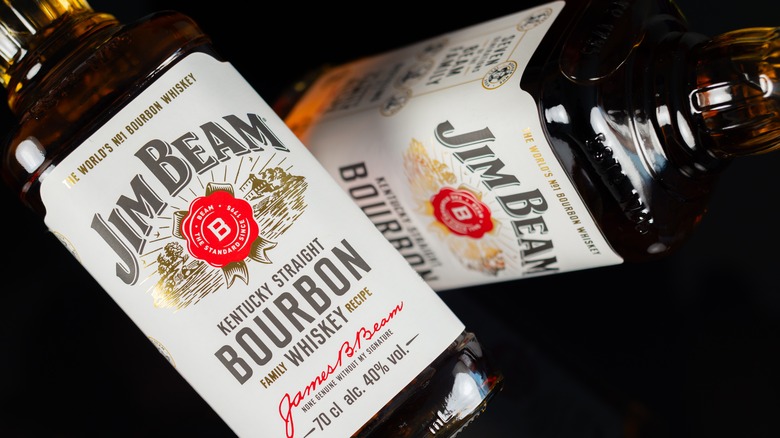
There are some bourbons out there that are just plain bad. Very little craftsmanship has gone into them, and it seems the whole point was to make a whiskey they could sell cheaply and as quickly as possible. However, not all cheap bourbon is created equally. Some are perfectly drinkable on their own or as a lovely addition to mixers or cocktails. Trying to find these bourbons yourself can lead to a lot of frustrating trial and error. That's where I wanted to help.
Here I'll showcase 10 bottom-shelf bourbons that are not only drinkable but ones you'll be happy to buy again. As a bourbon expert, I have a lot of experience in knowing which bourbons you should avoid buying and which ones are worth your time. I've tried all of these bourbons, and I'd happily drink these 10 again. For this list, my qualifier is that any bourbon needs to have an average cost of under $25. They show that the bottom shelf doesn't always mean bad, and those on a budget can still enjoy neat bourbon.
Evan Williams
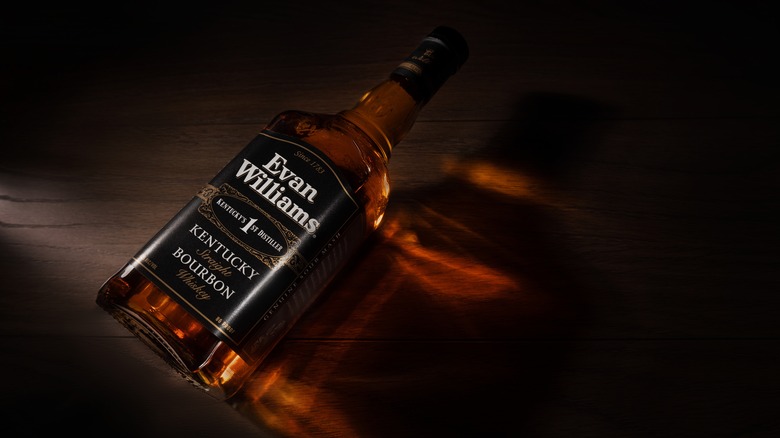
If you're new to bourbon terminology, you need to look out for the "straight bourbon" designation. One of the interesting facts about bourbon is that there is no minimum requirement. However, for "straight bourbon," it needs to be matured for at least two years. For any cheap bourbon to be drinkable, it really needs at least that level of aging. Evan Williams is such a bourbon, and it's one that always impresses when it comes to value for money. Its budget bottle may not be one of the best produced by the famous Heaven Hill distillery, but that's only due to the strength of its other expressions. It's a solid entry point into the world of bourbon and gives you insight into a classic bourbon profile. As with most of the bourbons here, there isn't a whole lot of depth, but it does the basics well.
That means having a nice caramel flavor with an enjoyable level of spice. Along with a little oak influence, it pleasantly sits on your taste buds. You may be able to pick out other sweet notes, but they aren't too prominent. As with most bottom-shelf bourbons, it's more about the quality of its tasting notes rather than the quantity of them. That quality makes it perfectly acceptable to sip neat but also makes it a good base for cocktails and mixers. It's a solid bourbon and one many fans will undoubtedly turn to when they want a cheap bottle.
Jim Beam
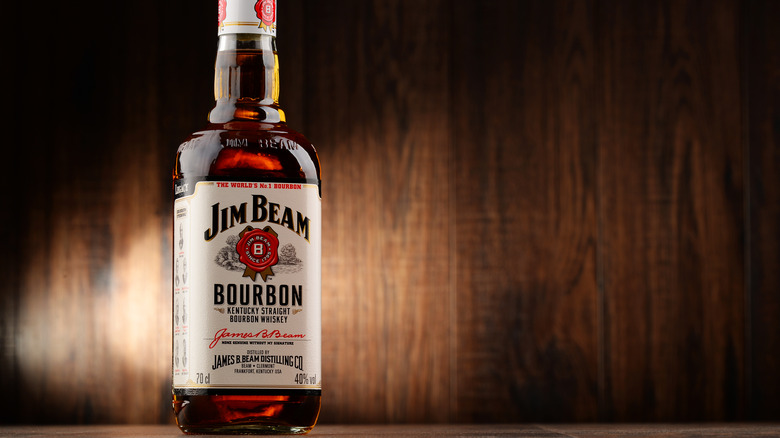
Jim Beam is one of the famous names in bourbon and has a long line of expressions, most of which are highly affordable. Its flagship bottle, often referred to as the White Label, may be low in price, but it's high in both stature and quality. A part of what makes it impressive is that it's aged for a minimum of four years, allowing it to develop more gracefully in the barrel and provide a range of flavors you often only see with mid-priced bourbon. The aroma offers you plenty of vanilla along with other sweet notes of corn and caramel. All of those notes carry through to the palate, and are joined by a gentle spice that underpins the tasting experience all the way through to the finish.
With a few more sips, you can taste a little of the oak influence. With poor-quality bourbon, the finish can be sharp and come with an alcohol burn. You don't get that here, and instead it's impressively clean. There's a reason it has maintained its iconic status among ever-evolving competition. It may be perfect for mixing, but it has a mellow flavor that can easily be enjoyed on its own. At an average price of $19, it's not the cheapest bourbon on this list, but one that you can always rely on.
Old Forester 86
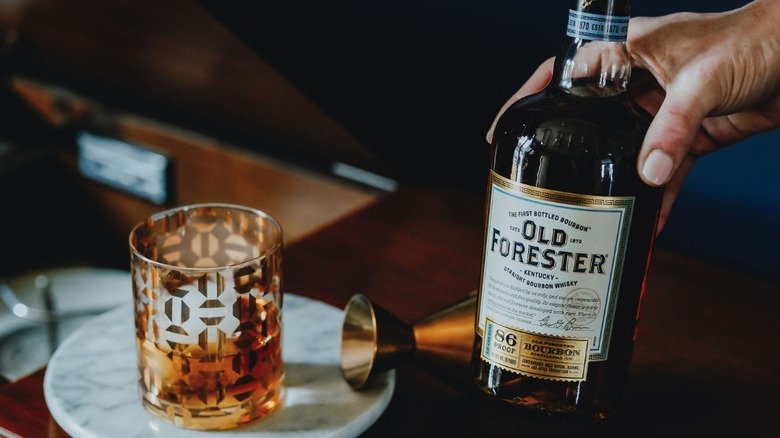
At an average of $23 per bottle, this is one of a few expressions that are close to our "bottom shelf" price threshold. Due to that, it's important to know what you are getting compared to whiskeys half the price. There is a term that is commonly used called an "everyday bourbon". This is used for quality bourbons that are good enough to be drunk often on their own, but don't have a high price tag. Therefore, you can drink them often without needing a special occasion to treat yourself. I think Old Forester 86 is such a bourbon as it matches the quality of many costlier expressions.
The name comes from its proof of 86, making it an approachable bourbon for those not used to tasting high-strength spirits. The palate is classically sweet with deep notes of vanilla and toffee being the most impressive. There is a touch of orange here, too, along with a slight oakiness. Cinnamon and nutmeg give it some spicy qualities that continue until its long finish. It does have versatility with other options of how to enjoy it, but it's a bottle you can truly enjoy neat. Considering that Old Forester has a long list of expressions to enjoy, it can also act as your gateway into this excellent whiskey brand.
Benchmark
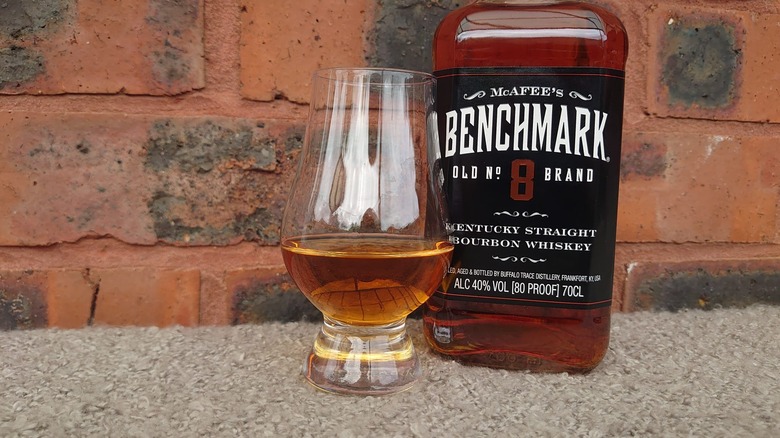
I haven't ranked this list, but if it were purely based on value for money, Benchmark could well take the number one spot at an average price of just $11. As with all the drinks here, its flavor is never going to blow you away, but you wouldn't feel short-changed if you paid double the price. Not only is it a bourbon that has a fascinating story, but it's one that you're likely to keep coming back to. I always enjoy trying new whiskeys, but there are some bottles that give me comfort in their reliable familiarity and quality. Benchmark is one of those.
Often called Benchmark No. 8 due to the branding on the bottle, it's produced by the famous Buffalo Trace distillery, who produce some of the most sought-after whiskeys in the world. At 80 proof, it shares features with a few others on this list that make it one of the best low-proof bourbons you can buy. It does have a little harshness, but you soon get a lovely caramel on the palate. The worst bourbons almost have an artificial taste, but there's none of that here. With some oak and tobacco notes, it has some of the qualities you find in much older bourbon. Of course, there is little complexity, but the taste is clean. You really can't ask for anything more from such cheap whiskey.
Four Roses
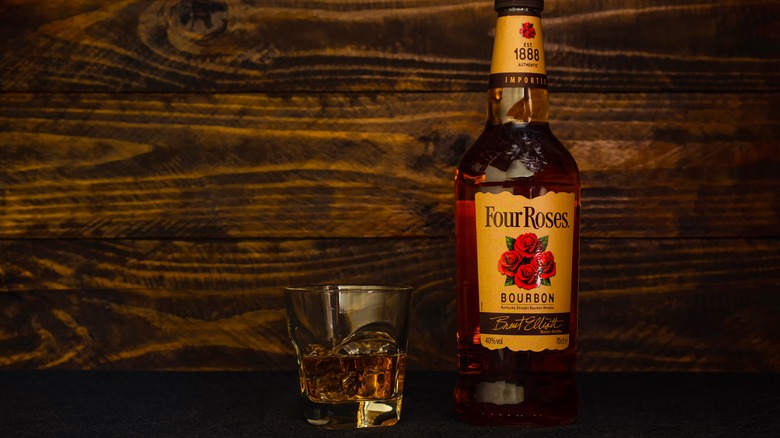
As we've seen with Old Forester, Four Roses is one of those bourbon brands that likes to offer a budget option along with its pricier offerings. It's a company with a fascinating history, which includes an intriguing mixture of mash bills and yeast strains. Commonly called the Yellow Label, this version of Four Roses is far from the worst whiskey you'd pick up from the bottom shelf. At an average cost of $22, it is on the pricier side in the context of this list, but it still gives you incredible value. A part of that extra bit of quality is evidenced in the nose, which has an elegant floral quality.
On the palate, you get a lovely combination of caramel and honey-sweet notes and baking spices throughout. There is a notable oak influence, too, but it offers a little burn rather than being an elegant edition. Importantly, the whiskey doesn't feel thin in your mouth and has a decent feel. It makes an excellent addition to mixers and cocktails as those flavors come through, but without dominating the drink. I personally feel as though there are a few better options at this price point, but it's still a solid low-budget whiskey that you won't regret buying. It may also be more suited to your tastes than mine, so it's always worth a try, especially at this price. Four Roses Yellow Label also gives you a good starting point to explore all of the other expressions from this famous brand.
Wild Turkey
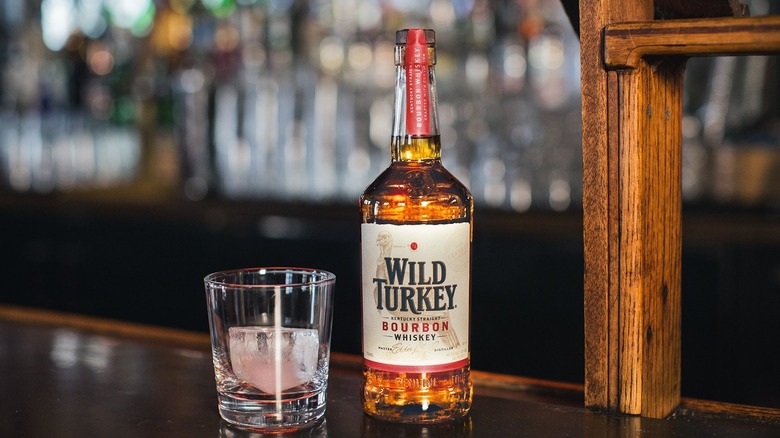
For those seeking an excellent, affordable bourbon, Wild Turkey 101 is always a great option. However, the price of the brand's most well-known bottle is usually a little above our $25 cut-off point. Instead, I'm here to celebrate its slightly less powerful sibling. The bottom-shelf bourbon comes at a proof of 81, making it an approachable and easy-drinking option for those new to bourbon. It shares many of the same tasting notes as the famous 101, but they are just a little more muted. It still has the same butterscotch on the nose, making it one of the finest-smelling bourbons here.
Once you've taken your first sip, you'll see how it nicely transitions from its sweetness into warming spice. That sweetness mainly presents in the form of brown sugar, with you being able to pick out the spices of both cinnamon and pepper. It has decent depth, and the warmth continues for a pleasant finish that will even stand out in cocktails. As I've said with a few others here, the budget gives you a good insight into how much you'll enjoy the rest of a brand's range. I like whiskeys that are a little spicier and warming than most, which makes Wild Turkey a go-to brand for me. Personally, I'll always opt for the 101 as it's only marginally more expensive, but at around $20 per bottle, you have little to lose by trying this bottle first.
J.T.S. Brown
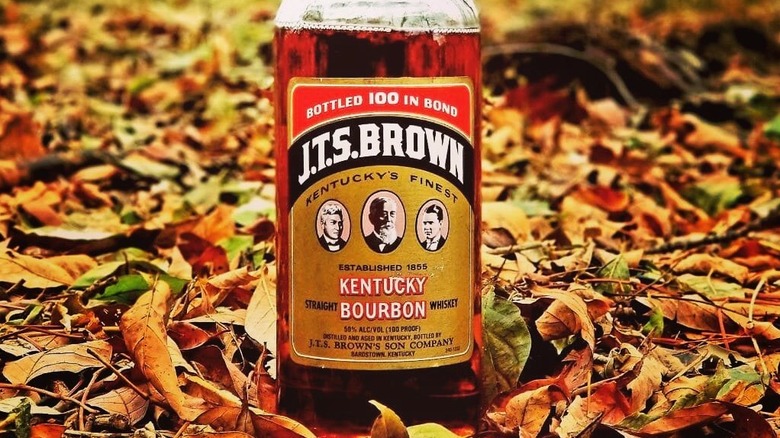
Often found under $10 a bottle, J.T.S. Brown is a true bottom-shelf dweller and can easily get lost in the midst of much worse whiskeys. What impresses with this bottle is its surprising balance. The cheapest whiskeys often feel skewed to one particular flavor, which can often leave a harsh or artificial aftertaste. You don't get much on the nose, but you will enjoy some soft notes of general sweetness. It's hard to pick out individual notes, but you do get hints of vanilla and caramel. The palate is never going to blow you away with flavor, but it is surprisingly smooth. You'll get an initial hit of brown sugar before getting a muted spice kick. The finish is short, but not unpleasant.
It probably doesn't have the quality of an everyday sipper, but it still can be enjoyed that way. Where it most shines is as a base for other drinks, especially if you don't want the whiskey to dominate them. The mellow profile and lack of harshness here make it a great addition to a classic like an Old Fashioned or simply with cola. If you're struggling for money and still want an enjoyable bourbon, J.T.S. Brown won't let you down.
Ezra Brooks 99 Proof
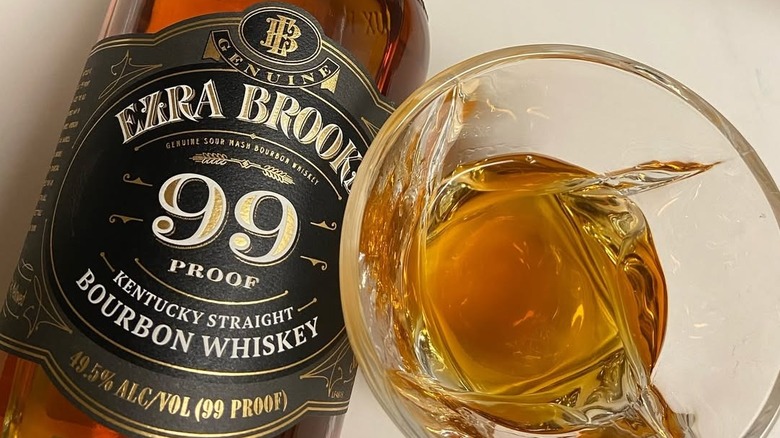
Ezra Brooks 99 Proof is a step-up in quality from the likes of J.T.S. Brown, but also a significant step-up in cost. At an average price of $24, this will appeal to anyone looking for a higher level of quality but without the budget for the mid-range level. For that extra cost, you get a bold and rich bourbon that is a great addition to any home bar. It serves as a great bourbon for those who casually enjoy the spirit, along with being suitable for those who want a bit more power in their cocktails. At 99-proof, it's powerful but without being overwhelming for beginners.
Here, you get some fairly unique notes on the nose, especially in the form of toasted oak and cherries. Upon tasting, you'll instantly notice its heavier mouthfeel, which is a common sign of a more developed bourbon. The tasting notes are nothing special, but all the individual flavors, such as brown sugar, cinnamon, and vanilla, are well-developed. Added to these, you get a nice earthy undertone with a peppery finish. It's a bourbon that has a little bit more to it than many of its slightly more expensive rivals. It's smooth enough to be sipped neat and has a bold flavor that can be a good gateway to even more robust bourbon.
Henry McKenna Sour Mash
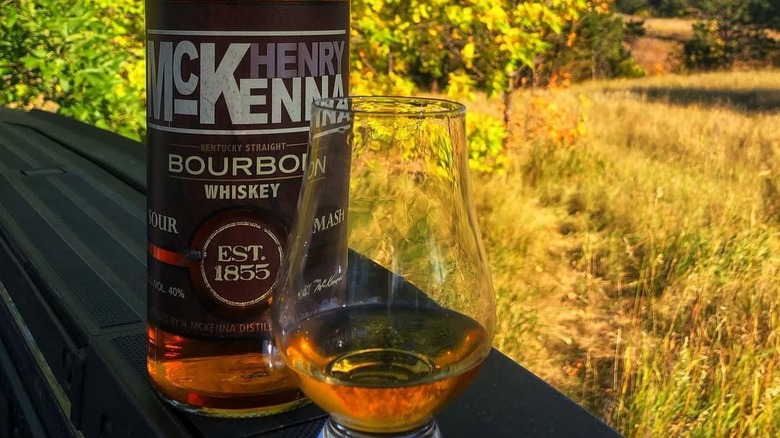
Henry McKenna is a name more synonymous with producing one of the best single-barrel bourbons, but it also has an impressive budget version. With a few exceptions, this bourbon follows many on this list by being low proof. At 80, it's incredibly approachable but still has enough character to shine. That does extend to a significant lightness on the aroma. You do get some caramel and vanilla, but overall, it doesn't offer much here. If you thought that lack of notes would lead to a bad whiskey, you may be pleasantly surprised. As with the nose, the mouthfeel is a little thin but does present a nice range of sweet flavors.
It doesn't go beyond the classic bourbon notes, but you get some nice honey and vanilla. A very gentle spice underpins the tasting experience to leave a clean finish. While it doesn't hugely impress in depth of flavor, it does impress in its smoothness and clarity. It makes it an ideal choice for casual drinkers or those who are new to the spirit. I think that shows what happens when high-quality craftsmanship meets a lack of aging. Bourbon lovers will no doubt be craving a little more depth, but for most people, it's a perfectly acceptable sipper.
Very Old Barton
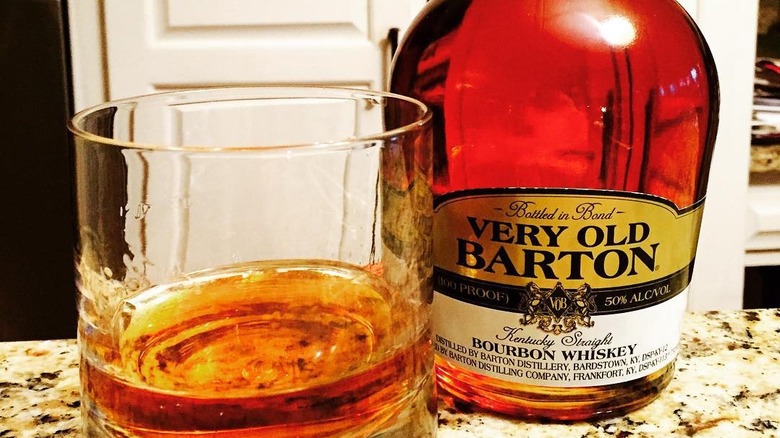
There is a charm that comes with Very Old Barton. The whiskey itself may be very old, but the bottle and the taste are a bit of a throwback. What most of the bottles here have in common, including Very Old Barton, is that they are bourbons you can keep on hand for casual sipping or quick mixing. With a cost of around $15, it punches well above the price point. The sweet vanilla aroma is lovely and is joined by some caramel and toasted oak. It has one of the nicest smells here, and it continues to impress on the palate. It's a smooth whiskey while also offering a decent mouthfeel.
Brown sugar is the most unique sweet flavor, and it's also joined by a gentle oak that is missing in most young whiskeys. When you add some baking spices and a peppery kick into the mix, there is some decent depth here. Of course, it doesn't have the complexity of higher-end bottles, but it competes well with those in the mid-price region. All of the whiskeys here may differ slightly, but they all show that budget doesn't equal bad. Very Old Barton is another bottom-shelf bourbon you'll happily go back to.