

Popular American Foods With Totally Different UK Names
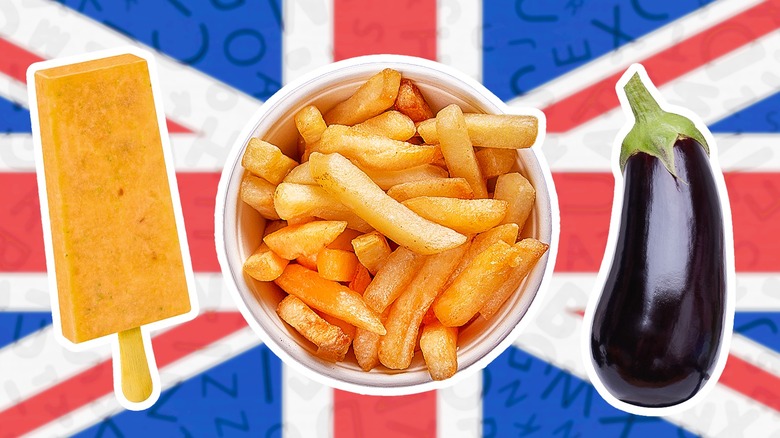
We love learning more about the world through a culinary lens. It's both intriguing and delicious to taste different cuisines, find out about cultures via various dishes, and let our appetites navigate our travels. But it's also interesting to do some of this learning in the context of differences between American dishes and international dishes, or even simply in the language around these dishes. For example, did you know that there's a plethora of American foods that are relatively the same in the United Kingdom but that are called totally different names?
Yes, we love actual U.K. food — there are plenty of must-try English dishes, notable foods from Scotland, and Welsh meals worth hunting down — but it's undeniably fun to find out what some of the most familiar American ingredients, dishes, and snacks are referred to as across the pond. Use these Briticisms to spice up your vocabulary, or so that you know how to ask for something when visiting the U.K.
US name: arugula / UK name: rocket
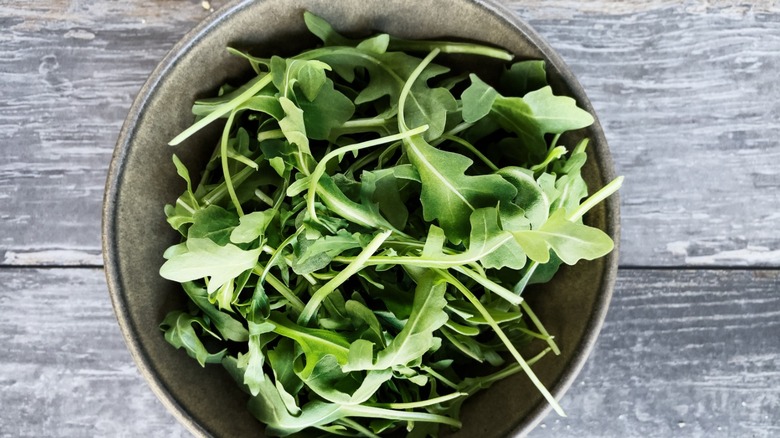
How much more fun does a citrusy rocket salad sound than a citrusy arugula salad? We know this zesty, spicy green as arugula, but we're just about the only English-speaking country to call it that. The plant is indigenous to the Mediterranean, and was referred to thousands of years ago by the Latin eruca, which translates to caterpillar in English, possibly because caterpillars love to munch on this green. Over centuries, as the word and the plant itself made its way to other countries, the terminology evolved. In Italy, it was called rucola, aruculu, or ruchetta, depending on the region. When ruchetta reached France, it became roquette, which became rocket in England. We use the arugula name in the United States because we know about this plant from Italian immigrants coming to America in the 19th century, and their aruculu and rucola terms simply stuck.
The next time you're making any of the many tasty recipes with arugula, try calling it rocket to your kids — it sounds much more fun, and they just might finally eat their greens.
US name: eggplant / UK name: aubergine
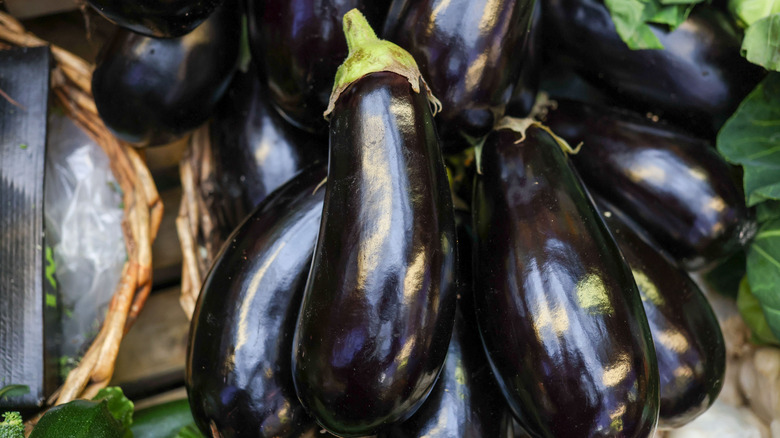
Despite historians' research suggesting that eggplants have been around for thousands of years in places like India and China, the plant didn't reach America until the 18th century when Thomas Jefferson brought some seeds back home from France. Here in the U.S., we decided this foreign plant literally looked like the plant of an egg, because there is a white variety that can resemble a large egg growing from a stem. But for centuries before that, Brits had been using the French term for this fruit — aubergine. The French got this from the older Indian name, brinjal, which derived from the even older Arabic name, al-badinjan. The color aubergine is a dark, brownish purple that was named for this plant, and eggplants in that shade are more common than white ones. While eggplant is a nice simple name, aubergine now actually makes more sense because of the color. Baked aubergine parmesan, anyone?
US name: french fries / UK name: chips
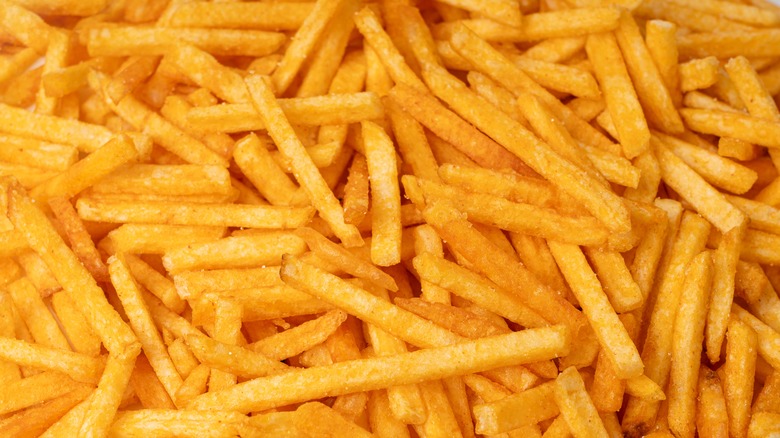
French fries versus chips is one of the more confusing food-name divides because you can order either with a burger or sandwich. An American in England might truly want what they consider chips, picturing well-known chip brands like Herr's or Lays, and they'd be surprised when a plate of fries hit their table. On the other hand, an English tourist in the U.S. would feel just as dismayed to get a side of fries instead of crisps (more on that later). Why do the British call fries chips? Because of the original way they were made: In the 1800s, people in England would just chip off chunky potato pieces and fry them. That name hung on in the U.K., but it also means that Brits only consider thicker, steak fry-style fries chips. Skinny iterations like shoestring fries or McDonald's fries are also known as fries in England, just to add another layer of confusion.
US name: chips / UK name: crisps
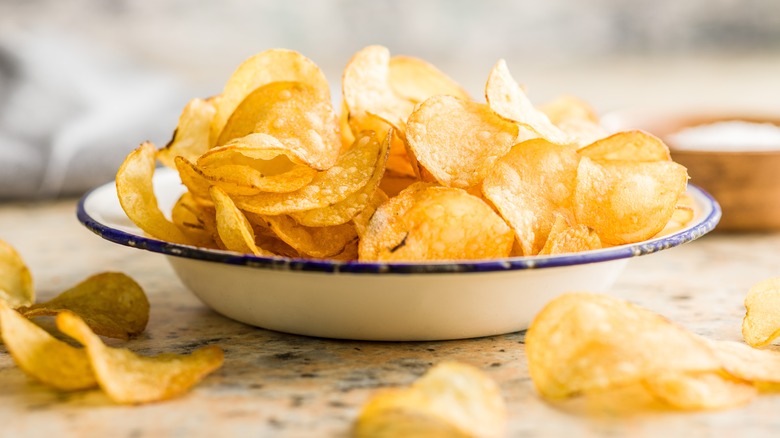
As mentioned above, British people refer to what we consider chips as crisps. Chips, of course, has already been taken by fries. So if you're heading to the U.K., prepare to ask for both fries and chips differently, as chips and crisps, respectively.
The origin story of potato chips is hotly debated, but it's believed by many that they were an American invention in the 19th century. When the smash hit snack item made its way to Britain, the potato chip moniker was already in use, so Brits simply named this food item for its number one characteristic: crisp.
US name: baked potato / UK name: jacket potato
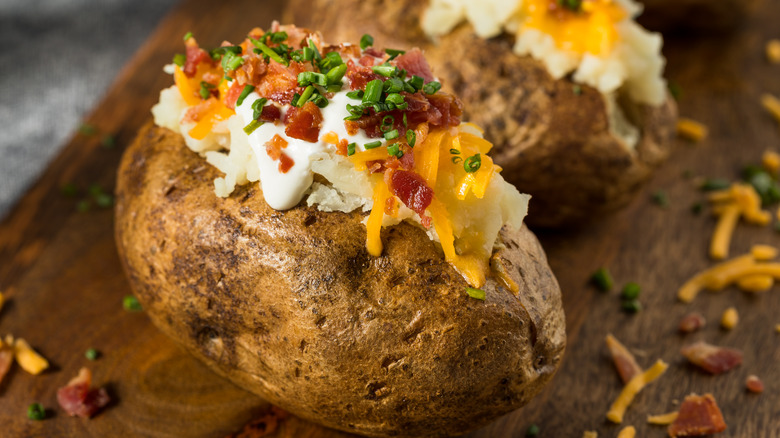
Speaking of spuds, did you know Brits call baked potatoes jacket potatoes? They are not, by the way, referring to potatoes wearing little coats — though that would be adorable — nor are they referring to potatoes specifically made to keep in your jacket pockets for whenever you're feeling peckish. The jacket part simply refers to the potato's skin, which is of course left on when prepared this way.
There are subtle differences in the way Americans make baked potatoes and how Brits make jacket spuds. The latter bake the potatoes for an hour or more so those jackets are extra crispy. For this reason, jacket potatoes specifically have been catching on in the U.S., including the British penchant for lots of tasty toppings. But for a true English jacket potato, load your spud with baked beans.
US name: cilantro / UK name: coriander
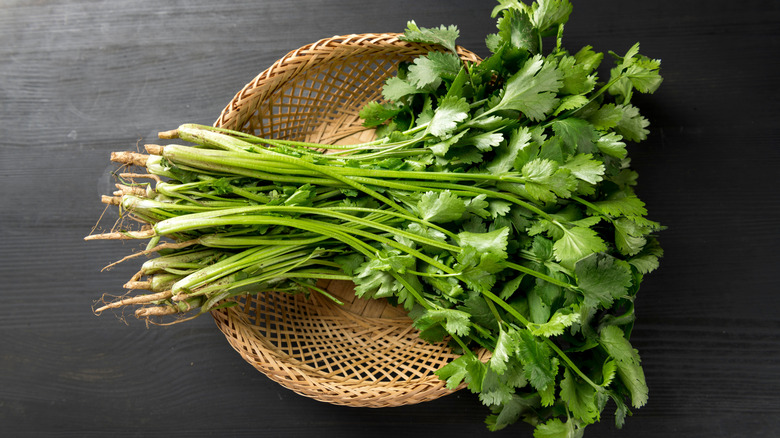
Here in the United States, we distinguish cilantro from coriander by referring to its different parts with different names. Cilantro is the green, leafy part we expect to find sprinkled fresh over fish tacos, while coriander is the ground spice we more associate with an Indian dish like chicken biryani. But in the United Kingdom, the whole kit and caboodle is referred to as coriander. This divide is believed to be a language one: U.K. English speakers call the entire plant coriander, derived from the French name for it, coriandre; American English speakers save that for the seeds and call the leaves and stems cilantro because that's the Spanish name for the plant. It's likely that more Americans experienced cilantro for the first time in Mexican cuisine, so learned it by its Spanish label.
US name: cookies / UK name: biscuits
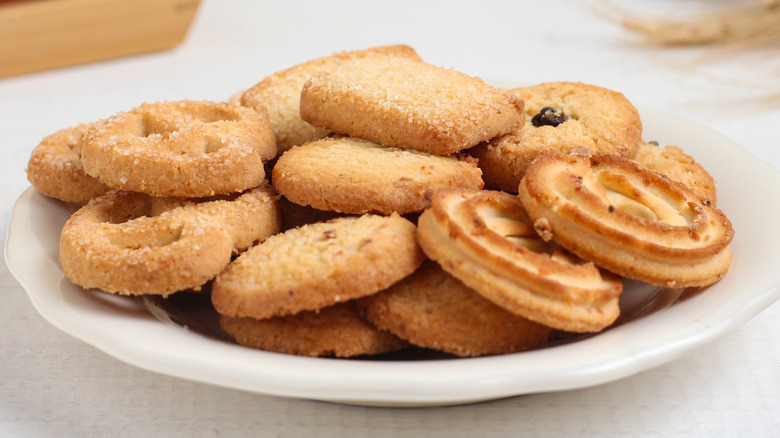
Offer an American a biscuit and they'd picture a fluffy, buttery, Southern-style quick bread in the form of a bun. Offer a Brit a biscuit and they'd imagine a crisp cookie like gingerbread, shortbread, or grahammy "digestive biscuits" possibly covered in chocolate. Both interpretations are delicious, but it's crucial to know the difference if you want to satisfy a specific craving in one country or the other.
The British biscuit got its name from the French bescuit, meaning twice baked. The French word is derived from the Latin words meaning the same thing, bis for twice and coquere for cooked, which is also where Italians got biscotti from. But as the Dutch settled Manhattan in the United States in the 17th century, they brought the Germanic-rooted moniker koekje, meaning little cake. That's the one that stuck for Americans, especially since biscuit came to be associated with an entirely different food. In the U.K., a cookie that's more cakey or ooey-gooey with chocolate chips or other mix-ins is likely to be called a cookie, too.
US name: biscuits / UK name: scones
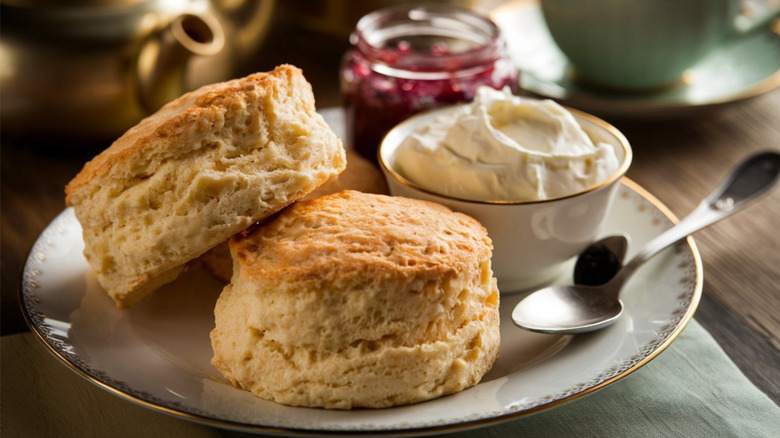
If Brits use biscuit for crisper cookies, what do they then call something more akin to our biscuits here in the States? This is where scones come in. American biscuits and English scones are pretty similar but have a few differences. They're both quick breads but the former developed with the Southern tradition of adding buttermilk so they're fluffier and more buttery while the latter employ eggs and milk or heavy cream to achieve a denser and more crumbly texture, and tends to use both baking powder and self-rising flour for a swift rise. Scones also often feature added ingredients like dried fruits, in which case they'll be called fruit scones. Here in the U.S., we ourselves distinguish the two, still referring to the non-buttermilk, denser baked goods as scones.
US name: zucchini / UK name: courgette
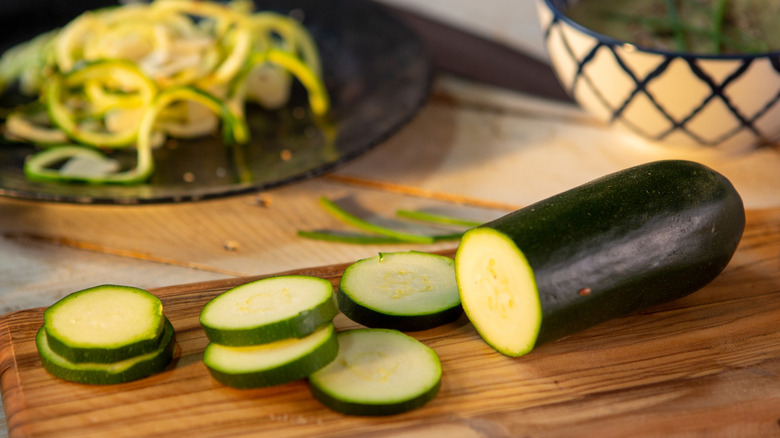
Your classic zucchini bread would be referred to as courgette bread in the U.K., which admittedly has a nice ring to it. The reason we call this squash zucchini and Brits call it courgette stems from a difference in the more dominant influencing languages in each country — which, you may have noticed, is a common theme for most of these discrepancies.
When squash made its way to Europe from its native Central and South America around the late 1400s, Italians christened it zucchini and the French called it courgette. The latter stuck in the U.K., but the former traveled to America via a flood of Italian immigrants in the 19th and early 20th centuries.
US name: cotton candy / UK name: candy floss
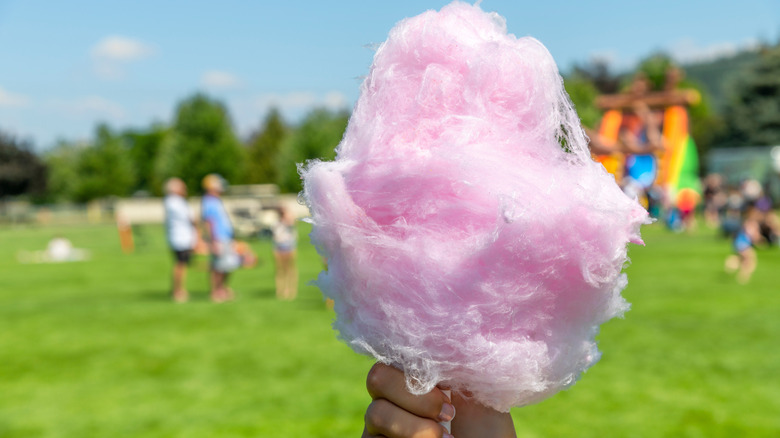
It's hard to imagine a better name for cotton candy than, well, cotton candy. This spun-sugar treat literally looks and feels like airy, fluffy balls of cotton. But in the U.K., it's called candy floss. It's easy enough to see the connection, considering the sweet is crafted from delicate, floss-like strands of sugar. But it feels a bit strange when you're not used to the term to call a candy by the thing we use to clean our teeth and avoid candy-caused cavities.
Our differing names for this cloud-like candy exist because the treat evolved pretty separately in each country. People have spinning sugar since medieval times, and it became known as candy floss in England simply because of those sugary whisps (this is a long time before dental floss was a thing). Meanwhile in the United States, John Wharton and William Morrison invented a machine to spin sugar into a cotton-like confection in 1899. Fun fact: Morrison was both a candy purveyor and a dentist, which not only feels like some sort of oxymoron, but also seems like a match more fitting to the U.K.'s candy floss moniker.
US name: shrimp / UK name: prawn
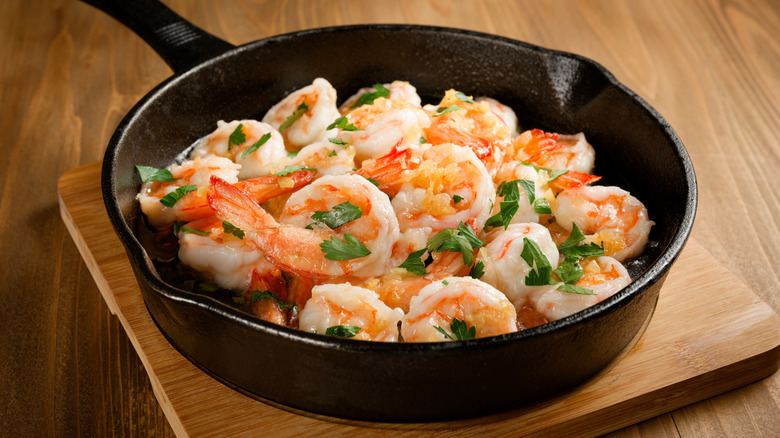
The shrimp-versus-prawn debate is probably the most confusing of any of these foods with different names. The main baffling factor is that shrimps and prawns actually are two different things. They're both decapod crustaceans and look and taste similar. However, shrimp tends to be found in saltwater and prawns in freshwater, while prawns are thought to be bigger than shrimps, but that's not even a hard and fast rule free of exceptions. To conflate things further, both shrimp and prawn terms originated in England, but many Brits just use the latter no matter what, and Americans tend to use shrimp as their go-to, though may utilize prawn for extra-large shrimps. There's not a whole lot of rhyme or reason in what to use when, essentially. But if you love a good old fashioned shrimp cocktail, be prepared to ask for a prawn cocktail in Blighty. In fact, prawn cocktail flavored crisps (that's chips to us Americans, remember) are a popular U.K. snack.
US name: Jell-O / UK name: jelly
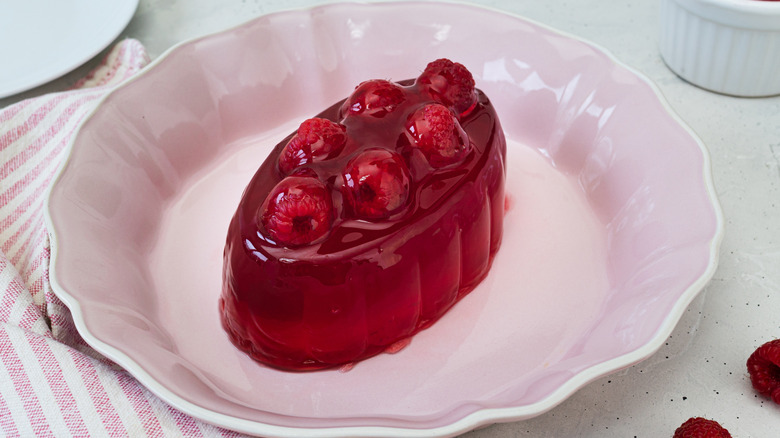
Do you know the difference between jelly and conserves or between marmalade and jam? If you do, you might better understand why Brits call Jell-O jelly. Here in the States, we tend to interchangeably refer to any kind of fruit spread as jam or jelly. Even if it's homemade, we call the fruity, gelatin-based, jiggly dessert by the brand name Jell-O. But in the U.K., the taxonomy of sugary, fruity spreads is better known and implemented.
Jam, specifically, is made from pureed or chopped fruit cooked with sugar and will be a loose consistency but with texture from small fruit bits and seeds. Preserves have bigger pieces of the actual fruit, and marmalade is a preserve most usually made with bitter Seville oranges and includes pieces of peel, although it can be made with any citrus fruit. Jelly, meanwhile, has a base of fruit juice cooked with sugar, some kind of acid, and sometimes added pectin or gelatin for a finished consistency that's smoother than jam or preserves and has a bit more jiggle to it — think of cranberry sauce still in the form of its can. When you learn this, it makes sense why English people reserve jelly for Jell-O.
US name: popsicle / UK name: ice lolly
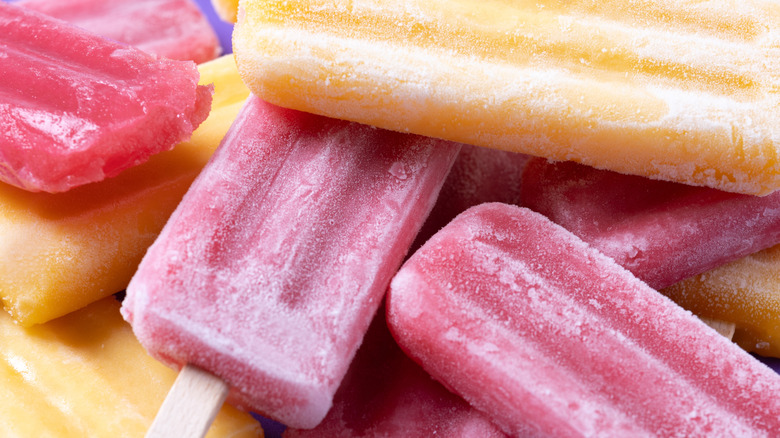
Nothing is more refreshing in the summer than a popsicle, so if you're planning on being in the U.K. on a hot day, you'd better know how to properly request one. Across Britain, frozen fruit or cream desserts on wooden sticks are called ice lollies.
Popsicles were invented accidentally by an 11-year-old boy in the United States, so Americans can claim some authority on the name. It was 1905 when Frank Epperson forgot his batch of water and sweet soda powder with its mixing stick outside on a winter night and came back to find a delicious treat. These popsicles hit the U.K. by the middle of the 20th century and, frankly, who could argue with the name ice lolly? It might not be the original moniker, but it makes perfect sense considering the popsicle's resemblance to a chilly lollipop. And, besides, it seems the popsicle has many different regional names, from ice pop to freezie.
US name: sausage / UK name: banger
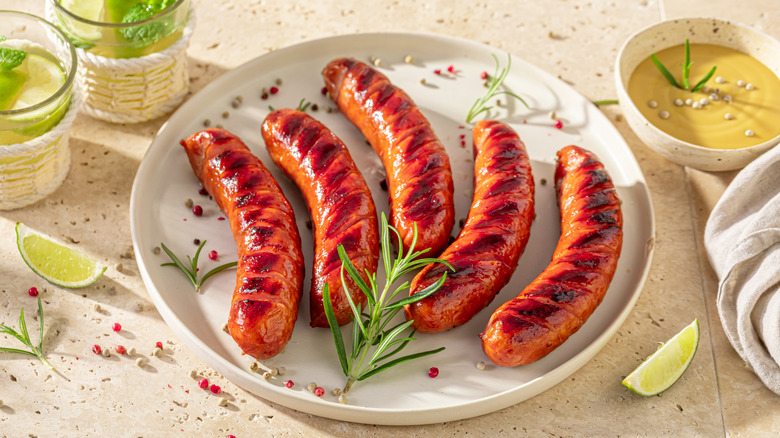
If you've ever heard of bangers and mash, this is not a suggestion to listen to some really good, catchy tunes while eating mashed potatoes. In the U.K., sausages are often referred to as bangers, though not in every single context — the specific dish bangers and mash is where you'll most likely hear it.
While there are all kinds of different sausage varieties, banger doesn't refer to a specific recipe or meat. It's a colloquialism for sausage in general, believed to have originated from the sounds sausages make when they cook. They tend to pop and bang when they heat up, or even partially explode, as British World War I soldiers learned and joked about with the bangers name. If you want savory sausages with comforting mashed potatoes, be prepared to ask for the dish by its proper name. You can even easily make bangers and mash at home.