

Pan-Seared Swordfish With Lemon Butter Sauce Recipe
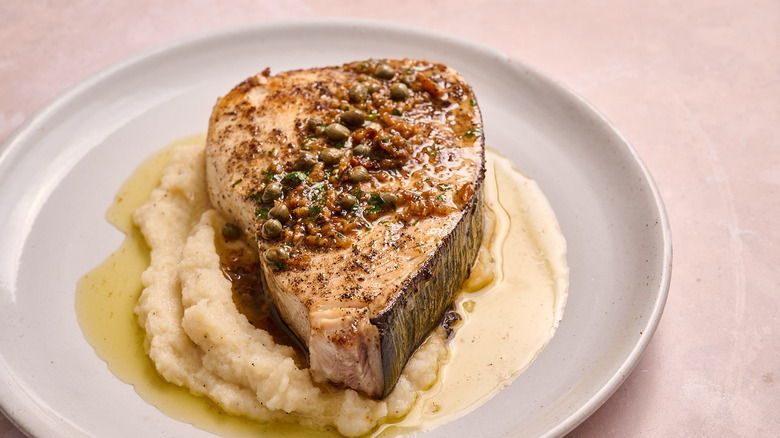
Swordfish is a unique fish named for its long, pointy nose that, because of its speed, size, and natural habitat, is hard to catch in the wild. This makes swordfish one of the more expensive fish on a menu, with a covetable texture to justify the price tag. Somewhere between the buttery flakiness of halibut and the dense richness of tuna steak, the swordfish has a uniquely meaty texture with a rich and buttery taste. You won't find swordfish on just any menu — the fish is most often found in high-end restaurants or featured as weekend specials.
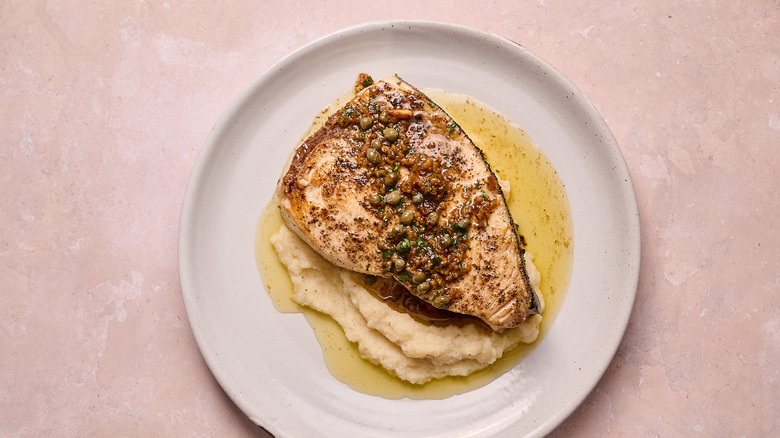
You don't have to plan a date night in order to indulge in a seared swordfish steak. With the help of a reputable fishmonger, you can make it at home with just a few simple ingredients and a frying pan. In this recipe written with developer Michelle McGlinn, swordfish is seared to a perfect golden brown and then coated in a buttery lemon pan sauce. Complete with garlic, parsley, and capers, this swordfish recipe is the perfect way to taste elegance at home — all it needs is a glass of wine to go with.
All of the ingredients needed to make a pan-seared swordfish with lemon butter sauce
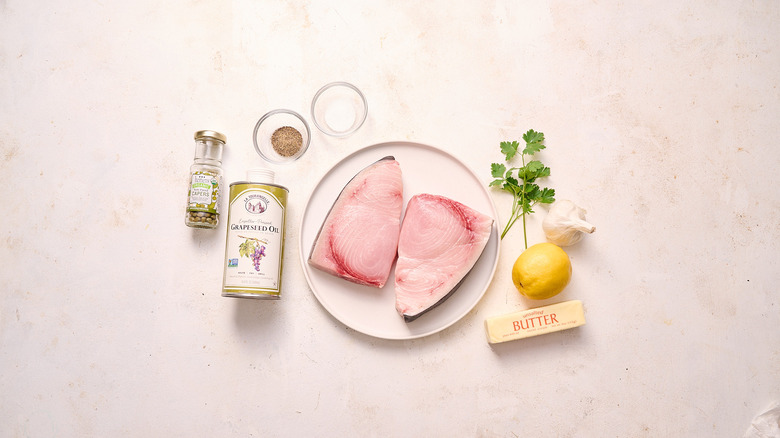
Swordfish is sold as meaty steaks, usually about 1 inch thick or more. About 6 to 8 inches long, each steak can comfortably serve 2 people, so we recommend buying 2 steaks to serve a group of 4. From there, you'll need salt, pepper, and oil to sear the steaks, then butter, lemon, capers, garlic, and parsley to finish the pan sauce.
Step 1: Pat the fish dry
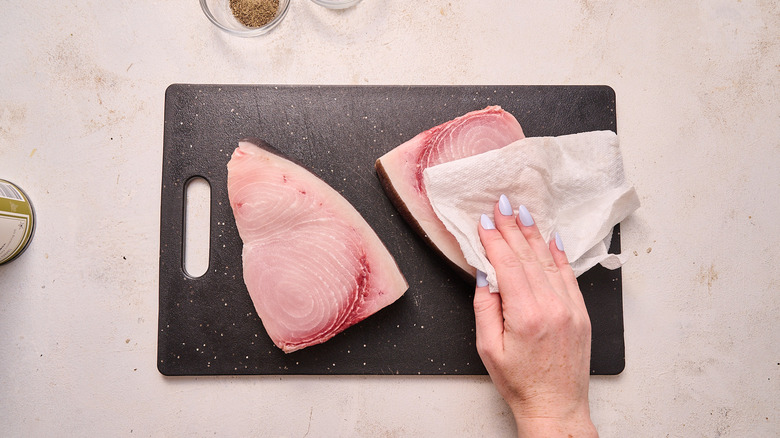
Pat the swordfish completely dry using a paper towel.
Step 2: Season the fish
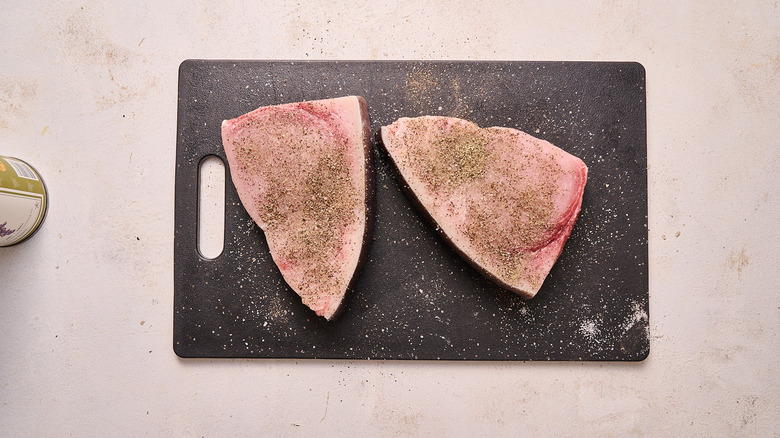
Season it on either side with salt and pepper.
Step 3: Heat up a skillet
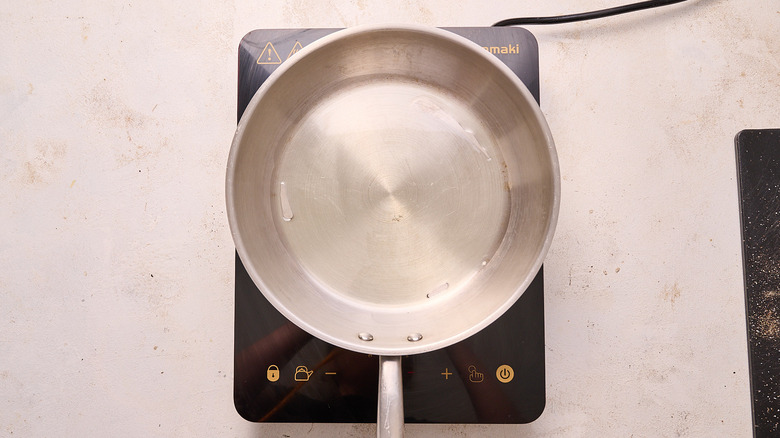
Heat the oil in a skillet over medium heat.
Step 4: Sear the swordfish
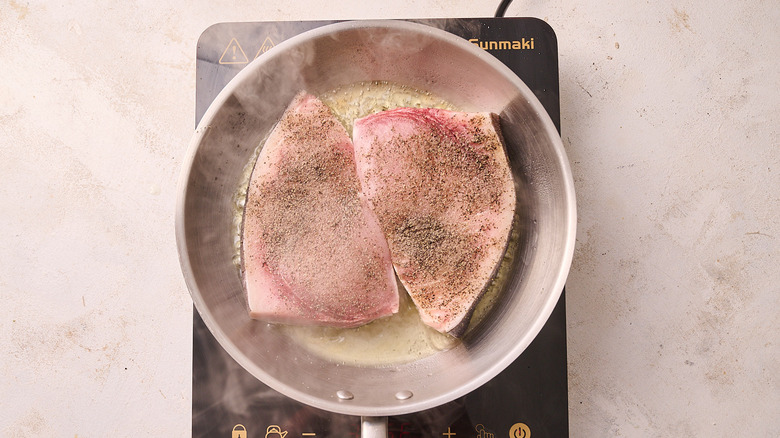
Once the oil is shimmering, add the swordfish. Cook until browned, about 4-5 minutes, then flip to the other side.
Step 5: Flip and baste with butter
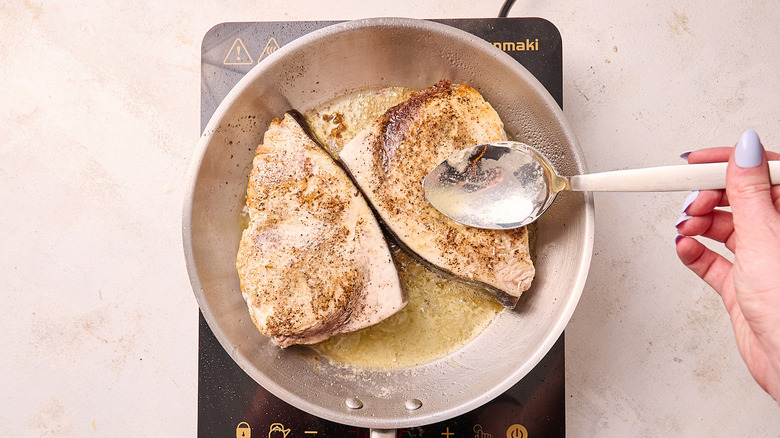
Add 1 tablespoon of butter. When the butter melts, tip the pan towards yourself and use a spoon to baste the swordfish with the melted butter.
Step 6: Remove the swordfish
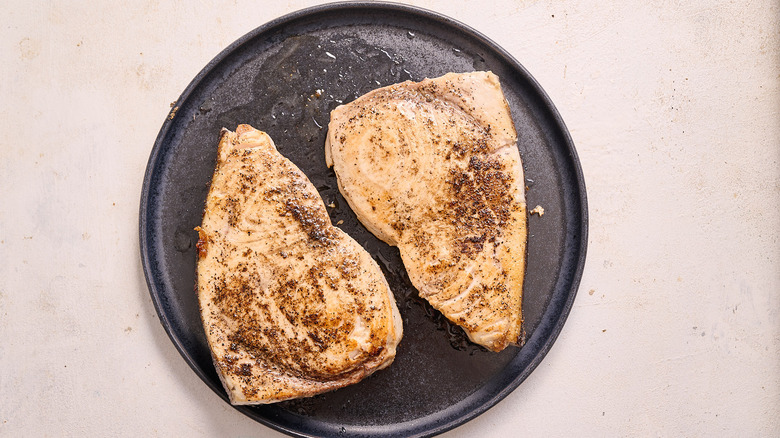
Once the swordfish filets are cooked all the way through, remove the filets from the skillet.
Step 7: Melt the remaining butter
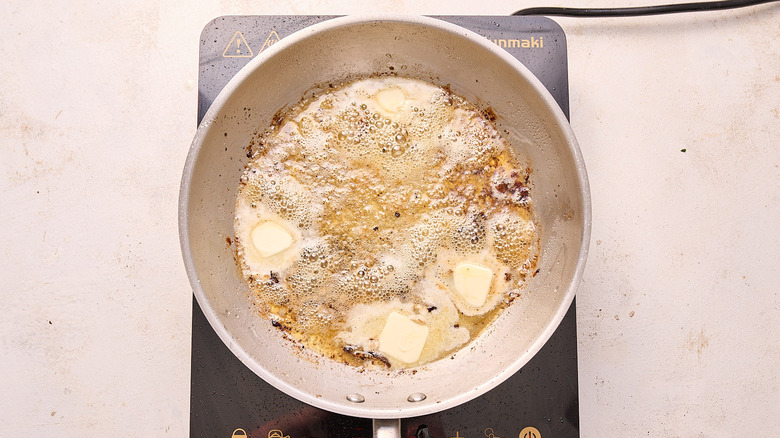
Add the remaining butter and turn the heat to medium low.
Step 8: Add the sauce ingredients
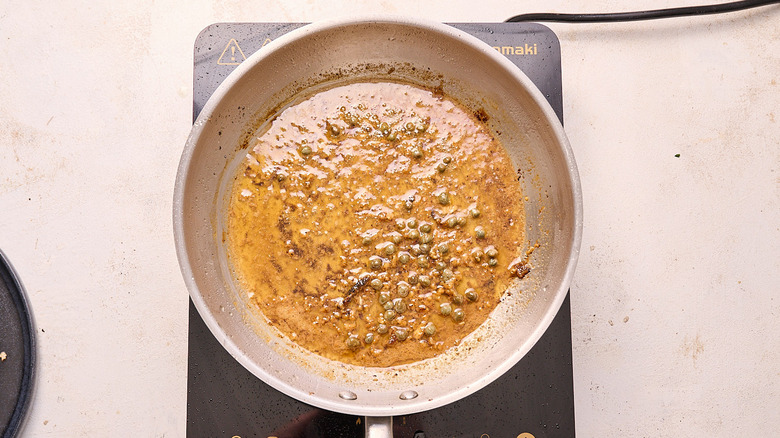
Add the lemon juice, capers, and garlic and continue to simmer gently until the garlic is fragrant, for about 2 minutes.
Step 9: Stir in the parsley
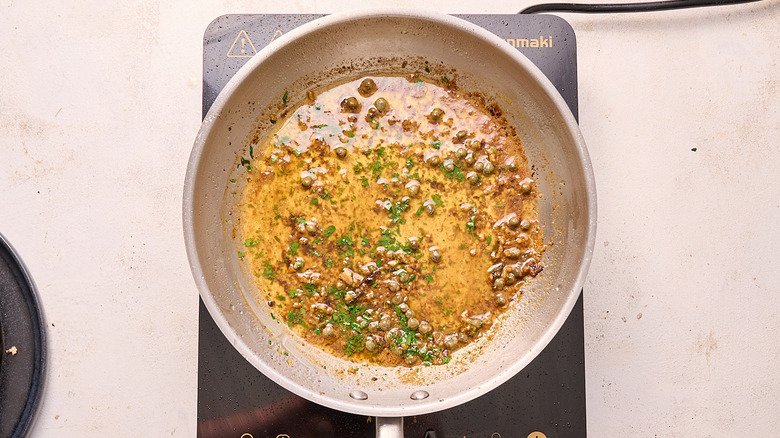
Remove the skillet from the heat and stir in the chopped parsley.
Step 10: Serve the swordfish
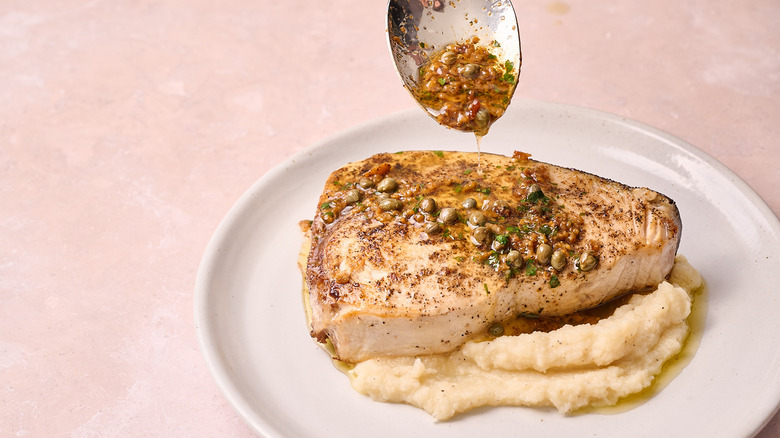
Pour over the swordfish to serve.
What can I serve with swordfish steak?
Pan-Seared Swordfish With Lemon Butter Sauce
Swordfish is seared to perfection and coated in a buttery lemon pan sauce with garlic, parsley, and capers, in this elegant 15-minute swordfish recipe.
Ingredients
- 2 (1-inch thick) swordfish filets
- 1 teaspoon salt
- 1 teaspoon pepper
- 2 tablespoons grapeseed oil
- 5 tablespoons butter, divided
- Juice from ½ lemon
- 1 tablespoon capers
- 3 cloves garlic, minced
- 2 tablespoons finely chopped parsley
Directions
- Pat the swordfish completely dry using a paper towel.
- Season it on either side with salt and pepper.
- Heat the oil in a skillet over medium heat.
- Once the oil is shimmering, add the swordfish. Cook until browned, about 4-5 minutes, then flip to the other side.
- Add 1 tablespoon of butter. When the butter melts, tip the pan towards yourself and use a spoon to baste the swordfish with the melted butter.
- One the swordfish filets are cooked all the way through, remove the filets from the skillet.
- Add the remaining butter and turn the heat to medium low.
- Add the lemon juice, capers, and garlic and continue to simmer gently until the garlic is fragrant, for about 2 minutes.
- Remove the swordfish from the heat and stir in the chopped parsley.
- Pour over the swordfish to serve.
Nutrition
| Calories per Serving | 295 |
| Total Fat | 25.8 g |
| Saturated Fat | 10.7 g |
| Trans Fat | 0.0 g |
| Cholesterol | 83.0 mg |
| Total Carbohydrates | 2.4 g |
| Dietary Fiber | 0.7 g |
| Total Sugars | 0.3 g |
| Sodium | 256.0 mg |
| Protein | 14.0 g |

What are some tips for buying swordfish?
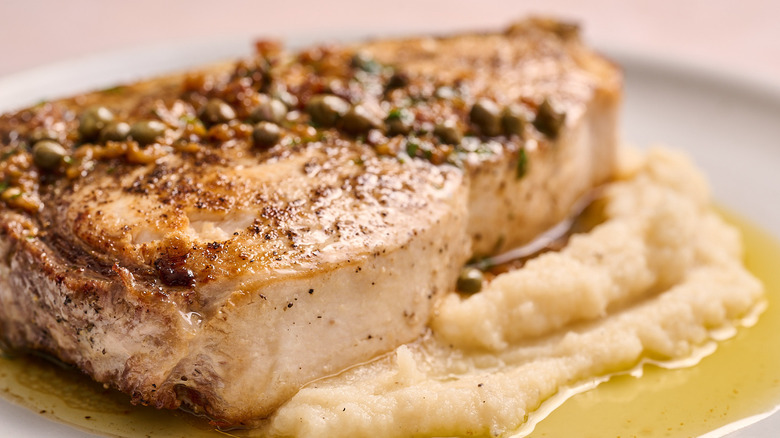
Swordfish tends to be considered a high-end fish, but the reason you may not be able to order it just anywhere goes beyond the cost: Chefs like Anthony Bourdain have warned against eating swordfish, citing the dangers of bacteria and mercury. Because swordfish is rarely farmed and can't be overcooked or frozen to kill the bacteria like other fish, there is more risk in buying and consuming it. Your best bet? Buying it from a fishmonger you trust, who will ensure that the fish is as safe as possible to eat.
When buying swordfish steaks, look for thick, white, meaty pieces about 6 to 8 inches in length and 1 inch in thickness. There will be a faint swirling pattern on top and a scarlet red bloodline — pink or light red is also fine, but avoid any brown or gray. Next, smell the fish: It should smell like the ocean. If it smells sour, sweet, or strongly fishy, avoid eating it.
How do I know when swordfish is cooked?
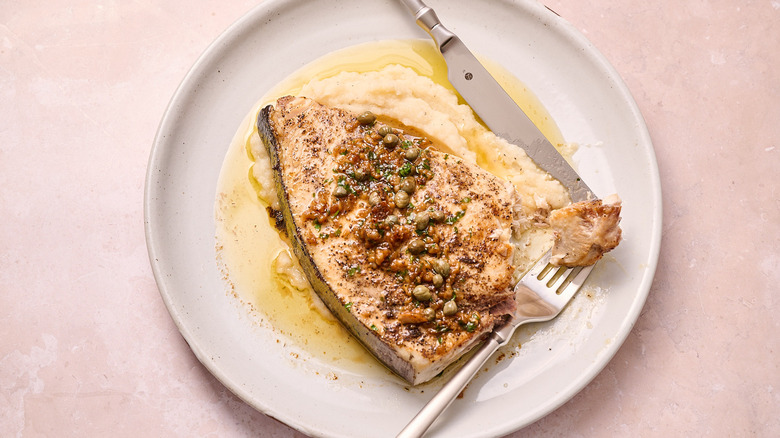
Though swordfish steak is great for cooking many different ways, it can be a little tricky to get right because of its size and texture. Unlike tuna steaks, which are similarly thick and dense, swordfish steaks have to be cooked all the way through — though overcooking can lead to drying out. Because of this, it is important to monitor the steaks closely so that you can remove them from the skillet right when they cook through, not a minute before or after.
For the most part, you can see the cooking process on the side of the fish, which will turn a light brown as it begins to cook. Flip the swordfish when the brown color is about halfway up the sides — the steak will, at this point, still be dense enough to flip with a pair of tongs. Cook for about the same amount of time on the other side, using a thermometer to ensure the middle reaches about 140 F (the fish will finish cooking in residual heat to about 145 F). When the swordfish is done, it will no longer be dense enough to use tongs with; it will be flaky all the way through.