

9 American Lagers That Fully Deserve A Revival
There's a good chance you may have heard U.S. beers derided as sub-par — especially when compared to offerings from Germany and other parts of Europe. There are still a number of American beers that everyone should try at least once, and that's a conversation that involves all kinds of different types. There's no denying that lager is tops when it comes to America's favorite frosty beverages, but it hasn't been smooth sailing for every brand. In spite of the popularity that lagers have historically enjoyed, some have fallen by the wayside — and we think they deserve to make a comeback.
Lagers have a pretty fascinating history in the U.S. Prohibition hurt the country in a number of ways, and that includes interrupting what could have been a buzzy beer landscape. When it was finally repealed, lagers were a quick and easy beer to start production with. They remain a favorite even today, but let's talk about some one-time big names that we'd like to see returning to the spotlight. Some have been discontinued entirely, and others have shrunk from national distribution to a tiny regional footprint, but they're all worthy of a reboot.
And it absolutely could happen. How do we know? Because it has. Meister Bräu got its start way back in the 1890s and disappeared in the 2000s. Parent company Miller sold the name, and plans for a rebirth were announced. It's not the only beer worthy of revisiting, so let's talk about classics that shouldn't be forgotten.
Schlitz
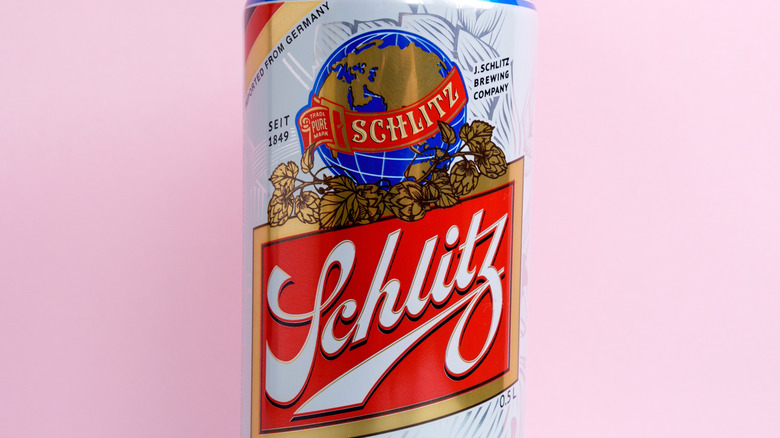
Some of today's biggest food brands are much, much older than you think, and unfortunately, we lost a big one in 2026. That's when parent company Pabst said goodbye to Schlitz, that iconic beer everyone's father, grandfather, uncles, cool neighbor, barber, and bartender seemed to swear by.
Schlitz was discontinued after an absolutely wild, 177-year run, as it debuted way back in 1849. And it was a huge deal for a long time, and had a popularity built on a bit of 19th-century marketing brilliance. In 1871, the Great Chicago Fire destroyed huge sections of the city. Around 100,000 people lost their homes, hundreds lost their lives, and Schlitz was there. The Milwaukee-based brewery donated barrels of beer (and by some accounts, water) to relief efforts, and if you're thinking that's the kind of thing that people remember, you'd be correct. Schlitz was front and center at Chicago's 1893 World's Columbian Exhibition, and interestingly, the elaborate pavilion it commissioned is credited with kicking off the city's love of combining art and architecture in a big way.
Things have been up and down for Schlitz since, and after a massive 1970s ad campaign failed to sell customers on a huge recipe change, nothing was ever really the same. Pabst says that it's officially on hiatus, and with enough love, it might just see a rebirth. Go on: you know what to do, denizens of the internet (and to be clear, we mean campaigning for change, not ... that other thing).
Falstaff
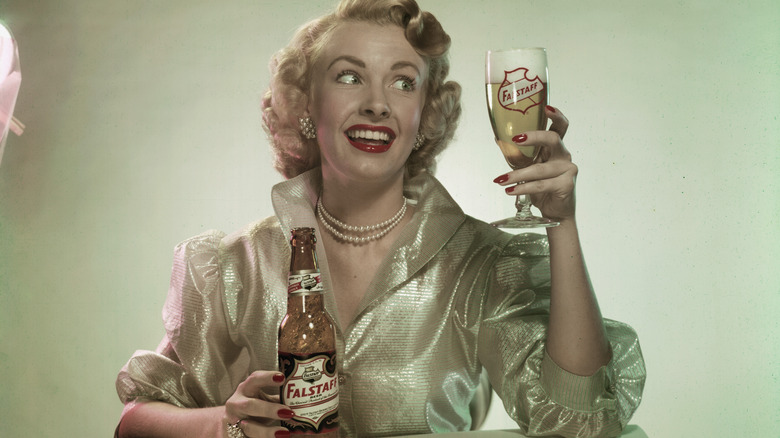
You'll often find Falstaff at the center of those memories that involve older relatives kicking back and listening to a baseball game or sitting on the porch and chatting with neighbors. If you're wondering when this one was in its heyday, we'll give you a hint: head to Reddit, and you'll find people posting photos of their young toddler selves proudly carrying around a can. The 1960s were definitely a different time, and it was a time when Falstaff was one of the largest brewing operations in the country.
By that time, Falstaff was already more than a century old. Sort of. The brand dates to 1840, and after the brief interruption that was Prohibition, owners guided the brand to prominence in a country undoubtedly ready to embrace beer with open arms. It remained a family-owned business until the 1970s, when things changed in a big way.
In 1975, control passed into the hands of Paul Kalmanovitz. He might not be a household name these days, but at the time — and before his death in 1987 — he was one of the richest beer tycoons in the States and the owner of Pabst, along with Falstaff. While we couldn't find too much information on exactly what happened, poor sales seem to be the cause of the beer's disappearance in 2005. Given that this one has more stories of fond memories than failures, we're thinking it needs a reboot.
Olympia
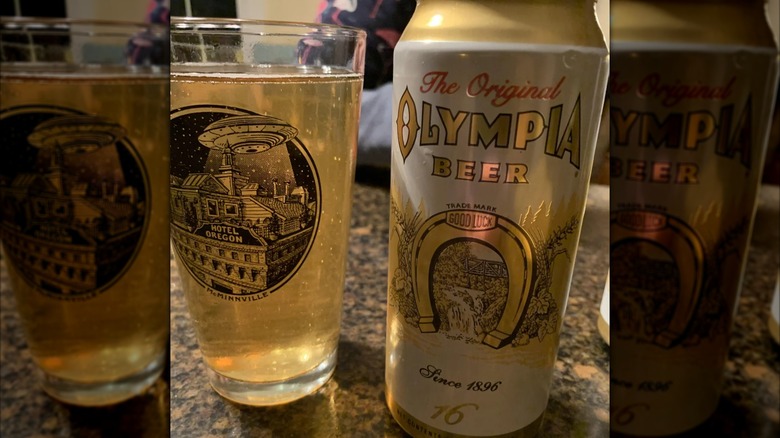
Every so often, we come across something that really illustrates just how important some brands are. Olympia Beer was officially discontinued in 2021, and in 2024, one Reddit user posted about finding and finishing a few cans that had been hiding in the back of a fridge. Others chimed in with fond memories of going on brewery tours and even of swimming around the waterfall pictured on the beer's logo. If that's not cool, we're not sure what is.
Others have posted photos of now-abandoned plants, and it's clear that this one still hits in a very particular way. And it makes sense. Headquartered in Tumwater, Washington, since 1896, the beer leaned heavily on the fact that ultra-pure water made a stellar product. It made it through challenges presented by difficult war years and, of course, Prohibition, and was another brewery bought out by one of the big ones. A series of ownership changes saw Pabst, Miller, and Molson Coors all getting involved with operations, and yes, it's as confusing as it sounds.
The official announcement came on the heels of COVID, when the facility was finding more success with vodka and hand sanitizer. Slowing sales led to what was described more as a hiatus than a complete discontinuation of brewing, and given the number of treasured memories of brewery tours, and family favorite beers, a return from that hiatus would be a welcome thing indeed.
Red White & Blue
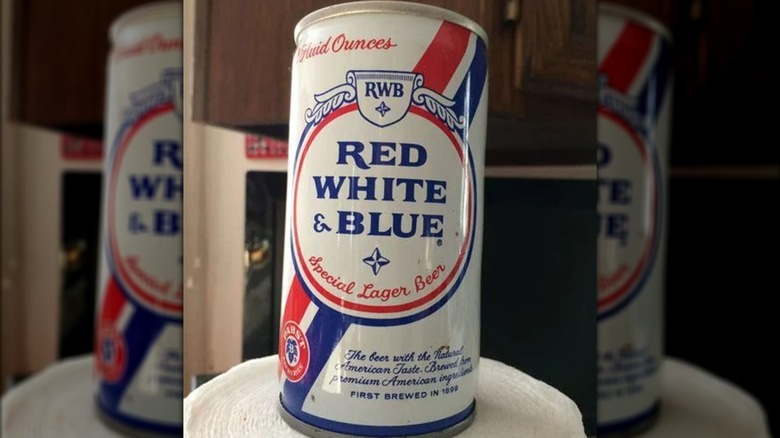
One of the biggest complaints you'll hear about American beer is that prices are out of control, and that's not just a case of grandpa yelling at the clouds because he's cranky after missing his afternoon nap. Studies, like the one done by Visual Capitalist, show that beer prices (based on the brands in surveyed in the study) have risen an average of 41% between 2015 and 2025, and honestly, we drink beer to avoid thinking about precisely these sorts of things. That brings us to Red White & Blue, the beer that was almost unthinkably affordable.
Let's take a trip back to the 1970s. Heavenly Hash and Butter Brickle were some of the classic ice cream flavors of the decade, sushi was still a rarely-seen novelty in the States, and a six-pack of Red White & Blue beer would set you back a cool 89 cents. Absolutely nothing about that is a typo, and you can see why we want this one back, right?
Even then, it was an old-school beer. Pabst debuted this one in 1899, brought it back at the end of Prohibition, and it was hugely popular — especially when times were tough, and money was tight. The beer changed hands a couple of times, and while it's unclear just what happened, it seems likely that competition with the similar-looking PBR didn't do Red White & Blue any favors. It disappeared, although it's been the subject of some special, limited releases, and we firmly believe it's time for this ultra-affordable beer to become permanent.
Billy Beer
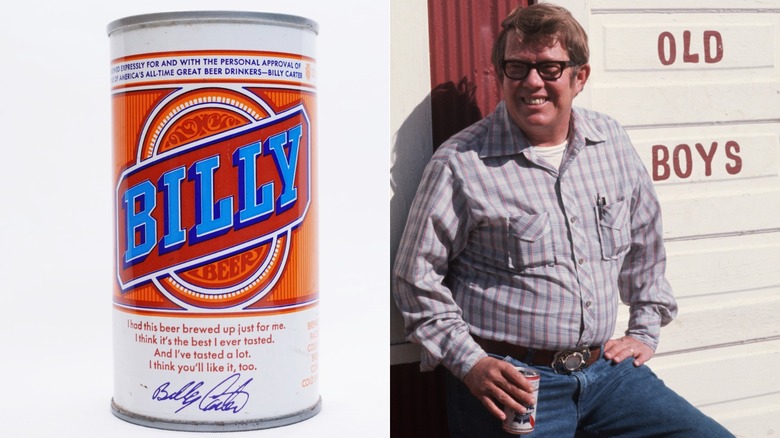
Remember when politics was fun? No? We don't either, but things were different in the 1970s: Jimmy Carter was the 39th president of the U.S., a Nobel Peace Prize winner, and a humanitarian known for his outspoken stances on social reforms. His brother, Billy Carter, owned a gas station and drank a lot of beer — and during the presidential campaign in 1976, that was the Carter who partnered with Falls City Brewing Company to develop and market Billy Beer.
Was it good beer? Eh. Billy himself was somewhat infamous for stating often and loudly that he preferred PBR, so do with that what you will (yes, that's him on the right with a can of the aforementioned PBR). Some Reddit users who tried it report that it wasn't terrible, and it was marketed as extra-smooth, tasty, and made with yeast imported from Germany. Fancy!
The beer was less than well-received, though. After hitting shelves in 1977, Billy Beer's brief run came to an end in 1978, and it took the brewery down with it. Still, we'd absolutely like to see this one make a comeback, especially in today's nightmare-soaked excuse for a political climate. To be clear, Billy wasn't precisely a non-problematic figure in his own right, but if there's any time that's right for a nostalgic look at how a U.S. president and his family were once pretty ordinary people, it's this time.
Hamm's Special Light
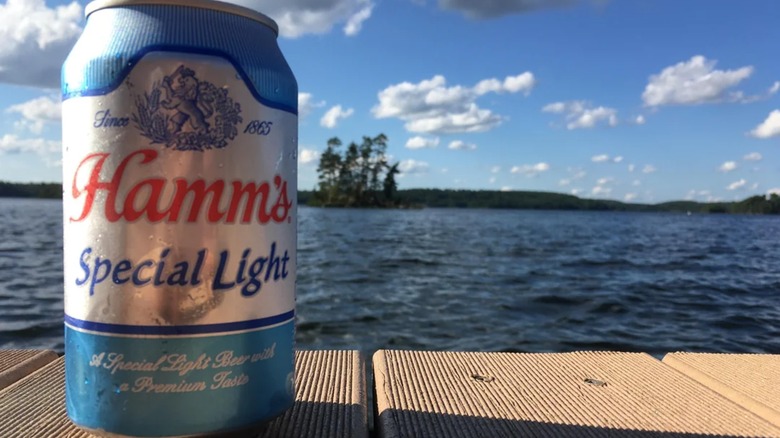
Hamm's is one of the oldest beer brands in the U.S., so it kind of goes without saying that there are a ton of die-hard Hamm's fans out there. It's been that way for a long time, as this brand goes all the way back to 1865. Skim through appreciation posts on Reddit, and you're likely to see a mention of Hamm's Special Light, along with a lament that this one's no longer available. The announcement that it was going to be going the way of the dodo was a rather strange one, as it was buried in a list of 11 beers that parent company Molson Coors decided to get rid of back in 2021.
Details were scarce, and wrapped up in business talk about streamlining production, managing supply chains, and all those sorts of business-related muck ups that all lead to one important bottom line: we don't have our Hamm's Special Light anymore. That's a bummer — and we're not the only ones who miss this super light, sweet, very crushable lager.
Some beer fans have been jealously rationing their final cans, and sharing the special sorts of places where they decide to have some of their final sips of this classic beer. Hamm's is without a doubt one of the beers that defined life in the 1960s, and bringing back a little taste of those bygone decades is reason enough to bring this one back to shelves.
Stag
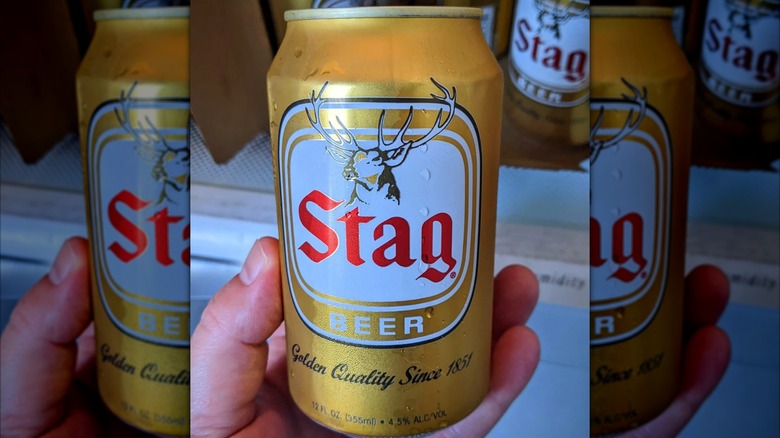
Stag isn't just a beer; it's a way of life. Pride in this Midwest favorite is on display with unparalleled gusto in the beer's birthplace of Belleville, Illinois, where scores of people claim Stag as their beer of choice and proclaim they're following the example of generations that have come before. It's a dedication that's wonderful to witness. Unfortunately, this iconic beer is getting harder and harder to find, in spite of the fact that devotees continue to laud it as the perfect affordable, easy-drinking, super refreshing sort of lager.
Stag's hotly debated origins date back to about 1907, and it's had a history of being a staple at everything from baseball games to weddings. While it remains popular, sales reportedly dropped off considerably when a new logo wasn't nearly as widely accepted as the company might have hoped. Now, there's some uncomfortable writing on the wall. In 2026, bars in St. Louis went public with the news that they were being told they could no longer get kegs of Stag, and it was so heartbreaking that some even held funerals to say goodbye to the era.
The problem was one that went well beyond beer. Stag was notable because it was a massive regional favorite, and one of the reasons people are so disappointed in the development is that it's the disappearance of a brew that has set Midwest bars apart for generations. Are there other beers that can replace a keg of Stag? Technically, yes. Spiritually, no.
Lucky Lager
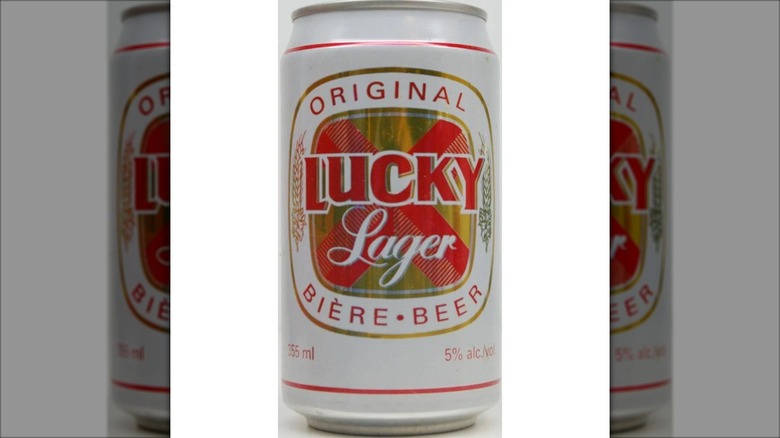
Some brand names just sound delightfully old-school, and that includes Lucky Lager. (Can't you just imagine elegantly dressed mobsters in fancy suits and dapper hats, sitting around tables in a just-built Las Vegas casino, discussing the dames while they deal cards and sip their Lucky Lager? No? Just us, then? Right.) After hitting the market in 1934 and taking full advantage of those heady days after Prohibition, the San Francisco-born lager saw a post-World War II-era heyday that sent it sprawling up into Canada.
The brand changed hands a few times, fell under the umbrella of Labatt, and then, in the 1970s, also ended up in the hands of Paul Kalmanovitz (yes, the same one that we mentioned in our entry on Falstaff, sounding familiar?). That's about the time things started going downhill in its home country, but the beer still held on until 2003.
Somewhere along the line, control of the brand shifted to Pabst. It's contracted to bring the beer back in a very limited, regional sort of way, and in 2019 it was announced that it was once again coming home to California. This one absolutely deserves to be more widespread, if only because of its very neat connection to our post-Prohibition era. At a time when most breweries were rushing to get product out the door, Lucky was standing by the fact that it was taking the time to age beer. That stood for quality, and for a time, it worked in a huge way.
Schaefer
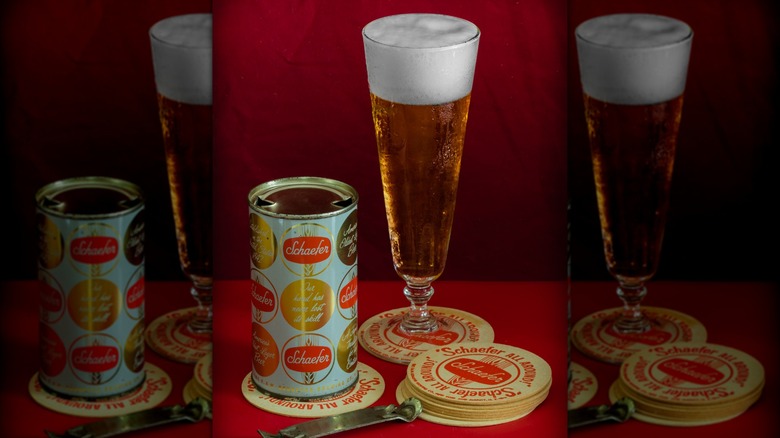
Is Schaefer a good beer? No: it's a great beer, especially on a hot summer day, and we are prepared to arm wrestle anyone who says differently. We know we're not alone in this, either, as Schaefer has had an incredibly long run. It dates back to 1842, and it's this historic brew that's largely credited with helping to popularize lagers in the U.S. That alone is enough to make us settle in to firmly root for Schaefer to once again take a place among other staple macrobrews, and it might.
Schaefer's story is a now-familiar one, and it went from being a family-owned brewery turning out beers beloved by the world to being bought by the giants. Bought first by Stroh and then by Pabst, Schaefer has long had a connection to the state where it was founded: New York. It was brewed there for a whopping 134 years before Brooklyn operations closed, and in 2020, plans were announced that it was going to be returning home.
Sort of. Schaefer is now coming out of a Utica brewery, with the revival promising to give the beer a snazzy new update while holding onto its legacy and old-school vibe. The recipe isn't quite the same, either, but we say this is one brand we'd love to see reclaim its throne.