

14 Of The Oldest Beer Brands In The US
If you enjoy cracking open a beer every now and again, you're far from alone. But you probably already know that, as most of us like to enjoy a cold one in groups. In fact, the simple drink, made with just water, hops, malt, and yeast, has become the ultimate accessory for nights out, nights in, days on the beach, days by the grill — you get the gist. And it's been that way for a really, really long time. In fact, the oldest beer brand in the U.S. is only a few decades younger than the country itself, while others are actually older than the states they were founded in. Yep, so when you sink a brewski with friends, you're actually embracing the history of America. Honest.
Like many beloved foods in America (pizza, pasta, hot dogs, nachos ... we could go on), the reason beer is so engrained in society is because of — drumroll please — immigration. Here, we take a look back at some of the oldest beer brands in the U.S., the majority of which were founded by people who came to the U.S. from Germany throughout the 19th century.
If you like a side of education with your booze, you've come to the right place. Crack open the tab on your favorite tipple, and let's go.
Yuengling
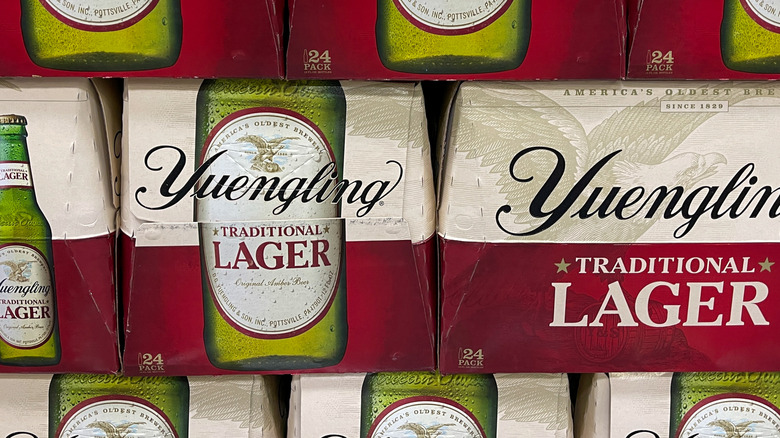
When German immigrant David G. Jüngling landed in Pottsville, Schuylkill County, in 1823, he spotted the perfect opportunity for a new business. With plenty of taverns and a thirsty clientele of laborers, this Pennsylvania mining town was the ideal spot for a new brewery. So, in 1829, Jüngling, who anglicized his name to Yuengling, opened Eagle Brewery. It wasn't a smooth ride, though. Over the decades, the brewery, which rebranded as D.G. Yuengling & Son in the 1870s (after D.G.'s son, Frederick Yuengling, became a partner in the business), dealt with catastrophic fires, Prohibition, and fierce competition.
Today, not only is it still standing, but the brewery, which is officially the oldest in the U.S., is still run by the Yuenglings' direct descendants. Yep, you can even still buy some of the brewery's original beers; Lord Chesterfield Ale and Dark Brewed Porter were first brewed by the company's founder back in the 1820s. At the time of writing, Yuengling's beers are still not available nationwide (despite the fact that many believe that it is one of those regional brands that should be everywhere). However, these brewskis are pretty widespread, available in a total of 30 states.
Minhas
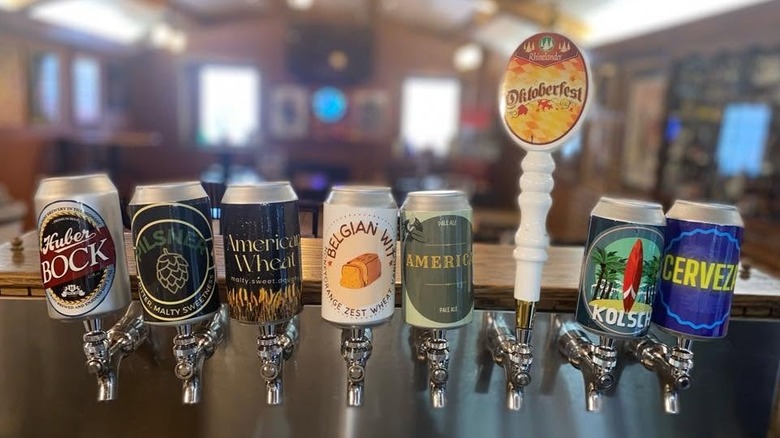
In 1848, Wisconsin officially became the 30th state in the U.S. — and three years before that, a Swiss immigrant named Mr. Bissinger (his first name is unknown, it seems) opened Monroe Brewery in Southern Wisconsin. Yep, that means the brewery, which would later be known as Minhas, is actually older than the state of Wisconsin. Fun fact, right?
Over the decades, Monroe Brewery changed hands many, many times. It also changed its name several times, too. But at its core, it was still the same brewery in Monroe, in the very same building that Bissinger bought back in 1845. Today, the brewery is called Minhas Craft Brewery, and it's run by siblings Ravinder and Manjit Minhas. Every owner of the brewery has added their own spin. For the Minhas duo, that spin is Southern barbecue, wood-fired pizza, and a beer garden, where customers can sip on the brand's signature brews. This includes Huber Bock — first introduced in the 1940s by former owner Joseph Huber.
Pabst
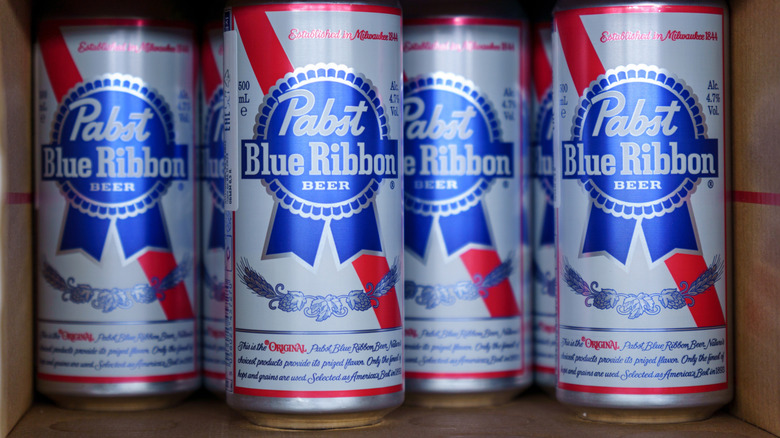
The 1840s were a big decade for Wisconsin breweries. In 1844, German immigrant Jacob Best founded the Best and Company Brewery in Milwaukee with the support of his four sons. At first, it was a tiny operation, producing just 300 barrels a year. By the 1870s, however, production had skyrocketed to more than 100,000 barrels — largely thanks to the involvement of Best's son-in-law, Frederick Pabst. Of course, it is the Pabst name that we are familiar with today, and that's because the brewery was renamed in his honor in the late 1880s. This was also around the time that Pabst started placing blue ribbons on its beer bottles in honor of its various awards (including a certificate at the 1883 Chicago World's Fair).
Right before the turn of the 20th century, Pabst hit a major milestone with the sale of 100 million barrels of beer, and it maintained that mega-brewer status over the next 100 years. In 2014, the company was sold for $700 million. But of course, that famous Pabst Blue Ribbon beer is still a shelf staple across the country, loved for its mild, malty, slightly sweet taste.
Stroh's
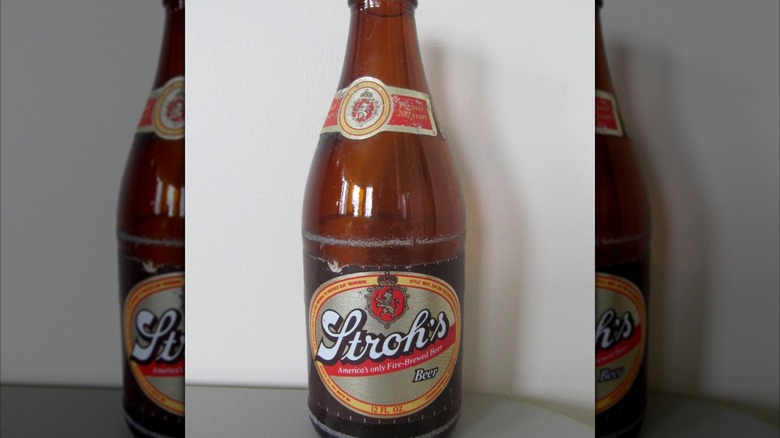
Many popular beer brands in the U.S. have German roots. It's not all that surprising, really, considering the country has a beer-brewing culture that goes back centuries (the oldest brewery there is nearly 1,000 years old, which puts this list to shame). So, of course, when German immigrants started arriving in the U.S. in the 1800s, they brought all of that knowledge with them. One such immigrant was Bernhard Stroh, who settled in Detroit after leaving Germany in the first half of the 19th century.
Utilizing two generations' worth of family brewing history, Stroh opened his own brewery in Michigan City in 1850, specializing in light pilsner brewed in copper kettles with open flames. Stroh's enjoyed immense success over the following century, evolving into a household name. In the 1970s, for example, it was one of those beers that everyone drank. Stroh's got into hot water financially after its purchase of Schlitz beer in the 1980s, and right before the turn of the 21st century, it sold to the Pabst Brewing Company. In 2022, Pabst relaunched Stroh's with its original packaging and distributed it to draft taps in Detroit once again.
Miller
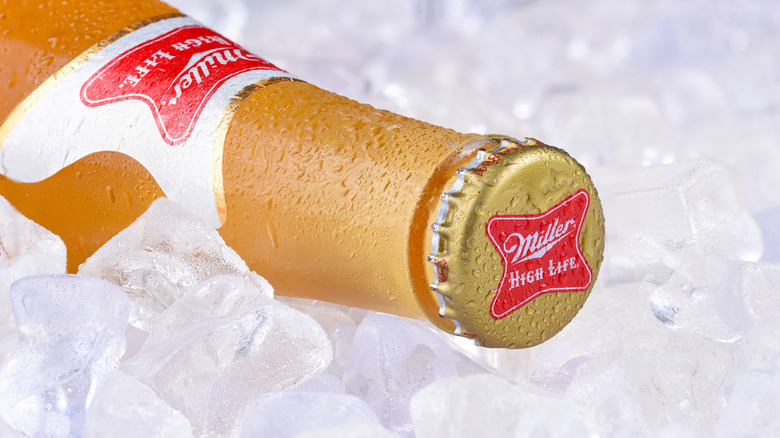
It's 1855, and we're still in Wisconsin. If you're wondering why, the answer is pretty simple: With its green, hilly landscape, Wisconsin kind of looks like Germany. And when German immigrants arrived in the U.S., they wanted to settle somewhere that looked like home. Many also wanted to do the same work as back home: brew beer. Like many others, Frederick Miller was drawn to Milwaukee because of its large, thriving German community. He wanted to give them a taste of home, and so the Miller Brewing Company was born. Clearly, it was a good move; Miller had a knack for beer, and by the late 1910s, his brewery was producing an impressive 500,000 barrels a year.
Of course, the brewery then had to navigate Prohibition and the Great Depression like many others, but it persevered. Miller's company went on to introduce some of the most iconic beers in America, like Miller Lite and Miller High Life, both of which are still on the shelves today.
Anheuser-Busch
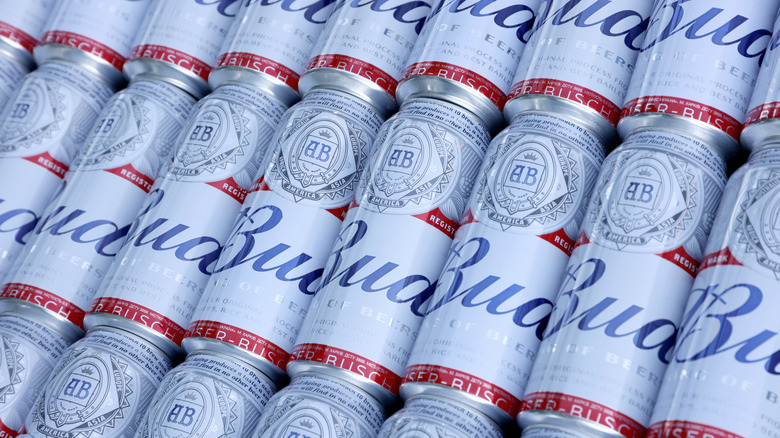
If you drink beer, you're already familiar with Anheuser-Busch. This is no niche craft brewery in small-town Wisconsin, but one of the biggest brewers in the world. It owns some of the most popular mainstream beers in existence, like Stella Artois and Budweiser, as well as beloved craft beers like Goose Island IPA. But it didn't start out that way. Back in the late 1850s, German immigrant Adolphus Busch arrived in St. Louis, Missouri, and took over a brewery supply company. He spotted that one of his clients, a soap manufacturer called Ebert Anheuser, was struggling to keep his small brewery afloat (the beer, apparently, tasted disgusting), and Busch stepped in to help, changing the recipe and pasteurizing the beer so it would last longer.
Understatement of the century, but people liked it. And very soon, the brewery, which became Anheuser-Busch, was thriving. Of course, it had its fair share of challenges, from Prohibition to internal power struggles, but the company grew astronomically in spite of it all. Today, that small struggling brewery in St. Louis wouldn't recognize the juggernaut that is the modern Anheuser-Busch. At the time of writing, it is worth upwards of $160 billion.
Stevens Point
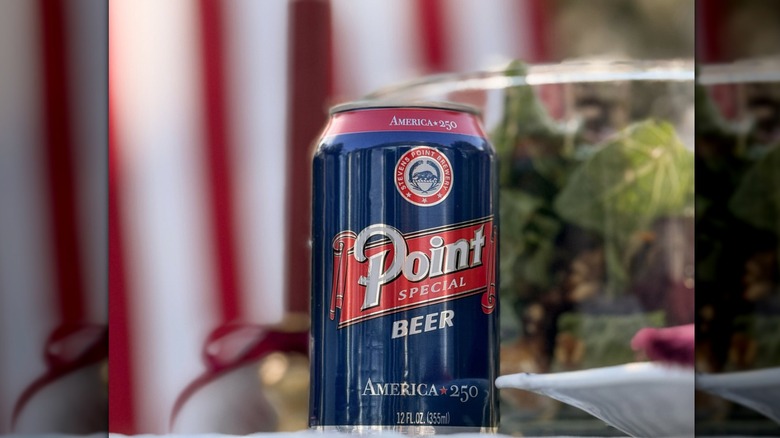
In the 1850s, Frank Wahle and George Ruder opened Stevens Point Brewery in — you guessed it — Stevens Point, Wisconsin. And in case you hadn't made the assumption already, Wahle and Ruder were, of course, German immigrants. Known for its signature Point Beer, the Stevens Point Brewery has changed hands several times since then, but it's still thriving today. In 2024, it even opened a brand-new tap room worth more than $1 million.
But you don't have to be based in Wisconsin to try its historical beers, as they're actually distributed to 36 states across the country. It hasn't always been that easy to access, though. In fact, Point Beer wasn't shipped out of Wisconsin until the 1970s, more than a century after it was first founded. Today, as well as its original Point Beers, the company also offers non-alcoholic beers and gourmet sodas like root beer, too.
Schell's
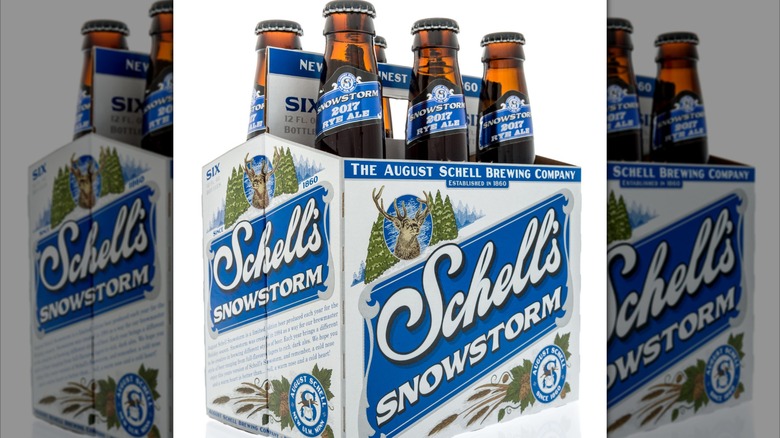
Many Germans flocked to Wisconsin during the 19th century, but others were drawn, instead, to neighboring Minnesota. And just like in Wisconsin, many German immigrants in the North Star State also brought their penchant for beer and knowledge of brewing with them. Take August Schell, for example, who settled in Minnesota with his wife in 1856 after emigrating from Durbach, Germany. Four years later, he would open his own brewery in Dakota Territory. Thanks to the Schell family building good relations with the territory's Native American population, the company's impressive ability to adapt and innovate, and well, its widely beloved beer, Schell's has survived.
In fact, unlike many other breweries on this list, Schell's brewery actually stayed in the family. Now located in New Ulm, the company is still owned by Schell's direct descendants, making it the second-oldest family-owned brewery in the country (with the first being Yuengling). Today, it still embraces its heritage, specializing in German craft beers and hosting annual Oktoberfest events.
Hamm's
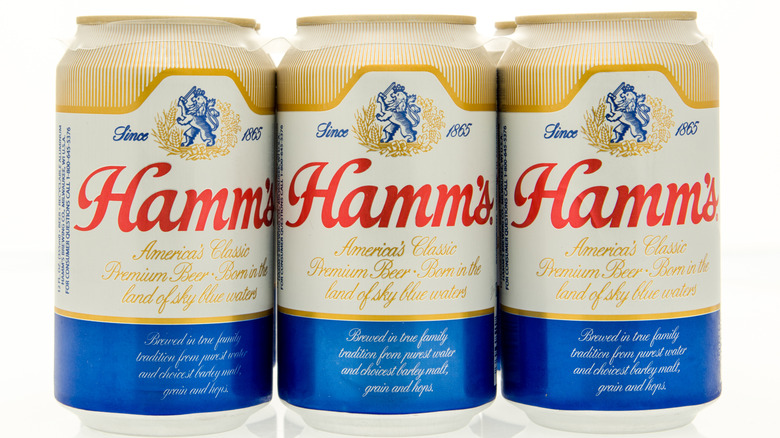
German immigrants settled in Minnesota for many reasons. They could own land there, for example, and it was already home to thriving industries for laborers. But for budding beer brewers, another appealing Minnesota asset was the water, which was (and still is) clean, low in minerals, and perfect for lager. The high quality of the water is part of the reason why Hamm's, one of the Midwest's most popular and beloved beer exports, was such a success.
Founded in 1865 by German immigrant Theodore Hamm, a key part of Hamm's marketing is that it is brewed in "the land of sky blue waters." In fact, smart marketing has consistently been integral to the Minnesota brand's success. Case in point: the Hamm's Bear, which was introduced in the 1950s and remains an iconic symbol of the brand today. Now owned by Molson Coors, Hamm's is still widely popular, especially in its Midwest home. In fact, per a 2026 survey by Innerbody, Hamm's is Minnesota's favorite beer (in Wisconsin, it's Miller Lite, in case you were wondering).
Leinenkugel's
If you're a fan of Leinenkugel's Original, a classic, malty pilsner, then you might be interested to learn that every time you take a sip, you're tasting a little bit of the past. In fact, this beer was first brewed at the Jacob Leinenkugel Brewing Company in Chippewa Falls, Wisconsin, back in the 1860s. When Bavarian immigrant Jacob Leinenkugel arrived in the small town in the mid-19th century, he was impressed with the clean water, perfect for brewing. He was also taken with the small logging population, who he suspected would jump at the chance to buy his locally brewed beer. His instincts were spot on, and his brewing company was a success — but a small one.
Everything was kept hyper-regional to northern Wisconsin until beer giant Miller acquired the brand in the 1980s and started shipping to more Midwestern states. Fun fact: Leinenkugel's Original beer, now produced by Molson Coors, wasn't actually available nationwide until 2017.
Coors Banquet
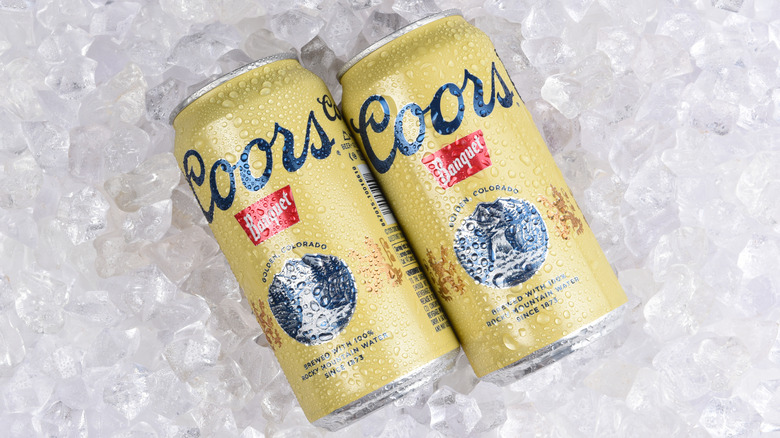
If you're in a store's beer section, spotting Coors Banquet is basically a given. The beer is a nationwide staple, beloved for its subtly sweet, fruity notes and — let's be honest — its price. Like fellow Midwestern favorites Pabst Blue Ribbon and Budweiser, it doesn't break the bank. But affordability doesn't mean it skimps on quality. Since the 1870s, Coors Banquet has been brewed in Golden, Colorado, always with Rocky Mountain water, which is low in minerals and requires little filtration before it is brewed into beer.
Wait, Colorado? Yes, we've finally made it out of the Midwest. Well, kind of. Before Coors Banquet's German immigrant founder, Adolph Coors, opened his own brewing company in the town of Golden in 1873, he had spent around three years cutting his teeth at a brewery in Chicago. That experience paid off: He created a beer that truly stood the test of time. In fact, the beer (now produced by Molson Coors, which was formed through a merger in 2005) is arguably more popular today than ever and has even found a new fanbase with Gen Z.
Genesee
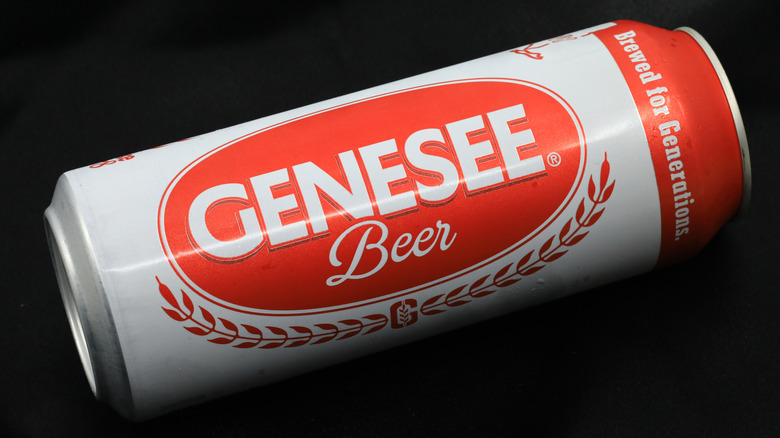
While many German immigrants settled in the Midwest in the 1800s, there was also a large European community in New York. It makes sense, considering millions of German immigrants arrived in New York City, ready to make a new life in the U.S., throughout the 19th century. Not everyone stayed in the Big Apple, though. The German-speaking Kondolf family, from the French border region of Merlebach, decided to settle in the Western New York city of Rochester, for example. And it was there that their son, Mathius Kondolf, would eventually take on an existing brewery in the late 1870s.
Kondolf changed the name of the brewery to The Genesee Brewery, and you guessed it, it's still around today. In fact, largely thanks to brewmaster Louis A. Wehle (who started working at Genesee in 1916), the brewery went from strength to strength over the course of the 20th century. By the 1930s, the brewery — which was now called The Genesee Brewing Company — was shipping beer outside of New York State for the first time, and by the late 1970s, it was shipping three million barrels a year. Today, Genesee has six popular beers in its lineup, including classic Genesee, which is made with the very same recipe first brewed back in the 1878.
National Bohemian
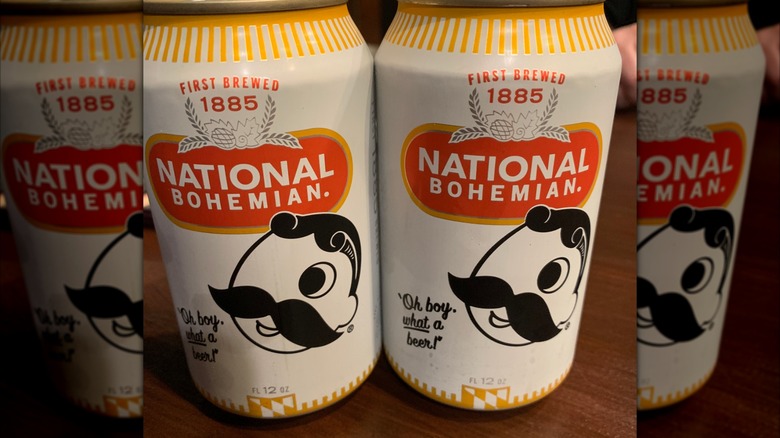
Like most of the beer brands on this list, National Bohemian — or, as it's more affectionately nicknamed, Natty Boh — exists because of German immigration. In 1850, Bavarian brewer Johann Baier started a brewery in Baltimore, Maryland, which he named after himself and ran for around 16 years before his death in 1866. His wife, Anna Maria Baier, took things over, but in 1885, she declared bankruptcy and sold the brewery to some malt suppliers. From then on, the brewery was known as the National Brewing Company, and one of its first beers? You guessed it, Natty Boh, a classic, light, mild lager.
National Bohemian's success can be largely attributed to a bit of marketing wizardry. In the 1930s, the animated character of Mr. Boh was born, and Marylanders fell in love, thanks to his curved mustache (think Pringles) and single black eye. Today, Natty Boh isn't even brewed in the state anymore (it's now owned by Pabst Brewing Company), but the beer is still widely loved across Maryland. In fact, the state is responsible for around 90% of Natty Boh's sales these days.
Narragansett Beer
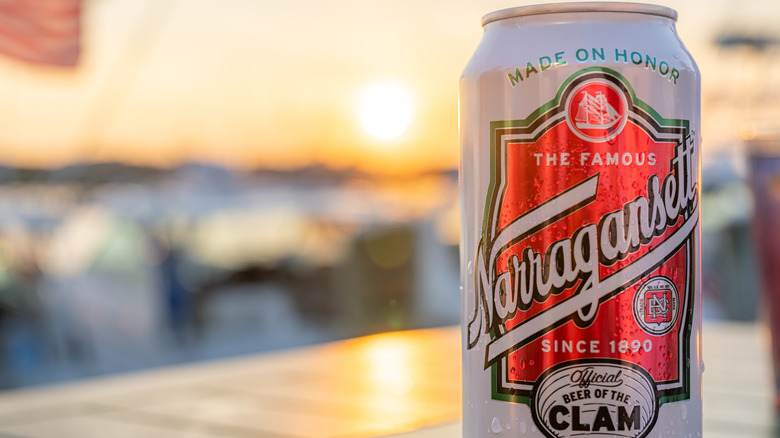
We're edging very close to the end of the 19th century now, but once again, we're talking about the role that German immigration has had in the American beer industry. In 1890, six German immigrants in Narragansett, Rhode Island, pooled their finances to start a new brewery. The Narragansett Brewing Company made nearly 30,000 barrels of beer within the first year of operation, priding itself on only using the "purest ingredients," according to its website. And well, long story short, people loved it — even local doctors prescribed it to their patients (yes, seriously).
Those six immigrants, John H. Fehlberg, Augustus F. Borchandt, Herman G. Possner, George M. Gerhard, Constand A. Moeller, and Jacob Wirth, persevered throughout the challenges of the first half of the 20th century, and they came out on top. By the 1960s, Narragansett Beer was worth $17 million and was purchased by the Falstaff Brewing Corporation. By the end of the 1900s, though, things had taken a turn for the worse, and production of Narragansett Beer was shut down. Fortunately, the brand was revived in the early 2000s, and its beers are back on the shelves today, including The Famous Narragansett, which is based on the original 1890 recipe.