

The Staple Midwest Beer That's Been Family-Owned For Over 150 Years
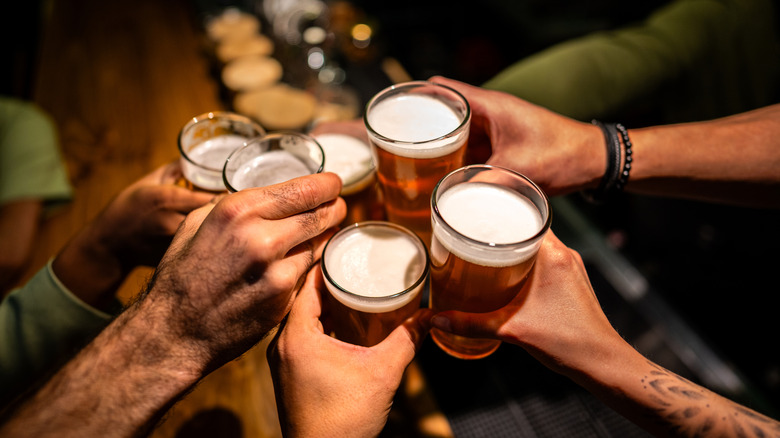
A lot of us cook to recreate dishes we miss. Perhaps it's something that was abundant once but is not available anymore — whether that's because of the passage of time, discontinued products, or geographic relocation. August Schell, who immigrated from Germany in the 1800s, missed German beer so much he ended up building a brewing empire that's lasted over 150 years. What's even more remarkable is that the Minnesota-based brewery remains family owned a century and a half since it poured its first cold one. This is the story of August Schell Brewing Company, or simply Schell's, one of America's oldest family-owned breweries that survived the Civil War, the Prohibition, and a constantly evolving market to serve beers that have been a staple in the Midwest for many generations of tipplers.
In 1860, 12 years after he had reached America, August Schell came to the conclusion that he needed his fix of German beer, one which was very different from American beer. He partnered with brewmaster Jacob Bernhardt, and the small brewery they built by the banks of the Cottonwood River generated 200 barrels of beer in the first year. This was the pre-refrigeration era, so they had to rely on a combination of ice from the frozen rivers, and underground caves to keep their beers cold. Schell bought out an ageing Bernhardt's share in the business in 1866, and the brewery has been in his family's control ever since.
Today, August Schell's great-great-grandchildren Jace, Kyle, and Franz run the company, having taken over from their parents Ted and Jodi Marti in 2020. At different times, the brewery was run by August Schell's wife, son, son-in-law, daughter, grandson, two great-grandsons, and now three great-great-grandchildren.
Rough ride, smooth beers
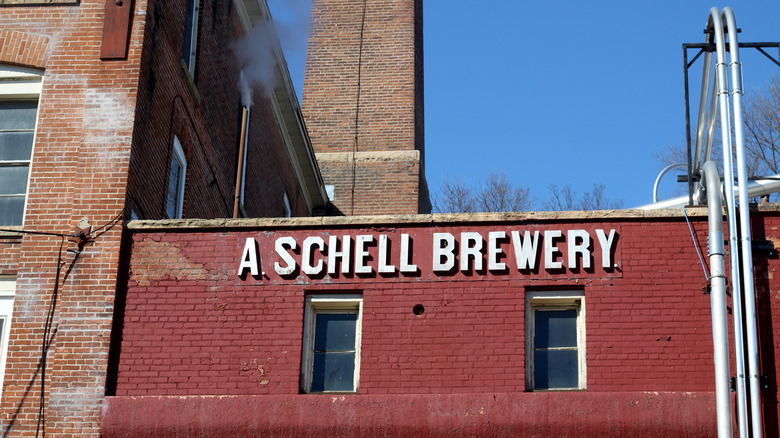
Any business that's been around for over 150 years has had to have hit more than its share of speed bumps. Two years after August Schell set up his brewery in New Ulm, Minnesota, the Civil War began, and the closely related U.S.-Dakota War wiped out large parts of the town, with many houses burned down or ransacked. However, the brewery survived. It also made it through the Prohibition Era, which lasted from 1920 to 1933. This was a period that hurt the U.S. in more ways than one, and Schell's survived by selling soft drinks and "near beers" — which were drinks that tasted like beer but couldn't contain more than 0.5% ABV).
To this day, the biggest challenges come from a rapidly evolving landscape. Schell's flagship is a full-flavored, pre-prohibition era lager called the Deer Brand Beer. Also on its product line is a German-style Pilsner, a Vienna-style amber lager, and an American dark lager, along with a collection of seasonal beers. In an interview with Beer Dabbler, Jodi Marti spoke about the challenges of making beer at a time when customers are constantly looking for something new. "I'm afraid that there's so many beers that are really, really good beers that just go away," she said. "There's been really good beers that we put out ... but people wanted to move on to the newest thing in the market, and a lot of times that's a shame."
Loads of love, and a crafty controversy
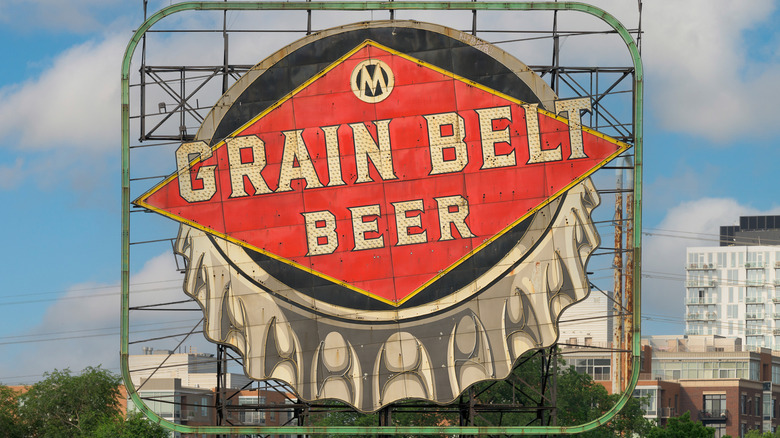
Schell's Brewery continued to ride the rough with smooth moves. In 2002, the company bought over another much-loved Midwest beer brand Grain Belt, which had been around since 1890, and is one of those old-school regional American beers that really should be everywhere. Grain Belt was in danger of going under in an ultra-competitive market, but under the Schell's Brewery banner, it started growing again, and Schell found even more love from its customers.
On a Reddit thread about Minnesota's most beloved beers, Schell's is the name that pops up most often. "Schell's is the second oldest, continuously operating brewery in the country," Reddit user u/Ropes13 wrote. The user added: "Also, they bought Grain Belt and have kept that brand alive as well. Schell's is dope — we're lucky to have them."
While patrons love Schell's well-crafted brews, a Colorado-based trade group — The Brewers Association — sparked a mini-controversy some time ago, when it put Schell's on a list of beer brands that were harming smaller craft brewers through misleading advertising. Its argument was that Schell's recipes and processes didn't fall under the Brewers Association's definition of "craft beer." The argument mostly collapsed under its own weight by claiming that Schell's brewing methods, fine-tuned for 150 years, were "non-traditional." Schell's is ranked No. 24 on The Brewers Associations' list of America's biggest breweries in 2026 (via Forbes).