

The Detroit Beer Brand That Failed After Buying Schlitz In 1982

It's been a sad month for old-school beer fans, as the news broke that Schlitz, the legendary Midwest beer, was being discontinued. Many of those wonderfully regional beers have been lost to brand consolidation, and the story of the Stroh Brewery Company is also a timely tale. For decades, Stroh Brewing was a fiercely independent Detroit powerhouse that had a loyal following as one of the top beers in the 1970s. Founded in 1850 by German immigrant Bernhard Stroh, the company was known for its clever "fire-brewed" marketing. The fire-brewed description referred to the historic method of heating brewing kettles directly with open flames, rather than the more modern steam method.
Stroh Brewing survived Prohibition by creating "near beers," sodas, and even a vintage ice cream flavor called "Superman." By the 1970s, the company known for its blue-collar Detroit identity was still thriving. But in 1982, Stroh made a massive gamble that ultimately destroyed it: It bought the struggling Joseph Schlitz Brewing Company. Schlitz was indeed "The Beer that Made Milwaukee Famous," but its quality had gone downhill when the company made the mistake of messing with its brewing formula.
When Stroh acquired Schlitz in 1982 for around $500 million, it instantly transformed the Detroit icon into the third-largest brewery in the United States. But the purchase came with a whole lotta baggage. Schlitz was still recovering from a disastrous ad campaign in which it threatened to "kill" non-customers.
Stroh's downfall is a famous cautionary tale in beer history
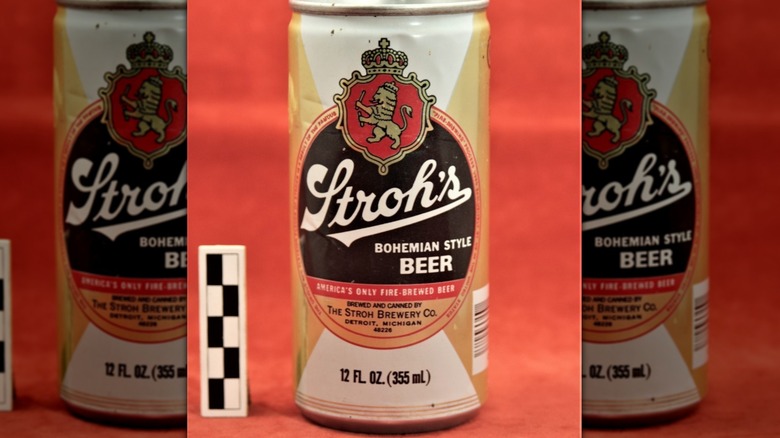
Stroh took on a huge amount of debt to finance the acquisition, and Schlitz wasn't the gleaming unicorn it thought it was. The once-thriving brand was damaged beyond repair. Integrating two massive brewing operations was no small feat, and the timing was also brutal. During the 1980s, national beer advertising exploded. Anheuser-Busch and Miller started spending big bucks on television campaigns, sports sponsorships, and nationwide distribution. Stroh simply couldn't keep up the pace while saddled with such big debt. They further drove themselves into the ground by additional acquisitions and restructuring.
At the same time, American beer tastes were changing. Light beer was becoming increasingly popular. Younger drinkers increasingly gravitated toward heavily marketed national brands for the coolness factor — the exact opposite of what happened with the rise and decline of the craft beer trend in the 2000s. Regional identity became less popular in an era dominated by massive nationwide advertising and gimmicks. The financial pressure for Stroh was unsustainable, and in 1999, the Stroh family sold the company's beer brands to Pabst. Its Detroit brewing operations had also closed, marking the end of the Motor Town's most iconic industrial brand.
It's ironic, of course, that the Schlitz acquisition that was meant to save Stroh ended up killing it instead. Both brands live on today as nostalgic legacy beer brands — relics of a time before imports, fancy microbrews, or hard seltzers.