

14 American Beers Everyone Should Try At Least Once

The craft beer scene in the U.S. has been buzzing for quite some time, with nearly half a million people employed by the 9,778 independent breweries scattered across the nation as of 2025. Add in the bigger players and that means choosing your next brew can be surprisingly complicated. Any good beer display greets customers with an array of everything from old-school, tried-and-true styles to fun and funky craft beers ... and about a million things in between. If you're overwhelmed with options we're here to help, as we've got some suggestions as to what American beers you should try at least once.
Now, we're not saying these are the best in the country, mainly because taste is subjective and there are approximately a bajillion different beers on the market (and that's barely an exaggeration). So we decided to spotlight some of the beers that have made a major impact on the beer industry, have amassed cult followings, or introduced European styles to the U.S. Some are old favorites, some are new.
We also wanted to make sure we were recommending something for everyone — and perhaps suggesting some beers that might open you up to a new style — so we limited our picks to one standout option per type of beer. Was it easy? Absolutely not. Are you going to have some thoughts on our choices? Probably. But here's the American beers we think are worth a try and why.
The Genesee Brewery's Genesee Cream Ale (Cream Ale)
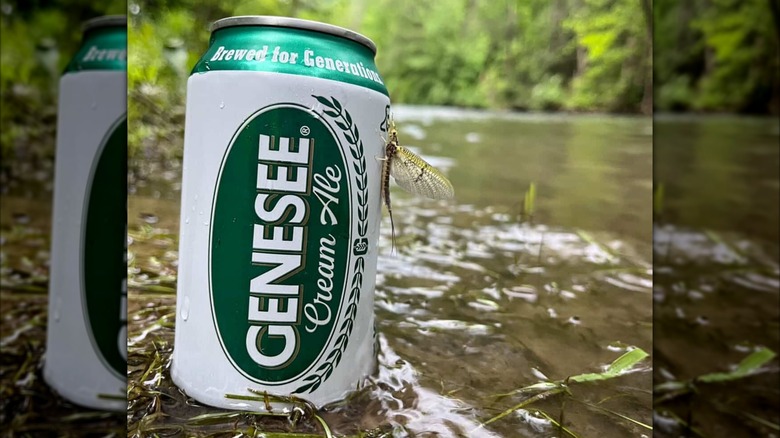
It's no secret many popular beer styles hail from Europe, but the cream ale is uniquely and entirely American. It dates back to the 1800s, and it's lager-adjacent with a fresh taste, lots of carbonation, and a smooth, easy drinkability. It's the perfect beer for hot and sunny summer afternoons, and even though the style has been around for a long time, it truly found its time to shine with the 1960s-era release of Genesee Cream Ale.
Affectionately known as Genny, the Rochester, New York-based beer hasn't spread much past Pennsylvania and Ohio, and that's a downright shame. The brewery itself goes back to the 19th century, and the more recent creation of Genny was an attempt to make something accessible to all kinds of beer drinkers. It spent some time as one of the country's best-selling beers, it's won some serious awards, and it's still beloved as one of the best of the ultra-affordable six packs on the market. It's the taste of backyard BBQ, hanging out at a lake, mowing the lawn in the summer, or kicking back with friends — and it's been that way for a long time.
Ommegang's Three Philosophers (Quadrupel Belgian Ale)
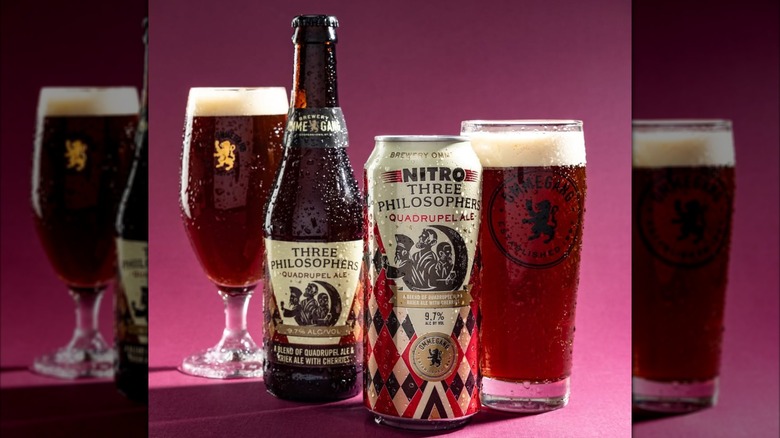
We're heading to Cooperstown, New York and the Ommegang Brewery for this one. The name has a pretty neat history and harkens back to 16th century parades thrown in honor of Holy Roman Emperor King Charles V, so you already know you're getting some neat history here. Ommegang's Three Philosophers is credited with helping to open the U.S. to the idea of heavy-hitting Belgian-style ales, and they did it in a super interesting way. It's technically somewhere between a quadruple Belgian — so you're getting something high-alcohol and ultra-flavorful — and a kriek, which brings a pretty delightful fruitiness to the party.
Even though Trappist traditions of brewing reach to the 6th century, quadruples are strangely recent. Those only go back to 1991, just six years before Ommegang opened. Three Philosophers was so popular that by 2005, a whopping 5 million bottles had made their way out the door. The brewery's still innovation, with a Nitro Three Philosophers available, as well. Both options remain a neat demonstration of what happens when traditional Belgian styles get a bit of an American reimagining.
Ska Brewing's Mexican Logger (Mexican-style lager)
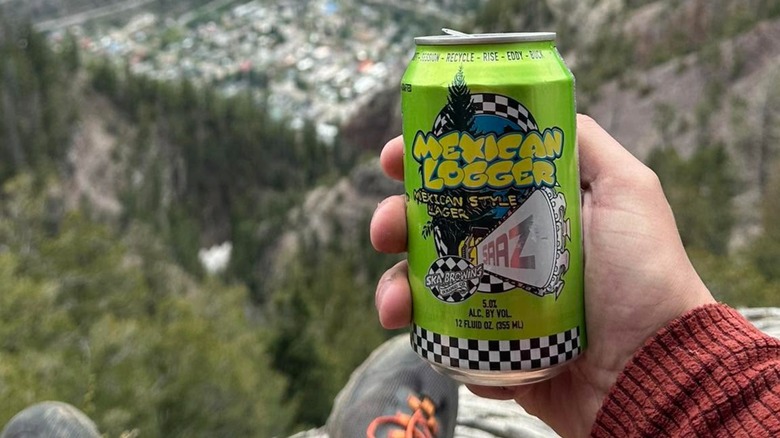
There are a lot of standout options if you're looking for a great Mexican beer. But if you're wondering what an American brewer can do with a Mexican-style lager, look no further than Ska Brewing and its iconic Mexican Logger. Based in Durango, Colorado, the brewery has won a number of accolades for the lager, which it advertises as the perfect companion for a little end-of-the-day relaxation. Across Ska Brewing's footprint, it's such a beloved part of summertime tradition its annual reappearance on shelves is eagerly awaited and reported.
Celebrated for being an outstanding example of what a light, refreshing, and flavorful lager should be, it was initially made as an absolutely wonderful statement about craft beer. The industry has a reputation for putting out complex, heavy, thoughtfully-created beers, so much so that Ska's founders have said that when that height-of-the-summer craving from something light and refreshing hit, they felt they needed to pick up their Mexican lagers while going incognito. So they made their own — and it's a delightful reminder that life's too short to drink something other than what you love.
Dogfish Head's World Wide Stout (Stout)
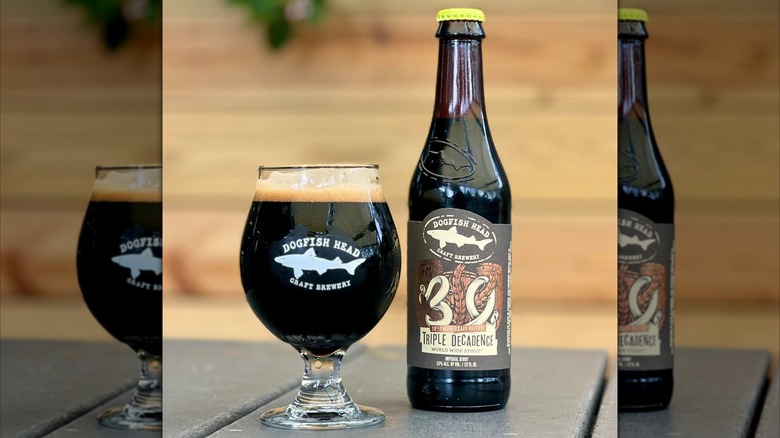
It was kind of a given that Dogfish Head was going to show up, as the groundbreaking craft brewery has been a leader in wild, over-the-top beermaking. Delaware's most famous brewery has made headlines for wildly creative offerings like a beer made from crushed meteorites and a beer that uses the same ingredients as pepper spray, but we're going to say the must-try of the lineup here is one that's a little less out there: its World Wide Stout.
Around since 1999, it's renowned for being an incredibly rich, luxurious-tasting beer that's more than just a great example of a stout. And since you're getting a beer that's between 15 and 20% ABV, this is a great one for aging — much like a fine wine. A lot of people have a lot of opinions about aging beer, but Dogfish promises the World Wide Stout will undergo noticeable changes with time, becoming smoother and more port-forward. We also love this one because there are regularly released variations, like the Utopias Barrel-Aged World Wide Stout (done in a partnership with Sam Adams) and the maple, milk, and coffee flavored Wake Up World Wide Stout.
Firestone Walker Pivo (Pilsner)
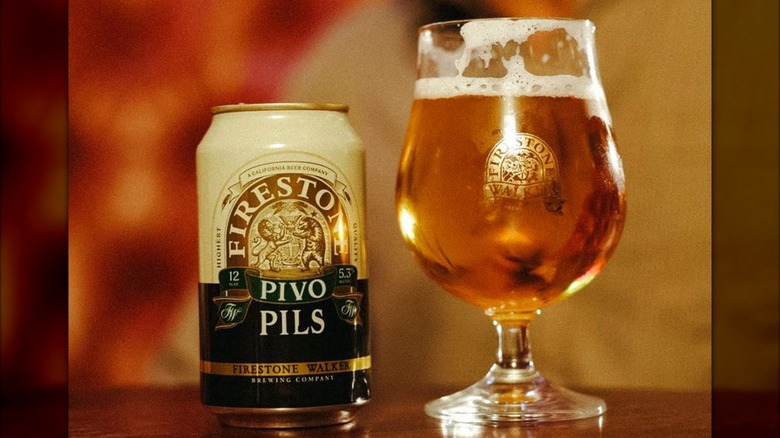
IPAs are one of the most popular craft beer styles in the U.S., and you'll find standout IPAs being brewed in each and every state. But these ultra-hoppy beers can be something that you need to be in the mood for. Consequently, Firestone Walker's Pivo has been credited with switching up the narrative with a reminder that well-made pilsners deserve a place among the nation's most beloved styles, as well.
It's not only won some serious fans stateside, but some huge international awards, too, including gold medals from the Brussels Beer Challenge in Belgium. Hops and malts might be German, but Firestone Walker is all-American, with several locations across California. It advertises Pivo as the brewmaster's favorite, and we can see why. It's a beer that's designed to be light and refreshing — perfect for sipping under the California sun. Spice and pine notes popular in those IPAs are relatively non-existent here, and are instead replaced with pineapple and orange. It's hoppy without being too hoppy, and it's downright tasty.
Ballast Point's Sculpin (IPA)
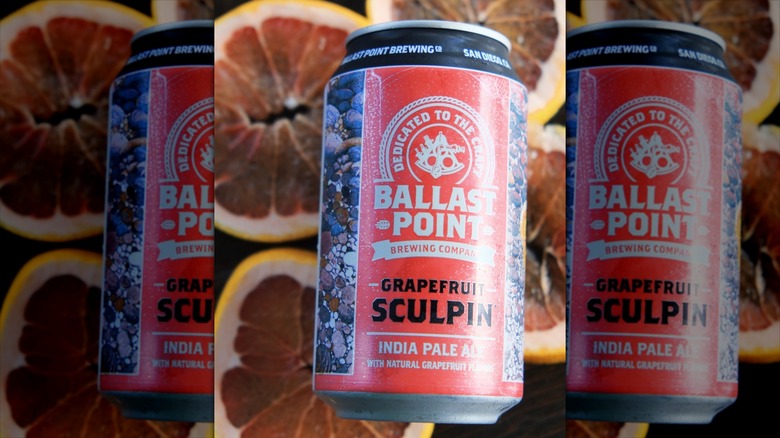
You'll hear Ballast Point mentioned when it comes time to talk about the best breweries in the U.S., and that's largely because it's been front and center in the development of the country's craft beer scene. While the brewery itself has had something of an up-and-down story over time, there's no denying that Sculpin is the flagship IPA that somewhat helped America become in the mood to take IPAs seriously. That alone makes it iconic, but have we mentioned that it's brought home dozens of awards?
Some industry publications have called this Ballast Point beer one of the best around, full stop. It comes with an accessible but respectable 7% ABV, and leans enough into the citrusy and fruity side of things that it's a great intro into IPAs. As a bonus, the Sculpin line has expanded into several hazy IPAs, as well as a highly respected grapefruit version.
Sam Adams' Boston Lager (Boston/Vienna Lager)
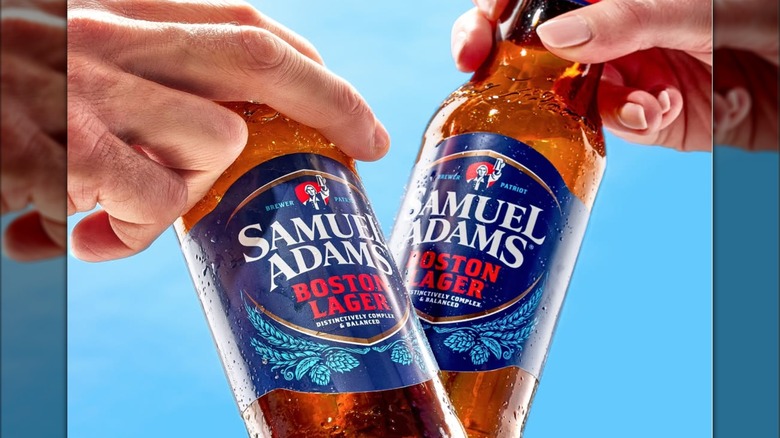
You knew Sam Adams was going to get a shout-out here, right? After all, it's the brewery that went from kitchen experiment to craft beer icon. Even though you'll hear people argue it's gotten way too big to be considered craft beer any more, there's something truly incredible about a brand that was built by a founder who started out by hawking his own beer to Boston bars. While the product line has pretty famously grown over the years, we'd suggest that every beer lover needs to try the OG Boston lager at least once.
Founder Jim Koch debuted this back in the 1980s, but it's not quite the same thing you'll get today. Over the years, the spicy-and-sweet lager — which is technically a Vienna-style lager — has gotten a bit of an overhaul. Hops are now left on the vine for just a tad longer to maximize flavor, and in 2023, the official brewing process got a couple changes. That included water treatment procedures designed to make the beer even smoother. Frankly, it's a testament to the company's promises to never decide something's good enough.
Bell's Oberon (Wheat ale)
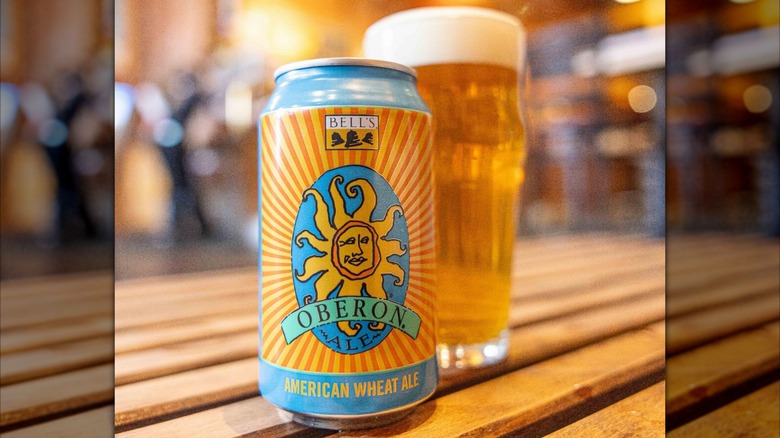
Being able to find your favorite beer on the shelves year-round is obviously a great thing, but there's also something special about the moment you find your favorite seasonal beer for the first time each year. Bell's Oberon is a simply stellar wheat beer that's only sold from the end of March to some time in September. In fact, you'll find fans who consider its annual reappearance a sign that winter is finally over and summer's on the way.
The idea behind Oberon was to create a beer you're going to want to sip on during those sultry summer days. It's the marriage of a light Belgian beer with American yeast, and the result is a cloudy beer with an outstanding, bright orange color. It's a little spicy, a little citrusy, and contains a lot of summertime vibes. If you're bummed that it's not available all year, we have some good news. From October to March, you'll find Oberon Eclipse taking its place. It's a little more spicy and a little darker, but still delish.
Burley Oak Brewing Company's Brown Butter Apple Pie JREAM (Fruited Sour)
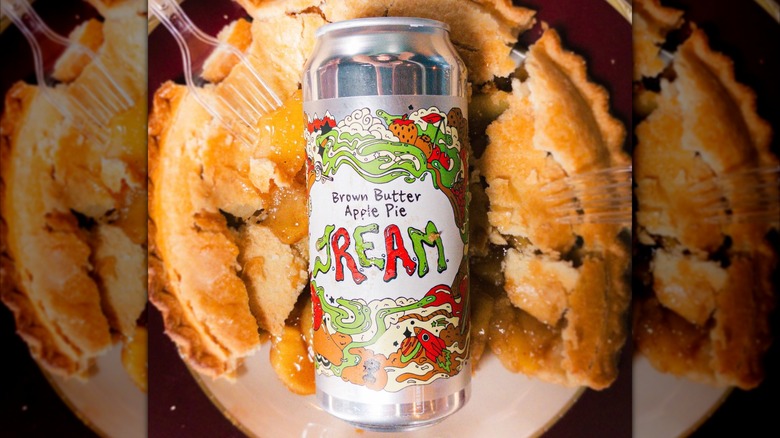
This one's a little bit different, as we're only really calling out a specific beer from here for the sake of continuity. Maryland's Burley Oak Brewing Company has been putting out all kinds of funky flavors in its JREAM series since 2016. And when it comes to offerings that are current at the time of this writing, we like the Brown Butter Apple Pie JREAM, because who doesn't love apple pie?
It might be the perfect beer for those times when you feel like dessert but don't want anything too heavy or too sweet. It's a little tart, a little spicy, wonderfully creamy, and essentially a dessert in a can (for real). Generally speaking, Burley Oak takes a Berliner weisse and ... well, things just kind of escalate from there. Fruits and milk sugar get added to turn that basic beer into a fruit sour that's pretty much guaranteed to get rave reviews.
This brewery is also a wonderful study in the best of the craft beer industry. It's growing its own grain, was funded via Kickstarter, and the owner is likely to be on hand if you visit. Plus, since there's been dozens of flavors released, you're never quite sure what's going to pop up next.
Russian River Brewing Comany's Damnation (Belgian-style golden ale)
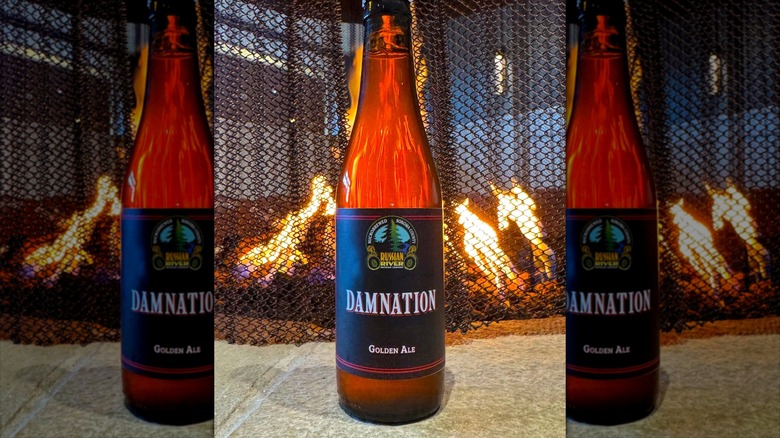
If you haven't been paying attention to the Russian River Brewing Company, you've been missing out in a big way. The California brewery has been putting out a beer that's been recognized by the American Homebrewers Association as one of the best in the country for multiple years – and that's not even the one we want to talk about right now. Pliny the Elder is a much-lauded IPA, but we think Damnation deserves a moment in the spotlight, too.
This Belgian-style golden ale has earned some impressive accolades, such as a silver medal at the 2025 World Beer Cup. That's in addition to the praise it's received for being the perfect balance between fruit and spice. Additionally, we love this one for being a great example of in-bottle fermentation. Because let's be honest here: The idea that sediment in beer is a bad thing and it's bound to make you sick is one of the biggest beer myths that still gets repeated as fact. Damnation's on-purpose sediment helps make a beer that's not only flavorful, but contains just the right amount of carbonation to complete the sensory experience.
Pabst's Brewing Company's PBR (Lager)
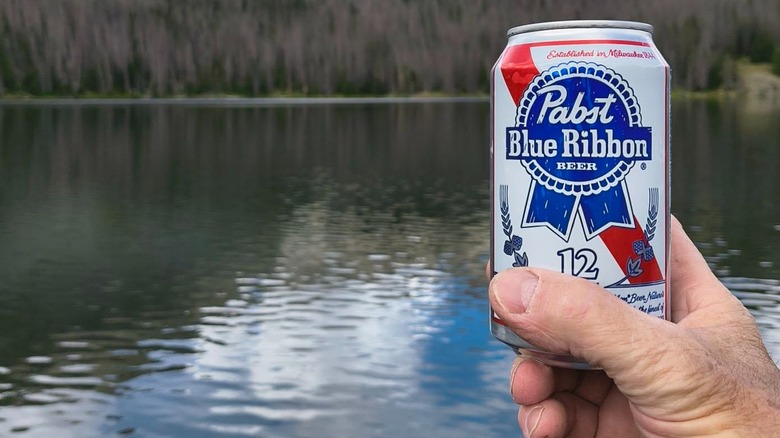
It's true: This writer has a particular fondness for PBR and is proud to admit it. Most of that fondness — for the lager more properly known as Pabst Blue Ribbon — comes from the fact that it's the perfect and affordable beer for loading up coolers before camping trips. It's one of the beers that defined the 1960s, but it still holds up today — and there are a ton of people who would agree. It wouldn't be an exaggeration to consider this one of the country's flagship beers for a number of reasons.
For starters, there really was a Pabst: He was a steamship captain who turned brewery president back in 1872. And the blue ribbon is legit, too. It was a marketing tactic from that same era, when real blue ribbons were wrapped around each individual bottle. There's still a lot that goes into this one, as well, from water that's carefully filtered to ensure each and every can is the same, to fine-tuning all the small details to account for variations in ingredients. Simply put, we'd argue there's no better beer for backyard cookouts.
New Belgium's Voodoo Ranger/Juicy Haze (IPA/Hazy IPA)
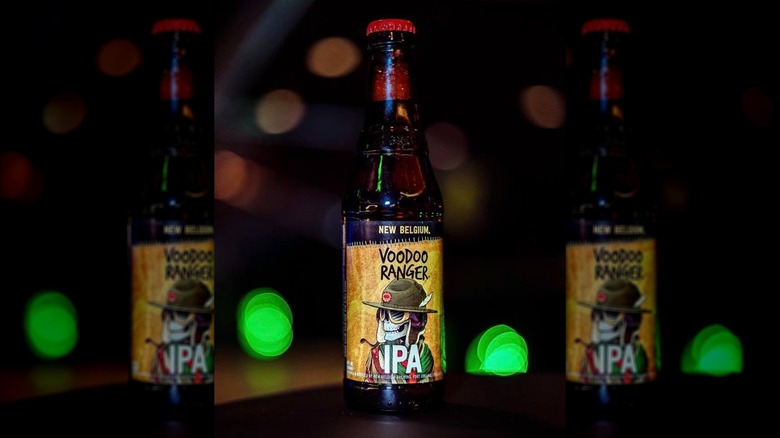
If you're a fan of IPAs and hazy IPAs, there's a good chance you've already tried New Belgium's Voodoo Ranger. It's often been among the best-selling craft IPAs in the country, and it's an interesting study in the importance of marketing and mass appeal that targets specifics groups and communities, like gamers. The company took craft beer and made it accessible and fun, and it worked — so much so that this became the first IPA some people enjoyed drinking.
While it might sound like it leans into gimmick territory, that's the farthest thing from the truth. New Belgium has gone out of its way to stress that quality and care come first, but high quality beers also don't need to be the sort of thing you need to pontificate away over. We'd recommend starting with the standard offering then, though if you like beers that are on the sweeter side, give its Juicy Haze a try. The hops don't drown out the other pleasant flavors of citrus and malt, the feel is delightful, and it doesn't hang around too long to wear out its welcome.
Deschutes Brewery's Black Butte (Porter/Non-alcoholic)
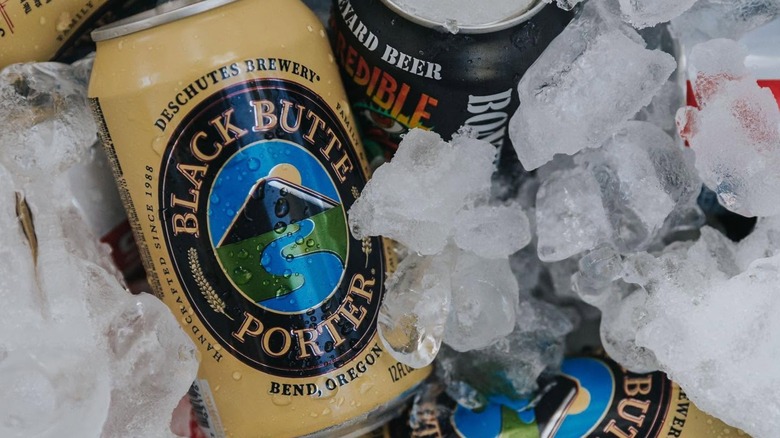
There's a lot to love about Oregon's Deschutes Brewery, but we're going to talk about two things in particular. First, this brewery is unusual in that a dark porter became one of its most beloved products. Dark beers have traditionally been a bit of a harder sell than light beers, but Black Butte has been a top seller since its 1988 debut. It's easy to see why, as it checks all the boxes. It's chocolate-forward, there's some coffee vibes going on here, and it's not nearly as heavy as you'd expect. It's delightfully creamy without delving too deeply into dessert territory.
But what about the second thing? Well, there's also a non-alcoholic version available — and we here at Tasting Table declared Black Butte NA to be the best nonalcoholic beer on the market. It compromises on none of the flavor, and is such a great example of what a nonalcoholic beer can be that it might even be mistaken for the OG porter (which clocks in at a very drinkable 5.5% ABV).
Cutting-edge tech and brewing processes are partnered with the same ingredients that go into the alcoholic version for the alcogol-free sibling. In fact, we recommend that anyone who doubts the drinkability of NA beers give this one a try.
Wayfinder's Secret Secret (Czech Dark Lager)
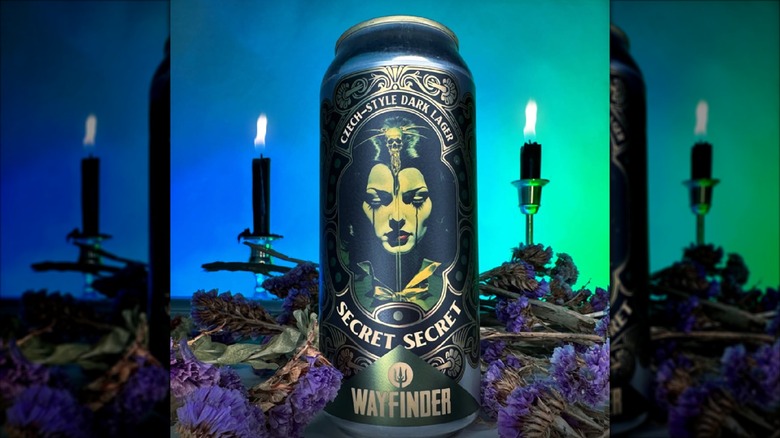
Oregon is a hotspot for brewing, and the state's Wayfinder has brought home a ton of awards that include accolades for its Secret Secret. In 2026, Secret Secret secured a third-year-running gold medal in the Dark German + European Lager category at the Oregon Beer Awards, and that's definitely not the only time it's taken top competition honors.
Technically speaking, it's a Czech dark lager, and you can picture chocolatey, fruity sweetness. It's delicious, sure, but we also like it because of the work and ethos that's going on in the background. Wayfinder prides itself on taking traditional styles and old-school practices, then adding a truly American flair to create something that's a mix of old and new. At the end of the day, that's where the American brewing industry really shines. When old traditions are honored while given new life, it becomes the best of both worlds (and uniquely American).
Methodology
Since there are so many outstanding beers to choose from, we needed to recommend the must-try American beers on merits beyond subjective goodness. We looked for beers that are old school favorites, those that had a landmark impact on the nation's beer industry, and opened the door for other breweries and brands. Some have been recommended for garnering international awards, for bringing together centuries-old traditions and American ingenuity, and some for having massive followings.