

5 Disadvantages Of Butcher Block Countertops
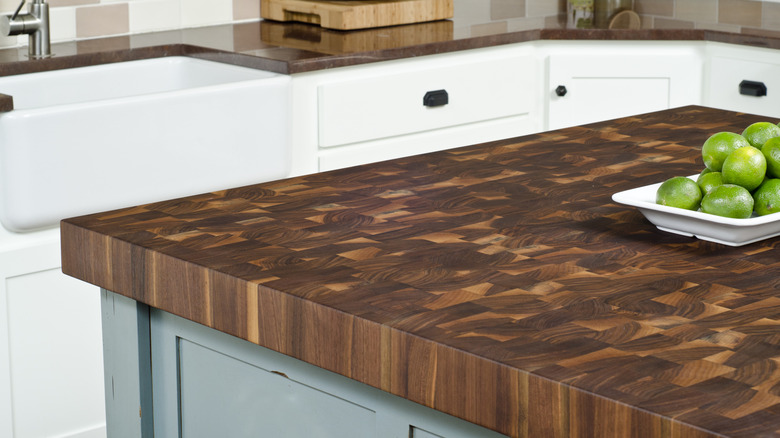
Butcher block countertops were a popular feature in homes in the 1970s and 1980s and remain a common choice today. Prized for their warm, rustic, and natural aesthetic as well as their no-frills functionality, they are an affordable alternative to luxury countertop materials like granite, marble, and quartzite. Yet when looking for the perfect countertop material for your kitchen, it's important to consider the pros and cons of each option. This will help you avoid wasting money on one that doesn't actually fit your lifestyle.
For instance, the beauty, durability, and longevity of butcher block largely depend on the quality of the wood used and the construction of the countertop. Solid hardwoods like maple tend to last longer, while softer, budget-friendly options like poplar or pine may become stained, scratched, or gouged more easily. Your consistency in keeping up with butcher block maintenance will also affect how long it lasts. These countertops are considered by some to be high-maintenance and require regular cleaning as well as periodic oiling or refinishing.
One of the biggest mistakes you can make when opting for butcher block countertops is ignoring the disadvantages. So as you explore different kitchen countertop materials, think about how you plan on using them, how much time you want to spend caring for the surface, and whether you can commit to protecting it from damage. Take the time to read reviews or comments from customers explaining what they wish they had known before choosing wooden counters for their kitchen, including these five common issues.
Porous and prone to stains and moisture damage
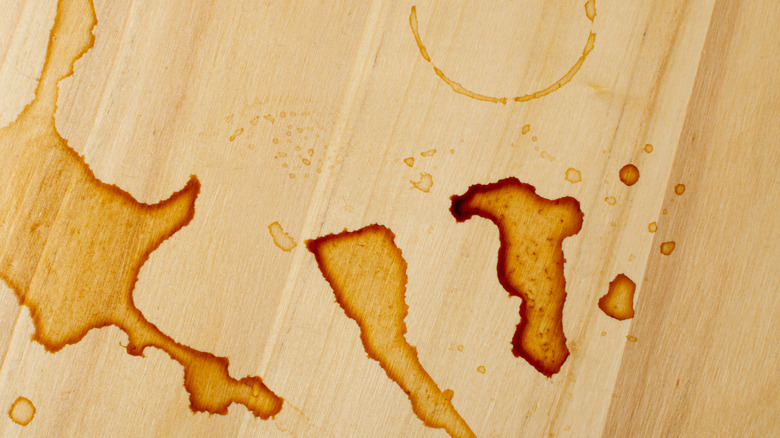
Wood is a porous material that is vulnerable to water intrusion. When your countertops regularly come into contact with water, or if water sits on the surface for a long time, it can seep into the microscopic holes in the wood. This can increase the risk of mold and mildew growth, which isn't ideal in a food prep space. Water intrusion may also cause the wood to warp over time, making it even more susceptible to stains and other damage.
Though it's easy to clean your countertops daily with mild soap and warm water, letting liquids sit on the surface can cause stains. Certain liquids can easily stain the surface, like red wine, berry juices, raw meat, blood, tomato sauce, vinegar, and cooking oils. Wet metal cookware and utensils can leave dark or rusty stains on the wood. Harsh cleaning products and chemicals can damage the finish or oils, causing discoloration. If your countertops are regularly sealed, they may have greater protection from stains, but oil alone doesn't make the surface waterproof.
The upside is that you can easily remove stubborn stains from wood with household cleaning products. One go-to solution for deep-set stains is to mix a small amount of hydrogen peroxide with water and dab the solution onto the affected area with a clean cloth. If that method doesn't work, you will need to sand off the stain and re-oil and refinish the wood as appropriate.
Susceptible to burns, cracks, gouges, cuts, and dings
Another drawback of wooden countertops is that they are easier to damage than many natural stone or solid surface materials. Even solid hardwoods can become damaged, especially if you cut directly on the countertop surface. Although part of the appeal of a butcher block countertop is its ability to serve as a giant cutting board, you should try to protect the surface from knives and other sharp objects to extend its lifespan. If you do notice gouges, cuts, scratches, or dings, you can often sand them out with fine-grit sandpaper and then re-oil the wood as appropriate.
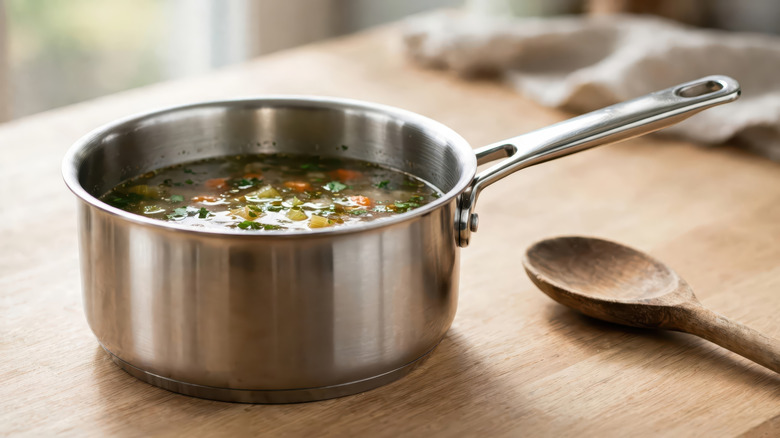
Your wooden surfaces can also be burned by hot cookware, so you should always use a kitchen cloth, cutting board, or trivet to protect them. While burns can sometimes be sanded away, repeated damage, sanding, and repairs may compromise the integrity of the wood. If water infiltrates the wood and humidity fluctuates, you may notice swelling, shrinking, and cracking. This could lead to gaps that get wider over time and cause the strips of wood to come apart. Water and other liquids like vinegar can dissolve the glue that binds the strips of wood or other materials together, resulting in cracks and gaps. Minor cracks and seam separation can be repaired with water-resistant adhesives or food-safe wood glue, but for larger areas of damage, you may need to consider whether to repair or replace your countertops.
Require extra care for food safety
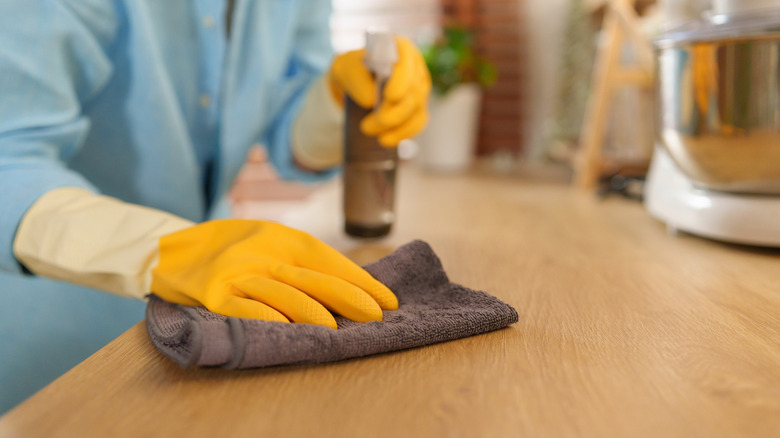
All countertops should be cleaned regularly, particularly after food preparation. You should also know the difference between cleaning, disinfecting, and sanitizing to properly remove germs and bacteria after the countertop is exposed to something like raw meat. While butcher block isn't difficult to clean, the wood is porous. If your countertop isn't properly sealed, the cracks and microscopic holes in the wood can become contaminated. This is true even for wood species that have antimicrobial properties. If the wood is subjected to prolonged water damage, mold and mildew may also begin to grow in damp areas. With regular cleaning and sanitizing, you can reduce the risk of spreading bacteria or mold to food or other surfaces.
Remove all food debris after use with a clean, damp cloth, then clean the surface with warm water, mild dish soap, and a soft sponge. You can use a mixture of white vinegar and water for a deeper clean, but don't use Julia Child's somewhat controversial method for cleaning butcher block countertops: She cleaned them with abrasive cleaners that can damage wood. Instead, try sprinkling the surface with coarse sea salt and rubbing it with a cut lemon. If you're concerned about bacteria, germs, and food safety, you might want to opt for a different countertop material. Nonporous countertops like solid surface, glass, quartz, porcelain, and stainless steel are generally easier to clean and sanitize.
Require regular oiling or refinishing
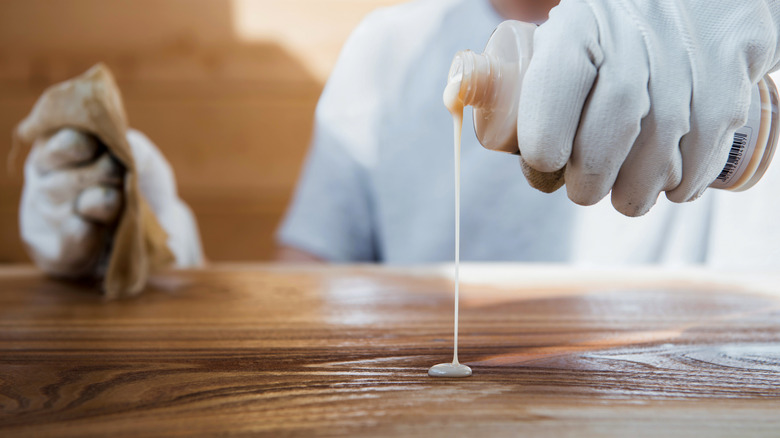
If you prefer a minimalist, low-maintenance kitchen, butcher block countertops may not be for you. They can require considerable upkeep to maintain their beauty and longevity and to prevent issues such as stains, mold, mildew, and bacteria. In fact, one thing that many homeowners wish they knew before installing wooden countertops is how much maintenance they can require.
The best way to keep them in tip-top shape is to follow the "Rule of Seven," which directs you to apply a 100% pure, food-grade oil like mineral, walnut, or tung to the surface each day for seven days after installation, followed by once per week for the next seven months, and once a month for the seven months following. Going forward, you can apply oil whenever your countertops look dry or dull, or after sanding them to remove stains or damage. Never use cooking oils, as those will become rancid and smelly. Food-grade oils are a must, as the countertop is a food prep surface, and pure oils are odorless, tasteless, clear, and won't go rancid.
You should also seal the surface with a polyurethane sealant every month during the first year, and every six months thereafter. Because there is no permanent sealant for wood, you will need to maintain this indefinitely. If you don't seal your countertops properly or re-seal them regularly, the wood can retain moisture, become warped and cracked, and become more vulnerable to stains and bacteria. Long-term maintenance will preserve the beauty of the wood, maintain its durability, and extend its lifespan.
Lifespan relies heavily on the quality of the wood and how well it is maintained
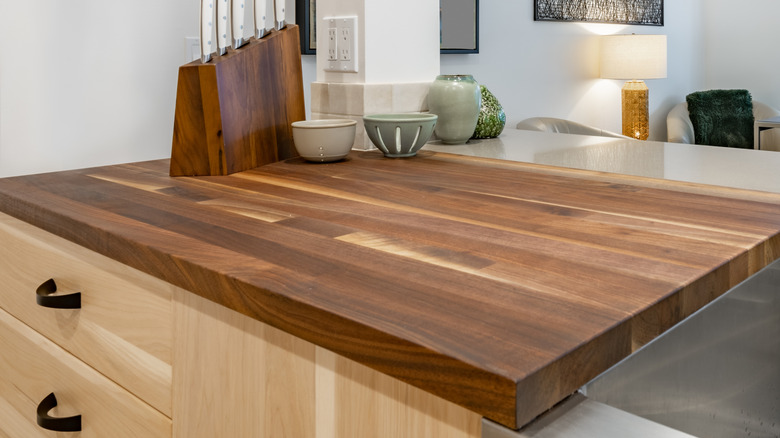
One benefit of butcher block countertops that is often touted is their longevity. If a high-quality, solid wood countertop is properly cared for, it can last for decades. However, its ultimate lifespan depends on many factors: the quality of the wood, the way the countertop is constructed, its environment and usage, and how well it is maintained. If you want to make sure it lasts as long as possible, choose a solid hardwood like maple, black walnut, or cherry. If you live in a humid region or will be installing it in a moisture-prone area, opt for teak.
An end-grain countertop is more expensive, but its construction makes it more durable and resistant to damage. Face-grain construction is the least durable and most likely to experience gouges, scratches, and dents. Edge grain is durable and works well in large areas, and is less expensive than end grain. Opting for a high-end finish can also provide the surface with better protection, as can being consistent about cleaning, maintenance, and repairs.
All in all, you should consider your budget, cooking habits, lifestyle, willingness to perform maintenance, and overall kitchen aesthetic when making your choice. If you determine that wood isn't the best material for your kitchen, there are many other options that are both durable and affordable. For instance, butcher block is the one material that Martha Stewart avoids for countertops; instead, she prefers zinc.