

How To Know When To Repair Vs Replace Your Countertops
We may receive a commission on purchases made from links.
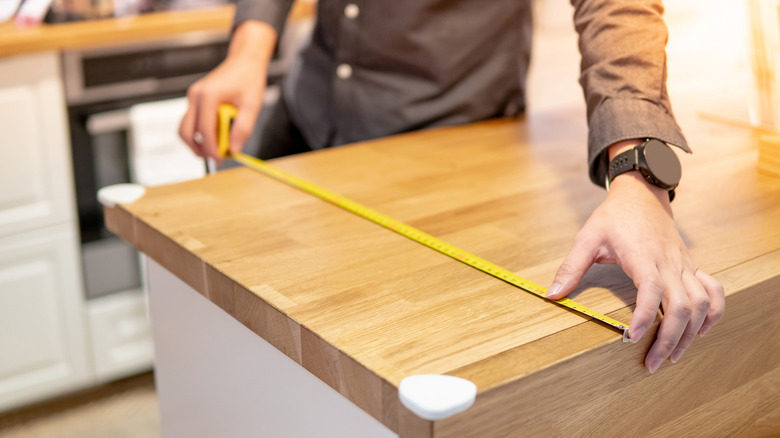
Your countertops are often the most heavily used part of the kitchen, and they inevitably develop scratches, stains, or cracks over time. When any damage to the surface has reached the point where it's no longer a pleasure to work with or look at, you have two options: repair and refresh the finish, or replace the whole thing. Replacing your kitchen countertops is an expensive endeavor, so your first instinct might be to opt for a refinish — but it's not always the best use of money.
There are a few things to take into consideration, but the most obvious is the level of damage. Scuffs, scratches, and chips can be filled, buffed, or painted, but larger cracks or warping can be a sign that the structure is compromised. The material of the kitchen counter will determine how easy it is to repair. Surfaces like butcher's block or Corian can be sorted out with a bit of DIY, but natural stone generally needs a professional's touch, which will increase the cost of repairs significantly.
Some abide by the rule that if the repair is more than 50% of the cost to replace, then a replacement is the best option, but this is when you need to consider the age of the countertop. A crack in a new and otherwise unscathed counter is probably better repaired. If you're considering refinishing a countertop that's nearing the end of its expected lifespan, it would make sense to simply replace it a little earlier than you might have planned.
Tips for repairing a kitchen countertop
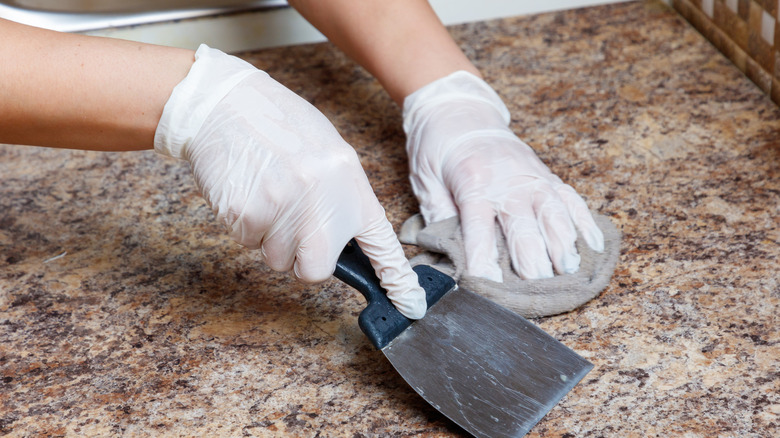
If you've decided that repairing your kitchen countertops is the best choice, it's worth taking the time and effort to do it correctly. This isn't time to reach for whatever superglue you have in the drawer — the right equipment will help ensure that the repair is a seamless one, but what that equipment is will depend on what kind of countertop material you're working with.
Laminate countertops aren't known for their durability, but repair kits can be surprisingly effective at filling in scratches. A product like the Coconix Furniture Repair Kit comes with different colored paste that can be mixed to get the exact match for your countertop. For laminate that's lifting at the edges, a contact cement will do the trick. Some people opt for painting laminate as a way to kitchen their kitchen without a remodel. This can be a good option if there's extensive staining, but it won't cover deep scratches or chips.
Chips or small cracks in stone or solid surfaces can be filled with an epoxy like the Instant Install 29 Complete Epoxy Permanent Repair Kit, which likewise can be mixed to the color of your particular surface. For deeper cracks or loose seams, you might be looking at structural damage, in which case it will need professional repairs.
Butcher block countertops are the most straightforward to repair. They can be easily patched with wood filler, sanded back to remove scratches, and resealed to give them a fresh look. Just be aware of large cracks, which if not treated correctly can let in water that will cause structural damage or mold.