

The Easiest Way To Know If Your Countertops Need Replacing
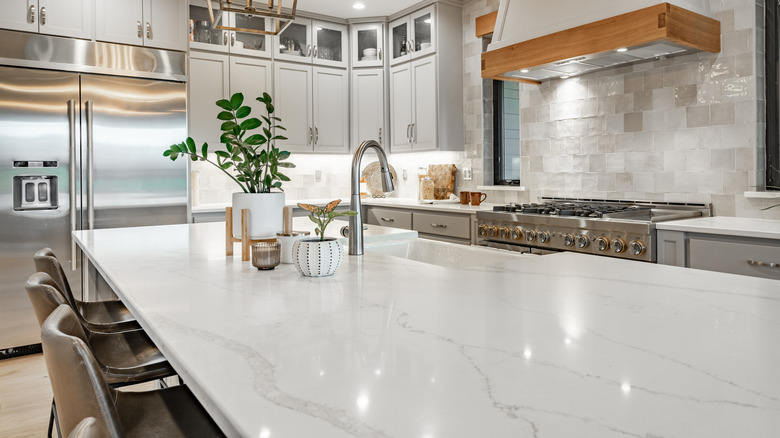
When trying to sell or add value to your home, the kitchen is a great place to start. It is a hot spot that many new buyers will look at, and a space you probably spend a good amount of time in. A kitchen remodel can garner 70% to 96% return on the money you spend, so it's also a wise long-term investment if you are in the market for upgrades. While your cabinets might just need updated hardware, the countertops can pose a trickier problem to tackle — particularly when it comes to deciding between a replacement and refurbishment.
Deciding between replacing and refurbishing your kitchen countertops is something that Cara Woodhouse, founder and principal designer of Cara Woodhouse Interiors, has dealt with quite a lot. She told Tasting Table that there are some clear-cut signs that a remodel is necessary. "Heavy staining that has penetrated deep into porous materials or widespread etching that has altered the surface integrity often requires more intensive work than it is worth," said Woodhouse. "At that point, you are investing in a temporary fix rather than a long-term solution."
While age comes as a common concern, that isn't necessarily a sign you need to replace your counters. "Age can absolutely be a determining factor when deciding whether to refurbish or replace countertops, but it is less about the number of years and more about how the material has aged over time," Woodhouse advised.
When it's time to go out with the old and in with the new
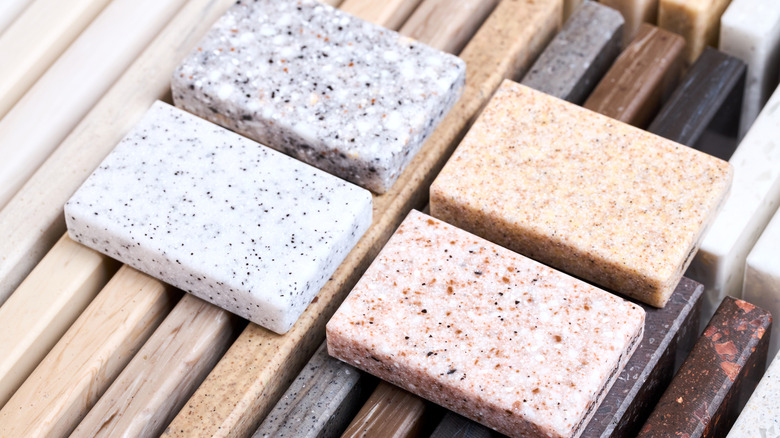
Some old countertops are definitely worth keeping, Woodhouse said. "Natural stones like marble or limestone can patina beautifully and may be worth restoring if the wear is surface level, such as light etching or minor staining." In general, she recommended, "If the issues are cosmetic, refurbishment can be a smart and sustainable choice." She also warned, though, "From a cost perspective, there is a tipping point where refurbishment becomes inefficient." When investing in your home, it's best to go for countertop materials that get better with age.
Countertop trends can become outdated, but Woodhouse warned there could be bigger issues with older components that go beyond style. "Older installations may also reflect outdated fabrication methods, thinner slabs, or improper sealing techniques that do not meet today's standards," she said, which makes refurbishing a no-go. "If you are repeatedly resealing, refinishing, or repairing problem areas, those costs begin to add up without truly extending the life of the material in a meaningful way."
Of course, if you must replace your countertops, Woodhouse suggested seeing it as a positive. "Replacement is not only more practical but also provides an opportunity to upgrade the quality, thickness, and fabrication of the stone, which ultimately adds more value to the home."