

These 12 Foods Have Way More Sugar Than You May Have Guessed
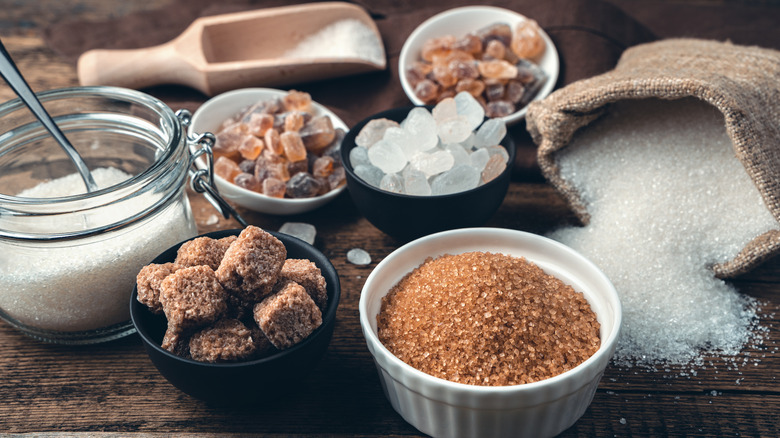
Unless you're a label hawk at the grocery store, you may not be aware of the startling amount of added sugar in our food. While candy bars and sugary sodas are obvious culprits, even seemingly innocent foods like white bread, sauces, and yogurts can be loaded with unexpected sugar. Sugar is a vital source of energy for humans that is found in nature in things like fruits, nuts, and even some vegetables. But too much sugar, and particularly added sugar, is associated with serious health problems, including hypertension, heart disease, diabetes, dental decay, and even cancer. There are plenty of foods that contain added sugars in many different forms, ranging from granulated white sugar to honey to high-fructose corn syrup.
Unsurprisingly for those in the know, it's the United States that consumes the most sugar globally (although many other countries are catching up). The average American adult consumes about 17 teaspoons of sugar per day, which is about 71 grams of sugar. But it's not just cans of coke or cookies that cause the problem. Unfortunately, drinking a single 13.7-ounce bottle of Starbucks Frappuccino contains 43 grams of sugar alone, so it's easy to see how quickly those teaspoons of sugar can add up.
While there is no recommended sugar consumption per day, USDA Dietary Guidelines for Americans recommend that children under 11 years old should not consume any added sugar whatsoever. The advice also mentions that although zero added sugars are recommended per day for adults, a single meal should contain only 10 grams of added sugar or fewer. Keep reading to find out where sugar might be sneaking up on you in your food choices.
Ketchup
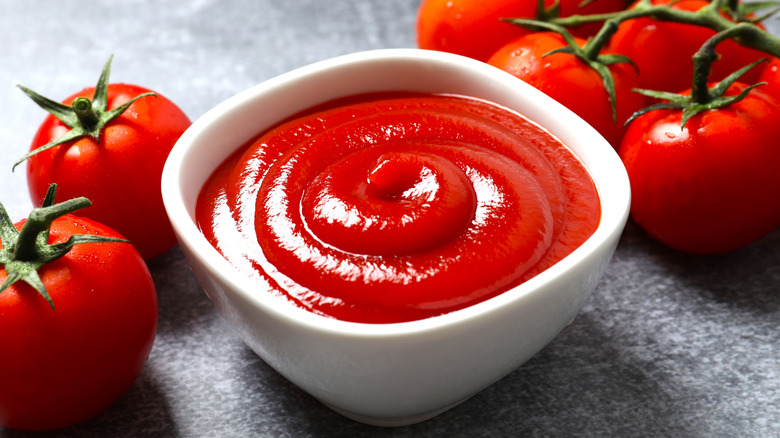
Whether you consider ketchup a sauce or a condiment, you should know that it contains more sugar than you'd likely assume. While tomatoes contain naturally occurring sugars, most ketchup brands add extra sugar or high fructose corn syrup to sweeten the tangy condiment. Unless you purposely seek out a low-sugar ketchup, it's likely to contain about 4 grams of sugar per tablespoon.
Canned baked beans
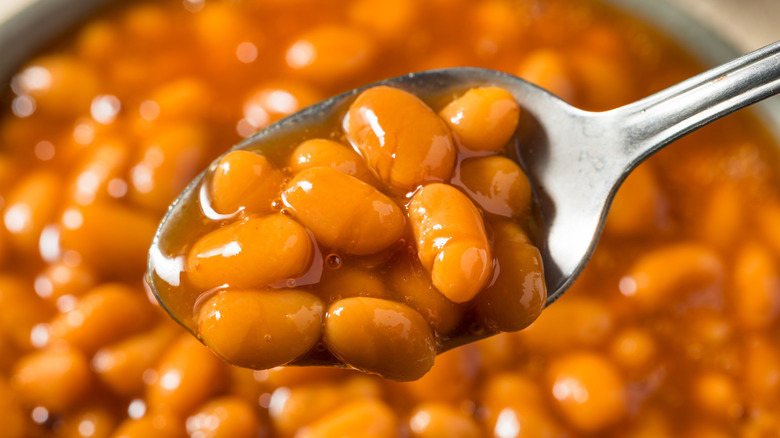
Canned baked beans can be hit or miss, but most of them have a substantial amount of sugar hiding in those saucy legumes. Bush's Original Baked Beans contain 12 grams of sugar per half-cup serving, which is only about 4 ounces of beans. Even baked beans from more wholesome-seeming brands like Amy's still have 10 grams of sugar per the same serving size, 8 grams of which are from added sugars.
Jams and jellies
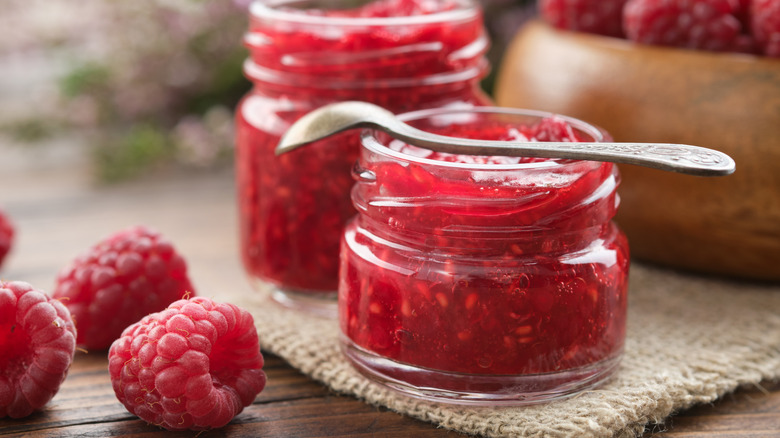
You'd think that fruit has enough natural sugars to make a jam or jelly without adding excess extra sugar, but unfortunately that's usually part of the commercial jam and jelly-making process, unless manufacturers turn to artificial sweeteners like erythritol and stevia. Smucker's Strawberry Jam and Bonne Maman Raspberry Preserves both have 12 grams of sugar per tablespoon, which isn't all that much jam. If you're looking for a jam with minimal sugar, you're better off making it yourself, or eating a bit less, but there are ways to upgrade store-bought jam that don't involve extra sugar.
Protein bars
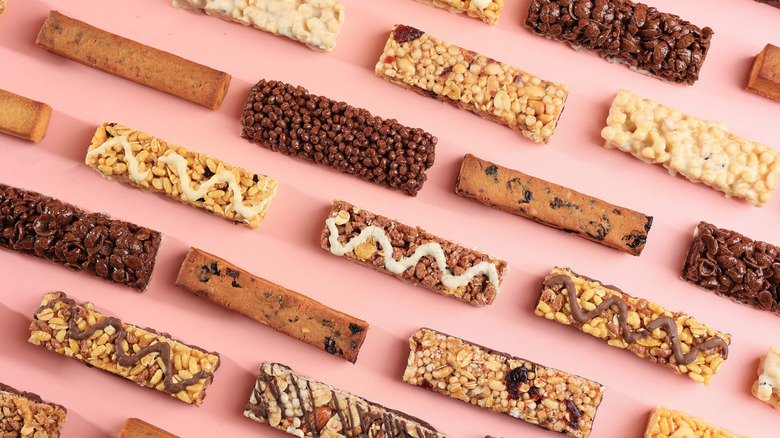
Generally marketed as post-workout snacks or healthy meals on the go, there are a lot of unhealthy protein bars on store shelves. Many protein bars that are lower in sugar often rely on artificial sweeteners like sucralose and sugar alcohols, giving them a lower overall sugar content, but some brands like GoMacro use less-refined sugars that creep up the sugar content, giving GoMacro bars around 13 grams of sugar per bar. Knowing this, do double-check the sugar content when buying protein bars.
Breakfast cereals
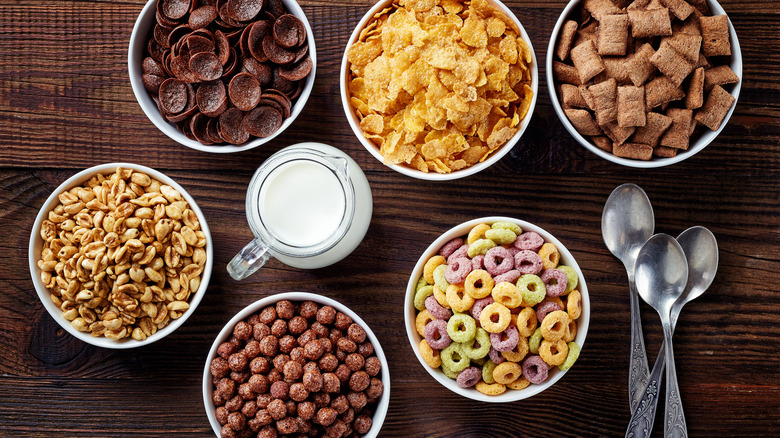
A staple of childhood and, if we're being honest, of many adulthoods, breakfast cereals can be loaded with hidden sugar and are less nutritious than you think. Popular sweet cereals like Cap'n Crunch have 16 grams of sugar per cup, while Honey Nut Cheerios have 12 grams of sugar per cup. And those sugar amounts are for dry cereal, not factoring in cow's milk, which tends to also have about 12 grams of sugar per cup, adding to the overall sugar content of that delicious bowl of cereal.
Granola
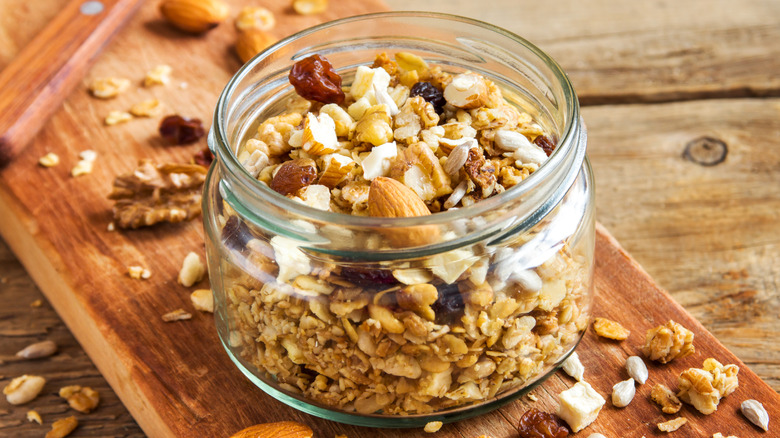
Similar to breakfast cereals, granola tends to hide a lot of unexpected sugar, especially those that include dried fruit or even chocolate. Target's Good & Gather French Vanilla Almond Granola has 16 grams of sugar for only two-thirds of a cup serving, for example. If you're a big granola fan but want to dial back the sugar content, making your own granola at home is easy and a great way to control what goes into it.
Yogurt
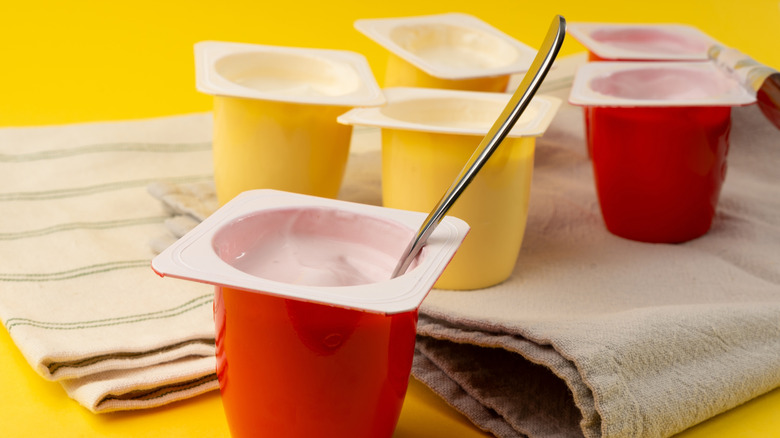
Yogurts always seems like a healthy choice, given that they usually contain a decent amount of protein. But many yogurts, especially flavored and fruit-infused varieties, contain a lot of sugar for such a small amount. Yogurt giant Yoplait's Original Strawberry Yogurt contains 18 grams of sugar in only 6 ounces, which makes sense given that sugar is the second ingredient after cultured low fat milk. To enjoy yogurt with less sugar, opt for plain, cultured yogurts like Icelandic skyr or Greek yogurts that usually have less added sugar.
Kombucha
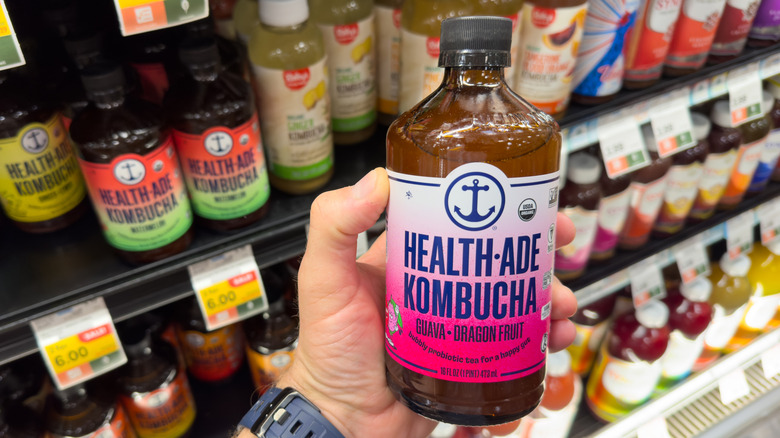
Many of us don't realize that sugar is actually essential to the process of making kombucha, as the beneficial bacteria and yeast feed on the sugar to ferment and turn the beverage from tea into kombucha. So it's only natural that kombucha would be higher in sugar, even if you don't expect it. Health Ade's Pink Lady Apple kombucha has 19 grams of sugar per 16-ounce bottle, while GT's Trilogy has 12 grams of sugar per 16-ounce serving. If you ferment your own kombucha, you'll have more control over the sugar content.
Sports drinks
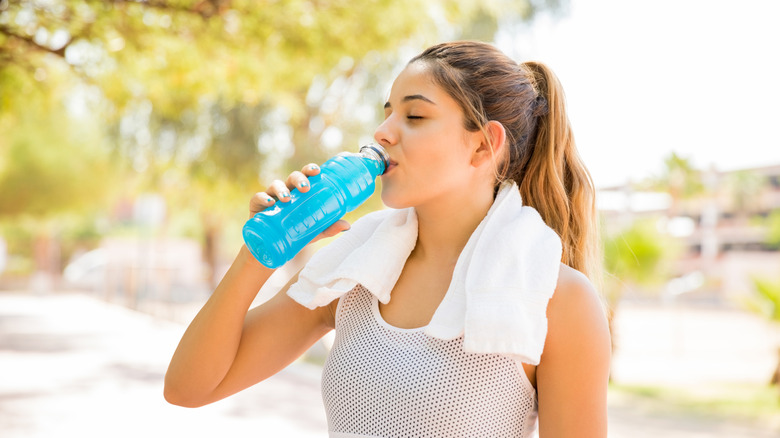
You're likely aware that many sodas are extremely high in sugar, but you might not have guessed that some sports drinks also come with a high sugar content. While it has electrolytes and carbs that help in recovery, classic Gatorade also has 21 grams of sugar per 12-ounce serving, while Bodyarmor's Strawberry Banana has 19 grams of sugar per bottle, 17 of which come from added sugar. Although your body does lose a lot during an intense workout, keep in mind what you replace those lost liquids and nutrients with.
Apple juice
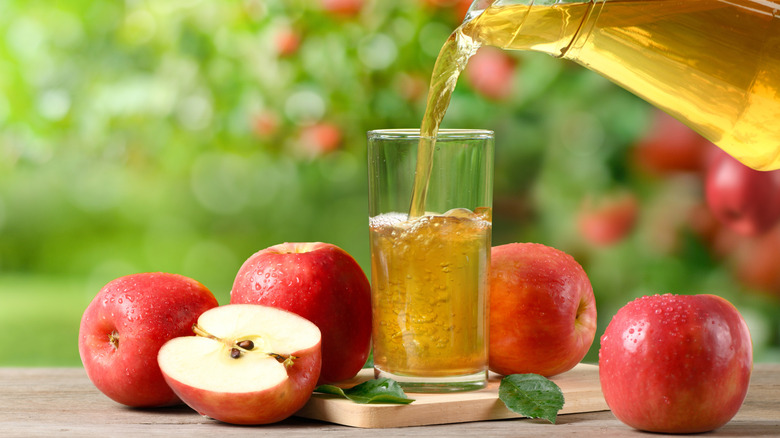
Apple juice is better for hydration than you might think, but that doesn't mean that it's sugar-free. Large apples can contain up to 25 grams of sugar each, and while it's fructose that's a naturally-occurring sugar, it still counts about the same as other sugars on a nutrition label. A single 8-ounce serving of Treetop apple juice contains 25 grams of sugar, which can add up quickly, especially for children as they aren't recommended to consume excess sugars.
Grape juice
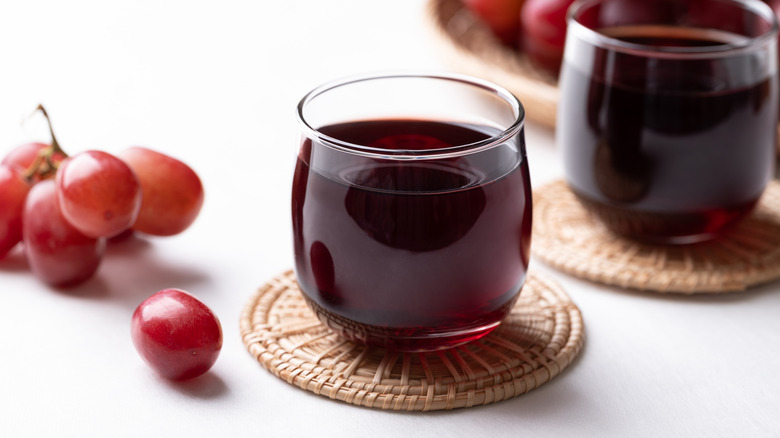
Another fruit juice that's popular among children is grape juice, which is generally loaded with even more sugar than apple juice. The popular brand Welch's 100% Grape Juice has a whopping 35 grams of sugar per 8-ounce serving, while our favorite underrated brand RW Knudsen's 100% Organic Just Concord Grape Juice with no added sugar still contains 34 grams of sugar in the same 8-ounce serving. It's important to be aware of how much sugar is in drinks, especially if caring for children.
Flavored coffee drinks
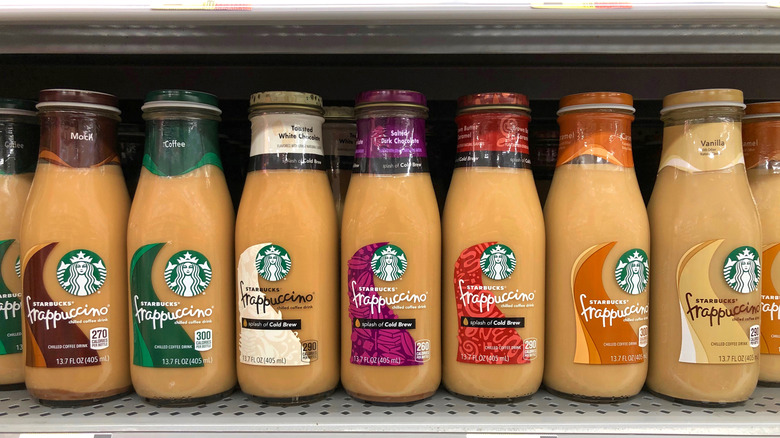
Last but not least in our roundup is flavored coffee drinks. Starbucks' famous bottled Frappuccino chilled coffee drinks can have anywhere up to a staggering 47 grams of sugar in just under 14 ounces of the caffeinated beverage, and most of those grams come from added sugar. Given the possible link between sugary drinks and cancer, it's important to limit your daily intake of sugar, so consider enjoying those refreshing coffee drinks sparingly and with caution.