

5 Fruits With More Fiber Than An Apple
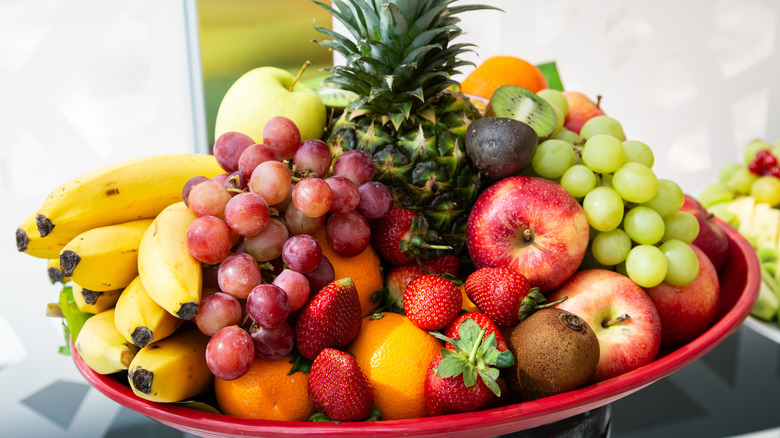
Fiber is a necessary nutrient to keep our bodies in top shape. It benefits our cardiovascular health, helps to regulate blood sugar, aids in weight management, supports a healthy gut microbiome, reduces inflammation, and might even prevent various types of cancer. According to the Dietary Guidelines for Americans (DGA), women between 19 and 50 years of age should consume 25-28 grams of fiber per day, decreasing to 22 grams after the age of 51. For men, the amounts in the same age groups are 31-34 grams decreasing to 28 grams per day.
Lucky for us, it's easy to meet our daily fiber requirements simply by adding fresh vegetables and fruits to our diet. That's why the DGA recommends we eat at least two servings of fruit per day. For instance, one large apple — weighing roughly about 8 ounces, which is equivalent to half a cup — contains 20% of the recommended daily value of dietary fiber. Whereas a medium apple with skin, roughly weighing 182 grams, will provide 4.5 grams of fiber.
While it may be true what they say about an apple a day, there are other fruits with a high fiber content that surpass the apple when it comes to the amount of fiber per serving. Here are five high-fiber fruits that may surprise you, plus facts and recipes to help you incorporate them into your everyday meals.
Passion fruit
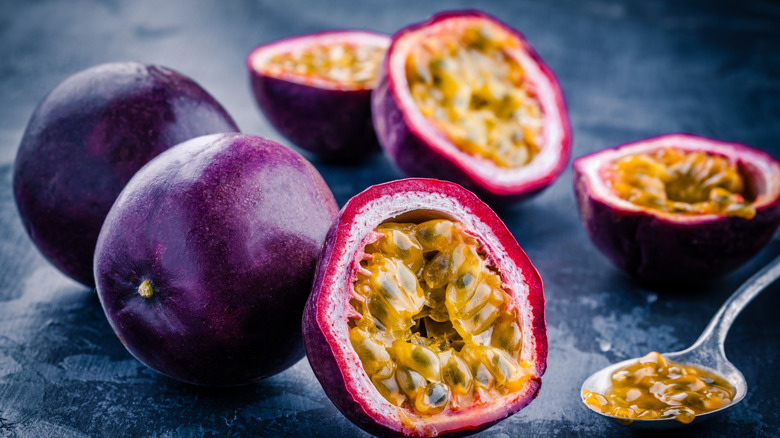
You may not expect to see this fruit here, but it's true. Passion fruit has the highest content of fiber of any fruit, boasting 24.5 g per cup of fresh fruit. It also contains potassium, niacin, riboflavin, iron, copper, magnesium, phosphorus, and other beneficial antioxidant compounds including carotenoids and polyphenols, which help reduce the risk of inflammation and heart disease.
To benefit from the fiber content, you need to eat the bright orange-yellow pulp and seeds, which offer a pleasant crunch and their own health benefits — aside from fiber, they are rich in piceatannol, a polyphenol that may help reduce the risk of type 2 diabetes. Their oil is high in vitamins A and C, calcium, potassium, phosphorus, and essential fatty acids. Talk about a super fruit!
Most importantly, passion fruit is incredibly delicious and versatile. There are lots of creative ways to use passion fruit in the kitchen, from cocktails (hello, porn star martini) to salad dressings to meat marinades and scrumptious desserts. You can also simply crack one open, spoon out the sweet-tart pulp and eat it as is, or use it as a topping for your morning yogurt or ice cream for a special treat.
Raspberries
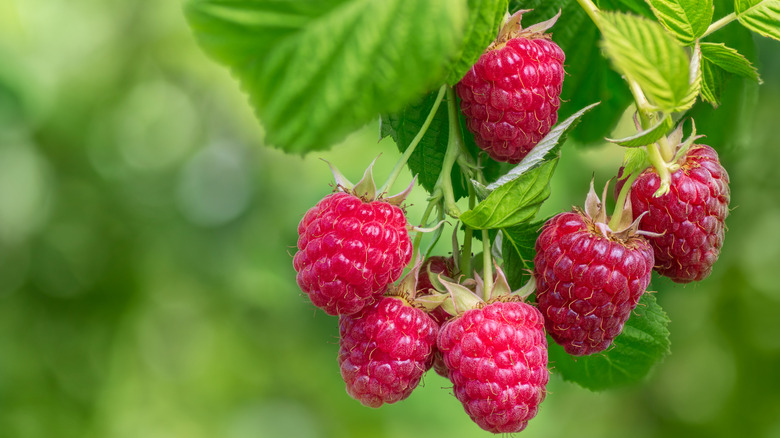
While all berries contain fiber, raspberries have the highest concentration, with almost 8g of fiber. Like passion fruit, a large amount of their fiber content resides in their many tiny seeds. Similar berries — blackberries, loganberries, and boysenberries — are also high in fiber. But raspberries are, arguably, the most delicious, with their velvety texture and balanced tangy, sweet flavor.
They are easy to find just about everywhere, and if you can't buy them fresh, don't worry. Frozen raspberries have the same amount of fiber so you're good to go. Combine them with chia seeds to make this easy snack that gives you half your daily fiber in one serving. You can also add raspberries to baked goods like pies and muffins, top your breakfast bowl, or enjoy them fresh by the handful. Too boot, they are also among the easiest fruits to grow so you can have a steady supply throughout the season.
Avocado
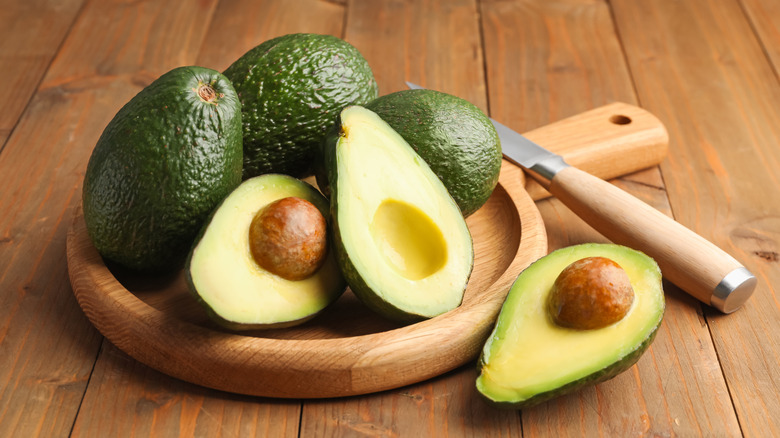
Although we don't normally eat them as such, avocados are botanically a fruit. They are packed with essential nutrients, including B vitamins, vitamins C, E, and K, folate, carotenoids, heart-healthy monounsaturated fats, potassium, and magnesium. A whole medium avocado has about 10 g of fiber, which is one of the many reasons some nutritionists are in favor of eating avocados every day. So if you love avocados — and let's be honest, who doesn't — this is great news.
There are dozens of ways to enjoy avocados, from tried-and-true favorites like guacamole to modern classics like avocado toast. But don't overlook more adventurous recipes, such as savory avocado mousse as a starter or avocado ice cream for dessert.
Their creamy texture and mild flavor are perfect for incorporating into smoothies, salads and sandwiches. They can even add an unexpected twist to your next batch of frozen margaritas. Follow these fail-proof tips before you buy avocados at the grocery store to ensure you get the best texture and flavor to enjoy this fiber-packed nutritional powerhouse.
Guava
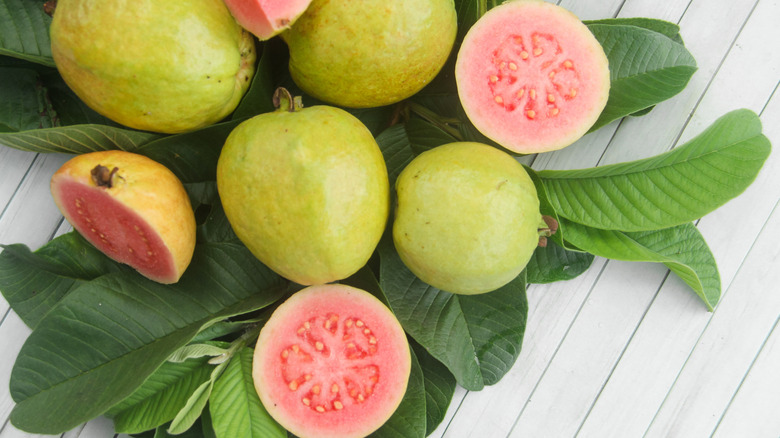
While they may not be on your regular shopping list, guavas are a delicious tropical treat with the nutrition qualities of a superfood. Guavas are loaded with vitamin C, containing more than 119% of the daily value, as well as about 4 grams of protein per cup, plus vitamin A, potassium, iron, and calcium. Because both the peel and the seeds are edible, guava's fiber content is a whopping 9 g for every cup of the raw fruit.
Guavas grow in warm climate countries in the Americas, and there are many varieties around the world, with green or yellow peel and pink or yellowish-cream colored fleshed. In the U.S, they grow commercially in Hawaii, Puerto Rico, and Florida, but they also come imported from Mexico.
They are incredibly fragrant, with a sweet taste that's hard to describe, though most compare it to a cross between strawberry and pear. When ripe, the flesh is creamy, a bit grainy, and 100% tropical. Once you know what to look for when buying guava, you will find it has many applications. Dice it into a fruit salad, blend it in a smoothie, use it to make ice cream or as a fruity addition to level up your margarita.
Kiwi
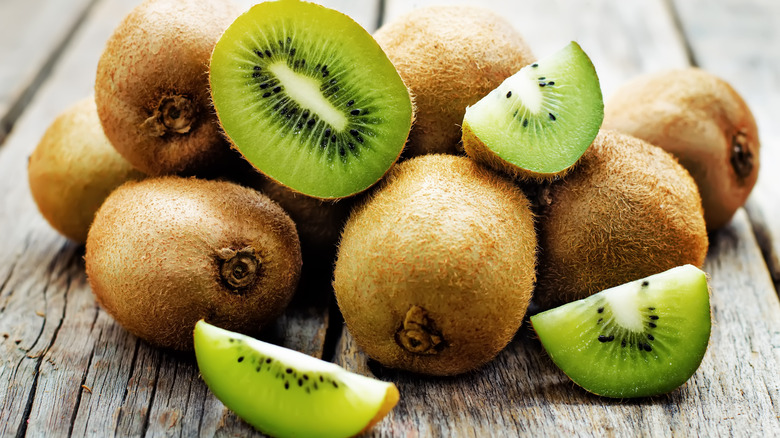
Last but not least, kiwis round out the list with even more fiber than apples. A cup of sliced kiwi — about 2 1/2 kiwi fruits or 180 g — has 5.4 g of fiber compared to the 4.5 g of apples. The seeds and peel are edible and contribute to the fiber content, but if you don't like the fuzzy feel of the peel you can certainly take it off. Fun fact: the skin of golden or yellow kiwis is softer than that of green ones, which some people definitely prefer.
Kiwis are also rich in potassium, copper, vitamin K, folate, and vitamin E, and contain more vitamin C than an orange — 3.5 ounces of kiwi will supply you with over 80% of of your daily need. Kiwi is a tangy sweet addition to a fruit salad, makes a fantastically refreshing three ingredient sorbet, and contains compounds that help tenderize meats when used in a marinade.