

This Is What Happens To Your Body When You Eat Avocado Every Day

Avocados are one of many food crops with Mexican origins that have won the hearts and stomachs of many across the world, becoming the "it" food of the 21st century. However, apart from being delicious, avocados are exceedingly healthy, and we've consulted an expert who's in favor of eating them every day. In an interview with registered dietitian Kelsey Kunik, she confirms that "regularly eating avocado can make your meals more satisfying and boost your intake of heart-healthy fats and fiber."
While avocados are high in calories and fat, Kunik argues that this should hardly be a deterrent for incorporating them into your daily diet. "A 2-ounce serving of avocado (about 1/4 of a medium-sized fruit) has 90 calories and 8 grams of fat, but also includes almost 4 grams of fiber, and most of the fat is in the form of heart-healthy monounsaturated fat," she explains.
Research over the past few years has shown frequent avocado eaters to have reduced rates of heart disease and cardiovascular disease. Avocados are so great for heart health because they don't have any cholesterol, and the fatty acids they contain can help remove "bad" LDL cholesterol from your bloodstream and stimulate "good" HDL cholesterol production. Additionally, the high fiber content in an avocado aids in digestion and, when paired with rich healthy fats, will keep you fuller and satisfied for longer. Furthermore, avocados contain several essential vitamins and minerals that benefit multiple organs and bodily systems, from the heart all the way to the brain.
The best ways to work avocados into your diet
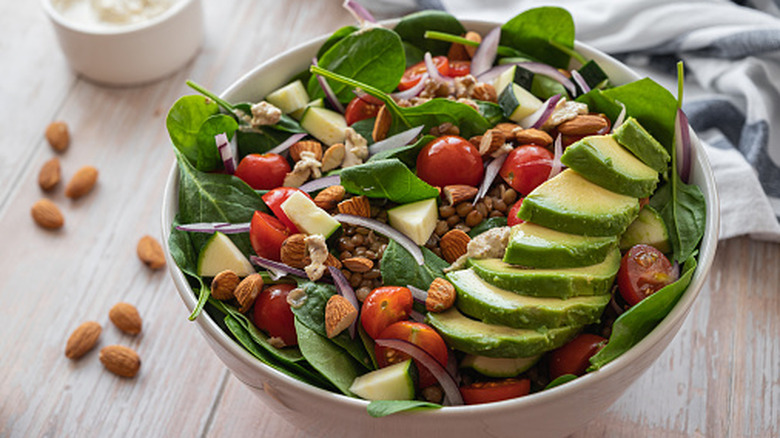
Avocados are rich, silky, and ready to eat right out of the peel, making them an easy addition to any meal. Plus, their flavor and texture are incredibly versatile, so you can pair them with all kinds of seasonings and ingredients that'll lead them into many different and tasty directions. You can simply smash an avocado onto toast, season with salt and pepper, and have yourself a healthy snack. Otherwise, cut avocado into chunks and incorporate into any refreshing salad recipe you have in mind.
Kelsey Kunik recommends preparing avocados in a way that will further their health benefits by using them as ingredient swaps. "Replacing foods high in saturated fat, like mayonnaise or sour cream, with avocado can give you the same creamy, satisfying texture, while adding healthy fats and fiber to your meal," she explains. One example that Kunik suggests is using blended avocado instead of mayo in an easy egg salad recipe. Alternatively, make an avocado crema to replace the sour cream in your tacos by blitzing avocado, lime juice, garlic, salt, pepper, and fresh jalapenos in a blender until smooth.
Avocados also help you absorb fat-soluble vitamins and antioxidants so that you can better reap the benefits of nutrient-dense fruits and vegetables. For example, avocados will help you absorb the compounds lycopene and beta carotene in tomatoes, making a crave-worthy guacamole even healthier. Similarly, adding avocado to a bed of leafy greens will allow better absorption of vitamins A and K, as well as beta carotene and lutein.