

This Often-Ignored Fruit Has More Vitamin C Than An Orange And Enough Potassium To Rival Bananas
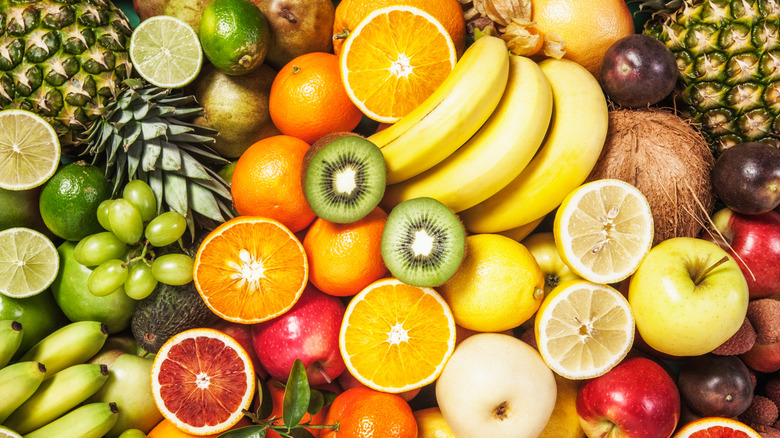
While they may be a little bizarre-looking, kiwis are packed with important vitamins and minerals. They're tart, sweet, and delicious all on their own. Plus, kiwis are easy to enjoy — just cut in half and scoop out the flesh with a regular spoon. If you're not eating kiwis regularly, but are concerned about your daily vitamin intake, it's time to add the small-but-mighty fruit into your diet.
Out of all the foods with more vitamin C than oranges, kiwis might be the most delicious. Kiwi, also known as kiwifruit, has almost twice the vitamin C of an orange. A 100 gram serving (about 3.5 ounces) of oranges has just over 53 milligrams of vitamin C, while the same amount of kiwifruit contains a staggering 92.7 milligrams. According to the National Institutes of Health, the daily recommended dietary allowance for vitamin C is 90 milligrams for males and 75 milligrams for females over the age of 18 (however 85 milligrams daily is recommended for anyone pregnant).
For most people, a mere 4-ounce kiwifruit should get them their daily dose of vitamin C. In comparison to oranges, kiwis not only contain more vitamin C, but also more zinc, magnesium, copper, and vitamins like E, K, and B3 and B6. Kiwis also contain more dietary fiber than oranges. Not only are kiwis also high in vitamin C, but they also have beneficial enzymes that can aid in digestion, specifically in the digestion of animal proteins. The fruit is also bursting with potassium.
Tart, sweet, and full of nutrients
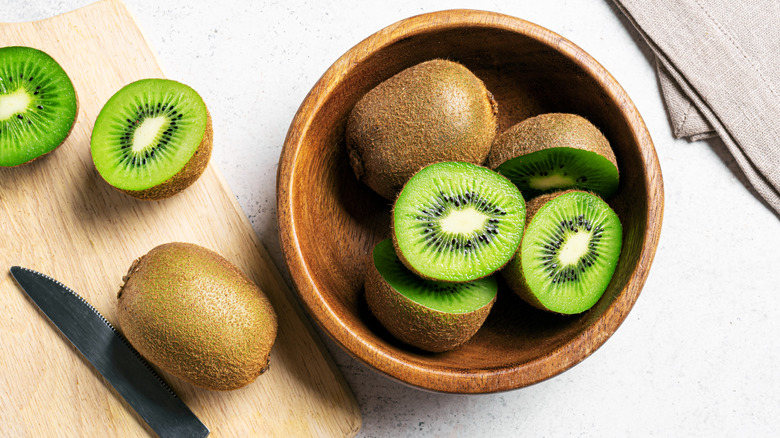
Bananas are always touted for their levels of potassium, but there are at least 17 foods with more potassium than a banana, making us wonder why this fruit is always the go-to recommendation. Potassium helps to balance fluids in our bodies, protects our bones by retaining calcium, keeps our kidneys healthy, and aids in muscle contraction (which is especially important for the heart). Our bodies don't make potassium, so it's essential that we get it from outside sources like food.
The National Institutes of Health reports the daily recommended dietary allowance of potassium is to 3,400 milligrams for males and 2,600 milligrams for females over the age of 18 (but 2,900 milligrams daily is recommended for pregnant people). While a 100-gram serving of banana contains 358 milligrams of potassium, 100 grams of peeled, green kiwifruit has 302 milligrams of potassium. So for those who don't like bananas but are looking for a natural potassium source, kiwis are a great alternative.
Whether gold or green, the skin of a kiwi is edible, as well. Some might find the hairy exterior texture a bit off off-putting, but kiwi skin has fiber and antioxidants like vitamin E. If you do want to eat the entire kiwi, skin and all, opt for golden or yellow varieties, as their skin is a bit thinner with less "hair" on the exterior. No matter what type you're consuming, you're better off eating kiwi raw to maintain all of the fruit's naturally occurring nutritional benefits, as heating can lower vitamin C and potassium levels.