

Cinnamon Raisin Biscuits Recipe
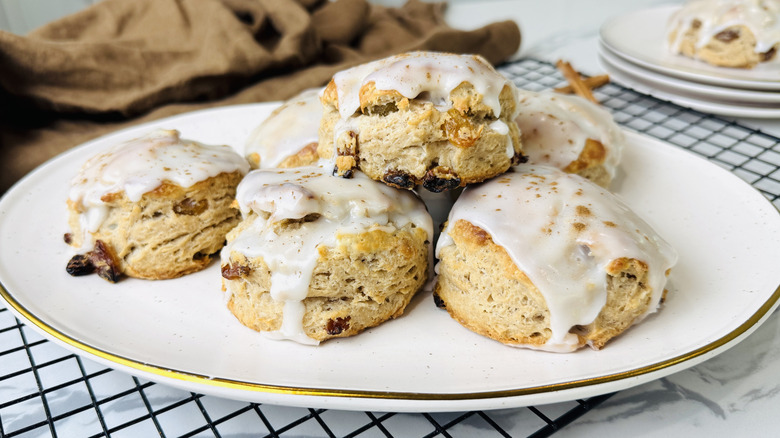
Biscuits are one of those unique types of baked goods that work just as well in savory contexts as they do in sweet ones, meaning that the mix-in and flavor possibilities are nearly endless. In this cinnamon raisin biscuits recipe, brought to us by developer Katie Rosenhouse, biscuits get a sweet-spiced touch, but that classic buttery, flaky formula remains the same. What really sets these cinnamon raisin biscuits apart is a sweet and simple buttermilk glaze, one that fully solidifies these baked goods into dessert territory.
Whether you are looking for an inventive new dessert recipe, one that will make breakfast a little sweet, or a baked good to enjoy with a cup of afternoon tea, this biscuit recipe is capable of wearing many hats. "These biscuits are flaky, buttery, and brimming with juicy raisins — so it's pretty impossible not to love them," Rosenhouse describes. "The glaze adds a sweet touch that turns them into a cross between a cinnamon bun, scone, and classic biscuit."
As if being a three-in-one treat wasn't enough, these biscuits are also just generally easy to make and even easier to enjoy for days, weeks, or even months to come. As Rosenhouse says, "They're quick and easy to prepare, and can even be made ahead, frozen, and thawed before serving for a sweet treat anytime you need one."
Gather the ingredients for cinnamon raisin biscuits
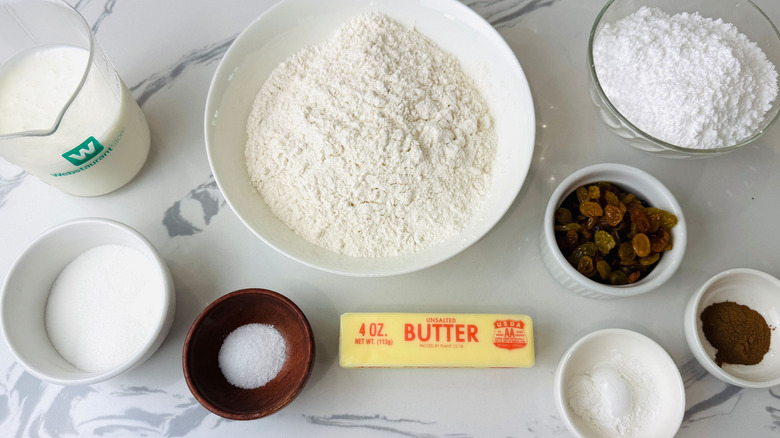
As with many biscuit recipes out there, the ingredient list is pretty simple and straightforward here. You'll start with all-purpose flour, granulated sugar, baking powder, salt, cold butter, and buttermilk to form the base dough. Golden raisins and cinnamon add those distinct flavorings, while a little more buttermilk, salt, and confectioners' sugar come together to form the glaze.
Step 1: Combine the dry ingredients
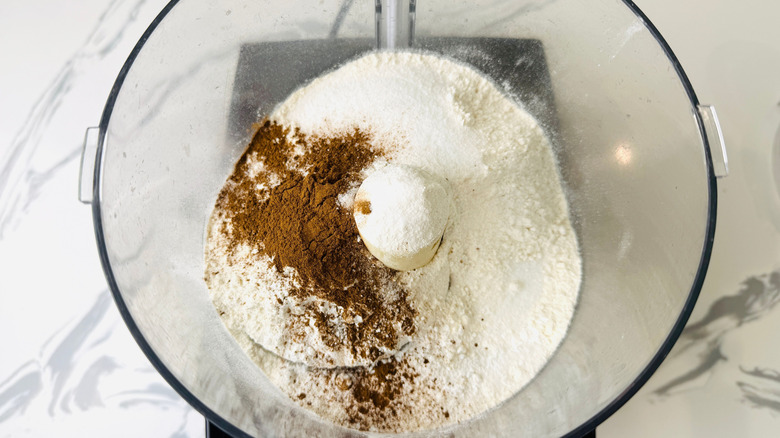
In a food processor, pulse to combine the flour, sugar, baking powder, salt, and cinnamon.
Step 2: Mix in the cold butter
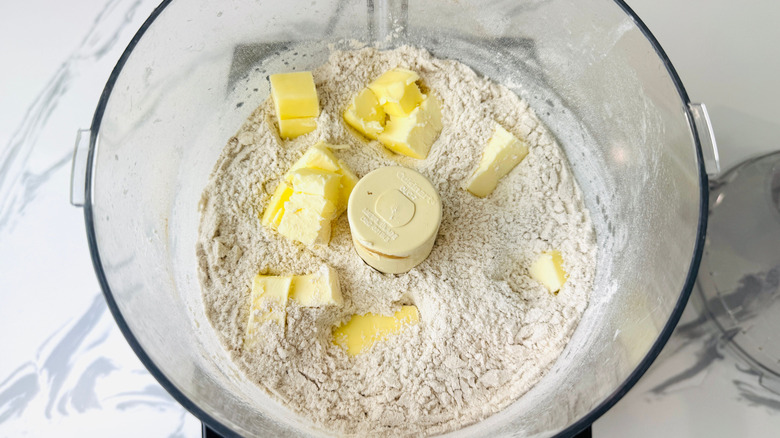
Add the cold, cubed butter, and process until only pea-sized bits remain visible.
Step 3: Stir in the raisins and buttermilk
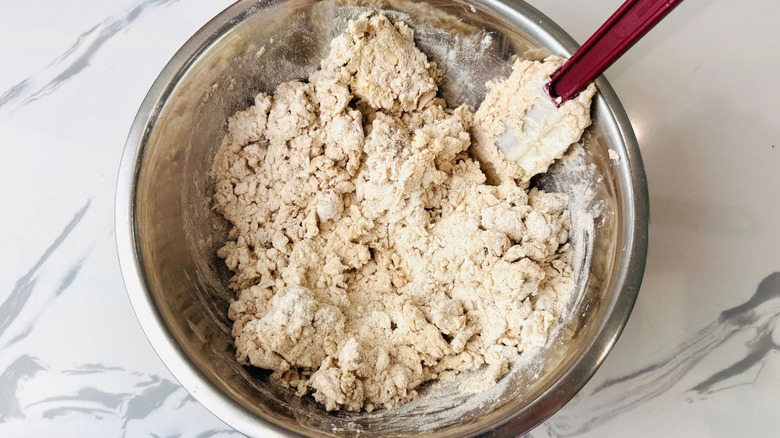
Transfer the mixture to a bowl, and gently stir in the raisins and 1 cup buttermilk just until the dough begins to come together.
Step 4: Lightly knead the dough
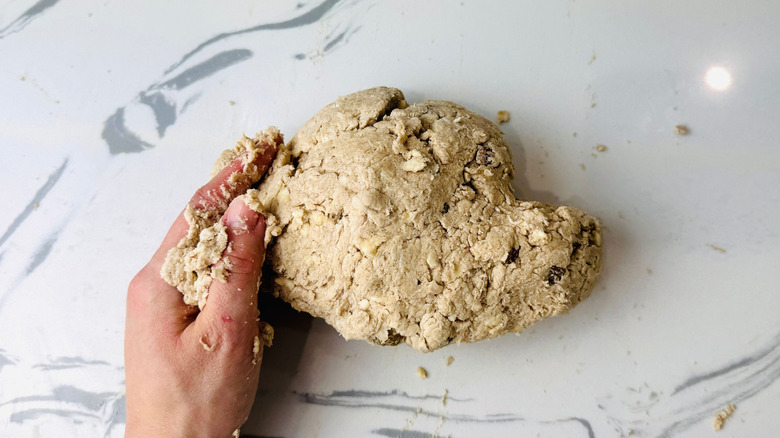
Transfer the dough to a clean surface and knead very lightly to combine.
Step 5: Flour the work surface
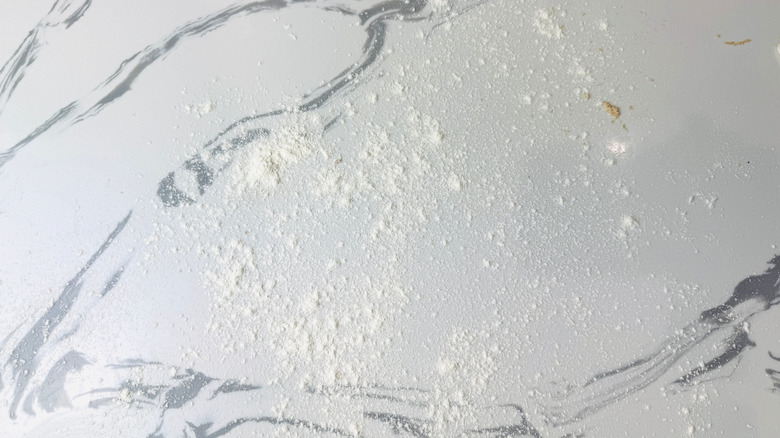
Flour the surface.
Step 6: Press the dough into a rectangle
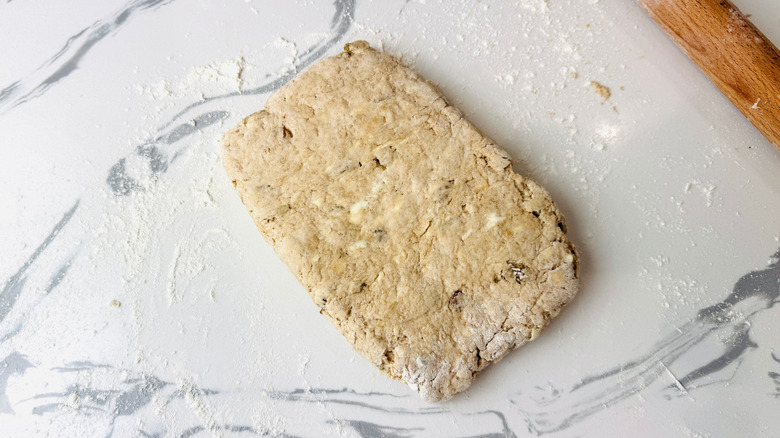
Press or roll dough to a 10x5-inch rectangle.
Step 7: Fold the dough
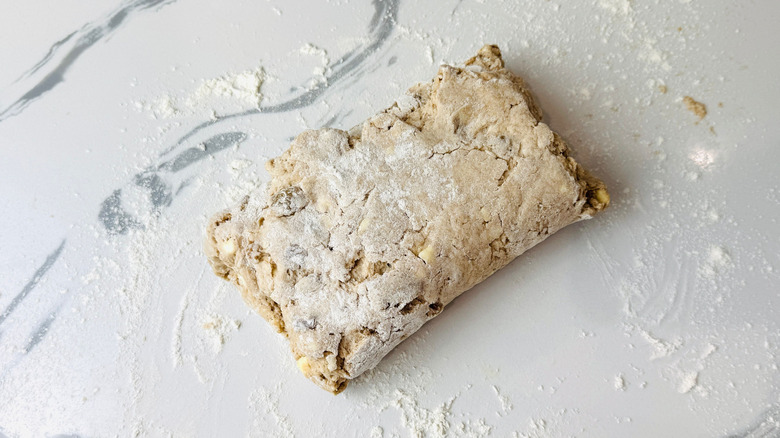
Fold the dough like a letter, into thirds.
Step 8: Press the dough again, then cut out the biscuits
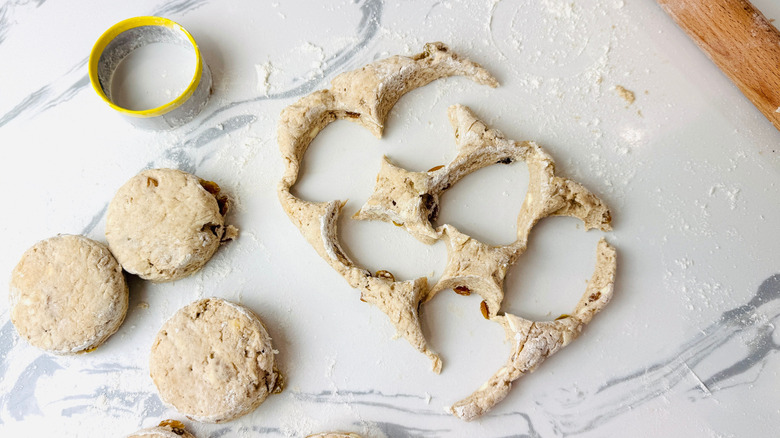
Press or roll the dough to 1-inch thickness, then cut out rounds using 2 ½-inch cutters.
Step 9: Press the scraps together and cut out more biscuits
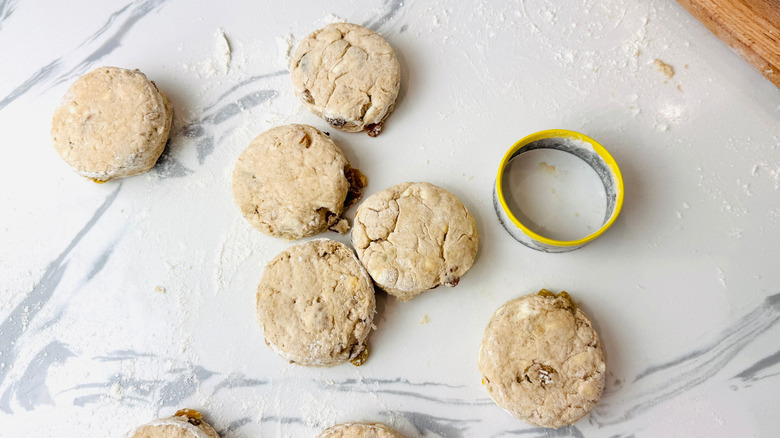
Gently press the scraps together and cut out additional rounds.
Step 10: Refrigerate the biscuits
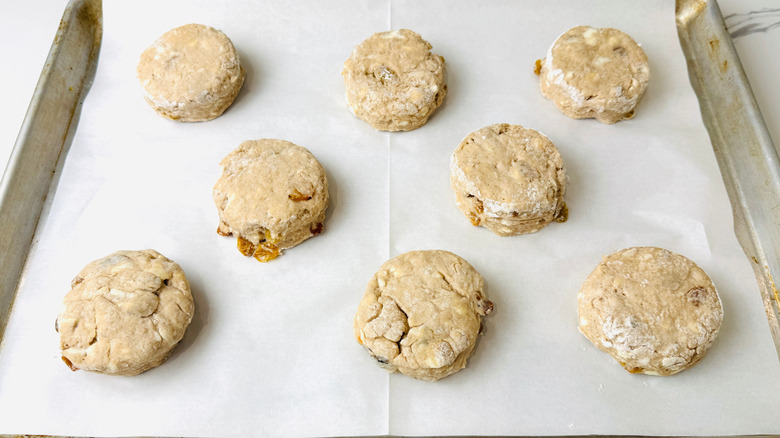
Transfer the biscuits to a lined baking sheet and refrigerate while the oven preheats.
Step 11: Preheat the oven
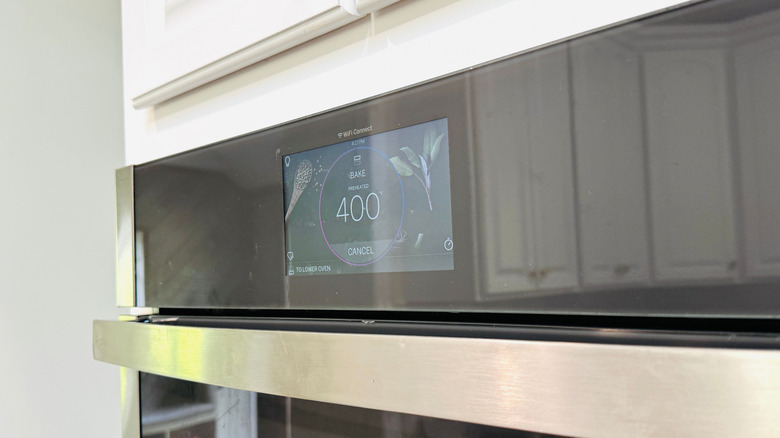
Preheat the oven to 400 F.
Step 12: Brush the biscuits with buttermilk
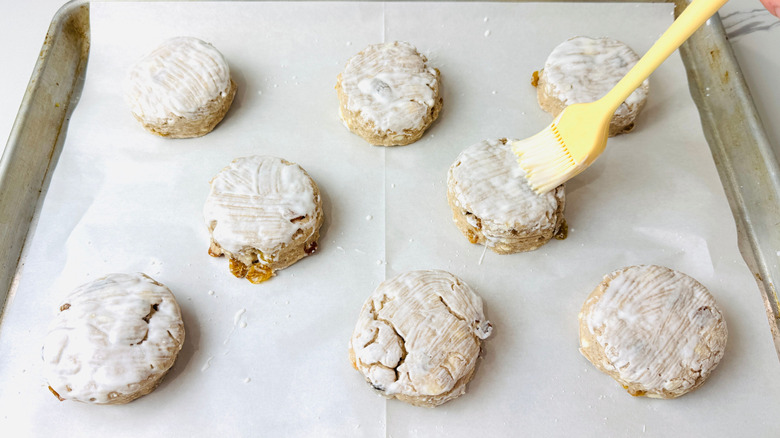
When the oven comes to temperature, brush the tops of the biscuits with buttermilk.
Step 13: Bake the biscuits
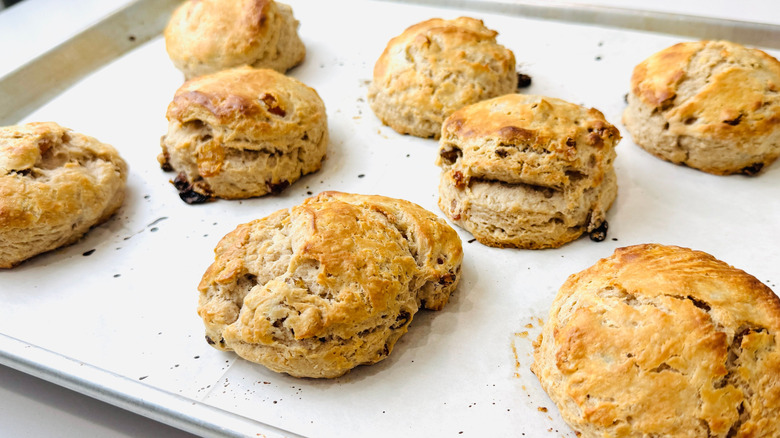
Bake for 18-20 minutes until the biscuits are golden brown and baked through.
Step 14: Make the glaze
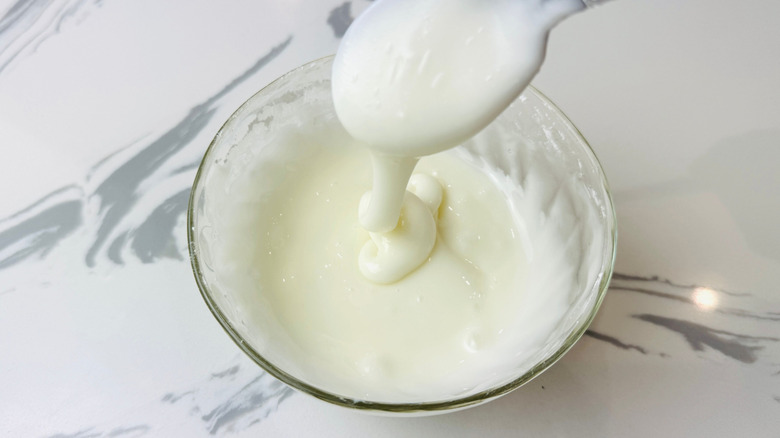
In the meantime, to prepare the glaze, stir to combine the confectioners' sugar, a pinch of salt, and 2 tablespoons buttermilk until thick but pourable. Add a splash of any remaining buttermilk if needed to adjust the consistency.
Step 15: Glaze the slightly cooled biscuits
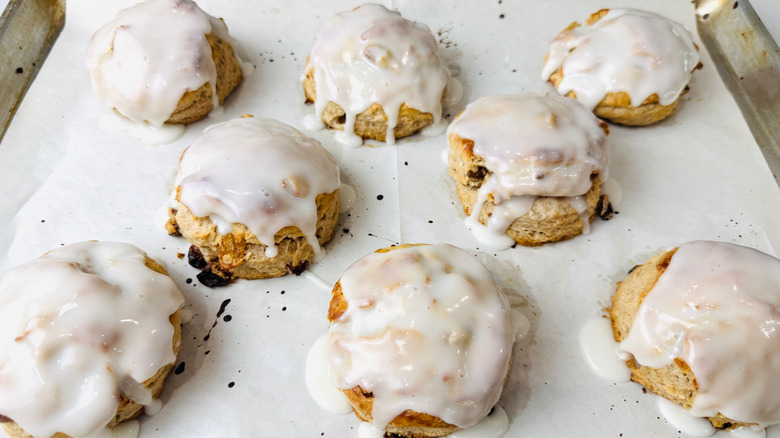
Let the biscuits cool at least 10 minutes, then top each with a spoonful of glaze.
Step 16: Serve the cinnamon raisin biscuits
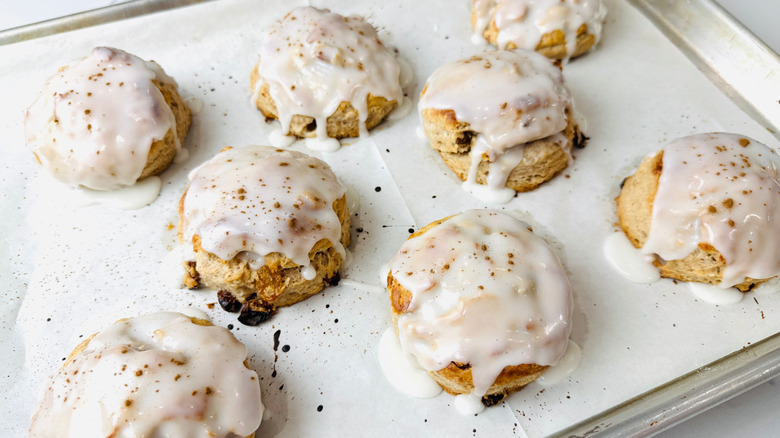
Sprinkle with cinnamon if desired, and serve warm or at room temperature.
What pairs well with cinnamon biscuits?
Cinnamon Raisin Biscuits Recipe
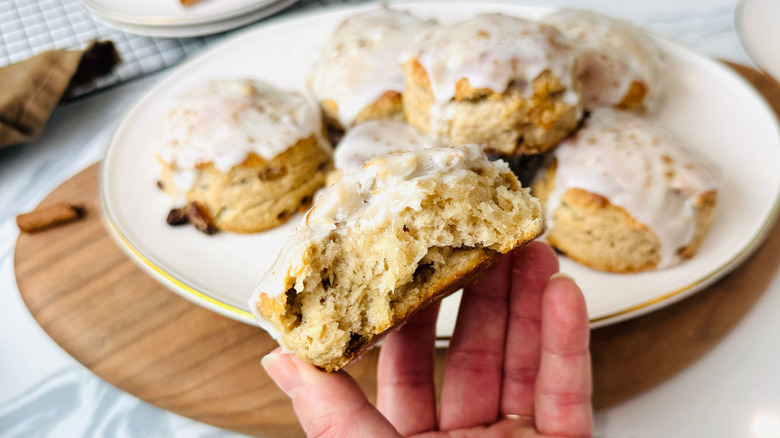
Perfectly flaky, buttery, and tender biscuits get the sweet treatment in our cinnamon raisin biscuits, which are topped with a simple, sweet buttermilk glaze.
Ingredients
- 2 ½ cups all-purpose flour
- ⅓ cup granulated sugar
- 1 tablespoon baking powder
- 1 teaspoon + 1 pinch kosher salt, divided
- 1 teaspoon ground cinnamon, plus additional for sprinkling
- ½ cup cold, cubed unsalted butter
- ⅓ cup golden raisins
- 1 ¼ cups whole buttermilk (or half-and-half), divided
- 1 ¼ cups confectioners’ sugar
Directions
- In a food processor, pulse to combine the flour, sugar, baking powder, salt, and cinnamon.
- Add the cold, cubed butter, and process until only pea-sized bits remain visible.
- Transfer the mixture to a bowl, and gently stir in the raisins and 1 cup buttermilk just until the dough begins to come together.
- Transfer the dough to a clean surface and knead very lightly to combine.
- Flour the surface.
- Press or roll dough to a 10x5-inch rectangle.
- Fold the dough like a letter, into thirds.
- Press or roll the dough to 1-inch thickness, then cut out rounds using 2 ½-inch cutters.
- Gently press the scraps together and cut out additional rounds.
- Transfer the biscuits to a lined baking sheet and refrigerate while the oven preheats.
- Preheat the oven to 400 F.
- When the oven comes to temperature, brush the tops of the biscuits with buttermilk.
- Bake for 18-20 minutes until the biscuits are golden brown and baked through.
- In the meantime, to prepare the glaze, stir to combine the confectioners’ sugar, a pinch of salt, and 2 tablespoons buttermilk until thick but pourable. Add a splash of any remaining buttermilk if needed to adjust the consistency.
- Let the biscuits cool at least 10 minutes, then top each with a spoonful of glaze.
- Sprinkle with cinnamon if desired, and serve warm or at room temperature.
Nutrition
| Calories per Serving | 393 |
| Total Fat | 13.2 g |
| Saturated Fat | 8.0 g |
| Trans Fat | 0.0 g |
| Cholesterol | 34.7 mg |
| Total Carbohydrates | 64.2 g |
| Dietary Fiber | 1.4 g |
| Total Sugars | 32.6 g |
| Sodium | 294.7 mg |
| Protein | 5.6 g |

What are tips for making the best cinnamon raisin biscuits?
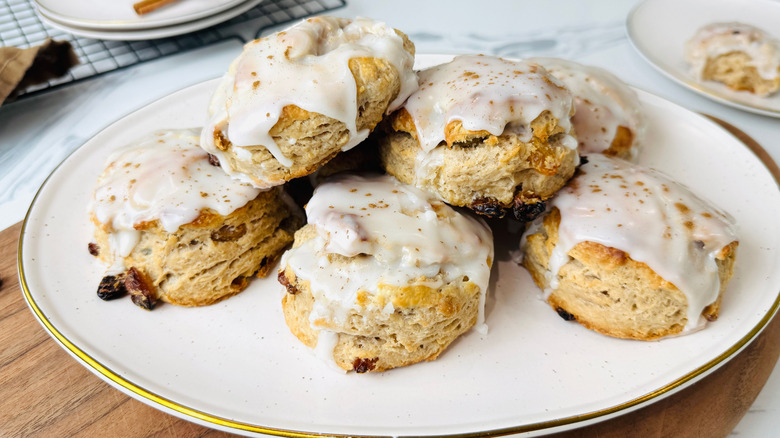
There are common mistakes that nearly everyone makes when making biscuits, ranging from not using enough butter to over-mixing the dough to not using a sharp enough biscuit cutter. Biscuits, although relatively easy to make in the grand scheme of all baked goods, can be a bit fickle if overworked or if the ingredient ratio is off. Ensuring that you're using cold butter is a huge key in making successful biscuit dough, but making sure you're getting the flour ratio right is another thing to look out for. "My first tip is to spoon and level (or weigh) your flour to keep each batch consistent," Rosenhouse explains. "A heavy hand, and you'll end up with dense, rubbery biscuits instead of light, flaky ones."
While some types of dough can be pretty forgiving when it comes to over-mixing, biscuit dough isn't one of them. "Avoid over-kneading and over-mixing, both of which will create too much gluten development and heavy biscuits," Rosenhouse advises. You'll even want to be careful when cutting out the biscuits, and ensure that you don't twist the biscuit cutter around the edges of a given biscuit, which will keep them from rising properly. Make sure you chill the biscuits as the oven preheats, and even better yet, you could prepare the biscuits the night before, chill overnight, and then bake them up fresh in the morning.
What ingredient substitutions can I make in this biscuit recipe?
There's truly no shortage of ways to elevate homemade biscuits, ranging from herb or cheese inclusions for more savory-leaning ones, or fruit or chocolate inclusions for sweet-leaning ones. These biscuits are, of course, leaning on the sweeter side of things, so if you want to switch things up, you have plenty of room to do so — but you'll want to stick with fruity, spiced, or otherwise sweet ingredients to stay on the dessert-like biscuit theme.
To start, Rosenhouse recommends playing around with the type of dried fruit you opt for. Raisins are a classic choice, but cranberries, dried blueberries, or dried strawberries are all great options. Another way to add a hint of fruitiness and a pop of citrus is by way of zest — either lemon zest or orange zest would work well in the recipe as written, and you could even massage the zest into the flour mixture to really get those citrus notes to pop. Otherwise, you don't need to stick with cinnamon, and both cardamom and nutmeg would make great replacements or additions. You can also skip the glaze entirely if you'd like, opting for a dusting of powdered sugar or cinnamon sugar instead. As a final tip, Rosenhouse notes that you can make your own buttermilk in a pinch by combining sour cream with milk until you reach a thick yet pourable consistency.