

Springtime Quiche Supreme Recipe
We may receive a commission on purchases made from links.
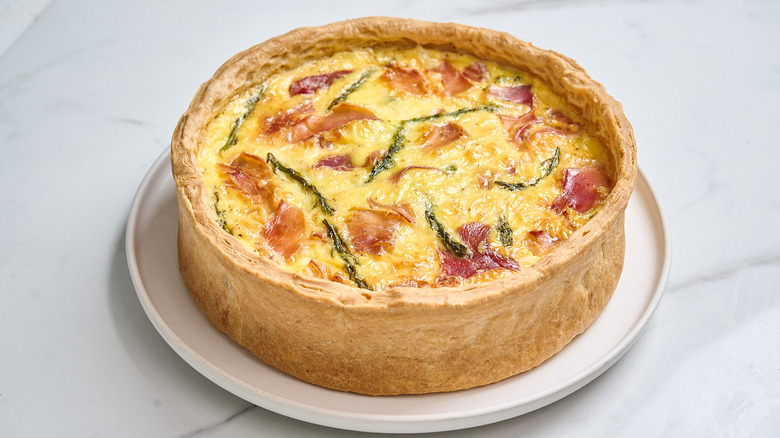
There is no better breakfast than a creamy, cheesy quiche, and there is no better season to enjoy it than in the spring. Almost as though it was made for the season, the eggy custard and flaky crust pairs perfectly with seasonal vegetables like peas, asparagus, and leeks. Filled with all three, the quiche becomes a supreme combination of flavors, made even better with melty white cheese and savory prosciutto.
Part of what makes quiche such a good breakfast is that it looks and tastes impressive but is relatively easy to prepare. Even a deep dish quiche, which bakes in a tall springform pan, comes together without much hassle — as long as you keep quiche-making tips and best practices in mind. This springtime quiche supreme recipe includes techniques I learned while working at a bakery that lovingly crafted tall, creamy, flavorful quiches every weekend. It's the recipe that made me learn to love quiche, but this time, loaded up with all of my favorite spring vegetables. Perfect for warmer weather and tables full of friends, this springy quiche recipe is one of the many reasons to love winter's end.
Gather the ingredients for springtime quiche supreme
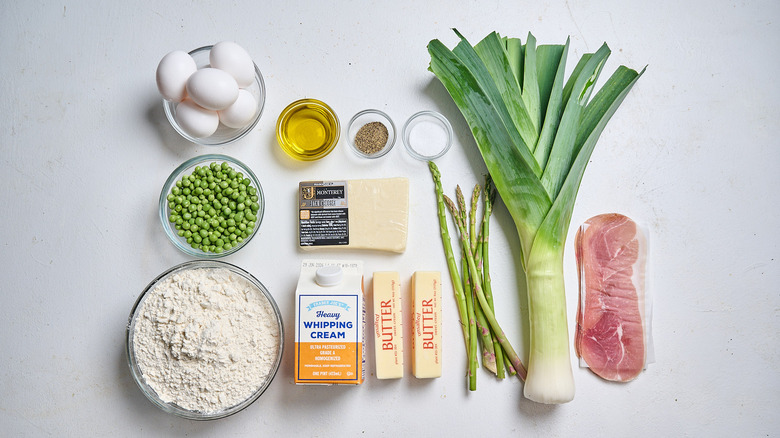
To make the homemade crust, you'll need flour, salt, and a stick and a half of butter. For the egg filling, you'll need eggs and heavy cream, as well as salt and pepper for seasoning. To make it supreme, you'll need asparagus, fresh peas, a small leek, Monterey Jack cheese, prosciutto, and olive oil for cooking. Believe it or not, that's all you'll need to build a quiche supreme.
Step 1: Pulse butter into flour
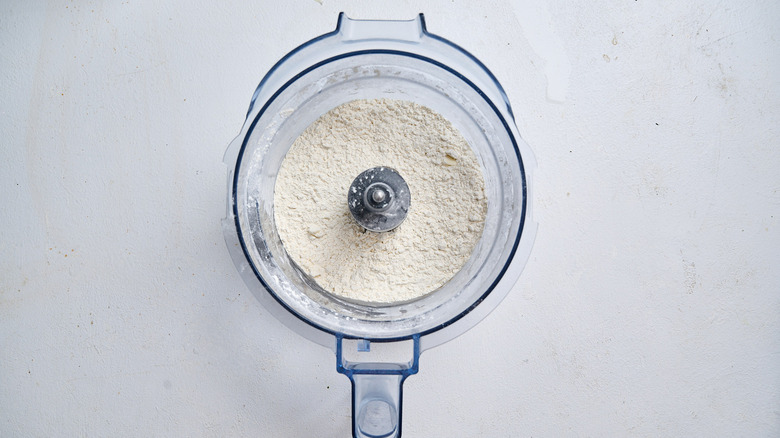
Begin the crust: Add the flour, salt, and butter to a food processor and pulse until butter is in pea-sized pieces.
Step 2: Form dough using water
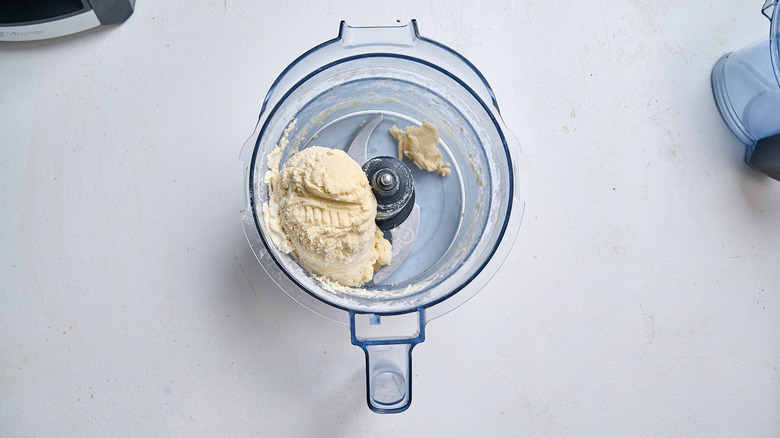
Add ¾ cup cold water and pulse until a ball of dough forms.
Step 3: Knead dough into a disc and chill
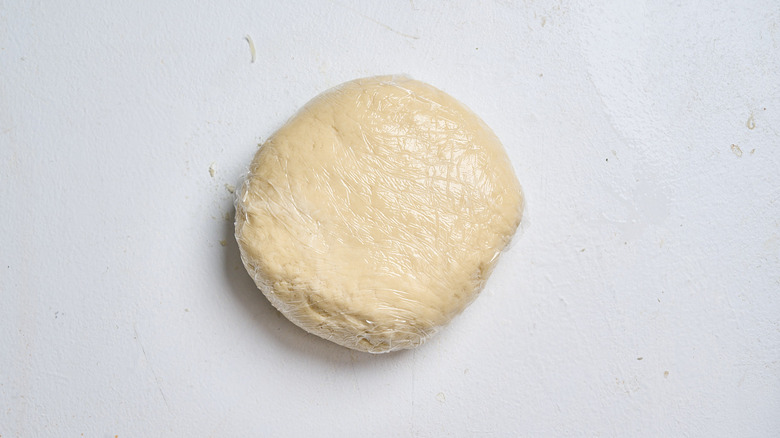
Transfer the dough to a floured surface and knead into a smooth disc shape. Wrap tightly in plastic and chill for 30 minutes.
Step 4: Heat up the oven
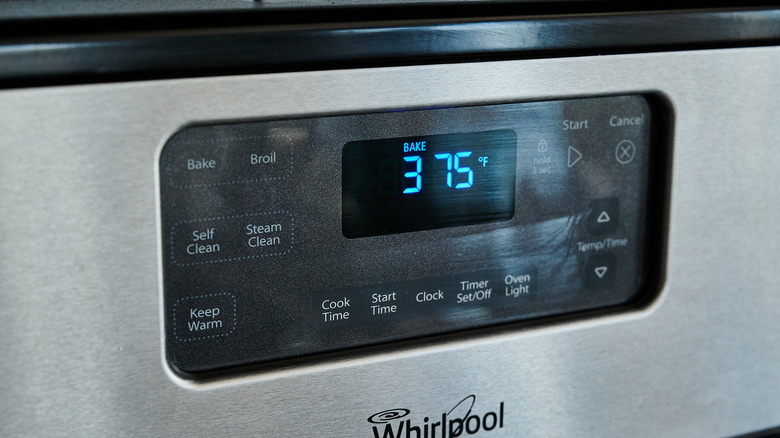
Preheat the oven to 375 F.
Step 5: Roll out the dough
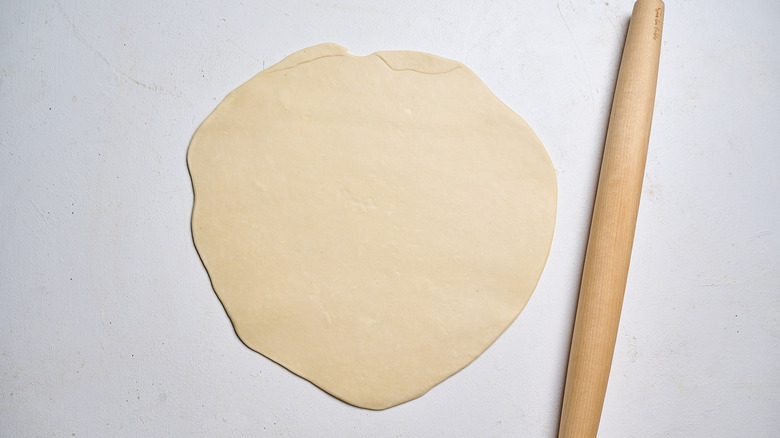
Roll the dough into a flat circle, about ⅛-inch thick.
Step 6: Press dough into the pan
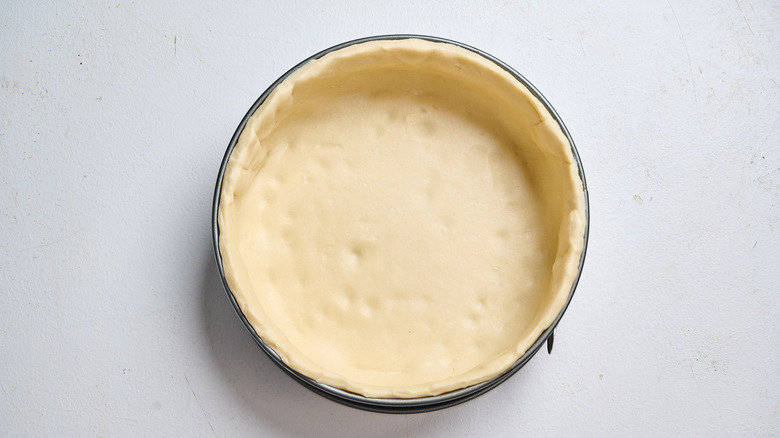
Press the dough into a springform pan and trim the edges to fit.
Step 7: Fill crust with pie weights and bake
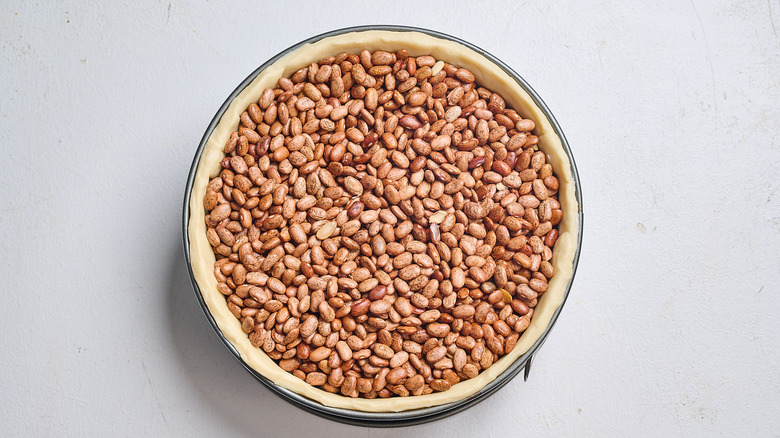
Fill the crust with pie weights or beans, then bake for 1 hour, until just golden.
Step 8: Lower the heat of the oven
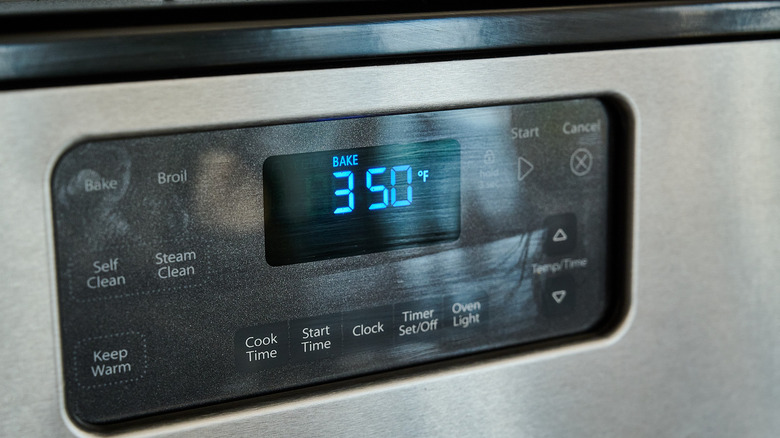
Once the crust is done baking, lower the oven's temperature to 350 F.
Step 9: Heat oil in a skillet
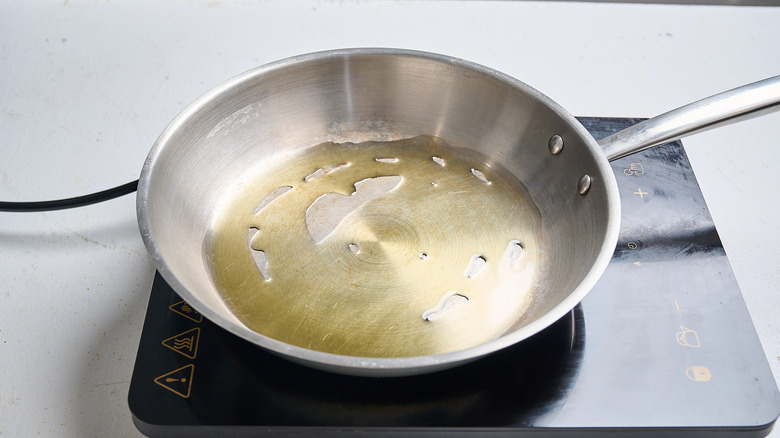
In the meantime, prepare the filling. Heat the olive oil in a skillet over medium heat.
Step 10: Cook the vegetables
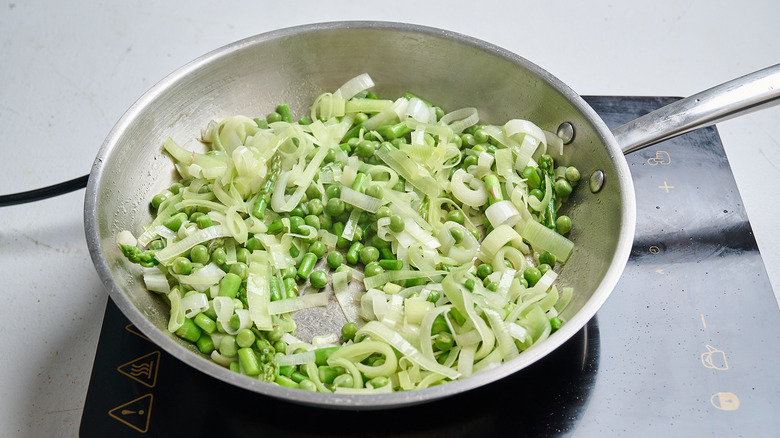
Add the asparagus, leeks, and peas and cook until bright green and slightly softened, about 3-5 minutes. Season with ¼ teaspoon each salt and pepper.
Step 11: Whisk the egg filling until smooth
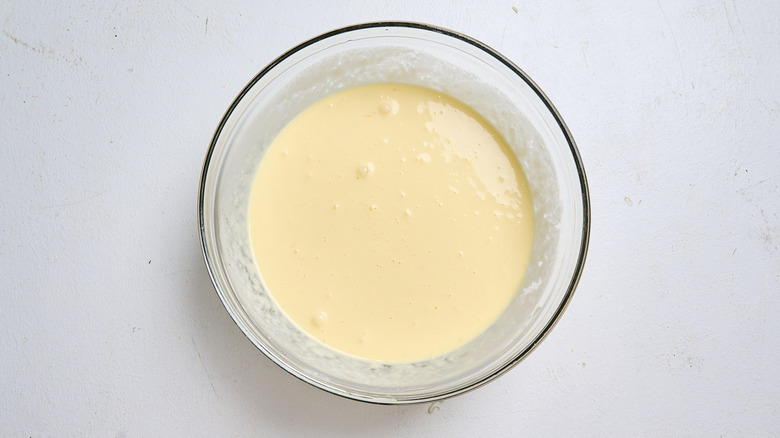
Whisk the eggs, heavy cream, and remaining ½ teaspoon each salt and pepper together in a bowl.
Step 12: Fill the baked crust with cheese and prosciutto
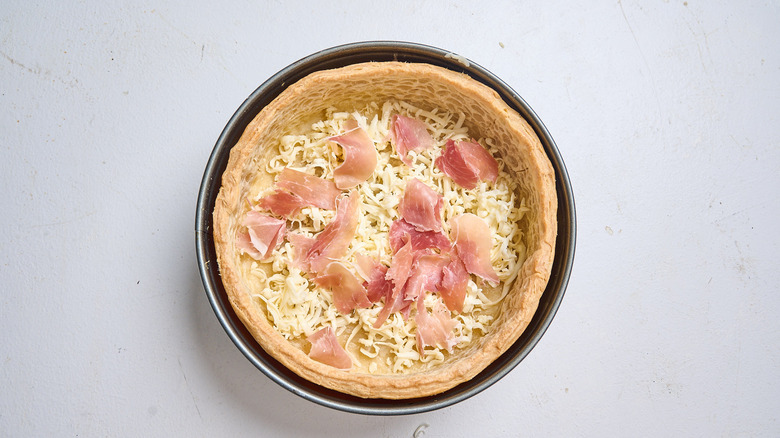
When the crust is baked, remove the pie weights or beans and fill the bottom of the crust with 1 cup of cheese and half of the prosciutto.
Step 13: Add the vegetables to the quiche
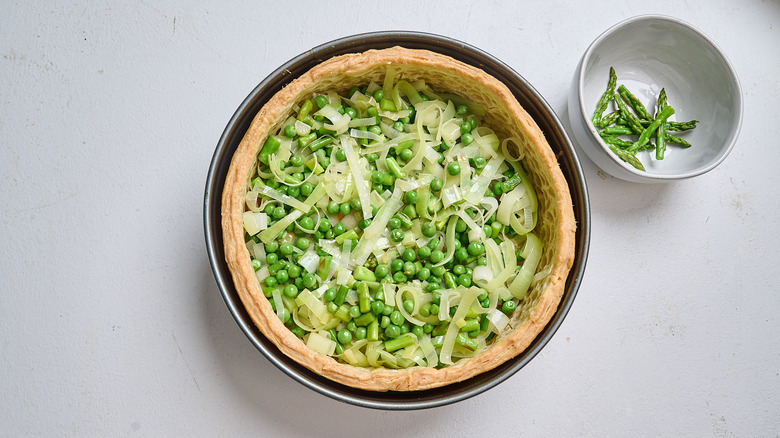
Add the asparagus, leek, and pea mixture to the quiche, reserving the heads of the asparagus.
Step 14: Cover with egg, then top with remaining ingredients
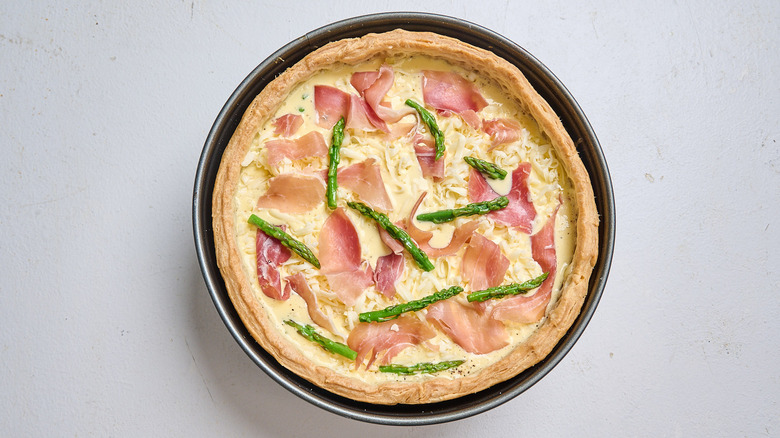
Pour in the egg mixture, then top with the remaining 1 cup cheese, prosciutto, and asparagus heads.
Step 15: Bake the quiche until set
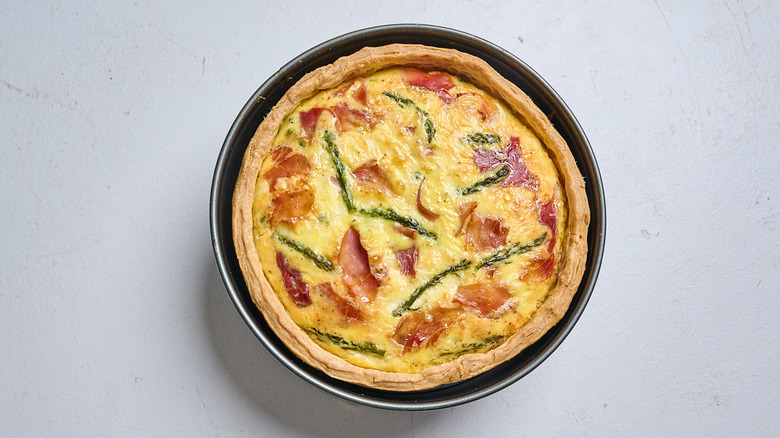
Bake the quiche for 1 hour 20 minutes to 1 hour 30 minutes, until slightly jiggly in the middle but set throughout.
Step 16: Let cool, then serve the springtime quiche supreme
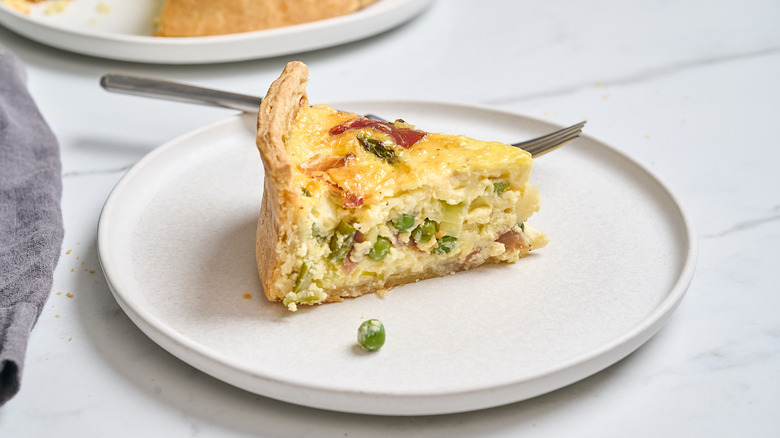
Remove from the oven and let cool before slicing and serving.
What to serve with springtime quiche supreme
Springtime Quiche Supreme Recipe
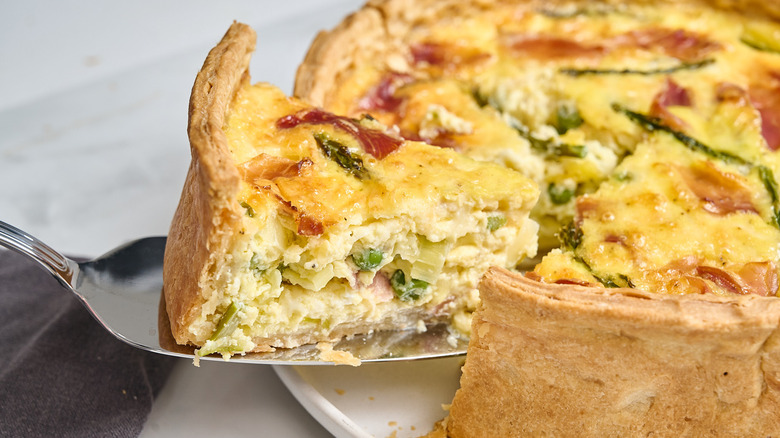
Ring in spring and all its vegetal bounty with this springtime quiche supreme recipe, which boasts veggies like asparagus, leeks, and peas in a deep-dish crust.
Ingredients
- For the crust
- 3 cups all-purpose flour
- 1 teaspoon salt
- 12 tablespoons cold unsalted butter, cut into 1-inch chunks
- For the filling
- 2 tablespoons olive oil
- 10 asparagus stalks, sliced into ¼-inch pieces
- 1 cup sliced and washed leeks
- 1 cup fresh peas
- ¾ teaspoon salt, divided
- ¾ teaspoon pepper, divided
- 6 eggs
- 1 ½ cups heavy whipping cream
- 2 cups Monterey Jack cheese
- 4 ounces prosciutto, torn into 1-inch pieces
Directions
- Begin the crust: Add the flour, salt, and butter to a food processor and pulse until butter is in pea-sized pieces.
- Add ¾ cup cold water and pulse until a ball of dough forms.
- Transfer the dough to a floured surface and knead into a smooth disc shape. Wrap tightly in plastic and chill for 30 minutes.
- Preheat the oven to 375 F.
- Roll the dough into a flat circle, about ⅛-inch thick.
- Press the dough into a springform pan and trim the edges to fit.
- Fill the crust with pie weights or beans, then bake for 1 hour, until just golden.
- Once the crust is done baking, lower the oven’s temperature to 350 F.
- In the meantime, prepare the filling. Heat the olive oil in a skillet over medium heat.
- Add the asparagus, leeks, and peas and cook until bright green and slightly softened, about 3-5 minutes. Season with ¼ teaspoon each salt and pepper.
- Whisk the eggs, heavy cream, and remaining ½ teaspoon each salt and pepper together in a bowl.
- When the crust is baked, remove the pie weights or beans and fill the bottom of the crust with 1 cup of cheese and half of the prosciutto.
- Add the asparagus, leek, and pea mixture to the quiche, reserving the heads of the asparagus.
- Pour in the egg mixture, then top with the remaining 1 cup cheese, prosciutto, and asparagus heads.
- Bake the quiche for 1 hour 20 minutes to 1 hour 30 minutes, until slightly jiggly in the middle but set throughout.
- Remove from the oven and let cool before slicing and serving.
Nutrition
| Calories per Serving | 727 |
| Total Fat | 51.6 g |
| Saturated Fat | 29.3 g |
| Trans Fat | 0.6 g |
| Cholesterol | 255.5 mg |
| Total Carbohydrates | 42.5 g |
| Dietary Fiber | 2.9 g |
| Total Sugars | 3.6 g |
| Sodium | 645.5 mg |
| Protein | 24.0 g |

How do I know when quiche is done?
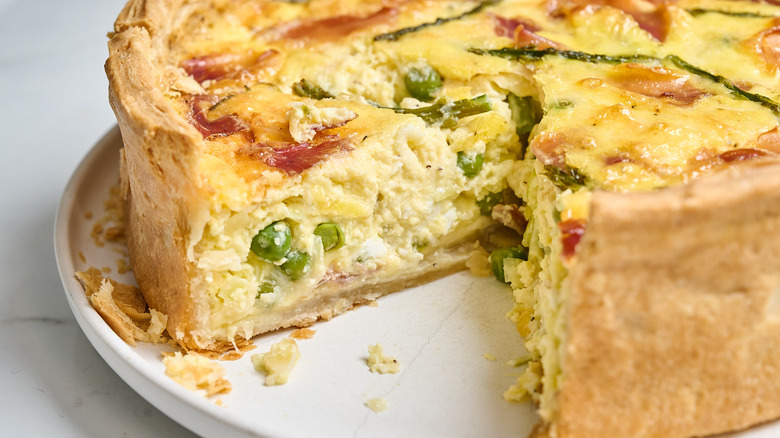
One of the hardest parts about making a quiche is pulling it out of the oven at the right time. It seemed like magic every time I watched our head baker do it. Seemingly randomly, she'd decide the quiche looked right and would promptly remove them from the oven. To the untrained eye, a quiche looks about the same at 70 minutes into cooking as it does at 80; but there is a difference, and knowing how to spot it makes cooking quiche a lot easier.
Around the hour mark, begin checking the quiche for doneness. The quiche, by then, should be solidified within the crust, and will become less and less jiggly as the eggs continue to cook. The quiche is ready when the filling, when shaken gently, wiggles slightly within the crust. If this is too arbitrary of a direction, you can also use a thermometer for exact doneness, checking for an internal temperature of 165 F. Remember also that eggs continue to cook in residual heat, so pulling a few minutes early is better than a little late.
Why do I have to fill the crust with pie weights?
Because deep dish quiche has a high volume of liquid filling that slowly bakes into a soft custard, it is necessary to blind bake the crust. Without blind baking, the crust wouldn't be able to brown and crisp into a flaky exterior. It is essential when blind baking, though, to use pie weights, which weigh down the dough to prevent bubbling and shrinking. If you don't have pie weights (which you'll need a lot of to fill the entire springform pan), you can also use dried beans, which are inexpensive and can be reused nearly indefinitely for blind baking pie and quiche crusts (I keep mine in a large jar in the back of the pantry).
It is important to fill the crust as much as possible with weights so that it doesn't crack and collapse in on itself while baking, either. The only problem with filling the crust with weights is that they stick to the dough, which can make removal difficult. To make it easier to remove the weights (or beans), cut a piece of parchment paper to fit into the bottom of the crust, then layer the weights on top. This means the beans will slide right out of the crust, and all you have to do is remove the parchment.