

12 Essential Tips And Tricks For Grilling Vegetables
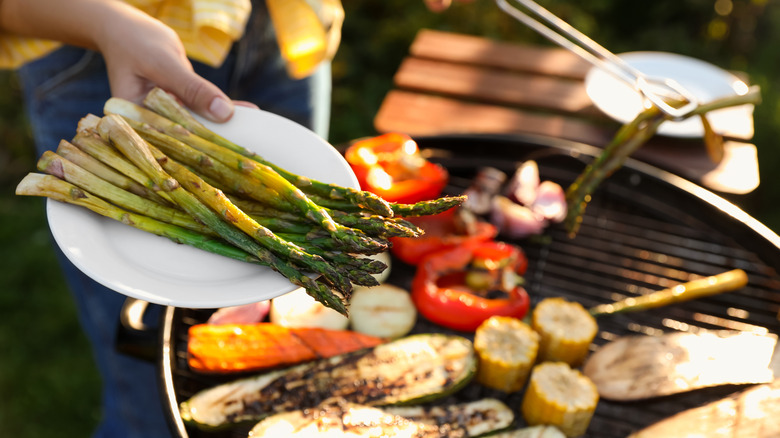
Folks often gear up to throw away their grills after going vegetarian or reducing their meat intake. But the truth is that grilling fruits and vegetables can actually expand your grilling horizons. In addition, grilling vegetables certainly does not make you a vegetarian, as meat and veggies can thrive side by side over open flames. As a plant-based recipe designer and chef, some of my best work is done outside, flames a' blazing and spatula whirling. I've been grilling since I could walk, and spent most of my springs, summers, and falls grilling at least a few times a week. With burgers and lamb chops as my area of expertise for many years, I pivoted, expanded my horizons, and explored the world of vegetarian grilling. I've made mistakes, learned from them, and that's how I've gathered these essential tips you need when grilling vegetables, as the process can look quite different than ribs or dogs.
Veggies vary greatly in water content, texture, size, and their need to be cooked thoroughly. There's not a vegetable that can't be grilled; the methodology just varies, sometimes quite substantially. However, there are overall rules to grilling vegetables that you can apply across the board to ensure tender, flavorful outcomes. If you plan on tossing produce on the barbie this summer, then it's important to prepare yourself like the grill master you are.
Use indirect heat
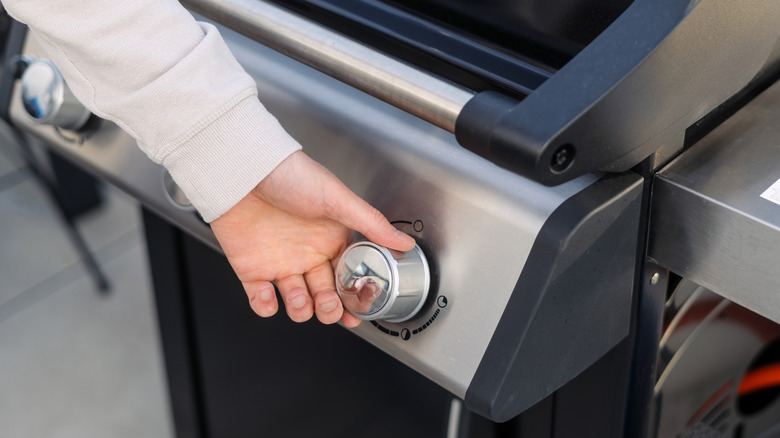
For those who know their way around a grill, you've likely used indirect heat to cook meat in the past. The basic principle is that you blast one side of the grill, place your food on the other side, and close the lid. This creates more of an oven-like effect, which can help vegetables cook more evenly. Some thinner, more tender veggies like sliced zucchini can be quickly blasted with some direct flame to get the job done, while others require a slow cook to penetrate deep into the center. This easy grilling tip gives vegetables that picture-perfect char, without leaving the inside raw.
You don't need to use only indirect heat; give your vegetables a nice char while finishing them over indirect heat until tender. If your grill is loaded up with burgers or other foods that require high-temp grilling, consider cooking them alongside the vegetables, but leave half of the grill turned off. On a charcoal grill, you'll have to poke those coals over to one side. The grate will still heat up, but you won't risk all those burnt skins and edges.
Parboil certain vegetables first
Even if you slow-cook your larger vegetables on the grill, they may take a long time to cook. You may find that the outside chars or even burns while the inside remains tough or rubbery. Unless you're a seasoned veteran, finding a balance between time and heat can seem daunting, especially if you're cooking a variety of vegetables and proteins all at once. Luckily, there is a solution that requires a bit of extra prep work, but helps to move things along on game day.
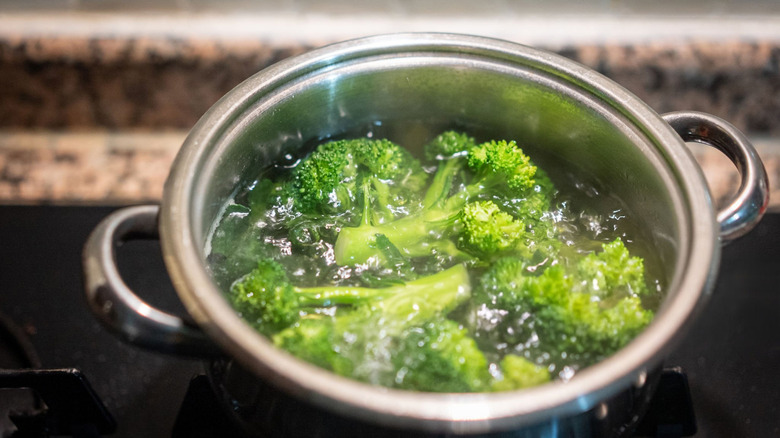
Parboiling vegetables like potatoes, cauliflower, broccoli, beets, and carrots can help soften the vegetables evenly and still give the outside that toasted, crisp texture and smoky flavor. You can do this the day before to give yourself a break at the grill, or toss a pot of water directly on the grill. If you choose to cook them in a pot over the grill, just note that you'll want to keep the grill top open, and be extra cautious to avoid steam burns. Parboiling vegetables also breaks them down enough to absorb more marinade, helping the sauce penetrate beneath the skin. The benefits are endless.
Select a high smoke-point oil
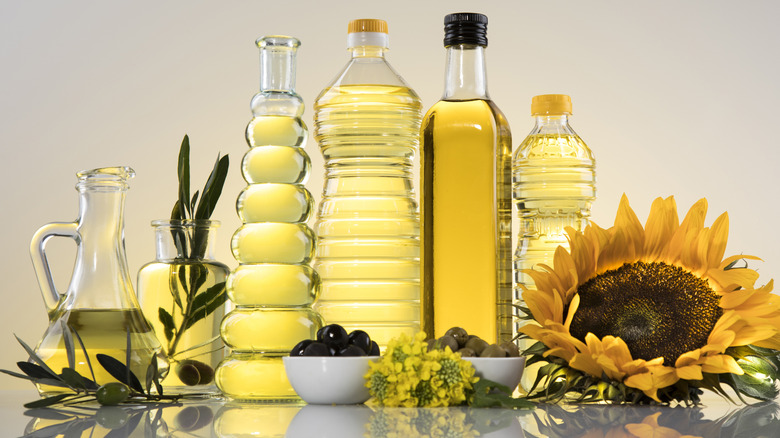
Things can get rather smoky around the grill, so it's essential you come prepared. Oil can help to prevent sticking, keep your veggies moist, and create a desirable texture. Typically, marinades will contain enough oil to get the job done, but if you're opting out of a marinade, don't forget that oil is still essential when grilling vegetables. But any old oil won't do. While you may be tempted to gravitate towards a rich, aromatic extra virgin olive oil, think twice.
While EVOO is inherently delicious, it has a rather low smoke point. If you're planning on cranking that grill up past 350 degrees Fahrenheit or allowing the vegetables to come into direct contact with the flame, consider an oil with a higher smoke point. Some animal studies suggest that oil becomes carcinogenic when it reaches a certain temperature beyond the smoke point, and that exact temperature is dependent on the type of oil used. Some high-smoke-point oils include vegetable, avocado, and peanut. Opt for one of these if you're planning to crank up the heat.
Prevent sticking
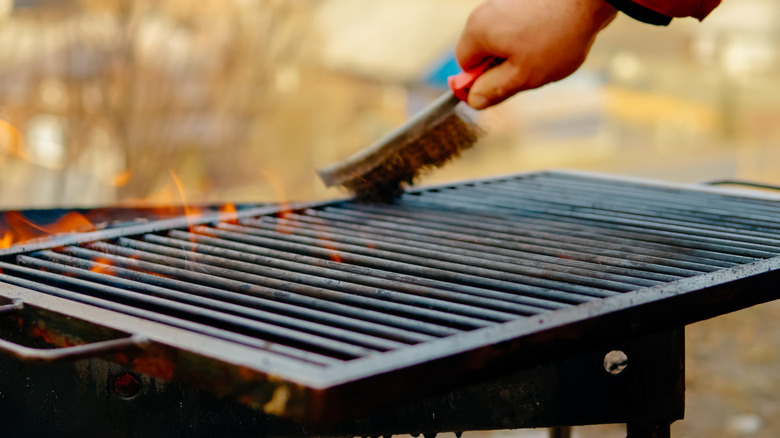
While you may have some grilling experience with tender meats like thin cuts of poultry or seafood, vegetables can be even more finicky on the grill. Some are so tender that even flipping them can result in shredded or ruined vegetables. Consider sliced zucchini or cherry tomatoes. They fall apart on the grill if you just look at them wrong. That's why it's essential to ensure that these vegetables won't stick to the grates. To create a nonstick surface on the grates, follow a few steps. The first is to make sure your grill grates are completely clean. Instead of using steel wool to clean your grill, opt for a vinegar and water solution, along with a grill brush or balled up piece of tin foil. Clean the grill down after you're done grilling, and before you grill again.
Next, you'll want to treat the grates like you would a cast-iron skillet. Heat the grill and then rub a high-smoke-point oil on the grates with a clean cotton cloth or paper towel. Be careful, and use your tongs to hold the cloth or towel to avoid burning your hand. Let the oil heat up thoroughly before tossing your vegetables on the grates. Don't shift them around a lot; instead, let them char on the grates, and flip only a few times, when necessary. Use this protocol for all your vegetables, tender or stiff.
Marinate your vegetables
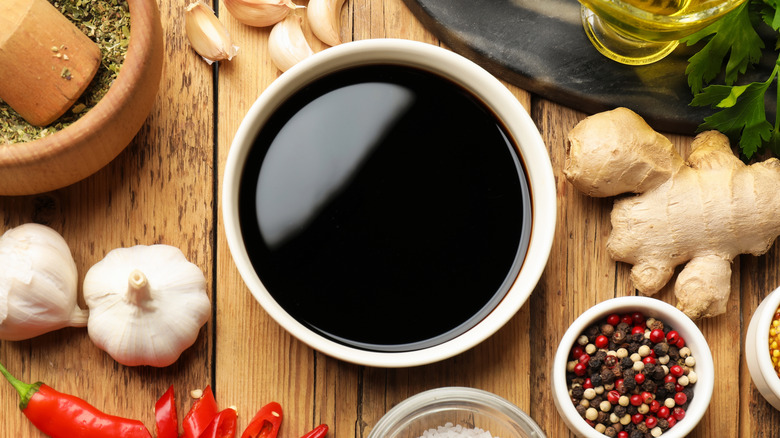
Just because vegetables are incredibly flavorful on their own doesn't mean you shouldn't add some additional flavor. Marinating your vegetables can help elevate the flavor and improve the texture. Folks often just use a little oil and salt, which can do the trick, but imagine what the outcome would be if you gave vegetables the same attention that you give meat? Saucy, sticky marinades, loaded with strong vinegars, sweet sugars, deep spices, and salty umami, can only elevate your produce if used properly.
For a milder marinade, focus on using salt or umami in combination with acid to elevate the vegetable's natural flavor. For a blander vegetable that is acting as a vehicle for flavor, choose a stronger combination, dark with spices, or dense with blended fruits or tomatoes. Any oil-based dressing or barbecue sauce can work in the right application, so you don't always need to start from scratch. Marinate your vegetables for at least 10 minutes, but if you have the foresight, let the tougher ones soak overnight, like cauliflower. For softer vegetables like zucchini or mushrooms, stick to under 15 minutes so they don't become soggy. Just because you sauce up your vegetables doesn't mean you can't add a pop of flavor after they come off the grill. A wedge of lemon or dipping sauce can help elevate the flavor to a whole new level.
Use a grill basket for smaller veggies
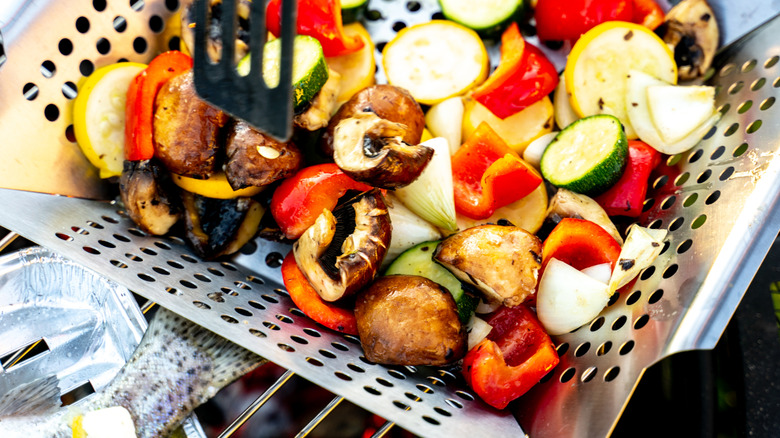
A rack of ribs or a chicken breast isn't at risk of falling through the grates and plummeting to a fiery doom. Cherry tomatoes, button mushrooms, asparagus, or sliced pepper are just the right size to disappear forever. When you're dealing with smaller or cut vegetables, and you're finding that you're losing too much of your haul, then it's time to regroup and take a new approach. Look into using a grill basket. These metal baskets are made to withstand the heat of the grill and are placed right on top of the grates. They have small holes, so those small veggies won't be at risk of disappearing.
You'll want to prep the grill basket like you would the grill. Be sure it's clean, let it preheat with the grill, and use a high-smoke-point oil to prevent sticking. Try to avoid overcrowding the vegetables so they don't steam each other, but instead, get nice and caramelized. This is a great tool for smoking vegetables, too. When you remove the basket from the grill or adjust its position on the grates, be sure to use tongs or flame-retardant and heat-resistant grilling mitts. The metal heats up just like the grill does, so it's imperative that you take proper safety precautions.
Note the thickness
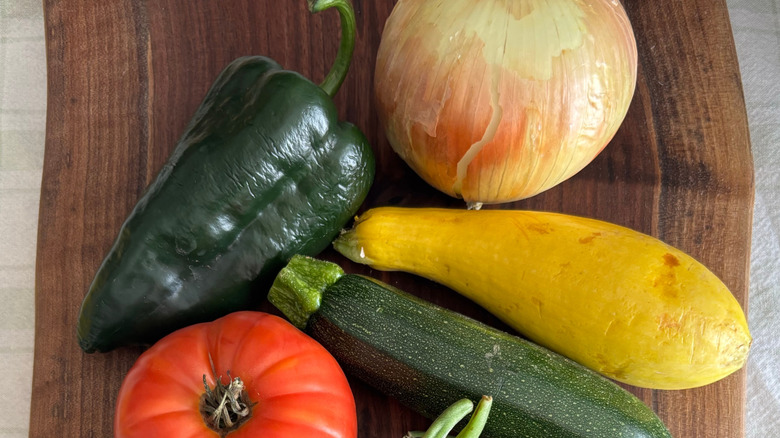
Grill-masters know that different cuts of meat require different amounts of time to cook on the grill, and vegetables are not dissimilar. For instance, your zucchini slice will be charred to another dimension by the time your cauliflower steak is ready to be removed from the grill, so this is not a set-and-forget situation. Grilling vegetables takes patience, attention, and technique. You want to keep the lid on as much as possible so that the vegetables get cooked all the way through. However, some veggies need to be checked on often. The best way to prevent uneven cooking is to lock in on using zones and to note the thickness of the vegetables you're grilling.
Get organized before you begin. Lay your vegetables on the grates in order of toughness and thickness. The vegetables that need a longer grill time should be first, and the more tender and delicate vegetables should be last. Let those thicker veggies reach about half of their cook time before adding the thinner vegetables. You can start all of these vegetables over a high heat to get a nice sear, but the thinner vegetables will need to be moved over to the area with less heat, or no direct heat. Staggering when you add vegetables to the grill will help them finish around the same time, and will prevent the first ones off the grill from becoming too soggy while they wait.
Don't forget seasonings
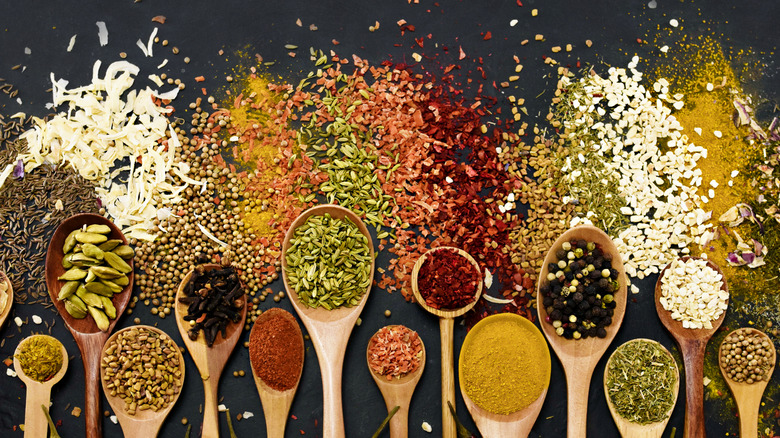
Who doesn't love a dry rub on a steak or pork butt? But have you ever tried a dry rub on your vegetables? Because vegetables don't have the same texture and fat content as meat, the rub will need something to cling to, and therefore won't be entirely "dry." You'll want to use a light amount of oil on your vegetables before tossing them in a dry rub, but the outcome is similar: a crusted edge of intense flavor. All too often, vegetables are underspiced, but all of those steak seasonings can be used just the same on grilled vegetables. In fact, meatier vegetables like mushrooms or eggplant pair beautifully with a classic steak seasoning.
For lighter vegetables, consider a seafood seasoning or poultry seasoning. Try a fajita seasoning blend on corn, peppers, or onions, and a pumpkin spice blend seasoning on pumpkin, sweet potato, or butternut squash. You can even create your own dry rub using herbs, spices, sugars, and powders. Be sure to use a salty element in each rub, and plenty of spices that play nicely together. If you're filling a grill up with veggies, try a few different dry rubs on different vegetables to create variety. For vegetables with nooks and crannies like broccoli or cauliflower, be sure to really use your hands to wedge the spices deep into the vegetable, where the flavors can cling to the oil.
Load up skewers
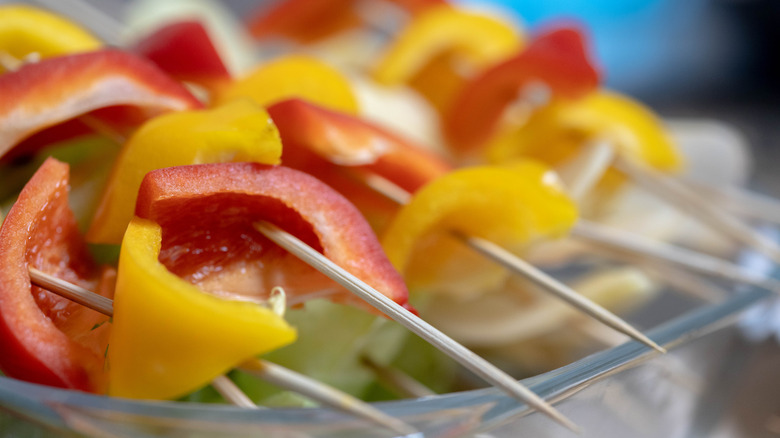
For small vegetables or cuts of vegetables, there's a fantastic way to ensure they don't fall through the grate, and it's likely something you're familiar with. If you've got some skewers on hand, this is a phenomenal use for them. Have you noticed how aesthetically pleasing it is to layer different vegetables onto your skewer, resulting in a little smorgasbord on a stick? Well, you shouldn't be doing that. As we know, vegetables are notorious for cooking at different rates, and unless you've loaded your kebab up with all vegetables that cook at a similar rate, then you're going to end up with some raw and some overcooked vegetables.
Designate a skewer for peppers, one for onions, one for cherry tomatoes, and one for button mushrooms. To make flipping your skewers easier (and to avoid ring around the rosie), use two skewers at a time. You can even cut your vegetables into longer sections to make it easier to load up. Grab both skewers at once and flip your vegetables over, so they don't just twirl around the stick and re-cook the same side again. In addition, follow all the basic essential tips for grilling kebabs, like soaking skewers beforehand. Use a sauce, marinade, or try making a veggie skewer recipe with an incredible dipping sauce.
Smoke 'em
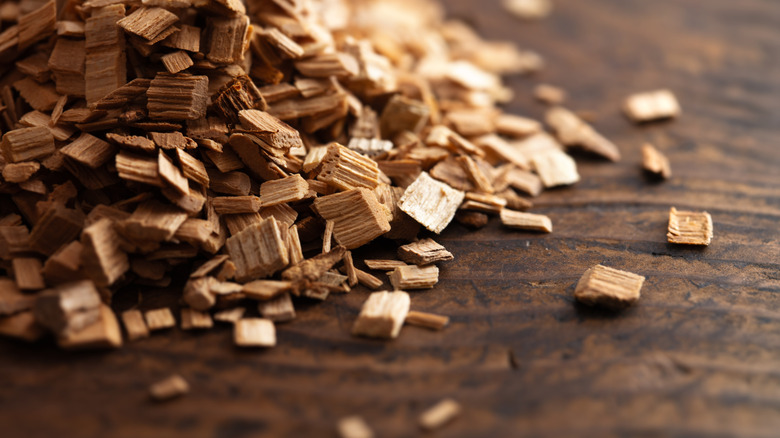
We smoke meat all the time, so why not smoke veggies? How good does hickory-smoked eggplant or apple-smoked zucchini sound? It's easy to forget that vegetables deserve the same attention as meat, especially if they are a central part of the main dish. Smoking infuses vegetables with a smoky flavor that matches the wood being used. Smoking chips are an easy way to smoke vegetables on a gas grill, but you can also add smoking chips directly to your charcoal grill.
If you feel confident in pairing vegetables with particular woods for smoking, you can experiment by mixing smoking wood chips for unique flavors. Fruity woods pair magically with each other, or with hickory and mesquite. These flavor combinations can add layers to your grilled fruit, especially if you've chosen to go light on the seasonings. When in doubt, go with hickory, as it's versatile and goes with just about any vegetable.
Those veggies don't need to rest
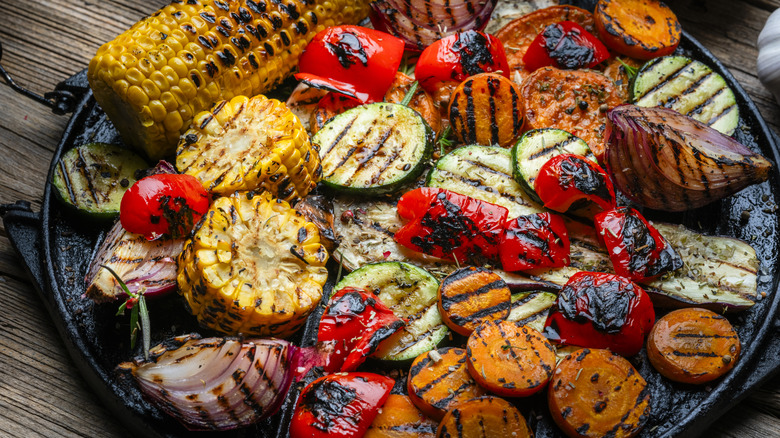
After grilling up a steak, it's best to let it rest. Not because it's worn out from all the hullabaloo during the cooking process, but because it produces a juicier cut that won't drain out when you take your first slice. Vegetables, on the other hand, do not need to rest and are best served straight from the grill. In order to do this, you'll have to prep and practice time management.
Beyond timing the lot of vegetables, you'll also want to time them with meats and appetizers. Finish cooking the vegetables as the meat is resting, which means you need to time the meat coming off the grill about 10 minutes before the vegetables are predicted to finish. Before you begin removing vegetables, you'll want to ensure everyone's drink is full and they are ready to start loading up their plates. Now, a cold vegetable isn't the end of the world, but leaving them on the grill for too long to ensure they are warm can lead to overcooking.
Use foil
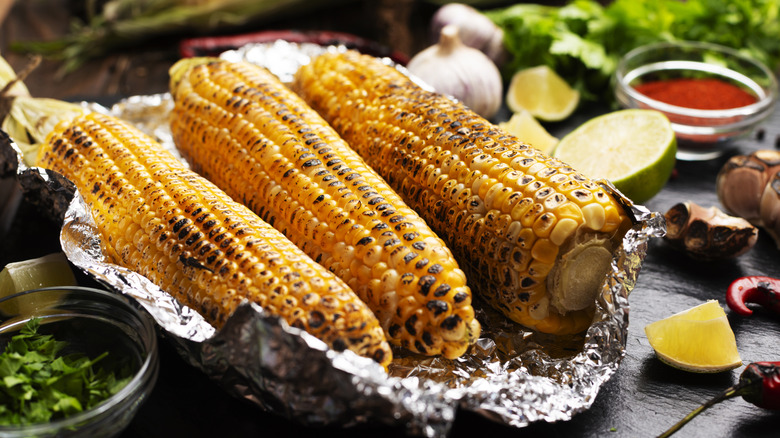
A quick and easy grilling hack that can save you a few major steps is using tin foil pouches. No need to worry about scrubbing that grill down, vegetables sticking to the grates, or sauce burning and dripping down into the flames. Fold vegetables into tinfoil with a little sauce, and let them steam away. If you don't fold them over completely, it will let some steam escape, which will result in a less water-dense outcome. Since vegetables tend to cook at different rates, you may find some to be slightly overcooked, but in the end, the saucy pouch of goodness is an easy route to take.
Some folks recommend using tin foil while grilling corn, and other vegetables that might need some protection from the direct flame, but need to grill for a while until thoroughly cooked. Although this method might not be as popular with the grilling elite, it sure is a great way to enjoy a saucy, easy grilled dinner without too much cleanup. Heck, you could even eat it out of the tinfoil when you're done. This is a great camping hack, or method for first-time grillers who are anxious about charring the vegetables a little too heavily.