

15 Signs You're Becoming A Whiskey Expert

The foundation of whiskey will always be about what you taste in your glass, but behind this legendary spirit is a whole world of depth and craftsmanship. Whiskey lovers appreciate both of these parts, especially how they marry to create beautiful bottles. However, the journey to fully appreciate whiskey can be a long one. There is no shortcut to becoming a whiskey expert. For those on this journey, it's good to recognize the signs that will tell you you're on the right track.
If you're reading this, there's already a good chance you've started to pick up some useful habits and techniques. I've had nearly two decades of whiskey-tasting experience that included visiting distilleries and speaking to those who work in the field. That has given me valuable expert insight. Yet I also remember what it's like to be a newbie and not being able to distinguish my Scotch from my bourbon. Here, I'll walk you through 15 signs that you're on the right path to becoming an expert.
You get a good idea of the mash bill from just the taste
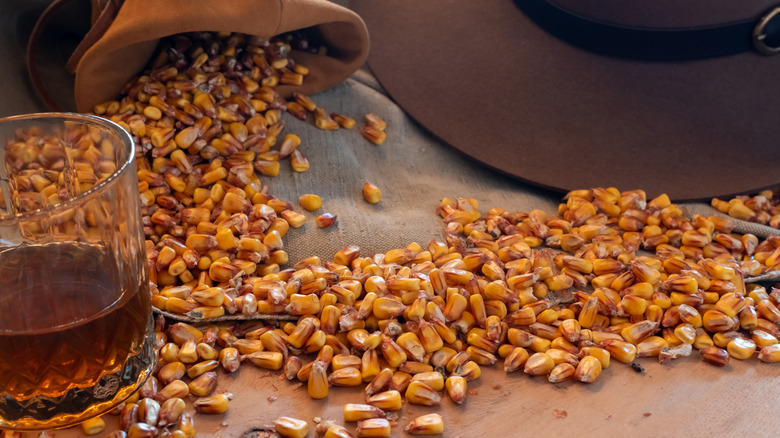
The mash bill is the list of grains used to make a particular whiskey, which is especially important for bourbon as it generally uses three or four ingredients. It will have a small amount of malted barley and, as stipulated by law, at least 51% corn. The remaining mash bill will then be made up of either wheat or rye, but here are some that use both. While malted barley is mostly for fermentation, the other three elements can have a significant impact on the taste. When you first sip a bourbon, you want to have a good idea of its ingredients and the percentages that were used.
This can be useful as some distilleries don't disclose the exact mash bills. A highly sweet bourbon is likely to be very high in corn, a spicy whiskey will be high in rye, and high wheat can leave it creamy and mellow. It's a little more nuanced than that, as each ingredient can also impart specific flavors. Single malt whiskey is a little different, as these are made from 100% barley. Even then, you can taste how barley was treated, for example whether it was dried over peat smoke. Eventually, you'll get to a point where the breakdown of flavors and grains becomes instinctive.
High-strength spirits no longer burn your throat

I remember taking my first gulp of whiskey, and coughing until my eyes started watering. It seems a lifetime ago now, but it sticks in my memory as now I can enjoy high-strength spirits with ease. It also serves as a reminder that everyone starts as a novice, not fully appreciating the power of these potent spirits. Until you get used to them, high-strength whiskey feels aggressive and hot. It's similar to tasting hot chilies. When food gets too spicy for your palate, you struggle to taste the flavor, and it can ruin the whole experience.
Over time, your palate will adapt and your technique will improve. You gradually get used to the strength of these bottles and greatly appreciate the flavors they carry. You can also help yourself by taking smaller sips and adding a touch of water. This will allow you to fully enjoy barrel-proof and cask-strength releases, which often have richer flavors with bold spice and oak notes. When high-strength spirits no longer burn your throat and get the attention they deserve, it's a sign that your palate has started to mature.
You realize whiskey quality goes much deeper than age
The correlation between age and quality is strong but not entirely reliable. At first, it seems as though age is the ultimate marker of quality. It makes sense to assume that older must be better. As you develop a greater understanding, you'll realize that quality goes deeper than that. I would say that whiskey needs to mature for approximately four years to get to a decent level. Once it does, a well-made five-year-old bottle can comfortably be better than something double that age.
You'll also notice that many of the best bourbon brands don't have age statements at all. That's because when the whiskey is ready, it's ready, regardless of how long it has been in the barrel. Also, once whiskey matures for over a decade, personal preference can come into play. For example, the Pappy Van Winkle 23-year is still exceptional, but I still prefer the 20-year-old. As a novice, you can go searching for age statements. Over time, you'll appreciate that it's just one of several factors that might indicate whiskey quality.
Your view on water with whiskey becomes nuanced

I've spoken to some people who think they know whiskey and they treat adding water to this spirit as a sin. They are often surprised to learn that whiskey being 80-proof don't magically happen. It's because they are cut with water to make them more palatable. As your experience grows, your view will become more nuanced as you realize adding water is neither good nor bad. It's just a different way of enjoying whiskey, and it can allow you to open up the flavors.
The use of water comes down to context and preference. For example, even when you get used to drinking high strength spirits, flavors can be hidden by high heat. Water can help mellow and break down flavor into specific tasting notes. Instead of thinking of it as something negative, whiskey experts experiment with water. Sometimes it can improve the tasting experience, but sometimes it doesn't. And if someone likes adding water to a whiskey you prefer to drink neat, you learn to respect their choice rather than sneer at it.
You're not dismissive of blended whiskey
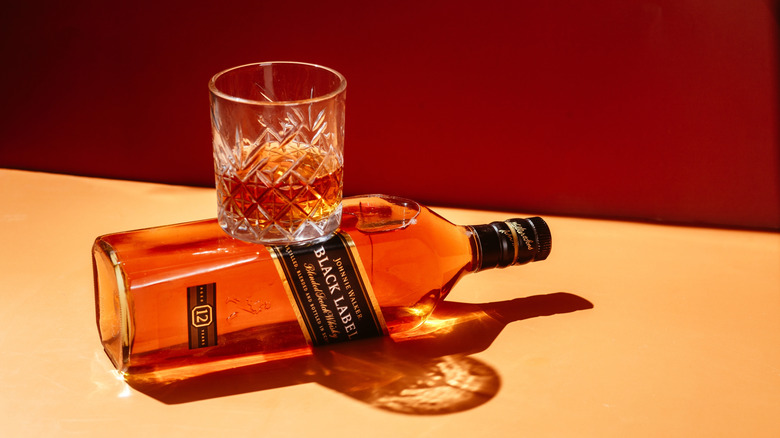
There are a few signs on this list that go against black and white thinking. This is another one. When compared with blended whiskey, single malts and single barrels feel more serious as there is typically no room for error in their production. The perception isn't helped by the fact that most bottom-shelf whiskeys are blended. However, blending is a skill that some distilleries master to produce fantastic bottles. It's also important to know that blended can have two meanings. Most distilleries will blend multiple barrels of the same spirit to achieve consistency, but this is not the blend most dismiss.
The term blended is more commonly used when different types of spirit are mixed together. For Scotch, this is usually malted and grain whiskey, while some low-end bourbons include neutral grain spirits. However, there are some well-made blends that can give you beautifully balanced and approachable flavor. Johnnie Walker Black Label is a great example of this. A great blend is a reminder that you should always judge what's in the glass above anything else, and realizing this means that you're becoming a whiskey expert.
You care little about branding or marketing

There are plenty of whiskey brands that try to tempt you with flashy advertising campaigns or fancy bottles. It would be logical to think that if they put that much effort into the packaging, the contents must be great too, but reality is often the other way around. There are some positive examples, but sometimes the focus isn't on quality but on design and endorsements – celebrity-owned liquor brands are often guilty of this. As you develop into a whiskey expert, you'll come to realize that it only matters what's inside the bottle.
A plain bottle with intriguing production details will excite you more than any overdesigned release. I often cite Pappy Van Winkle as a good example of this – it's perhaps the most sought-after bourbon in the world, yet its bottles are simple. Word gets around quickly, and any bottle worth your money will quickly gain popularity. This means that if the spirit itself is excellent, the whiskey will effectively market itself. Having this mindset will allow you to be a more confident buyer as you'll be able to trust your own instincts rather than falling for any branding hype.
You come to truly trust your own palate

Early in your tasting journey, it can be easy to distrust your own palate. If you read a reputable review and it mentions a tasting note you can't find, you can feel like you've done something wrong. You can be led by ratings and popular opinion while figuring out what you like and allowing your palate to develop. Eventually, your dependence will fade, and you'll realize there's nothing more important than your personal experience. Tasting notes can be useful, but you'll begin to use them as a reference point rather than a guide.
The reality is that our taste buds are all different. A tasting note one person finds can genuinely be missing from someone else's. You'll be comfortable disagreeing with consensus, especially when you can cross-reference it with other bottles you've had. There is no correct answer with tasting whiskey and no validation to seek. With experience, you learn that whiskey is a deeply personal thing and if anyone tries to invalidate your opinion, they are wrong.
You work out which terms have value, and which don't
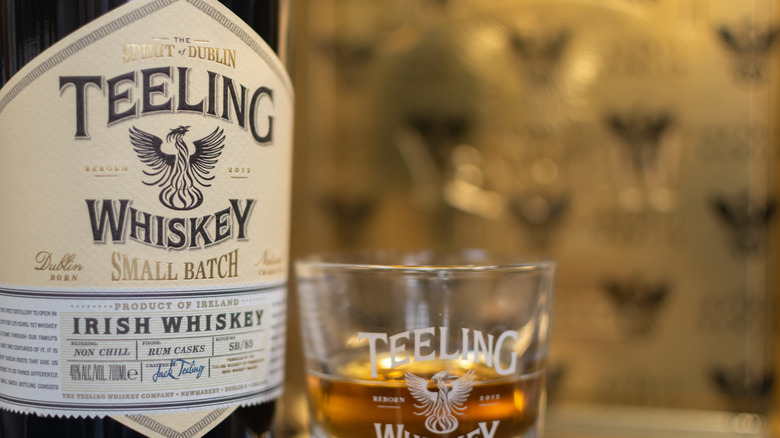
The world of whiskey is packed with terminology. Some terms are clear legal definitions while others have no set meaning and can be easily misused. One of the signs you're becoming a whiskey expert is the ability to decide which of these terms to trust. The two terms that have little value are handcrafted and small batch. The problem is that anyone can use them, and if a distillery applies these terms, you want them to include the info on the likes of barrel numbers and how big the batch actually was.
Other terms such as barrel proof tell you that the whiskey you're tasting is the same proof as it was when it left the barrel after aging. Essentially, you learn to focus on information that guides your buying decision as they can help you predict flavor and balance. The likes of signature, premium, and expertly matured mean nothing without specifics. An expert will know which terms can help and which can be ignored. This is a great protection from marketing hype and misleading labels.
You can work out what missing details on the label mean

When you've spent enough time reading whiskey labels, you realize that what's missing from a label can be as important as what's on it. For example, a bottle using terms such as produced by or bottled by implies it wasn't distilled by that brand. A great distillery will be proud of how the spirit was made, but others might have something to hide and give off some obvious red flags.
If there is missing information about maturation, location, and ingredients, you may be getting a low-quality bottle. There are also legal definitions that need to be adhered to. If something is labeled as American whiskey, it most likely doesn't meet the classification to be called bourbon. If it is bourbon but doesn't call itself straight bourbon, it'll be less than two years old. This isn't about being cynical or snobbish, it's about expecting to be given context for your buying decision. Any decent producer will give you all the information you need to know.
You could tell where it was made in a blind taste test
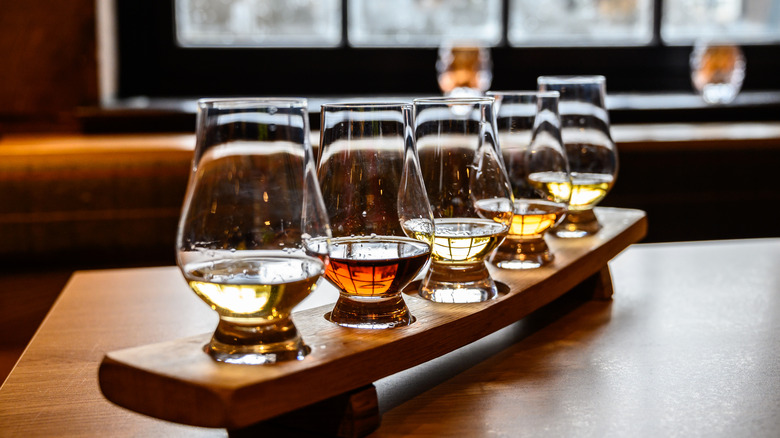
You'll eventually reach a point where you can place a whiskey's origin in a blind test. Though it might start with the country of origin, it can develop further. This is especially true for Scotch whiskey. The most obvious example of this is seen in whiskies coming from Western Isles that are usually made with barley dried by peat smoke. In Speyside, whiskies are usually more mellow and sophisticated. For American whiskeys, you will eventually be able to differentiate between Tennessee and Kentucky whiskies.
In reality, there are always those which break the rules and throw you off. When you get to the expert level, you will even notice these differences in whiskey-based cocktails. This is because each region has a unique climate and preferred casks. This skill takes time and careful observation. When you can identify where and when whiskey was made, it's a true sign of an expert-level palate.
You can estimate age by taste alone

Being able to guess the age of whiskey by taste alone isn't about counting years in your head. It's about tasting whiskey and having a good idea how long it was in the barrel. There are a few clues to look for here. Aged whiskey tends to have a richer mouthfeel, and this typically comes with unique tasting notes, such as leather, spices, and chocolate. Along with this, the prevalence of oak in the tasting notes can be a strong sign it has been sitting in a barrel for a long time.
There are a few more markers of young whiskey. Firstly, the taste of grain which will ebb away the longer it matures. With immature spirits, you can also get a taste of ethanol, which is the taste of pure alcohol that usually comes with an unpleasant burn. You also have to appreciate climate and maturation. Whiskey matures more quickly in warmer climates and in new barrels. This means that bourbon ages more quickly than Scotch. At expert level, you'll instinctively know these differences and immediately spot when a whiskey has been well matured.
You know the legal definitions of various whiskey types
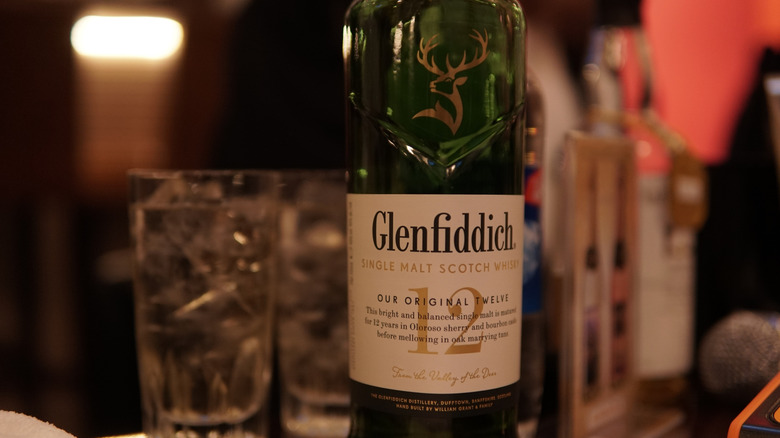
Besides general terminology, whiskey has intricacies when it comes to the legal definitions. When tasting bourbon, you'll know that it had to meet certain criteria — one of those is that it needs to be made in America.
Additionally, you'll learn that Scotch has to be aged for at least three years, while bourbon has no aging requirements apart from straight bourbon that has to be aged for at least two years, while bottled-in-bond bourbons require a minimum of four years. Tennessee whiskey must go through the Lincoln County Process and single malt has to be made in copper pot stills. These are just some of the things that whiskey experts know by heart. This allows you to be more informed and have clearer expectations. As mentioned, any of these terms either featured or missing from the label can also tell you a lot.
You realize price and quality have a loose correlation
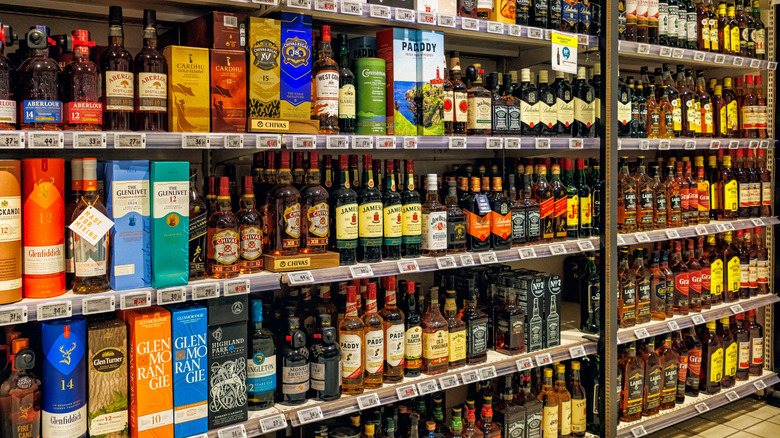
Price and quality have an even looser correlation than age and quality. It's easy to assume that price means higher quality. It is true that your average $50 bottle might be nicer than your average $20 one, but there is no guarantee. Some expensive bottles can fail to live up to expectations and make you feel as though you've wasted your money. For example, there are plenty of excellent Scotches under $50 that may be better than some labels that cost twice as much.
Becoming a whiskey expert will also mean that you'll start to learn about what actually drives pricing. Limited releases, packaging, age statements, demand, and brand reputation are all reasons a distillery may decide to increase the price. In contrast, a solid and well-made whiskey can remain reasonably priced because of high-availability and less hype. As a beginner, you can doubt yourself, wondering if there's something you're missing. As time goes on, you'll figure out several affordable favorites and some expensive labels that are worth the price.
You know how production affects whiskey
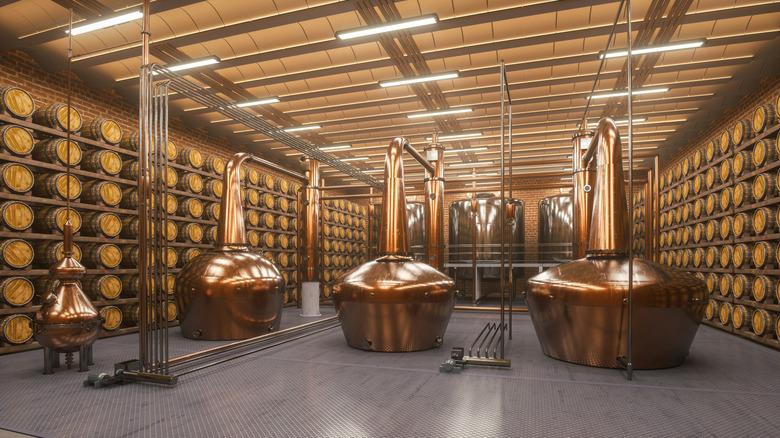
Whiskey production is incredibly complex, and I could write whole articles on grain selection, malting, mashing, fermentation, spirit cut, and maturation, and that would only be covering several select parts of the process. There is a general production method, but there can be great differences in how these steps are followed.
For example, there is a reason why single malt whiskey needs to be made in copper pot stills. This production method is slower but it provides heavier and richer character, which often gives whiskey a thicker mouthfeel and more complexity. On the other hand, the more varied mash bill and quicker maturation mean that the bourbon industry almost always used column stills, which are continuous and can run non-stop, and tend to produce a more muted profile. As you build up your whiskey knowledge, you'll appreciate how each production step can affect the final product, and a lot of times you can taste this in the glass. It's one of many things that makes whiskey so special.
You become more of a guide than a gatekeeper

I find there is an interesting transition that can happen on a whiskey journey. Once someone reaches a mid-level range of knowledge, they can get a little snobbish about whiskey, becoming somewhat of a gatekeeper. These people sneer if someone gets things wrong and suggest they are somehow not worthy of expensive bottles as they haven't got a developed palate. There can be exceptions, but most whiskey experts I've spoken to do things differently: Instead of gatekeeping, they are proud to share their expertise, and instead of judging others, they teach us how to appreciate whiskey by discussing mash bills, finishing methods, and the overall character. This is not showing off; true experts will try to turn anyone into a fellow whiskey lover.
Gatekeepers can focus on myths such as combining water with whiskey, obsessing over age statements, or dismissing certain whiskey regions. As a whiskey expert, you will have confidence in your knowledge. You won't have to prove anything and you won't focus on being right. Instead, you'll focus on being helpful while fully appreciating that everyone has a different palate. Eventually, you'll find great joy in positively contributing to the development of whiskey culture.