

The 5 Most Nutritious Tinned Fish To Keep On Hand
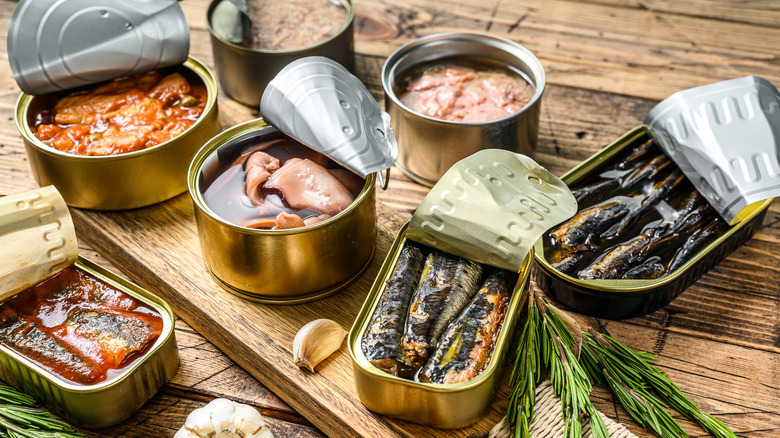
Although it's always been a staple around the world, tinned fish has really been having a moment in the spotlight for the past couple of years in the U.S. Home-grown brands like Fish Wife are all over social media and have colorful, enticing packaging that's so much more exciting than basic round, silver tins. And many European brands are all the rage, too. So it's time to get upscale canned seafood brands on your radar, because you don't have to settle for sad, bargain-brand tuna that may or may not remind you of cat food. And the other good news is that hiding in those bright or chic vintage-looking tins of seafood are a powerhouse of benefits, like omega-3s, vitamins, and plenty of protein, while being lower in calories and carbohydrates.
To help matters, we've rounded up a variety of tinned fish to stock in your pantry that really pack in the nutrients. All of these tinned fish can act as a blank canvas for you to transform into a plethora of meals, from simple salads and sandwiches to a full-on tinned fish snack board. When paired with butters, herbs, vegetables, mustards, pickles, and fresh bread, tinned fish can become a snacking adventure.
Sardines
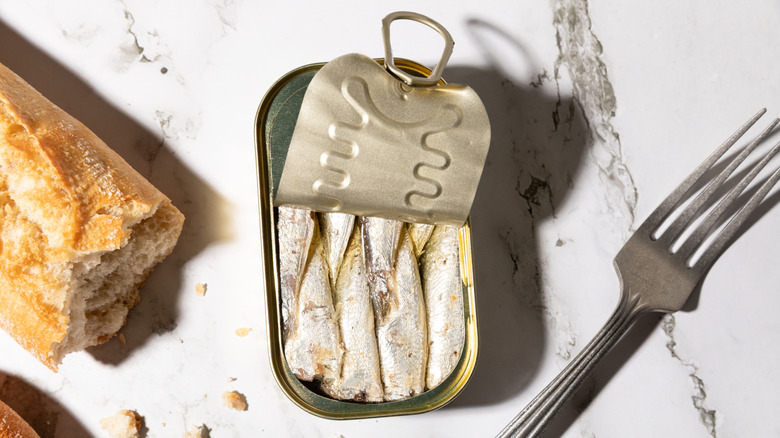
Sardines are one of the most nutrient-packed foods you can buy, and are sometimes known as a superfood of the ocean. They contain high amounts of omega-3s, which are healthy fats that help your cells function properly, particularly in your brain and eyes, and have also been linked to heart health, raising good cholesterol levels, and helping to keep blood pressure low. A serving size of about five small oil-packed sardines (bones included) contains almost 15 grams of protein, 45 milligrams of calcium, and 7 grams of healthy fat, all without any sugar or carbohydrates.
There are many great uses for canned sardines, like to top salads or to make a sandwich that's a departure from the usual deli meats or tuna, or to add to pasta dishes. Sardines are a staple in Mediterranean food, as they have been popular for centuries in Portugal, Spain, and Italy, but they are now widely caught and sold around the world, from costal regions of North America to Japan. However you enjoy the small fish, always be sure to give sardines a zesty upgrade with a splash of acid, whether it's a drizzle of vinegar, a squeeze of fresh lemon juice, or a tangy pickle.
Tuna
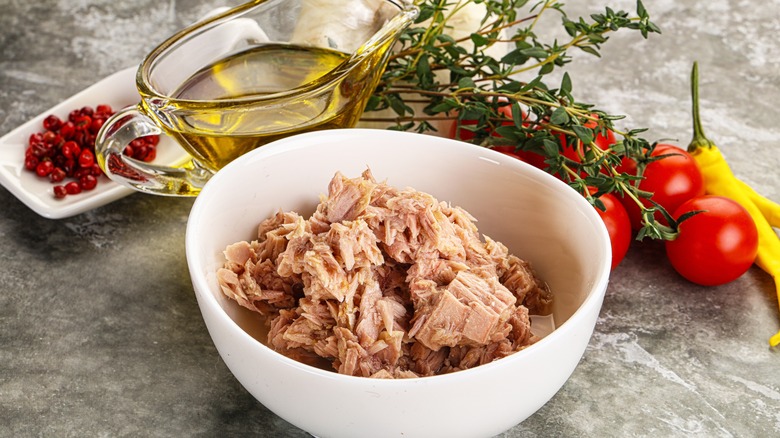
A 3.5-ounce serving of tuna packs 29 grams of protein while containing no carbohydrates, perfect for those looking to build muscle or opting for a leaner, lighter meal that still leaves you full and satisfied. Tuna is also low in fat, making it a lean protein. Additionally, the same 100-gram serving contains about 34% of the daily recommended value of vitamin D, something that most of us are deficient in, especially during winter months with less exposure to the sun. One thing to know about tuna is that it tends to be higher in mercury than other tinned seafood, so look for "light" or "skipjack" tuna, which have been shown to contain lower levels of mercury, if you're a frequent seafood eater. It is also advised to avoid tuna if you're pregnant.
When looking for cans in the grocery store, there are many specifics to keep an eye out for on the label for the best quality tuna, like BPA-free packaging and language like safe-caught, pole-caught, and wild. If sodium is a concern, seek out low-sodium tins of seafood. Water-packed tinned fish is a healthy option, but don't avoid oil-packed if the oil is extra-virgin olive oil, as extra-virgin olive oil has many health benefits, and oil-packed tuna can feel more rich and satisfying than water-packed versions.
Anchovies
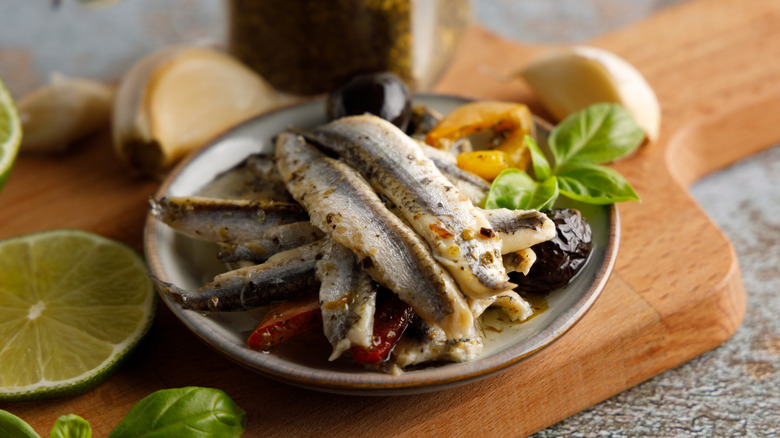
Anchovies are the tinned fish Alton Brown keeps stocked at all times. They're great to throw into pasta sauce like marinara for an extra bit of salt and umami, as the tiny fish really just melt into the sauce as it cooks. Anchovy fillets are also perfect for salads, whether blended in a dressing like Caesar or dotted on top of a salad of bitter chicories and slivers of salty cheese for even more savory notes. Tinned or canned anchovy fillets are safe to eat whole, as the bones left in the fish are so fine that they don't pose a danger, unlike bones in most fish.
Although you're welcome to eat an entire tin of anchovies, we recommend consuming just a handful of them at a time, as the petite filets are high in sodium. A serving of five anchovies has between 5-6 grams of protein, along with about 30% of the daily value of recommended sodium intake. Anchovies also contain small amounts of selenium and iron, as well as calcium, thanks to those tiny bones. One of the most nutritious aspects of a small serving of anchovies, however, are the omega-3s, with over 400mg of omega-3s per five anchovies. Anchovies are also lower in mercury than many other fish, making them more of a safe bet to eat frequently. As a bonus, if you buy anchovies that have been packed in oil (hopefully extra-virgin olive oil), here are some creative ways to use up leftover anchovy oil.
Salmon
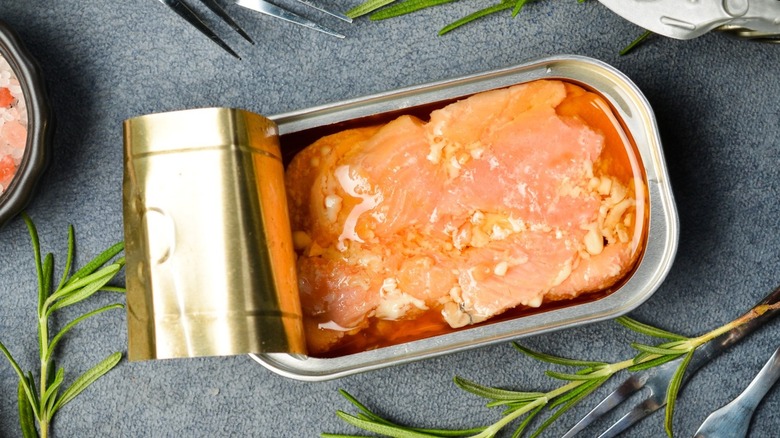
While it may not be the most beautiful tinned fish in the universe, canned wild salmon is a solid staple to keep in your pantry. Similar to tuna, its mild flavor and flaky texture are easy to incorporate in meals, like light lunches over greens and vegetables or tossed into a creamy pasta dish. A 100-gram serving, equal to about 3.5 ounces, has 23 grams of protein with no sugars or carbohydrates, and has less than 170 calories. Tinned salmon also contains a massive amount of omega-3 fatty acids at 1,227 milligrams, as well as 21 micrograms of vitamin D, which is about 105% of the daily recommended value. Tinned salmon is also a good source of calcium and phosphorus.
With its mild taste and buttery, flaky texture, tinned salmon is a great option for weekday lunches or speedy dinners at home. There are many ways to use canned salmon, like making your own sushi hand rolls with freshly cooked rice and a sprinkling of furikake seasoning, or skipping the red meat and swapping out salmon burgers for regular burgers, which are especially delicious when topped with a creamy, tangy tartar sauce. When searching for tinned salmon, it's best to opt for wild salmon as opposed to farmed.
Mackerel
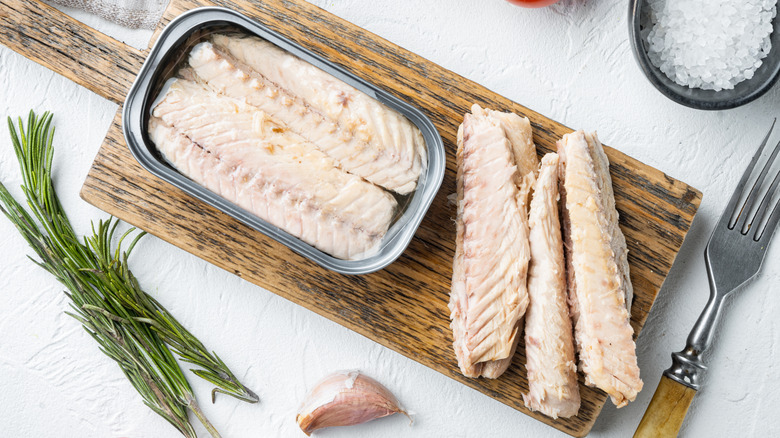
A 3.5-ounce serving of mackerel contains 23 grams of protein and a whopping 1,230 milligrams of omega-3s, and, like other smaller fish, mackerel is lower in mercury than its larger ocean counterparts, especially both the Pacific and Atlantic chub varieties. A serving of mackerel also contains almost 7 grams of vitamin B12, which add up to around 290% of the recommended daily amount, as well as 36% of the daily recommended quantity of vitamin D. Mackerel also contains an antioxidant known as selenium, and has more calcium than milk.
If you're unsure of how to incorporate tinned mackerel into your kitchen rotation, there are easy ways to make mackerel the star of your next pasta. If you're a fan of tinned tuna, mackerel is even a bit more easy to use, with a mild flavor that's still rich and fatty, particularly when it's packed in oil instead of water. Mackerel filets are larger than anchovies and sardines, making them easy to layer on toasts for a satisfying meal or to top a niçoise salad in place of tuna. Its mild flavor makes it a good replacement for recipes where you'd use tinned tuna or salmon, like in a pan-seared fish cake, a much cheaper alternative to crab cakes.