

10 Varieties Of Oranges And The Best Ways To Use Them
We may receive a commission on purchases made from links.
Why should you have any interest in oranges? For starters, there are over 600 types of oranges grown around the world, meaning when you stroll through your local grocery store or farmers' market, you've merely scratched the surface — or peel, in this case. In addition, the health benefits of eating oranges — high vitamin C, vitamin B1, and folate — are generally great for keeping your immune system chugging along. And, oranges are a wonderfully versatile fruit for cooking, baking, and cocktail-making.
For the best possible insight, we brought in some experts to talk about all things orange: fourth-generation citrus grower Emma Reynolds Ezell from the Florida Department of Citrus, Helen Goh, author of "Baking and the Meaning of Life," and Alex George, aka Lily P Crumbs, author of "In the Mood to Bake." Out of the more than 600 varieties of oranges out there, we cut the list down to the ones that you're most likely to come across at your local grocery store or farmers' market, and dove deep into the traits of each one and how best to use them at home. Move over, other citrus; oranges are about to become the most ap-peel-ing fruits in your kitchen.
How to pick out the best orange

Like any other fruit or vegetable, it's helpful to know what to look for to make sure that the oranges you're buying at the grocery store or farmers' market are of the best quality. Size, weight, and texture are all useful indicators to consider when you pick up that piece of fruit and decide whether to put it in your shopping bag or back on the perfectly constructed pyramid. In Florida, a state known for its citrus and where many of your grocery store oranges are likely grown, the harvest season is from mid-October to May. "It's a long harvest season, partly because you have some varieties that are ready to be harvested in the fall and winter, while others are not ready until late winter or early spring," notes Emma Reynolds Ezell.
Ezell's first recommendation is to inspect the skin. Minor blemishes or greenish tinges on the outside? Not a problem. According to Ezell, these aren't an indicator of ripeness, but a result of the yearly re-greening process. Now, give that orange a little squeeze. Not too hard! Do this gently to get an idea of how firm or soft it is. "When you hold an orange, an ideal ripeness should be firm to the touch but slightly give," said Ezell. "It shouldn't have mushy or spongy spots." Now the weight — is it heavy? If so, that's a good thing. The heavier the orange, notes Ezell, the more juice inside.
Navel
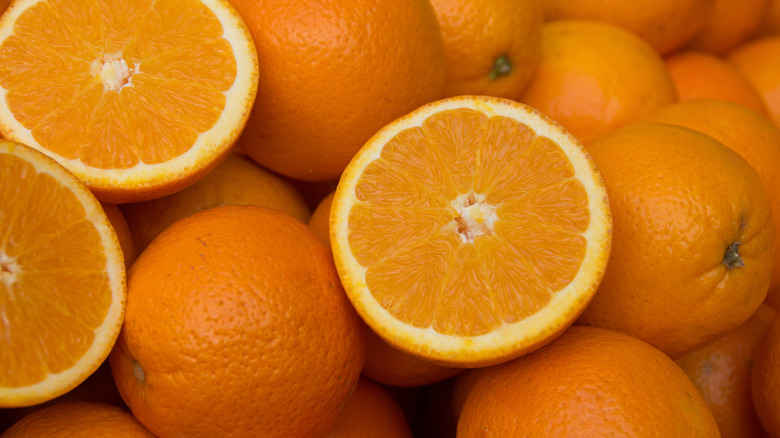
If you're a regular citrus shopper, you've probably seen navel oranges more than any other variety. That's not a coincidence — navel oranges are one of the most common oranges sold in grocery stores, known for their juiciness, sweetness, and for being nearly seedless. They also tend to have a thinner skin, which results in a fleshier, juicier inside with a lot of pure orange flavor. Emma Reynolds Ezell also notes that when shopping for navel oranges, look for ones with a small navel, as those will have the most juice.
Navel's growing season is from November to May, making it an ideal citrus to play with in the winter and early spring months. In addition to being one of the best oranges for snacking on or juicing, navels come in handy when putting together a simple fruit salad or any number of sweet desserts. Helen Goh relies on the navel orange for its consistency, noting its aromatic zest and a flavor that leans more sweet than bitter. Alex George is of a similar mind, explaining how the navel orange is her "everyday workhorse for baking: reliable, sweet, and juicy." On the savory side, you can put the sweetness of the navel orange, peel and all, to good use in something like a bourbon glaze for chicken or a simple but wildly flavorful snack of roasted almonds.
Cara Cara
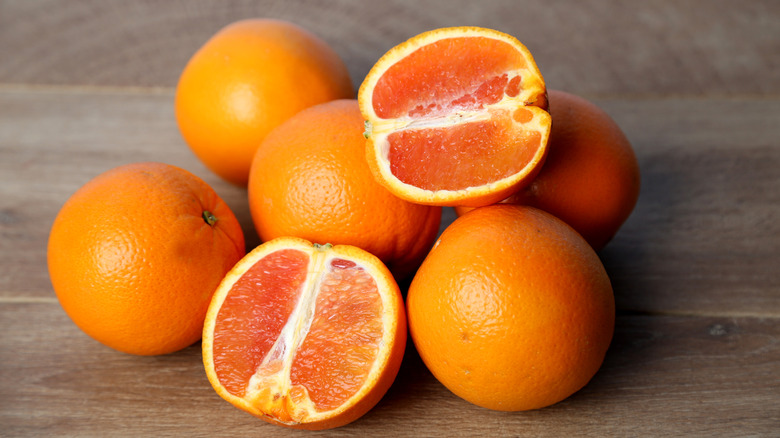
Another member of the navel orange family, Cara Cara oranges are actually a hybrid of two different navel oranges: the Washington navel and the Brazilian Bahia. Unlike the traditional navel orange, however, Cara Cara oranges have a pinkish-red flesh and a milder, slightly more tangy flavor profile. With a growing season from December to April, Cara Cara oranges are another orange to integrate into your cooking and baking routines during the chilly winter months and the first signs of springtime.
Because of their mild flavor, Cara Cara oranges are quite versatile in the kitchen. The winter months are some of the best to have crisp, bright salads, so using Cara Cara segments in a chicory salad with orange and walnuts will add incredible depth of flavor and balance with the bitter greens. It's also the perfect time to lean into cozy dishes with rich flavors, making the Cara Cara orange an ideal companion to roast pork tenderloin or a whole roasted chicken.
If you're looking to make your cocktail or baked-good garnishes at home a little more exciting, candied orange peels made with your Cara Cara oranges are your ticket to glory. A simple process of boiling and blanching the peels and letting them take an extended bath in sugar syrup will result in a chewy, sweet peel that can complement an old fashioned or whiskey sour, or adorn the top of a citrus almond tart.
Blood orange
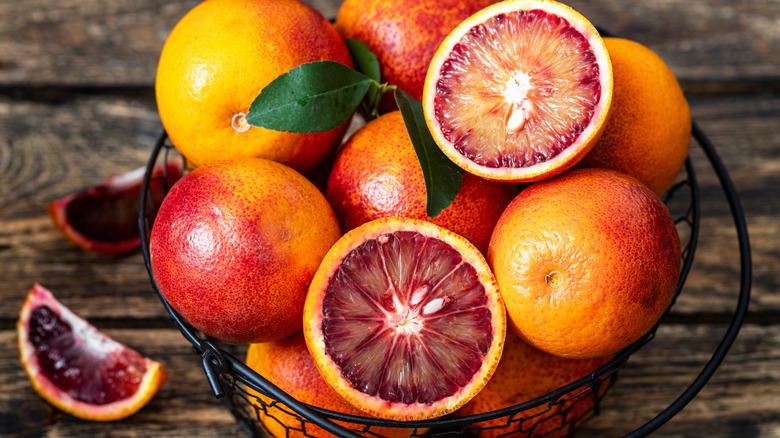
If it wasn't enough of a giveaway in the name, blood oranges definitely stand out among the other orange varieties. Their dark red flesh, which comes from an antioxidant called anthocyanin, is unusual yet striking, and their tart, almost cherry-like flavor sets them apart in the best possible way. Blood oranges have a sweeter, less acidic flavor than other orange varieties, and have fewer seeds, although they aren't entirely seedless.
Because of the deep red color and berry-forward flavor of the blood orange, you'll want to lean into these qualities when deciding how best to cook or bake with it. A rich, decadent dessert like chocolate-blood orange pots de creme gets a hit of sweet-and-tart flavor from the zest in the mix as well as the candied blood orange peel on top. For the savory chef, incorporate the juice and zest of a blood orange to give a creamy pasta bake a tangy kick. While Alex George typically develops recipes with navel and Valencia oranges in mind for the home baker, because of the short growing season (December to May), if she sees a blood orange at her local grocery store, she's buying as many as possible.
Tangerine
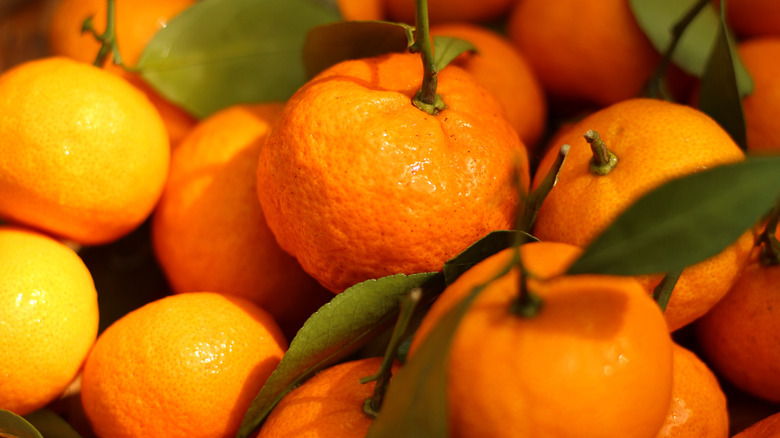
A member of the mandarin orange family, tangerines are smaller than most other orange varieties, with easy-to-separate segments that are incredibly tender and sweet. The name "tangerine" comes from Tangier, Morocco, where the first tangerines were shipped to Europe. They have been grown in countries like Japan and China for thousands of years, but didn't start showing up on grocery store shelves in the United States until the mid-19th century. The flesh is sweeter and less acidic than most other orange varieties, and with the relatively long growing season compared to other oranges — November to May — you're bound to cross paths with them at the grocery store. "These varieties are much smaller than oranges, easy to peel, and very sweet," said Emma Reynolds Rezell. "My kids love them as a quick snack!"
Behind the bar, the peel of the tangerine is about to become your new best friend. Rather than buying a commercially made orange liqueur, use that thin, tangy peel to make your own tangerine infusion at home. Once you've let the peels infuse in a neutral spirit for an extended period of time, put the liqueur to work in an orange-centric golden margarita or a spiked orange smoothie.
Clementine
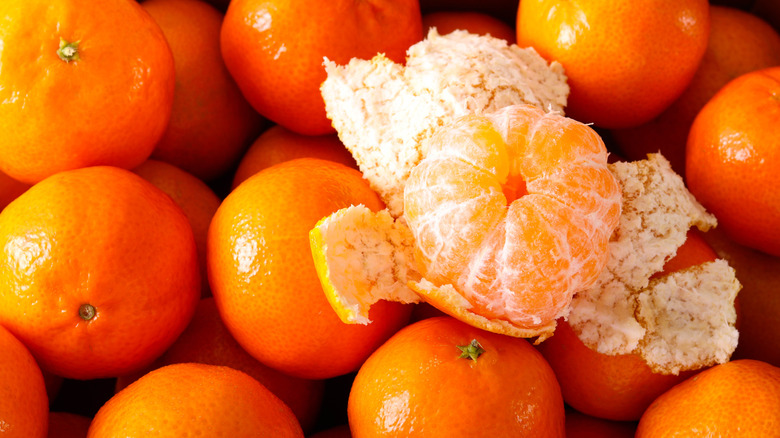
If there's any orange variety that can act like the poster citrus for adorable and downright dainty snacking, it's the clementine. A member of the mandarin family, clementines are small with a thin peel that's easy to remove, encasing seedless flesh which is wonderfully sweet. The origin of the clementine is a bit hazy, but what we do know is that the best time of year to eat them is December through February, when they have reached their prime. So while it may be tempting to pick up a crate of them before this, waiting until peak season is more than worth it.
In addition to the obvious snackability of the clementine, it's also a great piece of citrus to use in winter citrus salads that need an extra sweet kick. A salad of bitter greens with speck and clementines is wonderfully fresh and bright with the fleshy, juicy segments scattered throughout. Clementines also make a sweet, zesty addition to an arugula salad with avocado, red onion, and sunflower seeds. "After all the indulgent eating from the holidays, I love to make salads using Florida oranges and grapefruit segments," notes Emma Reynolds Ezell. "It fills you up without making you feel heavy afterward."
Valencia
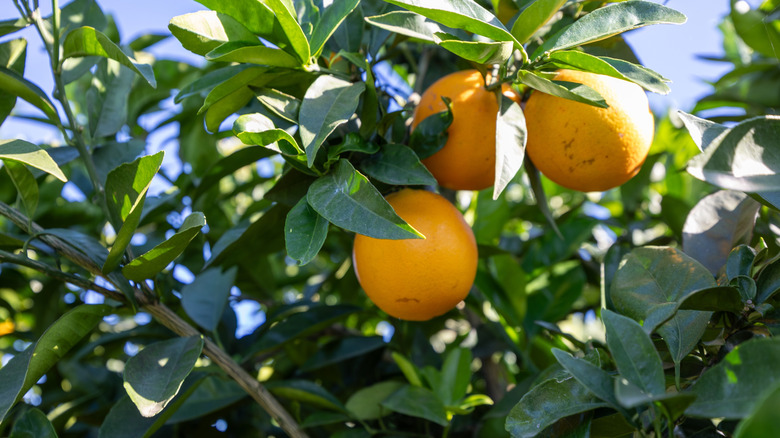
So far, we've really gone deep into the winter citrus season, highlighting some of the best oranges the cold months have to offer. So let's pivot to summer citrus, where the Valencia orange comes in hot and oh-so-juicy. Named after the city of Valencia, Spain, Emma Reynolds Ezell notes that Valencia is "arguably the world's most popular orange for its rich, golden juiciness."
It is a medium-sized orange with a thin peel and wonderfully juicy flesh within. Be advised: This is a seeded orange, so if you're looking to snack on or juice this variety (which we really recommend you do), be prepared to remove the seeds. To find the best of the best, do your Valencia shopping in late spring or early summer and make as much fresh-squeezed Valencia orange juice as possible. "Besides juicing, it's fantastic to eat in sliced wedges or in recipes, just be prepared to get sticky in the best possible way!" notes Ezell.
When baking with citrus, Helen Goh will often use the whole, raw orange to extract every drop of flavor from every part of the fruit. In the case of her Shoo Fly buns, Goh blitzes a whole, fresh orange and adds it to a yeasted dough, while also making an orange syrup from the peels combined with a sprig of rosemary. Take a page from the Goh playbook and lean into all the best qualities of a raw Valencia orange with oven-roasted salmon with orange marmalade, brimming with citrus-forward flavor from whole orange slices as well as the zesty, deeply flavored marmalade.
Tangelo
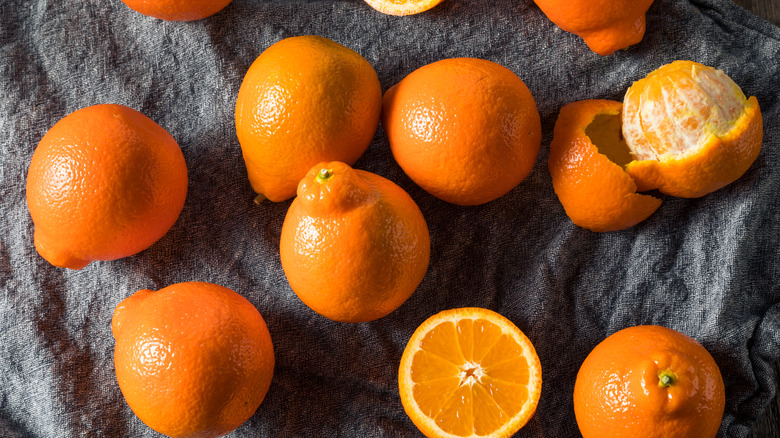
The tangelo is like the international spy of the orange world — it can go by multiple names, but in the end, they're all the same family of oranges, whether you've heard the name tangelo, minneolas, or honeybells. Enjoyed from February through April, the tangelo is a cross between a tangerine or mandarin and a pomelo, hence the portmanteau. As such, it has a little bit of character from each variety, with a bell shape, an easy-to-remove peel, and a distinctive "nipple" on one end. The juicy flesh is mildly sweet and tangy, making it an ideal orange to use in its raw form.
To get the best of the tangelos' balanced sweet-and-tart flavor profile, use the juice and the zest. Start with your favorite orange-inspired cocktails, like a Maryland orange crush or a grown-up jungle juice with plenty of fresh orange slices for garnish. For Alex George, who uses oranges in everything from cakes and cookies to curds, glazes, and syrups, relying on the balanced flavor of a tangelo is a great way to take advantage of that subtle brightness. "I love using orange zest in otherwise simple recipes, like vanilla cake or shortbread, where it adds just a little without overwhelming the base," she says.
Seville

If you weren't already sure based on the name itself, the Seville orange is mainly grown in the Seville region of Spain. What you may not know is that the Seville orange originated in Southeast Asia and Australia before eventually reaching Europe. Unlike the oranges on this list that are primarily sweet, the Seville orange is known for its notably bitter, tart flavor. Sevilles also have a rough, bumpy peel and plenty of seeds. Seville oranges are at their peak in the winter months and are only available for a few weeks a year.
That bitter flavor profile isn't a bad thing — in fact, it's a positive when used in the kitchen. The bitter flavor doesn't make it the best snacking orange, but it is absolutely an orange to turn to for marmalade, Paddington Bear style, because of its high pectin content. "If I'm making marmalade, I choose Seville oranges for their bitter, acidic profile to counteract the extreme sweetness in the jam," notes Helen Goh. In addition to the classic fruit preserve, shake up your typical citrus vinaigrette by swapping out the lemon juice for tart Seville orange juice instead, giving the standard salad dressing an extra hit of bold flavor.
Sumo
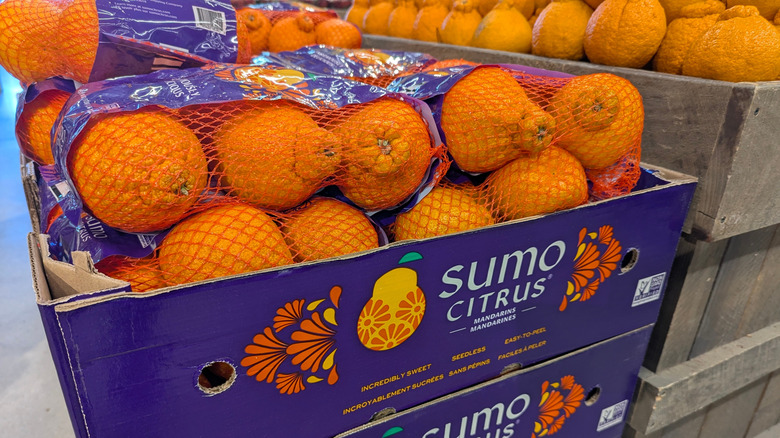
According to Sumo Citrus, the California-based company that produces them in the United States, the sumo, also known as a dekopon, is a cross between a mandarin, a Satsuma, and a navel orange. It was first developed by a farmer in Japan in the 1970s, and gets its name from sumo wrestling, which helps to explain its place of origin, large size, and that cute little bump on top. Sumo oranges are only grown in the San Joaquin Valley of California and in southern regions of Australia due to the hot, dry summer climate and cool winter nights.
Flavorwise, don't be fooled by the large size — the juice and flesh are wonderfully sweet, with an easy-to-remove peel and virtually no seeds. If you're on the hunt for a sumo, your best bet is to peruse your grocery store from January to April.
Here's the catch with the elusive sumo orange — they aren't cheap. The price can come in anywhere between $4 and $6 a pound, which comes out to between $2 and $3 per orange. They are difficult to grow, taking about four years before a sumo tree produces any fruit. Because of the price, the best way to appreciate these oranges is to use them in something that will last a while and that you'll get plenty of use out of, like orange preserves or an orange liqueur.
Satsuma
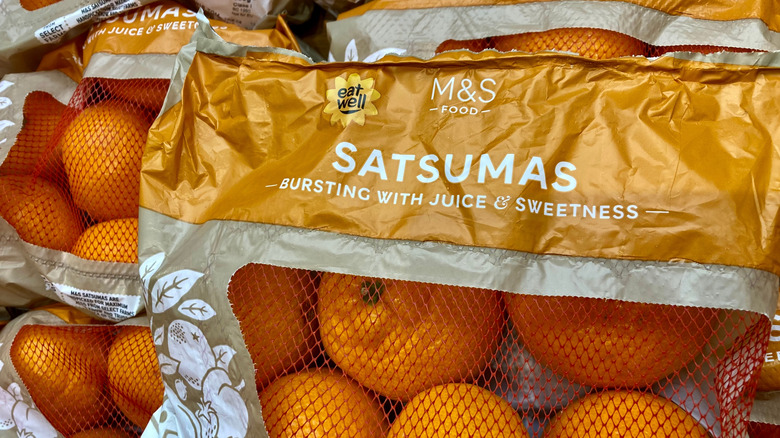
Another member of the hybrid orange list, the Satsuma is a cross between a mandarin and a pomelo. Named for the Satsuma province in Japan, where they are believed to have originated, they arrived in North America in the 18th century and are typically grown along the Gulf Coast and in California, with peak season from November to February. The dark orange peel encases very tender, seedless flesh, which is sweet and juicy, and only slightly acidic.
Because of the sweet flavor and low acidity, the Satsuma is great in both its raw and cooked forms. Helen Goh is a big fan of using flavorful orange zest as much as possible, noting how the aromatic oils in the zest are fat-soluble. "That means they bloom really well in butter or cream. Rubbing citrus zest into sugar before creaming with butter is one of the easiest ways to add a beautiful scent to a batter."
Take Goh's advice and use that zest in an orange chiffon cake, which uses both the zest and the juice of three oranges for plenty of citrusy flavor and a texture that's light as air. The sweet flesh of the Satsuma will also come through in something more breakfast-y, like a cinnamon orange coffee cake.