

The Best Seafood Rice Skillet ('Not Quite Paella') Recipe
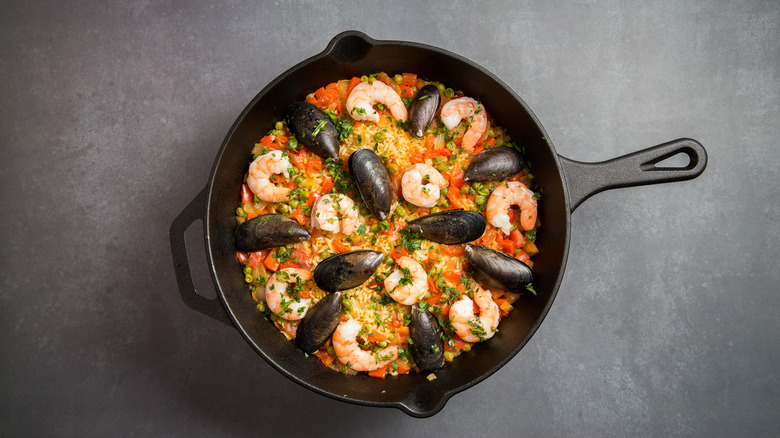
There are many ways to make seafood and rice, but combining them in a seafood rice skillet is a fabulous way to enjoy a richly flavored and satisfying meal. If this sounds like paella, you're on the right track. Recipe developer Michelle Bottalico has created a recipe inspired by a Spanish seafood paella. You don't need to buy a special paella pan to make this dish, though, and the recipe calls for long-grain rice because the special short-grain rice used to make paella can be harder to find, making this recipe easier and more accessible to most home cooks.
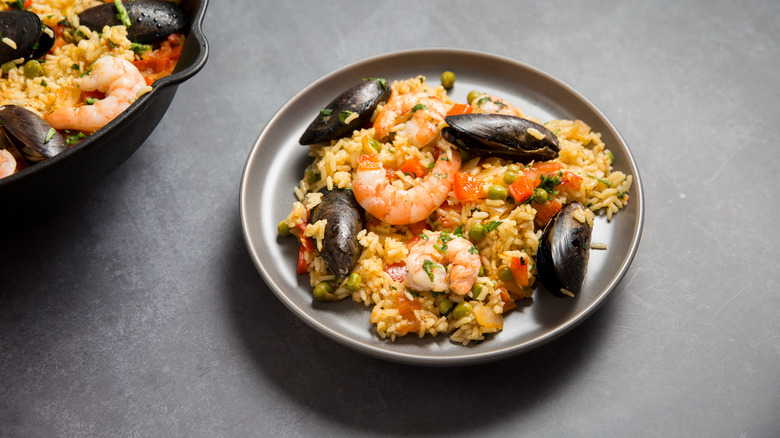
While it's not quite paella, the ingredients and cooking process are similar, and this dish is delicious in its own right. Tender seafood sits atop al dente rice perfectly flavored with seafood broth, aromatics, and spices, with a few vegetables mixed in. This recipe calls for shrimp and mussels, but you can use your favorite seafood with similar results. Follow a geometric pattern when you place the seafood on top of the rice for a beautiful and eye-catching display.
To make this recipe truly one-pan, use room temperature broth and let it heat up after you pour it into the skillet rather than keeping it hot in a separate saucepan. Either way, you won't believe how easy it is to make a restaurant-quality seafood rice dish we bet you'll turn to again and again.
Gather your seafood rice skillet ingredients
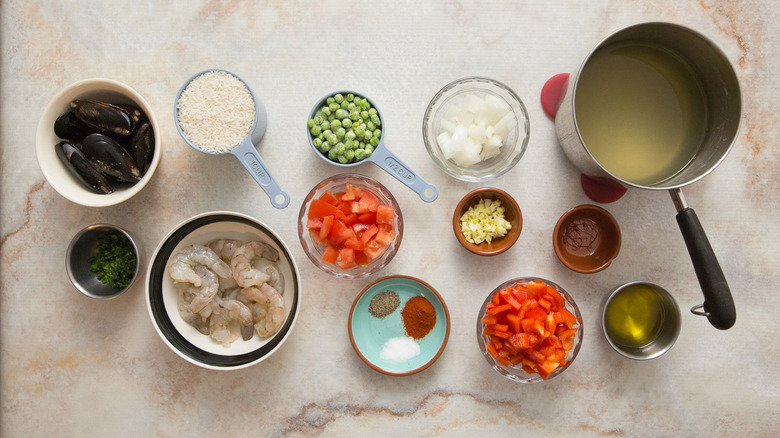
For this recipe, you will first need seafood broth. You could purchase this in a store, but you can also make a quick and easy broth with shrimp shells instead of throwing the shells away. The next ingredient is saffron (but see the FAQ below about how to substitute other spices if saffron is too expensive). You will also need extra virgin olive oil, yellow onion, garlic, red bell pepper, peas, tomato, paprika, salt, black pepper, long-grain rice, and parsley. Finally, this recipe calls for whole mussels and peeled and deveined shrimp for the seafood ingredients.
Step 1: Heat the broth
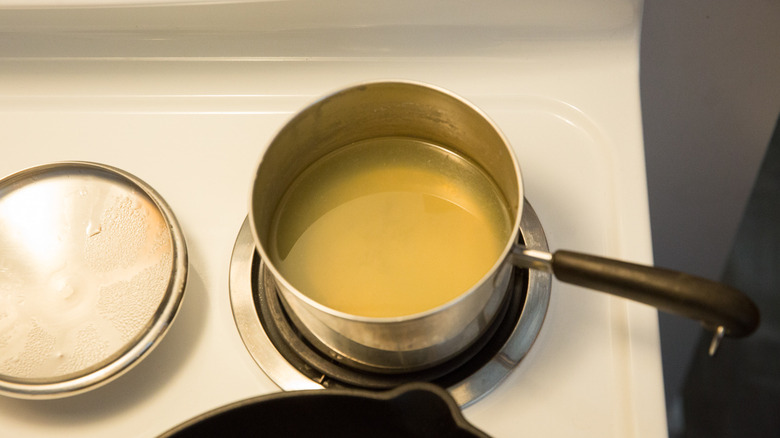
Heat the broth in a small saucepan until it comes to a simmer. Turn the heat to low and cover the pot to keep it warm until you're ready to use it.
Step 2: Prepare the saffron
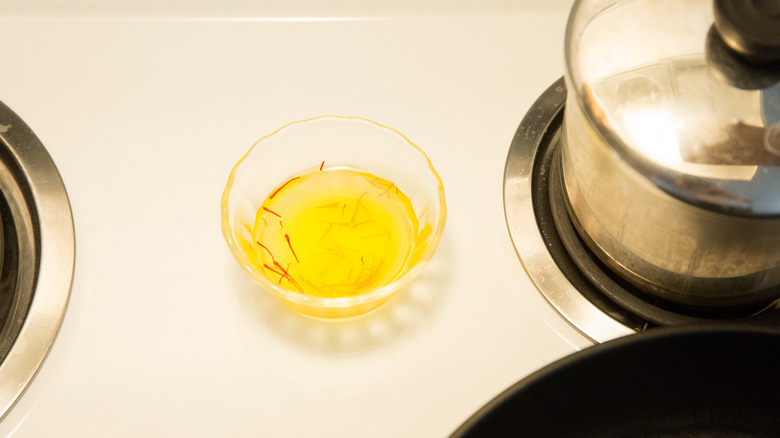
Place the saffron in a small bowl, pour in ¼ cup of the hot broth, and set it aside to steep.
Step 3: Heat the oil
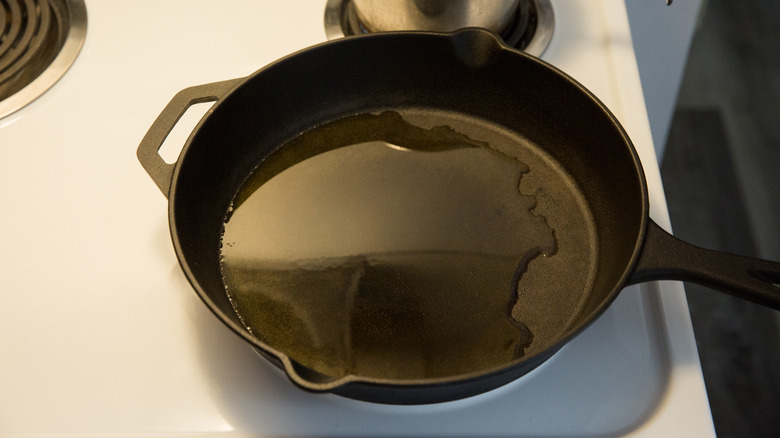
Heat the oil in a large heavy-bottomed skillet on medium.
Step 4: Sautee the onion and garlic
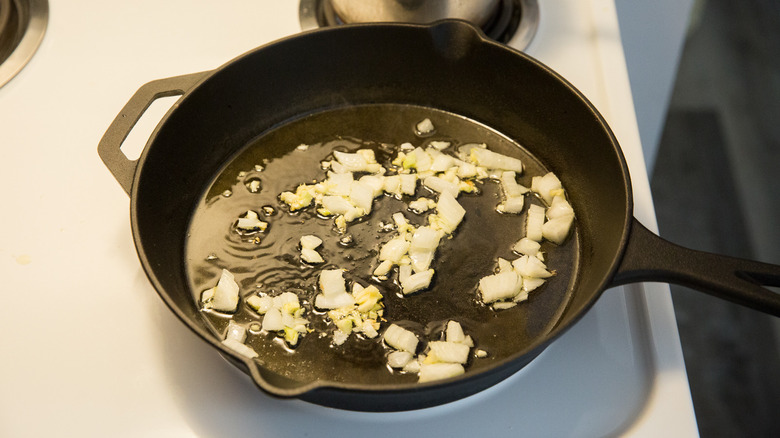
Add the onion and garlic and saute for 3-4 minutes.
Step 5: Add the vegetables
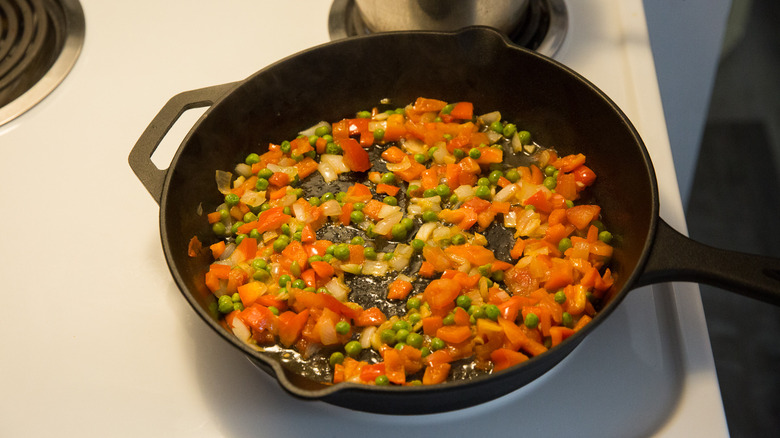
Add the bell pepper, peas, and tomato and saute for 7-8 minutes.
Step 6: Add the seasonings
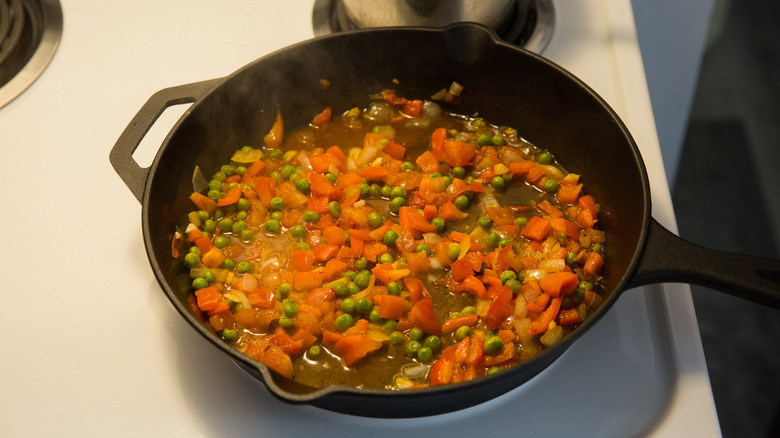
Add the saffron with its liquid, paprika, salt, and black pepper, stir, and cook for about 30 seconds.
Step 7: Toast the rice
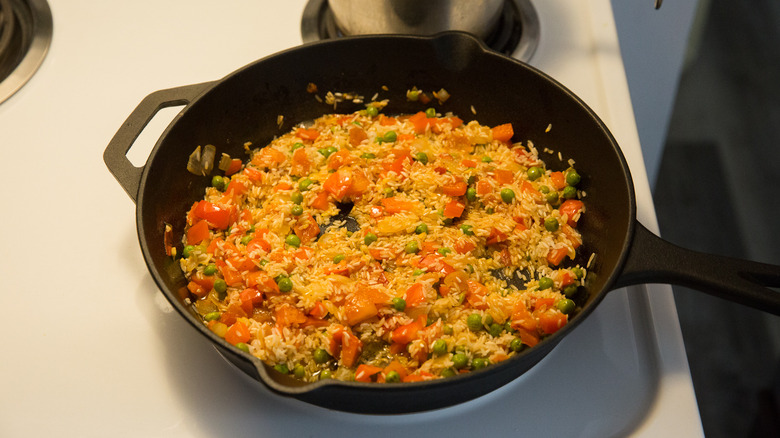
Place the rice in the pan and toast it, stirring frequently, for 1 minute.
Step 8: Pour in the broth
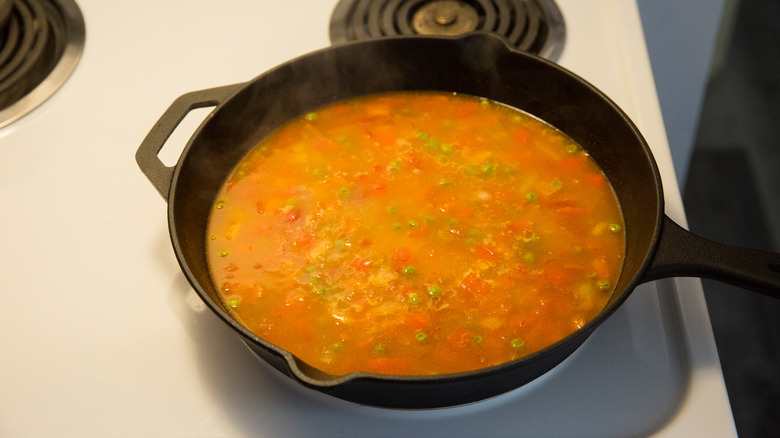
Pour in the hot broth, stir, and raise the heat to high until the liquid comes to a low boil. Taste the broth and stir in additional salt and pepper if desired, but don't stir anymore after this step.
Step 9: Let simmer
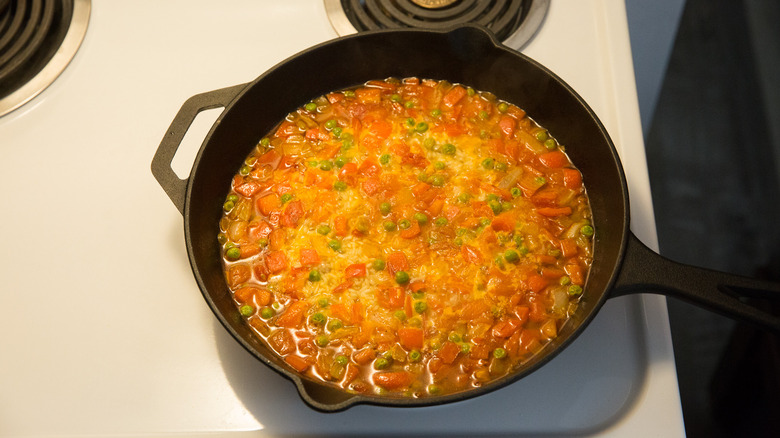
Reduce the heat to medium-low and bring the liquid to a simmer. Let it simmer for 6-8 minutes until the rice starts to peek out above the broth.
Step 10: Add the seafood
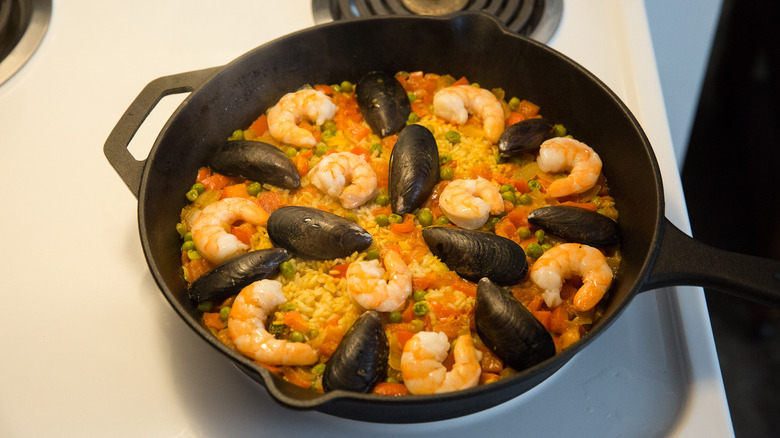
Arrange the shrimp and mussels decoratively on top of the rice, cover, and cook until the seafood is cooked, the rice is al dente, and most of the broth is absorbed, about 10-12 minutes.
Step 11: Serve the seafood rice skillet
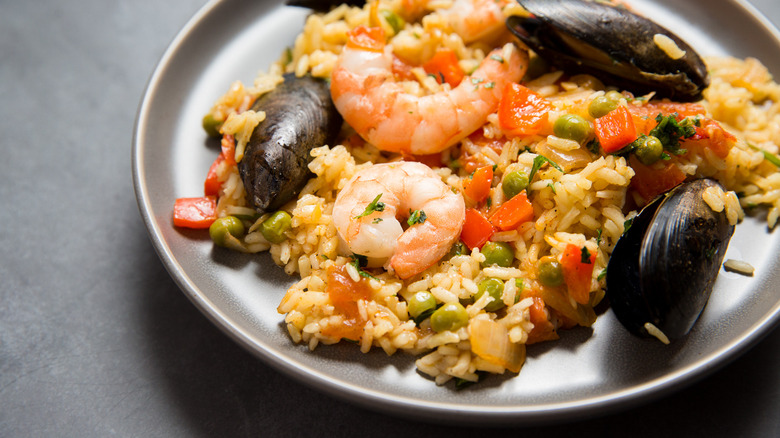
Sprinkle parsley on top and serve hot.
What pairs well with seafood skillet?
The Best Seafood Rice Skillet ('Not Quite Paella') Recipe
Tender shrimp and mussels sit atop al dente rice that's perfectly flavored with seafood broth, aromatics, and spices in this eye-catching skillet rice recipe.
Ingredients
- 2 ½ cups seafood broth
- ½ pinch saffron threads
- 3 tablespoons extra virgin olive oil
- ¼ medium yellow onion, diced
- 2 cloves garlic, minced
- 1 small red bell pepper, diced
- ½ cup peas
- 1 small ripe tomato, chopped
- ½ teaspoon paprika
- ¼ teaspoon salt
- ¼ black pepper
- 1 cup long-grain rice
- 10 shrimp, peeled and deveined
- 10 mussels
- 3 tablespoons minced parsley
Directions
- Heat the broth in a small saucepan until it comes to a simmer. Turn the heat to low and cover the pot to keep it warm until you're ready to use it.
- Place the saffron in a small bowl, pour in ¼ cup of the hot broth, and set it aside to steep.
- Heat the oil in a large heavy-bottomed skillet on medium.
- Add the onion and garlic and saute for 3-4 minutes.
- Add the bell pepper, peas, and tomato and saute for 7-8 minutes.
- Add the saffron with its liquid, paprika, salt, and black pepper, stir, and cook for about 30 seconds.
- Place the rice in the pan and toast it, stirring frequently, for 1 minute.
- Pour in the hot broth, stir, and raise the heat to high until the liquid comes to a low boil. Taste the broth and stir in additional salt and pepper if desired, but don't stir anymore after this step.
- Reduce the heat to medium-low and bring the liquid to a simmer. Let it simmer for 6-8 minutes until the rice starts to peek out above the broth.
- Arrange the shrimp and mussels decoratively on top of the rice, cover, and cook until the seafood is cooked, the rice is al dente, and most of the broth is absorbed, about 10-12 minutes.
- Sprinkle parsley on top and serve hot.
Nutrition
| Calories per Serving | 708 |
| Total Fat | 25.7 g |
| Saturated Fat | 4.0 g |
| Trans Fat | 0.0 g |
| Cholesterol | 64.4 mg |
| Total Carbohydrates | 89.7 g |
| Dietary Fiber | 5.5 g |
| Total Sugars | 6.0 g |
| Sodium | 1,116.4 mg |
| Protein | 28.9 g |

How is this seafood rice skillet different from paella?
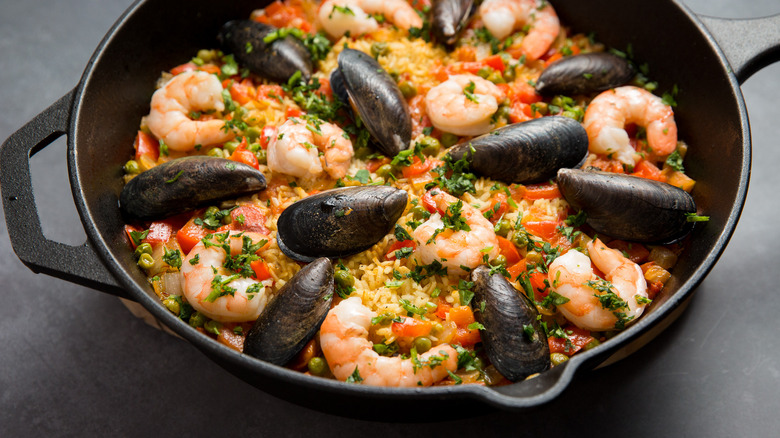
Paella is a very popular dish from Spain made with short-grain rice grown in the region of Valencia. Paella is traditionally cooked in a shallow layer in a special pan, which is also called a paella, over a wood fire. The rice forms a crispy and caramelized crust on the bottom, which is called the socarrat, and which many people consider to be the best part of paella. Paella is also known for its yellowish-red color and the special aroma and flavor that comes from the use of saffron.
This seafood rice skillet is not unlike paella because it uses similar ingredients and a similar cooking technique, but it's not the same dish. Depending on your skillet's shape, the rice may not cook in as shallow a layer as it does in a paella pan. The characteristic socarrat doesn't form, although you may get some browning or crisping. The type of rice is also different. The Spanish short-grain rice is very starchy and absorbs more broth, making the paella creamy. We use long-grain rice because it's widely available and gives this dish a different but very pleasant consistency.
Good quality paella pans can be expensive and need to be imported, and the proper rice can be hard to find, depending on where you live. But never fear. This "not quite paella" seafood skillet is a wonderful dish of its own, and it's absolutely delicious.
How can I customize a seafood rice skillet?
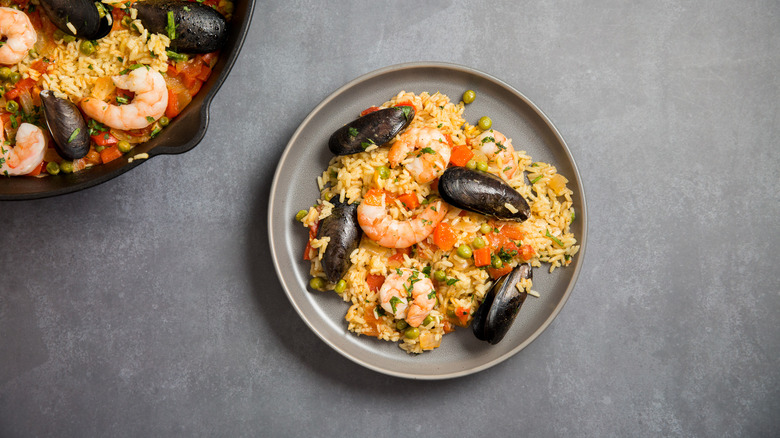
One way you can customize a seafood rice skillet is to mix up the seafood. You can choose to use just one kind of seafood (all shrimp, or all mussels, for example), or use a combination of your favorites. Besides shrimp and mussels, clams, scallops, crayfish, or crab would work. You can even choose not to use shellfish and make it with chunks of fish like cod or salmon. Some people like to use a frozen seafood mix for convenience to save time shelling and cleaning the shellfish. If you make substitutions, check the cooking time because you may have to add the seafood earlier or later than directed here, and if the seafood is frozen, defrost it first or add it earlier. If you can't find seafood broth or don't want to make your own from shrimp shells, you can sub vegetable or chicken broth, water and clam juice, or just water (but add more salt if you only use water).
Saffron can be quite expensive, but if it's out of budget, try this more affordable saffron alternative: turmeric. Turmeric will color the rice yellow in a similar way to saffron, but don't overdo it. While the flavor goes with the dish, too much will give it too earthy of a flavor. You can make the dish spicy with hot sauce or red pepper flakes, and mix up the veggies and herbs. Think green beans, fava beans, other colors of bell pepper, and zucchini.