

These 10 Liquors Have More Alcohol Than Standard Vodka
We may receive a commission on purchases made from links.
Boasting a 40% alcohol by volume (ABV) ratio, vodka serves as a baseline for what many of use consider to be a "strong" liquor. But for those in the know, the spirit market has high-octane bottlings that are far more intense (and strange) than vodka's relative modesty. "How strong can they possibly be?" you might ask. Well, let's put it this way: The one at the end of this list is nearly pure ethanol and is illegal to sell in multiple states.
Before we get there, we've got plenty of interesting high-proof liquors to explore. Coming from all around the world, these spirits are incredibly diverse in their history, flavor, and distillation methods, but they all push well beyond what most people consider average sipping strength.
The reasons are just as varied as their origins. Some are deliberately concentrated, while others simply emerge from production methods that refuse dilution — refusing to compromise or water things down for accessibility. So, without further ado, let's take a look at the outer edges of what distillers can create.
Overproof Rum
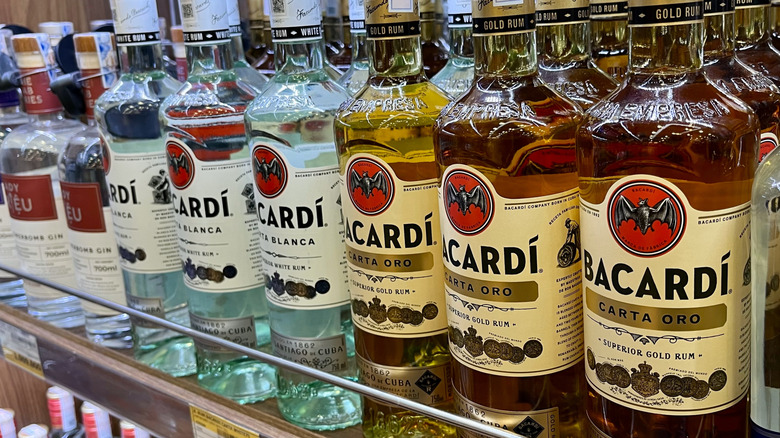
While standard rum typically sits at the same strength as vodka (40% ABV), overproof rum typically ranges from at least 50% to well beyond. When you buy a bottle of overproof rum, you're looking at anywhere between 57% to 75.5% ABV, depending on the bottling. Some rare bottles may actually exceed 80% ABV — more than double the strength of vodka.
Overproof rum comes primarily from island nations where sugarcane and production of rum is plentiful, like Jamaica, Barbados, and Trinidad. Compared to standard rum, the overproofed version is more intense in every way. Of course, the exact expression will differ depending on the bottling you buy — overproofed white rums will be much funkier and grassier than the typical blancos, while aged varieties are going to taste much richer with more prominent molasses notes. Tying everything together is a very spicy finish thanks to the higher ABV.
Few people drink this neat, though you're welcome to try. The high strength means it's an awesome mixer in tropical cocktails where stronger rum notes are needed. For instance, try giving your next Dark and Stormy a dash of overproof rum — it'll make the drink as intense as the name suggests.
Cask-Strength/Barrel-Proof Whiskey
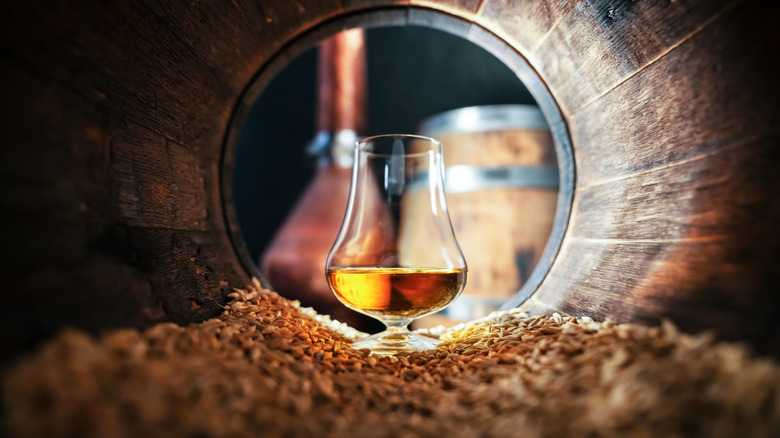
Most of the whiskeys and bourbons you'll find on shelves are watered down. They're standardized for consistency and the mass market — after all, not everyone can handle the burn of a high-proof drink. For folks who want their whiskey completely unaltered, there's cask-strength whiskey. The spirit is either released directly from the barrel or undergoes only minimal adjustment before bottling. Most of these expressions clock in anywhere between 50% (Port Charlotte 10 Year Old) to 65% ABV (Elijah Craig Barrel Proof).
The burn's greater, but you get a "purer" whiskey in return since every flavor compound remains at maximum concentration. Take a sip of one of these high-proof bourbons and you'll find vanilla exploding across your palate with oak notes strong enough to feel almost tactile. This is why there's a devoted club of whiskey enthusiasts who specifically hunt down these higher-proof bottlings. All the flavor notes emerge with remarkable clarity and power since there's literally nothing diluting the experience.
Distilleries from Scotland to Kentucky release cask strength spirits regularly. Once you get your hands on a bottle, you have two ways to enjoy it: Neat or watered down to your exact preferred level of dilution. That's the second benefit of cask-strength whiskey — you can tailor each pour precisely to your liking.
Absinthe
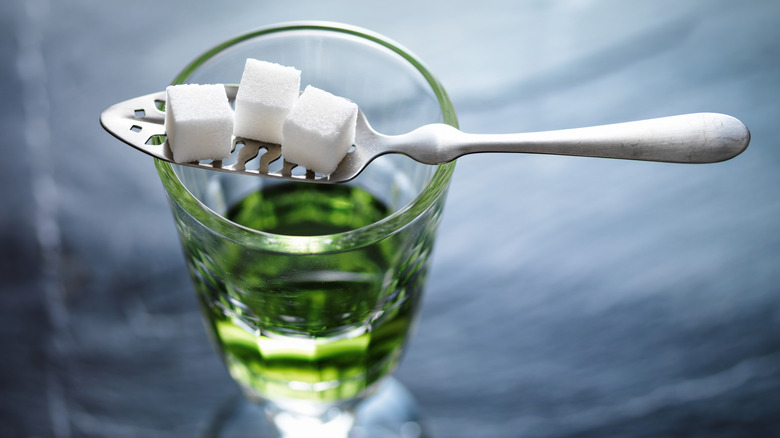
Mysterious. Legendary. Even mythical. Absinthe carries an infamy that very few spirits can match. It's visually distinctive; instead of clear or caramel-colored like the other entries on this list, this spirit has a green tint. Typically bottled at 45% to 74% ABV, this spirit — distilled from a bouquet of herbs that include wormwood, anise, fennel, and more — is intensely herbal and grassy. The sharp burn of the alcohol combined with the bitter and semi-medicinal flavor means the first taste is always going to be a memorable one.
Just as interesting as the spirit itself, however, is the ritual. Absinthe is best served in a specially designed glass and an ornate spoon. The way you use it is this: You perch the spoon (which has a slotted bowl) across the glass and place a sugar cube in the bowl. Then, drip cold water across the sugar cube. As the sweetened water drips down and into the absinthe below, the spirit will turn opalescent, and its harsh edges will be mellowed out.
Its high strength and surrounding mysticism made it a target many times throughout history. In 1915, absinthe was banned in many countries, including the United States because people believed it was addictive and caused hallucinations. There's no scientific basis behind that claim and the spirit has enjoyed a resurgence. Whether you drink it neat or in an extra spooky Corpse Reviver or Green Beast (yes, those are all real cocktails), it's bound to be quite an experience.
Poitín/Poteen
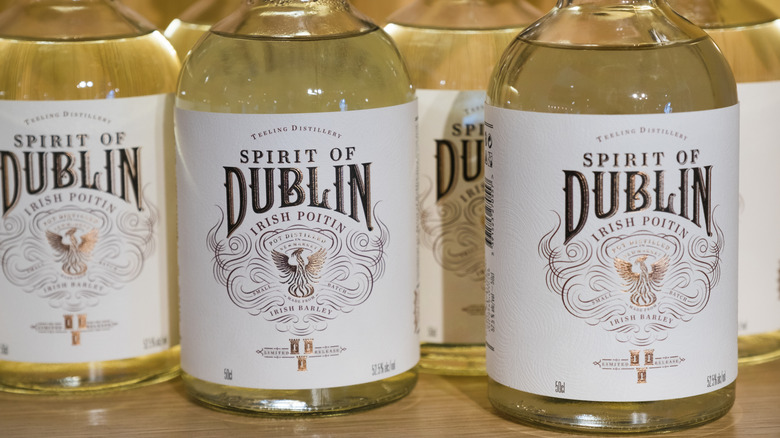
"Oh, what botheration o' dose in the nation/Can give consolation like poitín, me boys?" So goes a verse from a traditional Irish pub song dating back to the 1880s. In the song, poitín — a type of Irish moonshine that dates back to the 6th century — is called "the elixir of life" and the "philosopher's stone." Is that true? Well, not quite. But with a strength that can approach 90% ABV, it'll definitely give you a hard knock on the first sip.
Poitín (also spelled "poteen") is one of the most intense liquors available in Ireland. The strength can vary anywhere from 60% to 90% ABV. The name comes from the Irish word for "pot," specifically referring to the small stills hidden in remote rural locations where families distilled illegally for centuries to avoid crushing whiskey taxes.
Back when poitín was illegal and unregulated, quality varied dramatically. Some batches were dangerously contaminated while others tasted like genuine craft spirits. Fortunately, with legal production now established, you can buy clean poitín from distillers that captures the harsh, unrefined character of the original without the risk of poisoning. Poitín is often drunk neat, but as an outlaw spirit, there are no hard rules on what you can do with it.
Baijiu
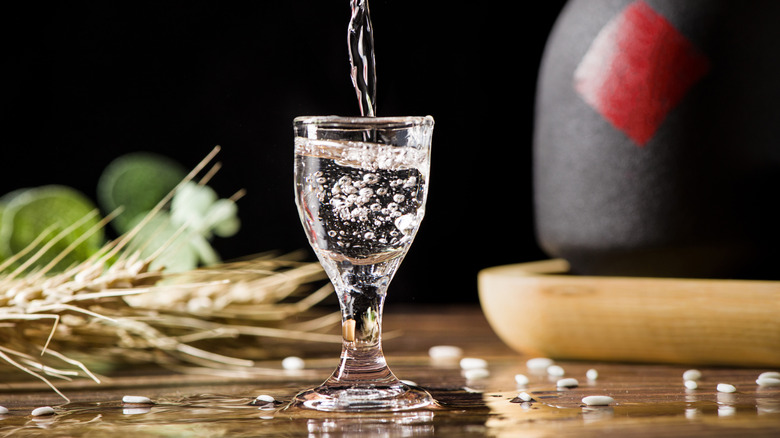
Baijiu has been around for over a thousand years and it's still one of the world's most consumed spirits by volume. At 50% to 65% ABV, depending on the production, even the "weakest" baijiu will give you a harder kick than vodka.
Baijiu production is dramatically different from most modern spirit distillation. Instead of a liquid mash, baijiu uses a solid-state fermentation process where grains (typically sorghum) are steamed, mixed with a starter culture, and then left to ferment either in stone jars or in special fermentation cellars. This process can take anywhere from weeks to months, resulting in flavors that range from light and floral to intensely savory and funky. It's really difficult to put baijiu's unique taste into words — you just might have to try it out for yourself. Fair warning, though: It's not uncommon for new drinkers to have difficulty downing the first sip. The power and the flavor take some time to get used to.
Premium baijiu is sealed in clay pots and can age for decades, resulting in flavors that rival aged cognacs or whiskeys in complexity. The best way to drink it? With friends, neat. Chinese drinkers often share baijiu in small cups as a communal experience. In fact, it's central to many business dealings in the country and an essential part of family celebrations. It wouldn't be wrong to say that baijiu is part of Chinese culture — a very intense one at that.
High-Proof Aquavit
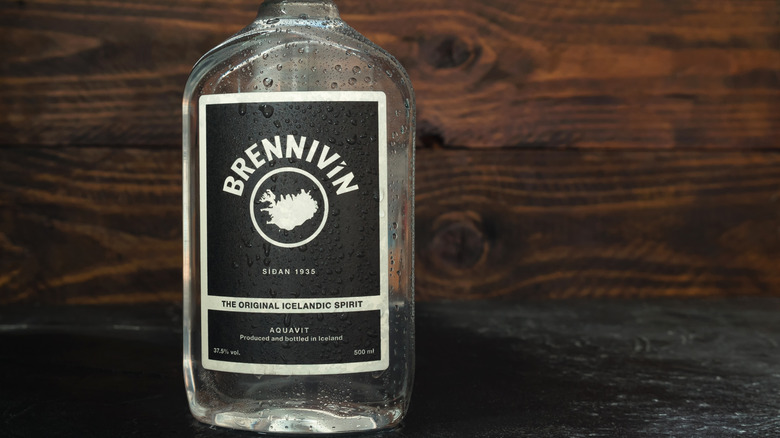
Produced in Scandinavia, you can think of aquavit (also spelled "akvavit") as an analogue to gin. However, instead of juniper, the magic comes from caraway seeds and, in some productions, dill. Most people describe aquavit as having a "savory" taste right off the bat, with botanical notes of fennel, coriander, dill, and more underneath. And of course, there's the burn. The EU states that to be considered aquavit, the spirit must be distilled to at least 37.5% ABV. Most distillers go above and beyond this minimum and you'll find many bottles clocking 45%, 50% ABV, or even higher. Needless to say, aquavit is a drink that demands respect. In fact, it's typically strong enough that you can actually throw it in the freezer and it won't freeze — perfect if you like your drinks extra chilly.
Traditionally, aquavit can play the role of both an aperitif or a digestif. You'd drink it either before or after a hearty meal of cured fish and grain dishes, all of which pair beautifully with the herbal warmth and complexity of the spirit. Modern bartenders have also been paying mmore attention to high-proof aquavit recently as a cocktail ingredient, spawning special recipes like the Turf War or even spinning classics, like in the case of the Aquavit negroni. For the smoothest introduction to this drink, though, we recommend starting with a Danish Coffee — it's basically an Irish Coffee, just with Aquavit instead of Irish whiskey.
Mezcal (High-Proof/Pechuga/En Blanco Variant)
Tequila's a household name at this point, but mezcal? Not so much. Both come from Mexico and use agave, but that's where the resemblance stops. With the agave being roasted in huge underground pits instead of steamed like tequila, mezcal comes with a beautiful smoky flavor that you won't find in tequila; think of it as peated versus unpeated scotch. And since production is largely family-run and small-batch, flavors vary dramatically from one bottle to another. Each distillery will have its own recipe and choice of agave (tequila makers are limited to using only Weber blue, mezcal can be made from any of 30 agave varietals). Not only that, the proof can differ as well; while standard mezcal sits at 40% ABV, high-proof versions reach 45% to 55% ABV or higher.
There's "en blanco" mezcal, which is essentially unaged and can reach up to 50% ABV. But the most interesting high-proof variant has to be "pechuga." Literally meaning "breast" in Spanish, this mezcal is made by redistilling the spirit a third time with nuts and grains for flavor, but here's the twist — a raw piece of chicken or turkey breast is hung over the still. Yes, seriously. As heat from the still rises, it cooks the meat and the fat drips down into the mezcal, changing its final flavor. Surprisingly, it doesn't taste like chicken broth. Instead, it's deeply savory once you get past the alcohol burn, which typically ranges from 45% to 51% ABV thanks to the third distillation.
Cask Strength Brandy/Cognac
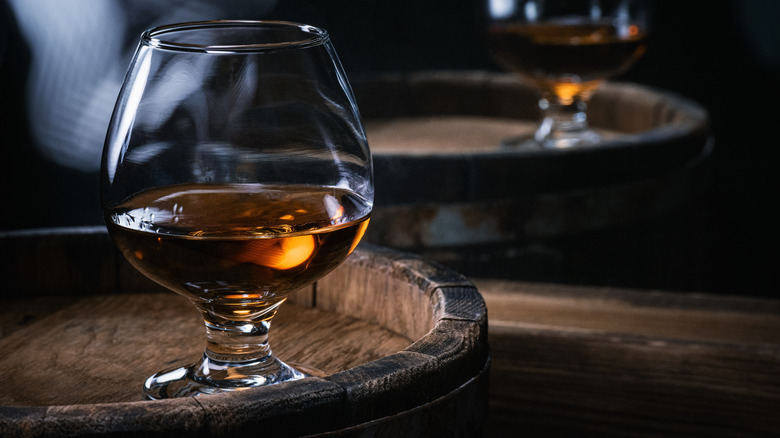
Brandy is what you get when you take wine and distill it into a concentrated spirit with remarkable complexity. Like whiskey, most brandies and cognacs (brandies from the Cognac region of France) are diluted to the standard 40% ABV. But cask-strength bottlings (brut de fut) are taken straight from the barrel and bottled as-is, giving you every flavor note that the copper pot stills and wooden casks impart. You experience even the most minute results of the alcohol's interaction with wood — vanilla and oak characteristics far more intense than standard bottlings, while the underlying fruit notes from the original wine cut through the alcohol burn with remarkable clarity.
Despite skipping an entire step in the production process, cask-strength brandies often command premium prices. A good cask-strength bottling is how you judge a distillery's brandy-making prowess, so most producers — from Hennessy to Courvoisier to Rémy Martin — take special care to ensure top-notch quality. That's why the best way to enjoy it is with slow sips from a snifter. Save the cheap VS-grade bottles for your Metropolitans and Sidecars.
Overproof/Navy-Strength Gin
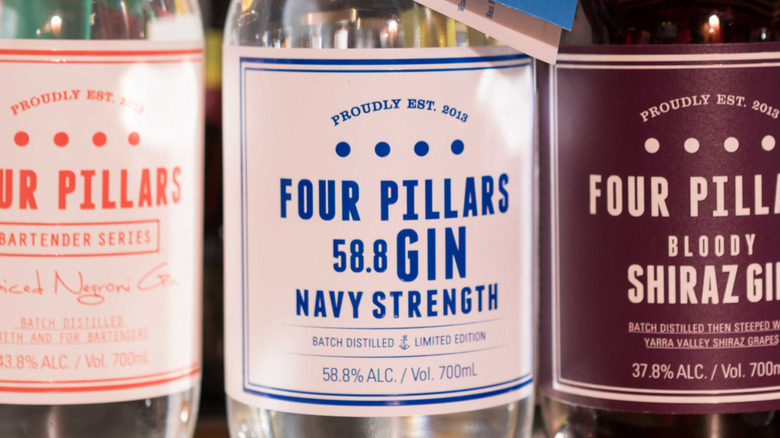
As with most common liquors on this list, typical gin bottlings hover around 40% ABV, but some distillers push well into the 57% ABV territory or higher. Known as "navy-strength" gins, this overproof version is made in the style of the gins stored aboard British Royal Navy warships in the 18th century. Ships back then carried huge casks of gin to supply thirsty sailors during month-long voyages. However, if the ship saw action and gin somehow soaked the gunpowder stores, they needed assurance the ammunition would still fire. The solution was elegantly practical: They'd carry overproof gin at around 57% ABV and test it empirically by mixing it with gunpowder and igniting it to see if it caught fire. If it did, they called it navy-strength gin, which would then be given the go-ahead to be put aboard.
Navy-strength gin is still made today (and fortunately, we've figured out safer methods to determine the proof than setting it on fire). You still get the botanical complexity of gin, but it comes with a fiercer burn than standard Beefeater. That intensity is precisely why some bartenders reach for navy-strength expressions — the extra alcohol gives cocktails backbone and lets the botanicals punch through mixers without getting lost.
Rectified Spirit/Neutral Grain Spirit
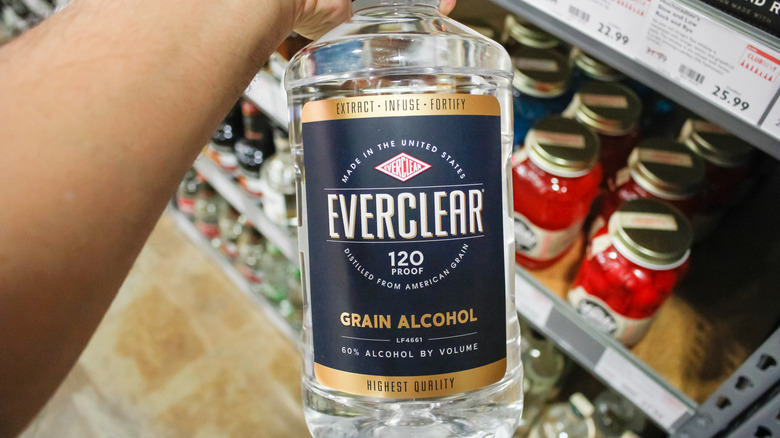
At the extreme end of the alcohol scale is rectified spirit, or neutral grain spirit. It's not "neutral" in the way you might expect because at 95% to 96% ABV, this is essentially pure alcohol with just a tiny bit of water mixed in. These ultra-high-proof spirits aren't meant to be drunk straight in shot glasses (though that hasn't stopped some enterprising souls from trying, either to see if they can or for internet challenges) and are intended to be used as an alcoholic base for specialty projects like homemade infusions.
So why is it called "neutral" if it packs such a dizzying punch? The neutrality here is in terms of flavor. Basically, the spirit is distilled until virtually all traces of flavor are removed, leaving an alcohol that tastes like ... well, just plain alcohol. This makes it the perfect vehicle for extracting flavors from botanicals, fruits, and spices — you'll always find it in homemade limoncello, bitters, and vanilla extract. Professional distillers use it too as a starting point for liqueurs, where even vodka's famous neutrality might distract from the intended flavor.
Remember that spirit we said was illegal in some states? This is it. Many states, including California, Florida, and Hawaii, prohibit the sale of 190-proof or higher grain spirits, which include rectified spirits. At such strength, there's a real risk of alcohol poisoning if you consume too much. So if you're going to give it a try, be very careful. It's a long way from your typical vodka.